The Magic Is Everywhere

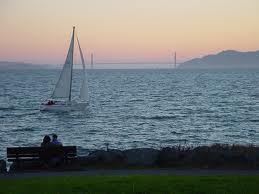
Last weekend, our family headed for the marina, a grassy area on the west point of Berkeley that looks over the San Francisco Bay Area. We have been there many times to fly kites, play soccer, run and bike. 
This time, armed with a blanket and picnic, we were planning on some serious reading. Older son had a book assigned from school, a historical fictional account of many good people dying from a plague back in the 1700’s: perfect depressing material for the summer vacation. Not surprisingly, he hadn’t embraced the intrusion with the enthusiasm he showed for Christopher Paolini’s Eragon or J. K. Rowlings’ Harry Potter. 

It was surprisingly windy and we made for some bushes and trees that would deny us the view, but offer shelter. We spread the blanket and I fell into my stadium chair and flicked on my Kindle.

While I waited for it to fire up, I glanced to my left. Between the bushes and the trees was a tunnel, with brush growing up and over so that you could barely see the sky. It was dark inside with the promise of sunlight on the other side. My youngest son, I realized, was staring at it as well. He turned to me.

“What do you think is through there?” he asked, eyes wide open.

“I don’t know,” I replied, the right level of gravity in my voice. “Think you should check it out?”

He nodded, rose and moved into the tunnel. He never came out…

Okay, that is not exactly true. But he stayed in the tunnel and explored beyond. Sometimes he sat and read his book, and other times played, creating his own world. Finally, he called for me to join him.

“The tunnel is safe,” he declared, “but there are dragons on the other side. Be careful.”

I knew that on the other side was a view of the Golden Gate Bridge, Alcatraz, San Francisco, and the bay with many sailboats. But as his tiny hand took mine and guided me out the other side, all I saw were the dragons.

Others might have seen a red kite with a long tail, to its left was a blue-green one tearing through the sky in acrobatic maneuvers, but we saw two dragons eying each other. My son announced with authority that they were deciding whether to fight or be friends. Remembering my politically correct role as father, I said I hoped they would be friends. 

But as I watched them and glanced back at the tunnel, it was my imagination that soared. Perhaps a new book is fermenting, or only a scene in the next Wycaan Master. Maybe it will surface next year or in a decade, but it is stored away.

And this moment of magic only happened because I was ready to embrace it, albeit with a little help from a nine-year-old with a rich imagination. But then I have seen elves in coffee shops.

——————————————————————————————————

Alon Shalev is the author of The Accidental Activist and A Gardener’s Tale. He has written three epic fantasy novels and the first reached the Quarter Finals of the Amazon Breakthrough Novel Award as of March 2012. More on Alon Shalev at http://www.alon-shalev.com and on Twitter (@elfwriter).

When is an Elf not an Elf? And why do we care?

Yes, my novel is compelling, special, well-written etc. just like the 499 other epic fantasy manuscripts sitting in the slush piles of every publishing house that offers YA epic fantasy.

I am working with an agent who is asking the challenging and insightful questions that will help my manuscript stand out from the rest. It is tough and I am feeling very possessive. Last week I shared his prompting to seek a Higher Concept.

One of the aspects that he wants me to consider is changing my elves, who make up many of the main characters and cultural references. He suggests that I consider changing the elves for a new, mythical race that will set me apart from the rest.

Let me state from the outset that I have no doubt this man knows far more than I about the publishing world, has considerable experience and understands the current state of the publishing world.

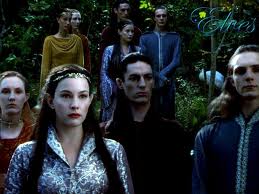
But my elves? Our elves? Those of us who grew up on Tolkein, Paolini, Brooks and others, have standards, images, friends. Legolas and Anwen, Arya and Blodgarm, and many others have created a rich and familiar texture. We welcome them surfacing as we settle into a thick novel. We embrace them because there are common threads that pass between authors. We call it a culture, those who don’t read fantasy roll their eyes.

                               Nobel Haldir – we owe him for Helm’s Deep, no?

Terry Brooks’ children know that he is not all there, he tells us as much when he opens his book Sometimes the Magic Works: Lessons from a Writing Life. More on this book in a later blog.

But Brooks in not dissimilar to the rest of us, just considerably more talented! We pass through a gate in our imagination and reacquaint in a world that exists in a shared consciousness.

Here the elves are tall, thin, light-footed and beautiful. They are fast and posses stealth and discipline. They are in touch with the energy of the earth, the forest, the animal kingdom. They excel in archery, crafts and healing. Perhaps they are aloof, elitist, and closed to the other races, but this comes from their ancient and rich heritage. We know and love them.

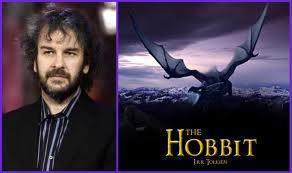
We rejoiced to learn that Peter Jackson is bringing Legalos into a prominent role in the hobbit. Well, a few raised eyebrows, since Legalos was not even referred to by name in The Hobbit when he appeared flanking his father, the King of Mirkwood.

We accept, even with a bit of jealousy that he can fight at Helms Deep for five days, or run non stop for three and still not need to brush his immaculate hair. Nor do we care that his quiver seems to replenish itself, an occupational hazard of any archer who fights battles every other day.

We don’t mind because elves epitomize something that we identify with. We all want to be beautiful, brilliant, in excellent physical condition and, of course, environmentalists. When R.A. Salvatore created Drizzt Do’Urden and the dark elves of Menzoberranzan, a giant underground drow city-state he broke new ground.

Many of us were repelled and had it not been created in the hands of a master of fantasy, we would have rebelled. It was daring, it worked and by Book Three, we were rewarded with the typical elf one finds above ground.

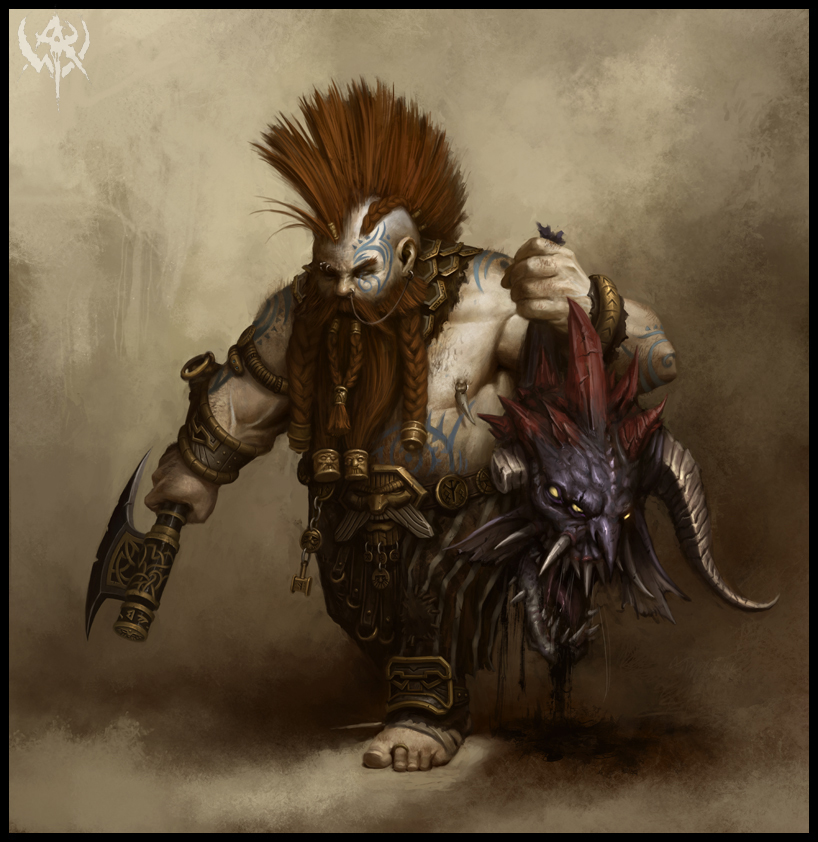
It is tough to turn away from the basic tenets of epic fantasy: the teacher and student, the quest, the fight against a powerful evil, dwarves, elves, dragons, a rich natural world. There is something that has entered our collective consciousness and taken root.

It is why we read and reread the masters…and it is why we will return to read those who take over the role of entertaining us in a way that only epic fantasy does.

——————————————————————————————————

Alon Shalev is the author of The Accidental Activist and A Gardener’s Tale. He has written two fantasy novels and the first will enter the Amazon Breakthrough Novel Award in January 2012. More on Alon Shalev at http://www.alonshalev.com/and on Twitter (#elfwriter).

The Power of Paolini

Anyone reading this blog is probably very aware that this week Christopher Paolini released the fourth book in the Inheritance Trilogy (sorry Christopher – even though we are all thrilled that there are another 800 pages of Eragon, we all remember the moment somewhere in the third book when we realized it was not going to end there).

The Final One

Our copy of Inheritance will arrive in the next couple of days and my 12-year-old will devour it, before passing it on to me, hopefully in time for the Thanksgiving vacation. It has been a wonderful bonding experience. Whether it is Harry Potter or Eragon (or most likely both) who are responsible for his leap in reading ability and desire is immaterial, I am eternally grateful to Paolini and J.K. Rowling.

My son and I spent endless hours reading the books, listening to the audio version, watching the (only!!!!) movie, and discussing how it will end in Brisingr, the third and not final book of the trilogy, and then Inheritance.

When Paolini released Brisingr, my then 10-year-old stood defiantly at the front of the line in our local Borders, falling asleep on his feet literally as the clock approached midnight. I remember the lady who was working there, encouraging him to stay awake and hang on. At exactly midnight, she put a copy that she had hidden under the counter into his hands and whispered that he should buy that very copy. It was the only book in the store that Christopher Paolini had personally signed.

The autograph & the fan.

Five minutes later, my son was fast asleep in the car clutching his autographed copy by his hero who was barely ten years older than him.

Paolini has proved a number of important points:
1. The young generation will read 400-page novels if the material is gripping enough.
2. They will read rich descriptions, convoluted plots, and identify with characters that are deep, vulnerable, and profoundly human (or elf or dwarf).
3.  They will thrive on a high level of language.
4. Tolkien might still be king, but he has good company. Paolini is young. His level of craft is only going to improve and that is an exciting prospect.

Two years later, my son and I wrote our first 90,000-word fantasy novel. The seeds were sown in the land of Alagaesia, on the wings of dragons, and in the art of an incredibly talented young man.

The Master

As the excitement has grown for my eldest son and I as the release date for Inheritance neared, my youngest son,  who is eight-years-old, has quietly read more than 250 pages of Eragon.  

So Christopher, if by any chance you ever read this: Thank you, as a reader, a fan, and a father.

The Trilogy!

——————————————————————————————————

Alon Shalev is the author of The Accidental Activist and A Gardener’s Tale. He has written two fantasy novels and the first will enter the Amazon Breakthrough Novel Award in January 2012. More on Alon Shalev at alonshalev.com and on Twitter (#elfwriter).

Why We Read Fantasy

I admit, it is a stretch to understand why someone would write novels with social injustice themes and run an grassroots political blog would suddenly go off and begin writing YA fantasy, But this I have done and I am trying to understand that there is no dichotomy as long as I enjoy the ride (and, I guess, my readers do).

I have just completed the manuscript for my second fantasy novel. What began a year ago as a way to bond with my oldest son (an avid 12-year-old fantasy reader) has become a whole new experience. I had previously read Tolkien, Paolini and probably a few others, but I never considered this my genre.

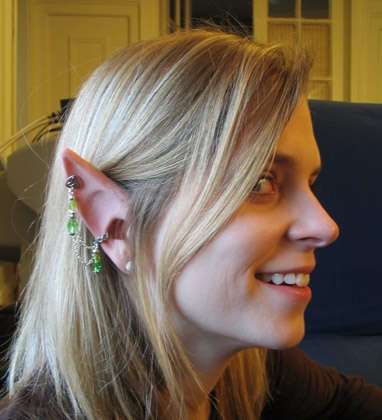
Now, 180,000+ (two books) on, I am avidly reading about fantasy writing techniques, devouring books by authors such as Terry Brooks and R.A. Salvatore, and considering getting my ears pointed (okay – but there really are people who do this cosmetic surgery).

Hey Mom, at least I promised no tatoos!

Whenever I tell people, especially those who know I write political fiction, about my foray into the world of fantasy, I do so in a somewhat apologetic way. Usually, I make sure to tell people that I am doing it for my son, which while true, is only one part as my enthusiasm grows. 

The question that is on my mind these days is why do intelligent, educated adults enjoy plowing through 90,000 word tomes about elves, dwarfs and dragons? Here are some Wiki answers:

“Some fantasy readers are unhappy with their lives and think that they would be happier in another world. A place where someone who is not so successful in this world might be a hero or king in another world.”

Lord of the Rings - No one understood elves like Tolkein.

“I like reading fantasy books because they provide me with a beneficial different point of view on world and everything. I like to think about it using the analogy to house that you may live in but you’ll never be able to understand if you don’t ever get outside and look at it from perspective.”

“You can see a lot of tiny details in fantasy books that you may somehow lose in your everyday life just because they aren’t getting enough your attention… Digest them and they’ll make your life more colorful and interesting.

A lot of fantasy is about the world we would like to see, a dream we want to pursue. Where would we be at if we didn’t dream?”

“Older readers might enjoy Fantasy because of its imaginative scope, and also because of the uncanny ability fantasy has to show us aspects of our own lives in an otherwise far-fetched format. People can relate to the emotions and experiences of fantasy characters, as well as mirror events in human history, through the blurred mirror of the fantasy world.”

“Fantasy is a place to escape when you no longer want to live in real life. Where you can let your imagination run free and have control over what you see and hear.

Many people like to escape the hustle and bustle of real life and be captured by a story which involves something special, unreal or different – possibly magic. People enjoy being in someone else’s shoes – someone extraordinary, so that we can look at the world through anothers eyes. You can switch off and enjoy letting your imagination run wild.”

Do you read fantasy? If so share what the attraction is for you? If you read it once in a period of your life, why then and not now?  Fascinating stuff. This blog is going to be a one-post-a-week (my other blog is daily) and focus on my journey into the world of fantasy.

Hey, want to join the quest? I promise swords, elves, brave exploits, and most of all, friendship.

——————————————————————————————————

Alon Shalev is the author of The Accidental Activist (now available on Kindle) and A Gardener’s Tale. He has written two fantasy novels and the first will enter the Amazon Breakthrough Novel Award in January 2012. More on Alon Shalev at http://www.alonshalev.com/and on Twitter (#elfwriter).