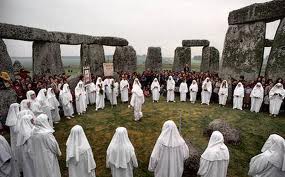
Fantasy – A Pagan Conspiracy?

First a big Thank You to the 30+ people who filled out my survey – Who Are My Target Audience – I am going to keep tweeting it and hopefully reach my goal of 50 responses (it makes it easy for my mathematically-challenged brain to do percentages).  If you have not had the time, please consider three minutes to answer ten questions by clicking here.

The first time I read that someone was uncomfortable with her children reading YA fantasy because of the Pagan themes running through it, I dismissed the reader as a maverick who is worried she won’t succeed in passing on her religious lifestyle to her children. But I have now seen this a couple of times.

I am sensitive to this. My first published novel, A Gardener’s Tale, follows the yearly cycle of the Pagan religion as it was (and still it) celebrated in rural Britain, and shines light on the struggle of Christianity to crush it.  While the novel was received enthusiastically in the Pagan community (their leader Vivienne Crowley called it “A beautiful and elegiac evocation of a timeless Britain and of a man of the ancient ways of the earth who brings peace and healing where the flames of persecution once burned.”), I incurred the wrath of many religious Jews and Christians.

The Pagan religion is based upon the agrarian cycle and the farmer’s connections to the earth. Being mysterious, the emergence of an earth-based religion, where there was power and magic in the earth and those who stewarded her (yes – her, another topic) were worshiped and studied.

A common theme in many books, mine included, is the source of magic comes from the earth, from nature, through animals and the elements. The Druids, so often mentioned, were a genuine religious order. The witches, millions of whom were burned at the stake as Christianity raised a frenzy of anti-women, anti-anything, were often healers who used herbs and minerals that were gifts from the earth. Even the Jedi Order harnessed an energy, the Force, from everything living around them.

Other common elements include the quest, the holy (magical) props, the connection with and reverence of nature. Most of all, however, is the power of story. All religions and spiritual practices maintain a powerful element of stories, legends, parables, a narrative history (the best selling book of all time, anyone?).

I am skeptical that there is an international conspiracy to revive the Pagan religion through instilling scintillating epic fantasy novels insidiously into the minds of our unsuspecting youth (now you are convinced that I am the High Priest – isn’t this how conspiracy theory works?).

However, it is not a huge leap of faith to think that those who put quill to parchment (there is probably an app for this) and write such stories do have aspirations of teaching certain noble morals and principles. I recently wrote in an interview:

“Working on the novel with my (now 12-year-old) son and seeing the potential to share my values and political beliefs while imbibing a profound love for storytelling and reading. I have seen the impact of the Harry Potter series and Christopher Paolini’s Inheritance series on my son and his friends. I want to help shape the landscape of the next generation’s imagination and maybe even the society they strive to create.”

Now if that is not a declaration to take over the world

Finally, one more plug – if you have a few minutes please fill out my survey – Who Are My Target Audience – and Thank You again to those who already have.

——————————————————————————————————

Alon Shalev is the author of The Accidental Activist and A Gardener’s Tale. He has written two fantasy novels and the first reached the Quarter Finals of  the Amazon Breakthrough Novel Award as of March 2012. More on Alon Shalev at http://www.alonshalev.com/and on Twitter (@elfwriter).
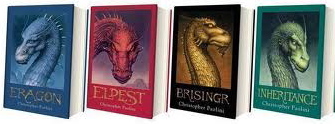
Writing A Fantasy Series Pt. 1

Christopher Paolini, the young author of the Inheritance Series (Eragon), was featured in The Writer. I was excited as the title was ‘Writing A Hit Series’, and Paolini has created a magnificent world in the 3,000 or so pages of his four novels.

I was disappointed with the interview. The reporter assumed that most of us didn’t know who Paolini is and what he has written. The story focused on a lot of the well-recorded autobiography (that I am sure most of us love) and the decision of the Paolini family to self-publish Eragon and travel around the country selling copies face-to-face.

But there were precious few tidbits regarding writing a series. Paolini structures his stories before he writes them. Fair enough. There are no surprises, we are told, except I wish to point out that Book Three became two books (how do you misplan an additional 700+ pages? – not that I am complaining, Mr. Paolini – you can write several more and I will faithfully buy and read them together with my sons).

My son holding his autographed copy at the midnight release... a priceless moment!

Paolini also stresses the need for a map. He warns that if there is a small mistake in detail between Book One and Four, true fans will notice.

As I continue to put Book Three of the Wycaan Master onto (virtual) parchment, (just passed the 25,000 word mark), I am continually realizing how much I must refer back to keep consistent, whether in language, appearance, or plot.

I love the spontaneity of allowing the plot to unfold. It works for me and it is part of the magic of writing. But I totally understand the value of a structured plan as Paolini suggests.

I keep three lists going: characters, chapter contents, and odds-and-ends. I do not provide much in terms of character appearance and history. I regret this now, as I need to sift through over 200,000 words. Chapter contents are kept brief – 1-2 sentences, but serves to help me refer back relatively quickly. Odd-and-ends is, well, a lot of unresolved issues, detail needed, clan structure and more.

A Great Place to Write Fantasy.

I have no doubt that there is so much more to remember and involved when writing a series. I think when I begin another, I might take more careful notes and listen more to authors like Paolini, Salvatore, and Brooks.

But I also think it is worth it. The depth and richness of a series is an incredible honor to write. More on that aspect next week.

Until then, good writing.

——————————————————————————————————

Alon Shalev is the author of The Accidental Activist and A Gardener’s Tale. He has written two fantasy novels and the first has reached the Quarter Finals of  the Amazon Breakthrough Novel Award as of March 2012. More on Alon Shalev at http://www.alonshalev.com/and on Twitter (@elfwriter).


Seeking The Higher Concept

J.R.R. Tolkien’s Lord of the Rings set the bar. Everything since has been compared to this masterpiece. I have heard interviews with Terry Brooks and Christopher Paolini where each has had to deal with the comparisons.

Neither seemed particularly happy with the need to defend or compare their works. Each agree that Lord of the Rings (LOTR) stands on the pinnacle of fantasy and will for many years,

This leaves the rest of us wannabe fantasy authors with a dilemma. While my own Alliance series has its own specific aspects, it is inevitably compared to LOTHR. When I introduced my elves to my writer’s group, it is Legalos who comes to mind.

I've never survived a mighty battle with every hair still in place.

It is not only Tolkien of course. My antagonist is the Emperor and immediately someone compared him to Star Wars’ Palpatine, and his right hand man to Darth Vader (even without the mask and asthma).

I recently began to meet with an agent who is coaching me to prepare the first Alliance book to market. When I offered my pitch, he immediately asked what is my higher concept? He knows of Tolkien, Brooks, Salvatore and Paolini: what differentiates Shalev from these masters?

I admit to being stuck. I am reading John Locke’s How I Sold 1 Million Ebooks in 5 Months book and he admits it is much harder to change a book already written to hook your target audience than to begin a novel with the specific demands of your target audience in mind. This is doubly hard for me as I have already written two books in the series and have the third mapped out.

Every time I, or anyone helping me, have an idea, I feel resistant. I have created my world, my characters, my conflict…but I cannot explain its unique or higher concept.  Reluctant hero must learn his magic from a master and overcome the all-powerful evil dude. Sound familiar? There are many ways to make an omelet, many variations of vegetables, spices and cheeses, but all omelets involve eggs.

Need to crack a few eggs!

When someone has already used organic, cage-free, grade A eggs, how do you change the recipe? How do you find a higher concept? Any ideas?

——————————————————————————————————

Alon Shalev is the author of The Accidental Activist and A Gardener’s Tale. He has written two fantasy novels and the first will enter the Amazon Breakthrough Novel Award in January 2012. More on Alon Shalev at http://www.alonshalev.com/and on Twitter (#elfwriter).


Fantasy as a Vehicle for Social Justice

I believe passionately that writers of fiction  can ply their craft to help effect positive social change and offer a platform for values and principles. The Accidental Activist and A Gardener’s Tale both reflect this and I have a series of books focusing on social issues in the US (all based on San Francisco) beginning with Unwanted Heroes which will be released by Three Clover Press in the spring and highlight the way we treat war veterans and the homeless.

I was delighted when Kaitlyn Cole from Online Universities shared a list that their faculty had put together entitled: 50 Best Novels For Political Junkies.

Kaitlyn wrote: “True story: Some of the best political novels aren’t explicitly about politics. Yes, some of the books on this list deal directly with governments and politicians, with laws and the ways they’re made or abused, and with the peril and promise inherent in every governing body. But some of them use adventure, parable, or satire to subtly explore our political system with a depth that wouldn’t be possible any other way.”

Great point and relevant to those of us who write political fiction. But how about fantasy? Is there room to use our elves and dwarves to promote social injustices or causes? 

Over the last two summers I was blessed with the amazing experience of writing two fantasy novels together with my 11-year-old son. While I have read a few fantasy novels, I had no idea about the “rules” of the genre.

Writing with my son, however, compelled me to include moral issues such as racism, dictatorship and freedom, as well as the values of friendship and freedom. I was writing for my son and there are plenty of swords, quests, elves, dwarves etc., but as I watched him read and listened to his feedback, I waited for his comments about such issues and derived huge satisfaction when he brought up issues.

In setting my goals for an exercise at Author Salon, I wrote:

“I have seen the impact of the Harry Potter series and Christopher Paolini’s Inheritance series on my son and his friends. I want to help shape the landscape of the next generation’s imagination and maybe even the society they strive to create.”

My lack of knowledge regarding fantasy leads me to ask the question: Can fantasy offer a vehicle to discuss political and social injustice? I would love to hear your answers fantasy-fans.

——————————————————————————————————

Alon Shalev is the author of The Accidental Activist and A Gardener’s Tale. He has written two fantasy novels and the first will enter the Amazon Breakthrough Novel Award in January 2012. More on Alon Shalev at http://www.alonshalev.com/and on Twitter (#elfwriter).

The Power of Paolini

Anyone reading this blog is probably very aware that this week Christopher Paolini released the fourth book in the Inheritance Trilogy (sorry Christopher – even though we are all thrilled that there are another 800 pages of Eragon, we all remember the moment somewhere in the third book when we realized it was not going to end there).

The Final One

Our copy of Inheritance will arrive in the next couple of days and my 12-year-old will devour it, before passing it on to me, hopefully in time for the Thanksgiving vacation. It has been a wonderful bonding experience. Whether it is Harry Potter or Eragon (or most likely both) who are responsible for his leap in reading ability and desire is immaterial, I am eternally grateful to Paolini and J.K. Rowling.

My son and I spent endless hours reading the books, listening to the audio version, watching the (only!!!!) movie, and discussing how it will end in Brisingr, the third and not final book of the trilogy, and then Inheritance.

When Paolini released Brisingr, my then 10-year-old stood defiantly at the front of the line in our local Borders, falling asleep on his feet literally as the clock approached midnight. I remember the lady who was working there, encouraging him to stay awake and hang on. At exactly midnight, she put a copy that she had hidden under the counter into his hands and whispered that he should buy that very copy. It was the only book in the store that Christopher Paolini had personally signed.

The autograph & the fan.

Five minutes later, my son was fast asleep in the car clutching his autographed copy by his hero who was barely ten years older than him.

Paolini has proved a number of important points:
1. The young generation will read 400-page novels if the material is gripping enough.
2. They will read rich descriptions, convoluted plots, and identify with characters that are deep, vulnerable, and profoundly human (or elf or dwarf).
3.  They will thrive on a high level of language.
4. Tolkien might still be king, but he has good company. Paolini is young. His level of craft is only going to improve and that is an exciting prospect.

Two years later, my son and I wrote our first 90,000-word fantasy novel. The seeds were sown in the land of Alagaesia, on the wings of dragons, and in the art of an incredibly talented young man.

The Master

As the excitement has grown for my eldest son and I as the release date for Inheritance neared, my youngest son,  who is eight-years-old, has quietly read more than 250 pages of Eragon.  

So Christopher, if by any chance you ever read this: Thank you, as a reader, a fan, and a father.

The Trilogy!

——————————————————————————————————

Alon Shalev is the author of The Accidental Activist and A Gardener’s Tale. He has written two fantasy novels and the first will enter the Amazon Breakthrough Novel Award in January 2012. More on Alon Shalev at alonshalev.com and on Twitter (#elfwriter).