An Unexpected Journey

This weekend, J.R.R. Tolkien’s The Hobbit – An Unexpected Journey comes out. If you are reading this blog, you have probably been counting down along with the Mayans. I haven’t seen the movie yet, so there are no spoilers, but I am incredibly excited. I can’t wait to see it and have no doubt that I will love it, buy the DVD, change my computer’s wall paper and take my kids to eat breakfast at Denny’s…again!

imgres-2But there is something else that has me so stoked for this movie stands on the threshold of something historic: it is the induction of the next generation of epic fantasy readers. Just as Lord of the Rings ignited my generation’s interest, and Christopher Paolini’s Eragon sentenced my own children to a lifetime of reading and vivid imagination, The Hobbit will take a new, unsuspecting generation on an unexpected journey.

My own journey has been somewhat unexpected. Having written a series of well-received social justice-themed novels, I have been introduced to people who are passionate to see and work for a better world. I treasure the opportunities to meet readers at book signings and author meet ups.

DSCN1387As we approached the launch of At The Walls Of Galbrieth, I sought to define my target audience and had a big surprise. To begin with, there were the 100+ who filled out my survey ­– thank you all – and I began to discover a group of passionate and richly imaginative readership.

But here is what excites me. I am meeting a large number of students and teenagers who are die-hard readers of epic fantasy. They eloquently share their love for the creation of a new world, their desire to see everyday folk transform into heroes, and to believe in universal principles such as freedom, good over evil, and the value of friendship.

My social justice-themed novels all contain a common thread: an everyday person goes through a transformational experience which empowers them to pursue justice. Swap the multinational corporation for an evil Emperor, replace the use of social protest with a special bow and arrow, and we have similar themes.

My point is that epic fantasy creeps up on you. This weekend many ingenuous children, teenagers, and parents, are going to see a hyped-up movie and experience a transformation. They may not start yielding a sword and slaying dragons, but they just might embark on an unexpected journey of reading and enter into a world that drives our imagination and defines our social values…

All because in the words of a great wizard: “Hobbits really are amazing creatures.”

——————————————————————————————————

Alon Shalev is the author of At The Walls of Galbrieth, Book 1 of The Wyccan Master series, which reached the Quarter Finals of the Amazon Breakthrough Novel Award 2012, released by Tourmaline Books. The First Decree, the sequel is due out in early 2013. Shalev is also the author of three social justice-themed novels: Unwanted Heroes, The Accidental Activist and A Gardener’s Tale. More on Alon Shalev at http://www.alonshalev.com and on Twitter (@elfwriter).

How’s The Weather In Middle Earth?

I’ve never been a big weather fan but Tamati Coffey receives my Weather Forecaster of the Week. I think you’ll understand why.

Mr. Coffey – I believe Professor Tolkien would be proud.

Hope you all have a great weekend and the weather holds out for you. If it’s raining or snowing where you live, I suggest you replay the above forecast!

——————————————————————————————————

Alon Shalev is the author of At The Walls of Galbrieth, Book 1 of The Wyccan Master series, which reached the Quarter Finals of the Amazon Breakthrough Novel Award 2012, released by Tourmaline Books. The First Decree, the sequel is due out in early 2013. Shalev is also the author of three social justice-themed novels: Unwanted Heroes, The Accidental Activist and A Gardener’s Tale. More on Alon Shalev at http://www.alonshalev.com and on Twitter (@elfwriter).

What If Humans Were Real?

What if elves were real? There are those in the south of England who believe that elves exist. I heard this when researching for A Gardener’s Tale.  When a twitter friend shared with me that he had heard of this in the north of England, it made me wonder…

Delyphin rubbed the points of his ears as he waited for Harwin who was always late. He checked his watch. They would have to walk fast to reach the bookstore before the famous author began his reading. 

“Sorry, I’m late,” Harwin said as he jogged up.

They set off, hands in pockets. There was no point in chastising Harwin – it simply didn’t help.

“I‘m looking forward to this,” Harwin said. “I loved ‘Lady of the Earings’. The way that professor describes these mythical humans, I really begin to feel they exist.” 

I nodded, too winded to comment. The professor was a strange chap, lecturing at an elite university on ancient elven languages. They say he even invented an entire human language – as if all humans would speak the same language. Still he was a master of the epic fantasy genre.

We enter the bookstore, which is full and grab the last two seats.

Harwin leans in. “I hear he is planning on sending the humans on a new quest, that their world is threatened by some strange energy – ‘oyl’ – that is expensive, polluting and they go to war over it because there isn’t much.”

“That’s a bit of a stretch,” I say. “His humans are too smart to do that. Besides, they have the sun, the wind, and the waves of the ocean just like us. Why would they use this oyl?”

Harwin smiled. “You look rather irate. You might start believing in these humans too.”

“Don’t be daft, Harwin. That’s the beauty of epic fantasy. You get so into the story that you begin to believe the characters might actually be real. Next thing, you’ll be swearing you saw someone with round ears.”

We both laugh. That would be a sight.  The room hushes. The professor is about to speak. He opens his new book…and the world of the humans becomes real as he reads…

I can almost see their round ears and their oyl.

——————————————————————————————————

Alon Shalev is the author of At The Walls of Galbrieth, Book 1 of The Wyccan Master series, which reached the Quarter Finals of the Amazon Breakthrough Novel Award 2012, released by Tourmaline Books. The First Decree, the sequel is due out in early 2013. Shalev is also the author of three social justice-themed novels: Unwanted Heroes, The Accidental Activist and A Gardener’s Tale. More on Alon Shalev at http://www.alonshalev.com and on Twitter (@elfwriter).

A Poem In Elvish – J.R.R. Tolkien

This is a rare gem. That an author could possibly make up an entire language is mind-blowing. Yet we often forget that beyond the dragons, swords, and quests, J.R.R. Tolkien created an entire language. As a professor of philology (ancient languages) at Oxford University, Tolkien was already immersed in the mechanics of how a language is put together. 

But the professor took it to another level when he actually made up a language. With the hype beginning to build for The Hobbit movie, this poem surfaced read by the master himself.

Enjoy!

My own elvish is somewhat rusty, so here is a translation of Namarie (Farewell) courtesy of Josh Jones, who goes into greater detail about the when and where.  

Ah! like gold fall the leaves in the wind, long years
numberless as the wings of trees! The long years
have passed like swift draughts of the sweet mead
in lofty halls beyond the West, beneath the blue
vaults of Varda wherein the stars tremble in the
song of her voice, holy and queenly.

Who now shall refill the cup for me?

For now the Kindler, Varda, the Queen of Stars,
from Mount Everwhite has uplifted her hands like
clouds, and all paths are drowned deep in shadow;
and out of a grey country darkness lies on the
foaming waves between us, and mist covers the
jewels of Calacirya for ever. Now lost, lost for
those from the East is Valimar!

Farewell! Maybe thou shalt find Valimar. Maybe
even thou shalt find it. Farewell!

And, in case you haven’t got enough, here is Tolkien again, reciting the Song of Durin (in English). 

Have a great weekend,

Elfwriter

——————————————————————————————————

Alon Shalev is the author of The Accidental Activist and A Gardener’s Tale. He has written three epic fantasy novels and the first, which reached the Quarter Finals of the Amazon Breakthrough Novel Award 2012, is due out in January 2013 by Tourmaline Press. More on Alon Shalev at http://www.alonshalev.com and on Twitter (@elfwriter).

What Would Tolkien Say?

I wasn’t that surprised when I heard originally that The Hobbit would be expanded into more than one movie. Harry Potter 7 and Breaking Dawn have set the precedence. But I was stunned (pleasantly, I must admit) that somehow the thin, children’s book is going to take as much time as Lord of the Rings, volumes of which are well-known for many attributes, not least that of a competent doorstop.

Still, I thought, in Peter Jackson I trust. LOTR is an amazing movie trilogy, so why not have the hobbit and dwarves trudge through countless woods and mountain ranges. Offer a few character insights, and smoke a few more pipes around the fire. Works for me and I doubt a particular Oxford linguistics professor would have minded.

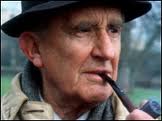
But, now I hear that Peter Jackson has actually invented some new characters and I must admit to feeling somewhat perturbed. Is J.R.R. Tolkien sitting in his celestial study puffing his pipe furiously? 

It had occurred to me that we are a bit short on the females in this book, less noticeable for a book, but an issue for the screen. This has obviously occurred to Mr. Jackson as well, as he introduces Tauriel, an elven warrior, who according to the info released is head of the elven guard. Lost star Evangeline Lilly plays this fearsome (and no doubt sexy warrior) and she is quoted as saying:

“She is a warrior. She’s actually the head of the Elven guard. She’s the big shot in the army. So she knows how to wield any weapon, but the primary weapons that she uses are a bow and arrow and two daggers. And she’s lethal and deadly.”

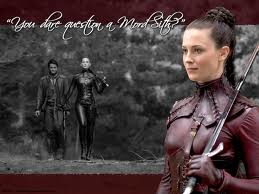
While I am the last to complain about introducing any elf, I feel uneasy. And it has nothing to do with her resembling a Mord Sith. I’m feeling rather traumatized, having (after watching Legend of the Seeker on TV) just listened to Wizard’s First Rule – Terry Goodkind – on audio alone in my car, which fleshes out (excuse the extremely accurate pun), the Mord Sith techniques. Let’s just say that if any woman in red leather comes within 50 feet, I’m running.

But the question is not what this humble elfwriter thinks, but what Tolkien would say. I have a number of books on the master, but never met him. However, I can’t help feeling he would not be amused. 

I can’t imagine someone taking my books and inserting new characters. It seems to be one step too far. What do you think? How loyal should Peter Jackson stay to the original work?

When does The Hobbit become The Hollybit?

——————————————————————————————————

Alon Shalev is the author of The Accidental Activist and A Gardener’s Tale. He has written three epic fantasy novels and the first reached the Quarter Finals of the Amazon Breakthrough Novel Award as of March 2012. More on Alon Shalev at http://www.alonshalev.com and on Twitter (@elfwriter).

It’s In The Journey

“The problem with your genre,” the man declared with a smirk, “is that the reader always know what’s going to happen in the end. That’s why I never read fantasy.”

I could have asked him how he knew this since he admitted to not reading the genre. I might have questioned whether romance (the most popular fiction genre) or cookbooks (most popular non fiction) are any different. Those recipes never work for me!

Instead, I asked him what it was about epic fantasy that made it popular assuming he was right about the predictable endings. To his credit, he thought a while before answering. “It’s in the journey,” he replied.

I’ve been thinking about this. During my summer vacation, we camped by a river. The locals told me that there were no fish inhabiting it and it was only good for swimming in.

We went down to the river and my sons had a great time with their river rats (inflated tubes) negotiating small rapids.

I got out my fly rod, walked a bit upstream and stood in the middle of the water casting. The river was beautiful and clear, the rocks underneath and protruding were smooth and colorful. Majestic redwoods surrounded us and a noble mountain peak loomed above me. Wisps of fog hugged the tops of the trees and later in the day came almost to the edge of the water.

The author, deftly not catching fish!

I imagined where a wild trout (huge one of course) would hover and allow its prey to float right to it (a feeding pool, I think the experts call it). I cast my fly and watched it float in a wide arc. Being of only limited skill it took me a while to cast to the right distance, but I was very satisfied when I could consistently float my fly into the (imaginary) feeding pool.

A couple walked past arm-in-arm and the man felt compelled to tell me that there were no fish in the river. I nodded and told him I knew. He shrugged, but his partner got it, I think.

“Enjoy yourself,” she said.

I did enjoy myself that afternoon. I enjoyed setting up my fly rod and casting it out. I enjoyed the river, the trees, the mountain, the fog. I felt myself sighing as I released the tension of my real world and let it float away with the river.

Hemingway fly-fished. Tolkien smoked a pipe (I couldn’t find evidence that he fished but he wrote poems about it – see below). I strive to walk in the shadow of Tolkien rather than Hemmingway, but the pipe has long been relinquished. Still I remember the pleasure I got in packing and lighting the pipe, even cleaning it. I still yearn for the smell of the Borkum Riff tobacco all these years later. I miss it more than the smoking for sure. I recall the anticipation of waiting all day for that special time after dinner when I could sit outside my little house and puff away the worries of the day.

Gimli lights up after a hard day of killing.

At the end of one of my fantasy novels is a twist I am very proud of. Those who have read it all tell me that they gasped at that moment. In my writer’s group, while still only on page six of that novel, one of the women guessed the twist.

I never responded, never told her she was right. I want her to enjoy the journey.

Happy fishing everyone, however you cast your rod. I’ll leave you in the hands of the Master:

Fish Riddle

Alive without breath;
as cold as death;
never thirsting, ever drinking;
clad in mail, never clinking.
Drowns on dry land,
thinks an island
is a mountain;
thinks a fountain
is a puff of air.

So sleek, so fair!
What a joy to meet!

We only wish
to catch a fish,

 So juicy-sweet!

                                                      From Lord of the Rings By J.R.R. Tolkien

——————————————————————————————————

Alon Shalev is the author of The Accidental Activist and A Gardener’s Tale. He has written three epic fantasy novels and the first reached the Quarter Finals of the Amazon Breakthrough Novel Award as of March 2012. More on Alon Shalev at http://www.alonshalev.com/ and on Twitter (@elfwriter).

The Master Tolkien Left Crumbs For The Hungry

The skeptics (those forced to study his work) and the jealous (those of us who figuratively sit at his feet bashing out epic fantasy novels on our laptops) dismiss J.R.R. Tolkien as a once-in-a-lifetime genius. We couldn’t emulate him even if we wanted to (though of course we do want to). We comfort ourselves that in today’s world of instant gratification, you cannot spend several pages describing a forest, however old and steeped in magic it may be.

I have read a number of books about the master and even began a fictionalized account of his life. I have on my iPod a course from the iTunes University – The Tolkien Professor by Corey Olsen, a professor himself from Washington College.

I want to share a few tips that Tolkien had for writers. This is taken from a post by Roger Colby, an author and English teacher. Mr. Colby never met Tolkien, though thanks to photoshop, he looks like he might have! Judging by his research, he deserved to!

Roger Colby ‘meets’ J.R.R. Tolkien

Mr. Colby spent a month carefully dissecting The Letters of J.R.R. Tolkien, edited by Humphrey Carpenter, and underlined every instance where the master of Middle Earth wrote about his process. The quotes are attributed. Any comments belong to Mr. Colby, though I strongly recommend reading the entire article.

1.  Vanity Is Useless

Tolkien writes in a letter to Sir Stanley Unwin on 31 July 1947:

“…I certainly hope to leave behind me the whole thing [LOTR] revised and in final form, for the world to throw into the waste-paper basket.  All books come there in the end, in this world, anyway” (121).

2.  Keep a Stiff Upper Lip

In another letter to Sir Stanley Unwin dated July 21, 1946, Tolkien lists a mound of personal struggles he was facing: being ill, being overworked and missing his son Christopher who was away in the Royal Navy. He put many of his struggles aside, though, and went to writing.

He had to balance his day job with his desire to write epic stories set in Middle Earth. He found time. He made time. It took him 7 years to write The Hobbit. (117). The thing that he writes about most in this period is his struggle to get the work finished on his novels and to balance teaching and his many duties at Oxford College. Apparently he found a way.

3.  Listen to Critics

Tolkien writes to his editor about the comments C.S. Lewis made about The Lord of the Rings: “When he would say, ‘You can do better than that. Better, Tolkien, please!’ I would try. I’d sit down and write the section over and over.

That happened with the scene I think is the best in the book, the confrontation between Gandalf and his rival wizard, Saruman, in the ravaged city of Isengard.”

He writes that he “cut out some passages of light-hearted hobbit conversation which he [Lewis] found tiresome, thinking that if he did most other readers (if any) would feel the same…to tell the truth he never really like hobbits very much, least of all Merry and Pippin. But a great number of readers do, and would like more than they have got” (376).

4.  Let Your Interests Drive Your Writing

Tolkien wrote: “I began the construction of languages in early boyhood: I am primarily a scientific philologist. My interests were, and remain, largely scientific. But I was also interested in traditional tales (especially those concerning dragons); and writing (not reading) verse and metrical devices. These things began to flow together when I was an undergraduate to the despair of my tutors and near-wrecking of my career” (345).

5.  Poetry As A Road to Prose

When Tolkien couldn’t express his thoughts in prose he “wrote much of it in verse.”

He writes “The first version of the song of Strider concerning Luthien,… originally appeared in the Leeds University magazine, but the whole tale, as sketched by Aragorn, was written in a poem of great length” (346).

6.  Happy Accidents

Tolkien writes: “The Hobbit saw the light and made my connection with A. & U. by an accident.” Further: “From The Hobbit are also derived the matter of the Dwarves, Durin their prime ancestor, and Moria; and Elrond.

Mr. Colby: “Sometimes accidents happen, and sometimes those accidents will lead a writer to a publisher or create an entire novel.  Tolkien created entire worlds and then used what he knew of myth and legend to tell iconic, archetypal stories based in those magical places.

Even though he planned everything out meticulously, he still had happy accidents occur that he kept in the final manuscript because they just worked. Sometimes accidents can be blessings.”

7.  Dreams Give Us Inspiration

Tolkien writes:  “In sleep I had the dreadful dream of the ineluctable Wave, either coming out of the quiet sea, or coming in towering over the green inlands.  It still occurs occasionally, though now exorcised by writing about it.

It always ends by surrender, and I awake gasping out of the deep water. I used to draw it or write bad poems about it. When C.S. Lewis and I tossed up, and he was to write on space-travel and I on time-travel, I began an abortive book of time-travel of which the end was to be the presence of my hero in the drowning of Atlantis” (347).

8.  Real People Make Great Characters

Tolkien: “There was a curious local character, an old man who used to go about sweeping gossip and weather-wisdom and such like.

To amuse my boys I named him Gaffer Gamgee, and the name became part of family lore to fix on old chaps of the kind. At that time I was beginning on The Hobbit. The choice of Gamgee was primarily directed by alliteration; but I did not invent it. It was caught out of childhood memory, as a comic word or name. It was in fact the name when I was small (in Birmingham) for ‘cotton-wool’”(348).

9.  You May Be the Next Best Selling Author

Tolkien relates the following story: “I lived for a while in a rather decayed road (aptly called Duchess) in Edgbaston, B’ham; it ran into a more decayed road called Beaufort. I mention this only because in Beaufort road was a house, occupied in its palmier days, by Mr. Shorthouse, a manufacturer of acids, of (I believe) Quaker connections.

He, a mere amateur (like myself) with no status in the literary world, suddenly produced a long book, which was queer, exciting, and debatable – or seemed so then, few now find it possible to read. It slowly took on, and eventually became a best-seller, and the subject of public discussion from the Prime Minister downwards. This was John Inglesant. Mr. Shorthouse became very queer, and very UnBrummagem not to say UnEnglish. He seemed to fancy himself as a reincarnation of some renaissance Italian, and dressed the part” (348).

10.  Books You Write May Seem Trite

Tolkien writes: “I now find The Lord of the Rings ‘good in parts”(349).

Mr, Colby: “This is to say that upon reading his books years after writing them his writing experience informs him that he is a much better writer than when he published The Hobbit.”

Tribute: Given that I have relied heavily upon the research of Mr. Colby, I would like to promote his own novel as appreciation. The Transgression Box- Roger Colby.
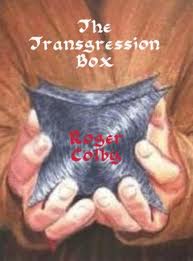
Dornin is known as the village liar…but he will also be their unwitting savior. It all begins when Dornin finds a mysterious object in the forest – a perfect cube of a box – and brings it back to his village. Unsure of its purpose, he hands over the object to the village elders – but during the night he spots a strange fog emanating from the House of Elders, and in the morning, over half of the people of the village have fallen into an unnatural and unending sleep.

Dornin decides he must set off on a quest to destroy the “Transgression Box” in order to save his people. Along the way he will encounter many strange and dangerous places, as he desperately tries to destroy that which must be destroyed for him. The Transgression Box is an allegorical science fiction tale of faith, trust and hope.

——————————————————————————————————

Alon Shalev is the author of The Accidental Activist and A Gardener’s Tale. He has written three epic fantasy novels and the first reached the Quarter Finals of the Amazon Breakthrough Novel Award as of March 2012. More on Alon Shalev at  http://www.alonshalev.com and on Twitter (@elfwriter).

What is The Future of Epic Fantasy?

I have mentioned in past posts that I am seeking to differentiate my novel from other epic fantasy series. I am being continually told by those insiders that every descent agent and publisher has five hundred manuscripts on their groaning desks about swords and quests and good .v. evil. Apparently these agents groan whenever an elf is mentioned (especially if s/he is tall, thin, loves nature etc.).

At the Berkeley Writers critique group, visitors often ask: what differentiates this from Lord of the Rings?

All this begs the question: what is the future of epic fantasy?

Is it okay to accept that there are certain conventions that are timeless? Are dwarfs small and stout, brave and ready for a rumble? Is it okay that they are miners and love to live underground?

Gimli - plenty of blades, no razor

Here are 10 basic ingredients that need to be questioned:

1) There is the good guy (or gal) and the bad one. The goods is the underdog, the bad is all-powerful, though hopefully will fall in the end.

2) Magic – the hero/heroine has something special about them that gives them a chance to win.

3) There is a teacher who mentors the hero/heroine.

4) The dwarfs are stereotypical – see above.

5) The elves are tall, beautiful, healers, wicked with the bow and arrows and…

6) Romance

7) Everything takes place in New Zealand-type environment.

8) There is a lot of walking about.

9) Swords, bows and arrows, lots of insignificant people dying.

10) Long novels, preferably in series form, with huge potential for movies.

Journeys that never end...

I have mentioned the high-concept challenge in earlier posts. The idea is to have something that is unique, that separates your fantasy novel from the rest. Enter Harry Potter and Hunger Games. 

And yet, we come back for more. A new novel from Terry Brooks or R.A Salvatore has us salivating. Christopher Paolini’s final book of the Inheritance series was eagerly awaited, and we all know when we are going to see the Hobbit movie even if we haven’t booked our summer vacations or filed our taxes.

When I mentioned the higher concept to a woman who has been reading my manuscript, she baulked. As long as there is a strong plot, a few twists, memorable characters, and a high level of writing, she said, a novel will always stand out from the rest.

The question is: Are the essential epic fantasy novel ingredients timeless? When Tolkien first created Middle Earth, did he set in motion a genre that will endure into the 21st Century?

The Master

——————————————————————————————————

Alon Shalev is the author of The Accidental Activist and A Gardener’s Tale. He has written two fantasy novels and the first has been entered into the Amazon Breakthrough Novel Award in January 2012. More on Alon Shalev at http://www.alonshalev.com/and on Twitter (@elfwriter).

Fantasy and Females

I realize that a title like this might give the wrong idea. This blog is about epic (or high) fantasy fiction – imagine Lord of the Rings. If you want to leave this post right now, I will understand.

I have mentioned that I am working with an agent preparing Wycaan Master/At the Walls of Galbrieth (I know I haven’t settled on a title). He sees his role as helping me differentiate my work from the other 499 epic fantasy submissions sitting on the acquisition’ editor’s desk.

With more than two-thirds of the publishing world of the female persuasion and given that so much of literature (and music, and movies, and business, and politics…) is focused on men, there is an understandable desire to see more female-focused stories and stronger female characters.

I baulked at the idea of changing my protagonist’s gender and have gone through the manuscript strengthening the secondary character who is female. She was never a doormat character, swooning after the hero, but a strong, independent individual with an attitude and a high level of skill at fighting.

Now I am considering changing one of the other main characters into a female, someone with authority and power. There are examples out there. I am currently listening to the audio book of Terry Brook’s Voyage of the Jerle Shannara. The first book has our antagonist being a woman  (the Ilse Witch).

Why have authors of epic fantasy created main characters who are male? Given that it is not a new phenomenon that women are the vast majority of readers, I feel that I am missing something.

Any ideas?

——————————————————————————————————

Alon Shalev is the author of The Accidental Activist and A Gardener’s Tale. He has written two fantasy novels and the first will enter the Amazon Breakthrough Novel Award in January 2012. More on Alon Shalev at http://www.alonshalev.com/and on Twitter (@elfwriter).

Pro-logue or Against -logue

This week, I entered Wycaan Master/At the Walls of Galbrieth, the first of my Alliance series, into the San Francisco Writer’s Conference Indie Awards. In three weeks, I will submit it to the Amazon Breakthrough Novel Award.

Both competitions require the first 5,000 words of the novel and abruptly I find myself needing to make a critical decision. I have written a prologue, a short but hopefully eloquent setting of the scene.

Prologues are not always acceptable. When I presented the prologue to my writer’s group, the jury was out and, though I was not hung, neither was I acquitted.

It seems that prologues are more acceptable in the fantasy genre than others. Critiques have suggested that a prologue is there to mask a slow beginning or a lack of a hook.

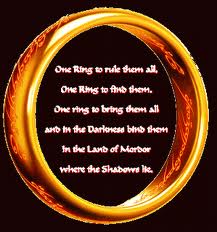
One ring to bind them all… opened the master and we were duly bound for three long volumes, cartoon series, and epic movies. Now the epic fantasy world waits with bated breath for The Hobbit movie, even though we all know what happens.

Since my novel is directed at the YA audience I made sure to begin the novel at a fast pace. I can imagine many teens skimming the prologue, though I hope they will value it in later years when they ritually return to the series as I, and many of you, return to read LOTR every few years.

So, a couple of weeks before decision time, I wish to ask:

How do you feel about a prologue for an epic fantasy novel? Does the reader want it, the agent accept it and the publisher allow it?

Your comments and advice are gratefully received. Wishing you all a happy and healthy new year.

——————————————————————————————————

Alon Shalev is the author of The Accidental Activist and A Gardener’s Tale. He has written two fantasy novels and the first will enter the Amazon Breakthrough Novel Award in January 2012. More on Alon Shalev at http://www.alonshalev.com/and on Twitter (@elfwriter).