Who is Reading Epic Fantasy?

I’m reading a series of books about marketing my novels. They each prioritize a central marketing principle: Know Your Target Audience.

I realize, being relatively new to the epic fantasy scene that I don’t know who these people are. I have never frequented conventions or even chat groups online. When I go to social occasions, I often ask people what are you reading right now, because sports and politics can only go so far – and real men don’t discuss work or family (as a new immigrant to the US that’s what I was told).

But when I ask the question, people rarely say epic fantasy. During the days of Harry Potter, the Inheritance series, and now The Hunger Games, a man could come out of the library closet because his children were reading them and he was showing himself to be an in-touch father.

So here is my request. If you read epic fantasy, please answer as many of the following questions as you have patience for.

1. How old are you?

2. Are you male or female?

3. Where do you live?

4. Did you finish High School / Bachelors Degree / Masters Degree?

5. What is your profession?

6. Are you active on Facebook, Twitter, Google+, read and comment on blogs?

7. What do you look for in an epic fantasy book?

8. Do you read books on an eReader or as a hardcover/paperback? (if both, please assign a ratio).

9. How many books do you read a month?

10. Who is your favorite epic fantasy author? Why?

One last favor if I may. Please pass this on to friends and family who you think might read epic fantasy and ask them to mention your name as referral. I would like to offer the first 20 people who refer 3 responders to the survey an eBook of either:

The Accidental Activist  or

A Gardener’s Tale

Thank you for your help. I will publish the results if I can get 50 responses.

——————————————————————————————————

Alon Shalev is the author of The Accidental Activist and A Gardener’s Tale. He has written two fantasy novels and the first reached the Quarter Finals of  the Amazon Breakthrough Novel Award as of March 2012. More on Alon Shalev at http://www.alonshalev.com/and on Twitter (@elfwriter).

Traditional Epic Fantasy and The Higher Concept

There is a lot of discussion among fantasy writers about the need for the Higher Concept. Can an epic fantasy novel succeed if it is about a young underdog with a magical talent, who needs to overcome the evil (insert whoever)?

True, Tolkien did it, Brooks did it, as have many others. But they are established authors with huge followings. Who will take a chance on the unknown author?

I feel very defensive about this: what about memorable characters, internal conflicts, and plot twists? How about strong dialogue and a couple of intriguing plot twists?

The question is, whether these key components are enough to allow a manuscript to rise through the slush pile in an agent’s office?

There is no question about why Harry Potter, Percy Jackson or The Hunger Games, all stood out to their respective agents and publishers. But I can’t help wondering whether there isn’t something attractive in the familiar.

I have read eight books in Terry Brook’s Shannara series. I will start the ninth soon. I am not bored as each series offers something different, but the tropes remain similar and still I come back for more.

And while I am in defensive mode: Does Grisham, Patterson, or Steel, offer anything new within their genres with each novel? Romance, mystery, crime: don’t they have their own tropes that figure in book after book.

From Terry Brooks – First King of Shannara. copyright ©Andy Simmons 1995-2002

When people get familiar with a genre, do they not go looking for these tropes? Is it not enough to ensure a strong plot with twists, distinct characters and strong dialogue?

What do you think?

——————————————————————————————————

Alon Shalev is the author of the 2013 Eric Hoffer YA Book Award winner, At The Walls of Galbrieth, and five other Wycaan Master books all released by Tourmaline Books. The link above takes you to the Kindle versions. For all other eReaders, please click here.

More at http://www.alonshalev.com and on Twitter (@elfwriter).

Music And Fantasy

I realize this is slightly off topic for a blog about the writing of fiction. No book that I am aware of comes with a soundtrack (though I read that this might become an e-book app in the not-too-distant future).

But I have found myself listening to the soundtracks of Lord of the Rings while writing the Alliance trilogy. I wrote yesterday in Left Coast Voices that I can write anywhere, anytime, and I believe it to be so.

Nonetheless, I realize that I do listen to music in the context of the book I am writing.  A Gardener’s Tale was written with the music of Lloyd Cole in my ears,  The Accidental Activist was written to Billy Bragg, and I just wrote a beat-era novel listening to jazz music.

But I want to pay tribute to the Lord of the Rings soundtracks (one for each movie). They are truly brilliant, truly inspiring. While I believe I can write anytime, anywhere, I am thankful that the music of Howard Shore together with Enya or Annie Lennox, who can simply transport me into the land of Odessiya (home of the Alliance series).

I fantasize when the Alliance series finds a home with a publisher that there is a movie deal for all the reasons that every author shares. But I also fantasize that someone with the talent of Howard Shore will be commissioned to write a soundtrack that can be so transformational in its own right.

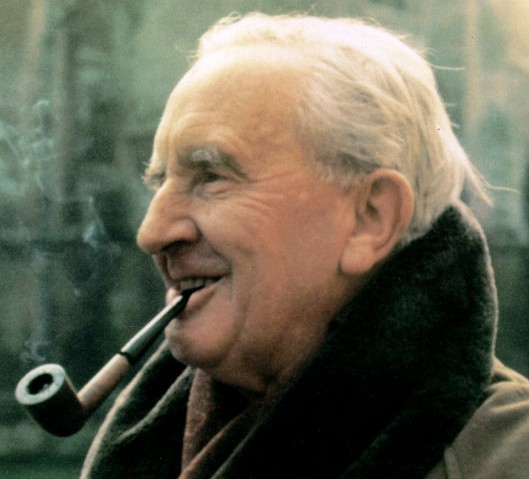
I’m sure J.R.R. Tolkien is up there in Writer’s Heaven, puffing his pipe, and writing a new epic series (to be published as an ethereal or e-book). Perhaps he has his little white headphones on and is listening to a LOTR soundtrack as he writes.

Have a great week.

Alon

——————————————————————————————————

Alon Shalev is the author of The Accidental Activist and A Gardener’s Tale. He has written two fantasy novels and the first has been entered into the Amazon Breakthrough Novel Award in January 2012. More on Alon Shalev at http://www.alonshalev.com/and on Twitter (@elfwriter).

What is The Future of Epic Fantasy?

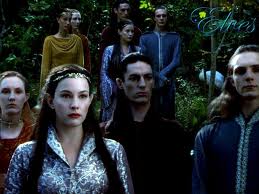
I have mentioned in past posts that I am seeking to differentiate my novel from other epic fantasy series. I am being continually told by those insiders that every descent agent and publisher has five hundred manuscripts on their groaning desks about swords and quests and good .v. evil. Apparently these agents groan whenever an elf is mentioned (especially if s/he is tall, thin, loves nature etc.).

At the Berkeley Writers critique group, visitors often ask: what differentiates this from Lord of the Rings?

All this begs the question: what is the future of epic fantasy?

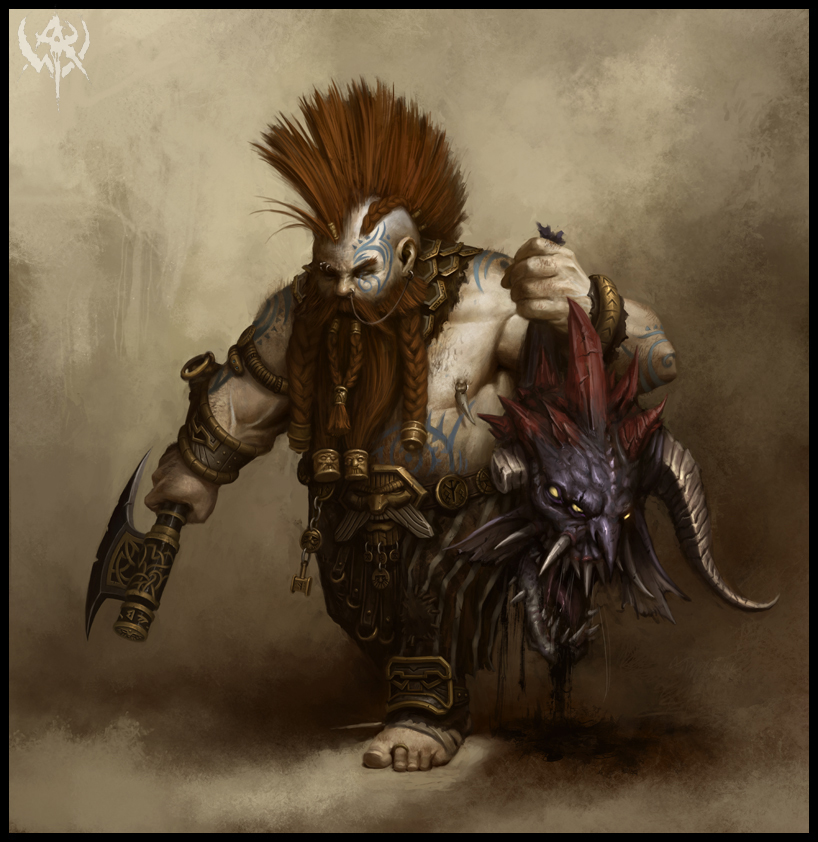
Is it okay to accept that there are certain conventions that are timeless? Are dwarfs small and stout, brave and ready for a rumble? Is it okay that they are miners and love to live underground?

Gimli - plenty of blades, no razor

Here are 10 basic ingredients that need to be questioned:

1) There is the good guy (or gal) and the bad one. The goods is the underdog, the bad is all-powerful, though hopefully will fall in the end.

2) Magic – the hero/heroine has something special about them that gives them a chance to win.

3) There is a teacher who mentors the hero/heroine.

4) The dwarfs are stereotypical – see above.

5) The elves are tall, beautiful, healers, wicked with the bow and arrows and…

6) Romance

7) Everything takes place in New Zealand-type environment.

8) There is a lot of walking about.

9) Swords, bows and arrows, lots of insignificant people dying.

10) Long novels, preferably in series form, with huge potential for movies.

Journeys that never end...

I have mentioned the high-concept challenge in earlier posts. The idea is to have something that is unique, that separates your fantasy novel from the rest. Enter Harry Potter and Hunger Games. 

And yet, we come back for more. A new novel from Terry Brooks or R.A Salvatore has us salivating. Christopher Paolini’s final book of the Inheritance series was eagerly awaited, and we all know when we are going to see the Hobbit movie even if we haven’t booked our summer vacations or filed our taxes.

When I mentioned the higher concept to a woman who has been reading my manuscript, she baulked. As long as there is a strong plot, a few twists, memorable characters, and a high level of writing, she said, a novel will always stand out from the rest.

The question is: Are the essential epic fantasy novel ingredients timeless? When Tolkien first created Middle Earth, did he set in motion a genre that will endure into the 21st Century?

The Master

——————————————————————————————————

Alon Shalev is the author of The Accidental Activist and A Gardener’s Tale. He has written two fantasy novels and the first has been entered into the Amazon Breakthrough Novel Award in January 2012. More on Alon Shalev at http://www.alonshalev.com/and on Twitter (@elfwriter).

Fantasy as a Vehicle for Social Justice

I believe passionately that writers of fiction  can ply their craft to help effect positive social change and offer a platform for values and principles. The Accidental Activist and A Gardener’s Tale both reflect this and I have a series of books focusing on social issues in the US (all based on San Francisco) beginning with Unwanted Heroes which will be released by Three Clover Press in the spring and highlight the way we treat war veterans and the homeless.

I was delighted when Kaitlyn Cole from Online Universities shared a list that their faculty had put together entitled: 50 Best Novels For Political Junkies.

Kaitlyn wrote: “True story: Some of the best political novels aren’t explicitly about politics. Yes, some of the books on this list deal directly with governments and politicians, with laws and the ways they’re made or abused, and with the peril and promise inherent in every governing body. But some of them use adventure, parable, or satire to subtly explore our political system with a depth that wouldn’t be possible any other way.”

Great point and relevant to those of us who write political fiction. But how about fantasy? Is there room to use our elves and dwarves to promote social injustices or causes? 

Over the last two summers I was blessed with the amazing experience of writing two fantasy novels together with my 11-year-old son. While I have read a few fantasy novels, I had no idea about the “rules” of the genre.

Writing with my son, however, compelled me to include moral issues such as racism, dictatorship and freedom, as well as the values of friendship and freedom. I was writing for my son and there are plenty of swords, quests, elves, dwarves etc., but as I watched him read and listened to his feedback, I waited for his comments about such issues and derived huge satisfaction when he brought up issues.

In setting my goals for an exercise at Author Salon, I wrote:

“I have seen the impact of the Harry Potter series and Christopher Paolini’s Inheritance series on my son and his friends. I want to help shape the landscape of the next generation’s imagination and maybe even the society they strive to create.”

My lack of knowledge regarding fantasy leads me to ask the question: Can fantasy offer a vehicle to discuss political and social injustice? I would love to hear your answers fantasy-fans.

——————————————————————————————————

Alon Shalev is the author of The Accidental Activist and A Gardener’s Tale. He has written two fantasy novels and the first will enter the Amazon Breakthrough Novel Award in January 2012. More on Alon Shalev at http://www.alonshalev.com/and on Twitter (#elfwriter).

The Power of Paolini

Anyone reading this blog is probably very aware that this week Christopher Paolini released the fourth book in the Inheritance Trilogy (sorry Christopher – even though we are all thrilled that there are another 800 pages of Eragon, we all remember the moment somewhere in the third book when we realized it was not going to end there).

The Final One

Our copy of Inheritance will arrive in the next couple of days and my 12-year-old will devour it, before passing it on to me, hopefully in time for the Thanksgiving vacation. It has been a wonderful bonding experience. Whether it is Harry Potter or Eragon (or most likely both) who are responsible for his leap in reading ability and desire is immaterial, I am eternally grateful to Paolini and J.K. Rowling.

My son and I spent endless hours reading the books, listening to the audio version, watching the (only!!!!) movie, and discussing how it will end in Brisingr, the third and not final book of the trilogy, and then Inheritance.

When Paolini released Brisingr, my then 10-year-old stood defiantly at the front of the line in our local Borders, falling asleep on his feet literally as the clock approached midnight. I remember the lady who was working there, encouraging him to stay awake and hang on. At exactly midnight, she put a copy that she had hidden under the counter into his hands and whispered that he should buy that very copy. It was the only book in the store that Christopher Paolini had personally signed.

The autograph & the fan.

Five minutes later, my son was fast asleep in the car clutching his autographed copy by his hero who was barely ten years older than him.

Paolini has proved a number of important points:
1. The young generation will read 400-page novels if the material is gripping enough.
2. They will read rich descriptions, convoluted plots, and identify with characters that are deep, vulnerable, and profoundly human (or elf or dwarf).
3.  They will thrive on a high level of language.
4. Tolkien might still be king, but he has good company. Paolini is young. His level of craft is only going to improve and that is an exciting prospect.

Two years later, my son and I wrote our first 90,000-word fantasy novel. The seeds were sown in the land of Alagaesia, on the wings of dragons, and in the art of an incredibly talented young man.

The Master

As the excitement has grown for my eldest son and I as the release date for Inheritance neared, my youngest son,  who is eight-years-old, has quietly read more than 250 pages of Eragon.  

So Christopher, if by any chance you ever read this: Thank you, as a reader, a fan, and a father.

The Trilogy!

——————————————————————————————————

Alon Shalev is the author of The Accidental Activist and A Gardener’s Tale. He has written two fantasy novels and the first will enter the Amazon Breakthrough Novel Award in January 2012. More on Alon Shalev at alonshalev.com and on Twitter (#elfwriter).

Why Fantasy? Another Perspective

Last weekend, I shared some comments from adults explaining why they read fantasy. A friend sent me this article by Lev Grossman, author of “The Magicians” and the recently released “The Magician King.”

The Magicians - Lev Grossman

In the article, Grossman talks about the excitement generated by the release of George R.R. Martin’s “A Dance With Dragons.”

“The book has brought with it, along with the feverish excitement of fans like myself, a whiff of burning insulation. There’s a cultural short circuit happening somewhere in the system.”

What I believe is creating the stir is the fact that while Mr. Martin’s work is clearly fantasy, it does not adhere to the formulas of such leaders as J.R.R. Tolkien and C.S. Lewis. Martin includes a fair helping of blood and sex in his continent of Westeros than the Pevensie children ever saw in Narnia. Something has changed.

Grossman shares his frustration at the perception that fantasy is for children and adults who are in denial that they are adults and seeking some escapism. “I see it all the time. I’ll be at a dinner party, and the person next to me asks me what I do. I’m a novelist, I’ll say, and a little light of hopeful interest kindles in their eyes. What kind of novels do you write? the dinner guest asks. And I reply: fantasy novels. And just like that, the little light of hopeful interest dies away.”

This story really resonates with me. Every week at the Berkeley Writers Group, I meet new people and introduce myself as an author of political fiction. Then when I prepare to read my weekly offering, I apologetically explain that I wrote a fantasy novel with my eldest son. All true of course, but I am conscious that I feel the need to justify. Why is this?

Lev Grossman

Grossman goes on to say: “It hasn’t always been this way. There was a time when adults read fantasy with impunity. The classical literature of Greece and Rome is so fantastical that you can’t swing a cat without hitting a god or a witch or a centaur, and chances are the cat will turn out to be somebody’s long-lost son-in-law in transfigured form.”

Right on! Stephen Wenster backs him up by asking where “would Shakespeare have been without fantasy—his spirits, his ghosts and the witches three of Macbeth?”

Apparently fantasy, without being labeled as a genre was prominent throughout literature history: “Where would Spenser’s “Faerie Queene” be without fairies? Where would Shakespeare have been without fantasy—his spirits, his ghosts, and his proto-Orc Caliban, the misshapen villain of “The Tempest”? You can’t have Macbeth without the witches three. Apart from everything else, who would have handled all that crucial exposition of the play’s plot?”

Absolutely!

Grossman, who holds a PhD in Comparative Literature, claims the downfall began around the time of Samuel Johnson. Perhaps this was the time that the advent of science meant they actually began to believe that ghosts and magic really didn’t exist.

Again, Lev Grossman: “A fascination with the here and the now and the real set in. This was the moment when the novel arose in the West, and it was an ideal medium to satisfy that fascination. Novels were about the way we live now. There was no Caliban on Robinson Crusoe’s island, just the eminently human Friday.

“In 1750, Samuel Johnson wrote an influential essay in praise of fiction that was about “life in its true state, diversified only by accidents that daily happen in the world.” As far as he was concerned, a good novel “can neither employ giants to snatch away a lady from the nuptial rites, nor knights to bring her back from captivity; it can neither bewilder its personages in deserts, nor lodge them in imaginary castles.” Thus admonished, ghosts and witches went off to live in fairy tales and allegories and gothic novels and other disreputable places.”

So history is against us, perhaps because people really did once believe in magic and ghosts. But I believe that in accepting there is nothing factual in elves, dwarfs etc. we can focus on allowing values to play a prominent role because, as Grossman say: “If anything, it is realist literature that pretends to be real. Fantasy doesn’t pretend.”

Fantasy is one of the few literary genres left where it is still considered okay to explore questions of moral judgment. But that’s not a bad thing. When the powerless and good become empowered and are able to change the destiny of their world, there is something that resonates in a world where so many feel alienated and disenfranchised. When coming-of-age can happen at any age, why would an adult still hoping to leave his/her mark on the world not be attracted to such novels?

——————————————————————————————————

Alon Shalev is the author of The Accidental Activist (now available on Kindle) and A Gardener’s Tale. He has written two fantasy novels and the first will enter the Amazon Breakthrough Novel Award in January 2012. More on Alon Shalev at http://www.alonshalev.com/and on Twitter (#elfwriter).

Why We Read Fantasy

I admit, it is a stretch to understand why someone would write novels with social injustice themes and run an grassroots political blog would suddenly go off and begin writing YA fantasy, But this I have done and I am trying to understand that there is no dichotomy as long as I enjoy the ride (and, I guess, my readers do).

I have just completed the manuscript for my second fantasy novel. What began a year ago as a way to bond with my oldest son (an avid 12-year-old fantasy reader) has become a whole new experience. I had previously read Tolkien, Paolini and probably a few others, but I never considered this my genre.

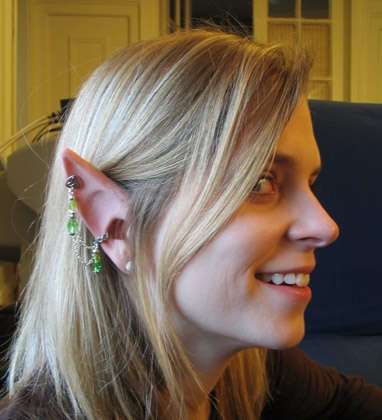
Now, 180,000+ (two books) on, I am avidly reading about fantasy writing techniques, devouring books by authors such as Terry Brooks and R.A. Salvatore, and considering getting my ears pointed (okay – but there really are people who do this cosmetic surgery).

Hey Mom, at least I promised no tatoos!

Whenever I tell people, especially those who know I write political fiction, about my foray into the world of fantasy, I do so in a somewhat apologetic way. Usually, I make sure to tell people that I am doing it for my son, which while true, is only one part as my enthusiasm grows. 

The question that is on my mind these days is why do intelligent, educated adults enjoy plowing through 90,000 word tomes about elves, dwarfs and dragons? Here are some Wiki answers:

“Some fantasy readers are unhappy with their lives and think that they would be happier in another world. A place where someone who is not so successful in this world might be a hero or king in another world.”

Lord of the Rings - No one understood elves like Tolkein.

“I like reading fantasy books because they provide me with a beneficial different point of view on world and everything. I like to think about it using the analogy to house that you may live in but you’ll never be able to understand if you don’t ever get outside and look at it from perspective.”

“You can see a lot of tiny details in fantasy books that you may somehow lose in your everyday life just because they aren’t getting enough your attention… Digest them and they’ll make your life more colorful and interesting.

A lot of fantasy is about the world we would like to see, a dream we want to pursue. Where would we be at if we didn’t dream?”

“Older readers might enjoy Fantasy because of its imaginative scope, and also because of the uncanny ability fantasy has to show us aspects of our own lives in an otherwise far-fetched format. People can relate to the emotions and experiences of fantasy characters, as well as mirror events in human history, through the blurred mirror of the fantasy world.”

“Fantasy is a place to escape when you no longer want to live in real life. Where you can let your imagination run free and have control over what you see and hear.

Many people like to escape the hustle and bustle of real life and be captured by a story which involves something special, unreal or different – possibly magic. People enjoy being in someone else’s shoes – someone extraordinary, so that we can look at the world through anothers eyes. You can switch off and enjoy letting your imagination run wild.”

Do you read fantasy? If so share what the attraction is for you? If you read it once in a period of your life, why then and not now?  Fascinating stuff. This blog is going to be a one-post-a-week (my other blog is daily) and focus on my journey into the world of fantasy.

Hey, want to join the quest? I promise swords, elves, brave exploits, and most of all, friendship.

——————————————————————————————————

Alon Shalev is the author of The Accidental Activist (now available on Kindle) and A Gardener’s Tale. He has written two fantasy novels and the first will enter the Amazon Breakthrough Novel Award in January 2012. More on Alon Shalev at http://www.alonshalev.com/and on Twitter (#elfwriter).