Awkward Sex Change

Last week I shared feedback I had received to add stronger female characters in my YA novels to distinguish them from traditional epic fantasy. I have to admit to feeling motivated to do this just from a desire to contribute to breaking from the sexist images that I feel pervade in millennial culture (another topic in itself).

Heeding this advice, I have begun to convert a powerful and wise (male) teacher into a female. It has been an interesting and revealing process.  At first, it seems just a matter of changing he to she, him to her, and man to woman.

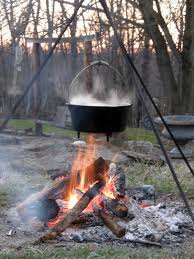
But as I make the conversion there seem to be a number of questions arising and a sharp look at his/her behavior. Firstly, I realized that the teacher does almost all the cooking. When it was a guy I never noticed: now I do and feel a need for her to teach our hero some cookery lessons.
There are other scenes that need to modified. Imagining the shock when my young teenage son reads that they cast off their clothes and jump into the lake, one would assume naked, made sense when it was two guys, but now an elderly  woman and teenage boy… hmmm.

The fighting aspect doesn’t faze me. I am happy that she is a fearsome warrior and that she teaches to try and solve conflicts in a peaceful way first. Ironically, as the reluctant teacher spends more time with the protagonist, he becomes more paternal to the young elf.  While I enjoyed this when the teacher was a man, as a woman it seems almost…stereotypical.

Changing the gender of a character, I discovered, is far more intricate than just converting he to she. But in doing so, I feel I am strengthening my novel and the epic fantasy genre. More importantly, I hope that I am making a statement that will resonate with my two sons and their friends.

——————————————————————————————————

Alon Shalev is the author of The Accidental Activist and A Gardener’s Tale. He has written two fantasy novels and the first will enter the Amazon Breakthrough Novel Award in January 2012. More on Alon Shalev at http://www.alonshalev.com/and on Twitter (@elfwriter).
Fantasy and Females

I realize that a title like this might give the wrong idea. This blog is about epic (or high) fantasy fiction – imagine Lord of the Rings. If you want to leave this post right now, I will understand.

I have mentioned that I am working with an agent preparing Wycaan Master/At the Walls of Galbrieth (I know I haven’t settled on a title). He sees his role as helping me differentiate my work from the other 499 epic fantasy submissions sitting on the acquisition’ editor’s desk.

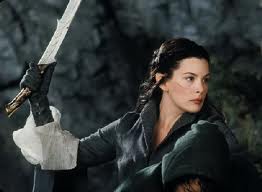
With more than two-thirds of the publishing world of the female persuasion and given that so much of literature (and music, and movies, and business, and politics…) is focused on men, there is an understandable desire to see more female-focused stories and stronger female characters.

I baulked at the idea of changing my protagonist’s gender and have gone through the manuscript strengthening the secondary character who is female. She was never a doormat character, swooning after the hero, but a strong, independent individual with an attitude and a high level of skill at fighting.

Now I am considering changing one of the other main characters into a female, someone with authority and power. There are examples out there. I am currently listening to the audio book of Terry Brook’s Voyage of the Jerle Shannara. The first book has our antagonist being a woman  (the Ilse Witch).

Why have authors of epic fantasy created main characters who are male? Given that it is not a new phenomenon that women are the vast majority of readers, I feel that I am missing something.

Any ideas?

——————————————————————————————————

Alon Shalev is the author of The Accidental Activist and A Gardener’s Tale. He has written two fantasy novels and the first will enter the Amazon Breakthrough Novel Award in January 2012. More on Alon Shalev at http://www.alonshalev.com/and on Twitter (@elfwriter).

Pro-logue or Against -logue

This week, I entered Wycaan Master/At the Walls of Galbrieth, the first of my Alliance series, into the San Francisco Writer’s Conference Indie Awards. In three weeks, I will submit it to the Amazon Breakthrough Novel Award.

Both competitions require the first 5,000 words of the novel and abruptly I find myself needing to make a critical decision. I have written a prologue, a short but hopefully eloquent setting of the scene.

Prologues are not always acceptable. When I presented the prologue to my writer’s group, the jury was out and, though I was not hung, neither was I acquitted.

It seems that prologues are more acceptable in the fantasy genre than others. Critiques have suggested that a prologue is there to mask a slow beginning or a lack of a hook.

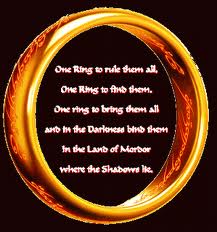
One ring to bind them all… opened the master and we were duly bound for three long volumes, cartoon series, and epic movies. Now the epic fantasy world waits with bated breath for The Hobbit movie, even though we all know what happens.

Since my novel is directed at the YA audience I made sure to begin the novel at a fast pace. I can imagine many teens skimming the prologue, though I hope they will value it in later years when they ritually return to the series as I, and many of you, return to read LOTR every few years.

So, a couple of weeks before decision time, I wish to ask:

How do you feel about a prologue for an epic fantasy novel? Does the reader want it, the agent accept it and the publisher allow it?

Your comments and advice are gratefully received. Wishing you all a happy and healthy new year.

——————————————————————————————————

Alon Shalev is the author of The Accidental Activist and A Gardener’s Tale. He has written two fantasy novels and the first will enter the Amazon Breakthrough Novel Award in January 2012. More on Alon Shalev at http://www.alonshalev.com/and on Twitter (@elfwriter).
Going for the Writer’s Lottery

It is true that you can become a millionaire from winning the lottery and that there are lottery winners every week. But for the aspiring author, winning the Amazon Breakthrough Novel Award (ABNA) is akin to that precious and elusive lottery ticket.

http://leftcoastvoices.files.wordpress.com/2011/01/images-12.jpg

In today’s economic climate, it is a brave publisher who invests in an unknown author. Yes there will always be the J.K. Rowling out there, but they are as rare as, well, a winning lottery ticket. Assuming you are not a celebrity or have a good friend in the industry, it is almost impossible to pick up a literary agent. Then it helps that the agent stays in the business and find a publisher, and then the publisher needs to stay in the business and … well you get the gist.

But once a year, optimism pervades among us writers. ABNA is the mother of all writing competitions. They accept only 10,000 entries (already better odds than the lottery) which then go through a series of rounds until two talented individuals stand alone. Or more significantly stand with the publishing folks at Penguin Group (USA), Amazon.com, and CreateSpace. There is a $15,000 advance along with the publishing contract.

It is an exciting process. As midnight approaches on January 23rd, thousands of optimistic writers will sit poised by our computers, all necessary documents ready to upload. A month later we will all anxiously await the first cut. We look first for our own names and then those of our friends who have also entered.

http://leftcoastvoices.files.wordpress.com/2011/01/images-23.jpg

For the last two years I have reached the last 250 entries, the Quarter Finals, with The Accidental Activist and Unwanted Heroes, both political fiction. Like any good lottery player, I was already dreaming of my shining literary future. Alas, I went no further and my dreams were put aside in favor of actively seeking an agent and publisher. I did succeed, with The Accidental Activist coming out last year and Unwanted Heroes expected this coming spring.

But this is the first time that I am entering the YA contest with a fantasy manuscript. In the next month I will share my preparations and would appreciate any feedback that can help me hone the best possible entry.

And once again I will be watching the clock tick away to midnight on that fateful day and begin the dream all over again.

I will keep you posted – to the bitter end – but until then, allow me to dream.

——————————————————————————————————

Alon Shalev is the author of The Accidental Activist and A Gardener’s Tale. He has written two fantasy novels and the first will enter the Amazon Breakthrough Novel Award in January 2012. More on Alon Shalev at http://www.alonshalev.com/and on Twitter (#elfwriter).

When is an Elf not an Elf? And why do we care?

Yes, my novel is compelling, special, well-written etc. just like the 499 other epic fantasy manuscripts sitting in the slush piles of every publishing house that offers YA epic fantasy.

I am working with an agent who is asking the challenging and insightful questions that will help my manuscript stand out from the rest. It is tough and I am feeling very possessive. Last week I shared his prompting to seek a Higher Concept.

One of the aspects that he wants me to consider is changing my elves, who make up many of the main characters and cultural references. He suggests that I consider changing the elves for a new, mythical race that will set me apart from the rest.

Let me state from the outset that I have no doubt this man knows far more than I about the publishing world, has considerable experience and understands the current state of the publishing world.

But my elves? Our elves? Those of us who grew up on Tolkein, Paolini, Brooks and others, have standards, images, friends. Legolas and Anwen, Arya and Blodgarm, and many others have created a rich and familiar texture. We welcome them surfacing as we settle into a thick novel. We embrace them because there are common threads that pass between authors. We call it a culture, those who don’t read fantasy roll their eyes.

                               Nobel Haldir – we owe him for Helm’s Deep, no?

Terry Brooks’ children know that he is not all there, he tells us as much when he opens his book Sometimes the Magic Works: Lessons from a Writing Life. More on this book in a later blog.

But Brooks in not dissimilar to the rest of us, just considerably more talented! We pass through a gate in our imagination and reacquaint in a world that exists in a shared consciousness.

Here the elves are tall, thin, light-footed and beautiful. They are fast and posses stealth and discipline. They are in touch with the energy of the earth, the forest, the animal kingdom. They excel in archery, crafts and healing. Perhaps they are aloof, elitist, and closed to the other races, but this comes from their ancient and rich heritage. We know and love them.

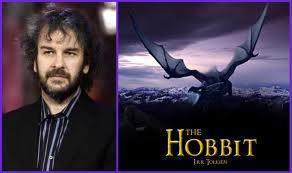
We rejoiced to learn that Peter Jackson is bringing Legalos into a prominent role in the hobbit. Well, a few raised eyebrows, since Legalos was not even referred to by name in The Hobbit when he appeared flanking his father, the King of Mirkwood.

We accept, even with a bit of jealousy that he can fight at Helms Deep for five days, or run non stop for three and still not need to brush his immaculate hair. Nor do we care that his quiver seems to replenish itself, an occupational hazard of any archer who fights battles every other day.

We don’t mind because elves epitomize something that we identify with. We all want to be beautiful, brilliant, in excellent physical condition and, of course, environmentalists. When R.A. Salvatore created Drizzt Do’Urden and the dark elves of Menzoberranzan, a giant underground drow city-state he broke new ground.

Many of us were repelled and had it not been created in the hands of a master of fantasy, we would have rebelled. It was daring, it worked and by Book Three, we were rewarded with the typical elf one finds above ground.

It is tough to turn away from the basic tenets of epic fantasy: the teacher and student, the quest, the fight against a powerful evil, dwarves, elves, dragons, a rich natural world. There is something that has entered our collective consciousness and taken root.

It is why we read and reread the masters…and it is why we will return to read those who take over the role of entertaining us in a way that only epic fantasy does.

——————————————————————————————————

Alon Shalev is the author of The Accidental Activist and A Gardener’s Tale. He has written two fantasy novels and the first will enter the Amazon Breakthrough Novel Award in January 2012. More on Alon Shalev at http://www.alonshalev.com/and on Twitter (#elfwriter).

Seeking The Higher Concept

J.R.R. Tolkien’s Lord of the Rings set the bar. Everything since has been compared to this masterpiece. I have heard interviews with Terry Brooks and Christopher Paolini where each has had to deal with the comparisons.

Neither seemed particularly happy with the need to defend or compare their works. Each agree that Lord of the Rings (LOTR) stands on the pinnacle of fantasy and will for many years,

This leaves the rest of us wannabe fantasy authors with a dilemma. While my own Alliance series has its own specific aspects, it is inevitably compared to LOTHR. When I introduced my elves to my writer’s group, it is Legalos who comes to mind.

I've never survived a mighty battle with every hair still in place.

It is not only Tolkien of course. My antagonist is the Emperor and immediately someone compared him to Star Wars’ Palpatine, and his right hand man to Darth Vader (even without the mask and asthma).

I recently began to meet with an agent who is coaching me to prepare the first Alliance book to market. When I offered my pitch, he immediately asked what is my higher concept? He knows of Tolkien, Brooks, Salvatore and Paolini: what differentiates Shalev from these masters?

I admit to being stuck. I am reading John Locke’s How I Sold 1 Million Ebooks in 5 Months book and he admits it is much harder to change a book already written to hook your target audience than to begin a novel with the specific demands of your target audience in mind. This is doubly hard for me as I have already written two books in the series and have the third mapped out.

Every time I, or anyone helping me, have an idea, I feel resistant. I have created my world, my characters, my conflict…but I cannot explain its unique or higher concept.  Reluctant hero must learn his magic from a master and overcome the all-powerful evil dude. Sound familiar? There are many ways to make an omelet, many variations of vegetables, spices and cheeses, but all omelets involve eggs.

Need to crack a few eggs!

When someone has already used organic, cage-free, grade A eggs, how do you change the recipe? How do you find a higher concept? Any ideas?

——————————————————————————————————

Alon Shalev is the author of The Accidental Activist and A Gardener’s Tale. He has written two fantasy novels and the first will enter the Amazon Breakthrough Novel Award in January 2012. More on Alon Shalev at http://www.alonshalev.com/and on Twitter (#elfwriter).