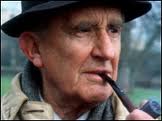
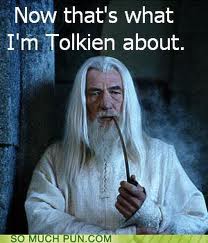
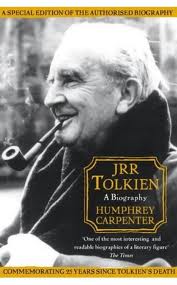
How’s The Weather In Middle Earth?

I’ve never been a big weather fan but Tamati Coffey receives my Weather Forecaster of the Week. I think you’ll understand why.

Mr. Coffey – I believe Professor Tolkien would be proud.

Hope you all have a great weekend and the weather holds out for you. If it’s raining or snowing where you live, I suggest you replay the above forecast!

——————————————————————————————————

Alon Shalev is the author of At The Walls of Galbrieth, Book 1 of The Wyccan Master series, which reached the Quarter Finals of the Amazon Breakthrough Novel Award 2012, released by Tourmaline Books. The First Decree, the sequel is due out in early 2013. Shalev is also the author of three social justice-themed novels: Unwanted Heroes, The Accidental Activist and A Gardener’s Tale. More on Alon Shalev at http://www.alonshalev.com and on Twitter (@elfwriter).

Farewell My Other Son

I’m dreading the day my sons leave home. Even though they mess up the kitchen, their clothes get strewn on the floor, and they vie with me (and win) for music, TV, and that last chocolate cookie, I’m dreading seeing them walk out the door.

There is something totally scary in that you are no longer there to nurture, protect, guide, or even to bask in their glory, for their glory is their own and perhaps always was.

That is how I am feeling right now with At The Walls Of Galbrieth. This week, the internal formatting was finished and sent in, the cover joined somewhere in the publishing process, and sometime in the next few days the ebook will be published, with the paperback following in a week or two.

It is out of my hands. Like an anxious parent, I will look on, watching how many people become friends with it, how it succeeds with grades (reviews), and whether it will establish itself in the real world of fiction.

But there is nothing left for me to do, except move on to Book 2: The First Decree. As that fine Professor Tolkien once said in a little-know Hobbit novel: “Remember what Bilbo used to say: It’s a dangerous business, Frodo, going out your door. You step onto the road, and if you don’t keep your feet, there’s no knowing where you might be swept off to.”

Have a great Thanksgiving, everyone. May you spend it round a mighty table laden with food and love. But keep an eye out for a misplaced ring, a dragon on the loose, an elf who has drunk all your mead …

…or the coming of The Wycaan Masters.

——————————————————————————————————

Alon Shalev is the author of The Accidental Activist and A Gardener’s Tale. He has written three epic fantasy novels and the first, which reached the Quarter Finals of the Amazon Breakthrough Novel Award 2012, is due out in December 2012 by Tourmaline Press. More on Alon Shalev at http://www.alonshalev.com and on Twitter (@elfwriter).

A Poem In Elvish – J.R.R. Tolkien

This is a rare gem. That an author could possibly make up an entire language is mind-blowing. Yet we often forget that beyond the dragons, swords, and quests, J.R.R. Tolkien created an entire language. As a professor of philology (ancient languages) at Oxford University, Tolkien was already immersed in the mechanics of how a language is put together. 

But the professor took it to another level when he actually made up a language. With the hype beginning to build for The Hobbit movie, this poem surfaced read by the master himself.

Enjoy!

My own elvish is somewhat rusty, so here is a translation of Namarie (Farewell) courtesy of Josh Jones, who goes into greater detail about the when and where.  

Ah! like gold fall the leaves in the wind, long years
numberless as the wings of trees! The long years
have passed like swift draughts of the sweet mead
in lofty halls beyond the West, beneath the blue
vaults of Varda wherein the stars tremble in the
song of her voice, holy and queenly.

Who now shall refill the cup for me?

For now the Kindler, Varda, the Queen of Stars,
from Mount Everwhite has uplifted her hands like
clouds, and all paths are drowned deep in shadow;
and out of a grey country darkness lies on the
foaming waves between us, and mist covers the
jewels of Calacirya for ever. Now lost, lost for
those from the East is Valimar!

Farewell! Maybe thou shalt find Valimar. Maybe
even thou shalt find it. Farewell!

And, in case you haven’t got enough, here is Tolkien again, reciting the Song of Durin (in English). 

Have a great weekend,

Elfwriter

——————————————————————————————————

Alon Shalev is the author of The Accidental Activist and A Gardener’s Tale. He has written three epic fantasy novels and the first, which reached the Quarter Finals of the Amazon Breakthrough Novel Award 2012, is due out in January 2013 by Tourmaline Press. More on Alon Shalev at http://www.alonshalev.com and on Twitter (@elfwriter).

What Would Tolkien Say?

I wasn’t that surprised when I heard originally that The Hobbit would be expanded into more than one movie. Harry Potter 7 and Breaking Dawn have set the precedence. But I was stunned (pleasantly, I must admit) that somehow the thin, children’s book is going to take as much time as Lord of the Rings, volumes of which are well-known for many attributes, not least that of a competent doorstop.

Still, I thought, in Peter Jackson I trust. LOTR is an amazing movie trilogy, so why not have the hobbit and dwarves trudge through countless woods and mountain ranges. Offer a few character insights, and smoke a few more pipes around the fire. Works for me and I doubt a particular Oxford linguistics professor would have minded.

But, now I hear that Peter Jackson has actually invented some new characters and I must admit to feeling somewhat perturbed. Is J.R.R. Tolkien sitting in his celestial study puffing his pipe furiously? 

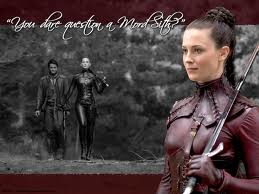
It had occurred to me that we are a bit short on the females in this book, less noticeable for a book, but an issue for the screen. This has obviously occurred to Mr. Jackson as well, as he introduces Tauriel, an elven warrior, who according to the info released is head of the elven guard. Lost star Evangeline Lilly plays this fearsome (and no doubt sexy warrior) and she is quoted as saying:

“She is a warrior. She’s actually the head of the Elven guard. She’s the big shot in the army. So she knows how to wield any weapon, but the primary weapons that she uses are a bow and arrow and two daggers. And she’s lethal and deadly.”

While I am the last to complain about introducing any elf, I feel uneasy. And it has nothing to do with her resembling a Mord Sith. I’m feeling rather traumatized, having (after watching Legend of the Seeker on TV) just listened to Wizard’s First Rule – Terry Goodkind – on audio alone in my car, which fleshes out (excuse the extremely accurate pun), the Mord Sith techniques. Let’s just say that if any woman in red leather comes within 50 feet, I’m running.

But the question is not what this humble elfwriter thinks, but what Tolkien would say. I have a number of books on the master, but never met him. However, I can’t help feeling he would not be amused. 

I can’t imagine someone taking my books and inserting new characters. It seems to be one step too far. What do you think? How loyal should Peter Jackson stay to the original work?

When does The Hobbit become The Hollybit?

——————————————————————————————————

Alon Shalev is the author of The Accidental Activist and A Gardener’s Tale. He has written three epic fantasy novels and the first reached the Quarter Finals of the Amazon Breakthrough Novel Award as of March 2012. More on Alon Shalev at http://www.alonshalev.com and on Twitter (@elfwriter).

The Master Tolkien Left Crumbs For The Hungry

The skeptics (those forced to study his work) and the jealous (those of us who figuratively sit at his feet bashing out epic fantasy novels on our laptops) dismiss J.R.R. Tolkien as a once-in-a-lifetime genius. We couldn’t emulate him even if we wanted to (though of course we do want to). We comfort ourselves that in today’s world of instant gratification, you cannot spend several pages describing a forest, however old and steeped in magic it may be.

I have read a number of books about the master and even began a fictionalized account of his life. I have on my iPod a course from the iTunes University – The Tolkien Professor by Corey Olsen, a professor himself from Washington College.

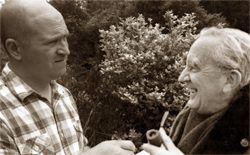
I want to share a few tips that Tolkien had for writers. This is taken from a post by Roger Colby, an author and English teacher. Mr. Colby never met Tolkien, though thanks to photoshop, he looks like he might have! Judging by his research, he deserved to!

Roger Colby ‘meets’ J.R.R. Tolkien

Mr. Colby spent a month carefully dissecting The Letters of J.R.R. Tolkien, edited by Humphrey Carpenter, and underlined every instance where the master of Middle Earth wrote about his process. The quotes are attributed. Any comments belong to Mr. Colby, though I strongly recommend reading the entire article.

1.  Vanity Is Useless

Tolkien writes in a letter to Sir Stanley Unwin on 31 July 1947:

“…I certainly hope to leave behind me the whole thing [LOTR] revised and in final form, for the world to throw into the waste-paper basket.  All books come there in the end, in this world, anyway” (121).

2.  Keep a Stiff Upper Lip

In another letter to Sir Stanley Unwin dated July 21, 1946, Tolkien lists a mound of personal struggles he was facing: being ill, being overworked and missing his son Christopher who was away in the Royal Navy. He put many of his struggles aside, though, and went to writing.

He had to balance his day job with his desire to write epic stories set in Middle Earth. He found time. He made time. It took him 7 years to write The Hobbit. (117). The thing that he writes about most in this period is his struggle to get the work finished on his novels and to balance teaching and his many duties at Oxford College. Apparently he found a way.

3.  Listen to Critics

Tolkien writes to his editor about the comments C.S. Lewis made about The Lord of the Rings: “When he would say, ‘You can do better than that. Better, Tolkien, please!’ I would try. I’d sit down and write the section over and over.

That happened with the scene I think is the best in the book, the confrontation between Gandalf and his rival wizard, Saruman, in the ravaged city of Isengard.”

He writes that he “cut out some passages of light-hearted hobbit conversation which he [Lewis] found tiresome, thinking that if he did most other readers (if any) would feel the same…to tell the truth he never really like hobbits very much, least of all Merry and Pippin. But a great number of readers do, and would like more than they have got” (376).

4.  Let Your Interests Drive Your Writing

Tolkien wrote: “I began the construction of languages in early boyhood: I am primarily a scientific philologist. My interests were, and remain, largely scientific. But I was also interested in traditional tales (especially those concerning dragons); and writing (not reading) verse and metrical devices. These things began to flow together when I was an undergraduate to the despair of my tutors and near-wrecking of my career” (345).

5.  Poetry As A Road to Prose

When Tolkien couldn’t express his thoughts in prose he “wrote much of it in verse.”

He writes “The first version of the song of Strider concerning Luthien,… originally appeared in the Leeds University magazine, but the whole tale, as sketched by Aragorn, was written in a poem of great length” (346).

6.  Happy Accidents

Tolkien writes: “The Hobbit saw the light and made my connection with A. & U. by an accident.” Further: “From The Hobbit are also derived the matter of the Dwarves, Durin their prime ancestor, and Moria; and Elrond.

Mr. Colby: “Sometimes accidents happen, and sometimes those accidents will lead a writer to a publisher or create an entire novel.  Tolkien created entire worlds and then used what he knew of myth and legend to tell iconic, archetypal stories based in those magical places.

Even though he planned everything out meticulously, he still had happy accidents occur that he kept in the final manuscript because they just worked. Sometimes accidents can be blessings.”

7.  Dreams Give Us Inspiration

Tolkien writes:  “In sleep I had the dreadful dream of the ineluctable Wave, either coming out of the quiet sea, or coming in towering over the green inlands.  It still occurs occasionally, though now exorcised by writing about it.

It always ends by surrender, and I awake gasping out of the deep water. I used to draw it or write bad poems about it. When C.S. Lewis and I tossed up, and he was to write on space-travel and I on time-travel, I began an abortive book of time-travel of which the end was to be the presence of my hero in the drowning of Atlantis” (347).

8.  Real People Make Great Characters

Tolkien: “There was a curious local character, an old man who used to go about sweeping gossip and weather-wisdom and such like.

To amuse my boys I named him Gaffer Gamgee, and the name became part of family lore to fix on old chaps of the kind. At that time I was beginning on The Hobbit. The choice of Gamgee was primarily directed by alliteration; but I did not invent it. It was caught out of childhood memory, as a comic word or name. It was in fact the name when I was small (in Birmingham) for ‘cotton-wool’”(348).

9.  You May Be the Next Best Selling Author

Tolkien relates the following story: “I lived for a while in a rather decayed road (aptly called Duchess) in Edgbaston, B’ham; it ran into a more decayed road called Beaufort. I mention this only because in Beaufort road was a house, occupied in its palmier days, by Mr. Shorthouse, a manufacturer of acids, of (I believe) Quaker connections.

He, a mere amateur (like myself) with no status in the literary world, suddenly produced a long book, which was queer, exciting, and debatable – or seemed so then, few now find it possible to read. It slowly took on, and eventually became a best-seller, and the subject of public discussion from the Prime Minister downwards. This was John Inglesant. Mr. Shorthouse became very queer, and very UnBrummagem not to say UnEnglish. He seemed to fancy himself as a reincarnation of some renaissance Italian, and dressed the part” (348).

10.  Books You Write May Seem Trite

Tolkien writes: “I now find The Lord of the Rings ‘good in parts”(349).

Mr, Colby: “This is to say that upon reading his books years after writing them his writing experience informs him that he is a much better writer than when he published The Hobbit.”

Tribute: Given that I have relied heavily upon the research of Mr. Colby, I would like to promote his own novel as appreciation. The Transgression Box- Roger Colby.
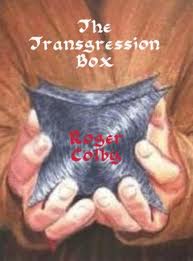
Dornin is known as the village liar…but he will also be their unwitting savior. It all begins when Dornin finds a mysterious object in the forest – a perfect cube of a box – and brings it back to his village. Unsure of its purpose, he hands over the object to the village elders – but during the night he spots a strange fog emanating from the House of Elders, and in the morning, over half of the people of the village have fallen into an unnatural and unending sleep.

Dornin decides he must set off on a quest to destroy the “Transgression Box” in order to save his people. Along the way he will encounter many strange and dangerous places, as he desperately tries to destroy that which must be destroyed for him. The Transgression Box is an allegorical science fiction tale of faith, trust and hope.

——————————————————————————————————

Alon Shalev is the author of The Accidental Activist and A Gardener’s Tale. He has written three epic fantasy novels and the first reached the Quarter Finals of the Amazon Breakthrough Novel Award as of March 2012. More on Alon Shalev at  http://www.alonshalev.com and on Twitter (@elfwriter).
The Art of World-Building

When the hobbit walked through Mirkwood, we all walked with him. We knew exactly how the trees looked, how the wind moved their branches, what the ground felt like as one fur-soled foot pressed down. We could smell the rotting leaves and…We were there as the master welcomed us into Middle Earth, his world. We were his honored guests and when we returned to this world, we felt a sense of loss.

No one, in my humble and uneducated opinion, has ever created a world in the rich way of J.R.R. Tolkien, and perhaps no one ever will. There are some among our younger readers who skip or skim the long descriptions. Do I need to know what every tree in the forest looks like?

And yet these same young people marveled over the world of Pandora from James Cameron’s Avatar. I am closing in on finishing the third of the Wycaan Master novels and will then begin another edit of the first book before passing it on to more professional hands.

One of the aspects that I want to focus on is how well have I described the land in which the story transpires. There is a lot of traveling and many different climates and natural wonders, as well as villages and cities, which are described. When I wrote the first book, it was in close collaboration with my then 11-year-old son. I was very conscious of maintaining a fast pace. The second and third books were more my own work, with my son reading and giving me feedback. I believe these two novels involved considerably more world-building.

Why do we need to show such detail in epic fantasy? It seems obvious for the Sci-fi writers to put so much emphasis on creating worlds and I understand why those who write in modern earth need not focus so much because we can see the world we live in. 

Do you enjoy the detail of a new world or are you content to receive hints and imagine it for yourself? How important is world-building to you becoming a loyal reader of a fantasy series? Finally, if you write fantasy yourself, do you have any best practices or tips? Do share in the comments below.

Appreciate your feedback. Have a great weekend and a happy 4th.

Alon 

——————————————————————————————————

Alon Shalev is the author of The Accidental Activist and A Gardener’s Tale. He has written two fantasy novels and the first reached the Quarter Finals of  the Amazon Breakthrough Novel Award as of March 2012. More on Alon Shalev at http://www.alonshalev.com/and on Twitter (@elfwriter).