The Art of World-Building

When the hobbit walked through Mirkwood, we all walked with him. We knew exactly how the trees looked, how the wind moved their branches, what the ground felt like as one fur-soled foot pressed down. We could smell the rotting leaves and…We were there as the master welcomed us into Middle Earth, his world. We were his honored guests and when we returned to this world, we felt a sense of loss.

No one, in my humble and uneducated opinion, has ever created a world in the rich way of J.R.R. Tolkien, and perhaps no one ever will. There are some among our younger readers who skip or skim the long descriptions. Do I need to know what every tree in the forest looks like?

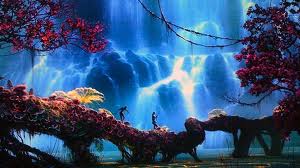
And yet these same young people marveled over the world of Pandora from James Cameron’s Avatar. I am closing in on finishing the third of the Wycaan Master novels and will then begin another edit of the first book before passing it on to more professional hands.

One of the aspects that I want to focus on is how well have I described the land in which the story transpires. There is a lot of traveling and many different climates and natural wonders, as well as villages and cities, which are described. When I wrote the first book, it was in close collaboration with my then 11-year-old son. I was very conscious of maintaining a fast pace. The second and third books were more my own work, with my son reading and giving me feedback. I believe these two novels involved considerably more world-building.

Why do we need to show such detail in epic fantasy? It seems obvious for the Sci-fi writers to put so much emphasis on creating worlds and I understand why those who write in modern earth need not focus so much because we can see the world we live in. 

Do you enjoy the detail of a new world or are you content to receive hints and imagine it for yourself? How important is world-building to you becoming a loyal reader of a fantasy series? Finally, if you write fantasy yourself, do you have any best practices or tips? Do share in the comments below.

Appreciate your feedback. Have a great weekend and a happy 4th.

Alon 

——————————————————————————————————

Alon Shalev is the author of The Accidental Activist and A Gardener’s Tale. He has written two fantasy novels and the first reached the Quarter Finals of  the Amazon Breakthrough Novel Award as of March 2012. More on Alon Shalev at http://www.alonshalev.com/and on Twitter (@elfwriter).

Music And Fantasy

I realize this is slightly off topic for a blog about the writing of fiction. No book that I am aware of comes with a soundtrack (though I read that this might become an e-book app in the not-too-distant future).

But I have found myself listening to the soundtracks of Lord of the Rings while writing the Alliance trilogy. I wrote yesterday in Left Coast Voices that I can write anywhere, anytime, and I believe it to be so.

Nonetheless, I realize that I do listen to music in the context of the book I am writing.  A Gardener’s Tale was written with the music of Lloyd Cole in my ears,  The Accidental Activist was written to Billy Bragg, and I just wrote a beat-era novel listening to jazz music.

But I want to pay tribute to the Lord of the Rings soundtracks (one for each movie). They are truly brilliant, truly inspiring. While I believe I can write anytime, anywhere, I am thankful that the music of Howard Shore together with Enya or Annie Lennox, who can simply transport me into the land of Odessiya (home of the Alliance series).

I fantasize when the Alliance series finds a home with a publisher that there is a movie deal for all the reasons that every author shares. But I also fantasize that someone with the talent of Howard Shore will be commissioned to write a soundtrack that can be so transformational in its own right.

I’m sure J.R.R. Tolkien is up there in Writer’s Heaven, puffing his pipe, and writing a new epic series (to be published as an ethereal or e-book). Perhaps he has his little white headphones on and is listening to a LOTR soundtrack as he writes.

Have a great week.

Alon

——————————————————————————————————

Alon Shalev is the author of The Accidental Activist and A Gardener’s Tale. He has written two fantasy novels and the first has been entered into the Amazon Breakthrough Novel Award in January 2012. More on Alon Shalev at http://www.alonshalev.com/and on Twitter (@elfwriter).

Epic Fantasy’s Hall of Fame

Being new to the wonderful world of fantasy, I am published in political and transformation fiction, I am greatly in debt to Castle Fiction for a list of past and present masters. The comments after the names are mainly from the Castle Fiction, but I would love to hear which you have read and how you felt about them.

Past Major Fantasy Authors:

William Morris I admit that I have never heard of William Morris and understand that this is a hole in my education. I consider Tolkien to be the father of modern-day epic fantasy but apparently this is incorrect. “It all started with the publication in 1892 of the William Morris novel The Well at the World’s End. This is an outstanding piece of Epic Fantasy and it is considered to be the first epic fantasy work of the modern era. The same applies for another Morris novel titled “The Wood Beyond the World.”

Edith Nesbitt A prolific author at the end of the 19th century she created a genre of children’s fantasy literature. It often had normal contemporary children who engaged in magical adventures and discovered magical objects. She set the genre for many contemporary writers including J.K. Rowling. Some of her notable books are Five Children and It and The Story of the Amulet.

J.R.R. Tolkien A master of the craft that created the complete world of Middle Earth which included maps, languages and much more. Most notable works is the Lord of the Rings Series.

Tolkien - Middle Earth Master

Edgar Rice Burroughs Early twentieth century writer that created memorable characters and explored different worlds. His most memorable character is Tarzan. And his most popular series of books include the Barsoom series which takes place on Mars. The Venus series and the Pellucidar series which takes place within the hollow earth.

Robert E. Howard Mid 20th century writer who was a heavy contributor to the pulp fiction magazines. He is generally credited with creating the swords & sorcery genre. His most notable character is Conan.

T.H. White Mid 20th century writer who penned several books in the King Arthur tradition. The most notable of which is The Sword in the Stone which ushered in the modern Arthurian novel. Of note was a posthumous publication of his novel The Book of Merlyn

E.R.R. Eddison Considered to be the father of High Fantasy he wrote several books that influenced authors to come such as Lewis and Tolkien. Of his highly imaginative worlds The Worm Ouroboros is one of the most famous.

C.S. Lewis He was a scholar of medieval literature and mythology penning many works in a variety of genres including fiction, religious fiction and science fiction. His most notable works are the epic fantasy Chronicles of Narnia.

Present Major Authors:

Terry Brooks In the late 70’s Brooks published the novel The Sword of Shannara. It climbed to the top of best seller lists and stood there for years. Heavily drawing on Tolkien this book reintroduced the epic fantasy to the general public. Brooks continued the Shannara series with several more books. He has gone on to pen even more series.

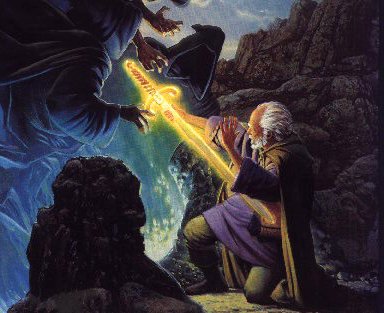
Scene from Sword of Shannara

Terry Goodkind Writer of the Sword of Truth series which began with Wizards First Rule This is a solid series that takes a more serious approach to epic fantasy. The books explore philosophical questions. The series became a TV series – Legend of the Seeker – which lasted for two seasons.

Robert Jordan Is the writer of the enormously successful Wheel of Time series which is currently eleven volumes. He has also written many works based on the Robert E. Howard Conan character.

Stephen Donaldson Creator of The Chronicles of Thomas Covenant series of books which now number seven volumes and is most notable for its use of the anti-hero in which the main character maintains a reluctance to actually take on the mantle of the hero. He has written several other series in the genre.

Marion Zimmer Bradley Editor of the famous sword and sorcery series Bradley is also a prolific writer. Most notable among her writings is the Arthurian Avalon series which begun with The Mists of Avalon.

David Eddings Writer of sword & sorcery and epic fantasy series he is most famous for the Belgariad and the Mallorean series.

Raymond Feist Many of his works are set in the connected worlds of Midkemia and Kelewan. This is called the Riftwar series and the novels range over various geographic locations and span centuries. He began his writing with the first novel in the Riftwar series called Magician: Apprentice. Another series of note is the Krondor series.

Robin Hobb Is the author of several popular trilogies including The Farseer Trilogy, The Liveship Traders Trilogy and The Tawny Man Trilogy

Stephen King Although considered to be the master of horror King has published an enormous body of work in the fantasy genre. He crosses genre at will and breaks all the rules but notable is his Dark Tower Trilogy and The Eyes of the Dragon which is classic fantasy.

L.E. Modesitt Author of several series most notable are The Corean Chronicles
Set on the world of Corus (or Acorus), where strange and dangerous beasts roam and people with magical Talent can commit astonishing feats. Also is The Spellsong Cycle and The Timegod’s World which draws heavily on Norse legend.

George R.R. Martin Most notable for his Song of Ice and Fire series which was begun with A Game of Thrones in 1996.

Tad Williams Writer of several fantasy series the most notable of which Memory, Sorrow, & Thorn which was begun with The Dragonbone Chair

J.K. Rowling Creator of the enormously popular Harry Potter series which began with Harry Potter and the Sorcerer’s Stone. These books have also been transformed into successful movies.

David Farlane – The Author of the Acclaimed Runelords series. The fifth book has just been published and the first book is being made into a major motion picture.

What are your favorite authors of High or Epic Fantasy? Do you agree with the comments added above?

——————————————————————————————————

Alon Shalev is the author of The Accidental Activist and A Gardener’s Tale. He has written two fantasy novels and the first will enter the Amazon Breakthrough Novel Award in January 2012. More on Alon Shalev at http://www.alonshalev.com/and on Twitter (#elfwriter).

Seeking The Higher Concept

J.R.R. Tolkien’s Lord of the Rings set the bar. Everything since has been compared to this masterpiece. I have heard interviews with Terry Brooks and Christopher Paolini where each has had to deal with the comparisons.

Neither seemed particularly happy with the need to defend or compare their works. Each agree that Lord of the Rings (LOTR) stands on the pinnacle of fantasy and will for many years,

This leaves the rest of us wannabe fantasy authors with a dilemma. While my own Alliance series has its own specific aspects, it is inevitably compared to LOTHR. When I introduced my elves to my writer’s group, it is Legalos who comes to mind.

I've never survived a mighty battle with every hair still in place.

It is not only Tolkien of course. My antagonist is the Emperor and immediately someone compared him to Star Wars’ Palpatine, and his right hand man to Darth Vader (even without the mask and asthma).

I recently began to meet with an agent who is coaching me to prepare the first Alliance book to market. When I offered my pitch, he immediately asked what is my higher concept? He knows of Tolkien, Brooks, Salvatore and Paolini: what differentiates Shalev from these masters?

I admit to being stuck. I am reading John Locke’s How I Sold 1 Million Ebooks in 5 Months book and he admits it is much harder to change a book already written to hook your target audience than to begin a novel with the specific demands of your target audience in mind. This is doubly hard for me as I have already written two books in the series and have the third mapped out.

Every time I, or anyone helping me, have an idea, I feel resistant. I have created my world, my characters, my conflict…but I cannot explain its unique or higher concept.  Reluctant hero must learn his magic from a master and overcome the all-powerful evil dude. Sound familiar? There are many ways to make an omelet, many variations of vegetables, spices and cheeses, but all omelets involve eggs.

Need to crack a few eggs!

When someone has already used organic, cage-free, grade A eggs, how do you change the recipe? How do you find a higher concept? Any ideas?

——————————————————————————————————

Alon Shalev is the author of The Accidental Activist and A Gardener’s Tale. He has written two fantasy novels and the first will enter the Amazon Breakthrough Novel Award in January 2012. More on Alon Shalev at http://www.alonshalev.com/and on Twitter (#elfwriter).


Fantasy as a Vehicle for Social Justice

I believe passionately that writers of fiction  can ply their craft to help effect positive social change and offer a platform for values and principles. The Accidental Activist and A Gardener’s Tale both reflect this and I have a series of books focusing on social issues in the US (all based on San Francisco) beginning with Unwanted Heroes which will be released by Three Clover Press in the spring and highlight the way we treat war veterans and the homeless.

I was delighted when Kaitlyn Cole from Online Universities shared a list that their faculty had put together entitled: 50 Best Novels For Political Junkies.

Kaitlyn wrote: “True story: Some of the best political novels aren’t explicitly about politics. Yes, some of the books on this list deal directly with governments and politicians, with laws and the ways they’re made or abused, and with the peril and promise inherent in every governing body. But some of them use adventure, parable, or satire to subtly explore our political system with a depth that wouldn’t be possible any other way.”

Great point and relevant to those of us who write political fiction. But how about fantasy? Is there room to use our elves and dwarves to promote social injustices or causes? 

Over the last two summers I was blessed with the amazing experience of writing two fantasy novels together with my 11-year-old son. While I have read a few fantasy novels, I had no idea about the “rules” of the genre.

Writing with my son, however, compelled me to include moral issues such as racism, dictatorship and freedom, as well as the values of friendship and freedom. I was writing for my son and there are plenty of swords, quests, elves, dwarves etc., but as I watched him read and listened to his feedback, I waited for his comments about such issues and derived huge satisfaction when he brought up issues.

In setting my goals for an exercise at Author Salon, I wrote:

“I have seen the impact of the Harry Potter series and Christopher Paolini’s Inheritance series on my son and his friends. I want to help shape the landscape of the next generation’s imagination and maybe even the society they strive to create.”

My lack of knowledge regarding fantasy leads me to ask the question: Can fantasy offer a vehicle to discuss political and social injustice? I would love to hear your answers fantasy-fans.

——————————————————————————————————

Alon Shalev is the author of The Accidental Activist and A Gardener’s Tale. He has written two fantasy novels and the first will enter the Amazon Breakthrough Novel Award in January 2012. More on Alon Shalev at http://www.alonshalev.com/and on Twitter (#elfwriter).

Why Fantasy? Another Perspective

Last weekend, I shared some comments from adults explaining why they read fantasy. A friend sent me this article by Lev Grossman, author of “The Magicians” and the recently released “The Magician King.”

The Magicians - Lev Grossman

In the article, Grossman talks about the excitement generated by the release of George R.R. Martin’s “A Dance With Dragons.”

“The book has brought with it, along with the feverish excitement of fans like myself, a whiff of burning insulation. There’s a cultural short circuit happening somewhere in the system.”

What I believe is creating the stir is the fact that while Mr. Martin’s work is clearly fantasy, it does not adhere to the formulas of such leaders as J.R.R. Tolkien and C.S. Lewis. Martin includes a fair helping of blood and sex in his continent of Westeros than the Pevensie children ever saw in Narnia. Something has changed.

Grossman shares his frustration at the perception that fantasy is for children and adults who are in denial that they are adults and seeking some escapism. “I see it all the time. I’ll be at a dinner party, and the person next to me asks me what I do. I’m a novelist, I’ll say, and a little light of hopeful interest kindles in their eyes. What kind of novels do you write? the dinner guest asks. And I reply: fantasy novels. And just like that, the little light of hopeful interest dies away.”

This story really resonates with me. Every week at the Berkeley Writers Group, I meet new people and introduce myself as an author of political fiction. Then when I prepare to read my weekly offering, I apologetically explain that I wrote a fantasy novel with my eldest son. All true of course, but I am conscious that I feel the need to justify. Why is this?

Lev Grossman

Grossman goes on to say: “It hasn’t always been this way. There was a time when adults read fantasy with impunity. The classical literature of Greece and Rome is so fantastical that you can’t swing a cat without hitting a god or a witch or a centaur, and chances are the cat will turn out to be somebody’s long-lost son-in-law in transfigured form.”

Right on! Stephen Wenster backs him up by asking where “would Shakespeare have been without fantasy—his spirits, his ghosts and the witches three of Macbeth?”

Apparently fantasy, without being labeled as a genre was prominent throughout literature history: “Where would Spenser’s “Faerie Queene” be without fairies? Where would Shakespeare have been without fantasy—his spirits, his ghosts, and his proto-Orc Caliban, the misshapen villain of “The Tempest”? You can’t have Macbeth without the witches three. Apart from everything else, who would have handled all that crucial exposition of the play’s plot?”

Absolutely!

Grossman, who holds a PhD in Comparative Literature, claims the downfall began around the time of Samuel Johnson. Perhaps this was the time that the advent of science meant they actually began to believe that ghosts and magic really didn’t exist.

Again, Lev Grossman: “A fascination with the here and the now and the real set in. This was the moment when the novel arose in the West, and it was an ideal medium to satisfy that fascination. Novels were about the way we live now. There was no Caliban on Robinson Crusoe’s island, just the eminently human Friday.

“In 1750, Samuel Johnson wrote an influential essay in praise of fiction that was about “life in its true state, diversified only by accidents that daily happen in the world.” As far as he was concerned, a good novel “can neither employ giants to snatch away a lady from the nuptial rites, nor knights to bring her back from captivity; it can neither bewilder its personages in deserts, nor lodge them in imaginary castles.” Thus admonished, ghosts and witches went off to live in fairy tales and allegories and gothic novels and other disreputable places.”

So history is against us, perhaps because people really did once believe in magic and ghosts. But I believe that in accepting there is nothing factual in elves, dwarfs etc. we can focus on allowing values to play a prominent role because, as Grossman say: “If anything, it is realist literature that pretends to be real. Fantasy doesn’t pretend.”

Fantasy is one of the few literary genres left where it is still considered okay to explore questions of moral judgment. But that’s not a bad thing. When the powerless and good become empowered and are able to change the destiny of their world, there is something that resonates in a world where so many feel alienated and disenfranchised. When coming-of-age can happen at any age, why would an adult still hoping to leave his/her mark on the world not be attracted to such novels?

——————————————————————————————————

Alon Shalev is the author of The Accidental Activist (now available on Kindle) and A Gardener’s Tale. He has written two fantasy novels and the first will enter the Amazon Breakthrough Novel Award in January 2012. More on Alon Shalev at http://www.alonshalev.com/and on Twitter (#elfwriter).