The Magic Is Everywhere

Last weekend, our family headed for the marina, a grassy area on the west point of Berkeley that looks over the San Francisco Bay Area. We have been there many times to fly kites, play soccer, run and bike. 

This time, armed with a blanket and picnic, we were planning on some serious reading. Older son had a book assigned from school, a historical fictional account of many good people dying from a plague back in the 1700’s: perfect depressing material for the summer vacation. Not surprisingly, he hadn’t embraced the intrusion with the enthusiasm he showed for Christopher Paolini’s Eragon or J. K. Rowlings’ Harry Potter. 

It was surprisingly windy and we made for some bushes and trees that would deny us the view, but offer shelter. We spread the blanket and I fell into my stadium chair and flicked on my Kindle.

While I waited for it to fire up, I glanced to my left. Between the bushes and the trees was a tunnel, with brush growing up and over so that you could barely see the sky. It was dark inside with the promise of sunlight on the other side. My youngest son, I realized, was staring at it as well. He turned to me.

“What do you think is through there?” he asked, eyes wide open.

“I don’t know,” I replied, the right level of gravity in my voice. “Think you should check it out?”

He nodded, rose and moved into the tunnel. He never came out…

Okay, that is not exactly true. But he stayed in the tunnel and explored beyond. Sometimes he sat and read his book, and other times played, creating his own world. Finally, he called for me to join him.

“The tunnel is safe,” he declared, “but there are dragons on the other side. Be careful.”

I knew that on the other side was a view of the Golden Gate Bridge, Alcatraz, San Francisco, and the bay with many sailboats. But as his tiny hand took mine and guided me out the other side, all I saw were the dragons.

Others might have seen a red kite with a long tail, to its left was a blue-green one tearing through the sky in acrobatic maneuvers, but we saw two dragons eying each other. My son announced with authority that they were deciding whether to fight or be friends. Remembering my politically correct role as father, I said I hoped they would be friends. 

But as I watched them and glanced back at the tunnel, it was my imagination that soared. Perhaps a new book is fermenting, or only a scene in the next Wycaan Master. Maybe it will surface next year or in a decade, but it is stored away.

And this moment of magic only happened because I was ready to embrace it, albeit with a little help from a nine-year-old with a rich imagination. But then I have seen elves in coffee shops.

——————————————————————————————————

Alon Shalev is the author of The Accidental Activist and A Gardener’s Tale. He has written three epic fantasy novels and the first reached the Quarter Finals of the Amazon Breakthrough Novel Award as of March 2012. More on Alon Shalev at http://www.alon-shalev.com and on Twitter (@elfwriter).

Don’t Let The Fairies Bully You!

I have mentioned before that fantasy can be a vehicle for social commentary and so I enjoyed coming across this blog post from Melanie Hatfield. It will reveal to you why I never leave the house without my hip flask and some single-malt! Ms. Hatfield’s debut novel: “Kingdom of the Snark: The Quest for the Sword” has just been released on Amazon and Smashwords.

And so with her permission: What To Do If You’re Being Bullied By Fairies – Melanie Hatfield :

I haven’t blogged much about my debut novel, but now I am at a point where I can admit (or should I say confess) that my first eBook, a fantasy/comedy titled Kingdom of the Snark:  The Quest for the Sword, will be online by July.  In my book, my heroine is bullied by fairies and I realized:  What should we do if we find ourselves picked on by those mischievous pixies?  Have no fear, for I have listed some helpful tips below.

Even house elves got bullied!

1)  Ignore them.
Conventional wisdom tells us to talk about our problems with those who cause us grief. This does not apply to fairies. If you tell them how their actions make you feel, they will not only continue to mock you, but will tell all of their fairy friends so they can join in and pile on the humiliation.  If fairies taunt you, it is best to keep your mouth shut and wander in the opposite direction.  It is important to avoid eye contact at all cost, least they cast a spell and make you dance (clothing optional).

2)  Sing them a song.
If ignoring them doesn’t work, you can distract the fairies with a song. Fairies love a tune as much as the next traveler.  If you have a harp, strike a few cords and see if they’ll jam with you.  Before long, maybe they’ll forget that they were hassling you in the first place, or at least like you enough to allow you to journey past them without further hindrance.

3)  Carry anti-magic devices.
When the fairies use their magic against you (and they will), counter their dust with crystals, a rainbow grenade, or other anti-magic device to render them helpless.  Buyer beware:  Never purchase such weapons from a seller you do not know.  There are many merchants in the world who take advantage of fairy victims with bogus devices.

4)  Give them a taste of ale.  
Fairies have never been known to hold their liquor, although they love to try. It only takes a thimble to get them into a drunken state of unconsciousness.  While they’re sleeping it off, you can tip-toe away.

5)  If all else fails, fight fire with fire…literally.
Fairies burn easily.  Sic your pet dragon on them.

Do you have any tips on how to handle fairies?  Are you a fairy and think you’re just misunderstood? Tell us about it in the comment box!

Picture

“Kingdom of the Snark: The Quest for the Sword”  is now available at Amazon and Smashwords.
——————————————————————————————————

Alon Shalev is the author of The Accidental Activist and A Gardener’s Tale. He has written two fantasy novels and the first reached the Quarter Finals of  the Amazon Breakthrough Novel Award as of March 2012. More on Alon Shalev at http://www.alonshalev.com/and on Twitter (@elfwriter).

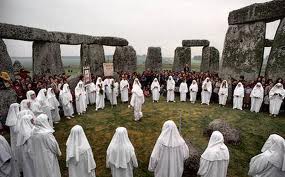
Fantasy – A Pagan Conspiracy?

First a big Thank You to the 30+ people who filled out my survey – Who Are My Target Audience – I am going to keep tweeting it and hopefully reach my goal of 50 responses (it makes it easy for my mathematically-challenged brain to do percentages).  If you have not had the time, please consider three minutes to answer ten questions by clicking here.

The first time I read that someone was uncomfortable with her children reading YA fantasy because of the Pagan themes running through it, I dismissed the reader as a maverick who is worried she won’t succeed in passing on her religious lifestyle to her children. But I have now seen this a couple of times.

I am sensitive to this. My first published novel, A Gardener’s Tale, follows the yearly cycle of the Pagan religion as it was (and still it) celebrated in rural Britain, and shines light on the struggle of Christianity to crush it.  While the novel was received enthusiastically in the Pagan community (their leader Vivienne Crowley called it “A beautiful and elegiac evocation of a timeless Britain and of a man of the ancient ways of the earth who brings peace and healing where the flames of persecution once burned.”), I incurred the wrath of many religious Jews and Christians.

The Pagan religion is based upon the agrarian cycle and the farmer’s connections to the earth. Being mysterious, the emergence of an earth-based religion, where there was power and magic in the earth and those who stewarded her (yes – her, another topic) were worshiped and studied.

A common theme in many books, mine included, is the source of magic comes from the earth, from nature, through animals and the elements. The Druids, so often mentioned, were a genuine religious order. The witches, millions of whom were burned at the stake as Christianity raised a frenzy of anti-women, anti-anything, were often healers who used herbs and minerals that were gifts from the earth. Even the Jedi Order harnessed an energy, the Force, from everything living around them.

Other common elements include the quest, the holy (magical) props, the connection with and reverence of nature. Most of all, however, is the power of story. All religions and spiritual practices maintain a powerful element of stories, legends, parables, a narrative history (the best selling book of all time, anyone?).

I am skeptical that there is an international conspiracy to revive the Pagan religion through instilling scintillating epic fantasy novels insidiously into the minds of our unsuspecting youth (now you are convinced that I am the High Priest – isn’t this how conspiracy theory works?).

However, it is not a huge leap of faith to think that those who put quill to parchment (there is probably an app for this) and write such stories do have aspirations of teaching certain noble morals and principles. I recently wrote in an interview:

“Working on the novel with my (now 12-year-old) son and seeing the potential to share my values and political beliefs while imbibing a profound love for storytelling and reading. I have seen the impact of the Harry Potter series and Christopher Paolini’s Inheritance series on my son and his friends. I want to help shape the landscape of the next generation’s imagination and maybe even the society they strive to create.”

Now if that is not a declaration to take over the world

Finally, one more plug – if you have a few minutes please fill out my survey – Who Are My Target Audience – and Thank You again to those who already have.

——————————————————————————————————

Alon Shalev is the author of The Accidental Activist and A Gardener’s Tale. He has written two fantasy novels and the first reached the Quarter Finals of  the Amazon Breakthrough Novel Award as of March 2012. More on Alon Shalev at http://www.alonshalev.com/and on Twitter (@elfwriter).

What is The Future of Epic Fantasy?

I have mentioned in past posts that I am seeking to differentiate my novel from other epic fantasy series. I am being continually told by those insiders that every descent agent and publisher has five hundred manuscripts on their groaning desks about swords and quests and good .v. evil. Apparently these agents groan whenever an elf is mentioned (especially if s/he is tall, thin, loves nature etc.).

At the Berkeley Writers critique group, visitors often ask: what differentiates this from Lord of the Rings?

All this begs the question: what is the future of epic fantasy?

Is it okay to accept that there are certain conventions that are timeless? Are dwarfs small and stout, brave and ready for a rumble? Is it okay that they are miners and love to live underground?

Gimli - plenty of blades, no razor

Here are 10 basic ingredients that need to be questioned:

1) There is the good guy (or gal) and the bad one. The goods is the underdog, the bad is all-powerful, though hopefully will fall in the end.

2) Magic – the hero/heroine has something special about them that gives them a chance to win.

3) There is a teacher who mentors the hero/heroine.

4) The dwarfs are stereotypical – see above.

5) The elves are tall, beautiful, healers, wicked with the bow and arrows and…

6) Romance

7) Everything takes place in New Zealand-type environment.

8) There is a lot of walking about.

9) Swords, bows and arrows, lots of insignificant people dying.

10) Long novels, preferably in series form, with huge potential for movies.

Journeys that never end...

I have mentioned the high-concept challenge in earlier posts. The idea is to have something that is unique, that separates your fantasy novel from the rest. Enter Harry Potter and Hunger Games. 

And yet, we come back for more. A new novel from Terry Brooks or R.A Salvatore has us salivating. Christopher Paolini’s final book of the Inheritance series was eagerly awaited, and we all know when we are going to see the Hobbit movie even if we haven’t booked our summer vacations or filed our taxes.

When I mentioned the higher concept to a woman who has been reading my manuscript, she baulked. As long as there is a strong plot, a few twists, memorable characters, and a high level of writing, she said, a novel will always stand out from the rest.

The question is: Are the essential epic fantasy novel ingredients timeless? When Tolkien first created Middle Earth, did he set in motion a genre that will endure into the 21st Century?

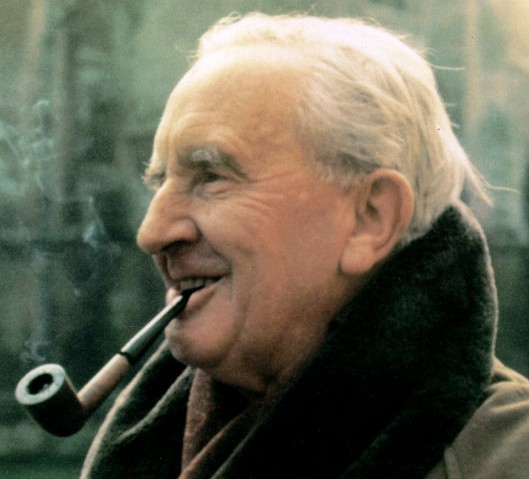
The Master

——————————————————————————————————

Alon Shalev is the author of The Accidental Activist and A Gardener’s Tale. He has written two fantasy novels and the first has been entered into the Amazon Breakthrough Novel Award in January 2012. More on Alon Shalev at http://www.alonshalev.com/and on Twitter (@elfwriter).

When is an Elf not an Elf? And why do we care?

Yes, my novel is compelling, special, well-written etc. just like the 499 other epic fantasy manuscripts sitting in the slush piles of every publishing house that offers YA epic fantasy.

I am working with an agent who is asking the challenging and insightful questions that will help my manuscript stand out from the rest. It is tough and I am feeling very possessive. Last week I shared his prompting to seek a Higher Concept.

One of the aspects that he wants me to consider is changing my elves, who make up many of the main characters and cultural references. He suggests that I consider changing the elves for a new, mythical race that will set me apart from the rest.

Let me state from the outset that I have no doubt this man knows far more than I about the publishing world, has considerable experience and understands the current state of the publishing world.

But my elves? Our elves? Those of us who grew up on Tolkein, Paolini, Brooks and others, have standards, images, friends. Legolas and Anwen, Arya and Blodgarm, and many others have created a rich and familiar texture. We welcome them surfacing as we settle into a thick novel. We embrace them because there are common threads that pass between authors. We call it a culture, those who don’t read fantasy roll their eyes.

                               Nobel Haldir – we owe him for Helm’s Deep, no?

Terry Brooks’ children know that he is not all there, he tells us as much when he opens his book Sometimes the Magic Works: Lessons from a Writing Life. More on this book in a later blog.

But Brooks in not dissimilar to the rest of us, just considerably more talented! We pass through a gate in our imagination and reacquaint in a world that exists in a shared consciousness.

Here the elves are tall, thin, light-footed and beautiful. They are fast and posses stealth and discipline. They are in touch with the energy of the earth, the forest, the animal kingdom. They excel in archery, crafts and healing. Perhaps they are aloof, elitist, and closed to the other races, but this comes from their ancient and rich heritage. We know and love them.

We rejoiced to learn that Peter Jackson is bringing Legalos into a prominent role in the hobbit. Well, a few raised eyebrows, since Legalos was not even referred to by name in The Hobbit when he appeared flanking his father, the King of Mirkwood.

We accept, even with a bit of jealousy that he can fight at Helms Deep for five days, or run non stop for three and still not need to brush his immaculate hair. Nor do we care that his quiver seems to replenish itself, an occupational hazard of any archer who fights battles every other day.

We don’t mind because elves epitomize something that we identify with. We all want to be beautiful, brilliant, in excellent physical condition and, of course, environmentalists. When R.A. Salvatore created Drizzt Do’Urden and the dark elves of Menzoberranzan, a giant underground drow city-state he broke new ground.

Many of us were repelled and had it not been created in the hands of a master of fantasy, we would have rebelled. It was daring, it worked and by Book Three, we were rewarded with the typical elf one finds above ground.

It is tough to turn away from the basic tenets of epic fantasy: the teacher and student, the quest, the fight against a powerful evil, dwarves, elves, dragons, a rich natural world. There is something that has entered our collective consciousness and taken root.

It is why we read and reread the masters…and it is why we will return to read those who take over the role of entertaining us in a way that only epic fantasy does.

——————————————————————————————————

Alon Shalev is the author of The Accidental Activist and A Gardener’s Tale. He has written two fantasy novels and the first will enter the Amazon Breakthrough Novel Award in January 2012. More on Alon Shalev at http://www.alonshalev.com/and on Twitter (#elfwriter).