At The Next Dwarf Mine Turn Left.

I came across this great article by Roberta Osborn called How to Create A Map For Your Novel. It is very cool and I strongly recommend to those of you who are fantasy or sci-fi writers and may be considering drawing a map, that you follow the link.

Two other articles that I found are from Fantasy Faction and a low-tech video.

When writing Wycaan Master, I never thought to draw a map. Only when I began to write a sequel and realized that I had to keep my characters following a certain geographical framework did I consider making one.

Given that I have no artistic talent, and that my son who helped me write and edit, better understands which end of a pencil is which, I charged him with the task. Being of prime pre-teen material, he refused. In the ensuing negotiation, we agreed to tackle it together.

We went through the manuscript and highlighted every change in direction, every named mountain range and forest. He then took a piece of paper and began to draw. We were soon off the page and took another piece of paper and, utilizing cutting-edge technology, taped the two pages together. They soon blossomed into several pages at unruly angles one to the other, with absolutely no way the map could be folded.
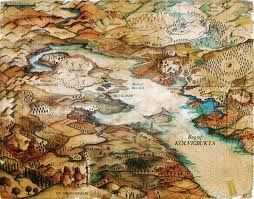
it was clearly destined to be crumpled, torn, and otherwise abused. Today, it sits somewhere in our humble abode under a pile of mutually discarded papers that are not yet quite trash-worthy. It is a tragic tale.

As I look through the articles above, I am struck with a series of questions for those who read epic fantasy. Remember, that I am new, if enthusiastic, to the genre. If you have the energy please answer any or all of the following questions.

1) Do you look at a map at the beginning of a fantasy novel? If so, how much do you study it?

2) Do you refer back to the map as you read the book?

3) Is there any room in epic fantasy for a GPS?

Answers to the first two questions will be greatly appreciated.
Have a great weekend,

Alon

——————————————————————————————————

Alon Shalev is the author of The Accidental Activist and A Gardener’s Tale. He has written two fantasy novels and the first has reached the Quarter Finals of  the Amazon Breakthrough Novel Award as of March 2012. More on Alon Shalev at http://www.alonshalev.com/and on Twitter (@elfwriter).

When is an Elf not an Elf? And why do we care?

Yes, my novel is compelling, special, well-written etc. just like the 499 other epic fantasy manuscripts sitting in the slush piles of every publishing house that offers YA epic fantasy.

I am working with an agent who is asking the challenging and insightful questions that will help my manuscript stand out from the rest. It is tough and I am feeling very possessive. Last week I shared his prompting to seek a Higher Concept.

One of the aspects that he wants me to consider is changing my elves, who make up many of the main characters and cultural references. He suggests that I consider changing the elves for a new, mythical race that will set me apart from the rest.

Let me state from the outset that I have no doubt this man knows far more than I about the publishing world, has considerable experience and understands the current state of the publishing world.

But my elves? Our elves? Those of us who grew up on Tolkein, Paolini, Brooks and others, have standards, images, friends. Legolas and Anwen, Arya and Blodgarm, and many others have created a rich and familiar texture. We welcome them surfacing as we settle into a thick novel. We embrace them because there are common threads that pass between authors. We call it a culture, those who don’t read fantasy roll their eyes.

                               Nobel Haldir – we owe him for Helm’s Deep, no?

Terry Brooks’ children know that he is not all there, he tells us as much when he opens his book Sometimes the Magic Works: Lessons from a Writing Life. More on this book in a later blog.

But Brooks in not dissimilar to the rest of us, just considerably more talented! We pass through a gate in our imagination and reacquaint in a world that exists in a shared consciousness.

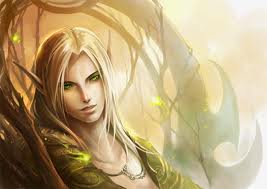
Here the elves are tall, thin, light-footed and beautiful. They are fast and posses stealth and discipline. They are in touch with the energy of the earth, the forest, the animal kingdom. They excel in archery, crafts and healing. Perhaps they are aloof, elitist, and closed to the other races, but this comes from their ancient and rich heritage. We know and love them.

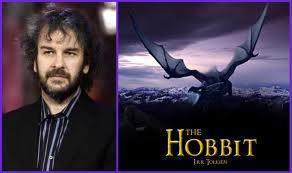
We rejoiced to learn that Peter Jackson is bringing Legalos into a prominent role in the hobbit. Well, a few raised eyebrows, since Legalos was not even referred to by name in The Hobbit when he appeared flanking his father, the King of Mirkwood.

We accept, even with a bit of jealousy that he can fight at Helms Deep for five days, or run non stop for three and still not need to brush his immaculate hair. Nor do we care that his quiver seems to replenish itself, an occupational hazard of any archer who fights battles every other day.

We don’t mind because elves epitomize something that we identify with. We all want to be beautiful, brilliant, in excellent physical condition and, of course, environmentalists. When R.A. Salvatore created Drizzt Do’Urden and the dark elves of Menzoberranzan, a giant underground drow city-state he broke new ground.

Many of us were repelled and had it not been created in the hands of a master of fantasy, we would have rebelled. It was daring, it worked and by Book Three, we were rewarded with the typical elf one finds above ground.

It is tough to turn away from the basic tenets of epic fantasy: the teacher and student, the quest, the fight against a powerful evil, dwarves, elves, dragons, a rich natural world. There is something that has entered our collective consciousness and taken root.

It is why we read and reread the masters…and it is why we will return to read those who take over the role of entertaining us in a way that only epic fantasy does.

——————————————————————————————————

Alon Shalev is the author of The Accidental Activist and A Gardener’s Tale. He has written two fantasy novels and the first will enter the Amazon Breakthrough Novel Award in January 2012. More on Alon Shalev at http://www.alonshalev.com/and on Twitter (#elfwriter).