What’s With The Pipe?

When you write epic fantasy, you have the privilege sit before a blank page (well screen nowadays). You make up all the rules. If you want these creatures to have different colored skin, pointed ears, horns, or magic, go for it. If you want to have unicorns, dragons, or any creature you make up, it is your right.

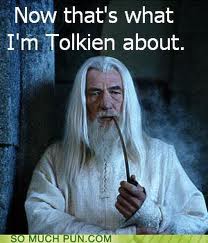
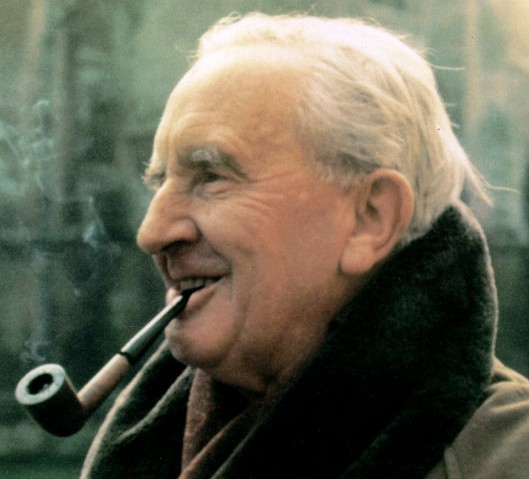
So what’s with the pipe? I know, Tolkien smoked, but he strode around Oxford in tweed, talking languages no one else remembers. In fact, there are a lot of characteristics about the master that we can adopt.

I think the secret lies with those who puff. I used to smoke a pipe for several years, seeing it as a compromise, a halfway house between smoking cigarettes and not. I loved my pipe. I craved the taste, loved the touch of the warm bowl, and enjoyed packing the pipe correctly, even cleaning it. All day, I looked forward to that time when I could put my feet up and puff the worries of the world away. 

I succeeded in giving up cigarettes for the pipe, but giving up the pipe proved tougher than I could imagine. This is not an article about smoking cessation, but even eight years later, if someone passed by me with his briar, or even is sitting a hundred feet away (given the correct wind), I will smell it, yearn for it, crave it for the rest of the day …  maybe for the rest of my life.

Perhaps this is why we continue to give our characters an opportunity that we are denying ourselves. Are we being foolish? Indulgent? 

I recently read a scene to my writer’s group in which, shortly after a bloody fight, the characters (those who survived) sat down and puffed their pipes. A colleague questioned me having my characters smoking in a YA novel. 

Fair point, I thought, until I realized that she had not objected to me exposing my tender, young readers to battle, killing, blood and gore.

I guess that one man’s poison is…well poison is poison. I shall have to sit and think about this. Now where’s my pi–.

Why do you think pipe smoking is a mainstay in fantasy novels?

Good reading.

——————————————————————————————————

Alon Shalev is the author of The Accidental Activist and A Gardener’s Tale. He has written three epic fantasy novels and the first reached the Quarter Finals of the Amazon Breakthrough Novel Award as of March 2012. More on Alon Shalev at http://www.alonshalev.com/and on Twitter (@elfwriter).

It’s In The Journey

“The problem with your genre,” the man declared with a smirk, “is that the reader always know what’s going to happen in the end. That’s why I never read fantasy.”

I could have asked him how he knew this since he admitted to not reading the genre. I might have questioned whether romance (the most popular fiction genre) or cookbooks (most popular non fiction) are any different. Those recipes never work for me!

Instead, I asked him what it was about epic fantasy that made it popular assuming he was right about the predictable endings. To his credit, he thought a while before answering. “It’s in the journey,” he replied.

I’ve been thinking about this. During my summer vacation, we camped by a river. The locals told me that there were no fish inhabiting it and it was only good for swimming in.

We went down to the river and my sons had a great time with their river rats (inflated tubes) negotiating small rapids.

I got out my fly rod, walked a bit upstream and stood in the middle of the water casting. The river was beautiful and clear, the rocks underneath and protruding were smooth and colorful. Majestic redwoods surrounded us and a noble mountain peak loomed above me. Wisps of fog hugged the tops of the trees and later in the day came almost to the edge of the water.

The author, deftly not catching fish!

I imagined where a wild trout (huge one of course) would hover and allow its prey to float right to it (a feeding pool, I think the experts call it). I cast my fly and watched it float in a wide arc. Being of only limited skill it took me a while to cast to the right distance, but I was very satisfied when I could consistently float my fly into the (imaginary) feeding pool.

A couple walked past arm-in-arm and the man felt compelled to tell me that there were no fish in the river. I nodded and told him I knew. He shrugged, but his partner got it, I think.

“Enjoy yourself,” she said.

I did enjoy myself that afternoon. I enjoyed setting up my fly rod and casting it out. I enjoyed the river, the trees, the mountain, the fog. I felt myself sighing as I released the tension of my real world and let it float away with the river.

Hemingway fly-fished. Tolkien smoked a pipe (I couldn’t find evidence that he fished but he wrote poems about it – see below). I strive to walk in the shadow of Tolkien rather than Hemmingway, but the pipe has long been relinquished. Still I remember the pleasure I got in packing and lighting the pipe, even cleaning it. I still yearn for the smell of the Borkum Riff tobacco all these years later. I miss it more than the smoking for sure. I recall the anticipation of waiting all day for that special time after dinner when I could sit outside my little house and puff away the worries of the day.

Gimli lights up after a hard day of killing.

At the end of one of my fantasy novels is a twist I am very proud of. Those who have read it all tell me that they gasped at that moment. In my writer’s group, while still only on page six of that novel, one of the women guessed the twist.

I never responded, never told her she was right. I want her to enjoy the journey.

Happy fishing everyone, however you cast your rod. I’ll leave you in the hands of the Master:

Fish Riddle

Alive without breath;
as cold as death;
never thirsting, ever drinking;
clad in mail, never clinking.
Drowns on dry land,
thinks an island
is a mountain;
thinks a fountain
is a puff of air.

So sleek, so fair!
What a joy to meet!

We only wish
to catch a fish,

 So juicy-sweet!

                                                      From Lord of the Rings By J.R.R. Tolkien

——————————————————————————————————

Alon Shalev is the author of The Accidental Activist and A Gardener’s Tale. He has written three epic fantasy novels and the first reached the Quarter Finals of the Amazon Breakthrough Novel Award as of March 2012. More on Alon Shalev at http://www.alonshalev.com/ and on Twitter (@elfwriter).

I Didn’t Make The Cut

I’m bummed. This week 50 writers saw their manuscripts advance to the Semi-Final stage of the Amazon Breakthrough Novel Award – YA category. My humble offering – Wycaan Master – was not one of them. It reached the Quarter-Final, ahead of a few thousand others, but…

In an odd sense of timing, I will finish reading the 95,000 word epic fantasy story to my writer’s group. They stuck with me over the past 18 months though none (until the last couple of months) read or are interested in fantasy. Thank you – Berkeley Writers Group.

Either you think epic fantasy is alive and thriving (Tolkien, Terry Brooks, R.A. Salvatore etc.,) or you think the only fantasy that sells is high concept – Harry Potter, The Hunger Games…

It is hard writing in two genres – social justice-themed novels reflect my lifestyle and values. Young-adult fantasy was inspired by a writing project with my preteen son and has been a lot of fun. But they serve two separate target audiences and I maintain a separate blog and twitter account.

I have to admit, I’ve arrived at a junction. I have not only sweated over a first YA fantasy manuscript, but completed a second, and am 30,000 words into a third. It is  a series and I must admit: I’m kind of hooked on it.

I want to see how my young heroes (and villains – who I am also quite attached to) grow. Will the races of Odessiya unite? What is the Emperor’s secret power that enables him to keep winning? Will shy Seanchai and his guide, Ilana, ever hook up?

As a reader becomes hooked on a series and feels compelled to read through to the end, I have discovered that so can an author become ensnared. It might well be an issue of not writing an outline and having faith in the story evolving, but I need to discover what happens in the world I’ve created.

Even if I didn’t make the cut.

——————————————————————————————————

Alon Shalev is the author of The Accidental Activist and A Gardener’s Tale. He has written two fantasy novels and the first reached the Quarter Finals of  the Amazon Breakthrough Novel Award as of March 2012. More on Alon Shalev at http://www.alonshalev.com/and on Twitter (@elfwriter).

Ever Been To The World I Invented?

How do you explain to someone how to write about a place that you made up? Or a race that has never existed? How to describe the unexplored or give directions to a destination that you have never been to?

Fantasy (and sci-fi) writers are in a unique position in the writing world. A friend of mine is writing a historical novel from the Vietnam War. It is from a time and place that she never experienced. Yet, thorough diligent research and patient interviews, she has built an authentic account of the jungles, the battles, and the actions of soldiers.

But I have to confess, and let’s just keep this between you and me; I have never met an elf, never yielded high magic or walked and breathed underwater (I tried the latter – it didn’t work). In Wycaan Master, one of my elves performed a particular feat. He will do it several times throughout the three novels and his teacher explains the rudiments to him. Nonetheless one of my dear friends from my writer’s group (not a fantasy writer) proclaimed: “elves can’t do that.” 

Our group boasts a number of very smart people, all of whom I am sure, thought what one asked. “Oh really? How many elves do you know?”

We laughed and decided that these were my elves and I could do what I want with them. It was amusing and yet, who sets the rules?

The obvious answer is that the market does, and the market is the reader. Buy a fantasy writer a couple of beers and s/he will admit that we all live in the shadow of the greats, with Tolkien being the greatest of them all.

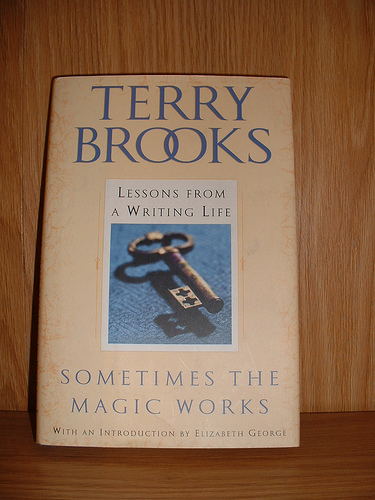
In the pantheon upon which the great Ring Writer sits, are others held in great esteem. I am devouring Terry Brooks‘ Shannara series, and so I came across a book he wrote to explain his craft.

 The book is called: Sometimes The Magic Works – Lessons From A Writing Life. Brooks deals with such issues common to all who write fiction such as plot, characters, hook, dialogue etc., but he also spends time on more specialized aspects such as world creating, or even how it is different perhaps to hold the threads of a plot through a number of books or corresponding paths in a single book.

I read through Sometimes The Magic Works – Lessons From A Writing Life once, enjoying his autobiographical content as much as his craft teaching. I am going away soon for a week and plan to take the book and reread.

 I have two questions:

 1) What makes writing fantasy different from other genres in terms of craft and technique?

2) Are there other good books on writing that are specific to the fantasy genre?

Drop me a note on the blog or tweet any suggestions. I appreciate your help.

Good Writing and Reading,

Alon

——————————————————————————————————

Alon Shalev is the author of The Accidental Activist and A Gardener’s Tale. He has written two fantasy novels and the first has reached the Quarter Finals of  the Amazon Breakthrough Novel Award as of March 2012. More on Alon Shalev at http://www.alonshalev.com/and on Twitter (@elfwriter).

Traditional Epic Fantasy and The Higher Concept

There is a lot of discussion among fantasy writers about the need for the Higher Concept. Can an epic fantasy novel succeed if it is about a young underdog with a magical talent, who needs to overcome the evil (insert whoever)?

True, Tolkien did it, Brooks did it, as have many others. But they are established authors with huge followings. Who will take a chance on the unknown author?

I feel very defensive about this: what about memorable characters, internal conflicts, and plot twists? How about strong dialogue and a couple of intriguing plot twists?

The question is, whether these key components are enough to allow a manuscript to rise through the slush pile in an agent’s office?

There is no question about why Harry Potter, Percy Jackson or The Hunger Games, all stood out to their respective agents and publishers. But I can’t help wondering whether there isn’t something attractive in the familiar.

I have read eight books in Terry Brook’s Shannara series. I will start the ninth soon. I am not bored as each series offers something different, but the tropes remain similar and still I come back for more.

And while I am in defensive mode: Does Grisham, Patterson, or Steel, offer anything new within their genres with each novel? Romance, mystery, crime: don’t they have their own tropes that figure in book after book.

From Terry Brooks – First King of Shannara. copyright ©Andy Simmons 1995-2002

When people get familiar with a genre, do they not go looking for these tropes? Is it not enough to ensure a strong plot with twists, distinct characters and strong dialogue?

What do you think?

——————————————————————————————————

Alon Shalev is the author of the 2013 Eric Hoffer YA Book Award winner, At The Walls of Galbrieth, and five other Wycaan Master books all released by Tourmaline Books. The link above takes you to the Kindle versions. For all other eReaders, please click here.

More at http://www.alonshalev.com and on Twitter (@elfwriter).

What is The Future of Epic Fantasy?

I have mentioned in past posts that I am seeking to differentiate my novel from other epic fantasy series. I am being continually told by those insiders that every descent agent and publisher has five hundred manuscripts on their groaning desks about swords and quests and good .v. evil. Apparently these agents groan whenever an elf is mentioned (especially if s/he is tall, thin, loves nature etc.).

At the Berkeley Writers critique group, visitors often ask: what differentiates this from Lord of the Rings?

All this begs the question: what is the future of epic fantasy?

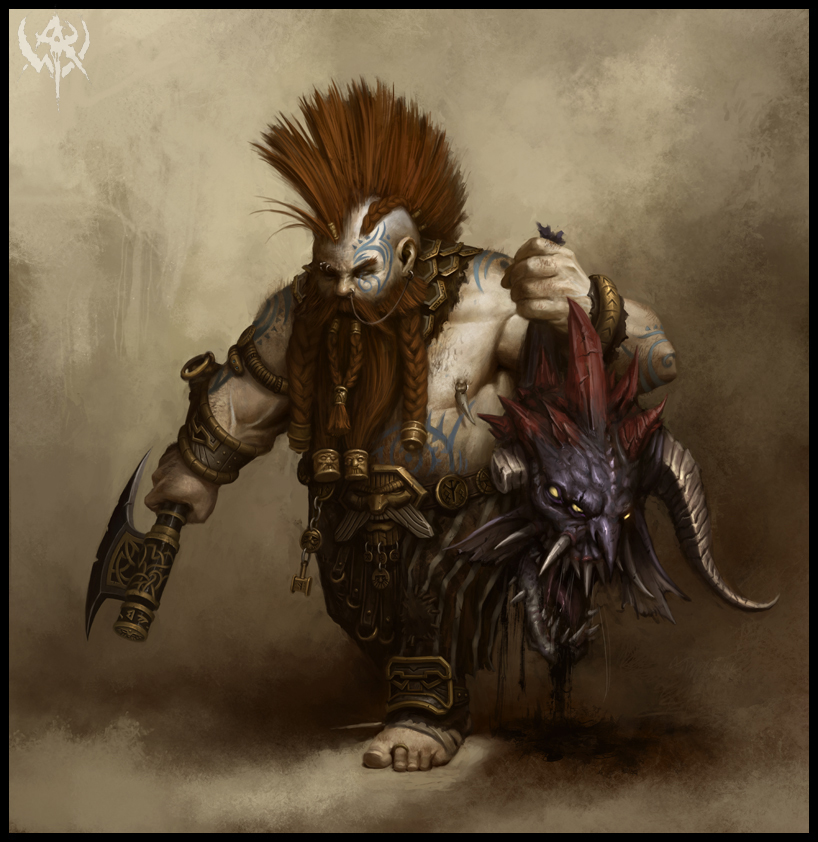
Is it okay to accept that there are certain conventions that are timeless? Are dwarfs small and stout, brave and ready for a rumble? Is it okay that they are miners and love to live underground?

Gimli - plenty of blades, no razor

Here are 10 basic ingredients that need to be questioned:

1) There is the good guy (or gal) and the bad one. The goods is the underdog, the bad is all-powerful, though hopefully will fall in the end.

2) Magic – the hero/heroine has something special about them that gives them a chance to win.

3) There is a teacher who mentors the hero/heroine.

4) The dwarfs are stereotypical – see above.

5) The elves are tall, beautiful, healers, wicked with the bow and arrows and…

6) Romance

7) Everything takes place in New Zealand-type environment.

8) There is a lot of walking about.

9) Swords, bows and arrows, lots of insignificant people dying.

10) Long novels, preferably in series form, with huge potential for movies.

Journeys that never end...

I have mentioned the high-concept challenge in earlier posts. The idea is to have something that is unique, that separates your fantasy novel from the rest. Enter Harry Potter and Hunger Games. 

And yet, we come back for more. A new novel from Terry Brooks or R.A Salvatore has us salivating. Christopher Paolini’s final book of the Inheritance series was eagerly awaited, and we all know when we are going to see the Hobbit movie even if we haven’t booked our summer vacations or filed our taxes.

When I mentioned the higher concept to a woman who has been reading my manuscript, she baulked. As long as there is a strong plot, a few twists, memorable characters, and a high level of writing, she said, a novel will always stand out from the rest.

The question is: Are the essential epic fantasy novel ingredients timeless? When Tolkien first created Middle Earth, did he set in motion a genre that will endure into the 21st Century?

The Master

——————————————————————————————————

Alon Shalev is the author of The Accidental Activist and A Gardener’s Tale. He has written two fantasy novels and the first has been entered into the Amazon Breakthrough Novel Award in January 2012. More on Alon Shalev at http://www.alonshalev.com/and on Twitter (@elfwriter).

Epic Fantasy’s Hall of Fame

Being new to the wonderful world of fantasy, I am published in political and transformation fiction, I am greatly in debt to Castle Fiction for a list of past and present masters. The comments after the names are mainly from the Castle Fiction, but I would love to hear which you have read and how you felt about them.

Past Major Fantasy Authors:

William Morris I admit that I have never heard of William Morris and understand that this is a hole in my education. I consider Tolkien to be the father of modern-day epic fantasy but apparently this is incorrect. “It all started with the publication in 1892 of the William Morris novel The Well at the World’s End. This is an outstanding piece of Epic Fantasy and it is considered to be the first epic fantasy work of the modern era. The same applies for another Morris novel titled “The Wood Beyond the World.”

Edith Nesbitt A prolific author at the end of the 19th century she created a genre of children’s fantasy literature. It often had normal contemporary children who engaged in magical adventures and discovered magical objects. She set the genre for many contemporary writers including J.K. Rowling. Some of her notable books are Five Children and It and The Story of the Amulet.

J.R.R. Tolkien A master of the craft that created the complete world of Middle Earth which included maps, languages and much more. Most notable works is the Lord of the Rings Series.

Tolkien - Middle Earth Master

Edgar Rice Burroughs Early twentieth century writer that created memorable characters and explored different worlds. His most memorable character is Tarzan. And his most popular series of books include the Barsoom series which takes place on Mars. The Venus series and the Pellucidar series which takes place within the hollow earth.

Robert E. Howard Mid 20th century writer who was a heavy contributor to the pulp fiction magazines. He is generally credited with creating the swords & sorcery genre. His most notable character is Conan.

T.H. White Mid 20th century writer who penned several books in the King Arthur tradition. The most notable of which is The Sword in the Stone which ushered in the modern Arthurian novel. Of note was a posthumous publication of his novel The Book of Merlyn

E.R.R. Eddison Considered to be the father of High Fantasy he wrote several books that influenced authors to come such as Lewis and Tolkien. Of his highly imaginative worlds The Worm Ouroboros is one of the most famous.

C.S. Lewis He was a scholar of medieval literature and mythology penning many works in a variety of genres including fiction, religious fiction and science fiction. His most notable works are the epic fantasy Chronicles of Narnia.

Present Major Authors:

Terry Brooks In the late 70’s Brooks published the novel The Sword of Shannara. It climbed to the top of best seller lists and stood there for years. Heavily drawing on Tolkien this book reintroduced the epic fantasy to the general public. Brooks continued the Shannara series with several more books. He has gone on to pen even more series.

Scene from Sword of Shannara

Terry Goodkind Writer of the Sword of Truth series which began with Wizards First Rule This is a solid series that takes a more serious approach to epic fantasy. The books explore philosophical questions. The series became a TV series – Legend of the Seeker – which lasted for two seasons.

Robert Jordan Is the writer of the enormously successful Wheel of Time series which is currently eleven volumes. He has also written many works based on the Robert E. Howard Conan character.

Stephen Donaldson Creator of The Chronicles of Thomas Covenant series of books which now number seven volumes and is most notable for its use of the anti-hero in which the main character maintains a reluctance to actually take on the mantle of the hero. He has written several other series in the genre.

Marion Zimmer Bradley Editor of the famous sword and sorcery series Bradley is also a prolific writer. Most notable among her writings is the Arthurian Avalon series which begun with The Mists of Avalon.

David Eddings Writer of sword & sorcery and epic fantasy series he is most famous for the Belgariad and the Mallorean series.

Raymond Feist Many of his works are set in the connected worlds of Midkemia and Kelewan. This is called the Riftwar series and the novels range over various geographic locations and span centuries. He began his writing with the first novel in the Riftwar series called Magician: Apprentice. Another series of note is the Krondor series.

Robin Hobb Is the author of several popular trilogies including The Farseer Trilogy, The Liveship Traders Trilogy and The Tawny Man Trilogy

Stephen King Although considered to be the master of horror King has published an enormous body of work in the fantasy genre. He crosses genre at will and breaks all the rules but notable is his Dark Tower Trilogy and The Eyes of the Dragon which is classic fantasy.

L.E. Modesitt Author of several series most notable are The Corean Chronicles
Set on the world of Corus (or Acorus), where strange and dangerous beasts roam and people with magical Talent can commit astonishing feats. Also is The Spellsong Cycle and The Timegod’s World which draws heavily on Norse legend.

George R.R. Martin Most notable for his Song of Ice and Fire series which was begun with A Game of Thrones in 1996.

Tad Williams Writer of several fantasy series the most notable of which Memory, Sorrow, & Thorn which was begun with The Dragonbone Chair

J.K. Rowling Creator of the enormously popular Harry Potter series which began with Harry Potter and the Sorcerer’s Stone. These books have also been transformed into successful movies.

David Farlane – The Author of the Acclaimed Runelords series. The fifth book has just been published and the first book is being made into a major motion picture.

What are your favorite authors of High or Epic Fantasy? Do you agree with the comments added above?

——————————————————————————————————

Alon Shalev is the author of The Accidental Activist and A Gardener’s Tale. He has written two fantasy novels and the first will enter the Amazon Breakthrough Novel Award in January 2012. More on Alon Shalev at http://www.alonshalev.com/and on Twitter (#elfwriter).

Why We Read Fantasy

I admit, it is a stretch to understand why someone would write novels with social injustice themes and run an grassroots political blog would suddenly go off and begin writing YA fantasy, But this I have done and I am trying to understand that there is no dichotomy as long as I enjoy the ride (and, I guess, my readers do).

I have just completed the manuscript for my second fantasy novel. What began a year ago as a way to bond with my oldest son (an avid 12-year-old fantasy reader) has become a whole new experience. I had previously read Tolkien, Paolini and probably a few others, but I never considered this my genre.

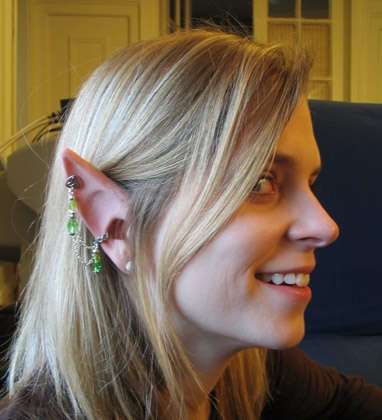
Now, 180,000+ (two books) on, I am avidly reading about fantasy writing techniques, devouring books by authors such as Terry Brooks and R.A. Salvatore, and considering getting my ears pointed (okay – but there really are people who do this cosmetic surgery).

Hey Mom, at least I promised no tatoos!

Whenever I tell people, especially those who know I write political fiction, about my foray into the world of fantasy, I do so in a somewhat apologetic way. Usually, I make sure to tell people that I am doing it for my son, which while true, is only one part as my enthusiasm grows. 

The question that is on my mind these days is why do intelligent, educated adults enjoy plowing through 90,000 word tomes about elves, dwarfs and dragons? Here are some Wiki answers:

“Some fantasy readers are unhappy with their lives and think that they would be happier in another world. A place where someone who is not so successful in this world might be a hero or king in another world.”

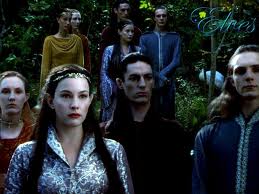
Lord of the Rings - No one understood elves like Tolkein.

“I like reading fantasy books because they provide me with a beneficial different point of view on world and everything. I like to think about it using the analogy to house that you may live in but you’ll never be able to understand if you don’t ever get outside and look at it from perspective.”

“You can see a lot of tiny details in fantasy books that you may somehow lose in your everyday life just because they aren’t getting enough your attention… Digest them and they’ll make your life more colorful and interesting.

A lot of fantasy is about the world we would like to see, a dream we want to pursue. Where would we be at if we didn’t dream?”

“Older readers might enjoy Fantasy because of its imaginative scope, and also because of the uncanny ability fantasy has to show us aspects of our own lives in an otherwise far-fetched format. People can relate to the emotions and experiences of fantasy characters, as well as mirror events in human history, through the blurred mirror of the fantasy world.”

“Fantasy is a place to escape when you no longer want to live in real life. Where you can let your imagination run free and have control over what you see and hear.

Many people like to escape the hustle and bustle of real life and be captured by a story which involves something special, unreal or different – possibly magic. People enjoy being in someone else’s shoes – someone extraordinary, so that we can look at the world through anothers eyes. You can switch off and enjoy letting your imagination run wild.”

Do you read fantasy? If so share what the attraction is for you? If you read it once in a period of your life, why then and not now?  Fascinating stuff. This blog is going to be a one-post-a-week (my other blog is daily) and focus on my journey into the world of fantasy.

Hey, want to join the quest? I promise swords, elves, brave exploits, and most of all, friendship.

——————————————————————————————————

Alon Shalev is the author of The Accidental Activist (now available on Kindle) and A Gardener’s Tale. He has written two fantasy novels and the first will enter the Amazon Breakthrough Novel Award in January 2012. More on Alon Shalev at http://www.alonshalev.com/and on Twitter (#elfwriter).