Big Boobs and Book Covers: A Critique of Fantasy Art

When I began soliciting artists interesting in creating the covers for At The Walls Of Galbrieth and The First Decree, I asked the artists for a rendering of Mhari, an elfe (politically correct term for female elf in Odessiya) who would become the first teacher of my protagonist, Seanchai.

I explained that she was old but vibrant, tough but wise, and I waited for the examples. Every one of the four artists produced sexy, buxom female warriors. I realize that sex sells ­– I considered moving to T-Mobile because of the woman in the advert not her motorbike, helicopter or the beautiful color purple (okay I am partial to motorbikes and purple, but lets stay on topic…) ­­– but these are YA books.

Wycaan Master 1 Just Front Cover

Apparently, the use of beautiful women on covers of YA Fantasy and Sci Fi are nothing new. This article follows the noble battle by author, Jim Hines.

Hines produced a series of great photos in which he poses in similar positions to scantily-clad women on book covers. Mr. Hines wasn’t against showing some skin himself.

_65356744_scifi“The way women are portrayed is just so ridiculous, so often, you just stop seeing it,” Hines says. “I think posing has made people see it again – you see how ridiculous it is when a 38-year-old fantasy writer is doing it.”

Hines began posting his poses at the beginning of 2012 and they quickly became the most visited. This gave him the idea to create a series to raise money for research to help fight Aicardi Syndrome, a genetic disorder, and he has raised over $15,000 to date.

_65373741_fear_comp

The issue of depicting women in fantasy art in a sexual way is nothing new and, in fact, quite rampant in role playing games like D&D. Tracey Hurley, co-founder of Prismatic Art Collection, has commented: “Women are so often portrayed assuming that a stereotypical hetero male is going to be the person looking at the cover, … Male characters [are] powerful and strong, and women’s sexuality will be emphasised. And why is that a problem? It’s constraining for both men and women.”

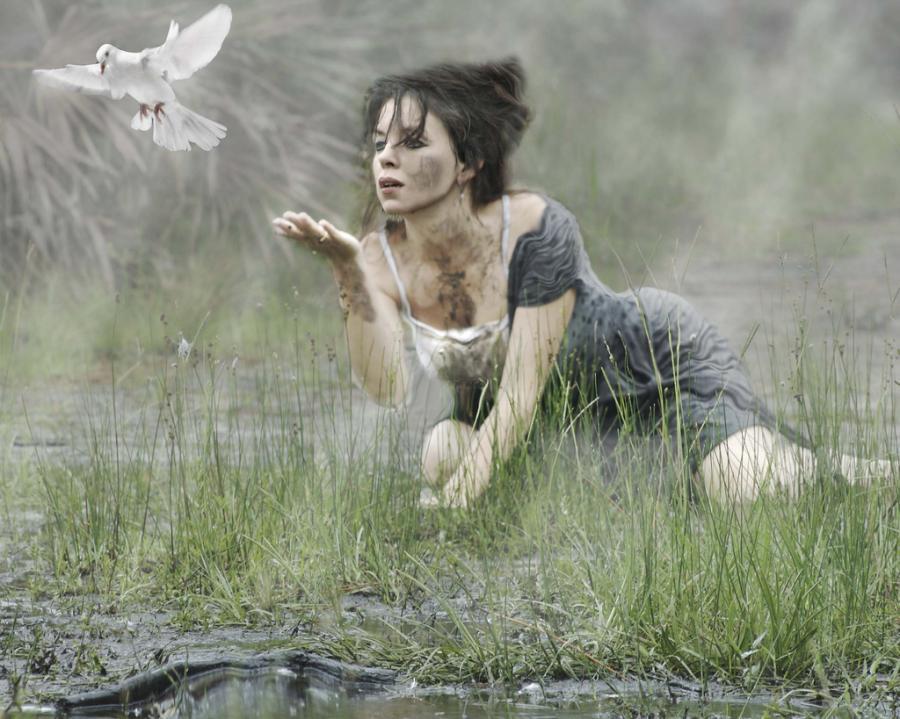
I find this really depressing. I guess I expected something different from a genre free of stereotypical constraints because it creates its own reality. This is all the more disappointing when dealing with Young Adult literature because of the target audience. I wonder whether a scantily-dressed, thin, and cleavage-heavy woman might also be a turn-off for young women, conscious of their own body-type. Add to this that most of the women portrayed are white and I am left wondering if this explains why less teenage women read fantasy. I also think it explains the success of The Hunger Games, though the promo photos for the movie also follow the concept.

imgresIt is not enough to just thrust a sword in her hand or dress her in a chain mail bikini to project strong images of women, nor is the cover of the book enough to reinforce strong, positive female values.

While my protagonist is a male, I made sure to add strong female characters, who are indispensable to his quest. I believe I showed them as more than equal warriors, each with her own special character. I needed prodding with this, I admit, and even changed Seanchai’s teacher from a man to a woman. Interestingly, it opened up a number of exciting avenues.

Authors are powerful influencers in the community, and even more so when writing for a Young Adult market. But power comes with responsibility and we have a role to play in shaping the next generation of thinkers, leaders, and innovators.

Even though many of us write about different worlds and kingdoms, let’s help make this world a better place.

—————————————————————————————————–

Alon Shalev writes social justice-themed novels and YA epic fantasy. He swears there is a connection. His latest books include: Unwanted Heroes and At The Walls Of GalbriethThe First Decree is due out in March 2013.

Sword and Gun Control

Epic Fantasy, among many genres, has the ability to whisk us away from reality and send us into a world of noble quests, ancient swords, and magnificent mythical animals. It also has the ability to offer wisdom for the world we live in and I have written about this before.

Airship10But sometimes it is really hard to let go and enter this world – or to return to the one we live in. I needed to write a post for this blog a day or so after the Sandy Hook Elementary School tragedy in Newtown, Connecticut, and I couldn’t. What can one possibly write on a blog like this? 

I searched the Internet, found something amusing and pre posted it. It was a cop-out; admittedly perhaps some much-needed comic relief. But I’ve been thinking about this ever since. If epic fantasy is anything more than escapism, then we should have something to say? 

When National Rifle Association VP, Wayne LaPierre, blames violent video games, perhaps to deflect the debate on gun control, we need to ask ourselves whether we as fantasy authors and readers are also glorifying violence. 

The fact we use bows and arrows, axes and swords instead of semi-automatic machine guns doesn’t make it cleaner. I admire (begrudgingly as it is sometimes hard to read) the gruesomeness of George R. R. Martin’s A Game of Thrones series. What he describes in his battle scenes are probably the closest we come to the reality of battle. 

imgres-8But I am stuck with the feeling that if we do not write about the darker side, how can we reach for the lighter? For a rainbow to appear, there needs to be a storm. We do have a responsibility not to glorify or keep the violence clean. I am not sure that I achieve this in At The Walls Of Galbrieth and especially not in the huge battles that take place in The First Decree. I am not sure how to even achieve this without excluding the young adults for whom I primarily write. I do not believe my 14-year-old son and his friends, who devour my books, should read A Game of Thrones because of the violence (and also the way he portrays sex).

How can we keep on moving forward after a tragedy? Does it not maybe become even more important not to give up? I’ll leave the last words to a couple of good friends.

FRODO: “What are we holding onto Sam?”

SAM: “That there’s some good in this world Mr. Frodo, and it’s worth fighting for.”

Frodo and Sam

——————————————————————————————————

Alon Shalev is the author of At The Walls of Galbrieth, Book 1 of The Wyccan Master series, which reached the Quarter Finals of the Amazon Breakthrough Novel Award 2012, released by Tourmaline Books. The First Decree, the sequel is due out in early 2013. Shalev is also the author of three social justice-themed novels: Unwanted Heroes, The Accidental Activist and A Gardener’s Tale. More on Alon Shalev at http://www.alonshalev.com and on Twitter (@elfwriter).

An Unexpected Journey

This weekend, J.R.R. Tolkien’s The Hobbit – An Unexpected Journey comes out. If you are reading this blog, you have probably been counting down along with the Mayans. I haven’t seen the movie yet, so there are no spoilers, but I am incredibly excited. I can’t wait to see it and have no doubt that I will love it, buy the DVD, change my computer’s wall paper and take my kids to eat breakfast at Denny’s…again!

imgres-2But there is something else that has me so stoked for this movie stands on the threshold of something historic: it is the induction of the next generation of epic fantasy readers. Just as Lord of the Rings ignited my generation’s interest, and Christopher Paolini’s Eragon sentenced my own children to a lifetime of reading and vivid imagination, The Hobbit will take a new, unsuspecting generation on an unexpected journey.

My own journey has been somewhat unexpected. Having written a series of well-received social justice-themed novels, I have been introduced to people who are passionate to see and work for a better world. I treasure the opportunities to meet readers at book signings and author meet ups.

DSCN1387As we approached the launch of At The Walls Of Galbrieth, I sought to define my target audience and had a big surprise. To begin with, there were the 100+ who filled out my survey ­– thank you all – and I began to discover a group of passionate and richly imaginative readership.

But here is what excites me. I am meeting a large number of students and teenagers who are die-hard readers of epic fantasy. They eloquently share their love for the creation of a new world, their desire to see everyday folk transform into heroes, and to believe in universal principles such as freedom, good over evil, and the value of friendship.

My social justice-themed novels all contain a common thread: an everyday person goes through a transformational experience which empowers them to pursue justice. Swap the multinational corporation for an evil Emperor, replace the use of social protest with a special bow and arrow, and we have similar themes.

My point is that epic fantasy creeps up on you. This weekend many ingenuous children, teenagers, and parents, are going to see a hyped-up movie and experience a transformation. They may not start yielding a sword and slaying dragons, but they just might embark on an unexpected journey of reading and enter into a world that drives our imagination and defines our social values…

All because in the words of a great wizard: “Hobbits really are amazing creatures.”

——————————————————————————————————

Alon Shalev is the author of At The Walls of Galbrieth, Book 1 of The Wyccan Master series, which reached the Quarter Finals of the Amazon Breakthrough Novel Award 2012, released by Tourmaline Books. The First Decree, the sequel is due out in early 2013. Shalev is also the author of three social justice-themed novels: Unwanted Heroes, The Accidental Activist and A Gardener’s Tale. More on Alon Shalev at http://www.alonshalev.com and on Twitter (@elfwriter).

What If Humans Were Real?

What if elves were real? There are those in the south of England who believe that elves exist. I heard this when researching for A Gardener’s Tale.  When a twitter friend shared with me that he had heard of this in the north of England, it made me wonder…

Delyphin rubbed the points of his ears as he waited for Harwin who was always late. He checked his watch. They would have to walk fast to reach the bookstore before the famous author began his reading. 

“Sorry, I’m late,” Harwin said as he jogged up.

They set off, hands in pockets. There was no point in chastising Harwin – it simply didn’t help.

“I‘m looking forward to this,” Harwin said. “I loved ‘Lady of the Earings’. The way that professor describes these mythical humans, I really begin to feel they exist.” 

I nodded, too winded to comment. The professor was a strange chap, lecturing at an elite university on ancient elven languages. They say he even invented an entire human language – as if all humans would speak the same language. Still he was a master of the epic fantasy genre.

We enter the bookstore, which is full and grab the last two seats.

Harwin leans in. “I hear he is planning on sending the humans on a new quest, that their world is threatened by some strange energy – ‘oyl’ – that is expensive, polluting and they go to war over it because there isn’t much.”

“That’s a bit of a stretch,” I say. “His humans are too smart to do that. Besides, they have the sun, the wind, and the waves of the ocean just like us. Why would they use this oyl?”

Harwin smiled. “You look rather irate. You might start believing in these humans too.”

“Don’t be daft, Harwin. That’s the beauty of epic fantasy. You get so into the story that you begin to believe the characters might actually be real. Next thing, you’ll be swearing you saw someone with round ears.”

We both laugh. That would be a sight.  The room hushes. The professor is about to speak. He opens his new book…and the world of the humans becomes real as he reads…

I can almost see their round ears and their oyl.

——————————————————————————————————

Alon Shalev is the author of At The Walls of Galbrieth, Book 1 of The Wyccan Master series, which reached the Quarter Finals of the Amazon Breakthrough Novel Award 2012, released by Tourmaline Books. The First Decree, the sequel is due out in early 2013. Shalev is also the author of three social justice-themed novels: Unwanted Heroes, The Accidental Activist and A Gardener’s Tale. More on Alon Shalev at http://www.alonshalev.com and on Twitter (@elfwriter).

A Poem In Elvish – J.R.R. Tolkien

This is a rare gem. That an author could possibly make up an entire language is mind-blowing. Yet we often forget that beyond the dragons, swords, and quests, J.R.R. Tolkien created an entire language. As a professor of philology (ancient languages) at Oxford University, Tolkien was already immersed in the mechanics of how a language is put together. 

But the professor took it to another level when he actually made up a language. With the hype beginning to build for The Hobbit movie, this poem surfaced read by the master himself.

Enjoy!

My own elvish is somewhat rusty, so here is a translation of Namarie (Farewell) courtesy of Josh Jones, who goes into greater detail about the when and where.  

Ah! like gold fall the leaves in the wind, long years
numberless as the wings of trees! The long years
have passed like swift draughts of the sweet mead
in lofty halls beyond the West, beneath the blue
vaults of Varda wherein the stars tremble in the
song of her voice, holy and queenly.

Who now shall refill the cup for me?

For now the Kindler, Varda, the Queen of Stars,
from Mount Everwhite has uplifted her hands like
clouds, and all paths are drowned deep in shadow;
and out of a grey country darkness lies on the
foaming waves between us, and mist covers the
jewels of Calacirya for ever. Now lost, lost for
those from the East is Valimar!

Farewell! Maybe thou shalt find Valimar. Maybe
even thou shalt find it. Farewell!

And, in case you haven’t got enough, here is Tolkien again, reciting the Song of Durin (in English). 

Have a great weekend,

Elfwriter

——————————————————————————————————

Alon Shalev is the author of The Accidental Activist and A Gardener’s Tale. He has written three epic fantasy novels and the first, which reached the Quarter Finals of the Amazon Breakthrough Novel Award 2012, is due out in January 2013 by Tourmaline Press. More on Alon Shalev at http://www.alonshalev.com and on Twitter (@elfwriter).

Where Do People Like Us Hang Out?

“Go forth and find your target audience,” I was told and I posted a questionnaire that many of you were kind enough to answer (if you haven’t, it is not too late, and I do promise to share my findings).

“Keep defining and refining it,” my mentor continued and so I have a question for you.

Where do you hang out? Where do you meet others such as you and me; those who believe in elves, dwarves, noble quests, and dragons? And please don’t tell me: Alagaësia, Middle Earth or Shannara – I’ve been there and I never saw you!

When you don’t have your nose in an exciting book, where do you meet fellow fantasy readers? Do you frequent conferences? Do you read magazines (on-line or tree form)? Are you on a social networking fantasy site, a discussion group, or a fantasy book club?

Please leave your tracks in the comments below. It will help me find companions for my journey and help others find company too.

I appreciate your help. Oh, and next time you pop into Alagaësia, Middle Earth or Shannara, would it hurt to say hi?

Finally something totally unconnected to this blog: This past week Muslims were insulted, Christians died from the violence, and Jews were blamed. We are all victims when we set ourselves apart. Sometimes it just feels easier to lose yourself in the world of elves, dwarves and dragons.

May we all learn to celebrate our differences together and share the space. There is enough room for us all. Safe travels wherever your road takes you.

——————————————————————————————————

Alon Shalev is the author of The Accidental Activist and A Gardener’s Tale. He has written three epic fantasy novels and the first reached the Quarter Finals of the Amazon Breakthrough Novel Award as of March 2012. More on Alon Shalev at http://www.alonshalev.com/and on Twitter (@elfwriter).

What’s With The Pipe?

When you write epic fantasy, you have the privilege sit before a blank page (well screen nowadays). You make up all the rules. If you want these creatures to have different colored skin, pointed ears, horns, or magic, go for it. If you want to have unicorns, dragons, or any creature you make up, it is your right.

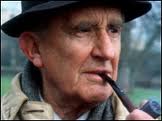
So what’s with the pipe? I know, Tolkien smoked, but he strode around Oxford in tweed, talking languages no one else remembers. In fact, there are a lot of characteristics about the master that we can adopt.

I think the secret lies with those who puff. I used to smoke a pipe for several years, seeing it as a compromise, a halfway house between smoking cigarettes and not. I loved my pipe. I craved the taste, loved the touch of the warm bowl, and enjoyed packing the pipe correctly, even cleaning it. All day, I looked forward to that time when I could put my feet up and puff the worries of the world away. 

I succeeded in giving up cigarettes for the pipe, but giving up the pipe proved tougher than I could imagine. This is not an article about smoking cessation, but even eight years later, if someone passed by me with his briar, or even is sitting a hundred feet away (given the correct wind), I will smell it, yearn for it, crave it for the rest of the day …  maybe for the rest of my life.

Perhaps this is why we continue to give our characters an opportunity that we are denying ourselves. Are we being foolish? Indulgent? 

I recently read a scene to my writer’s group in which, shortly after a bloody fight, the characters (those who survived) sat down and puffed their pipes. A colleague questioned me having my characters smoking in a YA novel. 

Fair point, I thought, until I realized that she had not objected to me exposing my tender, young readers to battle, killing, blood and gore.

I guess that one man’s poison is…well poison is poison. I shall have to sit and think about this. Now where’s my pi–.

Why do you think pipe smoking is a mainstay in fantasy novels?

Good reading.

——————————————————————————————————

Alon Shalev is the author of The Accidental Activist and A Gardener’s Tale. He has written three epic fantasy novels and the first reached the Quarter Finals of the Amazon Breakthrough Novel Award as of March 2012. More on Alon Shalev at http://www.alonshalev.com/and on Twitter (@elfwriter).

It’s In The Journey

“The problem with your genre,” the man declared with a smirk, “is that the reader always know what’s going to happen in the end. That’s why I never read fantasy.”

I could have asked him how he knew this since he admitted to not reading the genre. I might have questioned whether romance (the most popular fiction genre) or cookbooks (most popular non fiction) are any different. Those recipes never work for me!

Instead, I asked him what it was about epic fantasy that made it popular assuming he was right about the predictable endings. To his credit, he thought a while before answering. “It’s in the journey,” he replied.

I’ve been thinking about this. During my summer vacation, we camped by a river. The locals told me that there were no fish inhabiting it and it was only good for swimming in.

We went down to the river and my sons had a great time with their river rats (inflated tubes) negotiating small rapids.

I got out my fly rod, walked a bit upstream and stood in the middle of the water casting. The river was beautiful and clear, the rocks underneath and protruding were smooth and colorful. Majestic redwoods surrounded us and a noble mountain peak loomed above me. Wisps of fog hugged the tops of the trees and later in the day came almost to the edge of the water.

The author, deftly not catching fish!

I imagined where a wild trout (huge one of course) would hover and allow its prey to float right to it (a feeding pool, I think the experts call it). I cast my fly and watched it float in a wide arc. Being of only limited skill it took me a while to cast to the right distance, but I was very satisfied when I could consistently float my fly into the (imaginary) feeding pool.

A couple walked past arm-in-arm and the man felt compelled to tell me that there were no fish in the river. I nodded and told him I knew. He shrugged, but his partner got it, I think.

“Enjoy yourself,” she said.

I did enjoy myself that afternoon. I enjoyed setting up my fly rod and casting it out. I enjoyed the river, the trees, the mountain, the fog. I felt myself sighing as I released the tension of my real world and let it float away with the river.

Hemingway fly-fished. Tolkien smoked a pipe (I couldn’t find evidence that he fished but he wrote poems about it – see below). I strive to walk in the shadow of Tolkien rather than Hemmingway, but the pipe has long been relinquished. Still I remember the pleasure I got in packing and lighting the pipe, even cleaning it. I still yearn for the smell of the Borkum Riff tobacco all these years later. I miss it more than the smoking for sure. I recall the anticipation of waiting all day for that special time after dinner when I could sit outside my little house and puff away the worries of the day.

Gimli lights up after a hard day of killing.

At the end of one of my fantasy novels is a twist I am very proud of. Those who have read it all tell me that they gasped at that moment. In my writer’s group, while still only on page six of that novel, one of the women guessed the twist.

I never responded, never told her she was right. I want her to enjoy the journey.

Happy fishing everyone, however you cast your rod. I’ll leave you in the hands of the Master:

Fish Riddle

Alive without breath;
as cold as death;
never thirsting, ever drinking;
clad in mail, never clinking.
Drowns on dry land,
thinks an island
is a mountain;
thinks a fountain
is a puff of air.

So sleek, so fair!
What a joy to meet!

We only wish
to catch a fish,

 So juicy-sweet!

                                                      From Lord of the Rings By J.R.R. Tolkien

——————————————————————————————————

Alon Shalev is the author of The Accidental Activist and A Gardener’s Tale. He has written three epic fantasy novels and the first reached the Quarter Finals of the Amazon Breakthrough Novel Award as of March 2012. More on Alon Shalev at http://www.alonshalev.com/ and on Twitter (@elfwriter).

Teaching LOTR in School

English Teacher and novelist, Roger Colby, proses teaching Tolkien in school. Here he explains in his excellent post. Your thoughts?

Thanks for the feedback to my previous Tolkien posts. Have a great weekend.

——————————————————————————————————

Alon Shalev is the author of The Accidental Activist and A Gardener’s Tale. He has written three epic fantasy novels and the first reached the Quarter Finals of the Amazon Breakthrough Novel Award as of March 2012. More on Alon Shalev at http://www.alonshalev.com/ and on Twitter (@elfwriter).

Roger Colby, Novelist's avatarWriting Is Hard Work

J.R.R. Tolkien’s The Lord of the Rings is probably one of the most important texts written in the 20th century.  It is also a text that most students can read without much difficulty if given proper time.  Most teachers do not realize that the epic saga can be used to teach most of the Common Core Standards.  I have devised a unit for English teachers to use which is based on a unit I taught a few years ago when I was experimenting with using Advanced Placement style instruction in an at-level classroom.  It will work well for Common Core and will work for a freshman or sophomore class as juniors focus on American literature while seniors focus on British literature.

1.  Unit Thematic Questions – I ask several questions (meant for free-writing sessions) before we begin reading the text: What does power mean to you?  State several types…

View original post 1,841 more words

Fantasy – A Pagan Conspiracy?

First a big Thank You to the 30+ people who filled out my survey – Who Are My Target Audience – I am going to keep tweeting it and hopefully reach my goal of 50 responses (it makes it easy for my mathematically-challenged brain to do percentages).  If you have not had the time, please consider three minutes to answer ten questions by clicking here.

The first time I read that someone was uncomfortable with her children reading YA fantasy because of the Pagan themes running through it, I dismissed the reader as a maverick who is worried she won’t succeed in passing on her religious lifestyle to her children. But I have now seen this a couple of times.

I am sensitive to this. My first published novel, A Gardener’s Tale, follows the yearly cycle of the Pagan religion as it was (and still it) celebrated in rural Britain, and shines light on the struggle of Christianity to crush it.  While the novel was received enthusiastically in the Pagan community (their leader Vivienne Crowley called it “A beautiful and elegiac evocation of a timeless Britain and of a man of the ancient ways of the earth who brings peace and healing where the flames of persecution once burned.”), I incurred the wrath of many religious Jews and Christians.

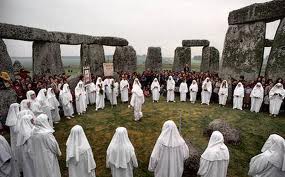
The Pagan religion is based upon the agrarian cycle and the farmer’s connections to the earth. Being mysterious, the emergence of an earth-based religion, where there was power and magic in the earth and those who stewarded her (yes – her, another topic) were worshiped and studied.

A common theme in many books, mine included, is the source of magic comes from the earth, from nature, through animals and the elements. The Druids, so often mentioned, were a genuine religious order. The witches, millions of whom were burned at the stake as Christianity raised a frenzy of anti-women, anti-anything, were often healers who used herbs and minerals that were gifts from the earth. Even the Jedi Order harnessed an energy, the Force, from everything living around them.

Other common elements include the quest, the holy (magical) props, the connection with and reverence of nature. Most of all, however, is the power of story. All religions and spiritual practices maintain a powerful element of stories, legends, parables, a narrative history (the best selling book of all time, anyone?).

I am skeptical that there is an international conspiracy to revive the Pagan religion through instilling scintillating epic fantasy novels insidiously into the minds of our unsuspecting youth (now you are convinced that I am the High Priest – isn’t this how conspiracy theory works?).

However, it is not a huge leap of faith to think that those who put quill to parchment (there is probably an app for this) and write such stories do have aspirations of teaching certain noble morals and principles. I recently wrote in an interview:

“Working on the novel with my (now 12-year-old) son and seeing the potential to share my values and political beliefs while imbibing a profound love for storytelling and reading. I have seen the impact of the Harry Potter series and Christopher Paolini’s Inheritance series on my son and his friends. I want to help shape the landscape of the next generation’s imagination and maybe even the society they strive to create.”

Now if that is not a declaration to take over the world

Finally, one more plug – if you have a few minutes please fill out my survey – Who Are My Target Audience – and Thank You again to those who already have.

——————————————————————————————————

Alon Shalev is the author of The Accidental Activist and A Gardener’s Tale. He has written two fantasy novels and the first reached the Quarter Finals of  the Amazon Breakthrough Novel Award as of March 2012. More on Alon Shalev at http://www.alonshalev.com/and on Twitter (@elfwriter).