I Didn’t Make The Cut

I’m bummed. This week 50 writers saw their manuscripts advance to the Semi-Final stage of the Amazon Breakthrough Novel Award – YA category. My humble offering – Wycaan Master – was not one of them. It reached the Quarter-Final, ahead of a few thousand others, but…

In an odd sense of timing, I will finish reading the 95,000 word epic fantasy story to my writer’s group. They stuck with me over the past 18 months though none (until the last couple of months) read or are interested in fantasy. Thank you – Berkeley Writers Group.

Either you think epic fantasy is alive and thriving (Tolkien, Terry Brooks, R.A. Salvatore etc.,) or you think the only fantasy that sells is high concept – Harry Potter, The Hunger Games…

It is hard writing in two genres – social justice-themed novels reflect my lifestyle and values. Young-adult fantasy was inspired by a writing project with my preteen son and has been a lot of fun. But they serve two separate target audiences and I maintain a separate blog and twitter account.

I have to admit, I’ve arrived at a junction. I have not only sweated over a first YA fantasy manuscript, but completed a second, and am 30,000 words into a third. It is  a series and I must admit: I’m kind of hooked on it.

I want to see how my young heroes (and villains – who I am also quite attached to) grow. Will the races of Odessiya unite? What is the Emperor’s secret power that enables him to keep winning? Will shy Seanchai and his guide, Ilana, ever hook up?

As a reader becomes hooked on a series and feels compelled to read through to the end, I have discovered that so can an author become ensnared. It might well be an issue of not writing an outline and having faith in the story evolving, but I need to discover what happens in the world I’ve created.

Even if I didn’t make the cut.

——————————————————————————————————

Alon Shalev is the author of The Accidental Activist and A Gardener’s Tale. He has written two fantasy novels and the first reached the Quarter Finals of  the Amazon Breakthrough Novel Award as of March 2012. More on Alon Shalev at http://www.alonshalev.com/and on Twitter (@elfwriter).

Traditional Epic Fantasy and The Higher Concept

There is a lot of discussion among fantasy writers about the need for the Higher Concept. Can an epic fantasy novel succeed if it is about a young underdog with a magical talent, who needs to overcome the evil (insert whoever)?

True, Tolkien did it, Brooks did it, as have many others. But they are established authors with huge followings. Who will take a chance on the unknown author?

I feel very defensive about this: what about memorable characters, internal conflicts, and plot twists? How about strong dialogue and a couple of intriguing plot twists?

The question is, whether these key components are enough to allow a manuscript to rise through the slush pile in an agent’s office?

There is no question about why Harry Potter, Percy Jackson or The Hunger Games, all stood out to their respective agents and publishers. But I can’t help wondering whether there isn’t something attractive in the familiar.

I have read eight books in Terry Brook’s Shannara series. I will start the ninth soon. I am not bored as each series offers something different, but the tropes remain similar and still I come back for more.

And while I am in defensive mode: Does Grisham, Patterson, or Steel, offer anything new within their genres with each novel? Romance, mystery, crime: don’t they have their own tropes that figure in book after book.

From Terry Brooks – First King of Shannara. copyright ©Andy Simmons 1995-2002

When people get familiar with a genre, do they not go looking for these tropes? Is it not enough to ensure a strong plot with twists, distinct characters and strong dialogue?

What do you think?

——————————————————————————————————

Alon Shalev is the author of the 2013 Eric Hoffer YA Book Award winner, At The Walls of Galbrieth, and five other Wycaan Master books all released by Tourmaline Books. The link above takes you to the Kindle versions. For all other eReaders, please click here.

More at http://www.alonshalev.com and on Twitter (@elfwriter).

What is The Future of Epic Fantasy?

I have mentioned in past posts that I am seeking to differentiate my novel from other epic fantasy series. I am being continually told by those insiders that every descent agent and publisher has five hundred manuscripts on their groaning desks about swords and quests and good .v. evil. Apparently these agents groan whenever an elf is mentioned (especially if s/he is tall, thin, loves nature etc.).

At the Berkeley Writers critique group, visitors often ask: what differentiates this from Lord of the Rings?

All this begs the question: what is the future of epic fantasy?

Is it okay to accept that there are certain conventions that are timeless? Are dwarfs small and stout, brave and ready for a rumble? Is it okay that they are miners and love to live underground?

Gimli - plenty of blades, no razor

Here are 10 basic ingredients that need to be questioned:

1) There is the good guy (or gal) and the bad one. The goods is the underdog, the bad is all-powerful, though hopefully will fall in the end.

2) Magic – the hero/heroine has something special about them that gives them a chance to win.

3) There is a teacher who mentors the hero/heroine.

4) The dwarfs are stereotypical – see above.

5) The elves are tall, beautiful, healers, wicked with the bow and arrows and…

6) Romance

7) Everything takes place in New Zealand-type environment.

8) There is a lot of walking about.

9) Swords, bows and arrows, lots of insignificant people dying.

10) Long novels, preferably in series form, with huge potential for movies.

Journeys that never end...

I have mentioned the high-concept challenge in earlier posts. The idea is to have something that is unique, that separates your fantasy novel from the rest. Enter Harry Potter and Hunger Games. 

And yet, we come back for more. A new novel from Terry Brooks or R.A Salvatore has us salivating. Christopher Paolini’s final book of the Inheritance series was eagerly awaited, and we all know when we are going to see the Hobbit movie even if we haven’t booked our summer vacations or filed our taxes.

When I mentioned the higher concept to a woman who has been reading my manuscript, she baulked. As long as there is a strong plot, a few twists, memorable characters, and a high level of writing, she said, a novel will always stand out from the rest.

The question is: Are the essential epic fantasy novel ingredients timeless? When Tolkien first created Middle Earth, did he set in motion a genre that will endure into the 21st Century?

The Master

——————————————————————————————————

Alon Shalev is the author of The Accidental Activist and A Gardener’s Tale. He has written two fantasy novels and the first has been entered into the Amazon Breakthrough Novel Award in January 2012. More on Alon Shalev at http://www.alonshalev.com/and on Twitter (@elfwriter).

Epic Fantasy’s Hall of Fame

Being new to the wonderful world of fantasy, I am published in political and transformation fiction, I am greatly in debt to Castle Fiction for a list of past and present masters. The comments after the names are mainly from the Castle Fiction, but I would love to hear which you have read and how you felt about them.

Past Major Fantasy Authors:

William Morris I admit that I have never heard of William Morris and understand that this is a hole in my education. I consider Tolkien to be the father of modern-day epic fantasy but apparently this is incorrect. “It all started with the publication in 1892 of the William Morris novel The Well at the World’s End. This is an outstanding piece of Epic Fantasy and it is considered to be the first epic fantasy work of the modern era. The same applies for another Morris novel titled “The Wood Beyond the World.”

Edith Nesbitt A prolific author at the end of the 19th century she created a genre of children’s fantasy literature. It often had normal contemporary children who engaged in magical adventures and discovered magical objects. She set the genre for many contemporary writers including J.K. Rowling. Some of her notable books are Five Children and It and The Story of the Amulet.

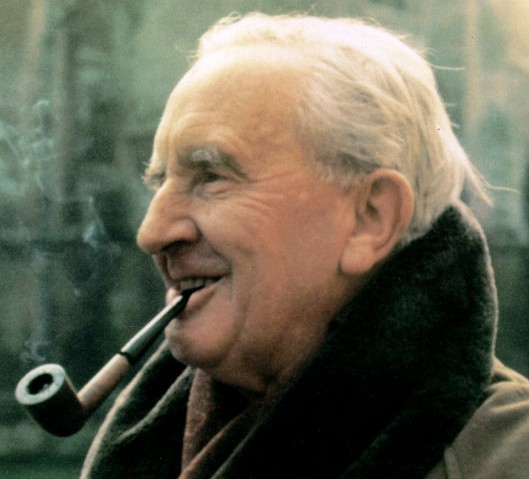
J.R.R. Tolkien A master of the craft that created the complete world of Middle Earth which included maps, languages and much more. Most notable works is the Lord of the Rings Series.

Tolkien - Middle Earth Master

Edgar Rice Burroughs Early twentieth century writer that created memorable characters and explored different worlds. His most memorable character is Tarzan. And his most popular series of books include the Barsoom series which takes place on Mars. The Venus series and the Pellucidar series which takes place within the hollow earth.

Robert E. Howard Mid 20th century writer who was a heavy contributor to the pulp fiction magazines. He is generally credited with creating the swords & sorcery genre. His most notable character is Conan.

T.H. White Mid 20th century writer who penned several books in the King Arthur tradition. The most notable of which is The Sword in the Stone which ushered in the modern Arthurian novel. Of note was a posthumous publication of his novel The Book of Merlyn

E.R.R. Eddison Considered to be the father of High Fantasy he wrote several books that influenced authors to come such as Lewis and Tolkien. Of his highly imaginative worlds The Worm Ouroboros is one of the most famous.

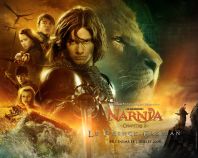
C.S. Lewis He was a scholar of medieval literature and mythology penning many works in a variety of genres including fiction, religious fiction and science fiction. His most notable works are the epic fantasy Chronicles of Narnia.

Present Major Authors:

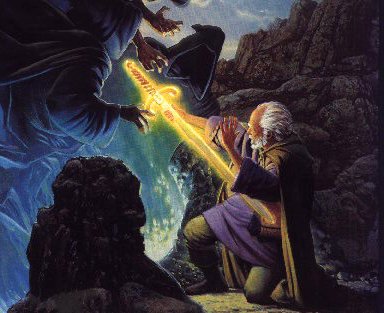
Terry Brooks In the late 70’s Brooks published the novel The Sword of Shannara. It climbed to the top of best seller lists and stood there for years. Heavily drawing on Tolkien this book reintroduced the epic fantasy to the general public. Brooks continued the Shannara series with several more books. He has gone on to pen even more series.

Scene from Sword of Shannara

Terry Goodkind Writer of the Sword of Truth series which began with Wizards First Rule This is a solid series that takes a more serious approach to epic fantasy. The books explore philosophical questions. The series became a TV series – Legend of the Seeker – which lasted for two seasons.

Robert Jordan Is the writer of the enormously successful Wheel of Time series which is currently eleven volumes. He has also written many works based on the Robert E. Howard Conan character.

Stephen Donaldson Creator of The Chronicles of Thomas Covenant series of books which now number seven volumes and is most notable for its use of the anti-hero in which the main character maintains a reluctance to actually take on the mantle of the hero. He has written several other series in the genre.

Marion Zimmer Bradley Editor of the famous sword and sorcery series Bradley is also a prolific writer. Most notable among her writings is the Arthurian Avalon series which begun with The Mists of Avalon.

David Eddings Writer of sword & sorcery and epic fantasy series he is most famous for the Belgariad and the Mallorean series.

Raymond Feist Many of his works are set in the connected worlds of Midkemia and Kelewan. This is called the Riftwar series and the novels range over various geographic locations and span centuries. He began his writing with the first novel in the Riftwar series called Magician: Apprentice. Another series of note is the Krondor series.

Robin Hobb Is the author of several popular trilogies including The Farseer Trilogy, The Liveship Traders Trilogy and The Tawny Man Trilogy

Stephen King Although considered to be the master of horror King has published an enormous body of work in the fantasy genre. He crosses genre at will and breaks all the rules but notable is his Dark Tower Trilogy and The Eyes of the Dragon which is classic fantasy.

L.E. Modesitt Author of several series most notable are The Corean Chronicles
Set on the world of Corus (or Acorus), where strange and dangerous beasts roam and people with magical Talent can commit astonishing feats. Also is The Spellsong Cycle and The Timegod’s World which draws heavily on Norse legend.

George R.R. Martin Most notable for his Song of Ice and Fire series which was begun with A Game of Thrones in 1996.

Tad Williams Writer of several fantasy series the most notable of which Memory, Sorrow, & Thorn which was begun with The Dragonbone Chair

J.K. Rowling Creator of the enormously popular Harry Potter series which began with Harry Potter and the Sorcerer’s Stone. These books have also been transformed into successful movies.

David Farlane – The Author of the Acclaimed Runelords series. The fifth book has just been published and the first book is being made into a major motion picture.

What are your favorite authors of High or Epic Fantasy? Do you agree with the comments added above?

——————————————————————————————————

Alon Shalev is the author of The Accidental Activist and A Gardener’s Tale. He has written two fantasy novels and the first will enter the Amazon Breakthrough Novel Award in January 2012. More on Alon Shalev at http://www.alonshalev.com/and on Twitter (#elfwriter).

Fantasy as a Vehicle for Social Justice

I believe passionately that writers of fiction  can ply their craft to help effect positive social change and offer a platform for values and principles. The Accidental Activist and A Gardener’s Tale both reflect this and I have a series of books focusing on social issues in the US (all based on San Francisco) beginning with Unwanted Heroes which will be released by Three Clover Press in the spring and highlight the way we treat war veterans and the homeless.

I was delighted when Kaitlyn Cole from Online Universities shared a list that their faculty had put together entitled: 50 Best Novels For Political Junkies.

Kaitlyn wrote: “True story: Some of the best political novels aren’t explicitly about politics. Yes, some of the books on this list deal directly with governments and politicians, with laws and the ways they’re made or abused, and with the peril and promise inherent in every governing body. But some of them use adventure, parable, or satire to subtly explore our political system with a depth that wouldn’t be possible any other way.”

Great point and relevant to those of us who write political fiction. But how about fantasy? Is there room to use our elves and dwarves to promote social injustices or causes? 

Over the last two summers I was blessed with the amazing experience of writing two fantasy novels together with my 11-year-old son. While I have read a few fantasy novels, I had no idea about the “rules” of the genre.

Writing with my son, however, compelled me to include moral issues such as racism, dictatorship and freedom, as well as the values of friendship and freedom. I was writing for my son and there are plenty of swords, quests, elves, dwarves etc., but as I watched him read and listened to his feedback, I waited for his comments about such issues and derived huge satisfaction when he brought up issues.

In setting my goals for an exercise at Author Salon, I wrote:

“I have seen the impact of the Harry Potter series and Christopher Paolini’s Inheritance series on my son and his friends. I want to help shape the landscape of the next generation’s imagination and maybe even the society they strive to create.”

My lack of knowledge regarding fantasy leads me to ask the question: Can fantasy offer a vehicle to discuss political and social injustice? I would love to hear your answers fantasy-fans.

——————————————————————————————————

Alon Shalev is the author of The Accidental Activist and A Gardener’s Tale. He has written two fantasy novels and the first will enter the Amazon Breakthrough Novel Award in January 2012. More on Alon Shalev at http://www.alonshalev.com/and on Twitter (#elfwriter).
The Power of Paolini

Anyone reading this blog is probably very aware that this week Christopher Paolini released the fourth book in the Inheritance Trilogy (sorry Christopher – even though we are all thrilled that there are another 800 pages of Eragon, we all remember the moment somewhere in the third book when we realized it was not going to end there).

The Final One

Our copy of Inheritance will arrive in the next couple of days and my 12-year-old will devour it, before passing it on to me, hopefully in time for the Thanksgiving vacation. It has been a wonderful bonding experience. Whether it is Harry Potter or Eragon (or most likely both) who are responsible for his leap in reading ability and desire is immaterial, I am eternally grateful to Paolini and J.K. Rowling.

My son and I spent endless hours reading the books, listening to the audio version, watching the (only!!!!) movie, and discussing how it will end in Brisingr, the third and not final book of the trilogy, and then Inheritance.

When Paolini released Brisingr, my then 10-year-old stood defiantly at the front of the line in our local Borders, falling asleep on his feet literally as the clock approached midnight. I remember the lady who was working there, encouraging him to stay awake and hang on. At exactly midnight, she put a copy that she had hidden under the counter into his hands and whispered that he should buy that very copy. It was the only book in the store that Christopher Paolini had personally signed.

The autograph & the fan.

Five minutes later, my son was fast asleep in the car clutching his autographed copy by his hero who was barely ten years older than him.

Paolini has proved a number of important points:
1. The young generation will read 400-page novels if the material is gripping enough.
2. They will read rich descriptions, convoluted plots, and identify with characters that are deep, vulnerable, and profoundly human (or elf or dwarf).
3.  They will thrive on a high level of language.
4. Tolkien might still be king, but he has good company. Paolini is young. His level of craft is only going to improve and that is an exciting prospect.

Two years later, my son and I wrote our first 90,000-word fantasy novel. The seeds were sown in the land of Alagaesia, on the wings of dragons, and in the art of an incredibly talented young man.

The Master

As the excitement has grown for my eldest son and I as the release date for Inheritance neared, my youngest son,  who is eight-years-old, has quietly read more than 250 pages of Eragon.  

So Christopher, if by any chance you ever read this: Thank you, as a reader, a fan, and a father.

The Trilogy!

——————————————————————————————————

Alon Shalev is the author of The Accidental Activist and A Gardener’s Tale. He has written two fantasy novels and the first will enter the Amazon Breakthrough Novel Award in January 2012. More on Alon Shalev at alonshalev.com and on Twitter (#elfwriter).