It’s In The Journey

“The problem with your genre,” the man declared with a smirk, “is that the reader always know what’s going to happen in the end. That’s why I never read fantasy.”

I could have asked him how he knew this since he admitted to not reading the genre. I might have questioned whether romance (the most popular fiction genre) or cookbooks (most popular non fiction) are any different. Those recipes never work for me!

Instead, I asked him what it was about epic fantasy that made it popular assuming he was right about the predictable endings. To his credit, he thought a while before answering. “It’s in the journey,” he replied.

I’ve been thinking about this. During my summer vacation, we camped by a river. The locals told me that there were no fish inhabiting it and it was only good for swimming in.

We went down to the river and my sons had a great time with their river rats (inflated tubes) negotiating small rapids.

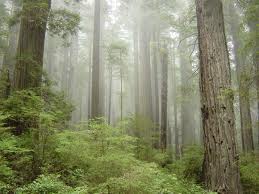
I got out my fly rod, walked a bit upstream and stood in the middle of the water casting. The river was beautiful and clear, the rocks underneath and protruding were smooth and colorful. Majestic redwoods surrounded us and a noble mountain peak loomed above me. Wisps of fog hugged the tops of the trees and later in the day came almost to the edge of the water.

The author, deftly not catching fish!

I imagined where a wild trout (huge one of course) would hover and allow its prey to float right to it (a feeding pool, I think the experts call it). I cast my fly and watched it float in a wide arc. Being of only limited skill it took me a while to cast to the right distance, but I was very satisfied when I could consistently float my fly into the (imaginary) feeding pool.

A couple walked past arm-in-arm and the man felt compelled to tell me that there were no fish in the river. I nodded and told him I knew. He shrugged, but his partner got it, I think.

“Enjoy yourself,” she said.

I did enjoy myself that afternoon. I enjoyed setting up my fly rod and casting it out. I enjoyed the river, the trees, the mountain, the fog. I felt myself sighing as I released the tension of my real world and let it float away with the river.

Hemingway fly-fished. Tolkien smoked a pipe (I couldn’t find evidence that he fished but he wrote poems about it – see below). I strive to walk in the shadow of Tolkien rather than Hemmingway, but the pipe has long been relinquished. Still I remember the pleasure I got in packing and lighting the pipe, even cleaning it. I still yearn for the smell of the Borkum Riff tobacco all these years later. I miss it more than the smoking for sure. I recall the anticipation of waiting all day for that special time after dinner when I could sit outside my little house and puff away the worries of the day.

Gimli lights up after a hard day of killing.

At the end of one of my fantasy novels is a twist I am very proud of. Those who have read it all tell me that they gasped at that moment. In my writer’s group, while still only on page six of that novel, one of the women guessed the twist.

I never responded, never told her she was right. I want her to enjoy the journey.

Happy fishing everyone, however you cast your rod. I’ll leave you in the hands of the Master:

Fish Riddle

Alive without breath;
as cold as death;
never thirsting, ever drinking;
clad in mail, never clinking.
Drowns on dry land,
thinks an island
is a mountain;
thinks a fountain
is a puff of air.

So sleek, so fair!
What a joy to meet!

We only wish
to catch a fish,

 So juicy-sweet!

                                                      From Lord of the Rings By J.R.R. Tolkien

——————————————————————————————————

Alon Shalev is the author of The Accidental Activist and A Gardener’s Tale. He has written three epic fantasy novels and the first reached the Quarter Finals of the Amazon Breakthrough Novel Award as of March 2012. More on Alon Shalev at http://www.alonshalev.com/ and on Twitter (@elfwriter).

I’ve Never Been In A Dwarf’s Cavern

I must confess: I’ve written almost 300,000 words of epic fantasy (three books) and never seen a dwarf’s cavern, an elf’s tree city, or a troll’s rock cairn. Now this might lose me credibility with readers, but after being complimented for my world-building by an editor at an established publishing house, I was asked from where I derive my inspiration for world-building from a fellow writer who is struggling with this important aspect.

My non-fantasy novels, The Accidental Activist and A Gardener’s Tale, were both situated in my native England, and my upcoming novel, Unwanted Heroes, is based here in San Francisco. I’m not sure if I chose these surroundings as much as absorbed what is around me into my stories. It is, I guess, what allows me to see elves in coffee shops.

I think the process is the same for me when I build my fantasy worlds. I am blessed to live surrounded by the natural beauty of California and its surrounding states, it is important to not only admire the majesty of the area but see it through the eyes of your protagonists. Three examples come to mind.

I have shared how my journey into the world of fantasy was prompted by my eldest son (then 11-years-old) complaining that I shouldn’t be writing while on vacation. I challenged him to write something with me and make it a family activity (the desperate games we play…) and there under the watchful eyes of the redwoods, we began our journey. 

It was easy to see our young heroes seeing these noble trees and the vines that hang in the forest where we were camping. They were ambushed as they passed a rock enclave, almost hidden by moss, that was a five minute bike ride from our tents.

On Monday, I will travel to an annual professional conference in St. Louis, where we have met for the past two years as well. To give us a break from the intensity of the conference, the organizers arranged a trip to a children’s museum. The incredibly creative designers had thought to fill their vast basement with caves and caverns.

While my colleagues snuck off to a nearby bar, I walked through these caverns imagining what it was like to live as a dwarf underground. I’m not sure what my biggest mistake was: missing out on a social mixer or admitting to my colleagues why I had declined their offer.

Finally, this year we traveled to Crater Lake in Oregon. Jutting out from the deep blue waters is an island called Magicians Island.  The audiovisual told us that the name came because it reminded the explorer of a wizard’s hat. I sat on the ridge overlooking the island, saw the steep grey rocks, the windswept trees, and the ospreys flying overhead.

Book 4 has a base from which to begin…

——————————————————————————————————

Alon Shalev is the author of The Accidental Activist and A Gardener’s Tale. He has written three epic fantasy novels and the first reached the Quarter Finals of the Amazon Breakthrough Novel Award as of March 2012. More on Alon Shalev at http://www.alon-shalev.com/ and on Twitter (@elfwriter).
Turn Write At The Next Junction

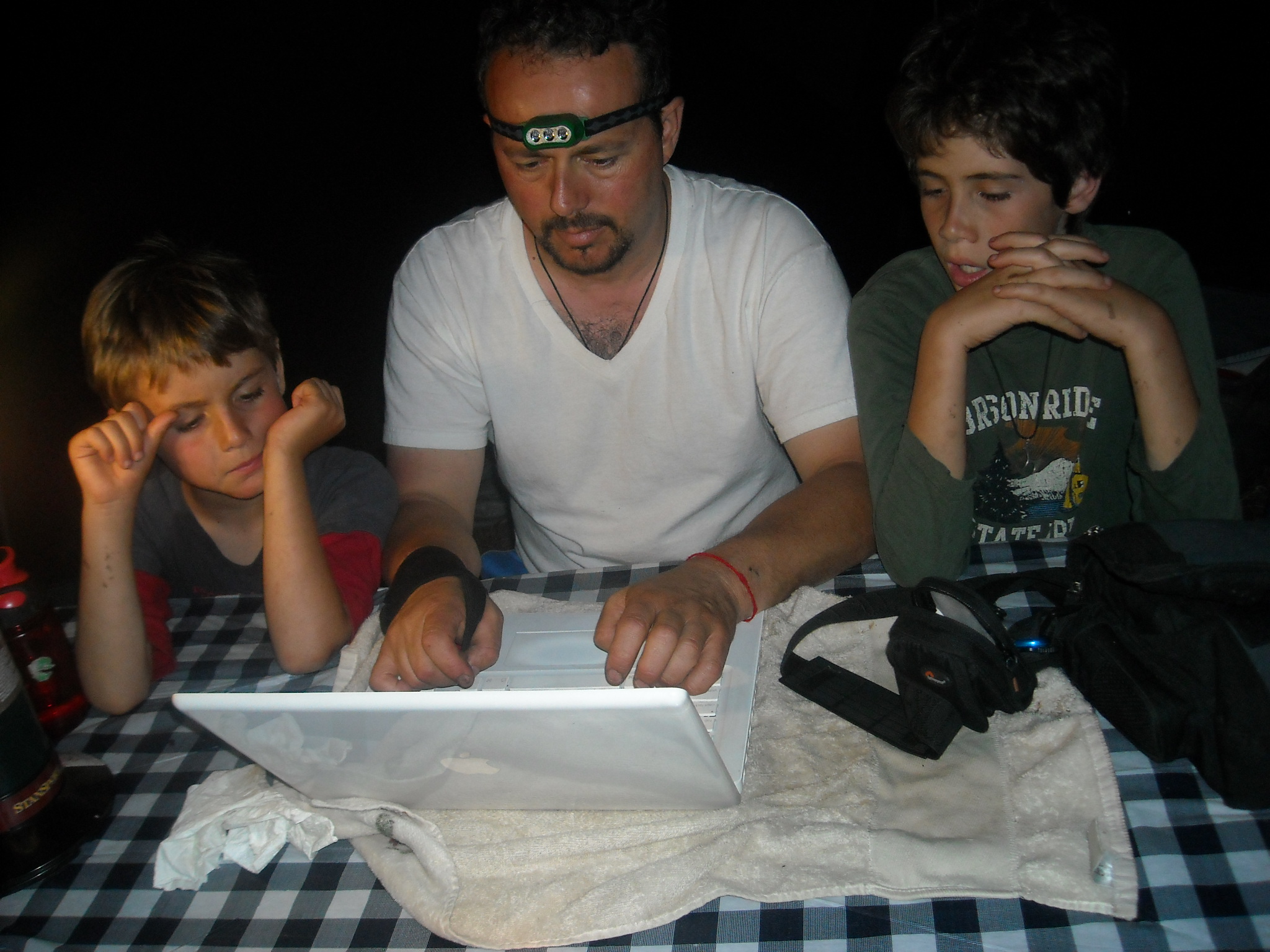
Family vacations are always special for my little clan. Once a year, we pack up our considerable collection of camping gear and head to the mountains, lakes and redwoods. Without Internet and electricity, we have no choice but to hike, fish, and enjoy beautiful Northern California and Oregon, and each other. This year there were two highlights. We all followed my eldest’s passion for archery and it has hopefully become a family hobby.

Two years ago. I wrote the first Wycaan Master book together with my eldest son. I have blogged about this previously. Last year, I wrote the second book before we went away and each night, we sat around the campfire or snuggled in my tent as I read to them a few chapters at a time.

This year, we followed suit, reading the third book of the series. Everyday I waited with anticipation to read and treasured their responses. As the books have become more intricate, my youngest (now 9 years old) sometimes had a hard time following and peppered me with questions, often later that night when he was supposed to sleep, or the next day in the middle of another activity.

Now I know that family are not supposed to be considered as impartial critics. In truth, they had a lot of constructive criticism and suggestions, most of which I adopted. But I cannot imagine enjoying the level of engagement that they experienced and expressed from anyone else.

Back in the Bay Area and it is time to make major decisions. There is time as I outsource the books for some professional editing, but I am considering alternative options to publish the series.

A fascinating conversation with a representative at a publishing house with a long history of epic fantasy titles has left me wondering how long to walk the traditional path. She told me that they spent considerable time discussing the option of signing me even though they had previously made a business decision to stop publishing in this genre. It just doesn’t make business sense in the current economic climate, she told me. It has nothing to do with the quality of your work.

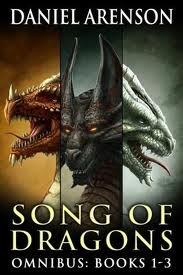
I feel a degree of frustration as I have been watching other fantasy authors and their respectable and consistent ranking on Amazon.com. Daniel Arenson, who is the author of the Requiem series and others, announced the following at the end of June:

“100,000 books sold. Bloody hell. You bought 100,000 of these silly books about dragons, swords, and spells. You’re nuts. But THANK YOU, readers. It’s been a crazy ride.”

I have no doubt that Mr. Arenson worked extremely hard to get to this significant landmark. He wrote great books and went out and did it by himself.

I congratulate him…and wonder.


——————————————————————————————————

Alon Shalev is the author of The Accidental Activist and A Gardener’s Tale. He has written three epic fantasy novels and the first reached the Quarter Finals of  the Amazon Breakthrough Novel Award as of March 2012. More on Alon Shalev at http://www.alonshalev.com/ and on Twitter (@elfwriter).