The Fatherly Figure in Fantasy

As a warm up for reading this blog, please  say the following five times as quickly as possible: The Fatherly Figure in Fantasy.

I shared some thoughts on Left Coast Voices regarding Father’s Day this Sunday. But it occurred to me that the father figures in epic fantasy gets a tough time. Here is a brief overview of a few of our beloved characters and their fathers (I acknowledge that I am encompassing a wide definition of the genre for this post. Purists – please excuse me this once).

WARNING: There might be spoilers here, so I am giving the name of the character first and won’t be offended if you skip that part.

1. Luke Skywalker:

I know this is sci-fi and not fantasy, but we have all hung there with Luke as his father, who had just chopped off his arm, now looms over him with a lightsaber. What a time to discover your father! As if it is not enough that your uncle and aunt who brought you up were murdered, now you discover your father is a metallic mass-murderer.

Suggestion: Do not buy Dad a lightsaber. It is the first step to the Dark Side and he already has plenty of power tools he never uses.

 images

2. Tyrion Lannister:

So your father abused you and openly hated and insulted you. As if you don’t have enough to contend with two older, beautiful siblings, who are bonking, or the fact that you were born stunted and are accused of killing your mother as she gave birth to you. Not hard to understand why A Lannister Always Pays His Debts!

Suggestion: Don’t give your father a ‘quarrel’ even if he deserves it.

 images-2

 3. Eragon:

Also grew up never knowing his true father and then, like Luke Skywalker, finds his uncle, who was like a father to him, is murdered in his stead. Of course, no sooner does he discover who his father really is, than he has to bury him, and take considerable blame for brave father’s death.

Suggestion: Giving your old man your dragon/porche just before he dies is classy, but do check your insurance policy first.

images-1

4. Drizzt Do’Urden:

Gotta give the dark elf considerable credit. He grew up in the Drow city of Menzoberranzan. where all males were merely fighters and concubines. Of course his mother and sisters abused him and tried to kill him, and by the time he discovered who his father really was, well…I don’t think he even got to bury him.

Suggestion: a bit stumped here. When your father gave you a genetic sense of justice, enough to turn you against your mother and sisters, what can you really reciprocate with? 
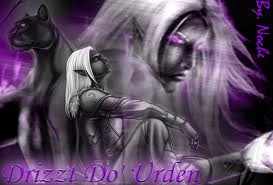
images-2

Artist – Noche

5. Frodo Baggins:

I admit, I had to look this up and cannot guarantee my sources. Frodo’s father was Drogo and we don’t know much about him other than he went and drowned in a boating accident. Hobbits should know not to participate in such dangerous and adventurous pastimes as boating. At least, Frodo had a nice secure upbringing with his first cousin once removed (and not his uncle as even dear Bilbo often referred to himself). It was not as though Bilbo passed on any artifact that was incredibly dangerous and held the fate of the entire Middle Earth!

Suggestion: Stay away from the jewelry!!!

images-3


In epic fantasy we gravitate to protagonists who are the underdogs, who overcome adversary, and make great personal sacrifice. But we also seem to be sending out a message to our young readers that the absent/weak/villain father is the norm.

It must not be so. Every young man deserves a father who is a role model, imperfect and flawed as we may be, but a father who will teach him to fish, nock an arrow, believe in a just society, and to be a good human being…or elf…dwarf etc.

I’m sure if we were to meet Luke, Eragon, Tyrion, Drizzt or Frodo in a pub, they would all agree that they wished they had fathers they could truly appreciate and learn from.

Perhaps being the best father you can is the greatest quest any of us can embark on. It may not save Middle Earth or Menzoberranzan, but it will make our world a better place to live in.

Happy Father’s Day.

—————————————————————————————————–

Alon Shalev writes social justice-themed novels and YA epic fantasy. He swears there is a connection. His latest books include: Unwanted Heroes and the 2013 Eric Hoffer Book Award for YA – At The Walls Of Galbrieth. Alon tweets at @elfwriter. For more about the author, check out his website.

An Unexpected Journey

This weekend, J.R.R. Tolkien’s The Hobbit – An Unexpected Journey comes out. If you are reading this blog, you have probably been counting down along with the Mayans. I haven’t seen the movie yet, so there are no spoilers, but I am incredibly excited. I can’t wait to see it and have no doubt that I will love it, buy the DVD, change my computer’s wall paper and take my kids to eat breakfast at Denny’s…again!

imgres-2But there is something else that has me so stoked for this movie stands on the threshold of something historic: it is the induction of the next generation of epic fantasy readers. Just as Lord of the Rings ignited my generation’s interest, and Christopher Paolini’s Eragon sentenced my own children to a lifetime of reading and vivid imagination, The Hobbit will take a new, unsuspecting generation on an unexpected journey.

My own journey has been somewhat unexpected. Having written a series of well-received social justice-themed novels, I have been introduced to people who are passionate to see and work for a better world. I treasure the opportunities to meet readers at book signings and author meet ups.

DSCN1387As we approached the launch of At The Walls Of Galbrieth, I sought to define my target audience and had a big surprise. To begin with, there were the 100+ who filled out my survey ­– thank you all – and I began to discover a group of passionate and richly imaginative readership.

But here is what excites me. I am meeting a large number of students and teenagers who are die-hard readers of epic fantasy. They eloquently share their love for the creation of a new world, their desire to see everyday folk transform into heroes, and to believe in universal principles such as freedom, good over evil, and the value of friendship.

My social justice-themed novels all contain a common thread: an everyday person goes through a transformational experience which empowers them to pursue justice. Swap the multinational corporation for an evil Emperor, replace the use of social protest with a special bow and arrow, and we have similar themes.

My point is that epic fantasy creeps up on you. This weekend many ingenuous children, teenagers, and parents, are going to see a hyped-up movie and experience a transformation. They may not start yielding a sword and slaying dragons, but they just might embark on an unexpected journey of reading and enter into a world that drives our imagination and defines our social values…

All because in the words of a great wizard: “Hobbits really are amazing creatures.”

——————————————————————————————————

Alon Shalev is the author of At The Walls of Galbrieth, Book 1 of The Wyccan Master series, which reached the Quarter Finals of the Amazon Breakthrough Novel Award 2012, released by Tourmaline Books. The First Decree, the sequel is due out in early 2013. Shalev is also the author of three social justice-themed novels: Unwanted Heroes, The Accidental Activist and A Gardener’s Tale. More on Alon Shalev at http://www.alonshalev.com and on Twitter (@elfwriter).

Genre Conventions .v. Originality

“But this is how it’s done in epic fantasy,” I whine to my writer’s group. “It’s part of the convention.”

We are a bonded group, anxious to support each other and so I receive sympathetic smiles and diplomatic silence. The silence screams in my ears. I know they are right. If I have to fall back on a sentence like that, I am in trouble. Or am I?

How important is originality?

Utter originality is, of course, out of the question.” – Ezra Pound

Originality is nothing but judicious imitation.” – Voltaire

I feel better already.

It is better to fail in originality than to succeed in imitation.” – Herman Melville.

Ouch!

Elves are tall, thin, have pointed ears, and excellent hearing. They look good in green, and shoot bow and arrows with exceptional accuracy.  Dwarves are short, rotund, live underground, mine and play around with axes. This is so because J.R.R. Tolkien put the epic in epic fantasy with his Middle Earth series’. Are the rest of us thus condemned to be mere recyclers of his work? Maybe. But I am not convinced how this is different from any other genre: romance has the same images and general plot arc. So does suspense and horror. And don’t get me started on dystopian thrillers.

So why do we so enthusiastically embrace conventions in a genre? It might be because some themes are simply timeless. I’m thinking Beowulf (maybe written in the eighth century) and The Odyssey (sixteen centuries before that!). Tolkien would concede that he was not the first, but when something works, you build your own version of it, and sometimes your version is good enough to capture the imagination of a very loyal readership. But it is not just enjoyment. It is pure escapism to a world we can get excited about, to values we can admire or fear (or both). It is also something familiar, something soothing. 

And yet when we embark on a new epic fantasy series, or try the work of a new author, we are seeking both something familiar and something original. What makes each author since Tolkien distinct is some aspect of his / her work. The relationship between Eragon and Saphira (his dragon), made Christopher Paolini’s Inheritance series special. I have just started reading The Weight of Blood by David Dalglish (check out his cool book covers by Peter Ortiz) which is about two brothers (okay) who are not just orcs (hmmm), but half-orcs (ahhh). I was caught on page one. Dalglish has written a variance on the convention. So did R.A. Salvatore when he introduced Drizzt – a dark elf whose race were the opposite from the stereotypical elves. Five novels on, I am still intrigued. Daniel Arenson came up with his own original approach to dragons in the Song of Dragons series. 

Before I end, let me say how much I admire those who come up with something original – Hunger Games, Harry Potter, Percy Jackson – they capture us all and we devour their new approaches. But those who seek to ride their coattails are not so successful and I think this is very telling.

It says that while the fantasy readership will embrace a clever, well-written, new concept, that very concept might not establish itself beyond one brilliant author. Epic fantasy, however, with its elves, dragons and swords, continues to stand the test of time. This is not because our readership is lazy. Instead they demand depth – world building, characters, and a plot that offers a twist on a well-tested theme. They continue to surprise us with the familiar.

It’s a great genre to be a part of.

 Good Writing,

Alon 

—————————————————————————————————

Alon Shalev is the author of The Accidental Activist and A Gardener’s Tale. He has written three epic fantasy novels and the first reached the Quarter Finals of the Amazon Breakthrough Novel Award as of March 2012. More on Alon Shalev at http://www.alonshalev.com/and on Twitter (@elfwriter).

The Magic Is Everywhere

Last weekend, our family headed for the marina, a grassy area on the west point of Berkeley that looks over the San Francisco Bay Area. We have been there many times to fly kites, play soccer, run and bike. 

This time, armed with a blanket and picnic, we were planning on some serious reading. Older son had a book assigned from school, a historical fictional account of many good people dying from a plague back in the 1700’s: perfect depressing material for the summer vacation. Not surprisingly, he hadn’t embraced the intrusion with the enthusiasm he showed for Christopher Paolini’s Eragon or J. K. Rowlings’ Harry Potter. 

It was surprisingly windy and we made for some bushes and trees that would deny us the view, but offer shelter. We spread the blanket and I fell into my stadium chair and flicked on my Kindle.

While I waited for it to fire up, I glanced to my left. Between the bushes and the trees was a tunnel, with brush growing up and over so that you could barely see the sky. It was dark inside with the promise of sunlight on the other side. My youngest son, I realized, was staring at it as well. He turned to me.

“What do you think is through there?” he asked, eyes wide open.

“I don’t know,” I replied, the right level of gravity in my voice. “Think you should check it out?”

He nodded, rose and moved into the tunnel. He never came out…

Okay, that is not exactly true. But he stayed in the tunnel and explored beyond. Sometimes he sat and read his book, and other times played, creating his own world. Finally, he called for me to join him.

“The tunnel is safe,” he declared, “but there are dragons on the other side. Be careful.”

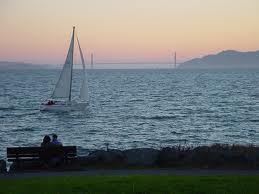
I knew that on the other side was a view of the Golden Gate Bridge, Alcatraz, San Francisco, and the bay with many sailboats. But as his tiny hand took mine and guided me out the other side, all I saw were the dragons.

Others might have seen a red kite with a long tail, to its left was a blue-green one tearing through the sky in acrobatic maneuvers, but we saw two dragons eying each other. My son announced with authority that they were deciding whether to fight or be friends. Remembering my politically correct role as father, I said I hoped they would be friends. 

But as I watched them and glanced back at the tunnel, it was my imagination that soared. Perhaps a new book is fermenting, or only a scene in the next Wycaan Master. Maybe it will surface next year or in a decade, but it is stored away.

And this moment of magic only happened because I was ready to embrace it, albeit with a little help from a nine-year-old with a rich imagination. But then I have seen elves in coffee shops.

——————————————————————————————————

Alon Shalev is the author of The Accidental Activist and A Gardener’s Tale. He has written three epic fantasy novels and the first reached the Quarter Finals of the Amazon Breakthrough Novel Award as of March 2012. More on Alon Shalev at http://www.alon-shalev.com and on Twitter (@elfwriter).

Writing A Fantasy Series Pt. 1

Christopher Paolini, the young author of the Inheritance Series (Eragon), was featured in The Writer. I was excited as the title was ‘Writing A Hit Series’, and Paolini has created a magnificent world in the 3,000 or so pages of his four novels.

I was disappointed with the interview. The reporter assumed that most of us didn’t know who Paolini is and what he has written. The story focused on a lot of the well-recorded autobiography (that I am sure most of us love) and the decision of the Paolini family to self-publish Eragon and travel around the country selling copies face-to-face.

But there were precious few tidbits regarding writing a series. Paolini structures his stories before he writes them. Fair enough. There are no surprises, we are told, except I wish to point out that Book Three became two books (how do you misplan an additional 700+ pages? – not that I am complaining, Mr. Paolini – you can write several more and I will faithfully buy and read them together with my sons).

My son holding his autographed copy at the midnight release... a priceless moment!

Paolini also stresses the need for a map. He warns that if there is a small mistake in detail between Book One and Four, true fans will notice.

As I continue to put Book Three of the Wycaan Master onto (virtual) parchment, (just passed the 25,000 word mark), I am continually realizing how much I must refer back to keep consistent, whether in language, appearance, or plot.

I love the spontaneity of allowing the plot to unfold. It works for me and it is part of the magic of writing. But I totally understand the value of a structured plan as Paolini suggests.

I keep three lists going: characters, chapter contents, and odds-and-ends. I do not provide much in terms of character appearance and history. I regret this now, as I need to sift through over 200,000 words. Chapter contents are kept brief – 1-2 sentences, but serves to help me refer back relatively quickly. Odd-and-ends is, well, a lot of unresolved issues, detail needed, clan structure and more.

A Great Place to Write Fantasy.

I have no doubt that there is so much more to remember and involved when writing a series. I think when I begin another, I might take more careful notes and listen more to authors like Paolini, Salvatore, and Brooks.

But I also think it is worth it. The depth and richness of a series is an incredible honor to write. More on that aspect next week.

Until then, good writing.

——————————————————————————————————

Alon Shalev is the author of The Accidental Activist and A Gardener’s Tale. He has written two fantasy novels and the first has reached the Quarter Finals of  the Amazon Breakthrough Novel Award as of March 2012. More on Alon Shalev at http://www.alonshalev.com/and on Twitter (@elfwriter).


The Power of Paolini

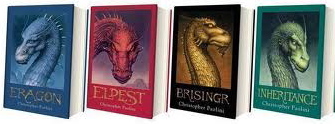
Anyone reading this blog is probably very aware that this week Christopher Paolini released the fourth book in the Inheritance Trilogy (sorry Christopher – even though we are all thrilled that there are another 800 pages of Eragon, we all remember the moment somewhere in the third book when we realized it was not going to end there).

The Final One

Our copy of Inheritance will arrive in the next couple of days and my 12-year-old will devour it, before passing it on to me, hopefully in time for the Thanksgiving vacation. It has been a wonderful bonding experience. Whether it is Harry Potter or Eragon (or most likely both) who are responsible for his leap in reading ability and desire is immaterial, I am eternally grateful to Paolini and J.K. Rowling.

My son and I spent endless hours reading the books, listening to the audio version, watching the (only!!!!) movie, and discussing how it will end in Brisingr, the third and not final book of the trilogy, and then Inheritance.

When Paolini released Brisingr, my then 10-year-old stood defiantly at the front of the line in our local Borders, falling asleep on his feet literally as the clock approached midnight. I remember the lady who was working there, encouraging him to stay awake and hang on. At exactly midnight, she put a copy that she had hidden under the counter into his hands and whispered that he should buy that very copy. It was the only book in the store that Christopher Paolini had personally signed.

The autograph & the fan.

Five minutes later, my son was fast asleep in the car clutching his autographed copy by his hero who was barely ten years older than him.

Paolini has proved a number of important points:
1. The young generation will read 400-page novels if the material is gripping enough.
2. They will read rich descriptions, convoluted plots, and identify with characters that are deep, vulnerable, and profoundly human (or elf or dwarf).
3.  They will thrive on a high level of language.
4. Tolkien might still be king, but he has good company. Paolini is young. His level of craft is only going to improve and that is an exciting prospect.

Two years later, my son and I wrote our first 90,000-word fantasy novel. The seeds were sown in the land of Alagaesia, on the wings of dragons, and in the art of an incredibly talented young man.

The Master

As the excitement has grown for my eldest son and I as the release date for Inheritance neared, my youngest son,  who is eight-years-old, has quietly read more than 250 pages of Eragon.  

So Christopher, if by any chance you ever read this: Thank you, as a reader, a fan, and a father.

The Trilogy!

——————————————————————————————————

Alon Shalev is the author of The Accidental Activist and A Gardener’s Tale. He has written two fantasy novels and the first will enter the Amazon Breakthrough Novel Award in January 2012. More on Alon Shalev at alonshalev.com and on Twitter (#elfwriter).