When Is An Elf Not An Elf?

Over the three days of November 17 -19, Amazon.com have decided to promote the 2013 Winner of the Eric Hoffer Book Award for YA – At The Walls Of Galbrieth. The novel will be offered FREE in ebook form.

This is a wonderful opportunity for me and I request that, to support my sales rank and me, you download the book and invites your friends to do the same. Feel free to gift it on (Thanksgiving and Hanukkah, anyone?).

To celebrate this and also the milestone of 100 blog posts on elfwriter.com, I wish to offer 10 of my favorite posts over the next three days. I hope you enjoy and, please, take a moment to download for FREE At The Walls Of Galbrieth and spread the word.

Thank you,

Alon

 =======================================

WHEN IS AN ELF NOT AN ELF?

Yes, my novel is compelling, special, well-written etc. just like the 499 other epic fantasy manuscripts sitting in the slush piles of every publishing house that offers YA epic fantasy.

I am working with an agent who is asking the challenging and insightful questions that will help my manuscript stand out from the rest. It is tough and I am feeling very possessive. Last week I shared his prompting to seek a Higher Concept.

One of the aspects that he wants me to consider is changing my elves, who make up many of the main characters and cultural references. He suggests that I consider changing the elves for a new, mythical race that will set me apart from the rest.

Let me state from the outset that I have no doubt this man knows far more than I about the publishing world, has considerable experience and understands the current state of the publishing world.

But my elves? Our elves? Those of us who grew up on Tolkien, Paolini, Brooks and others, have standards, images, friends. Legolas and Anwen, Arya and Blodgarm, and many others have created a rich and familiar texture. We welcome them surfacing as we settle into a thick novel. We embrace them because there are common threads that pass between authors. We call it a culture, those who don’t read fantasy roll their eyes.

                               Noble Haldir – we owe him for Helm’s Deep, no?

Terry Brooks’ children know that he is not all there, he tells us as much when he opens his book Sometimes the Magic Works: Lessons from a Writing Life. More on this book in a later blog.

But Brooks in not dissimilar to the rest of us, just considerably more talented! We pass through a gate in our imagination and reacquaint in a world that exists in a shared consciousness.

Here the elves are tall, thin, light-footed and beautiful. They are fast and posses stealth and discipline. They are in touch with the energy of the earth, the forest, the animal kingdom. They excel in archery, crafts and healing. Perhaps they are aloof, elitist, and closed to the other races, but this comes from their ancient and rich heritage. We know and love them.

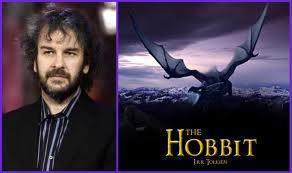
We rejoiced to learn that Peter Jackson is bringing Legalos into a prominent role in The Hobbit. Well, a few raised eyebrows, since Legalos was not even referred to by name in The Hobbit when he appeared flanking his father, the King of Mirkwood.
We accept, even with a bit of jealousy that he can fight at Helms Deep for five days, or run non stop for three and still not need to brush his immaculate hair. Nor do we care that his quiver seems to replenish itself, an occupational hazard of any archer who fights battles every other day.

We don’t mind because elves epitomize something that we identify with. We all want to be beautiful, brilliant, in excellent physical condition and, of course, environmentalists. When R.A. Salvatore created Drizzt Do’Urden and the dark elves of Menzoberranzan, a giant underground drow city-state he broke new ground.

Many of us were repelled and had it not been created in the hands of a master of fantasy, we would have rebelled. It was daring, it worked and by Book Three, we were rewarded with the typical elf one finds above ground.

It is tough to turn away from the basic tenets of epic fantasy: the teacher and student, the quest, the fight against a powerful evil, dwarves, elves, dragons, a rich natural world. There is something that has entered our collective consciousness and taken root.

It is why we read and reread the masters…and it is why we will return to read those who take over the role of entertaining us in a way that only epic fantasy does.

 =========================================

Alon Shalev is the author of the 2013 Eric Hoffer YA Book Award winner, At The Walls of Galbrieth, offered by Amazon.com  for FREE on November 17-19. The sequel, The First Decree, and Ashbar – Wycaan Master Book 3 are all released by Tourmaline Books. More at http://www.alonshalev.com and on Twitter (@elfwriter). Hang out with Alon on Google+
Big Characters Without Big Boobs

Last week I asked in my blog post, 10 Questions For J.R.R Tolkien, what questions people would like to ask the Professor if they had the opportunity. The answers were great, but one stood out for me.

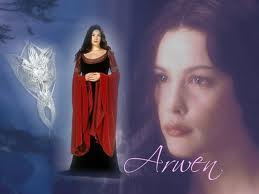
A person with the twitter username @oneyearnovel (happy to enter your name and website) wrote: “I would ask if he ever considered a woman character who was not beautiful?”

 images-1

This got me wondering. When I began looking around for a book cover artist and shared my concept of Mhari, an elfe (the politically correct term for a female elf) and Seanchai’s teacher, I was offered sketches of buxom women with cleavage-revealing armor, muscled (bare) legs etc. You get the picture. I talk about this in an earlier post – Big Boobs and Book Covers. While these images might have sold more copies of At The Walls Of Galbrieth, the pensive, wise face that adorns the cover truly represents the wise, yet world-weary mentor for my protagonist, Seanchai.

Wycaan Master 1 Just Front Cover

I don’t in truth know if @oneyearnovel is correct that Tolkien’s females in his books are all beautiful, or if this is Peter Jackson pandering to what he believes his Hollywood audience wants. I have not read Lord of the Rings in years and can’t even recall a female in the Hobbit.

Tolkien students: please enlighten us on this in the comments.

imgres

There are three main female characters who each leave an indelible mark on the first four books of the Wycaan Master series. Sellia is dark, exotic and beautiful, but she is also an excellent warrior and probably fits the stereotype. While I never talk about her breasts, hips etc. (this is YA), she intimidates the younger male elves and has them stuttering. She makes a game of eliciting a blush from Rhoddan or Seanchai.

Ilana is tough, an ideologue, constantly seeking a peaceful solution and offering Seanchai her unwavering support. As a romance blossoms she is viewed for her beauty, but it is seen through the eyes of one who is falling in love with her. Don’t we doting men all think our wives/partners are the most beautiful women in the world? Of course mine really is!

But Ilana is possibly the most popular character among readers, certainly female readers. It is not anything physical about her that binds the reader to her, but her deep principles, cutting sense of humor, and well just about everything else concerning her.

Maugwen is a human, short and pudgy. She is a weak character at first and I never meant to give her a long run. But she grows, matures and becomes a wise friend and strong individual. Readers have told me that she intrigues them and, just between us, she intrigues me.

We don’t make all our male characters handsome and ripped, so why our females? I think @oneyearnovel has a great point. Society expects us to bind ourselves to a pretty woman, and in truth, this goes for good or bad characters, but fiction has a responsibility to not only change with the times, but to be present at the tipping edge of that change.

It is very popular to write a coming-of-age novel. Perhaps it is time for our genre to come of age.

imgres-2

——————————————————————————————————

Alon Shalev is the author of the 2013 Eric Hoffer YA Book Award winner, At The Walls of GalbriethThe First Decree, and Ashbar – Wycaan Master Book 3 – all released by Tourmaline Books. Shalev is also the author of three social justice-themed novels including Unwanted Heroes. He swears there is a connection. More at http://www.alonshalev.com and on Twitter (@elfwriter).

10 Questions For J.R.R. Tolkien

This blog post was inspired by a Time interview with Sir Ian McKellen, who plays Gandalf, the wizard who… if you are following this blog, you already know. It is a fascinating interview given that  J.R.R Tolkien was Catholic and McKellen is gay.

imgresThe interview is:

Timely: the difference between the making of The Hobbit and Lord of the Rings is that Peter Jackson now wears shoes.

Funny:  “No one ever ablutes in Middle Earth.” and…

Poignant: When he visits a public school in England

One of the questions asked of McKellen is what would he ask Tolkien if he could meet him. This got me thinking: I have already shared that I think a lot of Tolkien and Oxford, and The Inklings Club.

So, if you are up there in Writer’s Heaven, quaffing on an ale or puffing your pipe, there is a student down on earth trying to emulate your literary work with a few questions.

1. Did you ever get embarrassed or try to hide your fantasy writing from your academic peers?

2. Did World War 1 provide you with the imaginary and emotional background for Lord of the Rings?

3. Why Hobbits? Who is your favorite character in either The Hobbit or Lord of the Rings?

4. If you were writing either LOTR or The Hobbit today, would you change anything? Different ending?

5. What do you think of the movies?

6. Is Peter Jackson out-of-line to make such radical changes to The Hobbit as including a character who is not from the book?

7. Who is your favorite fantasy author?

8. I know the story of how the first line of The Hobbit came to you (the blank academic paper you were grading), but how did you really come to write a fantasy series?

9. Mac or PC?

10. My critique group has room for one more. Would you consider…

imgres-7The reality is that if I ever found myself in front of the Professor, I would probably stammer and blush, and make a complete fool of myself. So help me out, just in case one day…

What questions would you ask the greatest epic fantasy writer of all time?

——————————————————————————————————

Alon Shalev is the author of the 2013 Eric Hoffer YA Book Award winner, At The Walls of Galbrieth,  the sequel The First Decree, and Ashbar – Wycaan Master Book 3, all released by Tourmaline Books. Shalev is also the author of three social justice-themed novels including Unwanted Heroes. He swears there is a connection. More at http://www.alonshalev.com and on Twitter (@elfwriter).

A Poem In Elvish – J.R.R. Tolkien

This is a rare gem. That an author could possibly make up an entire language is mind-blowing. Yet we often forget that beyond the dragons, swords, and quests, J.R.R. Tolkien created an entire language. As a professor of philology (ancient languages) at Oxford University, Tolkien was already immersed in the mechanics of how a language is put together. 

But the professor took it to another level when he actually made up a language. With the hype beginning to build for The Hobbit movie, this poem surfaced read by the master himself.

Enjoy!

My own elvish is somewhat rusty, so here is a translation of Namarie (Farewell) courtesy of Josh Jones, who goes into greater detail about the when and where.  

Ah! like gold fall the leaves in the wind, long years
numberless as the wings of trees! The long years
have passed like swift draughts of the sweet mead
in lofty halls beyond the West, beneath the blue
vaults of Varda wherein the stars tremble in the
song of her voice, holy and queenly.

Who now shall refill the cup for me?

For now the Kindler, Varda, the Queen of Stars,
from Mount Everwhite has uplifted her hands like
clouds, and all paths are drowned deep in shadow;
and out of a grey country darkness lies on the
foaming waves between us, and mist covers the
jewels of Calacirya for ever. Now lost, lost for
those from the East is Valimar!

Farewell! Maybe thou shalt find Valimar. Maybe
even thou shalt find it. Farewell!

And, in case you haven’t got enough, here is Tolkien again, reciting the Song of Durin (in English). 

Have a great weekend,

Elfwriter

——————————————————————————————————

Alon Shalev is the author of The Accidental Activist and A Gardener’s Tale. He has written three epic fantasy novels and the first, which reached the Quarter Finals of the Amazon Breakthrough Novel Award 2012, is due out in January 2013 by Tourmaline Press. More on Alon Shalev at http://www.alonshalev.com and on Twitter (@elfwriter).

What Would Tolkien Say?

I wasn’t that surprised when I heard originally that The Hobbit would be expanded into more than one movie. Harry Potter 7 and Breaking Dawn have set the precedence. But I was stunned (pleasantly, I must admit) that somehow the thin, children’s book is going to take as much time as Lord of the Rings, volumes of which are well-known for many attributes, not least that of a competent doorstop.

Still, I thought, in Peter Jackson I trust. LOTR is an amazing movie trilogy, so why not have the hobbit and dwarves trudge through countless woods and mountain ranges. Offer a few character insights, and smoke a few more pipes around the fire. Works for me and I doubt a particular Oxford linguistics professor would have minded.

But, now I hear that Peter Jackson has actually invented some new characters and I must admit to feeling somewhat perturbed. Is J.R.R. Tolkien sitting in his celestial study puffing his pipe furiously? 

It had occurred to me that we are a bit short on the females in this book, less noticeable for a book, but an issue for the screen. This has obviously occurred to Mr. Jackson as well, as he introduces Tauriel, an elven warrior, who according to the info released is head of the elven guard. Lost star Evangeline Lilly plays this fearsome (and no doubt sexy warrior) and she is quoted as saying:

“She is a warrior. She’s actually the head of the Elven guard. She’s the big shot in the army. So she knows how to wield any weapon, but the primary weapons that she uses are a bow and arrow and two daggers. And she’s lethal and deadly.”

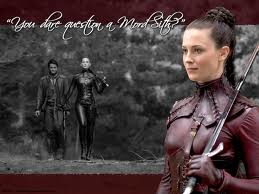
While I am the last to complain about introducing any elf, I feel uneasy. And it has nothing to do with her resembling a Mord Sith. I’m feeling rather traumatized, having (after watching Legend of the Seeker on TV) just listened to Wizard’s First Rule – Terry Goodkind – on audio alone in my car, which fleshes out (excuse the extremely accurate pun), the Mord Sith techniques. Let’s just say that if any woman in red leather comes within 50 feet, I’m running.

But the question is not what this humble elfwriter thinks, but what Tolkien would say. I have a number of books on the master, but never met him. However, I can’t help feeling he would not be amused. 

I can’t imagine someone taking my books and inserting new characters. It seems to be one step too far. What do you think? How loyal should Peter Jackson stay to the original work?

When does The Hobbit become The Hollybit?

——————————————————————————————————

Alon Shalev is the author of The Accidental Activist and A Gardener’s Tale. He has written three epic fantasy novels and the first reached the Quarter Finals of the Amazon Breakthrough Novel Award as of March 2012. More on Alon Shalev at http://www.alonshalev.com and on Twitter (@elfwriter).

When is an Elf not an Elf? And why do we care?

Yes, my novel is compelling, special, well-written etc. just like the 499 other epic fantasy manuscripts sitting in the slush piles of every publishing house that offers YA epic fantasy.

I am working with an agent who is asking the challenging and insightful questions that will help my manuscript stand out from the rest. It is tough and I am feeling very possessive. Last week I shared his prompting to seek a Higher Concept.

One of the aspects that he wants me to consider is changing my elves, who make up many of the main characters and cultural references. He suggests that I consider changing the elves for a new, mythical race that will set me apart from the rest.

Let me state from the outset that I have no doubt this man knows far more than I about the publishing world, has considerable experience and understands the current state of the publishing world.

But my elves? Our elves? Those of us who grew up on Tolkein, Paolini, Brooks and others, have standards, images, friends. Legolas and Anwen, Arya and Blodgarm, and many others have created a rich and familiar texture. We welcome them surfacing as we settle into a thick novel. We embrace them because there are common threads that pass between authors. We call it a culture, those who don’t read fantasy roll their eyes.

                               Nobel Haldir – we owe him for Helm’s Deep, no?

Terry Brooks’ children know that he is not all there, he tells us as much when he opens his book Sometimes the Magic Works: Lessons from a Writing Life. More on this book in a later blog.

But Brooks in not dissimilar to the rest of us, just considerably more talented! We pass through a gate in our imagination and reacquaint in a world that exists in a shared consciousness.

Here the elves are tall, thin, light-footed and beautiful. They are fast and posses stealth and discipline. They are in touch with the energy of the earth, the forest, the animal kingdom. They excel in archery, crafts and healing. Perhaps they are aloof, elitist, and closed to the other races, but this comes from their ancient and rich heritage. We know and love them.

We rejoiced to learn that Peter Jackson is bringing Legalos into a prominent role in the hobbit. Well, a few raised eyebrows, since Legalos was not even referred to by name in The Hobbit when he appeared flanking his father, the King of Mirkwood.

We accept, even with a bit of jealousy that he can fight at Helms Deep for five days, or run non stop for three and still not need to brush his immaculate hair. Nor do we care that his quiver seems to replenish itself, an occupational hazard of any archer who fights battles every other day.

We don’t mind because elves epitomize something that we identify with. We all want to be beautiful, brilliant, in excellent physical condition and, of course, environmentalists. When R.A. Salvatore created Drizzt Do’Urden and the dark elves of Menzoberranzan, a giant underground drow city-state he broke new ground.

Many of us were repelled and had it not been created in the hands of a master of fantasy, we would have rebelled. It was daring, it worked and by Book Three, we were rewarded with the typical elf one finds above ground.

It is tough to turn away from the basic tenets of epic fantasy: the teacher and student, the quest, the fight against a powerful evil, dwarves, elves, dragons, a rich natural world. There is something that has entered our collective consciousness and taken root.

It is why we read and reread the masters…and it is why we will return to read those who take over the role of entertaining us in a way that only epic fantasy does.

——————————————————————————————————

Alon Shalev is the author of The Accidental Activist and A Gardener’s Tale. He has written two fantasy novels and the first will enter the Amazon Breakthrough Novel Award in January 2012. More on Alon Shalev at http://www.alonshalev.com/and on Twitter (#elfwriter).