10 Questions For J.R.R. Tolkien

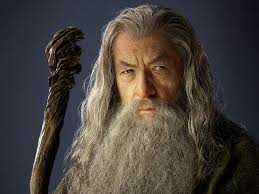
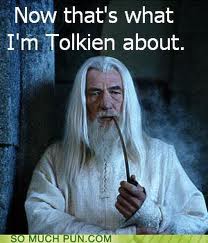
This blog post was inspired by a Time interview with Sir Ian McKellen, who plays Gandalf, the wizard who… if you are following this blog, you already know. It is a fascinating interview given that  J.R.R Tolkien was Catholic and McKellen is gay.

imgresThe interview is:

Timely: the difference between the making of The Hobbit and Lord of the Rings is that Peter Jackson now wears shoes.

Funny:  “No one ever ablutes in Middle Earth.” and…

Poignant: When he visits a public school in England

One of the questions asked of McKellen is what would he ask Tolkien if he could meet him. This got me thinking: I have already shared that I think a lot of Tolkien and Oxford, and The Inklings Club.

So, if you are up there in Writer’s Heaven, quaffing on an ale or puffing your pipe, there is a student down on earth trying to emulate your literary work with a few questions.

1. Did you ever get embarrassed or try to hide your fantasy writing from your academic peers?

2. Did World War 1 provide you with the imaginary and emotional background for Lord of the Rings?

3. Why Hobbits? Who is your favorite character in either The Hobbit or Lord of the Rings?

4. If you were writing either LOTR or The Hobbit today, would you change anything? Different ending?

5. What do you think of the movies?

6. Is Peter Jackson out-of-line to make such radical changes to The Hobbit as including a character who is not from the book?

7. Who is your favorite fantasy author?

8. I know the story of how the first line of The Hobbit came to you (the blank academic paper you were grading), but how did you really come to write a fantasy series?

9. Mac or PC?

10. My critique group has room for one more. Would you consider…

imgres-7The reality is that if I ever found myself in front of the Professor, I would probably stammer and blush, and make a complete fool of myself. So help me out, just in case one day…

What questions would you ask the greatest epic fantasy writer of all time?

——————————————————————————————————

Alon Shalev is the author of the 2013 Eric Hoffer YA Book Award winner, At The Walls of Galbrieth,  the sequel The First Decree, and Ashbar – Wycaan Master Book 3, all released by Tourmaline Books. Shalev is also the author of three social justice-themed novels including Unwanted Heroes. He swears there is a connection. More at http://www.alonshalev.com and on Twitter (@elfwriter).

Cute Tolkien Story

I am indebted for the story in this post to the author, Peter Smalley so I want to first give him a shout-out. “Peter A. Smalley was not so much born as he was the object of a suitably ominous origin story.” If you want to know more, click on the link above or check out his latest book – Emerald City Blues

Remember This Guy?

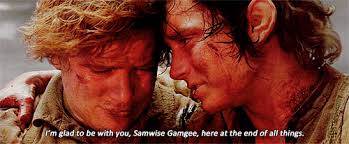
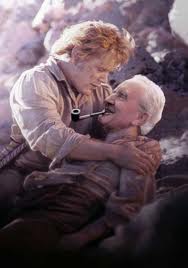
“I’m glad to be with you, Samwise Gamgee, here at the end of all things.” This is friendship!

 So here is the (true) story.

In March 1956, J.R.R. Tolkien was surprised to receive a letter from a man named Sam Gamgee from Tooting, London. Mr. Gamgee, who had not read Lord of the Rings, was surprised to hear that his name had been used in the story. The Professor responded in a letter of his own.

“Dear Mr. Gamgee,

It was very kind of you to write. You can imagine my astonishment when I saw your signature! I can only say, for your comfort, I hope, that the ‘Sam Gamgee’ of my story is a most heroic character, now widely beloved by many readers, even though his origins are rustic. So that perhaps you will not be displeased at the coincidence of the name of this imaginary character of supposedly many centuries ago being the same as yours.”

– The Letters of J.R.R. Tolkien: Letter 184

dsc04663-e1378821253884
Being the gentleman he was, Tolkien also sent him a signed copy of all three volumes of the book. This incident did, however, worry the professor who wrote in his journal:

“For some time I lived in fear of receiving a letter signed ‘S. Gollum’. That would have been more difficult to deal with.”

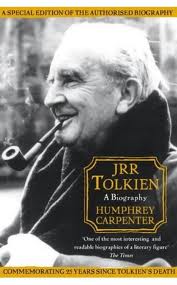
– J.R.R. Tolkien: A Biography

Oh well, need to fill the void for the next 1,464 hours (at the time of writing) until the second Hobbit movie!

imgres 

Finally, thank you to everyone who bought Ashbar – Wycaan Master Bk. 3, which celebrates its 10th day in publication!

 ——————————————————————————————————

Alon Shalev is the author of the 2013 Eric Hoffer YA Book Award winner, At The Walls of Galbrieth, Wycaan Master Book 1 and the sequel The First Decree, both released by Tourmaline Books. Ashbar – Book 3 is the third in the series, released in October 2013. Shalev is also the author of three social justice-themed novels including Unwanted Heroes. He swears there is a connection. More at http://www.alonshalev.com and on Twitter (@elfwriter).

An Unexpected Journey

This weekend, J.R.R. Tolkien’s The Hobbit – An Unexpected Journey comes out. If you are reading this blog, you have probably been counting down along with the Mayans. I haven’t seen the movie yet, so there are no spoilers, but I am incredibly excited. I can’t wait to see it and have no doubt that I will love it, buy the DVD, change my computer’s wall paper and take my kids to eat breakfast at Denny’s…again!

imgres-2But there is something else that has me so stoked for this movie stands on the threshold of something historic: it is the induction of the next generation of epic fantasy readers. Just as Lord of the Rings ignited my generation’s interest, and Christopher Paolini’s Eragon sentenced my own children to a lifetime of reading and vivid imagination, The Hobbit will take a new, unsuspecting generation on an unexpected journey.

My own journey has been somewhat unexpected. Having written a series of well-received social justice-themed novels, I have been introduced to people who are passionate to see and work for a better world. I treasure the opportunities to meet readers at book signings and author meet ups.

DSCN1387As we approached the launch of At The Walls Of Galbrieth, I sought to define my target audience and had a big surprise. To begin with, there were the 100+ who filled out my survey ­– thank you all – and I began to discover a group of passionate and richly imaginative readership.

But here is what excites me. I am meeting a large number of students and teenagers who are die-hard readers of epic fantasy. They eloquently share their love for the creation of a new world, their desire to see everyday folk transform into heroes, and to believe in universal principles such as freedom, good over evil, and the value of friendship.

My social justice-themed novels all contain a common thread: an everyday person goes through a transformational experience which empowers them to pursue justice. Swap the multinational corporation for an evil Emperor, replace the use of social protest with a special bow and arrow, and we have similar themes.

My point is that epic fantasy creeps up on you. This weekend many ingenuous children, teenagers, and parents, are going to see a hyped-up movie and experience a transformation. They may not start yielding a sword and slaying dragons, but they just might embark on an unexpected journey of reading and enter into a world that drives our imagination and defines our social values…

All because in the words of a great wizard: “Hobbits really are amazing creatures.”

——————————————————————————————————

Alon Shalev is the author of At The Walls of Galbrieth, Book 1 of The Wyccan Master series, which reached the Quarter Finals of the Amazon Breakthrough Novel Award 2012, released by Tourmaline Books. The First Decree, the sequel is due out in early 2013. Shalev is also the author of three social justice-themed novels: Unwanted Heroes, The Accidental Activist and A Gardener’s Tale. More on Alon Shalev at http://www.alonshalev.com and on Twitter (@elfwriter).

A Poem In Elvish – J.R.R. Tolkien

This is a rare gem. That an author could possibly make up an entire language is mind-blowing. Yet we often forget that beyond the dragons, swords, and quests, J.R.R. Tolkien created an entire language. As a professor of philology (ancient languages) at Oxford University, Tolkien was already immersed in the mechanics of how a language is put together. 

But the professor took it to another level when he actually made up a language. With the hype beginning to build for The Hobbit movie, this poem surfaced read by the master himself.

Enjoy!

My own elvish is somewhat rusty, so here is a translation of Namarie (Farewell) courtesy of Josh Jones, who goes into greater detail about the when and where.  

Ah! like gold fall the leaves in the wind, long years
numberless as the wings of trees! The long years
have passed like swift draughts of the sweet mead
in lofty halls beyond the West, beneath the blue
vaults of Varda wherein the stars tremble in the
song of her voice, holy and queenly.

Who now shall refill the cup for me?

For now the Kindler, Varda, the Queen of Stars,
from Mount Everwhite has uplifted her hands like
clouds, and all paths are drowned deep in shadow;
and out of a grey country darkness lies on the
foaming waves between us, and mist covers the
jewels of Calacirya for ever. Now lost, lost for
those from the East is Valimar!

Farewell! Maybe thou shalt find Valimar. Maybe
even thou shalt find it. Farewell!

And, in case you haven’t got enough, here is Tolkien again, reciting the Song of Durin (in English). 

Have a great weekend,

Elfwriter

——————————————————————————————————

Alon Shalev is the author of The Accidental Activist and A Gardener’s Tale. He has written three epic fantasy novels and the first, which reached the Quarter Finals of the Amazon Breakthrough Novel Award 2012, is due out in January 2013 by Tourmaline Press. More on Alon Shalev at http://www.alonshalev.com and on Twitter (@elfwriter).

10 Takeaways From George RR Martin

Isabel Berwick had lunch with Game of Thrones author, George RR Martin, and wrote this great article for the Financial Times. This post is not meant to replace it, but here are a few takeaways that stood out to me, for those of us who love and write epic fantasy. Please do read her article. It is very interesting, but be warned – it will make you hungry!

George RR Martin

1) During their lunch,  George RR Martin sees a map in Ms. Berwick’s “giant slab of breaded chicken.” He points to different parts and explains: “There are various little inlets where cities could be.”

I have seen elves in coffee shops and magical tunnels in my local park. These magical worlds are not hidden from us, they are right in front of our eyes.

2) Having famous fans of your works helps. Apparently, Facebook founder Mark Zuckerberg held a Game of Thrones-themed barbecue which made the news.

3) Martin didn’t have much as a child as his family struggled to keep financially afloat, but the seeds were sown – he was “the kid with his nose in a book.” Stephen King speaks of the need to be constantly reading – in your genre and outside.

 4) There are explicit sexual scenes in Game of Thrones (though I don’t remember much from the book apart from one scene – I have only read the first so far). This caught my attention because I use sex in my social-justice themed novels. Both A Gardener’s Tale and The Accidental Activist has vivid sex scenes. I believe these can reveal so much about a character, but I suspect HBO saw the fact that people like sex on their screens was reason enough.

5) It is okay to fail with a few books. Martin expected his breakthrough would come with his fourth book, Armageddon Rag, about a rock band. He concedes that: “it was the worst-selling of all my novels and essentially destroyed my career as a novelist at the time.” The most important lesson from this is DON’T GIVE UP!

6). When asked about his world-building, Martin, despite his success, is quick to give credit to J.R.R. Tolkien: “There were thousands of years of fantasy before Tolkien but the way it is shaped as a modern commercial publishing genre and the fantasy books that have been written in the past half century have all been influenced by Tolkien. So it still sort of defines the playing field.”

Martin has shown us that Tolkien’s legacy continues. People want to immerse into a rich world and are ready to read deep and vivid descriptions. 

7) Leave your own mark. Martin feels that his strong women, just as politically contriving and sexually adept, send a strong message that the female character needs to be as strong and vivid as the males.

I also think the way he perceives a hero is unique. John Smith and Tyrion Lannister are as close as I got to a hero (Edard Stark cuts a more typical Man For All Seasons-type hero). But they are clearly flawed and tainted enough to only just stand out from the rest. I admire this aspect of Martin – I am not aware who else succeeds in doing this.

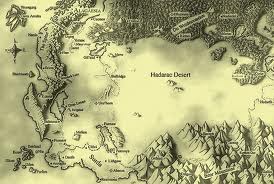
8) Martin believes that maps are very important. I have talked about them in this blog before, but he confirms the necessity. It was important enough, he notes, to be at the beginning of each HBO episode. 

 9) The reader is willing to cope with many characters. This means the writer needs to stay extremely organized. Martin has over 1,000 characters in his series and his plots are both complex and spread over years. 

There are many ways to keep track of plots and characters. I think methodology is a very individual choice and will touch on this in a later blog. What is certain is that the passionate reader will remember what happened several years ago and not forgive you the error.

10) Martin, the successful author is traveling around the world.  I am sure it is very interesting and gratifying, but you can tell a writer when he says: “These trips are fun but they do interfere with my writing.”

Write. Write. Write. This is a busy period for me at the work which puts the food on the table. Anticipating this, I am mainly editing and blogging. The next book will wait for a quieter part of the year. But man, am I cranky!  

Finally, I just loved this quote. It requires no comment.

“When I am writing best, I really am lost in my world. I lose track of the outside world. I have a difficult time balancing between my real world and the artificial world. When the writing is going really well, whole days and weeks go by and I suddenly realise I have all these unpaid bills and, my God, I haven’t unpacked, and the suitcase has been sitting there for three weeks.” 

If you’ve been there you know it. If you haven’t, I hope you soon discover it. Terry Brooks says that this is when the magic happens. Here’s to those magical moments: and many more books from the world of Westoros.

——————————————————————————————————

Alon Shalev is the author of The Accidental Activist and A Gardener’s Tale. He has written three epic fantasy novels and the first reached the Quarter Finals of the Amazon Breakthrough Novel Award as of March 2012. More on Alon Shalev at http://www.alon-shalev.com and on Twitter (@elfwriter).

Where Do People Like Us Hang Out?

“Go forth and find your target audience,” I was told and I posted a questionnaire that many of you were kind enough to answer (if you haven’t, it is not too late, and I do promise to share my findings).

“Keep defining and refining it,” my mentor continued and so I have a question for you.

Where do you hang out? Where do you meet others such as you and me; those who believe in elves, dwarves, noble quests, and dragons? And please don’t tell me: Alagaësia, Middle Earth or Shannara – I’ve been there and I never saw you!

When you don’t have your nose in an exciting book, where do you meet fellow fantasy readers? Do you frequent conferences? Do you read magazines (on-line or tree form)? Are you on a social networking fantasy site, a discussion group, or a fantasy book club?

Please leave your tracks in the comments below. It will help me find companions for my journey and help others find company too.

I appreciate your help. Oh, and next time you pop into Alagaësia, Middle Earth or Shannara, would it hurt to say hi?

Finally something totally unconnected to this blog: This past week Muslims were insulted, Christians died from the violence, and Jews were blamed. We are all victims when we set ourselves apart. Sometimes it just feels easier to lose yourself in the world of elves, dwarves and dragons.

May we all learn to celebrate our differences together and share the space. There is enough room for us all. Safe travels wherever your road takes you.

——————————————————————————————————

Alon Shalev is the author of The Accidental Activist and A Gardener’s Tale. He has written three epic fantasy novels and the first reached the Quarter Finals of the Amazon Breakthrough Novel Award as of March 2012. More on Alon Shalev at http://www.alonshalev.com/and on Twitter (@elfwriter).

Genre Conventions .v. Originality

“But this is how it’s done in epic fantasy,” I whine to my writer’s group. “It’s part of the convention.”

We are a bonded group, anxious to support each other and so I receive sympathetic smiles and diplomatic silence. The silence screams in my ears. I know they are right. If I have to fall back on a sentence like that, I am in trouble. Or am I?

How important is originality?

Utter originality is, of course, out of the question.” – Ezra Pound

Originality is nothing but judicious imitation.” – Voltaire

I feel better already.

It is better to fail in originality than to succeed in imitation.” – Herman Melville.

Ouch!

Elves are tall, thin, have pointed ears, and excellent hearing. They look good in green, and shoot bow and arrows with exceptional accuracy.  Dwarves are short, rotund, live underground, mine and play around with axes. This is so because J.R.R. Tolkien put the epic in epic fantasy with his Middle Earth series’. Are the rest of us thus condemned to be mere recyclers of his work? Maybe. But I am not convinced how this is different from any other genre: romance has the same images and general plot arc. So does suspense and horror. And don’t get me started on dystopian thrillers.

So why do we so enthusiastically embrace conventions in a genre? It might be because some themes are simply timeless. I’m thinking Beowulf (maybe written in the eighth century) and The Odyssey (sixteen centuries before that!). Tolkien would concede that he was not the first, but when something works, you build your own version of it, and sometimes your version is good enough to capture the imagination of a very loyal readership. But it is not just enjoyment. It is pure escapism to a world we can get excited about, to values we can admire or fear (or both). It is also something familiar, something soothing. 

And yet when we embark on a new epic fantasy series, or try the work of a new author, we are seeking both something familiar and something original. What makes each author since Tolkien distinct is some aspect of his / her work. The relationship between Eragon and Saphira (his dragon), made Christopher Paolini’s Inheritance series special. I have just started reading The Weight of Blood by David Dalglish (check out his cool book covers by Peter Ortiz) which is about two brothers (okay) who are not just orcs (hmmm), but half-orcs (ahhh). I was caught on page one. Dalglish has written a variance on the convention. So did R.A. Salvatore when he introduced Drizzt – a dark elf whose race were the opposite from the stereotypical elves. Five novels on, I am still intrigued. Daniel Arenson came up with his own original approach to dragons in the Song of Dragons series. 

Before I end, let me say how much I admire those who come up with something original – Hunger Games, Harry Potter, Percy Jackson – they capture us all and we devour their new approaches. But those who seek to ride their coattails are not so successful and I think this is very telling.

It says that while the fantasy readership will embrace a clever, well-written, new concept, that very concept might not establish itself beyond one brilliant author. Epic fantasy, however, with its elves, dragons and swords, continues to stand the test of time. This is not because our readership is lazy. Instead they demand depth – world building, characters, and a plot that offers a twist on a well-tested theme. They continue to surprise us with the familiar.

It’s a great genre to be a part of.

 Good Writing,

Alon 

—————————————————————————————————

Alon Shalev is the author of The Accidental Activist and A Gardener’s Tale. He has written three epic fantasy novels and the first reached the Quarter Finals of the Amazon Breakthrough Novel Award as of March 2012. More on Alon Shalev at http://www.alonshalev.com/and on Twitter (@elfwriter).

It’s In The Journey

“The problem with your genre,” the man declared with a smirk, “is that the reader always know what’s going to happen in the end. That’s why I never read fantasy.”

I could have asked him how he knew this since he admitted to not reading the genre. I might have questioned whether romance (the most popular fiction genre) or cookbooks (most popular non fiction) are any different. Those recipes never work for me!

Instead, I asked him what it was about epic fantasy that made it popular assuming he was right about the predictable endings. To his credit, he thought a while before answering. “It’s in the journey,” he replied.

I’ve been thinking about this. During my summer vacation, we camped by a river. The locals told me that there were no fish inhabiting it and it was only good for swimming in.

We went down to the river and my sons had a great time with their river rats (inflated tubes) negotiating small rapids.

I got out my fly rod, walked a bit upstream and stood in the middle of the water casting. The river was beautiful and clear, the rocks underneath and protruding were smooth and colorful. Majestic redwoods surrounded us and a noble mountain peak loomed above me. Wisps of fog hugged the tops of the trees and later in the day came almost to the edge of the water.

The author, deftly not catching fish!

I imagined where a wild trout (huge one of course) would hover and allow its prey to float right to it (a feeding pool, I think the experts call it). I cast my fly and watched it float in a wide arc. Being of only limited skill it took me a while to cast to the right distance, but I was very satisfied when I could consistently float my fly into the (imaginary) feeding pool.

A couple walked past arm-in-arm and the man felt compelled to tell me that there were no fish in the river. I nodded and told him I knew. He shrugged, but his partner got it, I think.

“Enjoy yourself,” she said.

I did enjoy myself that afternoon. I enjoyed setting up my fly rod and casting it out. I enjoyed the river, the trees, the mountain, the fog. I felt myself sighing as I released the tension of my real world and let it float away with the river.

Hemingway fly-fished. Tolkien smoked a pipe (I couldn’t find evidence that he fished but he wrote poems about it – see below). I strive to walk in the shadow of Tolkien rather than Hemmingway, but the pipe has long been relinquished. Still I remember the pleasure I got in packing and lighting the pipe, even cleaning it. I still yearn for the smell of the Borkum Riff tobacco all these years later. I miss it more than the smoking for sure. I recall the anticipation of waiting all day for that special time after dinner when I could sit outside my little house and puff away the worries of the day.

Gimli lights up after a hard day of killing.

At the end of one of my fantasy novels is a twist I am very proud of. Those who have read it all tell me that they gasped at that moment. In my writer’s group, while still only on page six of that novel, one of the women guessed the twist.

I never responded, never told her she was right. I want her to enjoy the journey.

Happy fishing everyone, however you cast your rod. I’ll leave you in the hands of the Master:

Fish Riddle

Alive without breath;
as cold as death;
never thirsting, ever drinking;
clad in mail, never clinking.
Drowns on dry land,
thinks an island
is a mountain;
thinks a fountain
is a puff of air.

So sleek, so fair!
What a joy to meet!

We only wish
to catch a fish,

 So juicy-sweet!

                                                      From Lord of the Rings By J.R.R. Tolkien

——————————————————————————————————

Alon Shalev is the author of The Accidental Activist and A Gardener’s Tale. He has written three epic fantasy novels and the first reached the Quarter Finals of the Amazon Breakthrough Novel Award as of March 2012. More on Alon Shalev at http://www.alonshalev.com/ and on Twitter (@elfwriter).

Teaching LOTR in School

English Teacher and novelist, Roger Colby, proses teaching Tolkien in school. Here he explains in his excellent post. Your thoughts?

Thanks for the feedback to my previous Tolkien posts. Have a great weekend.

——————————————————————————————————

Alon Shalev is the author of The Accidental Activist and A Gardener’s Tale. He has written three epic fantasy novels and the first reached the Quarter Finals of the Amazon Breakthrough Novel Award as of March 2012. More on Alon Shalev at http://www.alonshalev.com/ and on Twitter (@elfwriter).

Roger Colby, Novelist's avatarWriting Is Hard Work

J.R.R. Tolkien’s The Lord of the Rings is probably one of the most important texts written in the 20th century.  It is also a text that most students can read without much difficulty if given proper time.  Most teachers do not realize that the epic saga can be used to teach most of the Common Core Standards.  I have devised a unit for English teachers to use which is based on a unit I taught a few years ago when I was experimenting with using Advanced Placement style instruction in an at-level classroom.  It will work well for Common Core and will work for a freshman or sophomore class as juniors focus on American literature while seniors focus on British literature.

1.  Unit Thematic Questions – I ask several questions (meant for free-writing sessions) before we begin reading the text: What does power mean to you?  State several types…

View original post 1,841 more words

The Master Tolkien Left Crumbs For The Hungry

The skeptics (those forced to study his work) and the jealous (those of us who figuratively sit at his feet bashing out epic fantasy novels on our laptops) dismiss J.R.R. Tolkien as a once-in-a-lifetime genius. We couldn’t emulate him even if we wanted to (though of course we do want to). We comfort ourselves that in today’s world of instant gratification, you cannot spend several pages describing a forest, however old and steeped in magic it may be.

I have read a number of books about the master and even began a fictionalized account of his life. I have on my iPod a course from the iTunes University – The Tolkien Professor by Corey Olsen, a professor himself from Washington College.

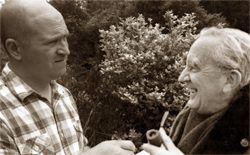
I want to share a few tips that Tolkien had for writers. This is taken from a post by Roger Colby, an author and English teacher. Mr. Colby never met Tolkien, though thanks to photoshop, he looks like he might have! Judging by his research, he deserved to!

Roger Colby ‘meets’ J.R.R. Tolkien

Mr. Colby spent a month carefully dissecting The Letters of J.R.R. Tolkien, edited by Humphrey Carpenter, and underlined every instance where the master of Middle Earth wrote about his process. The quotes are attributed. Any comments belong to Mr. Colby, though I strongly recommend reading the entire article.

1.  Vanity Is Useless

Tolkien writes in a letter to Sir Stanley Unwin on 31 July 1947:

“…I certainly hope to leave behind me the whole thing [LOTR] revised and in final form, for the world to throw into the waste-paper basket.  All books come there in the end, in this world, anyway” (121).

2.  Keep a Stiff Upper Lip

In another letter to Sir Stanley Unwin dated July 21, 1946, Tolkien lists a mound of personal struggles he was facing: being ill, being overworked and missing his son Christopher who was away in the Royal Navy. He put many of his struggles aside, though, and went to writing.

He had to balance his day job with his desire to write epic stories set in Middle Earth. He found time. He made time. It took him 7 years to write The Hobbit. (117). The thing that he writes about most in this period is his struggle to get the work finished on his novels and to balance teaching and his many duties at Oxford College. Apparently he found a way.

3.  Listen to Critics

Tolkien writes to his editor about the comments C.S. Lewis made about The Lord of the Rings: “When he would say, ‘You can do better than that. Better, Tolkien, please!’ I would try. I’d sit down and write the section over and over.

That happened with the scene I think is the best in the book, the confrontation between Gandalf and his rival wizard, Saruman, in the ravaged city of Isengard.”

He writes that he “cut out some passages of light-hearted hobbit conversation which he [Lewis] found tiresome, thinking that if he did most other readers (if any) would feel the same…to tell the truth he never really like hobbits very much, least of all Merry and Pippin. But a great number of readers do, and would like more than they have got” (376).

4.  Let Your Interests Drive Your Writing

Tolkien wrote: “I began the construction of languages in early boyhood: I am primarily a scientific philologist. My interests were, and remain, largely scientific. But I was also interested in traditional tales (especially those concerning dragons); and writing (not reading) verse and metrical devices. These things began to flow together when I was an undergraduate to the despair of my tutors and near-wrecking of my career” (345).

5.  Poetry As A Road to Prose

When Tolkien couldn’t express his thoughts in prose he “wrote much of it in verse.”

He writes “The first version of the song of Strider concerning Luthien,… originally appeared in the Leeds University magazine, but the whole tale, as sketched by Aragorn, was written in a poem of great length” (346).

6.  Happy Accidents

Tolkien writes: “The Hobbit saw the light and made my connection with A. & U. by an accident.” Further: “From The Hobbit are also derived the matter of the Dwarves, Durin their prime ancestor, and Moria; and Elrond.

Mr. Colby: “Sometimes accidents happen, and sometimes those accidents will lead a writer to a publisher or create an entire novel.  Tolkien created entire worlds and then used what he knew of myth and legend to tell iconic, archetypal stories based in those magical places.

Even though he planned everything out meticulously, he still had happy accidents occur that he kept in the final manuscript because they just worked. Sometimes accidents can be blessings.”

7.  Dreams Give Us Inspiration

Tolkien writes:  “In sleep I had the dreadful dream of the ineluctable Wave, either coming out of the quiet sea, or coming in towering over the green inlands.  It still occurs occasionally, though now exorcised by writing about it.

It always ends by surrender, and I awake gasping out of the deep water. I used to draw it or write bad poems about it. When C.S. Lewis and I tossed up, and he was to write on space-travel and I on time-travel, I began an abortive book of time-travel of which the end was to be the presence of my hero in the drowning of Atlantis” (347).

8.  Real People Make Great Characters

Tolkien: “There was a curious local character, an old man who used to go about sweeping gossip and weather-wisdom and such like.

To amuse my boys I named him Gaffer Gamgee, and the name became part of family lore to fix on old chaps of the kind. At that time I was beginning on The Hobbit. The choice of Gamgee was primarily directed by alliteration; but I did not invent it. It was caught out of childhood memory, as a comic word or name. It was in fact the name when I was small (in Birmingham) for ‘cotton-wool’”(348).

9.  You May Be the Next Best Selling Author

Tolkien relates the following story: “I lived for a while in a rather decayed road (aptly called Duchess) in Edgbaston, B’ham; it ran into a more decayed road called Beaufort. I mention this only because in Beaufort road was a house, occupied in its palmier days, by Mr. Shorthouse, a manufacturer of acids, of (I believe) Quaker connections.

He, a mere amateur (like myself) with no status in the literary world, suddenly produced a long book, which was queer, exciting, and debatable – or seemed so then, few now find it possible to read. It slowly took on, and eventually became a best-seller, and the subject of public discussion from the Prime Minister downwards. This was John Inglesant. Mr. Shorthouse became very queer, and very UnBrummagem not to say UnEnglish. He seemed to fancy himself as a reincarnation of some renaissance Italian, and dressed the part” (348).

10.  Books You Write May Seem Trite

Tolkien writes: “I now find The Lord of the Rings ‘good in parts”(349).

Mr, Colby: “This is to say that upon reading his books years after writing them his writing experience informs him that he is a much better writer than when he published The Hobbit.”

Tribute: Given that I have relied heavily upon the research of Mr. Colby, I would like to promote his own novel as appreciation. The Transgression Box- Roger Colby.
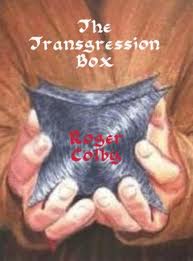
Dornin is known as the village liar…but he will also be their unwitting savior. It all begins when Dornin finds a mysterious object in the forest – a perfect cube of a box – and brings it back to his village. Unsure of its purpose, he hands over the object to the village elders – but during the night he spots a strange fog emanating from the House of Elders, and in the morning, over half of the people of the village have fallen into an unnatural and unending sleep.

Dornin decides he must set off on a quest to destroy the “Transgression Box” in order to save his people. Along the way he will encounter many strange and dangerous places, as he desperately tries to destroy that which must be destroyed for him. The Transgression Box is an allegorical science fiction tale of faith, trust and hope.

——————————————————————————————————

Alon Shalev is the author of The Accidental Activist and A Gardener’s Tale. He has written three epic fantasy novels and the first reached the Quarter Finals of the Amazon Breakthrough Novel Award as of March 2012. More on Alon Shalev at  http://www.alonshalev.com and on Twitter (@elfwriter).