World-Building: How Much Detail?

I’ve noticed a number of adult reviewers of my Wycaan Master series have been critical of my world-building, suggesting that I do not go deep enough or that the books are too fast-paced and that more description of scenery and environment would help to pace the book.

There seems a definite age issue here. I asked a number of my sons’ friends (ages 10-16) who have read the book and they did not agree. In fact, the younger readers were happy to describe to me the fortress of Galbrieth from Book 1, and mighty Hothengold, the dwarf capital, which is situated in a huge cavern. Admittedly, each child described it differently, but I am not sure that matters.

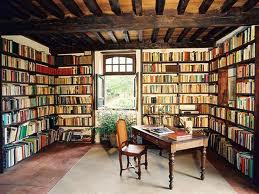
Girl Browsing Books at the Library

It seems there is a certain richness in each (young) reader’s imagination forming their own world, but why do adult readers not want to exercise their minds in such a way? Why does the generation of instant gratification seem willing to work their imagination muscles, while those who always had to work hard to discover anything, do not? In an earlier blog post – The Art of World Building – which I wrote at the beginning of my epic fantasy writing journey – I assumed that it would be exactly the opposite.

I suspect age is not always a factor. The adult who is often challenged to find reading time, wants to push the plot along, something my books are complimented for, and not spend a chapter describing every tree in Mirkwood. Ironically, when the same readers lost themselves in Tolkien’s Middle Earth decades ago, they had more free time to meander with the master.

Over the summer, I have indulged myself in writing an adult fantasy novel, a Game of Thrones wannabe, and I will soon shelve it to focus on editing Book 4 and writing Book 5 – the cycle never ends. But I realize I have been no more generous with my world building than for the Wycaan Master series.

Airship10

So my question to you, dear readers: How much detail of the environment is needed for a YA in comparison to an adult fantasy novel? Is there enough world-building in the Wycaan Master series? Please feel free to leave your feedback in the comments section below. I really appreciate every comment.

Talking of feedback: I have been reading a number of books about Amazon.com and how to improve your ranking and exposure. I really need reviews on both At The Walls Of Galbrieth and The First Decree, on both the US and UK sites. Apparently less than 3% of readers leave reviews and I admit, until I began writing, I was one of the 97%. But now from the other side of the fence, I would really appreciate that if you have read either book, please take five minutes and leave a review.

It will be a huge help to a struggling author and if ever we meet in Odessiya, the next round of ale will be on me!

hobbits in pub

——————————————————————————————————

Alon Shalev is the author of the 2013 Eric Hoffer YA Book Award winner, At The Walls of Galbrieth, Wycaan Master Book 1 and The First Decree, both released by Tourmaline Books. Ashbar – Book 3 – is due for release in October 2013. Shalev is also the author of three social justice-themed novels including Unwanted Heroes. He swears there is a connection. More at http://www.alonshalev.com and on Twitter (@elfwriter).

Guest Post: My Fantastical African Inspiration – Yurika Kotzé

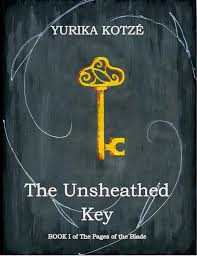
imgres-2 Yurika Kotzé is a fantasy author and wildlife researcher. She loves history and combines the inspiration she gleans from living in Africa with medieval swords and water nymphs – because, well, why not? Her first novel, The Unsheathed Key is now available as an ebook from Barnes&Noble, Kobo and others. Check out her website for info; or to read an excerpt.

 ————————————————————————————————————-     So there we were, sitting next to the fire on our farm, right on the border of Zimbabwe. We were happily nibbling away at our chops and tossing the bones into the fire, when another sound suddenly rose above the rushing waters of the river. A deep sawing noise.

Steady and rhythmic, it grew in volume and started to move around our campfire, just out of sight. If there had been any doubt, the sour feline smell confirmed it: we were being stalked by a leopard.

Nervously, we jumped up and put our backs to each other. My husband, his friend and I formed a little tripod of comfort as we steadily made our way to the car, eyes peeled for movement. The leopard sawed and barked and growled as it circled us, completely focussed on its prey. My hand finally found the car door’s handle, but it was locked. Laughing nervously, my husband fumbled for the keys as our friend loaded the .375 rifle.

At last, I managed to unlock the car with my shaky hands and the three of us piled into the front seat. We hastily shut the door and finally caught a glimpse of the leopard as he made his way back into the bush. We burst out laughing.

I am proudly South African. Moments like these make me fall in love with this beautiful country. Growing up just outside of the Kruger National Park and later living on an elephant farm, I have had my share of encounters.

images-1Being exposed to raw, unbridled Africa changes you. There is an atmosphere here that can only be understood by those who have experienced it.  It’s the perfect place for any fantasy author to become inspired.

South Africa is the birth-place of Tolkien and his Middle Earth, and there is nothing like hiking the Hogsback Mountains and seeing the world through his eyes. It’s also the perfect place to read The Hobbit. Except when your dog comes running out at you out of nowhere while your head is filled with orcs… I have never screamed so loud.

As a writer, I need to draw upon my surroundings, write what I know; and I am spoiled for choice. ‘Upside-down trees’ (baobabs), magnificent animals, folklore, and mighty rivers… I have been stalked, chased and burnt to shreds by the African sun enough for me to have writing material for years to come.

imgres-1I love this continent.

 —————————————————————————————————————-

Yurika Kotzé is the author of The Unsheathed Key. Check out her website for more information or to read an excerpt.

imgres-6

The Fatherly Figure in Fantasy

As a warm up for reading this blog, please  say the following five times as quickly as possible: The Fatherly Figure in Fantasy.

I shared some thoughts on Left Coast Voices regarding Father’s Day this Sunday. But it occurred to me that the father figures in epic fantasy gets a tough time. Here is a brief overview of a few of our beloved characters and their fathers (I acknowledge that I am encompassing a wide definition of the genre for this post. Purists – please excuse me this once).

WARNING: There might be spoilers here, so I am giving the name of the character first and won’t be offended if you skip that part.

1. Luke Skywalker:

I know this is sci-fi and not fantasy, but we have all hung there with Luke as his father, who had just chopped off his arm, now looms over him with a lightsaber. What a time to discover your father! As if it is not enough that your uncle and aunt who brought you up were murdered, now you discover your father is a metallic mass-murderer.

Suggestion: Do not buy Dad a lightsaber. It is the first step to the Dark Side and he already has plenty of power tools he never uses.

 images

2. Tyrion Lannister:

So your father abused you and openly hated and insulted you. As if you don’t have enough to contend with two older, beautiful siblings, who are bonking, or the fact that you were born stunted and are accused of killing your mother as she gave birth to you. Not hard to understand why A Lannister Always Pays His Debts!

Suggestion: Don’t give your father a ‘quarrel’ even if he deserves it.

 images-2

 3. Eragon:

Also grew up never knowing his true father and then, like Luke Skywalker, finds his uncle, who was like a father to him, is murdered in his stead. Of course, no sooner does he discover who his father really is, than he has to bury him, and take considerable blame for brave father’s death.

Suggestion: Giving your old man your dragon/porche just before he dies is classy, but do check your insurance policy first.

images-1

4. Drizzt Do’Urden:

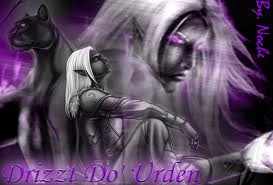
Gotta give the dark elf considerable credit. He grew up in the Drow city of Menzoberranzan. where all males were merely fighters and concubines. Of course his mother and sisters abused him and tried to kill him, and by the time he discovered who his father really was, well…I don’t think he even got to bury him.

Suggestion: a bit stumped here. When your father gave you a genetic sense of justice, enough to turn you against your mother and sisters, what can you really reciprocate with? 

images-2

Artist – Noche

5. Frodo Baggins:

I admit, I had to look this up and cannot guarantee my sources. Frodo’s father was Drogo and we don’t know much about him other than he went and drowned in a boating accident. Hobbits should know not to participate in such dangerous and adventurous pastimes as boating. At least, Frodo had a nice secure upbringing with his first cousin once removed (and not his uncle as even dear Bilbo often referred to himself). It was not as though Bilbo passed on any artifact that was incredibly dangerous and held the fate of the entire Middle Earth!

Suggestion: Stay away from the jewelry!!!

images-3


In epic fantasy we gravitate to protagonists who are the underdogs, who overcome adversary, and make great personal sacrifice. But we also seem to be sending out a message to our young readers that the absent/weak/villain father is the norm.

It must not be so. Every young man deserves a father who is a role model, imperfect and flawed as we may be, but a father who will teach him to fish, nock an arrow, believe in a just society, and to be a good human being…or elf…dwarf etc.

I’m sure if we were to meet Luke, Eragon, Tyrion, Drizzt or Frodo in a pub, they would all agree that they wished they had fathers they could truly appreciate and learn from.

Perhaps being the best father you can is the greatest quest any of us can embark on. It may not save Middle Earth or Menzoberranzan, but it will make our world a better place to live in.

Happy Father’s Day.

—————————————————————————————————–

Alon Shalev writes social justice-themed novels and YA epic fantasy. He swears there is a connection. His latest books include: Unwanted Heroes and the 2013 Eric Hoffer Book Award for YA – At The Walls Of Galbrieth. Alon tweets at @elfwriter. For more about the author, check out his website.

Elves, Dwarves and Political Activists

“You can’t be serious!” she exclaimed, wrinkling her nose as though I had just made a pass at her, or uttered a politically incorrect sentiment. “You write about elves and dwarves running from one end of the world to another killing each other and making long speeches? I thought you were a serious writer.”

In honesty, she had not seen me for a few years, and even then, knew me in the context of my more political work environment. To her credit, she recovered and apologized, and I was able to refrain from pouring my drink into her lap. It was, after all, a good scotch.

images-2

Friend or not, intentional or not, it still hurt. I thought I had past this stage, smoothly presenting myself as ‘an author who writes in two genres’. I have practiced my opening line and it is now delivered with confidence.

I am involved in social justice causes. Even in my short eight years living in the US, I have built a fair resume of involvement. I have taken students almost every year to New Orleans, not only to help rebuild a community, physically and emotionally, but to bear witness so that the millennials will not make the mistakes we have. I have been involved in various campaigns here and abroad.  I know my local food bank well. Hey, you never had a black President before I came to the US! 

But yes, I love to lose myself in Middle Earth, Alaegasia, Westeros and, dare I add it to the list: Odessiya. It’s a nice break from the intensive campus environment to deal with stubborn dwarves and idealistic elves. While closeted in an urban concrete jungle, it is relaxing to ride a horse through ancient forests, over great ice plains, and to quaff an ale or puff a pipe (without the health risks) with good friends, all from a computer screen or ebook reader.

Fantasy1

 The San Francisco Bay Area is intensely populated by variety of the human species often identified by salt-and-pepper haired, wrinkled, colorful attire, and provocative bumper stickers. These aging ideologues have rich resumes of demonstrating against wars, civil rights. Watergate, and more recently, more wars, gay rights, and gun control.

While there are many who have fallen by the wayside, succumbing to burnout, those who have maintained their energy to keep demonstrating and fighting for what is right, all seem to have a secret place they go to recharge, relax, and to return energized to make the world a better place to live in. It might be literature, meditation, family, friends, food, nature … it doesn’t matter. As a friend once said: Fixing the world is a marathon, not a sprint.

hobbits in pub

Yeah, I write about elves and dwarves doing brave acts and striving for justice and honor. Sure I write about battles and loves, about friendships and magic, about the power of nature and good fighting evil.

It energizes me, often provides clarity and vision. And if I do occasionally wonder what Seanchai or Shayth might do about gun control or why some people are denied the rights and opportunities their neighbors have, well that’s because fantasy is not quite as far-fetched and detached from reality as my shocked friend might think.

God created the world in six day and on the seventh s/he rested…and may well have deservedly read Lord of the Rings.

 images-3

Here’s to whatever it takes for each of us to continue the journey we’ve chosen!

—————————————————————————————————–

Alon Shalev writes social justice-themed novels and YA epic fantasy. He swears there is a connection. His latest books include: Unwanted Heroes and the 2013 Eric Hoffer Book Award for YA – At The Walls Of Galbrieth. Alon tweets at @alonshalevsf and @elfwriter.   For more about the author, check out his website.


The Gods of Fantasy

Pass a summer evening in a quaint English pub, mid 20th century, perhaps in the old town of Oxford. Caress a pint and listening to a few graying professors discuss semantics, philosophy, and the ancient languages long forgotten outside the sheltered walls of academia. What else can one possibly ask for? 

imgres-1Imagine these tweed-clad, pipe-smoking academics, hatching more than another challenging semester to try the greatest minds of this fair isle. Each is a king in the making or, more accurately, a kingmaker. For they direct more than the destiny of kings and noble houses. They raise kingdoms and conquer lands. They build great dynasties, bring whole species back from the mists of extinction, and set those of noble birth and principle to stand against evil.

Sip your beer, mull over the words, much of which you might not understand. Dwarves, elves, of course: but hobbits? Marsh-wiggles? Listen as the professors strategize great battles, masterfully marshalling unicorns, dragons, giants, minotaurs and proud ents. 

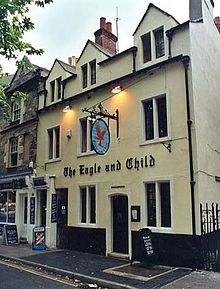
You slowly realize that you sit among the Gods, the creators of Middle Earth and Narnia, who hold court on Tuesdays at midday in a local public house. Perhaps it is The Eagle and Child, or The Lamb and Flag across the street. They read each other’s work and offer critique as writer’s groups have for centuries and continue to do so today.

220px-Birdandbaby 

I may never have understood much or been accepted into such an elite. They would have torn my work to shreds on grounds of philological shallowness (I had it checked – it’s not contagious), criticized me for imprudently suggesting that a 100,000 word novel can serve as more than merely an introduction.

They would have demanded richer world-building – take twenty pages to describe a forest, I dare you – unyielding heroes, and infallible plots. They would have challenged the age-old legends dressed up in fictional costumes, and raised an eyebrow at some of the language or innuendos.

Most likely, I would never have dared reveal my stories to the old professors of Oxford, to the most famous writing group in history. I would never have been more than a fly on the wall at a meeting of The Inklings, but would have returned week after week to sit at the feet of the Gods and hear their banter.

For here the Gods gave birth to great worlds and left them as a legacy to us and to our children, long after they departed this world. Every Wednesday night, I sit around a table in a coffee shop in Berkeley, sharing work with other aspiring authors and wonder: do the Gods look down upon us from Writers Heaven?

 lewis-and-tolkien1

Do they tut and shake their heads at our adverb addiction, our unwillingness to kill our darlings? Or do they even now move pieces around the literary chessboard? Protect the king! Advance the knights! Who, I wonder, are the pawns?

As we write a new book, a new chapter, do we not imagine the Gods walk among us?  Do they peer over our shoulders at our swanky writing machines, judging every word we write, every world we build? 

The Gods once sat in an old English pub. Now they stand behind us in coffee shops and at kitchen tables, urging us on, watching us walk the path they forged, taking on the quest they started.

For the Gods still walk among us and inside of us. The stories have been told but must be told again in different ways to a different generation. We sign these books in our own names, but humbly acknowledge those who molded us in their image as storytellers.

And now they are the flies on the wall and we who pound the keyboards. Take a moment, draw another pint, and raise your glass:

To the Gods of Fantasy!

—————————————————————————————————–

Alon Shalev writes social justice-themed novels and YA epic fantasy. He swears there is a connection. His latest books include: Unwanted Heroes and the 2013 Eric Hoffer Book Award for YA – At The Walls Of Galbrieth. Alon tweets at @alonshalevsf and @elfwriter.   For more about the author, check out his website.


Possessed Writers

The scene might be the same in any house mid-week, early evening.

Your partner is rushing to make dinner, still in his/her office clothes. Ten- year-old son is irritable, primarily because he prefers to play wall ball than eat his lunch at um … lunch break. He has even pointed out that the First Lady wants him to exercise more (you just lost my vote in 2020 Ms. Obama! Tell him to eat that sandwich we made him). Older son is drowning in homework and needs help. Unfortunately it is not math where he ends up explaining it to a perplexed calculator-wielding father – it is English and father is the fastest typist in the house.

images

From within this maelstrom, hassled wife turns around from steaming cooking pots and sees an unset, messy dinner table, a swivel chair, and a writer’s desk. The writer, sitting in said chair, is distinctly facing the wrong direction, pounding his keyboard with a vengeance.

Suddenly, she can’t help herself. Forgetting the wooden spoon in her hand (writers notice these details especially when the spoon is being flailed in writer’s direction), she towers over the writer, hands on hips:

“You’re writing? Now? Man, you are just possessed!”

When my extremely patient and understanding wife says something like this, it does makes you wonder.

The problem is that after a stressful few months, I had a week off over the Christmas break, and kind angels put up our family in beautiful, snowbound Tahoe, 10,000 feet high in the Sierra Nevada mountain range. Already on crutches from a knee operation, I was never going to cut the crisp, fresh snow on virgin slopes (I don’t even when not on crutches – at best I tumble down a 100 feet nursery slope, make sure there are photos, and then slink off for laced hot chocolate).

images-1

But here, if only for a few days, I couldn’t help myself. The laptop comes on and a few snow-bound scenes of a new book somehow appear.

Possessed? Moi? Five months and 103.000 words later, despite an intense period at work and many other obligations, I type the final period, click the save command, and stare at the epilogue. Rough first draft of Wycaan Master Book 4 is completed.

Written mainly between 7.30-8.30 am and after the boys go to bed on weekdays, and a couple of hours on the weekend, or random pieces written during odd times. Waiting at the dentist, on the mass-transit BART commuting home, in San Francisco, Washington DC, Ventura, St. Louis, San Diego, and at too many airports.

images-3

Possessed? Nah. Possessed would be finishing Book 4 and starting to write scenes of Book 5. Possessed. Out-of-control. Crazy.

I just wrote a few pages, mainly plot threads that I want to develop, characters that need to grow and confront their pasts. There is a bit of world-building with oceans and…

Starting Book Five might just be considered grounds for divorce, need to involve Family and Children Services, or a good psychologist (preferably one who is as much a fan of Tolkien as of Freud). 

Starting Book Five? “Now? Man, you are just possessed!”

Fair point.

—————————————————————————————————–

Alon Shalev writes social justice-themed novels and YA epic fantasy. He swears there is a connection. His latest books include: Unwanted Heroes and the 2013 Eric Hoffer Book Award for YA – At The Walls Of Galbrieth. Alon tweets at @alonshalevsf and @elfwriter.   For more about the author, check out his website.


The Fellowship of the Book

All our protagonists had them – a fellowship of loyal followers and friends, ready to put their lives on the line, to draw their swords in defense of the hero/ine, and to go off on dangerous missions or to pass on an important message.

hobbits in pub

What would we do without them? How would our characters cope bereft of true companionship? I have mentioned in the past the lure of universal values to the conventions of epic fantasy. We long to lose ourselves in some far off land, discover mythical creatures, embark on a noble quest.

Granted, but we also seek values that are part of our everyday aspirations: justice, truth, love, riches … and friendship.

Why am I writing about this? Last week, I somewhat frivolously criticized George R.R. Martin, author of the Game of Thrones series. I learned two things from the experience:

1) Mess with a great epic fantasy author if you want to boost the hits to your blog.

2) Mess with the followers of a great epic fantasy author at your peril.

images-1

My humble offering garnered 4-5 times the amount of hits of an average blog post (not that any of my posts are average, of course) and I received far more comments, many of which were retweeted and favored on twitter, some, I admit, by myself.

To those who accused me, a humble fantasy author, of being insanely jealous: I accept the charge.

To those who say people who criticize Martin’s long tomes suffer a short attention span, I say – next point.

And so it went on. To be fair, there were many who agreed with my pointed digs, and in the name of credibility, still faithfully open the next book in the series. I myself, despite honorable intentions to take a break having just concluded Book 4, read Sacre Bleu, the latest by one of my favorite authors, Christopher Moore, and having finished it, promptly started Book 5 – A Dance of Dragons.

imgres-2

What is clear is that, in the same way that we want to align ourselves to great fictional characters, we subconsciously swear fealty to their creators: the authors. I encountered fans of Mr. Martin, as loyal as Frodo’s gardener (well maybe not quite). They were ready to defend him to the hilt – even if they privately knew I was right. It is something very special about the people attracted to the genre.

The skeptical among them would probably accuse me again of jealousy: that I crave one day to have Wycaan Master followers as loyal as them. To my accusers I proudly say: Yeah. Darn right!

Have a great weekend,

Elfwriter

—————————————————————————————————–

Alon Shalev writes social justice-themed novels and YA epic fantasy. He swears there is a connection. His latest books include: Unwanted Heroes and At The Walls Of Galbrieth. Alon tweets at @alonshalevsf and @elfwriter.  


A Private Letter to George R.R. Martin

Dear Mr. Martin,

Let me begin by saying that I am a big fan. I have just finished Book 4 and, if that isn’t proof enough, I am preparing to read Book 5. I have sung your praises on my humble elfwriter blog and keep your photo under my pillow (I don’t – but I wanted to make sure I still had your attention).

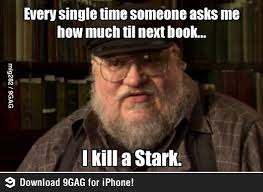
It’s like this, sir. One day I want to be a bestselling epic fantasy author like you. My third book comes out in the fall and I have probably sold as many books as you’ve killed noble characters (actually I might be being a bit optimistic there).

images-3

I spend a lot of time hanging out with other writers: online and (I know this is rare) actually in person. Everyone tells me to “observe the rules,” “don’t break the conventions,” and, my favorite, “Tolkien was one-of-a-kind. You wouldn’t get away with that.”

But you, sir, have broken the rules. You have tippexed (anyone?) over the conventions. One friend suggested that you only get away with it because you are already famous, already have a huge following, and probably don’t care anymore what anyone outside of the Seven Kingdoms thinks.

images-1

So here is my list of 10 things you have done wrong:

1. Your books are too long. I keep getting told that 90K is way beyond the commitment that most readers are willing to invest today. But then why do I enjoy them (and Christopher Paolini, and J.K Rowling, and some unknown ancient language, Oxford professor) and feel a sense of loss when they are finished? 

2. Your books are too slow. People want action, action, action. Instant gratification …debate in 140 characters or less. Have a car chase or blow up a bridge – well, you get my point.

3. Your books are too detailed. You mean I need to think? Concentrate? Invest? I hear you keep flow charts in your office – can we peek? How about a deal with Cliff Notes or an app that you can enter a character, your book and page number and get an update. Dude – I totally expect a commission on the app idea.

4. Your characters are too flawed (especially the good ones). If I’m not seeing Ryan Gosling or Kristen Stewart then it simply won’t do. If I want real people, I would put my book down and hit the pub.

images-2

5. Your characters are too dead. I actually wrote a blog post about this (I Need A Hero), keeping the book and you anonymous so as not to spoil it. Guess what? Everyone knew who I was talking about.

6. You drop some characters for hundreds of pages – are you tempting me to skip pages, sir? Just so as not to spoil this for any readers on Books 1-4, you know what I mean when I connect this to Book 4//5.

7. You miss out key scenes – battles in particular – and subtly let us know they have happened. I know it is incredibly difficult to write battles and only the best can pull it off, but well sir, you are one of the best.

8. You have too many minor characters. I hope you are keeping track of them because, to be honest, I am developing a habit of scratching my head whenever someone resurfaces 1-2,000 pages later.

9. You care more for the old gods and the new than the critics.

10. Your books are too addictive. I can’t stop…

You broke all the rules, sir. Congratulations! Now where is my copy of Book Five?

images

—————————————————————————————————–

Alon Shalev writes social justice-themed novels and YA epic fantasy. He swears there is a connection. His latest books include: Unwanted Heroes and At The Walls Of Galbrieth. Alon tweets at @alonshalevsf and @elfwriter.  

.


Stand Up Fantasy Readers

I came out of the literature closet when I made the decision to find a way to have my Wycaan Master series published. My ego prevented me from using a pseudonym and I knew it was time to let the world know.

At first I kind of tagged a mumbled line into my elevator pitch: I write social justice-themed novels and also dabble in some fantasmmmm (imagine a hand rising in front of my mouth).

images-5

I was mortified when my boss’s wife turned to me one day and said her husband had told her I’m really into epic fantasy. I focused all my superhero strength on the ground opening up and swallowing me. Thankfully such talents are woefully non-existent because boss’s wife revealed with pride how she totally loves the genre and began reeling off her favorite authors and series. Then boss’s super-cool wife promptly sat on the stairs with my then 12-year-old son and talked for a half hour of their shared genre. He was beaming when I asked him how their conversation went.

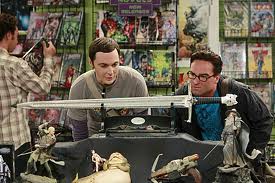
I discovered that, as I assumed more confidence in sharing that I write in two genres, people began to share their love for epic fantasy. I found that there were plenty of fantasy nerds (Big Bang Theory, anyone?) but there are also many very cool people.

images-6

As I begin to frequent the forums, I discover people who are deep-thinkers, who follow and critically analyze plots, world building, and character development. In fact, having participated in a fair share of workshops, read how-to writing books, and listened to countless authors, I have found these threads to be as profound and educational as any.

Fantasy readers are connoisseurs in the true sense of the word – a person who is especially competent to pass critical judgments in an art, particularly one of the fine arts, or in matters of taste (dictionary.com).

Last week I quoted from a comment on a long You Tube thread (I was listening to the Hobbit soundtrack) full of comments, disagreements, and debate. The author is RobbieBjork17: “Holy Crap that was one_ of the most educated conversations I’ve ever read on youtube…. shoulda known it was going to be Tolkien Fans ;).”

He (or she) knew something I didn’t. But then what can you expect from a genre led by two British Oxford professors!

Now I wear my genre on the side of my car and when I pick up commuters every morning at the casual car pool and they ask me about the car magnet, I reply: “I am an author. I write in two genres: social justice themed novels and YA epic fantasy.”

Image Car Magnet

And I say the last part without mumbling.

—————————————————————————————————–

Alon Shalev writes social justice-themed novels and YA epic fantasy. He swears there is a connection. His latest books include: Unwanted Heroes and At The Walls Of Galbrieth. Alon tweets at @alonshalevsf and @elfwriter.  

Everyone Wants To Be An Elf

How many times have you uploaded an article or song on the Internet and then got lost surfing through hundreds of comments underneath? Whether discussing politics, sports, or comparing the lead singers of Nightwish, it gets ugly very quickly. If you need to stock your insult arsenal, You Tube comments is the place to go – but a shot of JW or an anger management course might be more effective, long term…just saying, calm down.

Earlier this week, I played a Gothic music play list (that I can’t find now) while I wrote a new chapter for Book 4 of the Wycaan Master series. I made the mistake of perusing the comments and they were eye opening.

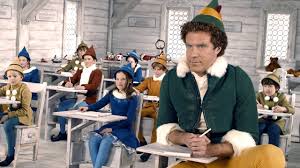
Tens of people (and I did not check all 2,000+ comments) wrote why they would love to be an elf. Just for the record, I believe people were imagining Legalos and not Will Ferrell or any of his fine companions.

 imagesimages

But there they were: some frivolous, but many, well, I believe laced with a genuine desire. They seemed to resonate with something deep inside, something lost.

Some spoke of the physical attributes – tall and thin, healthy (have you ever seen an elf sneeze? – they even die beautifully – yes I’m talking about you, Haldir, at Helm’s Deep, I’m sure you remember), long living, nimble, coordinated… 

images-1

Others mentioned emotional attributes – decisive, confident, calm, intelligent, loyal mates (I plan to research this – I did a quick search for the Rivendale Daily Enquirer but they only distribute in the Western Isles).

And there was also an interesting assortment of comments such as: they could trust their leaders; they were in touch with nature… 

When I began writing the Wycaan Master series, it was clear to my sons and me that we didn’t want to make the elves (most of our protagonists) perfect. They get angry, make wrong decisions, feel abashed at that first kiss, and seem more…well human (ouch!).

In fact, one of the comments that surfaced as I read At The Walls Of Galbrieth to my writer’s group wass that I failed to distinguish them as elves. I struggled to do this without stepping into the familiar stereotypes. As I write Book 4, things have become somewhat darker, with the protagonists facing greater personal challenges. I continue to find it difficult to strike a cord between making my elves special without them losing their genuine, vulnerable side.

Finally, as I write this, I am listening to The Hobbit soundtrack. There is a long thread of comments, disagreements, and debate. But this is the comment that caught my eye:

RobbieBjork17 wrote: “Holy Crap that was one_ of the most educated conversations I’ve ever read on youtube…. shoulda known it was going to be Tolkien Fans ;).”

It made me absurdly proud to feel a part of the Epic Fantasy nation.

images-2

——————————————————————————————————

Alon Shalev is the author of At The Walls of Galbrieth, Wycaan Master Book 1 and The First Decree, both released by Tourmaline Books. Shalev is also the author of three social justice-themed novels including Unwanted Heroes. He swears there is a connection. More on Alon Shalev at http://www.alonshalev.com and on Twitter (@elfwriter).