I Didn’t Make The Cut

I’m bummed. This week 50 writers saw their manuscripts advance to the Semi-Final stage of the Amazon Breakthrough Novel Award – YA category. My humble offering – Wycaan Master – was not one of them. It reached the Quarter-Final, ahead of a few thousand others, but…

In an odd sense of timing, I will finish reading the 95,000 word epic fantasy story to my writer’s group. They stuck with me over the past 18 months though none (until the last couple of months) read or are interested in fantasy. Thank you – Berkeley Writers Group.

Either you think epic fantasy is alive and thriving (Tolkien, Terry Brooks, R.A. Salvatore etc.,) or you think the only fantasy that sells is high concept – Harry Potter, The Hunger Games…

It is hard writing in two genres – social justice-themed novels reflect my lifestyle and values. Young-adult fantasy was inspired by a writing project with my preteen son and has been a lot of fun. But they serve two separate target audiences and I maintain a separate blog and twitter account.

I have to admit, I’ve arrived at a junction. I have not only sweated over a first YA fantasy manuscript, but completed a second, and am 30,000 words into a third. It is  a series and I must admit: I’m kind of hooked on it.

I want to see how my young heroes (and villains – who I am also quite attached to) grow. Will the races of Odessiya unite? What is the Emperor’s secret power that enables him to keep winning? Will shy Seanchai and his guide, Ilana, ever hook up?

As a reader becomes hooked on a series and feels compelled to read through to the end, I have discovered that so can an author become ensnared. It might well be an issue of not writing an outline and having faith in the story evolving, but I need to discover what happens in the world I’ve created.

Even if I didn’t make the cut.

——————————————————————————————————

Alon Shalev is the author of The Accidental Activist and A Gardener’s Tale. He has written two fantasy novels and the first reached the Quarter Finals of  the Amazon Breakthrough Novel Award as of March 2012. More on Alon Shalev at http://www.alonshalev.com/and on Twitter (@elfwriter).
Writing A Fantasy Series Pt. 1

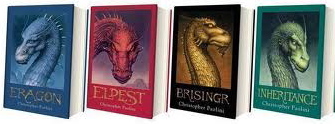
Christopher Paolini, the young author of the Inheritance Series (Eragon), was featured in The Writer. I was excited as the title was ‘Writing A Hit Series’, and Paolini has created a magnificent world in the 3,000 or so pages of his four novels.

I was disappointed with the interview. The reporter assumed that most of us didn’t know who Paolini is and what he has written. The story focused on a lot of the well-recorded autobiography (that I am sure most of us love) and the decision of the Paolini family to self-publish Eragon and travel around the country selling copies face-to-face.

But there were precious few tidbits regarding writing a series. Paolini structures his stories before he writes them. Fair enough. There are no surprises, we are told, except I wish to point out that Book Three became two books (how do you misplan an additional 700+ pages? – not that I am complaining, Mr. Paolini – you can write several more and I will faithfully buy and read them together with my sons).

My son holding his autographed copy at the midnight release... a priceless moment!

Paolini also stresses the need for a map. He warns that if there is a small mistake in detail between Book One and Four, true fans will notice.

As I continue to put Book Three of the Wycaan Master onto (virtual) parchment, (just passed the 25,000 word mark), I am continually realizing how much I must refer back to keep consistent, whether in language, appearance, or plot.

I love the spontaneity of allowing the plot to unfold. It works for me and it is part of the magic of writing. But I totally understand the value of a structured plan as Paolini suggests.

I keep three lists going: characters, chapter contents, and odds-and-ends. I do not provide much in terms of character appearance and history. I regret this now, as I need to sift through over 200,000 words. Chapter contents are kept brief – 1-2 sentences, but serves to help me refer back relatively quickly. Odd-and-ends is, well, a lot of unresolved issues, detail needed, clan structure and more.

A Great Place to Write Fantasy.

I have no doubt that there is so much more to remember and involved when writing a series. I think when I begin another, I might take more careful notes and listen more to authors like Paolini, Salvatore, and Brooks.

But I also think it is worth it. The depth and richness of a series is an incredible honor to write. More on that aspect next week.

Until then, good writing.

——————————————————————————————————

Alon Shalev is the author of The Accidental Activist and A Gardener’s Tale. He has written two fantasy novels and the first has reached the Quarter Finals of  the Amazon Breakthrough Novel Award as of March 2012. More on Alon Shalev at http://www.alonshalev.com/and on Twitter (@elfwriter).


Welcome Back Old Friends

It takes about four months for me to write a first draft of a novel. The rest of the year is spent editing the manuscript and promoting the books that I have already published.

I actually enjoy editing and marketing, but there is no rush here to compare to writing a novel. It is extra special, I think, when writing a series. In my political fiction, I have just begun the third in a series, and I have put it aside while I write the third book in the Wycaan Master series.

It is strange to finish a novel in a series and walk away from the characters that I have created. They seem to think they can still follow me around, hang out with me at the gym, intrude when I am trying to write something else, and sit in my car while I am driving.

 Most often, they appear in real people. It might be a comment, a mannerism, or an accent. Sometimes a person will say something and I will stare at them. These poor victims then feel a need to explain themselves because they fear they have just offended me. But really I am thinking that the Wycaan teacher Mhari might have said that, or Ilana would have arched her hip in exactly that way.

The worst part is when I suddenly think of a better way that one of my characters might have said something or dealt with a situation. I am consumed with concern or guilt and chastise myself, like a parent who missed an educational opportunity with a child.


But beginning a book is like welcoming old friends back after a long time apart. It is the family gathering once or twice a year. There is so much to catch up with, new stories and challenges, people growing up, flourishing or struggling. It is a fusion of the familiar and the potential.

 It is an amazing journey, and I could not walk it without the characters of my books by my side.

Welcome back, old friends.

——————————————————————————————————

Alon Shalev is the author of The Accidental Activist and A Gardener’s Tale. He has written two fantasy novels and the first has reached the Quarter Finals of  the Amazon Breakthrough Novel Award as of March 2012. More on Alon Shalev at http://www.alonshalev.com/and on Twitter (@elfwriter).


At The Next Dwarf Mine Turn Left.

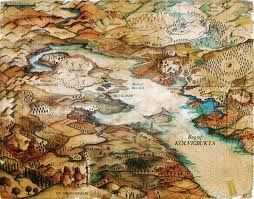
I came across this great article by Roberta Osborn called How to Create A Map For Your Novel. It is very cool and I strongly recommend to those of you who are fantasy or sci-fi writers and may be considering drawing a map, that you follow the link.

Two other articles that I found are from Fantasy Faction and a low-tech video.

When writing Wycaan Master, I never thought to draw a map. Only when I began to write a sequel and realized that I had to keep my characters following a certain geographical framework did I consider making one.

Given that I have no artistic talent, and that my son who helped me write and edit, better understands which end of a pencil is which, I charged him with the task. Being of prime pre-teen material, he refused. In the ensuing negotiation, we agreed to tackle it together.

We went through the manuscript and highlighted every change in direction, every named mountain range and forest. He then took a piece of paper and began to draw. We were soon off the page and took another piece of paper and, utilizing cutting-edge technology, taped the two pages together. They soon blossomed into several pages at unruly angles one to the other, with absolutely no way the map could be folded.

it was clearly destined to be crumpled, torn, and otherwise abused. Today, it sits somewhere in our humble abode under a pile of mutually discarded papers that are not yet quite trash-worthy. It is a tragic tale.

As I look through the articles above, I am struck with a series of questions for those who read epic fantasy. Remember, that I am new, if enthusiastic, to the genre. If you have the energy please answer any or all of the following questions.

1) Do you look at a map at the beginning of a fantasy novel? If so, how much do you study it?

2) Do you refer back to the map as you read the book?

3) Is there any room in epic fantasy for a GPS?

Answers to the first two questions will be greatly appreciated.

Have a great weekend,

Alon

——————————————————————————————————

Alon Shalev is the author of The Accidental Activist and A Gardener’s Tale. He has written two fantasy novels and the first has reached the Quarter Finals of  the Amazon Breakthrough Novel Award as of March 2012. More on Alon Shalev at http://www.alonshalev.com/and on Twitter (@elfwriter).

Ever Been To The World I Invented?

How do you explain to someone how to write about a place that you made up? Or a race that has never existed? How to describe the unexplored or give directions to a destination that you have never been to?

Fantasy (and sci-fi) writers are in a unique position in the writing world. A friend of mine is writing a historical novel from the Vietnam War. It is from a time and place that she never experienced. Yet, thorough diligent research and patient interviews, she has built an authentic account of the jungles, the battles, and the actions of soldiers.

But I have to confess, and let’s just keep this between you and me; I have never met an elf, never yielded high magic or walked and breathed underwater (I tried the latter – it didn’t work). In Wycaan Master, one of my elves performed a particular feat. He will do it several times throughout the three novels and his teacher explains the rudiments to him. Nonetheless one of my dear friends from my writer’s group (not a fantasy writer) proclaimed: “elves can’t do that.” 

Our group boasts a number of very smart people, all of whom I am sure, thought what one asked. “Oh really? How many elves do you know?”

We laughed and decided that these were my elves and I could do what I want with them. It was amusing and yet, who sets the rules?

The obvious answer is that the market does, and the market is the reader. Buy a fantasy writer a couple of beers and s/he will admit that we all live in the shadow of the greats, with Tolkien being the greatest of them all.

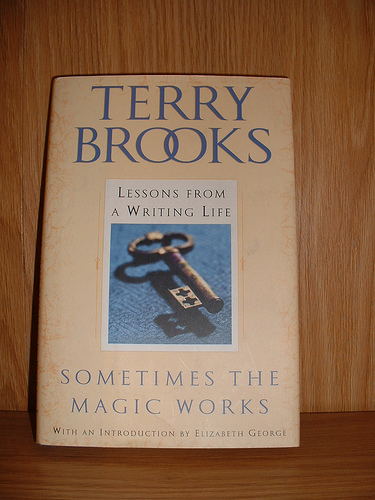
In the pantheon upon which the great Ring Writer sits, are others held in great esteem. I am devouring Terry Brooks‘ Shannara series, and so I came across a book he wrote to explain his craft.

 The book is called: Sometimes The Magic Works – Lessons From A Writing Life. Brooks deals with such issues common to all who write fiction such as plot, characters, hook, dialogue etc., but he also spends time on more specialized aspects such as world creating, or even how it is different perhaps to hold the threads of a plot through a number of books or corresponding paths in a single book.

I read through Sometimes The Magic Works – Lessons From A Writing Life once, enjoying his autobiographical content as much as his craft teaching. I am going away soon for a week and plan to take the book and reread.

 I have two questions:

 1) What makes writing fantasy different from other genres in terms of craft and technique?

2) Are there other good books on writing that are specific to the fantasy genre?

Drop me a note on the blog or tweet any suggestions. I appreciate your help.

Good Writing and Reading,

Alon

——————————————————————————————————

Alon Shalev is the author of The Accidental Activist and A Gardener’s Tale. He has written two fantasy novels and the first has reached the Quarter Finals of  the Amazon Breakthrough Novel Award as of March 2012. More on Alon Shalev at http://www.alonshalev.com/and on Twitter (@elfwriter).

Breaking Through The Amazon Breakthrough – Quarter Finals

This has been a great week for me professionally. I am concluding a meaningful and moving week with 20 students from our SF Hillel Jewish Student Center, volunteering to help rebuild the Gulf Coast. I have written on this at Left Coast Voices.

It is a totally immersive experience and I have been intensely focused on my students and the New Orleans community. So it is perhaps understandable that I was shocked to receive the electronic reminder that the Amazon Breakthrough Novel Award’s results for the Quarter Finals had been released.

I am immensely proud to advance to the final 250. Wycaan Master has been a tremendous ride since I began writing the novel with my then 11-year-old. He was the first to receive the phone call and the news.

Over the next month the manuscript will be read by Publisher Weekly reviewers. They will grade it and the top 50 move into the semifinals. It is quite a thrilling prospect. So far, over the past year, dozens of goodhearted individuals have read and offered feedback. These people, members of the Berkeley Writers Circle, have been amazing and I have no doubt that Wycaan Master is a much better book because of their input. But they are not professionals and I am rather awed that people from such an established magazine are perusing my novel.

Interesting and exciting times.


——————————————————————————————————

Alon Shalev is the author of The Accidental Activist and A Gardener’s Tale. He has written two fantasy novels and the first has been entered into the Amazon Breakthrough Novel Award in January 2012. More on Alon Shalev at http://www.alonshalev.com/and on Twitter (@elfwriter).


Elves in Coffee Shops

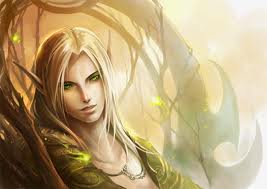
It happened earlier this week in the Financial District of San Francisco. It was a rainy workday and I was sitting in a café editing Wycaan Master, my fantasy novel, when these two distinct-looking women entered. I’m a guy: I peeked, taking in their tightly, swept back hair, high cheekbones and narrow eyes, all accentuated by carefully applied makeup. They were both tall and thin.

Then I realized. I had been disappointed as my gaze moved to their ears. Their ears were not pointed!

I was shocked. I had really expected pointed ears? It’s this elf thing…it’s taking over. When I am writing a story I am absorbed…totally. Even when editing, I am completely caught up in the story. I can read an emotional scene a dozen times and still be moved to tears (Confession: I once cried during a Simpson’s episode, but that’s for another time).

However more recently I am taken when I see someone who might fit into my fantasy world. A walking stick becomes a staff, and I expect a short, bearded man to have an axe at his side, not an iPhone.


It is taking over.

I’m not the first to stumble down this route. In his excellent book about writing fantasy, Terry Brooks admits to disappearing into the world of Shannara.  Often it happens when he is at the dinner table or with family or friends. His eyes (so he is told) gaze into the distance and everyone understands.

Now Terry Brooks can get away with it for two reasons:

1) He is older and entitled to a senior moment.

2) He is a best-selling author and there is nothing like success to romanticize a little eccentricity.

While I will one day be older, if the gods allow, the success isn’t assured. I am going to have to learn to curb my imagination, to stay in this world until sleep or time in front of a computer allows. A few glasses of single malt can also help.

But I don’t want to block it. My characters are part of my life, their challenges are my problems, and their triumphs are my successes. If I block them out just once, will they come back when I beckon them?

It’s tough living in two separate worlds, but I wouldn’t have it any other way.

th-1

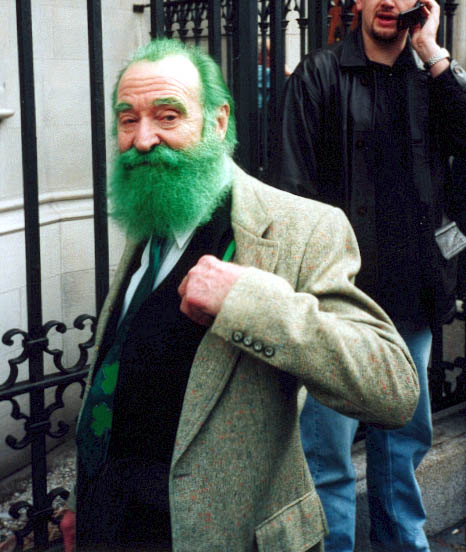
Finally, it is St. Patrick’s Day. Did you know the Irish for whiskey is ‘Uisce beatha’, which literally means ‘water of life’?

Live Green My Friends.

——————————————————————————————————

Alon Shalev is the author of The Accidental Activist and A Gardener’s Tale. He has written two fantasy novels and the first has been entered into the Amazon Breakthrough Novel Award in January 2012. More on Alon Shalev at http://www.alon-shalev.com/ and on Twitter (@elfwriter).

Criticizing the Critique Group

I’ve just read two interviews/articles with authors who were negative or detrimental about writers or critique groups. Neither would have fazed me, but having read both at one sitting, well, it irked.

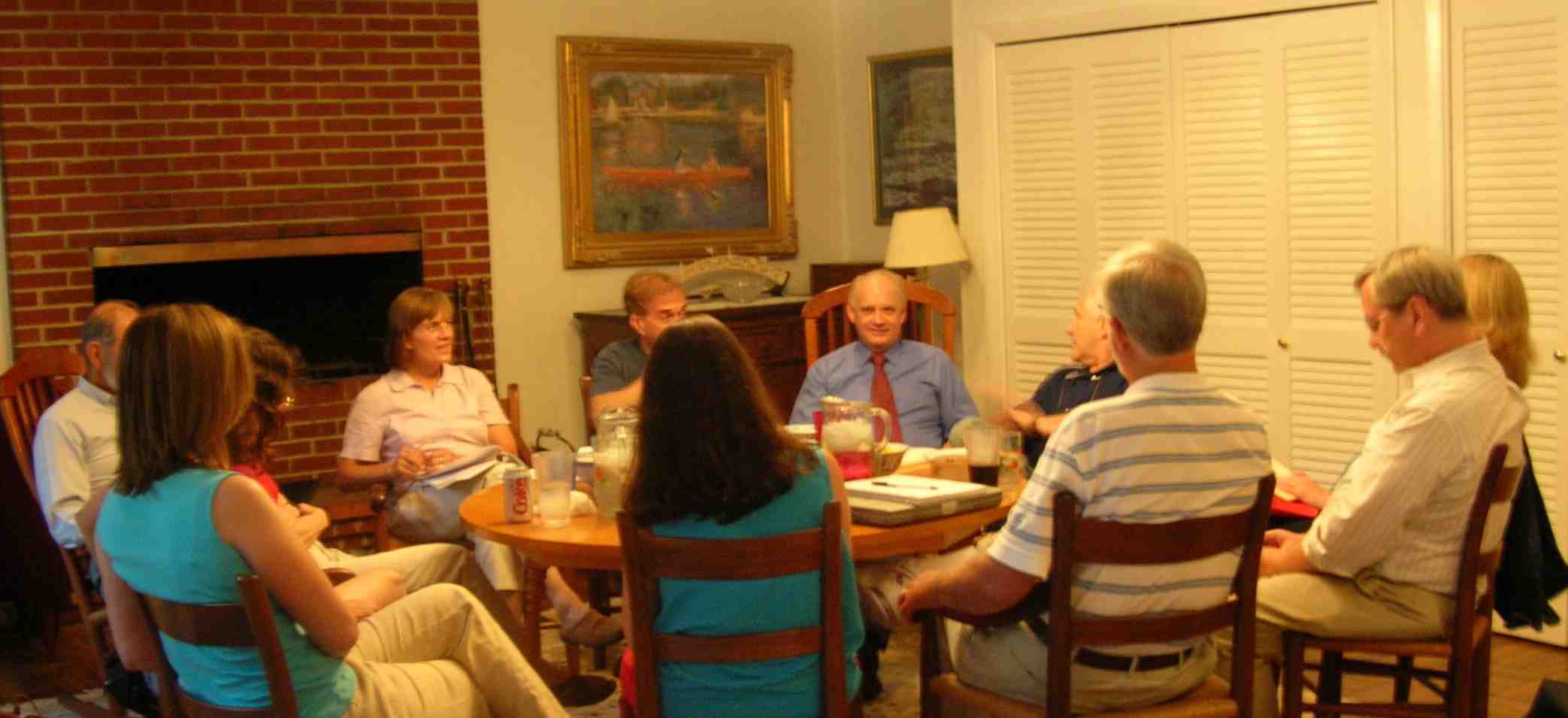
I have facilitated the Berkeley Writer’s Group for more than five years now. There is a core group and a larger transitional crowd who join for a period of time. It is a working group – if you are looking for a social meeting, this is not for you.

Usually, 8-10 individuals will read, receiving 15 minutes to share about 1,200 words (if fiction), or a few poems, article etc. Before they read, they can ask for feedback on a specific aspect and we also write comments on the manuscript copies that they distribute. When they finish reading they shut up and listen unless asked a question (this is the hardest part!). We try to be constructive but honest and there are occasionally bruised egos.

For the past 6 months, I have been reading my YA epic fantasy: Wycaan Master / At the Walls of Galbrieth (I still can’t decide between the two). No one in the group (until a woman recently joined us) were fans of fantasy and, given that they had helped me with two social-justice themed novels, were not happy with my change of direction.

As I near the end of the manuscript, I feel a great appreciation for the group. Certainly, it has not been easy and there are times that I would love to be sharing with people who understand the genre, but there is something incredibly refreshing in their comments, as readers who can look down from 10,000 feet, with perspective.

I recently mentioned that I have changed the teacher figure. He was very much a hybrid of Obi-Wan Kenobi, Brom and Gandalf and my group found him formal and predictable. The agent who is coaching me also commented on this and urged me to turn the character on his head.

He transformed and became a funny and unpredictable woman. She aged, but still had the strength and energy necessary; it just didn’t always come easy. I feel this has had a fundamental impact on my novel, particularly where there is often a middle sag, and added a richer layer, while also distinguishing the book from comparable novels in the genre.

This, and much more, came from people who, while not experts, care about their craft and also about mine. They are not a replacement for the professional editor, but s/he will receive a cleaner manuscript and I will have a richer story.

I often hear from people who speak derogatory about writer’s groups. Usually, they have had a bad experience or two, and so their attitude is understandable. But a good writer’s group is about mutual support, not fluffing or shattering someone’s ego, but it is above all a group communicating in a very honest and artistic way.

And we do it all face-to-face, with no screen in between. A last bastion of a dying culture?

——————————————————————————————————

Alon Shalev is the author of The Accidental Activist and A Gardener’s Tale. He has written two fantasy novels and the first will enter the Amazon Breakthrough Novel Award in January 2012. More on Alon Shalev at http://www.alonshalev.com/and on Twitter (@elfwriter).
Pro-logue or Against -logue

This week, I entered Wycaan Master/At the Walls of Galbrieth, the first of my Alliance series, into the San Francisco Writer’s Conference Indie Awards. In three weeks, I will submit it to the Amazon Breakthrough Novel Award.

Both competitions require the first 5,000 words of the novel and abruptly I find myself needing to make a critical decision. I have written a prologue, a short but hopefully eloquent setting of the scene.

Prologues are not always acceptable. When I presented the prologue to my writer’s group, the jury was out and, though I was not hung, neither was I acquitted.

It seems that prologues are more acceptable in the fantasy genre than others. Critiques have suggested that a prologue is there to mask a slow beginning or a lack of a hook.

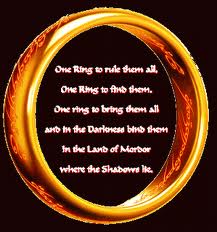
One ring to bind them all… opened the master and we were duly bound for three long volumes, cartoon series, and epic movies. Now the epic fantasy world waits with bated breath for The Hobbit movie, even though we all know what happens.

Since my novel is directed at the YA audience I made sure to begin the novel at a fast pace. I can imagine many teens skimming the prologue, though I hope they will value it in later years when they ritually return to the series as I, and many of you, return to read LOTR every few years.

So, a couple of weeks before decision time, I wish to ask:

How do you feel about a prologue for an epic fantasy novel? Does the reader want it, the agent accept it and the publisher allow it?

Your comments and advice are gratefully received. Wishing you all a happy and healthy new year.

——————————————————————————————————

Alon Shalev is the author of The Accidental Activist and A Gardener’s Tale. He has written two fantasy novels and the first will enter the Amazon Breakthrough Novel Award in January 2012. More on Alon Shalev at http://www.alonshalev.com/and on Twitter (@elfwriter).