Top Current Epic Fantasy Novels

Amazon.com sent me list of their best-selling titles (see below). I thought we could springboard on it and see who is reading what. Are you reading any of these novels? What is the best epic fantasy novel that you have read in the last few months?

I am particularly interested in Terry Goodkind. I enjoyed watching Legend of the Seeker on TV, but never got into the Sword of Truth – his first novel. Have you been reading his books? Let me know.

Have a great weekend,

Alon

——————————————————————————————————

Alon Shalev is the author of The Accidental Activist and A Gardener’s Tale. He has written two fantasy novels and the first has been entered into the Amazon Breakthrough Novel Award in January 2012. More on Alon Shalev at http://www.alonshalev.com/and on Twitter (@elfwriter).

Alon


A Discovery of Witches: A Novel (All Souls Trilogy) A Discovery of Witches: A Novel (All Souls Trilogy)
by Deborah Harkness
The Wise Man's Fear: The Kingkiller Chronicle: Day Two (Kingkiller Chronicles) The Wise Man’s Fear: The Kingkiller Chronicle: Day Two (Kingkiller Chronicles)
by Patrick Rothfuss
A Game of Thrones: The Graphic Novel: Volume One A Game of Thrones: The Graphic Novel: Volume One
by Daniel Abraham, George R.R. Martin
Charon's Claw: Neverwinter Saga, Book III Charon’s Claw: Neverwinter Saga, Book III
by R.A. Salvatore
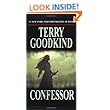
Confessor (Sword of Truth) Confessor (Sword of Truth)
by Terry Goodkind
Cry Wolf (Alpha and Omega, Book 1) Cry Wolf (Alpha and Omega, Book 1)
by Patricia Briggs
Guild Wars : Ghosts of Ascalon Guild Wars : Ghosts of Ascalonby Matt Forbeck
The Wheel of Time, Boxed Set II, Books 4-6: The Shadow Rising, The Fires of Heaven, Lord of Chaos The Wheel of Time, Boxed Set II, Books 4-6: The Shadow Rising, The Fires of Heaven, Lord of Chaos
by Robert Jordan

Traditional Epic Fantasy and The Higher Concept

There is a lot of discussion among fantasy writers about the need for the Higher Concept. Can an epic fantasy novel succeed if it is about a young underdog with a magical talent, who needs to overcome the evil (insert whoever)?

True, Tolkien did it, Brooks did it, as have many others. But they are established authors with huge followings. Who will take a chance on the unknown author?

I feel very defensive about this: what about memorable characters, internal conflicts, and plot twists? How about strong dialogue and a couple of intriguing plot twists?

The question is, whether these key components are enough to allow a manuscript to rise through the slush pile in an agent’s office?

There is no question about why Harry Potter, Percy Jackson or The Hunger Games, all stood out to their respective agents and publishers. But I can’t help wondering whether there isn’t something attractive in the familiar.

I have read eight books in Terry Brook’s Shannara series. I will start the ninth soon. I am not bored as each series offers something different, but the tropes remain similar and still I come back for more.

And while I am in defensive mode: Does Grisham, Patterson, or Steel, offer anything new within their genres with each novel? Romance, mystery, crime: don’t they have their own tropes that figure in book after book.

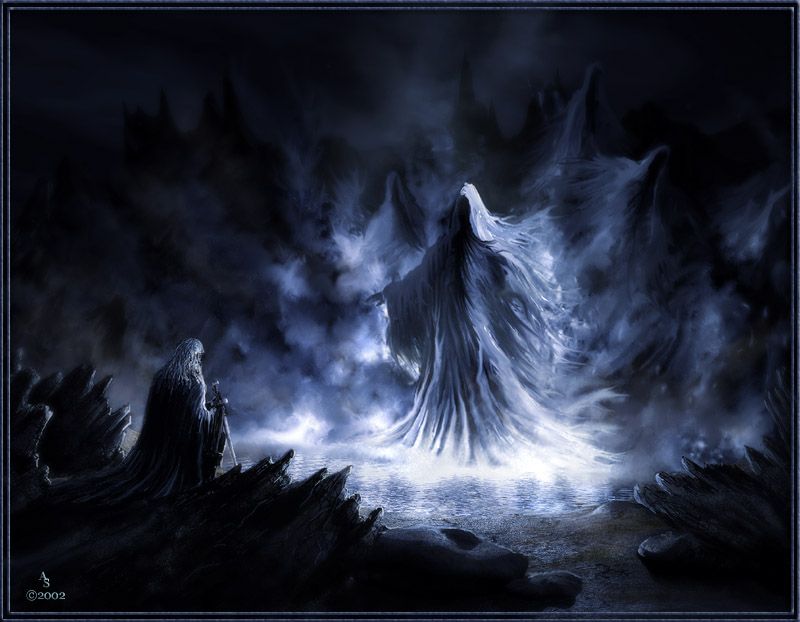
From Terry Brooks – First King of Shannara. copyright ©Andy Simmons 1995-2002

When people get familiar with a genre, do they not go looking for these tropes? Is it not enough to ensure a strong plot with twists, distinct characters and strong dialogue?

What do you think?

——————————————————————————————————

Alon Shalev is the author of the 2013 Eric Hoffer YA Book Award winner, At The Walls of Galbrieth, and five other Wycaan Master books all released by Tourmaline Books. The link above takes you to the Kindle versions. For all other eReaders, please click here.

More at http://www.alonshalev.com and on Twitter (@elfwriter).

Amazon Breakthrough Round 2

On Thursday, Amazon announced those novels which have made their way through  to the 2nd round of the Amazon Breakthrough Novel Award (ABNA). As I wrote in an earlier post, this is the writers lottery, with the winner receiving a $15,000 advance and, most importantly, a contract with Viking Press/Penguin Books.

From 5,000 YA entries, we are down to 1,000. The last round was judged on the 300 word pitch, something that is incredibly difficult to write.

The next round will be judged on the first 5,000 words of the novel and we will hear  who moves into the Quarter Finals on March 20.

It’s a long wait, but a great time to dream.

——————————————————————————————————

Alon Shalev is the author of The Accidental Activist and A Gardener’s Tale. He has written two fantasy novels and the first has been entered into the Amazon Breakthrough Novel Award in January 2012. More on Alon Shalev at http://www.alonshalev.com/and on Twitter (@elfwriter).

Young Adults and the E-book Revolution

I have entered my Young Adult epic fantasy novel into the Amazon Breakthrough Novel Award. My plan is if I do fall at some point to send submissions to about 20 agents and try to publish in the conventional way.

If this does not succeed, I assumed that I would then join the e-book revolution and hope to create enough splash to be picked up in the footsteps of Amanda Hocking and J.A. Konrath. I have read closely John Locke’s successful business model and would love to try it.

But today something hit me. Do young adults (10-18 year old) – my primary market for my epic fantasy series – read their books on e-Readers?

recently wrote: “The children’s and young adult e-book market faces special challenges not shared by the adult market, new research shows. And teens are slow to adopt e-books, in part because they do not see e-books as a social technology and they think there are too many restrictions on sharing digital titles.”

She reached her conclusion based on two online surveys commissioned by  PubTrack Consumer towards the end of last year who surveyed 1,000 teenagers and 1,000 parents of pre-teens. The details of the survey can be found here –  “Children’s Publishing Goes Digital.”

There are some interesting theories and statistics here. Firstly, youngsters are extremely social and want to share their books with friends and e-book technology is perceived as too restrictive. I thought that perhaps the teens did not have access to comfortable e-book readers. The majority has cell phones, but I am not including this. 60% of those surveyed receive technology from their parents as the latter upgrade.

makes another excellent point It is not just young adults propelling YA books like the Hunger Games trilogy onto e-book bestseller lists:

– 30-44-year-olds constitute 28 % of YA print book sales and 32 % of YA e-book sales. -18-29-year-olds buy the most YA books, purchasing 31% of YA print sales and 35% of YA e-book sales.

Making a decision to invest in the YA fantasy e-book market doesn’t look as attractive as for genres aimed at adults, but this is going to change as more young people receive the necessary devices. Also, the realization that the YA market goes not from 12-18, but 12-44 year olds make for a more encouraging prospect.

A final interesting point is that this age group is more likely to buy a book because of a recommendation on a social network.

Now, please excuse me, this 47-year-old is going to read The Hunger Games, recommended to me by my 13-year-old son.

——————————————————————————————————

Alon Shalev is the author of The Accidental Activist and A Gardener’s Tale. He has written two fantasy novels and the first will enter the Amazon Breakthrough Novel Award in January 2012. More on Alon Shalev at http://www.alonshalev.com/and on Twitter (@elfwriter).

Music And Fantasy

I realize this is slightly off topic for a blog about the writing of fiction. No book that I am aware of comes with a soundtrack (though I read that this might become an e-book app in the not-too-distant future).

But I have found myself listening to the soundtracks of Lord of the Rings while writing the Alliance trilogy. I wrote yesterday in Left Coast Voices that I can write anywhere, anytime, and I believe it to be so.

Nonetheless, I realize that I do listen to music in the context of the book I am writing.  A Gardener’s Tale was written with the music of Lloyd Cole in my ears,  The Accidental Activist was written to Billy Bragg, and I just wrote a beat-era novel listening to jazz music.

But I want to pay tribute to the Lord of the Rings soundtracks (one for each movie). They are truly brilliant, truly inspiring. While I believe I can write anytime, anywhere, I am thankful that the music of Howard Shore together with Enya or Annie Lennox, who can simply transport me into the land of Odessiya (home of the Alliance series).

I fantasize when the Alliance series finds a home with a publisher that there is a movie deal for all the reasons that every author shares. But I also fantasize that someone with the talent of Howard Shore will be commissioned to write a soundtrack that can be so transformational in its own right.

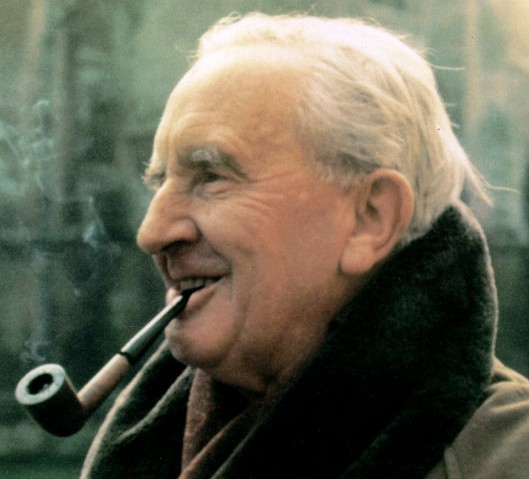
I’m sure J.R.R. Tolkien is up there in Writer’s Heaven, puffing his pipe, and writing a new epic series (to be published as an ethereal or e-book). Perhaps he has his little white headphones on and is listening to a LOTR soundtrack as he writes.

Have a great week.

Alon

——————————————————————————————————

Alon Shalev is the author of The Accidental Activist and A Gardener’s Tale. He has written two fantasy novels and the first has been entered into the Amazon Breakthrough Novel Award in January 2012. More on Alon Shalev at http://www.alonshalev.com/and on Twitter (@elfwriter).

What’s In A Name?

It’s time. You can only go for so long stuttering out an explanation when asked about the title of your latest work.

It didn’t bother me at first. I called my last novel Oilspill dotcom before my publisher took charge and gave it a new and beautiful cover and name – The Accidental Activist – which was widely complimented for both.

I have two titles in my head for each of my fantasy novels. But I have now used both titles intermittently and am no closer to a final decision. The series is called The Alliance Series. I feel pretty good with this because forming an alliance between the races is a central theme that runs throughout the manuscripts written (two so far and working on a third over the next 6 months).

Wycaan Master: The Wycaans were the stewards of the alliance and a fair part of the first novel is the relationship between our young protagonist and his teacher, the enigmatic Mhari. While Seanchai is the protagonist, Mhari is a colorful partner and involved through to the final page.

At The Walls Of Galbrieth: The climax of the book takes places in the imposing fortress of Galbrieth. The city is richly described and a representative of the totalitarian power that dominates the land of Odessiya.

I would love to received your feedback.

Alon

——————————————————————————————————

Alon Shalev is the author of The Accidental Activist and A Gardener’s Tale. He has written two fantasy novels and the first has been entered into the Amazon Breakthrough Novel Award in January 2012. More on Alon Shalev at http://www.alonshalev.com/and on Twitter (@elfwriter).

What is The Future of Epic Fantasy?

I have mentioned in past posts that I am seeking to differentiate my novel from other epic fantasy series. I am being continually told by those insiders that every descent agent and publisher has five hundred manuscripts on their groaning desks about swords and quests and good .v. evil. Apparently these agents groan whenever an elf is mentioned (especially if s/he is tall, thin, loves nature etc.).

At the Berkeley Writers critique group, visitors often ask: what differentiates this from Lord of the Rings?

All this begs the question: what is the future of epic fantasy?

Is it okay to accept that there are certain conventions that are timeless? Are dwarfs small and stout, brave and ready for a rumble? Is it okay that they are miners and love to live underground?
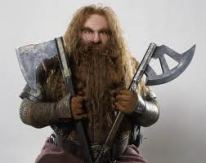
Gimli - plenty of blades, no razor

Here are 10 basic ingredients that need to be questioned:

1) There is the good guy (or gal) and the bad one. The goods is the underdog, the bad is all-powerful, though hopefully will fall in the end.

2) Magic – the hero/heroine has something special about them that gives them a chance to win.

3) There is a teacher who mentors the hero/heroine.

4) The dwarfs are stereotypical – see above.

5) The elves are tall, beautiful, healers, wicked with the bow and arrows and…

6) Romance

7) Everything takes place in New Zealand-type environment.

8) There is a lot of walking about.

9) Swords, bows and arrows, lots of insignificant people dying.

10) Long novels, preferably in series form, with huge potential for movies.

Journeys that never end...

I have mentioned the high-concept challenge in earlier posts. The idea is to have something that is unique, that separates your fantasy novel from the rest. Enter Harry Potter and Hunger Games. 

And yet, we come back for more. A new novel from Terry Brooks or R.A Salvatore has us salivating. Christopher Paolini’s final book of the Inheritance series was eagerly awaited, and we all know when we are going to see the Hobbit movie even if we haven’t booked our summer vacations or filed our taxes.

When I mentioned the higher concept to a woman who has been reading my manuscript, she baulked. As long as there is a strong plot, a few twists, memorable characters, and a high level of writing, she said, a novel will always stand out from the rest.

The question is: Are the essential epic fantasy novel ingredients timeless? When Tolkien first created Middle Earth, did he set in motion a genre that will endure into the 21st Century?

The Master

——————————————————————————————————

Alon Shalev is the author of The Accidental Activist and A Gardener’s Tale. He has written two fantasy novels and the first has been entered into the Amazon Breakthrough Novel Award in January 2012. More on Alon Shalev at http://www.alonshalev.com/and on Twitter (@elfwriter).
Criticizing the Critique Group

I’ve just read two interviews/articles with authors who were negative or detrimental about writers or critique groups. Neither would have fazed me, but having read both at one sitting, well, it irked.

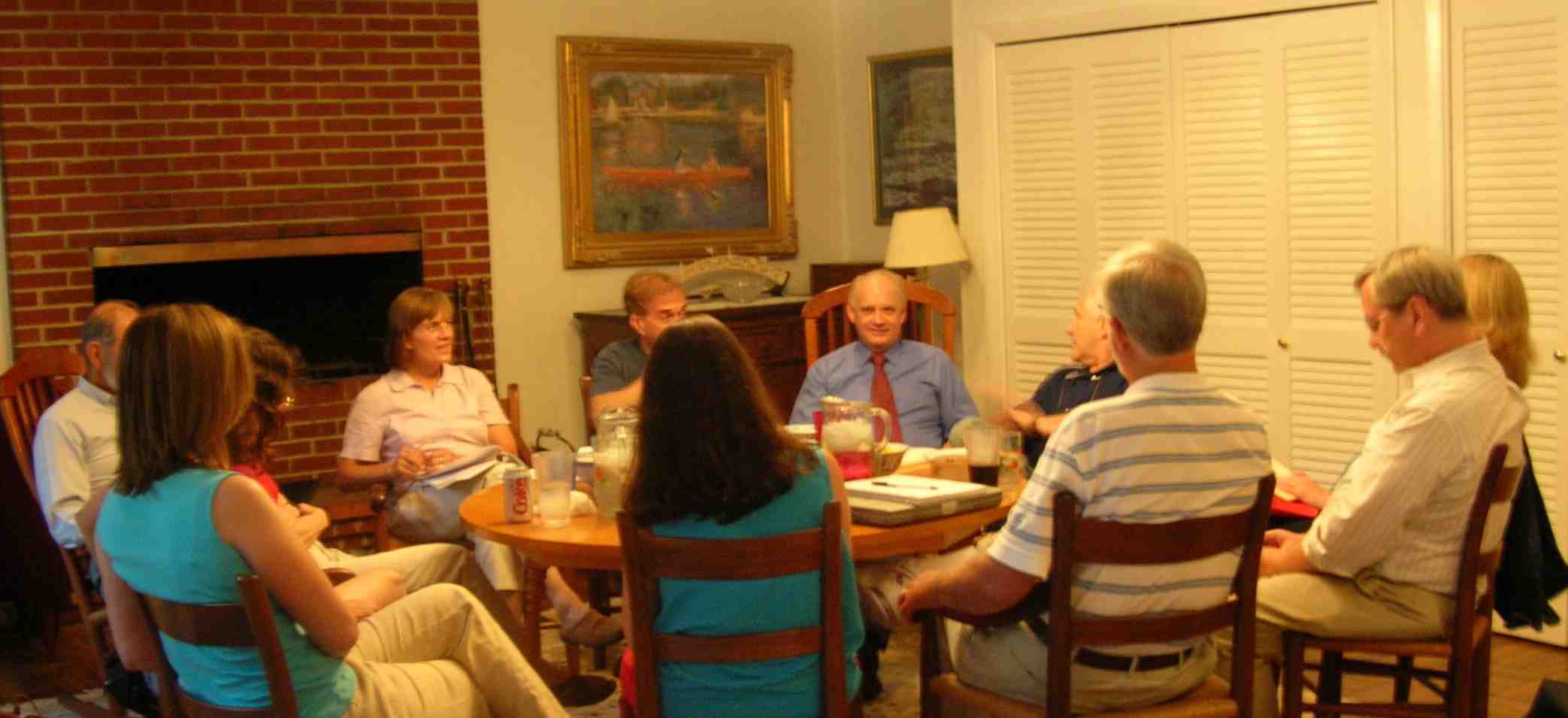
I have facilitated the Berkeley Writer’s Group for more than five years now. There is a core group and a larger transitional crowd who join for a period of time. It is a working group – if you are looking for a social meeting, this is not for you.

Usually, 8-10 individuals will read, receiving 15 minutes to share about 1,200 words (if fiction), or a few poems, article etc. Before they read, they can ask for feedback on a specific aspect and we also write comments on the manuscript copies that they distribute. When they finish reading they shut up and listen unless asked a question (this is the hardest part!). We try to be constructive but honest and there are occasionally bruised egos.

For the past 6 months, I have been reading my YA epic fantasy: Wycaan Master / At the Walls of Galbrieth (I still can’t decide between the two). No one in the group (until a woman recently joined us) were fans of fantasy and, given that they had helped me with two social-justice themed novels, were not happy with my change of direction.

As I near the end of the manuscript, I feel a great appreciation for the group. Certainly, it has not been easy and there are times that I would love to be sharing with people who understand the genre, but there is something incredibly refreshing in their comments, as readers who can look down from 10,000 feet, with perspective.

I recently mentioned that I have changed the teacher figure. He was very much a hybrid of Obi-Wan Kenobi, Brom and Gandalf and my group found him formal and predictable. The agent who is coaching me also commented on this and urged me to turn the character on his head.

He transformed and became a funny and unpredictable woman. She aged, but still had the strength and energy necessary; it just didn’t always come easy. I feel this has had a fundamental impact on my novel, particularly where there is often a middle sag, and added a richer layer, while also distinguishing the book from comparable novels in the genre.

This, and much more, came from people who, while not experts, care about their craft and also about mine. They are not a replacement for the professional editor, but s/he will receive a cleaner manuscript and I will have a richer story.

I often hear from people who speak derogatory about writer’s groups. Usually, they have had a bad experience or two, and so their attitude is understandable. But a good writer’s group is about mutual support, not fluffing or shattering someone’s ego, but it is above all a group communicating in a very honest and artistic way.

And we do it all face-to-face, with no screen in between. A last bastion of a dying culture?

——————————————————————————————————

Alon Shalev is the author of The Accidental Activist and A Gardener’s Tale. He has written two fantasy novels and the first will enter the Amazon Breakthrough Novel Award in January 2012. More on Alon Shalev at http://www.alonshalev.com/and on Twitter (@elfwriter).
Awkward Sex Change

Last week I shared feedback I had received to add stronger female characters in my YA novels to distinguish them from traditional epic fantasy. I have to admit to feeling motivated to do this just from a desire to contribute to breaking from the sexist images that I feel pervade in millennial culture (another topic in itself).

Heeding this advice, I have begun to convert a powerful and wise (male) teacher into a female. It has been an interesting and revealing process.  At first, it seems just a matter of changing he to she, him to her, and man to woman.

But as I make the conversion there seem to be a number of questions arising and a sharp look at his/her behavior. Firstly, I realized that the teacher does almost all the cooking. When it was a guy I never noticed: now I do and feel a need for her to teach our hero some cookery lessons.

There are other scenes that need to modified. Imagining the shock when my young teenage son reads that they cast off their clothes and jump into the lake, one would assume naked, made sense when it was two guys, but now an elderly  woman and teenage boy… hmmm.

The fighting aspect doesn’t faze me. I am happy that she is a fearsome warrior and that she teaches to try and solve conflicts in a peaceful way first. Ironically, as the reluctant teacher spends more time with the protagonist, he becomes more paternal to the young elf.  While I enjoyed this when the teacher was a man, as a woman it seems almost…stereotypical.

Changing the gender of a character, I discovered, is far more intricate than just converting he to she. But in doing so, I feel I am strengthening my novel and the epic fantasy genre. More importantly, I hope that I am making a statement that will resonate with my two sons and their friends.

——————————————————————————————————

Alon Shalev is the author of The Accidental Activist and A Gardener’s Tale. He has written two fantasy novels and the first will enter the Amazon Breakthrough Novel Award in January 2012. More on Alon Shalev at http://www.alonshalev.com/and on Twitter (@elfwriter).
Fantasy and Females

I realize that a title like this might give the wrong idea. This blog is about epic (or high) fantasy fiction – imagine Lord of the Rings. If you want to leave this post right now, I will understand.

I have mentioned that I am working with an agent preparing Wycaan Master/At the Walls of Galbrieth (I know I haven’t settled on a title). He sees his role as helping me differentiate my work from the other 499 epic fantasy submissions sitting on the acquisition’ editor’s desk.

With more than two-thirds of the publishing world of the female persuasion and given that so much of literature (and music, and movies, and business, and politics…) is focused on men, there is an understandable desire to see more female-focused stories and stronger female characters.

I baulked at the idea of changing my protagonist’s gender and have gone through the manuscript strengthening the secondary character who is female. She was never a doormat character, swooning after the hero, but a strong, independent individual with an attitude and a high level of skill at fighting.

Now I am considering changing one of the other main characters into a female, someone with authority and power. There are examples out there. I am currently listening to the audio book of Terry Brook’s Voyage of the Jerle Shannara. The first book has our antagonist being a woman  (the Ilse Witch).

Why have authors of epic fantasy created main characters who are male? Given that it is not a new phenomenon that women are the vast majority of readers, I feel that I am missing something.

Any ideas?

——————————————————————————————————

Alon Shalev is the author of The Accidental Activist and A Gardener’s Tale. He has written two fantasy novels and the first will enter the Amazon Breakthrough Novel Award in January 2012. More on Alon Shalev at http://www.alonshalev.com/and on Twitter (@elfwriter).