The Art of World-Building

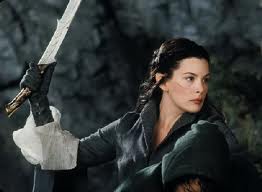
When the hobbit walked through Mirkwood, we all walked with him. We knew exactly how the trees looked, how the wind moved their branches, what the ground felt like as one fur-soled foot pressed down. We could smell the rotting leaves and…We were there as the master welcomed us into Middle Earth, his world. We were his honored guests and when we returned to this world, we felt a sense of loss.

No one, in my humble and uneducated opinion, has ever created a world in the rich way of J.R.R. Tolkien, and perhaps no one ever will. There are some among our younger readers who skip or skim the long descriptions. Do I need to know what every tree in the forest looks like?

And yet these same young people marveled over the world of Pandora from James Cameron’s Avatar. I am closing in on finishing the third of the Wycaan Master novels and will then begin another edit of the first book before passing it on to more professional hands.

One of the aspects that I want to focus on is how well have I described the land in which the story transpires. There is a lot of traveling and many different climates and natural wonders, as well as villages and cities, which are described. When I wrote the first book, it was in close collaboration with my then 11-year-old son. I was very conscious of maintaining a fast pace. The second and third books were more my own work, with my son reading and giving me feedback. I believe these two novels involved considerably more world-building.
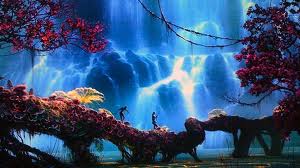
Why do we need to show such detail in epic fantasy? It seems obvious for the Sci-fi writers to put so much emphasis on creating worlds and I understand why those who write in modern earth need not focus so much because we can see the world we live in. 

Do you enjoy the detail of a new world or are you content to receive hints and imagine it for yourself? How important is world-building to you becoming a loyal reader of a fantasy series? Finally, if you write fantasy yourself, do you have any best practices or tips? Do share in the comments below.

Appreciate your feedback. Have a great weekend and a happy 4th.

Alon 

——————————————————————————————————

Alon Shalev is the author of The Accidental Activist and A Gardener’s Tale. He has written two fantasy novels and the first reached the Quarter Finals of  the Amazon Breakthrough Novel Award as of March 2012. More on Alon Shalev at http://www.alonshalev.com/and on Twitter (@elfwriter).
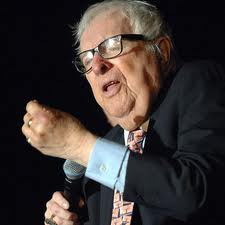
Ray Bradbury R.I.P

On Wednesday the book world received news of the passing of a master. Ray Bradburyauthor of The Martian Chronicles, Fahrenheit 451, Something Wicked This Way Comes, and many more literary classics — died  in Los Angeles, at the age of 91.

I had the honor to meet Ray at the Santa Barbara Writer’s Conference where, despite age and health challenges, he continued to be an inspirational guest speaker. From the podium he urged us to write because we loved to, to let nothing but our imagination limit us and to dream big.

Here is Ray in a 2-minute clip from then.

In the introduction to The Illustrated Man,  entitled “Dancing, So As Not to Be Dead,”  there is a poignant line about death.

“My tunes and numbers are here. They have filled my years, the years when I refused to die. And in order to do that I wrote, I wrote, I wrote, at noon or 3:00 A.M. So as not to be dead.”

I’m sure they have a keyboard and screen waiting for you in heaven, Ray. Keep on writing … here on earth, your work will never die.

Ray Bradbury R.I.P 2012

——————————————————————————————————

Alon Shalev is the author of The Accidental Activist and A Gardener’s Tale. He has written two fantasy novels and the first reached the Quarter Finals of  the Amazon Breakthrough Novel Award as of March 2012. More on Alon Shalev at http://www.alonshalev.com/and on Twitter (@elfwriter).
Oops! Just Killed A Friend

Wow! Killing a friend ain’t easy. You think you’re ready for it. You have planned the dramatic demise, executed to perfection, but when it gets right down to it, it is soooo hard.

And when they are lying there dead, with an arrow though their heart, or an axe wound in their head, you think you can just walk away. But what do you still have to do?

Press the Save button.

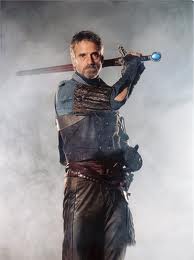
Haldir – too noble for our times.

Do you get the irony? Your friend lies dead on the page, their blood still wet, and you are totally responsible for it. Sure you didn’t wield the axe, or aim the bow, but you created this person, this character, this hero.

He trusted you, allowed you to move him from one part of the kingdom to the other. He has seen you put him in a tight jam and always something happens to get him out of it in the nick of time. He never complained.

Except this time he is dead. You killed him and now he glares at you from the computer screen.

Save

Brom – never got over the loss of his dragon.

And you walk around in a daze. What made you do it? Why? For the glory? So that the reader would say: “Wow I never thought he would dare…” And you know you will have to face your writers group next week with this and get flayed. They loyally listened to your manuscript week after week, growing to love your characters, buying into your plot, and now you do this to them!

Save

He hasn’t gone you know, not really. A knock on the door, a guy at the gym with the same tattoo, a person who bumps shoulders on the busy train platform. Your eyes meet fleetingly and you look away, guilty, ashamed. How could you have done that?

You killed a good friend, one who let you create them. And now you are going to expect the other characters in the story to trust you? Beware my friend. You never can be sure just how the next chapter will end.

Save

I simply could never accept this. Destroyed my childhood innocence and I’m in my 40’s!

Good Writing,

——————————————————————————————————

Alon Shalev is the author of The Accidental Activist and A Gardener’s Tale. He has written two fantasy novels and the first reached the Quarter Finals of  the Amazon Breakthrough Novel Award as of March 2012. More on Alon Shalev at http://www.alonshalev.com/and on Twitter (@elfwriter).
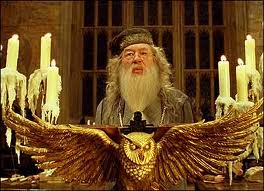
Where is the Moral Line in YA Fiction?

Since I wrote Wycaan Master with my (then) 11-year-old son, I assumed that our story fitted the Young Adult genre. It is a coming-of-age novel, so I never gave it much thought. There is no clear sex or profanity, though race is a big issue in the first book.

Since I have become absorbed in the fantasy genre, I have begun to wonder where the line is drawn. As I continue to write the second and third books in the series, intimacy has developed between characters, sometimes direct and at other times implied. There has been plenty of violence and references to overindulgence in alcohol. Colleagues at my writers group have questioned whether I should be including these themes.

As I began to research this, I found a number of excellent sources regarding YA fiction in general. Heather Dunlevy-Scheerer has written an interesting article about the historical development of YA literature.

She lays out several characteristics that she took from someone called Niday (I couldn’t find a clear reference).

(1) a teenage (or young adult) protagonist

(2) first-person perspective

(3) adult characters in the background

(4) a limited number of characters

(5) a compressed time span and familiar setting

(6) current slang

(7) detailed descriptions of appearance and dress

(8) positive resolution

(9) few, if any, subplots

(10) an approximate length of 125 to 250 pages.

From a brief skimming of the Internet, it seems that the common thread in YA fiction is an adolescent, rather than an adult or child, protagonist. However, the subject matter and story lines of leading YA literature are relevant to the challenges of youth, and more edgier novels include themes such as identity, sexuality, science fiction, depression, suicide, drug abuse, alcohol abuse, money issues, race, familial struggles, and bullying.

April Dawn Wells suggests seventeen common traits of young adult novels. These include: “friendship, getting into trouble, interest in the opposite sex, money, divorce, single parents, remarriage, problems with parents, grandparents, younger siblings, concern over grades/school, popularity, puberty, race, death, neighborhood, and job/working.

There are a number of YA novels currently in print that are on the edgier sides, dealing with peer pressure, drugs, gangs, crime, violence, sexuality, incest, oral sex, and female/male rape.

The obvious criticism of these novels is that they encourage destructive or immoral behavior or at least bring them into the adolescent’s mind at too early an age. Countering this is the fact that teens will be better equipped to deal with real-life difficult situations and social issues because they have role models in the protagonists they have followed.

Where is the line drawn in amount and nature of such issues between appropriateness and inappropriateness in young-adult fiction? How can we keep literature as a relevant medium when the exposure of TV, computer games and Internet is almost not monitored and easily accessible? None of these mediums, in my opinion, can offer the depth of thought and emotion that a good book provides.

Now more than ever, YA literature needs to stay relevant. Maybe the adults (including parents of teens like myself) have to accept that we might be more uncomfortable with this than our children.

——————————————————————————————————

Alon Shalev is the author of The Accidental Activist and A Gardener’s Tale. He has written two fantasy novels and the first reached the Quarter Finals of  the Amazon Breakthrough Novel Award as of March 2012. More on Alon Shalev at http://www.alonshalev.com/and on Twitter (@elfwriter).

I Didn’t Make The Cut

I’m bummed. This week 50 writers saw their manuscripts advance to the Semi-Final stage of the Amazon Breakthrough Novel Award – YA category. My humble offering – Wycaan Master – was not one of them. It reached the Quarter-Final, ahead of a few thousand others, but…

In an odd sense of timing, I will finish reading the 95,000 word epic fantasy story to my writer’s group. They stuck with me over the past 18 months though none (until the last couple of months) read or are interested in fantasy. Thank you – Berkeley Writers Group.

Either you think epic fantasy is alive and thriving (Tolkien, Terry Brooks, R.A. Salvatore etc.,) or you think the only fantasy that sells is high concept – Harry Potter, The Hunger Games…

It is hard writing in two genres – social justice-themed novels reflect my lifestyle and values. Young-adult fantasy was inspired by a writing project with my preteen son and has been a lot of fun. But they serve two separate target audiences and I maintain a separate blog and twitter account.

I have to admit, I’ve arrived at a junction. I have not only sweated over a first YA fantasy manuscript, but completed a second, and am 30,000 words into a third. It is  a series and I must admit: I’m kind of hooked on it.

I want to see how my young heroes (and villains – who I am also quite attached to) grow. Will the races of Odessiya unite? What is the Emperor’s secret power that enables him to keep winning? Will shy Seanchai and his guide, Ilana, ever hook up?

As a reader becomes hooked on a series and feels compelled to read through to the end, I have discovered that so can an author become ensnared. It might well be an issue of not writing an outline and having faith in the story evolving, but I need to discover what happens in the world I’ve created.

Even if I didn’t make the cut.

——————————————————————————————————

Alon Shalev is the author of The Accidental Activist and A Gardener’s Tale. He has written two fantasy novels and the first reached the Quarter Finals of  the Amazon Breakthrough Novel Award as of March 2012. More on Alon Shalev at http://www.alonshalev.com/and on Twitter (@elfwriter).

Writing A Fantasy Series Pt. 1

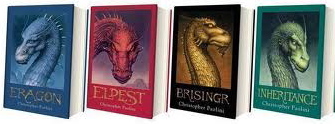
Christopher Paolini, the young author of the Inheritance Series (Eragon), was featured in The Writer. I was excited as the title was ‘Writing A Hit Series’, and Paolini has created a magnificent world in the 3,000 or so pages of his four novels.

I was disappointed with the interview. The reporter assumed that most of us didn’t know who Paolini is and what he has written. The story focused on a lot of the well-recorded autobiography (that I am sure most of us love) and the decision of the Paolini family to self-publish Eragon and travel around the country selling copies face-to-face.

But there were precious few tidbits regarding writing a series. Paolini structures his stories before he writes them. Fair enough. There are no surprises, we are told, except I wish to point out that Book Three became two books (how do you misplan an additional 700+ pages? – not that I am complaining, Mr. Paolini – you can write several more and I will faithfully buy and read them together with my sons).

My son holding his autographed copy at the midnight release... a priceless moment!

Paolini also stresses the need for a map. He warns that if there is a small mistake in detail between Book One and Four, true fans will notice.

As I continue to put Book Three of the Wycaan Master onto (virtual) parchment, (just passed the 25,000 word mark), I am continually realizing how much I must refer back to keep consistent, whether in language, appearance, or plot.

I love the spontaneity of allowing the plot to unfold. It works for me and it is part of the magic of writing. But I totally understand the value of a structured plan as Paolini suggests.

I keep three lists going: characters, chapter contents, and odds-and-ends. I do not provide much in terms of character appearance and history. I regret this now, as I need to sift through over 200,000 words. Chapter contents are kept brief – 1-2 sentences, but serves to help me refer back relatively quickly. Odd-and-ends is, well, a lot of unresolved issues, detail needed, clan structure and more.

A Great Place to Write Fantasy.

I have no doubt that there is so much more to remember and involved when writing a series. I think when I begin another, I might take more careful notes and listen more to authors like Paolini, Salvatore, and Brooks.

But I also think it is worth it. The depth and richness of a series is an incredible honor to write. More on that aspect next week.

Until then, good writing.

——————————————————————————————————

Alon Shalev is the author of The Accidental Activist and A Gardener’s Tale. He has written two fantasy novels and the first has reached the Quarter Finals of  the Amazon Breakthrough Novel Award as of March 2012. More on Alon Shalev at http://www.alonshalev.com/and on Twitter (@elfwriter).


Breaking Through The Amazon Breakthrough – Quarter Finals

This has been a great week for me professionally. I am concluding a meaningful and moving week with 20 students from our SF Hillel Jewish Student Center, volunteering to help rebuild the Gulf Coast. I have written on this at Left Coast Voices.

It is a totally immersive experience and I have been intensely focused on my students and the New Orleans community. So it is perhaps understandable that I was shocked to receive the electronic reminder that the Amazon Breakthrough Novel Award’s results for the Quarter Finals had been released.

I am immensely proud to advance to the final 250. Wycaan Master has been a tremendous ride since I began writing the novel with my then 11-year-old. He was the first to receive the phone call and the news.

Over the next month the manuscript will be read by Publisher Weekly reviewers. They will grade it and the top 50 move into the semifinals. It is quite a thrilling prospect. So far, over the past year, dozens of goodhearted individuals have read and offered feedback. These people, members of the Berkeley Writers Circle, have been amazing and I have no doubt that Wycaan Master is a much better book because of their input. But they are not professionals and I am rather awed that people from such an established magazine are perusing my novel.

Interesting and exciting times.


——————————————————————————————————

Alon Shalev is the author of The Accidental Activist and A Gardener’s Tale. He has written two fantasy novels and the first has been entered into the Amazon Breakthrough Novel Award in January 2012. More on Alon Shalev at http://www.alonshalev.com/and on Twitter (@elfwriter).


Top Current Epic Fantasy Novels

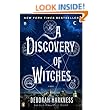
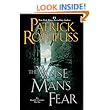
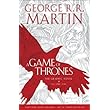
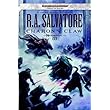
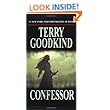
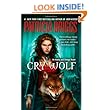
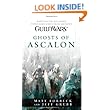
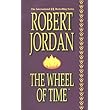
Amazon.com sent me list of their best-selling titles (see below). I thought we could springboard on it and see who is reading what. Are you reading any of these novels? What is the best epic fantasy novel that you have read in the last few months?

I am particularly interested in Terry Goodkind. I enjoyed watching Legend of the Seeker on TV, but never got into the Sword of Truth – his first novel. Have you been reading his books? Let me know.

Have a great weekend,

Alon

——————————————————————————————————

Alon Shalev is the author of The Accidental Activist and A Gardener’s Tale. He has written two fantasy novels and the first has been entered into the Amazon Breakthrough Novel Award in January 2012. More on Alon Shalev at http://www.alonshalev.com/and on Twitter (@elfwriter).

Alon


A Discovery of Witches: A Novel (All Souls Trilogy) A Discovery of Witches: A Novel (All Souls Trilogy)
by Deborah Harkness
The Wise Man's Fear: The Kingkiller Chronicle: Day Two (Kingkiller Chronicles) The Wise Man’s Fear: The Kingkiller Chronicle: Day Two (Kingkiller Chronicles)
by Patrick Rothfuss
A Game of Thrones: The Graphic Novel: Volume One A Game of Thrones: The Graphic Novel: Volume One
by Daniel Abraham, George R.R. Martin
Charon's Claw: Neverwinter Saga, Book III Charon’s Claw: Neverwinter Saga, Book III
by R.A. Salvatore
Confessor (Sword of Truth) Confessor (Sword of Truth)
by Terry Goodkind
Cry Wolf (Alpha and Omega, Book 1) Cry Wolf (Alpha and Omega, Book 1)
by Patricia Briggs
Guild Wars : Ghosts of Ascalon Guild Wars : Ghosts of Ascalonby Matt Forbeck
The Wheel of Time, Boxed Set II, Books 4-6: The Shadow Rising, The Fires of Heaven, Lord of Chaos The Wheel of Time, Boxed Set II, Books 4-6: The Shadow Rising, The Fires of Heaven, Lord of Chaos
by Robert Jordan

Fantasy and Females

I realize that a title like this might give the wrong idea. This blog is about epic (or high) fantasy fiction – imagine Lord of the Rings. If you want to leave this post right now, I will understand.

I have mentioned that I am working with an agent preparing Wycaan Master/At the Walls of Galbrieth (I know I haven’t settled on a title). He sees his role as helping me differentiate my work from the other 499 epic fantasy submissions sitting on the acquisition’ editor’s desk.

With more than two-thirds of the publishing world of the female persuasion and given that so much of literature (and music, and movies, and business, and politics…) is focused on men, there is an understandable desire to see more female-focused stories and stronger female characters.

I baulked at the idea of changing my protagonist’s gender and have gone through the manuscript strengthening the secondary character who is female. She was never a doormat character, swooning after the hero, but a strong, independent individual with an attitude and a high level of skill at fighting.

Now I am considering changing one of the other main characters into a female, someone with authority and power. There are examples out there. I am currently listening to the audio book of Terry Brook’s Voyage of the Jerle Shannara. The first book has our antagonist being a woman  (the Ilse Witch).

Why have authors of epic fantasy created main characters who are male? Given that it is not a new phenomenon that women are the vast majority of readers, I feel that I am missing something.

Any ideas?

——————————————————————————————————

Alon Shalev is the author of The Accidental Activist and A Gardener’s Tale. He has written two fantasy novels and the first will enter the Amazon Breakthrough Novel Award in January 2012. More on Alon Shalev at http://www.alonshalev.com/and on Twitter (@elfwriter).
Pro-logue or Against -logue

This week, I entered Wycaan Master/At the Walls of Galbrieth, the first of my Alliance series, into the San Francisco Writer’s Conference Indie Awards. In three weeks, I will submit it to the Amazon Breakthrough Novel Award.

Both competitions require the first 5,000 words of the novel and abruptly I find myself needing to make a critical decision. I have written a prologue, a short but hopefully eloquent setting of the scene.

Prologues are not always acceptable. When I presented the prologue to my writer’s group, the jury was out and, though I was not hung, neither was I acquitted.

It seems that prologues are more acceptable in the fantasy genre than others. Critiques have suggested that a prologue is there to mask a slow beginning or a lack of a hook.

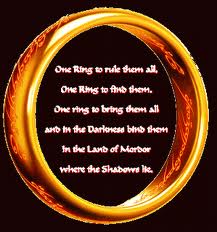
One ring to bind them all… opened the master and we were duly bound for three long volumes, cartoon series, and epic movies. Now the epic fantasy world waits with bated breath for The Hobbit movie, even though we all know what happens.

Since my novel is directed at the YA audience I made sure to begin the novel at a fast pace. I can imagine many teens skimming the prologue, though I hope they will value it in later years when they ritually return to the series as I, and many of you, return to read LOTR every few years.

So, a couple of weeks before decision time, I wish to ask:

How do you feel about a prologue for an epic fantasy novel? Does the reader want it, the agent accept it and the publisher allow it?

Your comments and advice are gratefully received. Wishing you all a happy and healthy new year.

——————————————————————————————————

Alon Shalev is the author of The Accidental Activist and A Gardener’s Tale. He has written two fantasy novels and the first will enter the Amazon Breakthrough Novel Award in January 2012. More on Alon Shalev at http://www.alonshalev.com/and on Twitter (@elfwriter).