Guest Post from Elwin Cotman – exciting young author.

Elwin read his previous collection, The Jack Daniels Sessions to our writers group. His new book – Hard Times – is out and his book launch is at Pegasus bookstore in Berkeley later this week. Elwin has a uniques way of writing, but his voice when reading is amazing. Well worth an evening.

Me3

Back to Reality

1To the bearer of the sandbag: slide back two steps for every one you gain, because the levee does not give ground easily.

2Leper steps, needles pricking his calves and thighs.

3His life measured in steps of ten, one after the other, then again.

4Behind the rifle aimed at his cheek: a hairy face plastered with three stripes of black hair and his

5Eyes like the heads of rusted nails, lips drawn back from broken teeth.

6The deputy kept as close to him as a brother, his curses swallowed by the storm.

7Or maybe he had lost his voice and moved his mouth in hateful habit.
finalcoverhardtimesblues1           

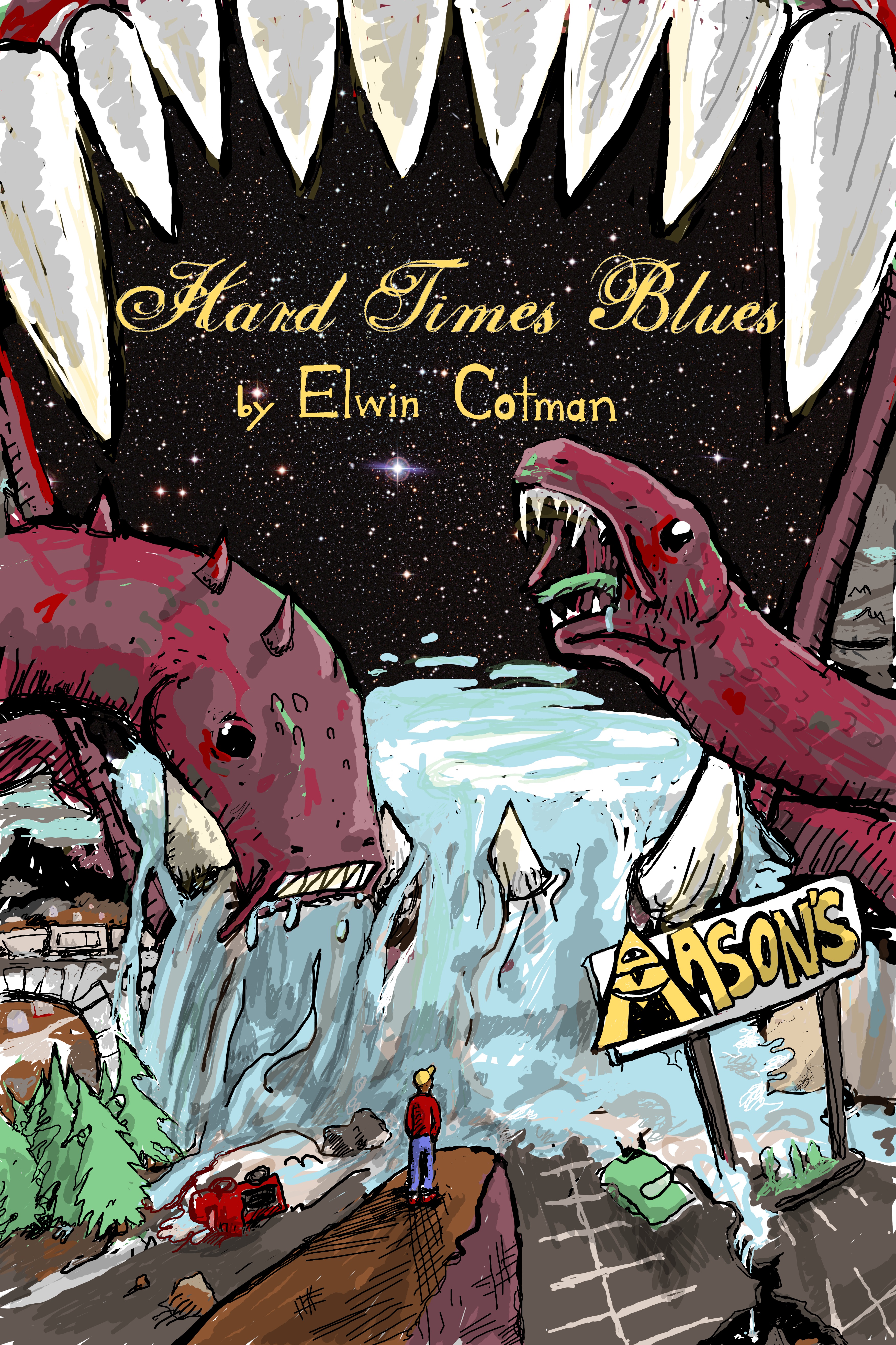
The above excerpt is from “The Revelation of John,” a story in my new collection Hard Times Blues. It deals with the Flood of ’27, when terrible storms devastated the Mississippi delta. Blacks along the Mississippi lost their crops, their livelihoods. They also lost their freedom: black men, like my protagonist, were forced to work the levee in a vain attempt to stop its breaking. Equally as terrifying was the aftermath, when the Army Corps of Engineers abused the blacks who survived. It is a tragic event in US history, and most people I’ve met have never heard of it.

But it is a part of our history. And my genre of choice—fantasy—is the perfect way to explore it.

I write fantasy because it is fun. The inclusion of dragons and elves automatically makes a story more engaging for me. However, my subject matter is often not fun. Even in entertainment, the tragedy of the black experience is inescapable. Nor should it be escaped. It should be dealt with head on so that the world does not forget. The events of Hurricane Katrina becomes especially egregious when people know the same thing happened almost 100 years ago. Past and present are one.

As a kid, I spent my days and nights in Prydain, Narnia, Redwall Abbey, and Krynn. I always felt left out because there were hardly any black characters in these stories. It was when I read Toni Morrison’s Beloved that I saw how fantasy could tell my American story. Here was a horror story, with all the dread and uncertainty that makes good horror. The horror itself stemmed from slavery. The ghost of the dead daughter served to make the story more realistic; a key to learning the degradation of black people.

In my work, I explore historical injustice, police brutality, gentrification. They stem from of a desire to bring these issues to light, but also because they reflect my experience. My world is a multicultural one, and my writing is my truth . . . filtered through dragons and zombies. I once asked Charles de Lint, who some consider the father of urban fantasy, if he ever ran into resistance from publishers for writing black and indigenous characters. His reply was that any publisher who had those reservations wasn’t worth his time.

De Lint is a wonderful fantasist, with stories of fairies and bards that would enchant you. More important, his work is compassionate, addressing the lives of the indigenous, the homeless, the survivors. His writing brings you back to reality.

That’s what fantasy does for me: it brings light to the real world. It also offers the perfect platform for tales of heroism. The Afro-American experience holds numerous stories of rebellion against overwhelming odds. Thanks to fantasy, I have the language to honor this history and heroism.

 ———————————————————————————————————————————————

Elwin  Michael Cotman is a writer of urban and folkloric fantasy. He blogs at www.lookmanoagent.blogspot.com. Hard Times Blues can be ordered on Amazon,com here.

The Gods of Fantasy

Pass a summer evening in a quaint English pub, mid 20th century, perhaps in the old town of Oxford. Caress a pint and listening to a few graying professors discuss semantics, philosophy, and the ancient languages long forgotten outside the sheltered walls of academia. What else can one possibly ask for? 

imgres-1Imagine these tweed-clad, pipe-smoking academics, hatching more than another challenging semester to try the greatest minds of this fair isle. Each is a king in the making or, more accurately, a kingmaker. For they direct more than the destiny of kings and noble houses. They raise kingdoms and conquer lands. They build great dynasties, bring whole species back from the mists of extinction, and set those of noble birth and principle to stand against evil.

Sip your beer, mull over the words, much of which you might not understand. Dwarves, elves, of course: but hobbits? Marsh-wiggles? Listen as the professors strategize great battles, masterfully marshalling unicorns, dragons, giants, minotaurs and proud ents. 

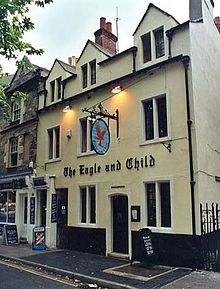
You slowly realize that you sit among the Gods, the creators of Middle Earth and Narnia, who hold court on Tuesdays at midday in a local public house. Perhaps it is The Eagle and Child, or The Lamb and Flag across the street. They read each other’s work and offer critique as writer’s groups have for centuries and continue to do so today.

220px-Birdandbaby 

I may never have understood much or been accepted into such an elite. They would have torn my work to shreds on grounds of philological shallowness (I had it checked – it’s not contagious), criticized me for imprudently suggesting that a 100,000 word novel can serve as more than merely an introduction.

They would have demanded richer world-building – take twenty pages to describe a forest, I dare you – unyielding heroes, and infallible plots. They would have challenged the age-old legends dressed up in fictional costumes, and raised an eyebrow at some of the language or innuendos.

Most likely, I would never have dared reveal my stories to the old professors of Oxford, to the most famous writing group in history. I would never have been more than a fly on the wall at a meeting of The Inklings, but would have returned week after week to sit at the feet of the Gods and hear their banter.

For here the Gods gave birth to great worlds and left them as a legacy to us and to our children, long after they departed this world. Every Wednesday night, I sit around a table in a coffee shop in Berkeley, sharing work with other aspiring authors and wonder: do the Gods look down upon us from Writers Heaven?

 lewis-and-tolkien1

Do they tut and shake their heads at our adverb addiction, our unwillingness to kill our darlings? Or do they even now move pieces around the literary chessboard? Protect the king! Advance the knights! Who, I wonder, are the pawns?

As we write a new book, a new chapter, do we not imagine the Gods walk among us?  Do they peer over our shoulders at our swanky writing machines, judging every word we write, every world we build? 

The Gods once sat in an old English pub. Now they stand behind us in coffee shops and at kitchen tables, urging us on, watching us walk the path they forged, taking on the quest they started.

For the Gods still walk among us and inside of us. The stories have been told but must be told again in different ways to a different generation. We sign these books in our own names, but humbly acknowledge those who molded us in their image as storytellers.

And now they are the flies on the wall and we who pound the keyboards. Take a moment, draw another pint, and raise your glass:

To the Gods of Fantasy!

—————————————————————————————————–

Alon Shalev writes social justice-themed novels and YA epic fantasy. He swears there is a connection. His latest books include: Unwanted Heroes and the 2013 Eric Hoffer Book Award for YA – At The Walls Of Galbrieth. Alon tweets at @alonshalevsf and @elfwriter.   For more about the author, check out his website.


The Fellowship of the Book

All our protagonists had them – a fellowship of loyal followers and friends, ready to put their lives on the line, to draw their swords in defense of the hero/ine, and to go off on dangerous missions or to pass on an important message.

hobbits in pub

What would we do without them? How would our characters cope bereft of true companionship? I have mentioned in the past the lure of universal values to the conventions of epic fantasy. We long to lose ourselves in some far off land, discover mythical creatures, embark on a noble quest.

Granted, but we also seek values that are part of our everyday aspirations: justice, truth, love, riches … and friendship.

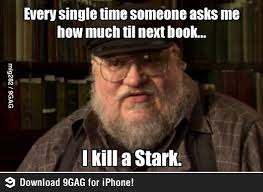
Why am I writing about this? Last week, I somewhat frivolously criticized George R.R. Martin, author of the Game of Thrones series. I learned two things from the experience:

1) Mess with a great epic fantasy author if you want to boost the hits to your blog.

2) Mess with the followers of a great epic fantasy author at your peril.

images-1

My humble offering garnered 4-5 times the amount of hits of an average blog post (not that any of my posts are average, of course) and I received far more comments, many of which were retweeted and favored on twitter, some, I admit, by myself.

To those who accused me, a humble fantasy author, of being insanely jealous: I accept the charge.

To those who say people who criticize Martin’s long tomes suffer a short attention span, I say – next point.

And so it went on. To be fair, there were many who agreed with my pointed digs, and in the name of credibility, still faithfully open the next book in the series. I myself, despite honorable intentions to take a break having just concluded Book 4, read Sacre Bleu, the latest by one of my favorite authors, Christopher Moore, and having finished it, promptly started Book 5 – A Dance of Dragons.

imgres-2

What is clear is that, in the same way that we want to align ourselves to great fictional characters, we subconsciously swear fealty to their creators: the authors. I encountered fans of Mr. Martin, as loyal as Frodo’s gardener (well maybe not quite). They were ready to defend him to the hilt – even if they privately knew I was right. It is something very special about the people attracted to the genre.

The skeptical among them would probably accuse me again of jealousy: that I crave one day to have Wycaan Master followers as loyal as them. To my accusers I proudly say: Yeah. Darn right!

Have a great weekend,

Elfwriter

—————————————————————————————————–

Alon Shalev writes social justice-themed novels and YA epic fantasy. He swears there is a connection. His latest books include: Unwanted Heroes and At The Walls Of Galbrieth. Alon tweets at @alonshalevsf and @elfwriter.  


Everyone Wants To Be An Elf

How many times have you uploaded an article or song on the Internet and then got lost surfing through hundreds of comments underneath? Whether discussing politics, sports, or comparing the lead singers of Nightwish, it gets ugly very quickly. If you need to stock your insult arsenal, You Tube comments is the place to go – but a shot of JW or an anger management course might be more effective, long term…just saying, calm down.

Earlier this week, I played a Gothic music play list (that I can’t find now) while I wrote a new chapter for Book 4 of the Wycaan Master series. I made the mistake of perusing the comments and they were eye opening.

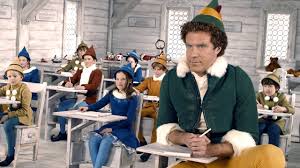
Tens of people (and I did not check all 2,000+ comments) wrote why they would love to be an elf. Just for the record, I believe people were imagining Legalos and not Will Ferrell or any of his fine companions.

 imagesimages

But there they were: some frivolous, but many, well, I believe laced with a genuine desire. They seemed to resonate with something deep inside, something lost.

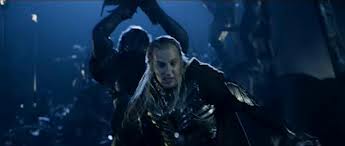
Some spoke of the physical attributes – tall and thin, healthy (have you ever seen an elf sneeze? – they even die beautifully – yes I’m talking about you, Haldir, at Helm’s Deep, I’m sure you remember), long living, nimble, coordinated… 

images-1

Others mentioned emotional attributes – decisive, confident, calm, intelligent, loyal mates (I plan to research this – I did a quick search for the Rivendale Daily Enquirer but they only distribute in the Western Isles).

And there was also an interesting assortment of comments such as: they could trust their leaders; they were in touch with nature… 

When I began writing the Wycaan Master series, it was clear to my sons and me that we didn’t want to make the elves (most of our protagonists) perfect. They get angry, make wrong decisions, feel abashed at that first kiss, and seem more…well human (ouch!).

In fact, one of the comments that surfaced as I read At The Walls Of Galbrieth to my writer’s group wass that I failed to distinguish them as elves. I struggled to do this without stepping into the familiar stereotypes. As I write Book 4, things have become somewhat darker, with the protagonists facing greater personal challenges. I continue to find it difficult to strike a cord between making my elves special without them losing their genuine, vulnerable side.

Finally, as I write this, I am listening to The Hobbit soundtrack. There is a long thread of comments, disagreements, and debate. But this is the comment that caught my eye:

RobbieBjork17 wrote: “Holy Crap that was one_ of the most educated conversations I’ve ever read on youtube…. shoulda known it was going to be Tolkien Fans ;).”

It made me absurdly proud to feel a part of the Epic Fantasy nation.

images-2

——————————————————————————————————

Alon Shalev is the author of At The Walls of Galbrieth, Wycaan Master Book 1 and The First Decree, both released by Tourmaline Books. Shalev is also the author of three social justice-themed novels including Unwanted Heroes. He swears there is a connection. More on Alon Shalev at http://www.alonshalev.com and on Twitter (@elfwriter).

Quite A Week

It has been quite a week for me. First, thank you to everyone who left such beautiful reviews both on amazon.com and across the pond at amazon.co.uk. In fact, both At The Walls Of Galbrieth and The First Decree are doing well there. I’m not sure what happened, but I received over 300 hits on Wednesday in an hour in the early California light. So whoever sparked it – I thank you too. 

I finished my own edit of Ashbar, Wycaan Master Book. 3, and sent it under the scalpel of the Master Surgeon (or Mistress Editor to be more accurate), Monica Buntin. While I wait, it is an opportunity to get back to writing Book 4. I wrote over 40,000 words during the Xmas break and I can’t wait to hit that keyboard – so much easier than a treadmill. I also left a few characters hanging and I need to apologize to them and let them move on.

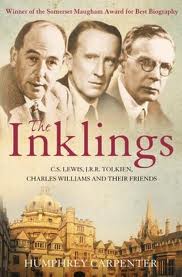
I discovered, and I realize that 90% of those who read this blog are about to roll their eyes, that J R.R. Tolkien and C.S. Lewis were part of a writers critic group at Oxford. It blew my mind and I scuttled off to find a copy of The Inklings by Humphrey Carpenter, who also wrote a great biography of the Professor. More on this when I actually finish his book.

imgres

Finally, The Hobbit came out on DVD and BluRay. In case you have never heard of this movie, Yahoo Movies offered us two delightful caveats.  I particularly loved their chart to differentiate between the races, but their behind-the-scenes video was cool as well.

_ylt=AsAy3VcY8kcvndsOg1BnmyK4AOB_;_ylu=X3oDMTFpOGpyZm1sBG1pdANCbG9nIFBvc3QgQm9keQRwb3MDMgRzZWMDTWVkaWFCbG9nQm9keUFzc2VtYmx5;_ylg=X3oDMTMyZnNiMWtvBGludGwDdXMEbGFuZwNlbi11cwRwc3RhaWQDZmMyZjgyNWQtMmUwNy0zN2NjLTk2OWEtM2IzNTEyMWQ1MzdhBHBzdGNhdANibG9nc3xt

I couldn’t see how to download it, so please accept The Song Of The Misty Mountain in its place.

——————————————————————————————————

Alon Shalev is the author of At The Walls of Galbrieth, Wycaan Master Book 1 and The First Decree, both released by Tourmaline Books. Shalev is also the author of three social justice-themed novels including Unwanted Heroes. He swears there is a connection. More on Alon Shalev at http://www.alonshalev.com and on Twitter (@elfwriter).


Why Epic Fantasy Can Be So Profound

The Lord of the Rings is a story (or several stories) about elves and dwarves and dragons and quests. And yet, professors sit in their Ivy League towers and dig deep into the story, seeking meaning, analyzing plot and characters, symbolism and analogy.

Grown men and women who read the books 20 or 30 years ago, continue to debate the values and meaning, while counting down the days from one epic movie to another. We reverently pass on the books, DVD’s and walk our children to the movies – a sacred rite of passage.

Here is a documentary that not only analyzes these aspects through a variety of knowledgable men and women with delightful accents, but also the symbiotic relationship between Tolkien with C.S. Lewis. Both men’s motivations and writing, for example, were shaped through their experiences in World War 1. They went on to create two of the greatest epic fantasy series ever. It is thirty minutes that are well worth the time.

lewis-and-tolkien1

So please, grab yourself a mug of ale, light up the Longbottom leaf, and enjoy a revealing explanation of a unique man who blazed a path for so many who came after him.

As one who owes him so much, I am truly humbled.

One last point: if you have the energy,  browse through the comments under the You Tube video. It is amazing how many people had such difficulty reading the LOTR and yet still have a deep appreciation for the work.

——————————————————————————————————

Alon Shalev is the author of the 2013 Eric Hoffer YA Book Award winner, At The Walls of Galbrieth, and five other Wycaan Master books all released by Tourmaline Books. The link above takes you to the Kindle versions. For all other eReaders, please click here.

More at http://www.alonshalev.com and on Twitter (@elfwriter).

A Poem In Elvish – J.R.R. Tolkien

This is a rare gem. That an author could possibly make up an entire language is mind-blowing. Yet we often forget that beyond the dragons, swords, and quests, J.R.R. Tolkien created an entire language. As a professor of philology (ancient languages) at Oxford University, Tolkien was already immersed in the mechanics of how a language is put together. 

But the professor took it to another level when he actually made up a language. With the hype beginning to build for The Hobbit movie, this poem surfaced read by the master himself.

Enjoy!

My own elvish is somewhat rusty, so here is a translation of Namarie (Farewell) courtesy of Josh Jones, who goes into greater detail about the when and where.  

Ah! like gold fall the leaves in the wind, long years
numberless as the wings of trees! The long years
have passed like swift draughts of the sweet mead
in lofty halls beyond the West, beneath the blue
vaults of Varda wherein the stars tremble in the
song of her voice, holy and queenly.

Who now shall refill the cup for me?

For now the Kindler, Varda, the Queen of Stars,
from Mount Everwhite has uplifted her hands like
clouds, and all paths are drowned deep in shadow;
and out of a grey country darkness lies on the
foaming waves between us, and mist covers the
jewels of Calacirya for ever. Now lost, lost for
those from the East is Valimar!

Farewell! Maybe thou shalt find Valimar. Maybe
even thou shalt find it. Farewell!

And, in case you haven’t got enough, here is Tolkien again, reciting the Song of Durin (in English). 

Have a great weekend,

Elfwriter

——————————————————————————————————

Alon Shalev is the author of The Accidental Activist and A Gardener’s Tale. He has written three epic fantasy novels and the first, which reached the Quarter Finals of the Amazon Breakthrough Novel Award 2012, is due out in January 2013 by Tourmaline Press. More on Alon Shalev at http://www.alonshalev.com and on Twitter (@elfwriter).

Where Do People Like Us Hang Out?

“Go forth and find your target audience,” I was told and I posted a questionnaire that many of you were kind enough to answer (if you haven’t, it is not too late, and I do promise to share my findings).

“Keep defining and refining it,” my mentor continued and so I have a question for you.

Where do you hang out? Where do you meet others such as you and me; those who believe in elves, dwarves, noble quests, and dragons? And please don’t tell me: Alagaësia, Middle Earth or Shannara – I’ve been there and I never saw you!

When you don’t have your nose in an exciting book, where do you meet fellow fantasy readers? Do you frequent conferences? Do you read magazines (on-line or tree form)? Are you on a social networking fantasy site, a discussion group, or a fantasy book club?

Please leave your tracks in the comments below. It will help me find companions for my journey and help others find company too.

I appreciate your help. Oh, and next time you pop into Alagaësia, Middle Earth or Shannara, would it hurt to say hi?

Finally something totally unconnected to this blog: This past week Muslims were insulted, Christians died from the violence, and Jews were blamed. We are all victims when we set ourselves apart. Sometimes it just feels easier to lose yourself in the world of elves, dwarves and dragons.

May we all learn to celebrate our differences together and share the space. There is enough room for us all. Safe travels wherever your road takes you.

——————————————————————————————————

Alon Shalev is the author of The Accidental Activist and A Gardener’s Tale. He has written three epic fantasy novels and the first reached the Quarter Finals of the Amazon Breakthrough Novel Award as of March 2012. More on Alon Shalev at http://www.alonshalev.com/and on Twitter (@elfwriter).

Genre Conventions .v. Originality

“But this is how it’s done in epic fantasy,” I whine to my writer’s group. “It’s part of the convention.”

We are a bonded group, anxious to support each other and so I receive sympathetic smiles and diplomatic silence. The silence screams in my ears. I know they are right. If I have to fall back on a sentence like that, I am in trouble. Or am I?

How important is originality?

Utter originality is, of course, out of the question.” – Ezra Pound

Originality is nothing but judicious imitation.” – Voltaire

I feel better already.

It is better to fail in originality than to succeed in imitation.” – Herman Melville.

Ouch!

Elves are tall, thin, have pointed ears, and excellent hearing. They look good in green, and shoot bow and arrows with exceptional accuracy.  Dwarves are short, rotund, live underground, mine and play around with axes. This is so because J.R.R. Tolkien put the epic in epic fantasy with his Middle Earth series’. Are the rest of us thus condemned to be mere recyclers of his work? Maybe. But I am not convinced how this is different from any other genre: romance has the same images and general plot arc. So does suspense and horror. And don’t get me started on dystopian thrillers.

So why do we so enthusiastically embrace conventions in a genre? It might be because some themes are simply timeless. I’m thinking Beowulf (maybe written in the eighth century) and The Odyssey (sixteen centuries before that!). Tolkien would concede that he was not the first, but when something works, you build your own version of it, and sometimes your version is good enough to capture the imagination of a very loyal readership. But it is not just enjoyment. It is pure escapism to a world we can get excited about, to values we can admire or fear (or both). It is also something familiar, something soothing. 

And yet when we embark on a new epic fantasy series, or try the work of a new author, we are seeking both something familiar and something original. What makes each author since Tolkien distinct is some aspect of his / her work. The relationship between Eragon and Saphira (his dragon), made Christopher Paolini’s Inheritance series special. I have just started reading The Weight of Blood by David Dalglish (check out his cool book covers by Peter Ortiz) which is about two brothers (okay) who are not just orcs (hmmm), but half-orcs (ahhh). I was caught on page one. Dalglish has written a variance on the convention. So did R.A. Salvatore when he introduced Drizzt – a dark elf whose race were the opposite from the stereotypical elves. Five novels on, I am still intrigued. Daniel Arenson came up with his own original approach to dragons in the Song of Dragons series. 

Before I end, let me say how much I admire those who come up with something original – Hunger Games, Harry Potter, Percy Jackson – they capture us all and we devour their new approaches. But those who seek to ride their coattails are not so successful and I think this is very telling.

It says that while the fantasy readership will embrace a clever, well-written, new concept, that very concept might not establish itself beyond one brilliant author. Epic fantasy, however, with its elves, dragons and swords, continues to stand the test of time. This is not because our readership is lazy. Instead they demand depth – world building, characters, and a plot that offers a twist on a well-tested theme. They continue to surprise us with the familiar.

It’s a great genre to be a part of.

 Good Writing,

Alon 

—————————————————————————————————

Alon Shalev is the author of The Accidental Activist and A Gardener’s Tale. He has written three epic fantasy novels and the first reached the Quarter Finals of the Amazon Breakthrough Novel Award as of March 2012. More on Alon Shalev at http://www.alonshalev.com/and on Twitter (@elfwriter).

What’s With The Pipe?

When you write epic fantasy, you have the privilege sit before a blank page (well screen nowadays). You make up all the rules. If you want these creatures to have different colored skin, pointed ears, horns, or magic, go for it. If you want to have unicorns, dragons, or any creature you make up, it is your right.

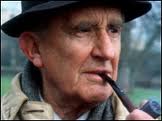
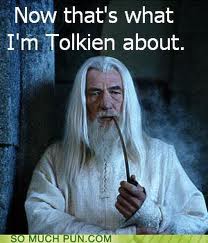
So what’s with the pipe? I know, Tolkien smoked, but he strode around Oxford in tweed, talking languages no one else remembers. In fact, there are a lot of characteristics about the master that we can adopt.

I think the secret lies with those who puff. I used to smoke a pipe for several years, seeing it as a compromise, a halfway house between smoking cigarettes and not. I loved my pipe. I craved the taste, loved the touch of the warm bowl, and enjoyed packing the pipe correctly, even cleaning it. All day, I looked forward to that time when I could put my feet up and puff the worries of the world away. 

I succeeded in giving up cigarettes for the pipe, but giving up the pipe proved tougher than I could imagine. This is not an article about smoking cessation, but even eight years later, if someone passed by me with his briar, or even is sitting a hundred feet away (given the correct wind), I will smell it, yearn for it, crave it for the rest of the day …  maybe for the rest of my life.

Perhaps this is why we continue to give our characters an opportunity that we are denying ourselves. Are we being foolish? Indulgent? 

I recently read a scene to my writer’s group in which, shortly after a bloody fight, the characters (those who survived) sat down and puffed their pipes. A colleague questioned me having my characters smoking in a YA novel. 

Fair point, I thought, until I realized that she had not objected to me exposing my tender, young readers to battle, killing, blood and gore.

I guess that one man’s poison is…well poison is poison. I shall have to sit and think about this. Now where’s my pi–.

Why do you think pipe smoking is a mainstay in fantasy novels?

Good reading.

——————————————————————————————————

Alon Shalev is the author of The Accidental Activist and A Gardener’s Tale. He has written three epic fantasy novels and the first reached the Quarter Finals of the Amazon Breakthrough Novel Award as of March 2012. More on Alon Shalev at http://www.alonshalev.com/and on Twitter (@elfwriter).