The Power of the Bow

There is a children’s movie just come out, Brave, with the heroine sporting a bow and arrow. Katnis, from the Hunger Games, was lethal with one. Legolas was extremely handsome even in the midst of a desperate fight for Helm’s Deep and never missed when he let fly.

It seems that a bow and arrow are integral ingredients in fantasy, even when the setting is modern enough for guns and technology. Bows were, of course, around before fantasy. Who can forget Robin Hood in the archery contest splitting his opponent’s arrow, which had pieced the center of the bull’s-eye? Classic.

And then there are the Samurai with their beautiful longbow, the Yumi. They didn’t just shoot it with their distinctive technique, but held a philosophical discipline, kyūjutsu, akin to Tai Chi and other spiritual martial arts.

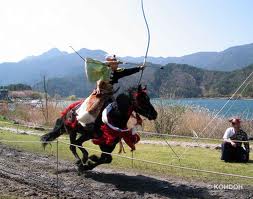
Even after the bow became outdated as an effective weapon it remained a form of training for its warrior code value. The yumi was also fired from horseback because of its asymmetric shape and this practice evolved into a Shinto ceremony known as yabusame. At the risk of sounding trite, there is a beautiful scene in The Last Samurai, with the yumi being explained and fired.

In the West we have also been drawn to the spiritual values of the bow. Eugen Herrigel’s classic, Zen in the Art of Archery, is still a classic fifty years after he wrote it. My 13-year-old has become obsessed with archery. He made his own bow and learned how to shoot it from a teacher. He takes classes at camp and has spent over a year saving up to buy a ‘real’ bow. When I wrote two scenes in the third Wycaan Master book, he provided me with a lot of excellent and rich information. 

I’m still struggling with why the bow is so captivating. For some reason, I am not questioning the sword in the same way. Use of the sword is elegant, noble and also has numerous philosophies and katot (martial art form), but there is something that sets the bow apart and keeps us coming back for more.

 Any ideas? Please share in the comments below.

——————————————————————————————————

Alon Shalev is the author of the 2013 Eric Hoffer YA Book Award winner, At The Walls of Galbrieth, and five other Wycaan Master books all released by Tourmaline Books. The link above takes you to the Kindle versions. For all other eReaders, please click here.

More at http://www.alonshalev.com and on Twitter (@elfwriter).

Guest Post – Author Lisa Fender

My guest today is author Lisa Fender. She has co-written the fantasy novel, Fable – Book 1 of The Lorn Prophecy with her sister which is, in itself an amazing story. Author, J.E Rogers described Fable “as a wonderful book that combines, fantasy, with young adult romance. Lisa Fender, and Toni Burns, have deftly created a new world, another dimension. This well written fantasy will take its readers on an exhilarating ride to this other dimension. It is another world that young people will easily identify with, and enjoy.”

Lisa exudes a love for everything epic fantasy, so I was not surprised when she chose to write about why she finds it so enthralling.

Lisa and Toni: sisters in creative collusion

Lisa: I have been a fantasy freak for as long as I can remember. Ah, to be taken away to another world where dragons roam and Dryads peek at you from behind (or within) the trees. And, when I am immersed in a fantasy world and I read the last book in the trilogy, quadrilogy, or even twelve-part series, and the story(ies) end…argh! Agony!

I live and breathe fantasy fiction and when I decided it was time for me to write the story dancing around in my head, it had to be in the genre of…epic fantasy, of course! But, the question was: How to make mine different? To achieve this, I looked to my personal passions.

My inherent love for our planet and wildlife, and concern over how our species seems bent on destroying both, gave me my inspiration. This in turn, gave rise to the idea of the Djen.

Djen are my take-off of the Genie. Don’t think of a genie in a bottle, or “I Dream of Jeannie”.  Instead my Djen are a race of beings in a parallel dimension. They have but one purpose: watch over the planet and keep nature in balance. Of course, perfection cannot come without conflict, in the form of a faction who creates turmoil for the Djen and the series’ main character, Stevie Barrett.

Fable Book Cover

I started putting pen to paper back in 2009. After a couple of years—not simply writing, but additionally educating myself in the craft—I asked my sister, Toni, to with help me with revisions. At the time I had hired a writing coach and we discovered that my sister’s experience with journalistic and business-style writing was not the same as creative writing. The two of us began to learn the craft together. 

After a short while, Toni started to offer suggestions and became my sounding board to bounce off ideas. This led to our coming up with scenarios and directions for the book and characters that neither one of us had considered. Together we made the story more intriguing and exciting. She too, fell in love with the characters and the Djen world. I finally decided to ask her to be my co-writer and I haven’t looked back. We are ecstatic about publishing our first book in the series, Fable, and look forward to continuing our partnership.

Writing the series together has truly brought us closer. Sure we fight once in a while, all sisters do, but not about the stories or the way we write together. We have a system and even though some have said to me that I’m giving away my power, I disagree. I love writing together.

Most of the basic story is written by me, and then the two of us go over each line and clean it up. We discuss ideas together and decide which way we want the story to go. We complement each other’s writing strengths and skills. It works well.

Fable, Book 1 of the Lorn Prophecy has been in print since spring of this year, and we have completed a side book/compendium novel: Fated, Book 1 of the Djenrye Chronicles. We are now working on the second book in the Lorn Prophecy series: Lore. In essence, I have gone from being immersed in the fantasy worlds of other writers to creating one of my own!

What books and worlds do you like get lost in?

imgres

I have the complete joy of living in Golden, Colorado with my husband, Rick, and our yellow lab mix, Branch. I love hiking, camping and enjoying the mountains and wildlife which provides so much of my inspiration. I don’t have some fabulous degree or a plethora of literary courses behind me, I am literally the waitress that wanted to write a book.

images-1

Thank you, Alon, for having me as a guest on your blog! It is truly an honor.  I do so share your love for the classic fantasy fictions—J.R.R. Tolkien, George R. R. Martin—as well as J. K. Rowling’s Harry Potter – and your finding your inspiration in the world around you.

Want to know more about Lisa and her work? Here are her social media links:

Fable – Book 1 of The Lorn Prophecy 

Fated – Book 1 of The Djenrye Chronicles 

Lisa’s Blog

Fanpage

Twitter

——————————————————————————————————

Alon Shalev is the author of the 2013 Eric Hoffer YA Book Award winner, At The Walls of Galbrieth, The First Decree, and Ashbar – Wycaan Master Book 3 – all released by Tourmaline Books. Shalev is also the author of three social justice-themed novels including Unwanted Heroes. He swears there is a connection. More at http://www.alonshalev.com, on Twitter (@elfwriter) and on Google+.

T is one tough 7th Grader – Tim O’Mara

Elfwriter’s Introduction:

Tim O’Mara is a hero. He is a public school teacher and a man (rare to have male role models in our schools). Like most of these dedicated, hard-working, under-rewarded, and under-recognized teachers, he cares about his students. I am very inspired by him and very grateful as a father and a citizen to all public school teachers.

But Tim is not just an  NYC public middle-school teacher. He is an author. He wrote an adult mystery series about a public schoolteacher who used to be a cop. O’Mara never was a cop, but his brother is. Raymond Donne Book 1, Sacrifice Fly (2012 Minotaur Books), was nominated by Deadly Pleasures Magazine for the 2013 Best First Novel Barry Award.

O’Mara teaches math and special education in a tony area of Manhattan now, but started his career in 1987 in a disadvantaged section of Williamsburg, Brooklyn, the setting for the series. The dichotomy of these two worlds is highlighted in Raymond Donne Book 2, Crooked Numbers, released this past week. More at www.timomara.net and on Facebook (TimOMaraAuthor) and Twitter (@TimOMaraAuthor).

Support a teacher – and read a good mystery book.

mail.google

Tim’s Post:

You know the type: hard to reach, easy to annoy, always knows more than the teacher. In this case, me. The kid’s got a wall around him that would make the Chinese envious. But on those rare occasions when he lets me glimpse over that wall, the view is astounding. He can be funny, insightful and a joy to teach.

He mentioned to me last week that he knew I’d written a book, Crooked Numbers. I had given a copy to a friend of his—another of my tougher students—to celebrate a successful session at camp and the birth of his foster mom’s first child. That was pretty much all T said. He knew I wrote a book.

For most of last year, there was a bit of a buzz around school that Mr. O’Mara had published a book and that it was in bookstores and it was even available online and their parents had bought it and liked it. Some kids actually brought copies to school to have me sign, and even though I wrote it with an adult audience in mind, it seemed to strike a chord with many of my middle school students.

If T was impressed, he kept it to himself.

Just last week, T stepped into it again. He earned himself a one-day suspension for creative use of a belt and ended up spending the day in the principal’s office. Shortly after school ended that day, my boss came to me in the Teacher Center. It turns out that during a conversation with the principal, it came out that T was somewhat impressed with my accomplishment and he was even thinking about going to the reading and signing event for my second book this week.

“Maybe you can work with that,” my boss suggested.

Maybe.

The next day, I brought in a personally inscribed copy of the book. I referenced a conversation I had had with him the day of his suspension:

To T,

This story has a lot to do with the choices people make—including the author.

I gave him the book immediately after a particularly positive period with him of one-on-one guidance through a quiz on integers. (Yes, pun intended.) He looked at the inscription and nodded. He didn’t say anything. I said, “You’re welcome,” and went off to do lunch duty.

When I go back to school tomorrow, it will be the first encounter with T since I gave him the book. My fantasy is that he stayed up all weekend reading the book, relating to the characters, and realizing the error of his ways. The reality is the gift of a book—my book—will more than likely not change much of anything. It has taken T thirteen years to build that wall and one present from a teacher is not going to tear it down.

What I’m hoping for is just one little crack.

mail.google-1

——————————————————————————————————

Alon Shalev is the author of the 2013 Eric Hoffer YA Book Award winner, At The Walls of Galbrieth, The First Decree, and Ashbar – Wycaan Master Book3, all released by Tourmaline Books. Shalev is also the author of three social justice-themed novels including Unwanted Heroes. He swears there is a connection. More at http://www.alonshalev.com and on Twitter (@elfwriter).

Epic Fantasy, Epic Tattoos

I take my tattoos pretty seriously and see them as a rite-of-passage. I have three, each celebrating a landmark event. I got the first when Ms. Elfwriter and I got married and the other two when my sons were each born. I often joke that the reason there will not be a third child is that I can’t afford the tattoo. I actually did plan another tattoo to celebrate the Wycaan Master series, but I haven’t done it yet.

I have often wondered about incorporating my love for body art into my books. I have this association, when it comes to fantasy, of tattoos and the bad guys. If they are essentially used to signify evil, I take issue.

eragon_film_eragon_rescues_arya

Having just discovered the Iron Druid series, I have found at least one author who has delved more than a cursory skin deep level (couldn’t resist).

Hearne’s protagonist is a Druid who draws power from the earth … through his tattoo. Hearne describes the tattoo beautifully as it moves from the soles of his feet to cover all the energy points on his body. In Book 1, we even learn something of the significance and the process. Note to Mr. Hearne – we, the readers, would love to learn more of this.

imgres-1

Credit to another writer – Paul Goat Allen – who wrote a blog post that asked what is your favorite literature image that you can imagine making into a tattoo.

But, as an author of Young Adult fantasy, is it okay to romanticize or elevate the art of tattoos? Certain religions forbid it – I will not be allowed to be buried in a Jewish cemetery since I have defiled my body, which was created in G-d’s image.

Putting aside any desire for my ashes to be thrown from the Golden Gate Bridge (there is probably a law against that as well – but hey, I’ve already apparently pissed off YAWEH) – there are many parents who, I am sure, do not want their children getting a tattoo on the whim of a fictional character.

My own sons, justifiably proud that I bear a tattoo of each of them, have already told me of the various images they plan to emblaze on their bodies. I promised that when they are 18, if they still want them, I will take them to get their first tattoos (to add proportion, I have also promised to buy their first round when they turn 21 – good parenting, I am told, is all about consistency). I do, however, also point out the painful process, which helps to somewhat quell their impatience.

imgres-2

And yet tattoos do have a rich, spiritual past. If fantasy authors are trying to illustrate such a fantastical bygone age, why should we shirk from a bit of body art? I am trying to imagine a conversation with a concerned parent.

“Look, Mr. Shalev, I really appreciate that you have written several books that my son is enjoying more than endless video games, but really! He now wants a tattoo. Do you have to keep harping on about it? It is so crude.”

“Crude?”

“Yes. All those needles and blood.”

“Have you told your son about this process?”

“Goddess no. He would have nightmares, poor little tyke.”

“Has he told you about the fighting in my books, slaying good and bad guys with swords and bows?”

“Oh yes. He wants to take up archery, the sweetie. At least it will get him out of the house, I say.”

“Great. By the way: what’s his favorite video game?”

“Grand Theft Auto. He just loves his little cars.”

“Do you have a problem with that?”

“Of course not. Burt Reynolds starred in the movie you know. Anyway, it’s only a game.”

True, I think. Only a game. This is literature!

And to end with a question in the vein of Paul Goat Allen’s post: What fantasy image, character, or phrase, could you imagine having tattooed onto your body? Answers in the comments, please.

Thank you! Have a great week.

——————————————————————————————————

Alon Shalev is the author of the 2013 Eric Hoffer YA Book Award winner, At The Walls of Galbrieth, Wycaan Master Book 1 and The First Decree, both released by Tourmaline Books. Ashbar – Book 3 – is due for release in October 2013. Shalev is also the author of three social justice-themed novels including Unwanted Heroes. He swears there is a connection. More at http://www.alonshalev.com and on Twitter (@elfwriter).

That Magical Time of Year – Better Than ‘Real’ Fantasy

Once a year, my family goes away camping in the mountains of Northern California or Oregon. All day we fish, hike, swim, explore and then after dinner sit around the campfire or snuggle up in my tent. This is the fourth year that I then open up a folder and read to my boys the completed first draft of the next book in the Wycaan Master series.

My boys listen, interrupt with question, comments and sometimes criticism. The latter is becoming increasingly sophisticated as they not only spot spelling or grammar errors, but when a character goes out of voice, or the plot is inconsistent.

During the day, while out on another activity, one of them might turn around and offer an idea or feedback. My youngest (10 years old) may well tell me what he guesses might happen next. I have told him that he is not allowed to share anything in an unpublished novel with his friends – many of whom are reading the series. He is to arch an eyebrow (Spock would be proud – if he ever felt emotions) and say Maybe. When he offers his predictions, I turn to him and smile, as evilly as I can muster: Maybe.

imgres

It elevates an already wonderful family vacation into the realms of magical and I feel truly blessed that we are building these communal memories together and hope they will stay with us as my boys grow up and walk their own paths.

Together with this is the excitement building for the book launch of Ashbar – Wycaan Master Book 3. Pages have been added at alonshalev.com and here on the elfwriter blog.

It is turning into an amazing year with The First Decree and Ashbar being published, and, of course winning the 2013 Eric Hoffer Book Award for YA. I am truly gratified that along the way I am making many new friends through twitter and the blog, and even some face-to-face networking (yes – it really happens!).

In this brave new publishing world, an author can only succeed with ‘a little help from his friends’ something Joe Cocker was preaching long before any of us knew that a chat room was a place you could hang out in pajamas or that we would love a tablet that is too large to swallow.

imgres-2

I appreciate all the retweets, the recommendations and the reviews. My mentor is telling me that I am not accruing enough reviews. Please, if you have read either At The Walls Of Galbrieth or The First Decree, take a few minutes to leave a review. If you are in a Google+ group, a Goodreads group, or on a thread of epic fantasy book aficionados, please make a recommendation to begin the series. I am following a thread on Amazon called Life after Game of Thrones and checking out the authors they suggest.

I really believe that, even in the rich online world, word-of-mouth remains the most effective marketing tool. On Thursday, a friend enthused about this new author he has discovered. I came home, checked him out, and his first book is on my wish list.

To those of you who already advocate for my novels and my path as an author – thank you. My relationship with my boys and the support you give me are what makes my epic fantasy truly magical.

—————————————————————————————————–

Alon Shalev writes social justice-themed novels and YA epic fantasy. He swears there is a connection. His latest books include: Unwanted Heroes and the 2013 Eric Hoffer Book Award for YA – At The Walls Of Galbrieth. Alon tweets at @alonshalevsf and @elfwriter. For more about the author, check out his website.

Guest Post from Elwin Cotman – exciting young author.

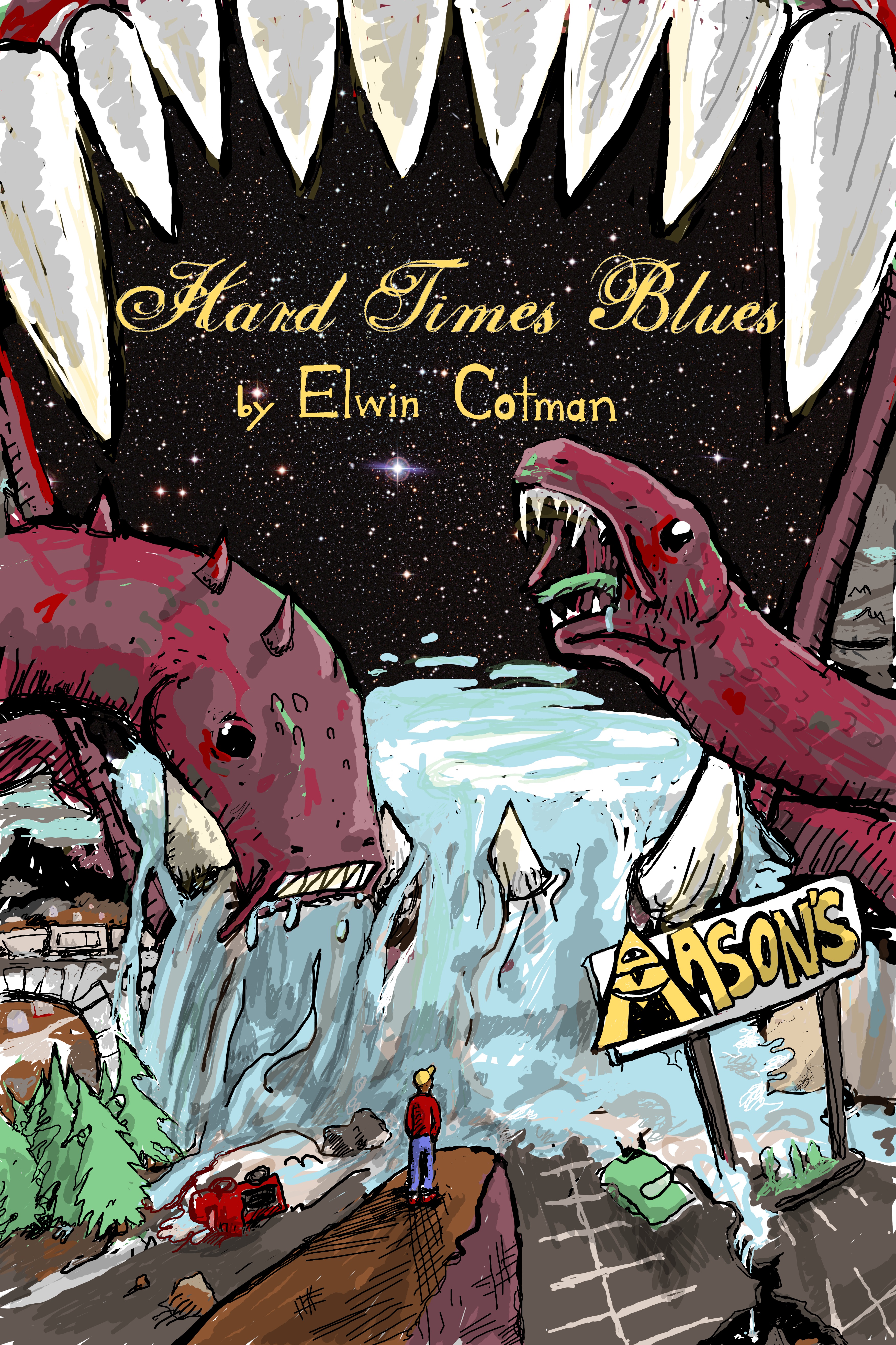
Elwin read his previous collection, The Jack Daniels Sessions to our writers group. His new book – Hard Times – is out and his book launch is at Pegasus bookstore in Berkeley later this week. Elwin has a uniques way of writing, but his voice when reading is amazing. Well worth an evening.

Me3

Back to Reality

1To the bearer of the sandbag: slide back two steps for every one you gain, because the levee does not give ground easily.

2Leper steps, needles pricking his calves and thighs.

3His life measured in steps of ten, one after the other, then again.

4Behind the rifle aimed at his cheek: a hairy face plastered with three stripes of black hair and his

5Eyes like the heads of rusted nails, lips drawn back from broken teeth.

6The deputy kept as close to him as a brother, his curses swallowed by the storm.

7Or maybe he had lost his voice and moved his mouth in hateful habit.

finalcoverhardtimesblues1           

The above excerpt is from “The Revelation of John,” a story in my new collection Hard Times Blues. It deals with the Flood of ’27, when terrible storms devastated the Mississippi delta. Blacks along the Mississippi lost their crops, their livelihoods. They also lost their freedom: black men, like my protagonist, were forced to work the levee in a vain attempt to stop its breaking. Equally as terrifying was the aftermath, when the Army Corps of Engineers abused the blacks who survived. It is a tragic event in US history, and most people I’ve met have never heard of it.

But it is a part of our history. And my genre of choice—fantasy—is the perfect way to explore it.

I write fantasy because it is fun. The inclusion of dragons and elves automatically makes a story more engaging for me. However, my subject matter is often not fun. Even in entertainment, the tragedy of the black experience is inescapable. Nor should it be escaped. It should be dealt with head on so that the world does not forget. The events of Hurricane Katrina becomes especially egregious when people know the same thing happened almost 100 years ago. Past and present are one.

As a kid, I spent my days and nights in Prydain, Narnia, Redwall Abbey, and Krynn. I always felt left out because there were hardly any black characters in these stories. It was when I read Toni Morrison’s Beloved that I saw how fantasy could tell my American story. Here was a horror story, with all the dread and uncertainty that makes good horror. The horror itself stemmed from slavery. The ghost of the dead daughter served to make the story more realistic; a key to learning the degradation of black people.

In my work, I explore historical injustice, police brutality, gentrification. They stem from of a desire to bring these issues to light, but also because they reflect my experience. My world is a multicultural one, and my writing is my truth . . . filtered through dragons and zombies. I once asked Charles de Lint, who some consider the father of urban fantasy, if he ever ran into resistance from publishers for writing black and indigenous characters. His reply was that any publisher who had those reservations wasn’t worth his time.

De Lint is a wonderful fantasist, with stories of fairies and bards that would enchant you. More important, his work is compassionate, addressing the lives of the indigenous, the homeless, the survivors. His writing brings you back to reality.

That’s what fantasy does for me: it brings light to the real world. It also offers the perfect platform for tales of heroism. The Afro-American experience holds numerous stories of rebellion against overwhelming odds. Thanks to fantasy, I have the language to honor this history and heroism.

 ———————————————————————————————————————————————

Elwin  Michael Cotman is a writer of urban and folkloric fantasy. He blogs at www.lookmanoagent.blogspot.com. Hard Times Blues can be ordered on Amazon,com here.

The Fatherly Figure in Fantasy

As a warm up for reading this blog, please  say the following five times as quickly as possible: The Fatherly Figure in Fantasy.

I shared some thoughts on Left Coast Voices regarding Father’s Day this Sunday. But it occurred to me that the father figures in epic fantasy gets a tough time. Here is a brief overview of a few of our beloved characters and their fathers (I acknowledge that I am encompassing a wide definition of the genre for this post. Purists – please excuse me this once).

WARNING: There might be spoilers here, so I am giving the name of the character first and won’t be offended if you skip that part.

1. Luke Skywalker:

I know this is sci-fi and not fantasy, but we have all hung there with Luke as his father, who had just chopped off his arm, now looms over him with a lightsaber. What a time to discover your father! As if it is not enough that your uncle and aunt who brought you up were murdered, now you discover your father is a metallic mass-murderer.

Suggestion: Do not buy Dad a lightsaber. It is the first step to the Dark Side and he already has plenty of power tools he never uses.

 images

2. Tyrion Lannister:

So your father abused you and openly hated and insulted you. As if you don’t have enough to contend with two older, beautiful siblings, who are bonking, or the fact that you were born stunted and are accused of killing your mother as she gave birth to you. Not hard to understand why A Lannister Always Pays His Debts!

Suggestion: Don’t give your father a ‘quarrel’ even if he deserves it.

 images-2

 3. Eragon:

Also grew up never knowing his true father and then, like Luke Skywalker, finds his uncle, who was like a father to him, is murdered in his stead. Of course, no sooner does he discover who his father really is, than he has to bury him, and take considerable blame for brave father’s death.

Suggestion: Giving your old man your dragon/porche just before he dies is classy, but do check your insurance policy first.

images-1

4. Drizzt Do’Urden:

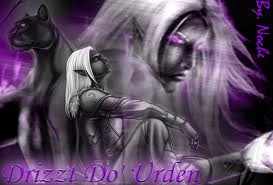
Gotta give the dark elf considerable credit. He grew up in the Drow city of Menzoberranzan. where all males were merely fighters and concubines. Of course his mother and sisters abused him and tried to kill him, and by the time he discovered who his father really was, well…I don’t think he even got to bury him.

Suggestion: a bit stumped here. When your father gave you a genetic sense of justice, enough to turn you against your mother and sisters, what can you really reciprocate with? 

images-2

Artist – Noche

5. Frodo Baggins:

I admit, I had to look this up and cannot guarantee my sources. Frodo’s father was Drogo and we don’t know much about him other than he went and drowned in a boating accident. Hobbits should know not to participate in such dangerous and adventurous pastimes as boating. At least, Frodo had a nice secure upbringing with his first cousin once removed (and not his uncle as even dear Bilbo often referred to himself). It was not as though Bilbo passed on any artifact that was incredibly dangerous and held the fate of the entire Middle Earth!

Suggestion: Stay away from the jewelry!!!

images-3


In epic fantasy we gravitate to protagonists who are the underdogs, who overcome adversary, and make great personal sacrifice. But we also seem to be sending out a message to our young readers that the absent/weak/villain father is the norm.

It must not be so. Every young man deserves a father who is a role model, imperfect and flawed as we may be, but a father who will teach him to fish, nock an arrow, believe in a just society, and to be a good human being…or elf…dwarf etc.

I’m sure if we were to meet Luke, Eragon, Tyrion, Drizzt or Frodo in a pub, they would all agree that they wished they had fathers they could truly appreciate and learn from.

Perhaps being the best father you can is the greatest quest any of us can embark on. It may not save Middle Earth or Menzoberranzan, but it will make our world a better place to live in.

Happy Father’s Day.

—————————————————————————————————–

Alon Shalev writes social justice-themed novels and YA epic fantasy. He swears there is a connection. His latest books include: Unwanted Heroes and the 2013 Eric Hoffer Book Award for YA – At The Walls Of Galbrieth. Alon tweets at @elfwriter. For more about the author, check out his website.

Finding Mythical Places Everywhere

A while ago, I wrote a post about meeting elves in coffee shops. The point was that…well you can read the point for yourself, but there is more along these lines.

I grew up in England with real castles, stately homes, wattle and daub cottages, and signs of a more ancient, Pagan culture everywhere. I was not writing fantasy back then but imagine I would find a lot of inspiration there. Two weeks sitting in a castle in Wales writing – is that a business expense?

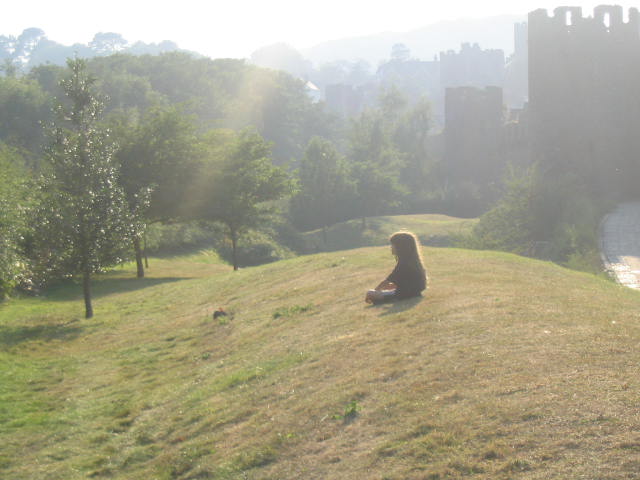
Meditation

My eldest at Conway Castle, Wales, several years ago. He sat there for hours, transfixed in a world of his own.

But we actually don’t have to travel too far. I attended a conference in the heart of Washington ‘DC Chinatown. I stepped outside the meeting room on the 7th floor  for some fresh air and stared at this:

Ruins by Hillel SIC

Today, I was at the Ferry Building in San Francisco and noticed Old Glory flying at half-mast in respect of the victims of the Boston Marathon attack. The sky was a rich blue and the flag and tower looked glorious. I could imagine Seanchai and friends arriving on a boat (do you pay the toll riding over the Bay Bridge on horseback? Do three horses and riders make a posse or qualify for the casual car pool?).

Interestingly, I crossed the Embarcadero between the Ferry Building and Bay Bridge and saw a restaurant with gargoyles and (what looked to me) a sign that could have been written in Medieval lettering. It could have been a tavern or pub for thirsty travelers before they put five Peet’s Coffee and nine Starbucks in the mile-square Financial District.

My point is that writing fantasy is as much a state of mind. When I am actually writing a story (as opposed to editing or marketing), which is about 4-5 months of the year, I notice these things as though they are only around for this time of the year.

Tunnel

Picnic at our local park. Younger son discovered this tunnel. We sat in here and discussed how to use it in the book I was writing at the time.

It is why I see elves in coffee shops and get invited underground by hospitable dwarves. It enriches the already beautiful vistas, forests and rivers of Northern California where I explore. It is what makes my kids and I respond when we see a beautiful natural scene by exclaiming: Alagaesia! (You can blame Christopher Paolini for this. I hope he’s touched).

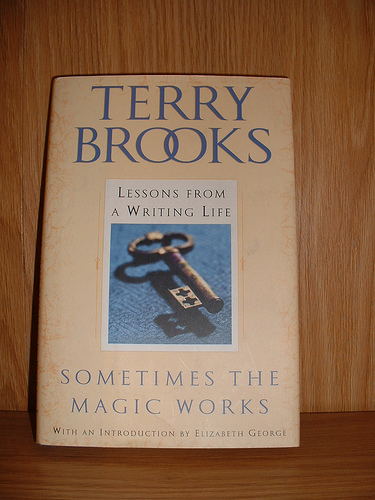
It is why Terry Brooks claims that ‘Sometimes The Magic Works.

Have a mystical weekend.

—————————————————————————————————–

Alon Shalev writes social justice-themed novels and YA epic fantasy. He swears there is a connection. His latest books include: Unwanted Heroes and At The Walls Of Galbrieth. Alon tweets at @alonshalevsf and @elfwriter.  

I’ve Never Been In A Dwarf’s Cavern

I must confess: I’ve written almost 300,000 words of epic fantasy (three books) and never seen a dwarf’s cavern, an elf’s tree city, or a troll’s rock cairn. Now this might lose me credibility with readers, but after being complimented for my world-building by an editor at an established publishing house, I was asked from where I derive my inspiration for world-building from a fellow writer who is struggling with this important aspect.

My non-fantasy novels, The Accidental Activist and A Gardener’s Tale, were both situated in my native England, and my upcoming novel, Unwanted Heroes, is based here in San Francisco. I’m not sure if I chose these surroundings as much as absorbed what is around me into my stories. It is, I guess, what allows me to see elves in coffee shops.

I think the process is the same for me when I build my fantasy worlds. I am blessed to live surrounded by the natural beauty of California and its surrounding states, it is important to not only admire the majesty of the area but see it through the eyes of your protagonists. Three examples come to mind.

I have shared how my journey into the world of fantasy was prompted by my eldest son (then 11-years-old) complaining that I shouldn’t be writing while on vacation. I challenged him to write something with me and make it a family activity (the desperate games we play…) and there under the watchful eyes of the redwoods, we began our journey. 

It was easy to see our young heroes seeing these noble trees and the vines that hang in the forest where we were camping. They were ambushed as they passed a rock enclave, almost hidden by moss, that was a five minute bike ride from our tents.

On Monday, I will travel to an annual professional conference in St. Louis, where we have met for the past two years as well. To give us a break from the intensity of the conference, the organizers arranged a trip to a children’s museum. The incredibly creative designers had thought to fill their vast basement with caves and caverns.

While my colleagues snuck off to a nearby bar, I walked through these caverns imagining what it was like to live as a dwarf underground. I’m not sure what my biggest mistake was: missing out on a social mixer or admitting to my colleagues why I had declined their offer.

Finally, this year we traveled to Crater Lake in Oregon. Jutting out from the deep blue waters is an island called Magicians Island.  The audiovisual told us that the name came because it reminded the explorer of a wizard’s hat. I sat on the ridge overlooking the island, saw the steep grey rocks, the windswept trees, and the ospreys flying overhead.

Book 4 has a base from which to begin…

——————————————————————————————————

Alon Shalev is the author of The Accidental Activist and A Gardener’s Tale. He has written three epic fantasy novels and the first reached the Quarter Finals of the Amazon Breakthrough Novel Award as of March 2012. More on Alon Shalev at http://www.alon-shalev.com/ and on Twitter (@elfwriter).

Ever Been To The World I Invented?

How do you explain to someone how to write about a place that you made up? Or a race that has never existed? How to describe the unexplored or give directions to a destination that you have never been to?

Fantasy (and sci-fi) writers are in a unique position in the writing world. A friend of mine is writing a historical novel from the Vietnam War. It is from a time and place that she never experienced. Yet, thorough diligent research and patient interviews, she has built an authentic account of the jungles, the battles, and the actions of soldiers.

But I have to confess, and let’s just keep this between you and me; I have never met an elf, never yielded high magic or walked and breathed underwater (I tried the latter – it didn’t work). In Wycaan Master, one of my elves performed a particular feat. He will do it several times throughout the three novels and his teacher explains the rudiments to him. Nonetheless one of my dear friends from my writer’s group (not a fantasy writer) proclaimed: “elves can’t do that.” 

Our group boasts a number of very smart people, all of whom I am sure, thought what one asked. “Oh really? How many elves do you know?”

We laughed and decided that these were my elves and I could do what I want with them. It was amusing and yet, who sets the rules?

The obvious answer is that the market does, and the market is the reader. Buy a fantasy writer a couple of beers and s/he will admit that we all live in the shadow of the greats, with Tolkien being the greatest of them all.

In the pantheon upon which the great Ring Writer sits, are others held in great esteem. I am devouring Terry Brooks‘ Shannara series, and so I came across a book he wrote to explain his craft.

 The book is called: Sometimes The Magic Works – Lessons From A Writing Life. Brooks deals with such issues common to all who write fiction such as plot, characters, hook, dialogue etc., but he also spends time on more specialized aspects such as world creating, or even how it is different perhaps to hold the threads of a plot through a number of books or corresponding paths in a single book.

I read through Sometimes The Magic Works – Lessons From A Writing Life once, enjoying his autobiographical content as much as his craft teaching. I am going away soon for a week and plan to take the book and reread.

 I have two questions:

 1) What makes writing fantasy different from other genres in terms of craft and technique?

2) Are there other good books on writing that are specific to the fantasy genre?

Drop me a note on the blog or tweet any suggestions. I appreciate your help.

Good Writing and Reading,

Alon

——————————————————————————————————

Alon Shalev is the author of The Accidental Activist and A Gardener’s Tale. He has written two fantasy novels and the first has reached the Quarter Finals of  the Amazon Breakthrough Novel Award as of March 2012. More on Alon Shalev at http://www.alonshalev.com/and on Twitter (@elfwriter).