Teaching LOTR in School

English Teacher and novelist, Roger Colby, proses teaching Tolkien in school. Here he explains in his excellent post. Your thoughts?

Thanks for the feedback to my previous Tolkien posts. Have a great weekend.

——————————————————————————————————

Alon Shalev is the author of The Accidental Activist and A Gardener’s Tale. He has written three epic fantasy novels and the first reached the Quarter Finals of the Amazon Breakthrough Novel Award as of March 2012. More on Alon Shalev at http://www.alonshalev.com/ and on Twitter (@elfwriter).

Roger Colby, Novelist's avatarWriting Is Hard Work

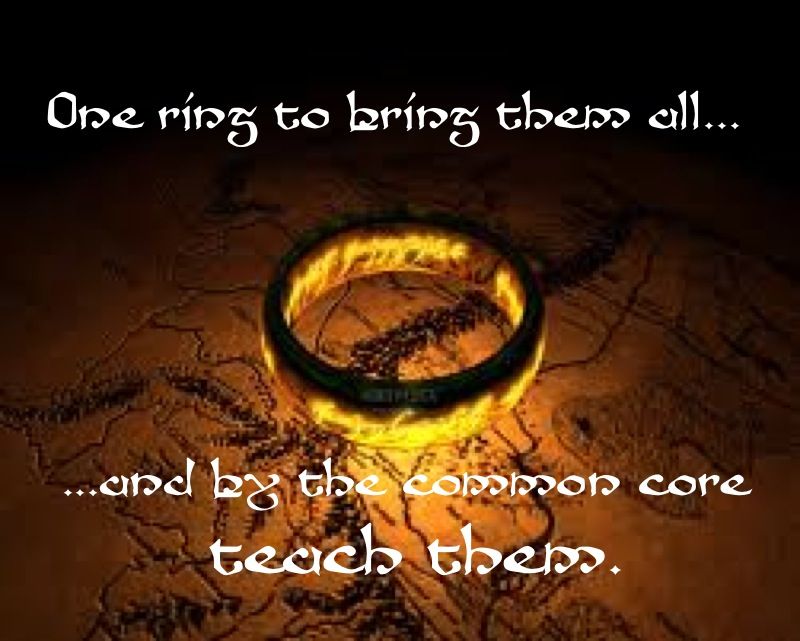
J.R.R. Tolkien’s The Lord of the Rings is probably one of the most important texts written in the 20th century.  It is also a text that most students can read without much difficulty if given proper time.  Most teachers do not realize that the epic saga can be used to teach most of the Common Core Standards.  I have devised a unit for English teachers to use which is based on a unit I taught a few years ago when I was experimenting with using Advanced Placement style instruction in an at-level classroom.  It will work well for Common Core and will work for a freshman or sophomore class as juniors focus on American literature while seniors focus on British literature.

1.  Unit Thematic Questions – I ask several questions (meant for free-writing sessions) before we begin reading the text: What does power mean to you?  State several types…

View original post 1,841 more words

I’ve Never Been In A Dwarf’s Cavern

I must confess: I’ve written almost 300,000 words of epic fantasy (three books) and never seen a dwarf’s cavern, an elf’s tree city, or a troll’s rock cairn. Now this might lose me credibility with readers, but after being complimented for my world-building by an editor at an established publishing house, I was asked from where I derive my inspiration for world-building from a fellow writer who is struggling with this important aspect.

My non-fantasy novels, The Accidental Activist and A Gardener’s Tale, were both situated in my native England, and my upcoming novel, Unwanted Heroes, is based here in San Francisco. I’m not sure if I chose these surroundings as much as absorbed what is around me into my stories. It is, I guess, what allows me to see elves in coffee shops.

I think the process is the same for me when I build my fantasy worlds. I am blessed to live surrounded by the natural beauty of California and its surrounding states, it is important to not only admire the majesty of the area but see it through the eyes of your protagonists. Three examples come to mind.

I have shared how my journey into the world of fantasy was prompted by my eldest son (then 11-years-old) complaining that I shouldn’t be writing while on vacation. I challenged him to write something with me and make it a family activity (the desperate games we play…) and there under the watchful eyes of the redwoods, we began our journey. 

It was easy to see our young heroes seeing these noble trees and the vines that hang in the forest where we were camping. They were ambushed as they passed a rock enclave, almost hidden by moss, that was a five minute bike ride from our tents.

On Monday, I will travel to an annual professional conference in St. Louis, where we have met for the past two years as well. To give us a break from the intensity of the conference, the organizers arranged a trip to a children’s museum. The incredibly creative designers had thought to fill their vast basement with caves and caverns.

While my colleagues snuck off to a nearby bar, I walked through these caverns imagining what it was like to live as a dwarf underground. I’m not sure what my biggest mistake was: missing out on a social mixer or admitting to my colleagues why I had declined their offer.

Finally, this year we traveled to Crater Lake in Oregon. Jutting out from the deep blue waters is an island called Magicians Island.  The audiovisual told us that the name came because it reminded the explorer of a wizard’s hat. I sat on the ridge overlooking the island, saw the steep grey rocks, the windswept trees, and the ospreys flying overhead.

Book 4 has a base from which to begin…

——————————————————————————————————

Alon Shalev is the author of The Accidental Activist and A Gardener’s Tale. He has written three epic fantasy novels and the first reached the Quarter Finals of the Amazon Breakthrough Novel Award as of March 2012. More on Alon Shalev at http://www.alon-shalev.com/ and on Twitter (@elfwriter).

The Master Tolkien Left Crumbs For The Hungry

The skeptics (those forced to study his work) and the jealous (those of us who figuratively sit at his feet bashing out epic fantasy novels on our laptops) dismiss J.R.R. Tolkien as a once-in-a-lifetime genius. We couldn’t emulate him even if we wanted to (though of course we do want to). We comfort ourselves that in today’s world of instant gratification, you cannot spend several pages describing a forest, however old and steeped in magic it may be.

I have read a number of books about the master and even began a fictionalized account of his life. I have on my iPod a course from the iTunes University – The Tolkien Professor by Corey Olsen, a professor himself from Washington College.

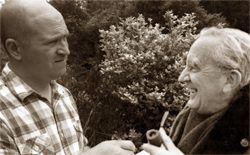
I want to share a few tips that Tolkien had for writers. This is taken from a post by Roger Colby, an author and English teacher. Mr. Colby never met Tolkien, though thanks to photoshop, he looks like he might have! Judging by his research, he deserved to!

Roger Colby ‘meets’ J.R.R. Tolkien

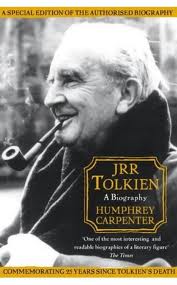
Mr. Colby spent a month carefully dissecting The Letters of J.R.R. Tolkien, edited by Humphrey Carpenter, and underlined every instance where the master of Middle Earth wrote about his process. The quotes are attributed. Any comments belong to Mr. Colby, though I strongly recommend reading the entire article.

1.  Vanity Is Useless

Tolkien writes in a letter to Sir Stanley Unwin on 31 July 1947:

“…I certainly hope to leave behind me the whole thing [LOTR] revised and in final form, for the world to throw into the waste-paper basket.  All books come there in the end, in this world, anyway” (121).

2.  Keep a Stiff Upper Lip

In another letter to Sir Stanley Unwin dated July 21, 1946, Tolkien lists a mound of personal struggles he was facing: being ill, being overworked and missing his son Christopher who was away in the Royal Navy. He put many of his struggles aside, though, and went to writing.

He had to balance his day job with his desire to write epic stories set in Middle Earth. He found time. He made time. It took him 7 years to write The Hobbit. (117). The thing that he writes about most in this period is his struggle to get the work finished on his novels and to balance teaching and his many duties at Oxford College. Apparently he found a way.

3.  Listen to Critics

Tolkien writes to his editor about the comments C.S. Lewis made about The Lord of the Rings: “When he would say, ‘You can do better than that. Better, Tolkien, please!’ I would try. I’d sit down and write the section over and over.

That happened with the scene I think is the best in the book, the confrontation between Gandalf and his rival wizard, Saruman, in the ravaged city of Isengard.”

He writes that he “cut out some passages of light-hearted hobbit conversation which he [Lewis] found tiresome, thinking that if he did most other readers (if any) would feel the same…to tell the truth he never really like hobbits very much, least of all Merry and Pippin. But a great number of readers do, and would like more than they have got” (376).

4.  Let Your Interests Drive Your Writing

Tolkien wrote: “I began the construction of languages in early boyhood: I am primarily a scientific philologist. My interests were, and remain, largely scientific. But I was also interested in traditional tales (especially those concerning dragons); and writing (not reading) verse and metrical devices. These things began to flow together when I was an undergraduate to the despair of my tutors and near-wrecking of my career” (345).

5.  Poetry As A Road to Prose

When Tolkien couldn’t express his thoughts in prose he “wrote much of it in verse.”

He writes “The first version of the song of Strider concerning Luthien,… originally appeared in the Leeds University magazine, but the whole tale, as sketched by Aragorn, was written in a poem of great length” (346).

6.  Happy Accidents

Tolkien writes: “The Hobbit saw the light and made my connection with A. & U. by an accident.” Further: “From The Hobbit are also derived the matter of the Dwarves, Durin their prime ancestor, and Moria; and Elrond.

Mr. Colby: “Sometimes accidents happen, and sometimes those accidents will lead a writer to a publisher or create an entire novel.  Tolkien created entire worlds and then used what he knew of myth and legend to tell iconic, archetypal stories based in those magical places.

Even though he planned everything out meticulously, he still had happy accidents occur that he kept in the final manuscript because they just worked. Sometimes accidents can be blessings.”

7.  Dreams Give Us Inspiration

Tolkien writes:  “In sleep I had the dreadful dream of the ineluctable Wave, either coming out of the quiet sea, or coming in towering over the green inlands.  It still occurs occasionally, though now exorcised by writing about it.

It always ends by surrender, and I awake gasping out of the deep water. I used to draw it or write bad poems about it. When C.S. Lewis and I tossed up, and he was to write on space-travel and I on time-travel, I began an abortive book of time-travel of which the end was to be the presence of my hero in the drowning of Atlantis” (347).

8.  Real People Make Great Characters

Tolkien: “There was a curious local character, an old man who used to go about sweeping gossip and weather-wisdom and such like.

To amuse my boys I named him Gaffer Gamgee, and the name became part of family lore to fix on old chaps of the kind. At that time I was beginning on The Hobbit. The choice of Gamgee was primarily directed by alliteration; but I did not invent it. It was caught out of childhood memory, as a comic word or name. It was in fact the name when I was small (in Birmingham) for ‘cotton-wool’”(348).

9.  You May Be the Next Best Selling Author

Tolkien relates the following story: “I lived for a while in a rather decayed road (aptly called Duchess) in Edgbaston, B’ham; it ran into a more decayed road called Beaufort. I mention this only because in Beaufort road was a house, occupied in its palmier days, by Mr. Shorthouse, a manufacturer of acids, of (I believe) Quaker connections.

He, a mere amateur (like myself) with no status in the literary world, suddenly produced a long book, which was queer, exciting, and debatable – or seemed so then, few now find it possible to read. It slowly took on, and eventually became a best-seller, and the subject of public discussion from the Prime Minister downwards. This was John Inglesant. Mr. Shorthouse became very queer, and very UnBrummagem not to say UnEnglish. He seemed to fancy himself as a reincarnation of some renaissance Italian, and dressed the part” (348).

10.  Books You Write May Seem Trite

Tolkien writes: “I now find The Lord of the Rings ‘good in parts”(349).

Mr, Colby: “This is to say that upon reading his books years after writing them his writing experience informs him that he is a much better writer than when he published The Hobbit.”

Tribute: Given that I have relied heavily upon the research of Mr. Colby, I would like to promote his own novel as appreciation. The Transgression Box- Roger Colby.
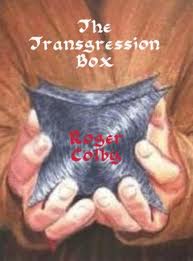
Dornin is known as the village liar…but he will also be their unwitting savior. It all begins when Dornin finds a mysterious object in the forest – a perfect cube of a box – and brings it back to his village. Unsure of its purpose, he hands over the object to the village elders – but during the night he spots a strange fog emanating from the House of Elders, and in the morning, over half of the people of the village have fallen into an unnatural and unending sleep.

Dornin decides he must set off on a quest to destroy the “Transgression Box” in order to save his people. Along the way he will encounter many strange and dangerous places, as he desperately tries to destroy that which must be destroyed for him. The Transgression Box is an allegorical science fiction tale of faith, trust and hope.

——————————————————————————————————

Alon Shalev is the author of The Accidental Activist and A Gardener’s Tale. He has written three epic fantasy novels and the first reached the Quarter Finals of the Amazon Breakthrough Novel Award as of March 2012. More on Alon Shalev at  http://www.alonshalev.com and on Twitter (@elfwriter).

Turn Write At The Next Junction

Family vacations are always special for my little clan. Once a year, we pack up our considerable collection of camping gear and head to the mountains, lakes and redwoods. Without Internet and electricity, we have no choice but to hike, fish, and enjoy beautiful Northern California and Oregon, and each other. This year there were two highlights. We all followed my eldest’s passion for archery and it has hopefully become a family hobby.

Two years ago. I wrote the first Wycaan Master book together with my eldest son. I have blogged about this previously. Last year, I wrote the second book before we went away and each night, we sat around the campfire or snuggled in my tent as I read to them a few chapters at a time.

This year, we followed suit, reading the third book of the series. Everyday I waited with anticipation to read and treasured their responses. As the books have become more intricate, my youngest (now 9 years old) sometimes had a hard time following and peppered me with questions, often later that night when he was supposed to sleep, or the next day in the middle of another activity.

Now I know that family are not supposed to be considered as impartial critics. In truth, they had a lot of constructive criticism and suggestions, most of which I adopted. But I cannot imagine enjoying the level of engagement that they experienced and expressed from anyone else.

Back in the Bay Area and it is time to make major decisions. There is time as I outsource the books for some professional editing, but I am considering alternative options to publish the series.

A fascinating conversation with a representative at a publishing house with a long history of epic fantasy titles has left me wondering how long to walk the traditional path. She told me that they spent considerable time discussing the option of signing me even though they had previously made a business decision to stop publishing in this genre. It just doesn’t make business sense in the current economic climate, she told me. It has nothing to do with the quality of your work.

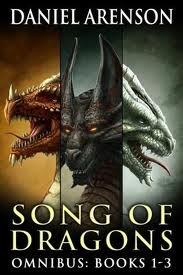
I feel a degree of frustration as I have been watching other fantasy authors and their respectable and consistent ranking on Amazon.com. Daniel Arenson, who is the author of the Requiem series and others, announced the following at the end of June:

“100,000 books sold. Bloody hell. You bought 100,000 of these silly books about dragons, swords, and spells. You’re nuts. But THANK YOU, readers. It’s been a crazy ride.”

I have no doubt that Mr. Arenson worked extremely hard to get to this significant landmark. He wrote great books and went out and did it by himself.

I congratulate him…and wonder.


——————————————————————————————————

Alon Shalev is the author of The Accidental Activist and A Gardener’s Tale. He has written three epic fantasy novels and the first reached the Quarter Finals of  the Amazon Breakthrough Novel Award as of March 2012. More on Alon Shalev at http://www.alonshalev.com/ and on Twitter (@elfwriter).


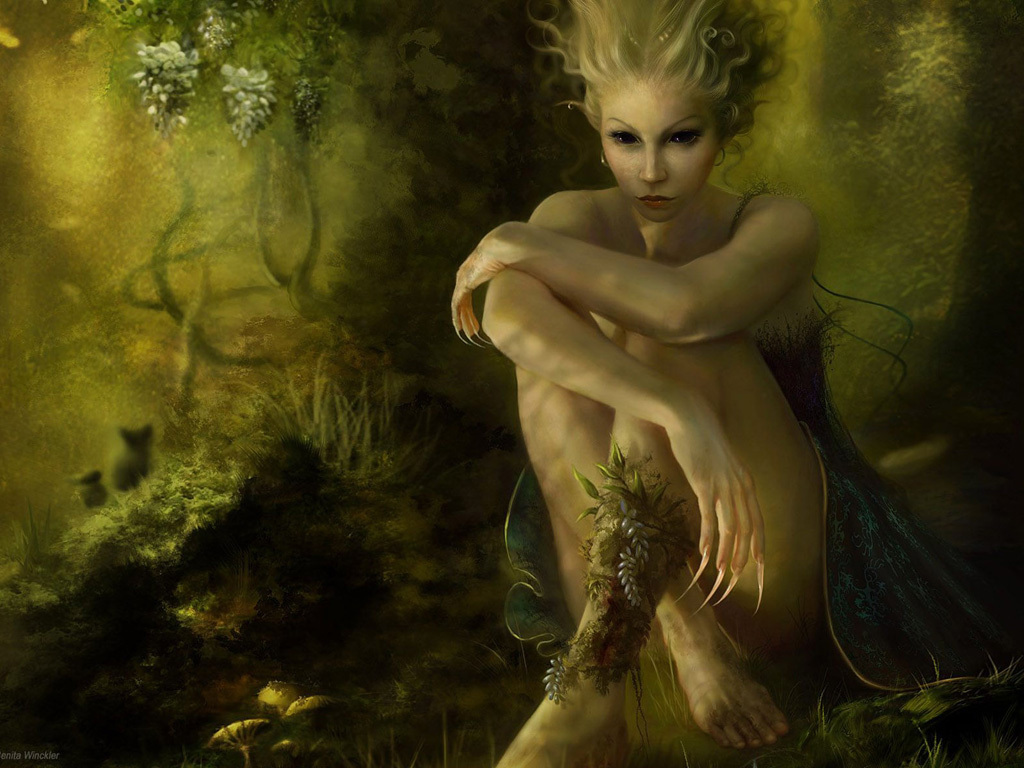
Don’t Let The Fairies Bully You!

I have mentioned before that fantasy can be a vehicle for social commentary and so I enjoyed coming across this blog post from Melanie Hatfield. It will reveal to you why I never leave the house without my hip flask and some single-malt! Ms. Hatfield’s debut novel: “Kingdom of the Snark: The Quest for the Sword” has just been released on Amazon and Smashwords.

And so with her permission: What To Do If You’re Being Bullied By Fairies – Melanie Hatfield :

I haven’t blogged much about my debut novel, but now I am at a point where I can admit (or should I say confess) that my first eBook, a fantasy/comedy titled Kingdom of the Snark:  The Quest for the Sword, will be online by July.  In my book, my heroine is bullied by fairies and I realized:  What should we do if we find ourselves picked on by those mischievous pixies?  Have no fear, for I have listed some helpful tips below.

Even house elves got bullied!

1)  Ignore them.
Conventional wisdom tells us to talk about our problems with those who cause us grief. This does not apply to fairies. If you tell them how their actions make you feel, they will not only continue to mock you, but will tell all of their fairy friends so they can join in and pile on the humiliation.  If fairies taunt you, it is best to keep your mouth shut and wander in the opposite direction.  It is important to avoid eye contact at all cost, least they cast a spell and make you dance (clothing optional).

2)  Sing them a song.
If ignoring them doesn’t work, you can distract the fairies with a song. Fairies love a tune as much as the next traveler.  If you have a harp, strike a few cords and see if they’ll jam with you.  Before long, maybe they’ll forget that they were hassling you in the first place, or at least like you enough to allow you to journey past them without further hindrance.

3)  Carry anti-magic devices.
When the fairies use their magic against you (and they will), counter their dust with crystals, a rainbow grenade, or other anti-magic device to render them helpless.  Buyer beware:  Never purchase such weapons from a seller you do not know.  There are many merchants in the world who take advantage of fairy victims with bogus devices.

4)  Give them a taste of ale.  
Fairies have never been known to hold their liquor, although they love to try. It only takes a thimble to get them into a drunken state of unconsciousness.  While they’re sleeping it off, you can tip-toe away.

5)  If all else fails, fight fire with fire…literally.
Fairies burn easily.  Sic your pet dragon on them.

Do you have any tips on how to handle fairies?  Are you a fairy and think you’re just misunderstood? Tell us about it in the comment box!

Picture

“Kingdom of the Snark: The Quest for the Sword”  is now available at Amazon and Smashwords.
——————————————————————————————————

Alon Shalev is the author of The Accidental Activist and A Gardener’s Tale. He has written two fantasy novels and the first reached the Quarter Finals of  the Amazon Breakthrough Novel Award as of March 2012. More on Alon Shalev at http://www.alonshalev.com/and on Twitter (@elfwriter).

The Art of World-Building

When the hobbit walked through Mirkwood, we all walked with him. We knew exactly how the trees looked, how the wind moved their branches, what the ground felt like as one fur-soled foot pressed down. We could smell the rotting leaves and…We were there as the master welcomed us into Middle Earth, his world. We were his honored guests and when we returned to this world, we felt a sense of loss.

No one, in my humble and uneducated opinion, has ever created a world in the rich way of J.R.R. Tolkien, and perhaps no one ever will. There are some among our younger readers who skip or skim the long descriptions. Do I need to know what every tree in the forest looks like?

And yet these same young people marveled over the world of Pandora from James Cameron’s Avatar. I am closing in on finishing the third of the Wycaan Master novels and will then begin another edit of the first book before passing it on to more professional hands.

One of the aspects that I want to focus on is how well have I described the land in which the story transpires. There is a lot of traveling and many different climates and natural wonders, as well as villages and cities, which are described. When I wrote the first book, it was in close collaboration with my then 11-year-old son. I was very conscious of maintaining a fast pace. The second and third books were more my own work, with my son reading and giving me feedback. I believe these two novels involved considerably more world-building.

Why do we need to show such detail in epic fantasy? It seems obvious for the Sci-fi writers to put so much emphasis on creating worlds and I understand why those who write in modern earth need not focus so much because we can see the world we live in. 

Do you enjoy the detail of a new world or are you content to receive hints and imagine it for yourself? How important is world-building to you becoming a loyal reader of a fantasy series? Finally, if you write fantasy yourself, do you have any best practices or tips? Do share in the comments below.

Appreciate your feedback. Have a great weekend and a happy 4th.

Alon 

——————————————————————————————————

Alon Shalev is the author of The Accidental Activist and A Gardener’s Tale. He has written two fantasy novels and the first reached the Quarter Finals of  the Amazon Breakthrough Novel Award as of March 2012. More on Alon Shalev at http://www.alonshalev.com/and on Twitter (@elfwriter).
Character .v. Plot: The Dragon or The Dragon-Killer?

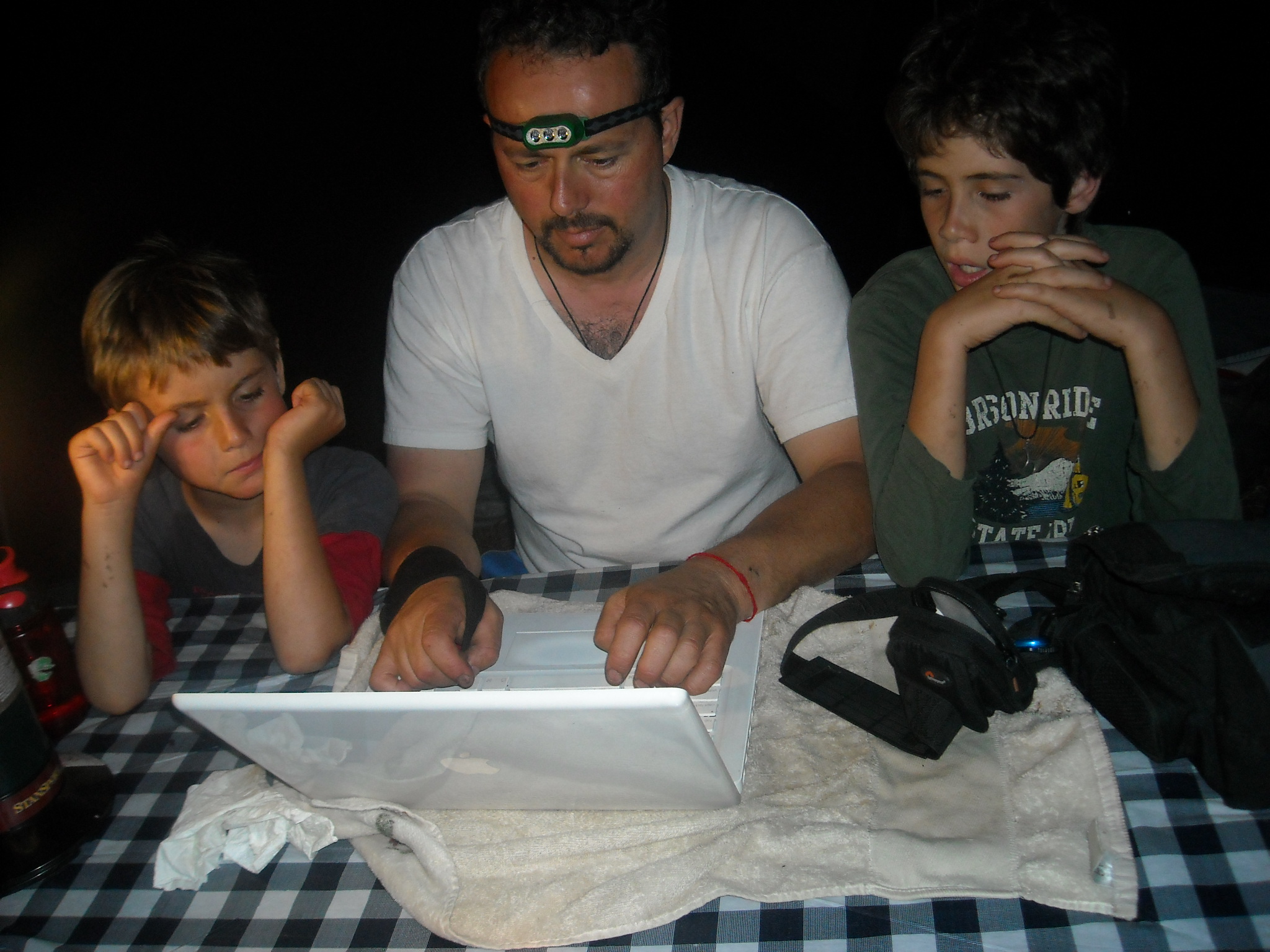
I am about to write the 75,000th word of the third novel in the Wycaan Master series. I have probably written over a quarter of a million words and I am not sure where the story is taking me, but it feels that I might yet walk in the path of Christopher Paolini and write a four book trilogy – if I do, I will have to man up and eat the words with which I taunted him for doing this.

But it is not about words. Anyone can put a lot of words on paper (or in a series of word documents). The art is keeping the readers as engaged at word 250,000 as they were at 5,000 and 95,000 (the beginning and end of the first book).

There is a lot of material on the net about plot .v. character. The tide seems to change every few years. A book must be plot-driven. A story must have rich characters. It is what might happen next that keeps us page turning after midnight. It is the characters who continue with us after we finish a book.

Of course, it is both. If the plot is not strong, we lose interest. If we cannot root for the characters, we disengage.

In the eight books I have written, the best ones seem to control their own plot. They steer themselves through me and onto the screen. I trust in the system and let them do this. Those that I felt a need to force a plot seem in retrospect…well somewhat forced.

It is the characters that seem to drive me on. I really do care about them and I can see myself hanging around to see how they develop. This week, I reintroduced a character (in book 3) who disappeared in the previous book. I don’t really need her, but I miss her. I’m not sure why, but it is more than the need for strong female characters.

In the survey that many of you filled out for me (Defining My Target Audience), characters figured highly. I wonder whether this is specific to our genre but I don’t think it is.

Humans crave relationships, even those who wile away the dark hours opposite a computer screen and make up stories. In fact, we writers thrive on the relationships we cultivate with our characters.

This is not a question of plot .v. character, but a question of emphasis. I will continue to develop my characters to keep them growing and loyal to their audience. If they slay a few figurative dragons along the way, then all the better.

*          *          *          *

A huge thank you to those who filled out the survey. I have learned so much from it. I didn’t realize how much work it would be to correlate the results but I am aware that I owe you the answers.

I will get to this, but I need to carve out the time. Tomorrow, my son, who together gave birth to the first book of the Wycaan series, will be bar mitzvahed. This is a huge rite-of-passage, coming-of-age quest in its own epic proportions. It has, however, drawn time from my writing. I will continue to seek more answers to the survey and hopefully publicize the results later in the summer. I haven’t forgotten. And thank you, once again, for filling out the survey.

——————————————————————————————————

Alon Shalev is the author of The Accidental Activist and A Gardener’s Tale. He has written two fantasy novels and the first reached the Quarter Finals of  the Amazon Breakthrough Novel Award as of March 2012. More on Alon Shalev at http://www.alonshalev.com/and on Twitter (@elfwriter).

Ray Bradbury R.I.P

On Wednesday the book world received news of the passing of a master. Ray Bradburyauthor of The Martian Chronicles, Fahrenheit 451, Something Wicked This Way Comes, and many more literary classics — died  in Los Angeles, at the age of 91.

I had the honor to meet Ray at the Santa Barbara Writer’s Conference where, despite age and health challenges, he continued to be an inspirational guest speaker. From the podium he urged us to write because we loved to, to let nothing but our imagination limit us and to dream big.

Here is Ray in a 2-minute clip from then.

In the introduction to The Illustrated Man,  entitled “Dancing, So As Not to Be Dead,”  there is a poignant line about death.

“My tunes and numbers are here. They have filled my years, the years when I refused to die. And in order to do that I wrote, I wrote, I wrote, at noon or 3:00 A.M. So as not to be dead.”

I’m sure they have a keyboard and screen waiting for you in heaven, Ray. Keep on writing … here on earth, your work will never die.

Ray Bradbury R.I.P 2012

——————————————————————————————————

Alon Shalev is the author of The Accidental Activist and A Gardener’s Tale. He has written two fantasy novels and the first reached the Quarter Finals of  the Amazon Breakthrough Novel Award as of March 2012. More on Alon Shalev at http://www.alonshalev.com/and on Twitter (@elfwriter).
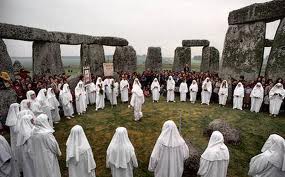
Fantasy – A Pagan Conspiracy?

First a big Thank You to the 30+ people who filled out my survey – Who Are My Target Audience – I am going to keep tweeting it and hopefully reach my goal of 50 responses (it makes it easy for my mathematically-challenged brain to do percentages).  If you have not had the time, please consider three minutes to answer ten questions by clicking here.

The first time I read that someone was uncomfortable with her children reading YA fantasy because of the Pagan themes running through it, I dismissed the reader as a maverick who is worried she won’t succeed in passing on her religious lifestyle to her children. But I have now seen this a couple of times.

I am sensitive to this. My first published novel, A Gardener’s Tale, follows the yearly cycle of the Pagan religion as it was (and still it) celebrated in rural Britain, and shines light on the struggle of Christianity to crush it.  While the novel was received enthusiastically in the Pagan community (their leader Vivienne Crowley called it “A beautiful and elegiac evocation of a timeless Britain and of a man of the ancient ways of the earth who brings peace and healing where the flames of persecution once burned.”), I incurred the wrath of many religious Jews and Christians.

The Pagan religion is based upon the agrarian cycle and the farmer’s connections to the earth. Being mysterious, the emergence of an earth-based religion, where there was power and magic in the earth and those who stewarded her (yes – her, another topic) were worshiped and studied.

A common theme in many books, mine included, is the source of magic comes from the earth, from nature, through animals and the elements. The Druids, so often mentioned, were a genuine religious order. The witches, millions of whom were burned at the stake as Christianity raised a frenzy of anti-women, anti-anything, were often healers who used herbs and minerals that were gifts from the earth. Even the Jedi Order harnessed an energy, the Force, from everything living around them.

Other common elements include the quest, the holy (magical) props, the connection with and reverence of nature. Most of all, however, is the power of story. All religions and spiritual practices maintain a powerful element of stories, legends, parables, a narrative history (the best selling book of all time, anyone?).

I am skeptical that there is an international conspiracy to revive the Pagan religion through instilling scintillating epic fantasy novels insidiously into the minds of our unsuspecting youth (now you are convinced that I am the High Priest – isn’t this how conspiracy theory works?).

However, it is not a huge leap of faith to think that those who put quill to parchment (there is probably an app for this) and write such stories do have aspirations of teaching certain noble morals and principles. I recently wrote in an interview:

“Working on the novel with my (now 12-year-old) son and seeing the potential to share my values and political beliefs while imbibing a profound love for storytelling and reading. I have seen the impact of the Harry Potter series and Christopher Paolini’s Inheritance series on my son and his friends. I want to help shape the landscape of the next generation’s imagination and maybe even the society they strive to create.”

Now if that is not a declaration to take over the world

Finally, one more plug – if you have a few minutes please fill out my survey – Who Are My Target Audience – and Thank You again to those who already have.

——————————————————————————————————

Alon Shalev is the author of The Accidental Activist and A Gardener’s Tale. He has written two fantasy novels and the first reached the Quarter Finals of  the Amazon Breakthrough Novel Award as of March 2012. More on Alon Shalev at http://www.alonshalev.com/and on Twitter (@elfwriter).

Who is Reading Epic Fantasy?

I’m reading a series of books about marketing my novels. They each prioritize a central marketing principle: Know Your Target Audience.

I realize, being relatively new to the epic fantasy scene that I don’t know who these people are. I have never frequented conventions or even chat groups online. When I go to social occasions, I often ask people what are you reading right now, because sports and politics can only go so far – and real men don’t discuss work or family (as a new immigrant to the US that’s what I was told).

But when I ask the question, people rarely say epic fantasy. During the days of Harry Potter, the Inheritance series, and now The Hunger Games, a man could come out of the library closet because his children were reading them and he was showing himself to be an in-touch father.

So here is my request. If you read epic fantasy, please answer as many of the following questions as you have patience for.

1. How old are you?

2. Are you male or female?

3. Where do you live?

4. Did you finish High School / Bachelors Degree / Masters Degree?

5. What is your profession?

6. Are you active on Facebook, Twitter, Google+, read and comment on blogs?

7. What do you look for in an epic fantasy book?

8. Do you read books on an eReader or as a hardcover/paperback? (if both, please assign a ratio).

9. How many books do you read a month?

10. Who is your favorite epic fantasy author? Why?

One last favor if I may. Please pass this on to friends and family who you think might read epic fantasy and ask them to mention your name as referral. I would like to offer the first 20 people who refer 3 responders to the survey an eBook of either:

The Accidental Activist  or

A Gardener’s Tale

Thank you for your help. I will publish the results if I can get 50 responses.

——————————————————————————————————

Alon Shalev is the author of The Accidental Activist and A Gardener’s Tale. He has written two fantasy novels and the first reached the Quarter Finals of  the Amazon Breakthrough Novel Award as of March 2012. More on Alon Shalev at http://www.alonshalev.com/and on Twitter (@elfwriter).