Size – Does It Matter?

So shoot me for false advertising, but I have a dilemma. I shared with you last week in A Tribute to Editors that I have received my manuscript to At The Walls Of Galbrieth back from my editor with lots of cuts and corrections. As I worked my way through, accepting 90% of the changes suggested, I realized that my word count was dropping drastically.

I am about 80% through the novel, which began at 96,000 words and is now down to about 85,000.

Epic fantasy novels are thick tombs, offering the promise to get lost in a mythical world for a month or so. It is not a novel that you can finish in a weekend (unless your weekend is very empty and you are a fast reader).

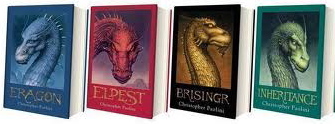
Even Young Adult books make good doorstops. The Christopher Paolinis’ of this world have proved that teenagers will stick with a long story if it is compelling enough.

So my first question is: Is there a minimum length? When I was shopping the Wycaan Master series, there were publishers who stipulated a word range, often 100,00+. It might be that they expected their editors to attack it with a scalpel, much as my editor did.

My second question regards world building, something we have touched on before at elfwriter. A lot of the scenery description has been edited out. The editor, like many in the writing world, believes that you shouldn’t reveal everything: about a person, room, scenery etc., but allow the reader to create their own image.

Certainly, anyone who has read a book after watching the movie  (or the other way around) can appreciate this.

Tolkien, the master, spent pages describing the forests and the trees. Many of us loved this while others skipped these long descriptions. I wonder whether a young, undiscovered Tolkien would (and please pardon the expression) suffer the long red, sharpie lines through these sections of his work (or the Track Changes equivalent – but that’s not how I think of the old professor).
There is a middle ground. My editor has challenged me to integrate the descriptions within an action scene or as a pivot for a character’s self-reflection. This is a great point and I plan to experiment with this in the future. Do you know of any writers who do a good job of integrating description into the flow of the plot or character development, without it feeling like a ‘description-dump’?

So two questions here: Does size matter? How much description is allowed?

As always, I appreciate your feedback and guidance.

——————————————————————————————————

Alon Shalev is the author of The Accidental Activist and A Gardener’s Tale. He has written three epic fantasy novels and the first, which reached the Quarter Finals of the Amazon Breakthrough Novel Award 2012, is due out in January 2013 by Tourmaline Press. More on Alon Shalev at http://www.alonshalev.com and on Twitter (@elfwriter).

A Tribute To Editors

No blog post this weekend. 

Yesterday, I received the manuscript to At The Walls of Galbrieth back from my editor. Like many authors, I thought I had sent her a pretty clean story. I had gone over it several times myself, had it scrutinized by the venerable Berkeley Writers Group, and put it through the laundry with softener (I think you get my point).

At first, I was a bit dismayed to see all those little boxes in ‘Track Changes’ fighting each other for space along the right-hand side of my page. But after following and accepting her changes for the first three chapters, I am in awe of what an impact the eye of an independent professional can have, how much s/he can discern, how a few changes can add such clarity.

My last novel, The Accidental Activist, is a social justice-themed novel that fictionalized the McDonalds libel trial in England in the 1990’s. To show how thwarted and depressed my protagonist felt, I had used an English soccer game of my favorite team, Arsenal, as an analogy. My editor had written to me and, while expressing that she did not follow soccer, had researched a bit and thought that I could use an actual game from 2004. She had been right. The game was perfect.

With Tourmaline Press working hard with a gifted cover artist in St. Louis, an ISBN number (or three) assigned to the book, everything is taking shape.

On Friday, I wrote the dedication at the front of the book with tears in my eyes. But that is a story for another time.

This update is just to let you know why there is no blog post this weekend. Here let me click the button…. Okay – posted!

Happy Columbus / Indigenous Peoples Day,

Elfwriter

p.s. – didn’t think pictures of editors would be too exciting – and this is a genre with such great images. So here are some of my favorites.

——————————————————————————————————

Alon Shalev is the author of The Accidental Activist and A Gardener’s Tale. He has written three epic fantasy novels and the first, which reached the Quarter Finals of the Amazon Breakthrough Novel Award 2012, is due out in January 2013 by Tourmaline Press. More on Alon Shalev at http://www.alonshalev.com and on Twitter (@elfwriter).
The Magic Is Everywhere

Last weekend, our family headed for the marina, a grassy area on the west point of Berkeley that looks over the San Francisco Bay Area. We have been there many times to fly kites, play soccer, run and bike. 

This time, armed with a blanket and picnic, we were planning on some serious reading. Older son had a book assigned from school, a historical fictional account of many good people dying from a plague back in the 1700’s: perfect depressing material for the summer vacation. Not surprisingly, he hadn’t embraced the intrusion with the enthusiasm he showed for Christopher Paolini’s Eragon or J. K. Rowlings’ Harry Potter. 

It was surprisingly windy and we made for some bushes and trees that would deny us the view, but offer shelter. We spread the blanket and I fell into my stadium chair and flicked on my Kindle.

While I waited for it to fire up, I glanced to my left. Between the bushes and the trees was a tunnel, with brush growing up and over so that you could barely see the sky. It was dark inside with the promise of sunlight on the other side. My youngest son, I realized, was staring at it as well. He turned to me.

“What do you think is through there?” he asked, eyes wide open.

“I don’t know,” I replied, the right level of gravity in my voice. “Think you should check it out?”

He nodded, rose and moved into the tunnel. He never came out…

Okay, that is not exactly true. But he stayed in the tunnel and explored beyond. Sometimes he sat and read his book, and other times played, creating his own world. Finally, he called for me to join him.

“The tunnel is safe,” he declared, “but there are dragons on the other side. Be careful.”

I knew that on the other side was a view of the Golden Gate Bridge, Alcatraz, San Francisco, and the bay with many sailboats. But as his tiny hand took mine and guided me out the other side, all I saw were the dragons.

Others might have seen a red kite with a long tail, to its left was a blue-green one tearing through the sky in acrobatic maneuvers, but we saw two dragons eying each other. My son announced with authority that they were deciding whether to fight or be friends. Remembering my politically correct role as father, I said I hoped they would be friends. 

But as I watched them and glanced back at the tunnel, it was my imagination that soared. Perhaps a new book is fermenting, or only a scene in the next Wycaan Master. Maybe it will surface next year or in a decade, but it is stored away.

And this moment of magic only happened because I was ready to embrace it, albeit with a little help from a nine-year-old with a rich imagination. But then I have seen elves in coffee shops.

——————————————————————————————————

Alon Shalev is the author of The Accidental Activist and A Gardener’s Tale. He has written three epic fantasy novels and the first reached the Quarter Finals of the Amazon Breakthrough Novel Award as of March 2012. More on Alon Shalev at http://www.alon-shalev.com and on Twitter (@elfwriter).

I’ve Never Been In A Dwarf’s Cavern

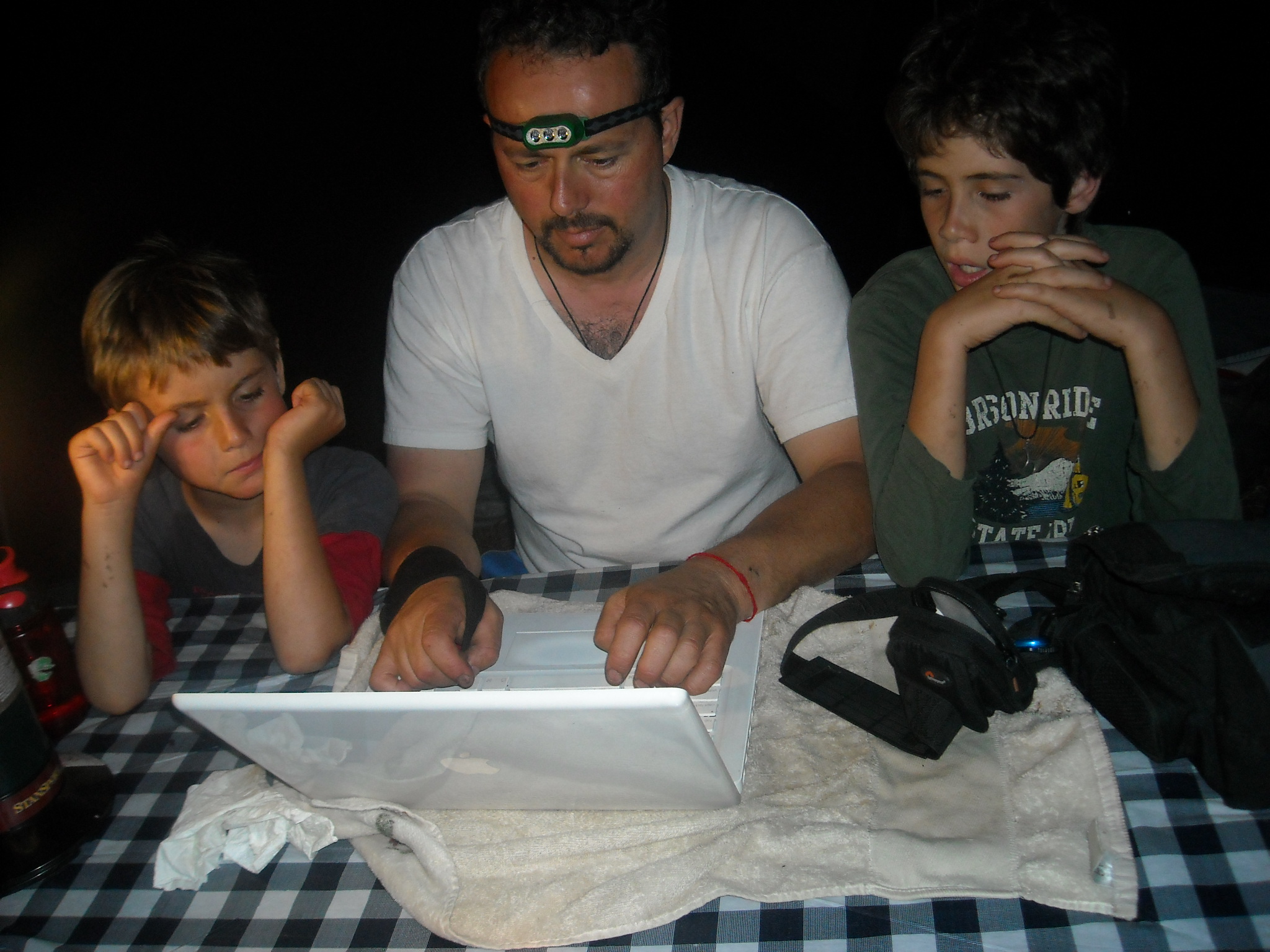
I must confess: I’ve written almost 300,000 words of epic fantasy (three books) and never seen a dwarf’s cavern, an elf’s tree city, or a troll’s rock cairn. Now this might lose me credibility with readers, but after being complimented for my world-building by an editor at an established publishing house, I was asked from where I derive my inspiration for world-building from a fellow writer who is struggling with this important aspect.

My non-fantasy novels, The Accidental Activist and A Gardener’s Tale, were both situated in my native England, and my upcoming novel, Unwanted Heroes, is based here in San Francisco. I’m not sure if I chose these surroundings as much as absorbed what is around me into my stories. It is, I guess, what allows me to see elves in coffee shops.

I think the process is the same for me when I build my fantasy worlds. I am blessed to live surrounded by the natural beauty of California and its surrounding states, it is important to not only admire the majesty of the area but see it through the eyes of your protagonists. Three examples come to mind.

I have shared how my journey into the world of fantasy was prompted by my eldest son (then 11-years-old) complaining that I shouldn’t be writing while on vacation. I challenged him to write something with me and make it a family activity (the desperate games we play…) and there under the watchful eyes of the redwoods, we began our journey. 

It was easy to see our young heroes seeing these noble trees and the vines that hang in the forest where we were camping. They were ambushed as they passed a rock enclave, almost hidden by moss, that was a five minute bike ride from our tents.

On Monday, I will travel to an annual professional conference in St. Louis, where we have met for the past two years as well. To give us a break from the intensity of the conference, the organizers arranged a trip to a children’s museum. The incredibly creative designers had thought to fill their vast basement with caves and caverns.

While my colleagues snuck off to a nearby bar, I walked through these caverns imagining what it was like to live as a dwarf underground. I’m not sure what my biggest mistake was: missing out on a social mixer or admitting to my colleagues why I had declined their offer.

Finally, this year we traveled to Crater Lake in Oregon. Jutting out from the deep blue waters is an island called Magicians Island.  The audiovisual told us that the name came because it reminded the explorer of a wizard’s hat. I sat on the ridge overlooking the island, saw the steep grey rocks, the windswept trees, and the ospreys flying overhead.

Book 4 has a base from which to begin…

——————————————————————————————————

Alon Shalev is the author of The Accidental Activist and A Gardener’s Tale. He has written three epic fantasy novels and the first reached the Quarter Finals of the Amazon Breakthrough Novel Award as of March 2012. More on Alon Shalev at http://www.alon-shalev.com/ and on Twitter (@elfwriter).

Turn Write At The Next Junction

Family vacations are always special for my little clan. Once a year, we pack up our considerable collection of camping gear and head to the mountains, lakes and redwoods. Without Internet and electricity, we have no choice but to hike, fish, and enjoy beautiful Northern California and Oregon, and each other. This year there were two highlights. We all followed my eldest’s passion for archery and it has hopefully become a family hobby.

Two years ago. I wrote the first Wycaan Master book together with my eldest son. I have blogged about this previously. Last year, I wrote the second book before we went away and each night, we sat around the campfire or snuggled in my tent as I read to them a few chapters at a time.

This year, we followed suit, reading the third book of the series. Everyday I waited with anticipation to read and treasured their responses. As the books have become more intricate, my youngest (now 9 years old) sometimes had a hard time following and peppered me with questions, often later that night when he was supposed to sleep, or the next day in the middle of another activity.

Now I know that family are not supposed to be considered as impartial critics. In truth, they had a lot of constructive criticism and suggestions, most of which I adopted. But I cannot imagine enjoying the level of engagement that they experienced and expressed from anyone else.

Back in the Bay Area and it is time to make major decisions. There is time as I outsource the books for some professional editing, but I am considering alternative options to publish the series.

A fascinating conversation with a representative at a publishing house with a long history of epic fantasy titles has left me wondering how long to walk the traditional path. She told me that they spent considerable time discussing the option of signing me even though they had previously made a business decision to stop publishing in this genre. It just doesn’t make business sense in the current economic climate, she told me. It has nothing to do with the quality of your work.

I feel a degree of frustration as I have been watching other fantasy authors and their respectable and consistent ranking on Amazon.com. Daniel Arenson, who is the author of the Requiem series and others, announced the following at the end of June:

“100,000 books sold. Bloody hell. You bought 100,000 of these silly books about dragons, swords, and spells. You’re nuts. But THANK YOU, readers. It’s been a crazy ride.”

I have no doubt that Mr. Arenson worked extremely hard to get to this significant landmark. He wrote great books and went out and did it by himself.

I congratulate him…and wonder.


——————————————————————————————————

Alon Shalev is the author of The Accidental Activist and A Gardener’s Tale. He has written three epic fantasy novels and the first reached the Quarter Finals of  the Amazon Breakthrough Novel Award as of March 2012. More on Alon Shalev at http://www.alonshalev.com/ and on Twitter (@elfwriter).


The Art of World-Building

When the hobbit walked through Mirkwood, we all walked with him. We knew exactly how the trees looked, how the wind moved their branches, what the ground felt like as one fur-soled foot pressed down. We could smell the rotting leaves and…We were there as the master welcomed us into Middle Earth, his world. We were his honored guests and when we returned to this world, we felt a sense of loss.

No one, in my humble and uneducated opinion, has ever created a world in the rich way of J.R.R. Tolkien, and perhaps no one ever will. There are some among our younger readers who skip or skim the long descriptions. Do I need to know what every tree in the forest looks like?

And yet these same young people marveled over the world of Pandora from James Cameron’s Avatar. I am closing in on finishing the third of the Wycaan Master novels and will then begin another edit of the first book before passing it on to more professional hands.

One of the aspects that I want to focus on is how well have I described the land in which the story transpires. There is a lot of traveling and many different climates and natural wonders, as well as villages and cities, which are described. When I wrote the first book, it was in close collaboration with my then 11-year-old son. I was very conscious of maintaining a fast pace. The second and third books were more my own work, with my son reading and giving me feedback. I believe these two novels involved considerably more world-building.

Why do we need to show such detail in epic fantasy? It seems obvious for the Sci-fi writers to put so much emphasis on creating worlds and I understand why those who write in modern earth need not focus so much because we can see the world we live in. 

Do you enjoy the detail of a new world or are you content to receive hints and imagine it for yourself? How important is world-building to you becoming a loyal reader of a fantasy series? Finally, if you write fantasy yourself, do you have any best practices or tips? Do share in the comments below.

Appreciate your feedback. Have a great weekend and a happy 4th.

Alon 

——————————————————————————————————

Alon Shalev is the author of The Accidental Activist and A Gardener’s Tale. He has written two fantasy novels and the first reached the Quarter Finals of  the Amazon Breakthrough Novel Award as of March 2012. More on Alon Shalev at http://www.alonshalev.com/and on Twitter (@elfwriter).

Character .v. Plot: The Dragon or The Dragon-Killer?

I am about to write the 75,000th word of the third novel in the Wycaan Master series. I have probably written over a quarter of a million words and I am not sure where the story is taking me, but it feels that I might yet walk in the path of Christopher Paolini and write a four book trilogy – if I do, I will have to man up and eat the words with which I taunted him for doing this.

But it is not about words. Anyone can put a lot of words on paper (or in a series of word documents). The art is keeping the readers as engaged at word 250,000 as they were at 5,000 and 95,000 (the beginning and end of the first book).

There is a lot of material on the net about plot .v. character. The tide seems to change every few years. A book must be plot-driven. A story must have rich characters. It is what might happen next that keeps us page turning after midnight. It is the characters who continue with us after we finish a book.

Of course, it is both. If the plot is not strong, we lose interest. If we cannot root for the characters, we disengage.

In the eight books I have written, the best ones seem to control their own plot. They steer themselves through me and onto the screen. I trust in the system and let them do this. Those that I felt a need to force a plot seem in retrospect…well somewhat forced.

It is the characters that seem to drive me on. I really do care about them and I can see myself hanging around to see how they develop. This week, I reintroduced a character (in book 3) who disappeared in the previous book. I don’t really need her, but I miss her. I’m not sure why, but it is more than the need for strong female characters.

In the survey that many of you filled out for me (Defining My Target Audience), characters figured highly. I wonder whether this is specific to our genre but I don’t think it is.

Humans crave relationships, even those who wile away the dark hours opposite a computer screen and make up stories. In fact, we writers thrive on the relationships we cultivate with our characters.

This is not a question of plot .v. character, but a question of emphasis. I will continue to develop my characters to keep them growing and loyal to their audience. If they slay a few figurative dragons along the way, then all the better.

*          *          *          *

A huge thank you to those who filled out the survey. I have learned so much from it. I didn’t realize how much work it would be to correlate the results but I am aware that I owe you the answers.

I will get to this, but I need to carve out the time. Tomorrow, my son, who together gave birth to the first book of the Wycaan series, will be bar mitzvahed. This is a huge rite-of-passage, coming-of-age quest in its own epic proportions. It has, however, drawn time from my writing. I will continue to seek more answers to the survey and hopefully publicize the results later in the summer. I haven’t forgotten. And thank you, once again, for filling out the survey.

——————————————————————————————————

Alon Shalev is the author of The Accidental Activist and A Gardener’s Tale. He has written two fantasy novels and the first reached the Quarter Finals of  the Amazon Breakthrough Novel Award as of March 2012. More on Alon Shalev at http://www.alonshalev.com/and on Twitter (@elfwriter).
Oops! Just Killed A Friend

Wow! Killing a friend ain’t easy. You think you’re ready for it. You have planned the dramatic demise, executed to perfection, but when it gets right down to it, it is soooo hard.

And when they are lying there dead, with an arrow though their heart, or an axe wound in their head, you think you can just walk away. But what do you still have to do?

Press the Save button.

Haldir – too noble for our times.

Do you get the irony? Your friend lies dead on the page, their blood still wet, and you are totally responsible for it. Sure you didn’t wield the axe, or aim the bow, but you created this person, this character, this hero.

He trusted you, allowed you to move him from one part of the kingdom to the other. He has seen you put him in a tight jam and always something happens to get him out of it in the nick of time. He never complained.

Except this time he is dead. You killed him and now he glares at you from the computer screen.

Save

Brom – never got over the loss of his dragon.

And you walk around in a daze. What made you do it? Why? For the glory? So that the reader would say: “Wow I never thought he would dare…” And you know you will have to face your writers group next week with this and get flayed. They loyally listened to your manuscript week after week, growing to love your characters, buying into your plot, and now you do this to them!

Save

He hasn’t gone you know, not really. A knock on the door, a guy at the gym with the same tattoo, a person who bumps shoulders on the busy train platform. Your eyes meet fleetingly and you look away, guilty, ashamed. How could you have done that?

You killed a good friend, one who let you create them. And now you are going to expect the other characters in the story to trust you? Beware my friend. You never can be sure just how the next chapter will end.

Save

I simply could never accept this. Destroyed my childhood innocence and I’m in my 40’s!

Good Writing,

——————————————————————————————————

Alon Shalev is the author of The Accidental Activist and A Gardener’s Tale. He has written two fantasy novels and the first reached the Quarter Finals of  the Amazon Breakthrough Novel Award as of March 2012. More on Alon Shalev at http://www.alonshalev.com/and on Twitter (@elfwriter).

I Didn’t Make The Cut

I’m bummed. This week 50 writers saw their manuscripts advance to the Semi-Final stage of the Amazon Breakthrough Novel Award – YA category. My humble offering – Wycaan Master – was not one of them. It reached the Quarter-Final, ahead of a few thousand others, but…

In an odd sense of timing, I will finish reading the 95,000 word epic fantasy story to my writer’s group. They stuck with me over the past 18 months though none (until the last couple of months) read or are interested in fantasy. Thank you – Berkeley Writers Group.

Either you think epic fantasy is alive and thriving (Tolkien, Terry Brooks, R.A. Salvatore etc.,) or you think the only fantasy that sells is high concept – Harry Potter, The Hunger Games…

It is hard writing in two genres – social justice-themed novels reflect my lifestyle and values. Young-adult fantasy was inspired by a writing project with my preteen son and has been a lot of fun. But they serve two separate target audiences and I maintain a separate blog and twitter account.

I have to admit, I’ve arrived at a junction. I have not only sweated over a first YA fantasy manuscript, but completed a second, and am 30,000 words into a third. It is  a series and I must admit: I’m kind of hooked on it.

I want to see how my young heroes (and villains – who I am also quite attached to) grow. Will the races of Odessiya unite? What is the Emperor’s secret power that enables him to keep winning? Will shy Seanchai and his guide, Ilana, ever hook up?

As a reader becomes hooked on a series and feels compelled to read through to the end, I have discovered that so can an author become ensnared. It might well be an issue of not writing an outline and having faith in the story evolving, but I need to discover what happens in the world I’ve created.

Even if I didn’t make the cut.

——————————————————————————————————

Alon Shalev is the author of The Accidental Activist and A Gardener’s Tale. He has written two fantasy novels and the first reached the Quarter Finals of  the Amazon Breakthrough Novel Award as of March 2012. More on Alon Shalev at http://www.alonshalev.com/and on Twitter (@elfwriter).

Writing A Fantasy Series Pt. 1

Christopher Paolini, the young author of the Inheritance Series (Eragon), was featured in The Writer. I was excited as the title was ‘Writing A Hit Series’, and Paolini has created a magnificent world in the 3,000 or so pages of his four novels.

I was disappointed with the interview. The reporter assumed that most of us didn’t know who Paolini is and what he has written. The story focused on a lot of the well-recorded autobiography (that I am sure most of us love) and the decision of the Paolini family to self-publish Eragon and travel around the country selling copies face-to-face.

But there were precious few tidbits regarding writing a series. Paolini structures his stories before he writes them. Fair enough. There are no surprises, we are told, except I wish to point out that Book Three became two books (how do you misplan an additional 700+ pages? – not that I am complaining, Mr. Paolini – you can write several more and I will faithfully buy and read them together with my sons).

My son holding his autographed copy at the midnight release... a priceless moment!

Paolini also stresses the need for a map. He warns that if there is a small mistake in detail between Book One and Four, true fans will notice.

As I continue to put Book Three of the Wycaan Master onto (virtual) parchment, (just passed the 25,000 word mark), I am continually realizing how much I must refer back to keep consistent, whether in language, appearance, or plot.

I love the spontaneity of allowing the plot to unfold. It works for me and it is part of the magic of writing. But I totally understand the value of a structured plan as Paolini suggests.

I keep three lists going: characters, chapter contents, and odds-and-ends. I do not provide much in terms of character appearance and history. I regret this now, as I need to sift through over 200,000 words. Chapter contents are kept brief – 1-2 sentences, but serves to help me refer back relatively quickly. Odd-and-ends is, well, a lot of unresolved issues, detail needed, clan structure and more.

A Great Place to Write Fantasy.

I have no doubt that there is so much more to remember and involved when writing a series. I think when I begin another, I might take more careful notes and listen more to authors like Paolini, Salvatore, and Brooks.

But I also think it is worth it. The depth and richness of a series is an incredible honor to write. More on that aspect next week.

Until then, good writing.

——————————————————————————————————

Alon Shalev is the author of The Accidental Activist and A Gardener’s Tale. He has written two fantasy novels and the first has reached the Quarter Finals of  the Amazon Breakthrough Novel Award as of March 2012. More on Alon Shalev at http://www.alonshalev.com/and on Twitter (@elfwriter).