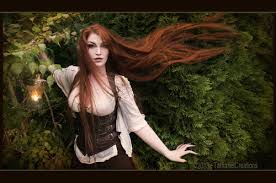
When Is An Elf Not An Elf?

Over the three days of November 17 -19, Amazon.com have decided to promote the 2013 Winner of the Eric Hoffer Book Award for YA – At The Walls Of Galbrieth. The novel will be offered FREE in ebook form.

This is a wonderful opportunity for me and I request that, to support my sales rank and me, you download the book and invites your friends to do the same. Feel free to gift it on (Thanksgiving and Hanukkah, anyone?).

To celebrate this and also the milestone of 100 blog posts on elfwriter.com, I wish to offer 10 of my favorite posts over the next three days. I hope you enjoy and, please, take a moment to download for FREE At The Walls Of Galbrieth and spread the word.

Thank you,

Alon

 =======================================

WHEN IS AN ELF NOT AN ELF?

Yes, my novel is compelling, special, well-written etc. just like the 499 other epic fantasy manuscripts sitting in the slush piles of every publishing house that offers YA epic fantasy.

I am working with an agent who is asking the challenging and insightful questions that will help my manuscript stand out from the rest. It is tough and I am feeling very possessive. Last week I shared his prompting to seek a Higher Concept.

One of the aspects that he wants me to consider is changing my elves, who make up many of the main characters and cultural references. He suggests that I consider changing the elves for a new, mythical race that will set me apart from the rest.

Let me state from the outset that I have no doubt this man knows far more than I about the publishing world, has considerable experience and understands the current state of the publishing world.

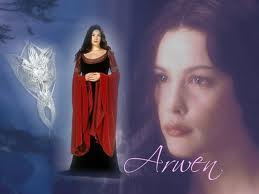
But my elves? Our elves? Those of us who grew up on Tolkien, Paolini, Brooks and others, have standards, images, friends. Legolas and Anwen, Arya and Blodgarm, and many others have created a rich and familiar texture. We welcome them surfacing as we settle into a thick novel. We embrace them because there are common threads that pass between authors. We call it a culture, those who don’t read fantasy roll their eyes.

                               Noble Haldir – we owe him for Helm’s Deep, no?

Terry Brooks’ children know that he is not all there, he tells us as much when he opens his book Sometimes the Magic Works: Lessons from a Writing Life. More on this book in a later blog.

But Brooks in not dissimilar to the rest of us, just considerably more talented! We pass through a gate in our imagination and reacquaint in a world that exists in a shared consciousness.

Here the elves are tall, thin, light-footed and beautiful. They are fast and posses stealth and discipline. They are in touch with the energy of the earth, the forest, the animal kingdom. They excel in archery, crafts and healing. Perhaps they are aloof, elitist, and closed to the other races, but this comes from their ancient and rich heritage. We know and love them.

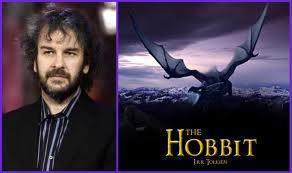
We rejoiced to learn that Peter Jackson is bringing Legalos into a prominent role in The Hobbit. Well, a few raised eyebrows, since Legalos was not even referred to by name in The Hobbit when he appeared flanking his father, the King of Mirkwood.
We accept, even with a bit of jealousy that he can fight at Helms Deep for five days, or run non stop for three and still not need to brush his immaculate hair. Nor do we care that his quiver seems to replenish itself, an occupational hazard of any archer who fights battles every other day.

We don’t mind because elves epitomize something that we identify with. We all want to be beautiful, brilliant, in excellent physical condition and, of course, environmentalists. When R.A. Salvatore created Drizzt Do’Urden and the dark elves of Menzoberranzan, a giant underground drow city-state he broke new ground.

Many of us were repelled and had it not been created in the hands of a master of fantasy, we would have rebelled. It was daring, it worked and by Book Three, we were rewarded with the typical elf one finds above ground.

It is tough to turn away from the basic tenets of epic fantasy: the teacher and student, the quest, the fight against a powerful evil, dwarves, elves, dragons, a rich natural world. There is something that has entered our collective consciousness and taken root.

It is why we read and reread the masters…and it is why we will return to read those who take over the role of entertaining us in a way that only epic fantasy does.

 =========================================

Alon Shalev is the author of the 2013 Eric Hoffer YA Book Award winner, At The Walls of Galbrieth, offered by Amazon.com  for FREE on November 17-19. The sequel, The First Decree, and Ashbar – Wycaan Master Book 3 are all released by Tourmaline Books. More at http://www.alonshalev.com and on Twitter (@elfwriter). Hang out with Alon on Google+

Why Do Adults Gravitate To Young Adult Fiction?

I believe that more adults are reading the epic fantasy Wycaan Master series than young adults. I know there is a fair proportion of teenagers and even pre-teens reading, but judging by the emails, blog comments, and twitter responses, it is predominately adults. This is all despite the books being written for and with my children, which I describe here. It begs the question why are adults drawn to Young Adult (YA) books?

imgresI found this article by Kelly Johnson. In her post, she debunks the following statements (her words):

1. Our culture encourages an unnatural and prolonged adolescence 

2. YA books are escapist since you don’t have to look beneath the surface of them. They are easier to grasp.

3. Adults read YA because they aren’t able to read past a middle school or high school level because adults are getting dumber and dumber.

4. YA books are about hopefulness. Their problems aren’t really problems and they can be fixed. Also there’s always a happy ending, so it’s satisfying and fulfilling to adults. The characters are likable. 

5. Fill in the blank with your own justification here. Some examples may include: YA is all about first experiences; YA is nostalgia for adults; YA is cheaper than adult books and therefore more appealing to the wallet; and so forth.”

images

I enjoyed Ms. Johnson’s fiery responses to these statements, but I felt let down when she finished with: “The only justification for why adults read YA books is this: they choose to. That’s it. That’s their reason. Adults read YA books because they as adults choose to do so.

I am disappointed. None of these reasons explain why an adult, working, raising a family, involved in a community, volunteering, following a sports team etc. would be so moved to take a few precious hours each day to sit and read, and then often reach out and engage with the author, fellow readers, come back to buy more books, and enter deep discussions online and at the pub.

Fiction is all about the plot, the characters, and the environment. It is true for John Grisham and Stephen King, and it is true for Terry Brooks, Christopher Paolini, and R.A. Salvatore.

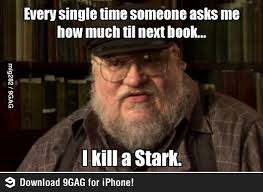
When I read a John Grisham book, I am transported to Mississippi, to another time, and when I close the book at the end of a chapter, I worry about his characters and their choices. It is no different to George R.R. Martin who may kill off a few popular characters in the next chapter if he had a bad day.

images-1

The issue, I think, is how we perceive YA. A young adult book means there is no sex, less violence and no profanity. There are certain boundaries not crossed if we want our youth to read them. But that is all it is. There is nothing here to prevent an adult from enjoying the book, unless you assume we are all sex-starved, violent, expletive-charged individuals, which would be sad, especially if this is how Hollywood and the mass media perceive us.

I am taking a few months break from the fourth Wycaan Master book to write an adult fantasy book.

I have not felt a need to raise the richness of language.

I have not made the characters deeper and more compelling.

I have not sought a more complex plot.

I have not deepened or diluted my world-building.

There are, to be honest, issues dealt with here that may be too dark to share with youth. I share a lot with my teen son, but would hesitate to share certain passages here. Characters deal with fears and obstacles that most of us who have children might not want them to read. There is sex and more graphic violence than in the Wycaan Master series, but that might yet get dialed down.

So what does make adults gravitate to YA novels? The problem is not with the answer. The question is simply wrong.

People read a story because it has a good plot, characters that the reader can bond with, a world that stimulates the imagination. This is the same for adults as it is for YA. YA is written within certain criteria in order to make them a safe space of teens. It certainly does not mean dumbing down or becoming predictable.

The discerning reader will be drawn to a book in their chosen genre simply because it is good: plot, characters, environment and strong writing.

A good novel is a good novel is a good novel…

So this seems like a good time to thank all of you who bought Ashbar – Wycaan Master Book 3 and any of my other novels. I read every blog comment, every tweet, every priceless review on Amazon.

Thank you. Thank you. Thank you. Have a great week.

elfwriter

——————————————————————————————————

Alon Shalev is the author of the 2013 Eric Hoffer YA Book Award winner, At The Walls of GalbriethThe First Decree, and Ashbar – Wycaan Master Book 3 – all released by Tourmaline Books. Shalev is also the author of three social justice-themed novels including Unwanted Heroes. He swears there is a connection. More at http://www.alonshalev.com and on Twitter (@elfwriter). Hang out with Alon on Google+ here.
Big Characters Without Big Boobs

Last week I asked in my blog post, 10 Questions For J.R.R Tolkien, what questions people would like to ask the Professor if they had the opportunity. The answers were great, but one stood out for me.

A person with the twitter username @oneyearnovel (happy to enter your name and website) wrote: “I would ask if he ever considered a woman character who was not beautiful?”

 images-1

This got me wondering. When I began looking around for a book cover artist and shared my concept of Mhari, an elfe (the politically correct term for a female elf) and Seanchai’s teacher, I was offered sketches of buxom women with cleavage-revealing armor, muscled (bare) legs etc. You get the picture. I talk about this in an earlier post – Big Boobs and Book Covers. While these images might have sold more copies of At The Walls Of Galbrieth, the pensive, wise face that adorns the cover truly represents the wise, yet world-weary mentor for my protagonist, Seanchai.

Wycaan Master 1 Just Front Cover

I don’t in truth know if @oneyearnovel is correct that Tolkien’s females in his books are all beautiful, or if this is Peter Jackson pandering to what he believes his Hollywood audience wants. I have not read Lord of the Rings in years and can’t even recall a female in the Hobbit.

Tolkien students: please enlighten us on this in the comments.

imgres

There are three main female characters who each leave an indelible mark on the first four books of the Wycaan Master series. Sellia is dark, exotic and beautiful, but she is also an excellent warrior and probably fits the stereotype. While I never talk about her breasts, hips etc. (this is YA), she intimidates the younger male elves and has them stuttering. She makes a game of eliciting a blush from Rhoddan or Seanchai.

Ilana is tough, an ideologue, constantly seeking a peaceful solution and offering Seanchai her unwavering support. As a romance blossoms she is viewed for her beauty, but it is seen through the eyes of one who is falling in love with her. Don’t we doting men all think our wives/partners are the most beautiful women in the world? Of course mine really is!

But Ilana is possibly the most popular character among readers, certainly female readers. It is not anything physical about her that binds the reader to her, but her deep principles, cutting sense of humor, and well just about everything else concerning her.

Maugwen is a human, short and pudgy. She is a weak character at first and I never meant to give her a long run. But she grows, matures and becomes a wise friend and strong individual. Readers have told me that she intrigues them and, just between us, she intrigues me.

We don’t make all our male characters handsome and ripped, so why our females? I think @oneyearnovel has a great point. Society expects us to bind ourselves to a pretty woman, and in truth, this goes for good or bad characters, but fiction has a responsibility to not only change with the times, but to be present at the tipping edge of that change.

It is very popular to write a coming-of-age novel. Perhaps it is time for our genre to come of age.

imgres-2

——————————————————————————————————

Alon Shalev is the author of the 2013 Eric Hoffer YA Book Award winner, At The Walls of GalbriethThe First Decree, and Ashbar – Wycaan Master Book 3 – all released by Tourmaline Books. Shalev is also the author of three social justice-themed novels including Unwanted Heroes. He swears there is a connection. More at http://www.alonshalev.com and on Twitter (@elfwriter).

10 Questions For J.R.R. Tolkien

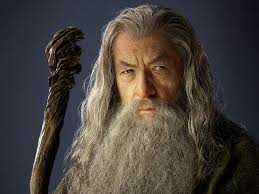
This blog post was inspired by a Time interview with Sir Ian McKellen, who plays Gandalf, the wizard who… if you are following this blog, you already know. It is a fascinating interview given that  J.R.R Tolkien was Catholic and McKellen is gay.

imgresThe interview is:

Timely: the difference between the making of The Hobbit and Lord of the Rings is that Peter Jackson now wears shoes.

Funny:  “No one ever ablutes in Middle Earth.” and…

Poignant: When he visits a public school in England

One of the questions asked of McKellen is what would he ask Tolkien if he could meet him. This got me thinking: I have already shared that I think a lot of Tolkien and Oxford, and The Inklings Club.

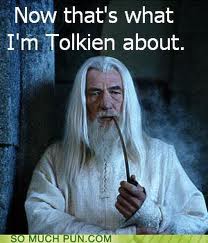
So, if you are up there in Writer’s Heaven, quaffing on an ale or puffing your pipe, there is a student down on earth trying to emulate your literary work with a few questions.

1. Did you ever get embarrassed or try to hide your fantasy writing from your academic peers?

2. Did World War 1 provide you with the imaginary and emotional background for Lord of the Rings?

3. Why Hobbits? Who is your favorite character in either The Hobbit or Lord of the Rings?

4. If you were writing either LOTR or The Hobbit today, would you change anything? Different ending?

5. What do you think of the movies?

6. Is Peter Jackson out-of-line to make such radical changes to The Hobbit as including a character who is not from the book?

7. Who is your favorite fantasy author?

8. I know the story of how the first line of The Hobbit came to you (the blank academic paper you were grading), but how did you really come to write a fantasy series?

9. Mac or PC?

10. My critique group has room for one more. Would you consider…

imgres-7The reality is that if I ever found myself in front of the Professor, I would probably stammer and blush, and make a complete fool of myself. So help me out, just in case one day…

What questions would you ask the greatest epic fantasy writer of all time?

——————————————————————————————————

Alon Shalev is the author of the 2013 Eric Hoffer YA Book Award winner, At The Walls of Galbrieth,  the sequel The First Decree, and Ashbar – Wycaan Master Book 3, all released by Tourmaline Books. Shalev is also the author of three social justice-themed novels including Unwanted Heroes. He swears there is a connection. More at http://www.alonshalev.com and on Twitter (@elfwriter).

Cute Tolkien Story

I am indebted for the story in this post to the author, Peter Smalley so I want to first give him a shout-out. “Peter A. Smalley was not so much born as he was the object of a suitably ominous origin story.” If you want to know more, click on the link above or check out his latest book – Emerald City Blues

Remember This Guy?

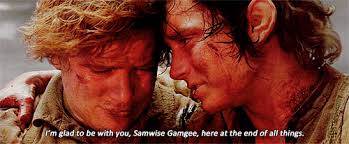
“I’m glad to be with you, Samwise Gamgee, here at the end of all things.” This is friendship!

 So here is the (true) story.

In March 1956, J.R.R. Tolkien was surprised to receive a letter from a man named Sam Gamgee from Tooting, London. Mr. Gamgee, who had not read Lord of the Rings, was surprised to hear that his name had been used in the story. The Professor responded in a letter of his own.

“Dear Mr. Gamgee,

It was very kind of you to write. You can imagine my astonishment when I saw your signature! I can only say, for your comfort, I hope, that the ‘Sam Gamgee’ of my story is a most heroic character, now widely beloved by many readers, even though his origins are rustic. So that perhaps you will not be displeased at the coincidence of the name of this imaginary character of supposedly many centuries ago being the same as yours.”

– The Letters of J.R.R. Tolkien: Letter 184

dsc04663-e1378821253884
Being the gentleman he was, Tolkien also sent him a signed copy of all three volumes of the book. This incident did, however, worry the professor who wrote in his journal:

“For some time I lived in fear of receiving a letter signed ‘S. Gollum’. That would have been more difficult to deal with.”

– J.R.R. Tolkien: A Biography

Oh well, need to fill the void for the next 1,464 hours (at the time of writing) until the second Hobbit movie!

imgres 

Finally, thank you to everyone who bought Ashbar – Wycaan Master Bk. 3, which celebrates its 10th day in publication!

 ——————————————————————————————————

Alon Shalev is the author of the 2013 Eric Hoffer YA Book Award winner, At The Walls of Galbrieth, Wycaan Master Book 1 and the sequel The First Decree, both released by Tourmaline Books. Ashbar – Book 3 is the third in the series, released in October 2013. Shalev is also the author of three social justice-themed novels including Unwanted Heroes. He swears there is a connection. More at http://www.alonshalev.com and on Twitter (@elfwriter).

The Journey Just Gets Better

It has been quite a week with the release of Ashbar – Wycaan Master Book 3. I am feeling slightly stunned by the closure of the first trilogy. Like At The Walls Of Galbrieth and The First Decree, Ashbar is a self contained story as well as the third in a series.

Ashbar front cover

There is a lot of closure, though not enough to stop the next trilogy from beginning, and I feel a certain sense of forlorn, perhaps as a parent feels when their children leave the nest.  I know the remedy to this – plunge into writing the next book. As the wise saying goes: “One trilogy closes, another opens.

Thank you to everyone who bought Ashbar over the weekend and enabled it to pick up a credible ranking. Please let me know what you thought of it, once read, and leave a review on Amazon. I am surprised at how important these reviews are in terms of trackable purchasing actions and sales ranks. If you have not yet bought it, please invest the $2.99 this week, to help move it to a higher ranking.

I just want to take a moment and thank the incredible support team behind me.

Monica Buntin is my editor. I send her a jumble of about 100,000 words and she makes sense of them. I once had the audacity to tell her that I was sending a pretty clean manuscript. She had the good manners not to respond to that comment, but that didn’t deter her from cutting about 10% of the book and offering (correct) critique on every page.

Oh well. I learned my lesson. Editors are an eclectic breed and I have written about them before. They need authors or they will have nothing to edit and yet have to, I am sure, tolerate an awful lot of ego. When an author finds a good editor and one who clicks with them, they have a rare asset and would do well to keep them.

William J. Kenny, a fantasy author in his own right, designed the covers for all three of the Wycaan Master books. One day, I would like him to reveal the creative process in depth. For now, I am content to consider it magical. I send him a couple of paragraphs with my ideas and he sends me a crude image. He takes my response and produces such a complete picture. I am really in awe of him. If I could draw anything better than deformed stick people, I would love to give the process a go.

Then there is Jeny Reulo from FastFingers Book Formatting Services,  who designs and formats the interior of the books. Her willingness to make changes and attention to detail is amazing. The interior design of a book, if done well, does not garner any attention, but it is a crucial element in the reader’s experience. The interior designers are often the unsung heroes of the expedition into producing a book.

Finally, a big appreciation for my wife Ariela. I am sure she releases a big sigh of relief on the day that I finish writing a manuscript and probably an even bigger sigh of exasperation when, the following week, I begin writing the next book! My absences, both physical and mental, create a void she needs to fill, and she does it with grace and understanding.

This series began as a fun, family project, deep in a redwood forest. My sons were a part of this strange journey, from the prologue in Chapter 1 of At The Walls Of Galbrieth, to the final climax in Ashbar. Earlier this summer I read them a rough first draft of Book 4, and, four years on, it remains an integral part of what I hope and believe is a powerful journey we will share in our memories forever.

This is how it all began - deep in a redwood forest.

Where it all began – deep in a redwood forest.

It really doesn’t get any better than that. Once again, thank you to all who buy, read and review the Wycaan Master series. Your time is precious, the options of good books to read vast, and I am honored that you choose to open and read my books.

Thank you for sharing in the journey of the Wycaan Masters.

——————————————————————————————————

Alon Shalev is the author of the 2013 Eric Hoffer YA Book Award winner, At The Walls of Galbrieth, Wycaan Master Book 1 and the sequel The First Decree, both released by Tourmaline Books. Ashbar – Book 3 is the third in the series, released in October 2013. Shalev is also the author of three social justice-themed novels including Unwanted Heroes. He swears there is a connection. More at http://www.alonshalev.com and on Twitter (@elfwriter).

A Prime Read!

“Hey Dad. Do we have Amazon Prime?”

“Sure son,” I reply.

“Great. We can get your ebooks for free .” He pauses for a few moments, perhaps pondering his own statement. “Err Dad. Do many people have Amazon Prime?”

“I believe it’s growing in popularity,” I say, invoking my fatherly privilege to all knowledge.

Actually, Morningstar analyst R.J. Hottovy published a report in March 2013 that claimed Amazon Prime membership had more than 10 million at the time of writing. Shame I didn’t have the use of Google during our discussion.

“So for all our hard work, and the fact that At The Walls Of Galbrieth won a fancy award, anyone can now get it for free? That sucks.”

“It’s like a library,” I say, not sure whether I want to convince him or myself. “People can now borrow the ebook and it will help fantasy readers to learn about my writing and the Wycaan Master series.”

“But they get it for free?” He has a certain skeptical frown that develops during adolescence, when teenagers begin to discover their fathers are generally making up fatherhood as we go.

“They do,” I gulp a glass of water. “But this is good for my market penetration.”

Big mistake. Remember: talking to teenager.

“Look son. You know how you are always complaining that you don’t have money to buy books?”

“You mean video games and a Harley, right?”

“Well think how many teenagers won’t have to deal with that problem now. They can borrow my book for a month on Amazon.”

“It’s still free, right?” Major teenage frown now.

“If you have Amazon Prime,” I add.

“Where did you get this idea?”

“From a marketing  book that focused on Amazon.”

“How much did you pay for this smart book, Dad?”

“I didn’t,” I reply. “I borrowed it for free from Amazon Prime.”

 imgres-1

It has taken me a while to understand the concept of Amazon’s Lending Library, but the idea that I can get my book out there quickly is very tempting. If you are an Amazon Prime member, you can indeed now borrow the ebook.

While there is no necessity, if you do so, please leave a review and help me convince my son and his father.

At The Walls Of Galbrieth will be in Amazon’s KDP program until the end of 2013. Enjoy, catch up. Book 3 should be out any day soon.

UPDATE: Ashbar – Wycaan Master Book 3 was released today in paperback. Here is the link. The ebook should be available next week.

Ashbar front cover

——————————————————————————————————

Alon Shalev is the author of the 2013 Eric Hoffer YA Book Award winner, At The Walls of Galbrieth, Wycaan Master Book 1 and the sequel The First Decree, both released by Tourmaline Books. Ashbar – Book 3 is the third in the series, released in October 2013. Shalev is also the author of three social justice-themed novels including Unwanted Heroes. He swears there is a connection. More at http://www.alonshalev.com and on Twitter (@elfwriter).

I Didn’t Mean To Kill Her

I swear I didn’t. She is beautiful, funny and has a wicked repartee. My protagonist might be a bit wooden, excusable given all the tragic events he has gone through and the overall mission he is on. He is moody, serious, but very good at killing the bad people. While he has great depth, she lightens him up.

And I’m going to miss the sex. She is as creative in this realm as she is with her comments.

It was an accident. Really.

images-4 

An assassin came to kill the prince. The protagonist chased him all over the castle battlements. They both had bows and shot at each other from some really cool angles, or while jumping or falling. I had a great time and if there are any video game designers out there, it will make a great video game addition to the movie (oh, and if there are any producers out there…).

So the good guy and the baddie are running and jumping, and I’m having a ball as my fingers speed around the keyboard. Suddenly they find themselves face-to-face with the prince and my aforementioned heroine. 

Now all this had been planned, in as much as I thought of the chase while at the gym in the morning. What came next surprised even me.

images-2

Hero does a neat role and kills assassin, who gets off a shot at the prince. Sexy woman dives on the prince and takes the arrow herself.

Ooops!

I am staring at the screen. My reflexes press save and I curse that holy ethic that pompous authors such as myself are wont to say over a Merlot in a party (it would be legit to imagine mine accompanied by an English accent, acquired at birth, cultivated for maximum pretentiousness: “Oh yes, I let the story guide me.

Kind of like my protagonist and the prince, I am now staring at her prone, slight body, red hair splayed around her, and blood ominously seeping from her chest.

It was time to pick up my youngest from school. As we walked home, he asked if I was okay. “I have a problem,” I said and described the above scenario.

“Of course you can change it,” my 10-year-old says. “It’s your story,” and he spent the whole walk home offering various scenarios from his vivid imagination.

Sometimes it takes a child to add proportion. My fantasy woman will live… for now at least. I’m old enough to know I am not master of my own destiny, but I’ll be buggered if I cannot be master of my own muse.

images-5

So tonight I will make the necessary changes. And if the critic cops point fingers at me, I’ll just hold up my hands: “But… I didn’t mean to kill her.” 

——————————————————————————————————

Alon Shalev is the author of the 2013 Eric Hoffer YA Book Award winner, At The Walls of Galbrieth, Wycaan Master Book 1 and The First Decree, both released by Tourmaline Books. Ashbar – Book 3 – is due for release in October 2013. Shalev is also the author of three social justice-themed novels including Unwanted Heroes. He swears there is a connection. More at http://www.alonshalev.com and on Twitter (@elfwriter).

World-Building: How Much Detail?

I’ve noticed a number of adult reviewers of my Wycaan Master series have been critical of my world-building, suggesting that I do not go deep enough or that the books are too fast-paced and that more description of scenery and environment would help to pace the book.

There seems a definite age issue here. I asked a number of my sons’ friends (ages 10-16) who have read the book and they did not agree. In fact, the younger readers were happy to describe to me the fortress of Galbrieth from Book 1, and mighty Hothengold, the dwarf capital, which is situated in a huge cavern. Admittedly, each child described it differently, but I am not sure that matters.

Girl Browsing Books at the Library

It seems there is a certain richness in each (young) reader’s imagination forming their own world, but why do adult readers not want to exercise their minds in such a way? Why does the generation of instant gratification seem willing to work their imagination muscles, while those who always had to work hard to discover anything, do not? In an earlier blog post – The Art of World Building – which I wrote at the beginning of my epic fantasy writing journey – I assumed that it would be exactly the opposite.

I suspect age is not always a factor. The adult who is often challenged to find reading time, wants to push the plot along, something my books are complimented for, and not spend a chapter describing every tree in Mirkwood. Ironically, when the same readers lost themselves in Tolkien’s Middle Earth decades ago, they had more free time to meander with the master.

Over the summer, I have indulged myself in writing an adult fantasy novel, a Game of Thrones wannabe, and I will soon shelve it to focus on editing Book 4 and writing Book 5 – the cycle never ends. But I realize I have been no more generous with my world building than for the Wycaan Master series.

Airship10

So my question to you, dear readers: How much detail of the environment is needed for a YA in comparison to an adult fantasy novel? Is there enough world-building in the Wycaan Master series? Please feel free to leave your feedback in the comments section below. I really appreciate every comment.

Talking of feedback: I have been reading a number of books about Amazon.com and how to improve your ranking and exposure. I really need reviews on both At The Walls Of Galbrieth and The First Decree, on both the US and UK sites. Apparently less than 3% of readers leave reviews and I admit, until I began writing, I was one of the 97%. But now from the other side of the fence, I would really appreciate that if you have read either book, please take five minutes and leave a review.

It will be a huge help to a struggling author and if ever we meet in Odessiya, the next round of ale will be on me!

hobbits in pub

——————————————————————————————————

Alon Shalev is the author of the 2013 Eric Hoffer YA Book Award winner, At The Walls of Galbrieth, Wycaan Master Book 1 and The First Decree, both released by Tourmaline Books. Ashbar – Book 3 – is due for release in October 2013. Shalev is also the author of three social justice-themed novels including Unwanted Heroes. He swears there is a connection. More at http://www.alonshalev.com and on Twitter (@elfwriter).

Interview With An Elf

This post has been sponsored by Tourmaline Books:  Award-winning epic fantasy ebook, At The Walls Of Galbrieth @ $0.99  only until Sunday – http://wp.me/p1Xaeb-fS  – It Was 99 Cents!

Wycaan Master 1 Just Front Cover

INTERVIEW WITH AN ELF

Interviewer: I would like to introduce Chamerak, an elf who appears in At The Walls Of Galbrieth, the first Wycaan Master novel by Alon Shalev.  Welcome, sir, and thank you for agreeing to the interview.

Chamerak: My pleasure. It is an honor to represent my people to receptive humans,

Interviewer: Receptive? Can you explain?

Chamerak: Once, long before you and I were born, a council that had representation from all the four races ruled the land of Odessiya. Eventually, humans broke from this coalition when they were discovered to have large colonies of slaves mining rich lands beyond our boundaries.

Most of those who were slaves then were dwarves, and the dwarves here insisted they stop. Slavery was not tolerated in Odessiya. There were the rich and the poor, to be sure, but every individual, regardless of race, had inherent rights.

Interviewer: What happened?

Chamerak: As well as large colonies of slaves, these humans had built huge armies too. There was a series of battles, culminating in one great battle. That was our most tragic moment.

The elven leaders had tried to broker between the humans and dwarves, though we were clearly on the side of the latter. Still, we had helped to find a diplomatic solution as we had for centuries since the great council had begun.

We spread our leaders too thinly and when the battles joined, our people were massacred. The humans won a decisive battle, the powers of the Emperor and his cronies were revealed. The dwarves, what were left of them, disappeared deep underground, and my people became a slave nation.

Interviewer: Literally slaves?

Chamerak: Yes. Those in the cities lived under total servitude. Others found refuge living in remoter villages, where they paid for their restricted freedom with crushing taxes that prevented them ever moving above the strain of poverty. Humans often came to have sport ­­– there were those who collected our pointed ears as trophies – or take if they wanted food or worse.

Interviewer: And all humans were like this?

Chamerak: Generally, yes. After a few generations, it became normal for them. They knew little else and were indoctrinated from birth to look down on us as an inferior race. But there were a few who were not like that.

In At The Walls Of Galbrieth, you will meet Uncle. He led a band of elves into the great forests, to live as freeborn and help other elves escape. Not long after I joined his band, we captured some humans. They did not fight us, but neither did they cower. We took them prisoners and a strange dynamic happened.

As we interrogated them, they began to ask us questions. At first, we thought it was a ruse to discover our secrets: where we hid, who our leadership was, and things like this. But they were different and we made a discovery that filled us with hope. Uncle, in his wisdom, was the first to realize this. I must admit: I wanted to execute them on the spot for just having round ears. I was young then and my life had been hard, though no different from those around me,

00013

Interviewer: What did this Uncle discover?

Chamerak: That not all humans were bad. That in the same way they had stereotyped us as stupid, inferior, lazy, unhygienic, etc., we too had stereotyped them as one type of human: violent, power-hungry, racist, you know.

Interviewer: What happened next?

Chamerak: Uncle invited them to join us. We kept them in a separate camp for a long time. But eventually, as trust grew between us, we became one band. Word spread of our mixed group and others sought us out. Other groups formed, including some who were committed to teaching rather than fighting.

Gradually, the old stories were told and there was an awakening of an older conscious. It is, I believe, what brought the Wycaans back into our histories, and what facilitated the coming of the Wycaan Master.

Interviewer: I have heard a lot of rumors about him. What can you tell me about­–

Chamerak: These are early days and it is better not to reveal too much. Wycaans are not just elves, but can be from any race. They can be male or female. You have made assumptions.

Interviewer: My apologies.

Chamerak: Assumptions are dangerous thoughts. They are what brought us to the racist society we live in. But there is hope.

Interviewer: How?

Chamerak: As long as the stories are being told, the narrative is being formed. It will be challenged and evolve and, hopefully, change for the better. It is the power of the books.

Interviewer: Rather fantastical, no?

Chamerak: Epically so.

images

——————————————————————————————————

Alon Shalev is the author of the 2013 Eric Hoffer YA Book Award winner, At The Walls of Galbrieth, Wycaan Master Book 1 and The First Decree, both released by Tourmaline Books. Ashbar – Book 3 – is due for release in October 2013. Shalev is also the author of three social justice-themed novels including Unwanted Heroes. He swears there is a connection. More at http://www.alonshalev.com and on Twitter (@elfwriter).