Don’t Let The Fairies Bully You!

I have mentioned before that fantasy can be a vehicle for social commentary and so I enjoyed coming across this blog post from Melanie Hatfield. It will reveal to you why I never leave the house without my hip flask and some single-malt! Ms. Hatfield’s debut novel: “Kingdom of the Snark: The Quest for the Sword” has just been released on Amazon and Smashwords.

And so with her permission: What To Do If You’re Being Bullied By Fairies – Melanie Hatfield :

I haven’t blogged much about my debut novel, but now I am at a point where I can admit (or should I say confess) that my first eBook, a fantasy/comedy titled Kingdom of the Snark:  The Quest for the Sword, will be online by July.  In my book, my heroine is bullied by fairies and I realized:  What should we do if we find ourselves picked on by those mischievous pixies?  Have no fear, for I have listed some helpful tips below.

Even house elves got bullied!

1)  Ignore them.
Conventional wisdom tells us to talk about our problems with those who cause us grief. This does not apply to fairies. If you tell them how their actions make you feel, they will not only continue to mock you, but will tell all of their fairy friends so they can join in and pile on the humiliation.  If fairies taunt you, it is best to keep your mouth shut and wander in the opposite direction.  It is important to avoid eye contact at all cost, least they cast a spell and make you dance (clothing optional).

2)  Sing them a song.
If ignoring them doesn’t work, you can distract the fairies with a song. Fairies love a tune as much as the next traveler.  If you have a harp, strike a few cords and see if they’ll jam with you.  Before long, maybe they’ll forget that they were hassling you in the first place, or at least like you enough to allow you to journey past them without further hindrance.

3)  Carry anti-magic devices.
When the fairies use their magic against you (and they will), counter their dust with crystals, a rainbow grenade, or other anti-magic device to render them helpless.  Buyer beware:  Never purchase such weapons from a seller you do not know.  There are many merchants in the world who take advantage of fairy victims with bogus devices.

4)  Give them a taste of ale.  
Fairies have never been known to hold their liquor, although they love to try. It only takes a thimble to get them into a drunken state of unconsciousness.  While they’re sleeping it off, you can tip-toe away.

5)  If all else fails, fight fire with fire…literally.
Fairies burn easily.  Sic your pet dragon on them.

Do you have any tips on how to handle fairies?  Are you a fairy and think you’re just misunderstood? Tell us about it in the comment box!

Picture

“Kingdom of the Snark: The Quest for the Sword”  is now available at Amazon and Smashwords.
——————————————————————————————————

Alon Shalev is the author of The Accidental Activist and A Gardener’s Tale. He has written two fantasy novels and the first reached the Quarter Finals of  the Amazon Breakthrough Novel Award as of March 2012. More on Alon Shalev at http://www.alonshalev.com/and on Twitter (@elfwriter).


The Art of World-Building

When the hobbit walked through Mirkwood, we all walked with him. We knew exactly how the trees looked, how the wind moved their branches, what the ground felt like as one fur-soled foot pressed down. We could smell the rotting leaves and…We were there as the master welcomed us into Middle Earth, his world. We were his honored guests and when we returned to this world, we felt a sense of loss.

No one, in my humble and uneducated opinion, has ever created a world in the rich way of J.R.R. Tolkien, and perhaps no one ever will. There are some among our younger readers who skip or skim the long descriptions. Do I need to know what every tree in the forest looks like?

And yet these same young people marveled over the world of Pandora from James Cameron’s Avatar. I am closing in on finishing the third of the Wycaan Master novels and will then begin another edit of the first book before passing it on to more professional hands.

One of the aspects that I want to focus on is how well have I described the land in which the story transpires. There is a lot of traveling and many different climates and natural wonders, as well as villages and cities, which are described. When I wrote the first book, it was in close collaboration with my then 11-year-old son. I was very conscious of maintaining a fast pace. The second and third books were more my own work, with my son reading and giving me feedback. I believe these two novels involved considerably more world-building.

Why do we need to show such detail in epic fantasy? It seems obvious for the Sci-fi writers to put so much emphasis on creating worlds and I understand why those who write in modern earth need not focus so much because we can see the world we live in. 

Do you enjoy the detail of a new world or are you content to receive hints and imagine it for yourself? How important is world-building to you becoming a loyal reader of a fantasy series? Finally, if you write fantasy yourself, do you have any best practices or tips? Do share in the comments below.

Appreciate your feedback. Have a great weekend and a happy 4th.

Alon 

——————————————————————————————————

Alon Shalev is the author of The Accidental Activist and A Gardener’s Tale. He has written two fantasy novels and the first reached the Quarter Finals of  the Amazon Breakthrough Novel Award as of March 2012. More on Alon Shalev at http://www.alonshalev.com/and on Twitter (@elfwriter).

Breaking Through The Amazon Breakthrough – Quarter Finals

This has been a great week for me professionally. I am concluding a meaningful and moving week with 20 students from our SF Hillel Jewish Student Center, volunteering to help rebuild the Gulf Coast. I have written on this at Left Coast Voices.

It is a totally immersive experience and I have been intensely focused on my students and the New Orleans community. So it is perhaps understandable that I was shocked to receive the electronic reminder that the Amazon Breakthrough Novel Award’s results for the Quarter Finals had been released.

I am immensely proud to advance to the final 250. Wycaan Master has been a tremendous ride since I began writing the novel with my then 11-year-old. He was the first to receive the phone call and the news.

Over the next month the manuscript will be read by Publisher Weekly reviewers. They will grade it and the top 50 move into the semifinals. It is quite a thrilling prospect. So far, over the past year, dozens of goodhearted individuals have read and offered feedback. These people, members of the Berkeley Writers Circle, have been amazing and I have no doubt that Wycaan Master is a much better book because of their input. But they are not professionals and I am rather awed that people from such an established magazine are perusing my novel.

Interesting and exciting times.


——————————————————————————————————

Alon Shalev is the author of The Accidental Activist and A Gardener’s Tale. He has written two fantasy novels and the first has been entered into the Amazon Breakthrough Novel Award in January 2012. More on Alon Shalev at http://www.alonshalev.com/and on Twitter (@elfwriter).


Amazon Breakthrough Round 2

On Thursday, Amazon announced those novels which have made their way through  to the 2nd round of the Amazon Breakthrough Novel Award (ABNA). As I wrote in an earlier post, this is the writers lottery, with the winner receiving a $15,000 advance and, most importantly, a contract with Viking Press/Penguin Books.

From 5,000 YA entries, we are down to 1,000. The last round was judged on the 300 word pitch, something that is incredibly difficult to write.

The next round will be judged on the first 5,000 words of the novel and we will hear  who moves into the Quarter Finals on March 20.

It’s a long wait, but a great time to dream.

——————————————————————————————————

Alon Shalev is the author of The Accidental Activist and A Gardener’s Tale. He has written two fantasy novels and the first has been entered into the Amazon Breakthrough Novel Award in January 2012. More on Alon Shalev at http://www.alonshalev.com/and on Twitter (@elfwriter).

Young Adults and the E-book Revolution

I have entered my Young Adult epic fantasy novel into the Amazon Breakthrough Novel Award. My plan is if I do fall at some point to send submissions to about 20 agents and try to publish in the conventional way.

If this does not succeed, I assumed that I would then join the e-book revolution and hope to create enough splash to be picked up in the footsteps of Amanda Hocking and J.A. Konrath. I have read closely John Locke’s successful business model and would love to try it.

But today something hit me. Do young adults (10-18 year old) – my primary market for my epic fantasy series – read their books on e-Readers?

recently wrote: “The children’s and young adult e-book market faces special challenges not shared by the adult market, new research shows. And teens are slow to adopt e-books, in part because they do not see e-books as a social technology and they think there are too many restrictions on sharing digital titles.”

She reached her conclusion based on two online surveys commissioned by  PubTrack Consumer towards the end of last year who surveyed 1,000 teenagers and 1,000 parents of pre-teens. The details of the survey can be found here –  “Children’s Publishing Goes Digital.”

There are some interesting theories and statistics here. Firstly, youngsters are extremely social and want to share their books with friends and e-book technology is perceived as too restrictive. I thought that perhaps the teens did not have access to comfortable e-book readers. The majority has cell phones, but I am not including this. 60% of those surveyed receive technology from their parents as the latter upgrade.

makes another excellent point It is not just young adults propelling YA books like the Hunger Games trilogy onto e-book bestseller lists:

– 30-44-year-olds constitute 28 % of YA print book sales and 32 % of YA e-book sales. -18-29-year-olds buy the most YA books, purchasing 31% of YA print sales and 35% of YA e-book sales.

Making a decision to invest in the YA fantasy e-book market doesn’t look as attractive as for genres aimed at adults, but this is going to change as more young people receive the necessary devices. Also, the realization that the YA market goes not from 12-18, but 12-44 year olds make for a more encouraging prospect.

A final interesting point is that this age group is more likely to buy a book because of a recommendation on a social network.

Now, please excuse me, this 47-year-old is going to read The Hunger Games, recommended to me by my 13-year-old son.

——————————————————————————————————

Alon Shalev is the author of The Accidental Activist and A Gardener’s Tale. He has written two fantasy novels and the first will enter the Amazon Breakthrough Novel Award in January 2012. More on Alon Shalev at http://www.alonshalev.com/and on Twitter (@elfwriter).

Fantasy and Females

I realize that a title like this might give the wrong idea. This blog is about epic (or high) fantasy fiction – imagine Lord of the Rings. If you want to leave this post right now, I will understand.

I have mentioned that I am working with an agent preparing Wycaan Master/At the Walls of Galbrieth (I know I haven’t settled on a title). He sees his role as helping me differentiate my work from the other 499 epic fantasy submissions sitting on the acquisition’ editor’s desk.

With more than two-thirds of the publishing world of the female persuasion and given that so much of literature (and music, and movies, and business, and politics…) is focused on men, there is an understandable desire to see more female-focused stories and stronger female characters.

I baulked at the idea of changing my protagonist’s gender and have gone through the manuscript strengthening the secondary character who is female. She was never a doormat character, swooning after the hero, but a strong, independent individual with an attitude and a high level of skill at fighting.

Now I am considering changing one of the other main characters into a female, someone with authority and power. There are examples out there. I am currently listening to the audio book of Terry Brook’s Voyage of the Jerle Shannara. The first book has our antagonist being a woman  (the Ilse Witch).

Why have authors of epic fantasy created main characters who are male? Given that it is not a new phenomenon that women are the vast majority of readers, I feel that I am missing something.

Any ideas?

——————————————————————————————————

Alon Shalev is the author of The Accidental Activist and A Gardener’s Tale. He has written two fantasy novels and the first will enter the Amazon Breakthrough Novel Award in January 2012. More on Alon Shalev at http://www.alonshalev.com/and on Twitter (@elfwriter).

Pro-logue or Against -logue

This week, I entered Wycaan Master/At the Walls of Galbrieth, the first of my Alliance series, into the San Francisco Writer’s Conference Indie Awards. In three weeks, I will submit it to the Amazon Breakthrough Novel Award.

Both competitions require the first 5,000 words of the novel and abruptly I find myself needing to make a critical decision. I have written a prologue, a short but hopefully eloquent setting of the scene.

Prologues are not always acceptable. When I presented the prologue to my writer’s group, the jury was out and, though I was not hung, neither was I acquitted.

It seems that prologues are more acceptable in the fantasy genre than others. Critiques have suggested that a prologue is there to mask a slow beginning or a lack of a hook.

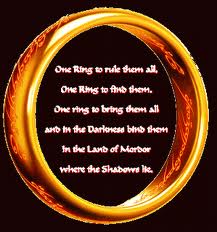
One ring to bind them all… opened the master and we were duly bound for three long volumes, cartoon series, and epic movies. Now the epic fantasy world waits with bated breath for The Hobbit movie, even though we all know what happens.

Since my novel is directed at the YA audience I made sure to begin the novel at a fast pace. I can imagine many teens skimming the prologue, though I hope they will value it in later years when they ritually return to the series as I, and many of you, return to read LOTR every few years.

So, a couple of weeks before decision time, I wish to ask:

How do you feel about a prologue for an epic fantasy novel? Does the reader want it, the agent accept it and the publisher allow it?

Your comments and advice are gratefully received. Wishing you all a happy and healthy new year.

——————————————————————————————————

Alon Shalev is the author of The Accidental Activist and A Gardener’s Tale. He has written two fantasy novels and the first will enter the Amazon Breakthrough Novel Award in January 2012. More on Alon Shalev at http://www.alonshalev.com/and on Twitter (@elfwriter).

Going for the Writer’s Lottery

It is true that you can become a millionaire from winning the lottery and that there are lottery winners every week. But for the aspiring author, winning the Amazon Breakthrough Novel Award (ABNA) is akin to that precious and elusive lottery ticket.

http://leftcoastvoices.files.wordpress.com/2011/01/images-12.jpg

In today’s economic climate, it is a brave publisher who invests in an unknown author. Yes there will always be the J.K. Rowling out there, but they are as rare as, well, a winning lottery ticket. Assuming you are not a celebrity or have a good friend in the industry, it is almost impossible to pick up a literary agent. Then it helps that the agent stays in the business and find a publisher, and then the publisher needs to stay in the business and … well you get the gist.

But once a year, optimism pervades among us writers. ABNA is the mother of all writing competitions. They accept only 10,000 entries (already better odds than the lottery) which then go through a series of rounds until two talented individuals stand alone. Or more significantly stand with the publishing folks at Penguin Group (USA), Amazon.com, and CreateSpace. There is a $15,000 advance along with the publishing contract.

It is an exciting process. As midnight approaches on January 23rd, thousands of optimistic writers will sit poised by our computers, all necessary documents ready to upload. A month later we will all anxiously await the first cut. We look first for our own names and then those of our friends who have also entered.

http://leftcoastvoices.files.wordpress.com/2011/01/images-23.jpg

For the last two years I have reached the last 250 entries, the Quarter Finals, with The Accidental Activist and Unwanted Heroes, both political fiction. Like any good lottery player, I was already dreaming of my shining literary future. Alas, I went no further and my dreams were put aside in favor of actively seeking an agent and publisher. I did succeed, with The Accidental Activist coming out last year and Unwanted Heroes expected this coming spring.

But this is the first time that I am entering the YA contest with a fantasy manuscript. In the next month I will share my preparations and would appreciate any feedback that can help me hone the best possible entry.

And once again I will be watching the clock tick away to midnight on that fateful day and begin the dream all over again.

I will keep you posted – to the bitter end – but until then, allow me to dream.

——————————————————————————————————

Alon Shalev is the author of The Accidental Activist and A Gardener’s Tale. He has written two fantasy novels and the first will enter the Amazon Breakthrough Novel Award in January 2012. More on Alon Shalev at http://www.alonshalev.com/and on Twitter (#elfwriter).