Valentine’s Day – Epic Fantasy Style

What made the great world-builders of our time overlook such a special occasion? Was Valentine’s Day not celebrated in Middle Earth? Shanara? Odessiya?  Where does Terry Brooks,  R. A. Salvatore, Christopher Paolini, Robert Jordan and others stand on this?

Perhaps it is not a question of the author’s epic battles for love. Sometimes you have to look to the characters to take a bit of responsibility. How would they have gone about it?

Elves: the sophisticated romantics. On the special day, elves would often take their beloved on a romantic walk, deep into the ancient forests. Alone, they would visit a favorite pool, fed by a steady waterfall, with a noble white heron keeping watch from a rock nearby. Butterflies would hover over the water.

Each elf would produce a small flute and serenade each other. Then one would draw his (or her) intricately carved bow and shoot into a nearby tree. A shower of fragrant petals would fall around them, settling in their perfectly coiffured hair. The other would produce a carefully wrapped, gluten-free, artisan pizza, magically still warm and with crispy crusts.  They would recite poetry to each other, eat, and then bathe in the pool, coincidently illuminated by a full moon on a cloudless night.

Oh, to be an elf!

 images-4

Dwarves: The romantic dwarf is meticulous in her (or his) preparation for Valentine’s Day. The previous day is spent washing, conditioning, and combing their beards. Oh, those curly locks challenge even the most finely made comb.

A dwarven Valentine’s Day is all about the rocks. A conscientious romantic will travel deep into the mines to find the perfect gem and then forge a unique ring and necklace set, never seen before … since last Valentine’s Day.

The morning of Valentine’s Day, one often awakes to see their axe newly sharpened and oiled, the hilt freshly bound with clean leather or copper wire, the shaft gleaming. That night around a roaring fire, with an ox dripping grease into the flames, the dwarves consume tankards of ale and sing deep into the night. The songs, however, are not of mighty battles and bountiful treasures as they are every other night, sung as one mighty chorus. This night the dwarves sing only to their beloved, and the songs are of mighty battles, bountiful treasures, and furtive kisses for the hero (or heroine). The next morning, all you remember through the hangover is hazy and askew. But you still have the ring and necklace, and oh your axe is gleaming and so sharp!

 images-6

Humans: As Valentine’s Day approaches, the scribes of the mighty House of Hallmark are almost out of scrolls, quills, and ink, their arms limp from Carpel Tunnel Syndrome. They don’t complain, few have health coverage, but they have made their money. They bless the Great Goddess of Consumerism, though they will never quite appreciate the theology until the revelation of the Coming of the Internet. For now, electricity seems fantastical and visions of deluded priests, court jesters, and entrepreneurs.

The gardeners have been preparing all year. Every self-respecting knight requires a bouquet of at least 10 long-stemmed reds to fit over the tip of their lance, which they will offer to a sweet virgin in the admiring crowd. If she accepts the roses, then she replaces them with her silk ’kerchief, piercing it gently over the young knight’s lance tip. Many a young man has, at this point, fallen from his horse in anticipation. And the definition of virgin, it should be noted, is pretty relaxed in the world of fantasy.

After the obligatory jousting and archery competitions, the virgins retire to their rooms and surreptitiously peer over their balconies. After slaying dragons and defeating barbarian hordes on the battlefield, the young knights return, and once bathed, shaved and smelling of Old Spice, serenade the young virgins. They toss a twisted vine with grappling hook up to her balcony (many a venture capitalist squire made his fortune investing in the grappling hook industry). The virgin slides down, having practiced for hours how to keep her flowing dress from either ripping, getting dirty, or ending up awkwardly around her head. She lands sidesaddle on the knight’s noble steed. 

The rest of the evening: a dinner, movie, and long walk along the moonlit battlefield, gazing together upon the vultures and ravens picking the entrails of the vanquished, have passed from tradition into our everyday rituals.

 images-7

Pictorians: The pictorians (read Wycaan Master series for background, but not while on Valentine’s Day date) are very secretive about their romantic rituals. Court anthropologists believe the couple sneak off after the pictorye are asleep, both with gleaming weapons. Working in perfect synchronicity and without need for verbal communication, they bring down a wild buffalo bull, ripping its flesh with their bare hands and teeth, while feeding each other in a raw, bloody passion. The horns of the bull are carved out and used to toast the night with a dark beer imported from the mythical land of the Four-leafed Clover. 

The female pictorian then beats her mate unconscious with the two bull horns, drags him back to their ice homes, and has her way with him, which often includes skinning the buffalo and cleaning out the hearth, done but once a year by such mighty warriors. They are also expected to provide her with breakfast in bed, the Venti Mocha still steaming.

If you are still reading this post, you probably have a pretty good idea why our literary greats chose not to dwell on such rituals as Valentine’s Day. I would elucidate further, but my mate awaits with expectations high, and I have her axe to sharpen, parchment to gather, and, where did I put that vine…

images-5 

Happy Valentine’s Day to all.

——————————————————————————————————

Alon Shalev is the author of the 2013 Eric Hoffer YA Book Award winner, At The Walls of GalbriethThe First Decree, and Ashbar – Wycaan Master Book 3 – all released by Tourmaline Books. Shalev is also the author of three social justice-themed novels including Unwanted Heroes. He swears there is a connection. More at http://www.alonshalev.com and on Twitter (@elfwriter). Hang out with Alon on Google+

When Authors Reach For Immortality

Recently, I listened to an interview with the famous Israeli author, Amos Oz, a literary icon I grew up admiring. Now, well into his 70’s, he is as vibrant and inspirational as ever. There was something he said in the interview that resonated with me. He claimed to have made up a number of words that he used throughout his books. He was stoked one day when, while in conversation with a cab driver who did not recognize his passenger, the man used one of Amos Oz’s words. Oz suggested that his modest contribution to the Israeli language was his own brush with immortality.

imgres

If this is so, I am quite proud of my own. When reading the manuscript of my first YA epic fantasy novel, At The Walls of Galbrieth, which won the 2013 Eric Hoffer Book Award for YA, to the Berkeley Writer’s Group, the female members of the group took exception to the term she-elf to delineate my female elves from males.

And so, after much discussion and debate, she-elves asserted themselves as elfes, and even saw the former term as an insult throughout the Wycaan Master series. Fast forward three years, and a newer member of the group while presenting his YA epic fantasy novel, used the same word, believing it part of the genre. I was, and remain, chuffed every time he uses the word.

images-6A friend from your writer’s group, is certainly a far cry from a random taxi driver (though no Israeli cabbie is ever random – you have to take a cab in Israel to appreciate them) of course. But I am hardly comparable to Amos Oz, an author widely expected to win the Nobel Prize for Literature.

And so I offer elfe to the epic fantasy world, along with calhei (elf children) and ahdahr (elf father). Last week, I mentioned that, while I have sent the manuscript of Book 4 to the editor, I am struggling with a title. The protagonist is a female, so I guess at least I have one word worked out!

—————————————————————————————————

Alon Shalev is the author of the 2013 Eric Hoffer YA Book Award winner, At The Walls of GalbriethThe First Decree, and Ashbar – Wycaan Master Book 3 – all released by Tourmaline Books. Shalev is also the author of three social justice-themed novels including Unwanted Heroes. He swears there is a connection. More at http://www.alonshalev.com and on Twitter (@elfwriter). Hang out with Alon on Google+
What If Humans Were Real – repost

Over the three days of November 17 -19, Amazon.com have decided to promote the 2013 Winner of the Eric Hoffer Book Award for YA – At The Walls Of Galbrieth. The novel will be offered FREE in ebook form.

This is a wonderful opportunity for me and I request that, to support my sales rank and me, you download the book and invites your friends to do the same. Feel free to gift it on (Thanksgiving and Hanukkah, anyone?).

To celebrate this and also the milestone of 100 blog posts on elfwriter.com, I wish to offer 10 of my favorite posts over the next three days. I hope you enjoy and, please, take a moment to download for FREE At The Walls Of Galbrieth and spread the word.

Thank you,

Alon

 =======================================

What if elves were real? There are those in the south of England who believe that elves exist. I heard this when researching for A Gardener’s Tale. When a twitter friend shared with me that he had heard of this in the north of England, it made me wonder…

I rubbed the points of my ears as I waited for Harwin who was always late. I checked my watch. We would have to walk fast to reach the bookstore before the famous author began his reading. 

“Sorry, I’m late,” Harwin said as he jogged up.

We set off, hands in pockets. There was no point in chastising Harwin – it simply didn’t help.

“I’m looking forward to this,” Harwin said. “I loved ‘Lady of the Earings’. The way that professor describes these mythical humans, I really began to feel they exist.” 

I nodded, too winded to comment. The professor was a strange chap, lecturing at an elite university on ancient elven languages. They say he even invented an entire human language – as if all humans would speak the same language. Still he was a master of the epic fantasy genre.

We entered the bookstore, which was full and grabbed the last two empty seats.

Harwin leaned in. “I hear that in this book he is planning on sending the humans on a new quest, that their world is threatened by some strange energy – ‘oil’ – which is expensive, polluting and they go to war over it because there isn’t much.”

“That’s a bit of a stretch,” I replied. “His humans are too smart to do that. Besides, they have the sun, the wind, and the waves of the ocean just like us. Why would they use this oil?”

Harwin smiled. “You look rather irate. Are you starting to believe in these humans too?”

“Don’t be daft, Harwin. That’s the beauty of epic fantasy. You get so into the story that you begin to believe the characters might actually be real. Next thing, you’ll be swearing you saw someone with round ears.”

We both laughed. That would be a sight.  The room hushed. The professor stood at the podium, about to speak. He opened his new book…and the world of the humans became real as he read…

I could almost see their round ears and even imagine their oil.

  =======================================

Alon Shalev is the author of the 2013 Eric Hoffer YA Book Award winner, At The Walls of Galbrieth, offered by Amazon.com  for FREE on November 17-19. The sequel, The First Decree, and Ashbar – Wycaan Master Book 3 are all released by Tourmaline Books. More at http://www.alon-shalev.com and on Twitter (@elfwriter). 

The Gods Of Fantasy – repost

Over the three days of November 17 -19, Amazon.com have decided to promote the 2013 Winner of the Eric Hoffer Book Award for YA – At The Walls Of Galbrieth. The novel will be offered FREE in ebook form.

This is a wonderful opportunity for me and I request that, to support my sales rank and me, you download the book and invites your friends to do the same. Feel free to gift it on (Thanksgiving and Hanukkah, anyone?).

To celebrate this and also the milestone of 100 blog posts on elfwriter.com, I wish to offer 10 of my favorite posts over the next three days. I hope you enjoy and, please, take a moment to download for FREE At The Walls Of Galbrieth and spread the word.

Thank you,

Alon

 =======================================

Pass a summer evening in a quaint English pub, mid 20th century, perhaps in the old town of Oxford. Caress a pint and listening to a few graying professors discuss semantics, philosophy, and the ancient languages long forgotten outside the sheltered walls of academia. What else can one possibly ask for? 

imgres-1

Imagine these tweed-clad, pipe-smoking academics, hatching more than another challenging semester to try the greatest minds of this fair isle. Each is a king in the making or, more accurately, a kingmaker. For they direct more than the destiny of kings and noble houses. They raise kingdoms and conquer lands. They build great dynasties, bring whole species back from the mists of extinction, and set those of noble birth and principle to stand against evil.

Sip your beer, mull over the words, much of which you might not understand. Dwarves, elves, of course: but hobbits? Marsh-wiggles? Listen as the professors strategize great battles, masterfully marshalling unicorns, dragons, giants, minotaurs and proud ents.

You slowly realize that you sit among the Gods, the creators of Middle Earth and Narnia, who hold court on Tuesdays at midday in a local public house. Perhaps it is The Eagle and Child, or The Lamb and Flag across the street. They read each other’s work and offer critique as writer’s groups have for centuries and continue to do so today.

220px-Birdandbaby

I may never have understood much or been accepted into such an elite. They would have torn my work to shreds on grounds of philological shallowness (I had it checked – it’s not contagious), criticized me for imprudently suggesting that a 100,000 word novel can serve as more than merely an introduction.

They would have demanded richer world-building – take twenty pages to describe a forest, I dare you – unyielding heroes, and infallible plots. They would have challenged the age-old legends dressed up in fictional costumes, and raised an eyebrow at some of the language or innuendos.

Most likely, I would never have dared reveal my stories to the old professors of Oxford, to the most famous writing group in history. I would never have been more than a fly on the wall at a meeting of The Inklings, but would have returned week after week to sit at the feet of the Gods and hear their banter.

For here the Gods gave birth to great worlds and left them as a legacy to us and to our children, long after they departed this world. Every Wednesday night, I sit around a table in a coffee shop in Berkeley, sharing work with other aspiring authors and wonder: do the Gods look down upon us from Writers Heaven?

lewis-and-tolkien1

Do they tut and shake their heads at our adverb addiction, our unwillingness to kill our darlings? Or do they even now move pieces around the literary chessboard. Protect the king! Advance the knights! Who, I wonder, are the pawns?

As we write a new book, a new chapter, do we not imagine the Gods walk among us?  Do they peer over our shoulders at our swanky writing machines, judging every word we write, every world we build? 

The Gods once sat in an old English pub. Now they stand behind us in coffee shops and at kitchen tables, urging us on, watching us walk the path they forged, taking on the quest they started.

For the Gods still walk among us and inside of us. The stories have been told but must be told again in different ways to a different generation. We sign these books in our own names, but humbly acknowledge those who molded us in their image as storytellers.

And now they are the flies on the wall and we who pound the keyboards. Take a moment, draw another pint, and raise your glass:

To the Gods of Fantasy!

 =========================================

Alon Shalev is the author of the 2013 Eric Hoffer YA Book Award winner, At The Walls of Galbrieth, offered by Amazon.com  for FREE on November 17-19. The sequel, The First Decree, and Ashbar – Wycaan Master Book 3 are all released by Tourmaline Books. More at http://www.alon-shalev.com and on  Twitter (@elfwriter). 

The Magic Is Everywhere – repost

Over the three days of November 17 -19, Amazon.com have decided to promote the 2013 Winner of the Eric Hoffer Award for YA – At The Walls Of Galbrieth. The novel will be offered FREE in ebook form.

This is a wonderful opportunity for me as an author and I request that you download the book and invites your friends to do the same. Feel free to gift it on (Thanksgiving and Hanukkah, anyone?).

To celebrate this and also the milestone of 100 blog posts on elfwriter.com, I wish to offer 10 of my favorite posts over the next three days. I hope you enjoy and, please, take a moment to download for FREE At The Walls Of Galbrieth and spread the word.

Thank you,

Alon

 =======================================

Last weekend, our family headed for the marina, a grassy area on the west point of Berkeley that looks over the San Francisco Bay Area. We have been there many times to fly kites, play soccer, run and bike. 

This time, armed with a blanket and picnic, we were planning on some serious reading. Older son had a book assigned from school, a historical fictional account of many good people dying from a plague back in the 1700’s: perfect depressing material for the summer vacation. Not surprisingly, he hadn’t embraced the intrusion with the enthusiasm he showed for Christopher Paolini’s Eragon or J. K. Rowlings’ Harry Potter.

It was surprisingly windy and we made for some bushes and trees that would deny us the view, but offer shelter. We spread the blanket and I fell into my stadium chair and flicked on my Kindle.

While I waited for it to fire up, I glanced to my left. Between the bushes and the trees was a tunnel, with brush growing up and over so that you could barely see the sky. It was dark inside with the promise of sunlight on the other side. My youngest son, I realized, was staring at it as well. He turned to me.

“What do you think is through there?” he asked, eyes wide open.

“I don’t know,” I replied, the right level of gravity in my voice. “Think you should check it out?”

He nodded, rose and moved into the tunnel. He never came out…

Okay, that is not exactly true. But he stayed in the tunnel and explored beyond. Sometimes he sat and read his book, and other times played, creating his own world. Finally, he called for me to join him.

“The tunnel is safe,” he declared, “but there are dragons on the other side. Be careful.”

I knew that on the other side was a view of the Golden Gate Bridge, Alcatraz, San Francisco, and the bay with many sailboats. But as his tiny hand took mine and guided me out the other side, all I saw were the dragons.

Others might have seen a red kite with a long tail, to its left was a blue-green one tearing through the sky in acrobatic maneuvers, but we saw two dragons eying each other. My son announced with authority that they were deciding whether to fight or be friends. Remembering my politically correct role as father, I said I hoped they would be friends. 

But as I watched them and glanced back at the tunnel, it was my imagination that soared. Perhaps a new book is fermenting, or only a scene in the next Wycaan Master. Maybe it will surface next year or in a decade, but it is stored away.

And this moment of magic only happened because I was ready to embrace it, albeit with a little help from a nine-year-old with a rich imagination. But then I have seen elves in coffee shops.  

=========================================

Alon Shalev is the author of the 2013 Eric Hoffer YA Book Award winner, At The Walls of Galbrieth, offered by Amazon.com  for FREE on November 17-19. The sequel, The First Decree, and Ashbar – Wycaan Master Book 3 are all released by Tourmaline Books. More at http://www.alon-shalev.com and on Twitter (@elfwriter). 

When Is An Elf Not An Elf?

Over the three days of November 17 -19, Amazon.com have decided to promote the 2013 Winner of the Eric Hoffer Book Award for YA – At The Walls Of Galbrieth. The novel will be offered FREE in ebook form.

This is a wonderful opportunity for me and I request that, to support my sales rank and me, you download the book and invites your friends to do the same. Feel free to gift it on (Thanksgiving and Hanukkah, anyone?).

To celebrate this and also the milestone of 100 blog posts on elfwriter.com, I wish to offer 10 of my favorite posts over the next three days. I hope you enjoy and, please, take a moment to download for FREE At The Walls Of Galbrieth and spread the word.

Thank you,

Alon

 =======================================

WHEN IS AN ELF NOT AN ELF?

Yes, my novel is compelling, special, well-written etc. just like the 499 other epic fantasy manuscripts sitting in the slush piles of every publishing house that offers YA epic fantasy.

I am working with an agent who is asking the challenging and insightful questions that will help my manuscript stand out from the rest. It is tough and I am feeling very possessive. Last week I shared his prompting to seek a Higher Concept.

One of the aspects that he wants me to consider is changing my elves, who make up many of the main characters and cultural references. He suggests that I consider changing the elves for a new, mythical race that will set me apart from the rest.

Let me state from the outset that I have no doubt this man knows far more than I about the publishing world, has considerable experience and understands the current state of the publishing world.

But my elves? Our elves? Those of us who grew up on Tolkien, Paolini, Brooks and others, have standards, images, friends. Legolas and Anwen, Arya and Blodgarm, and many others have created a rich and familiar texture. We welcome them surfacing as we settle into a thick novel. We embrace them because there are common threads that pass between authors. We call it a culture, those who don’t read fantasy roll their eyes.

                               Noble Haldir – we owe him for Helm’s Deep, no?

Terry Brooks’ children know that he is not all there, he tells us as much when he opens his book Sometimes the Magic Works: Lessons from a Writing Life. More on this book in a later blog.

But Brooks in not dissimilar to the rest of us, just considerably more talented! We pass through a gate in our imagination and reacquaint in a world that exists in a shared consciousness.

Here the elves are tall, thin, light-footed and beautiful. They are fast and posses stealth and discipline. They are in touch with the energy of the earth, the forest, the animal kingdom. They excel in archery, crafts and healing. Perhaps they are aloof, elitist, and closed to the other races, but this comes from their ancient and rich heritage. We know and love them.

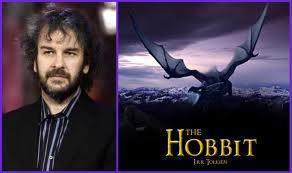
We rejoiced to learn that Peter Jackson is bringing Legalos into a prominent role in The Hobbit. Well, a few raised eyebrows, since Legalos was not even referred to by name in The Hobbit when he appeared flanking his father, the King of Mirkwood.

We accept, even with a bit of jealousy that he can fight at Helms Deep for five days, or run non stop for three and still not need to brush his immaculate hair. Nor do we care that his quiver seems to replenish itself, an occupational hazard of any archer who fights battles every other day.

We don’t mind because elves epitomize something that we identify with. We all want to be beautiful, brilliant, in excellent physical condition and, of course, environmentalists. When R.A. Salvatore created Drizzt Do’Urden and the dark elves of Menzoberranzan, a giant underground drow city-state he broke new ground.

Many of us were repelled and had it not been created in the hands of a master of fantasy, we would have rebelled. It was daring, it worked and by Book Three, we were rewarded with the typical elf one finds above ground.

It is tough to turn away from the basic tenets of epic fantasy: the teacher and student, the quest, the fight against a powerful evil, dwarves, elves, dragons, a rich natural world. There is something that has entered our collective consciousness and taken root.

It is why we read and reread the masters…and it is why we will return to read those who take over the role of entertaining us in a way that only epic fantasy does.

 =========================================

Alon Shalev is the author of the 2013 Eric Hoffer YA Book Award winner, At The Walls of Galbrieth, offered by Amazon.com  for FREE on November 17-19. The sequel, The First Decree, and Ashbar – Wycaan Master Book 3 are all released by Tourmaline Books. More at http://www.alonshalev.com and on Twitter (@elfwriter). Hang out with Alon on Google+

Interview With An Elf

This post has been sponsored by Tourmaline Books:  Award-winning epic fantasy ebook, At The Walls Of Galbrieth @ $0.99  only until Sunday – http://wp.me/p1Xaeb-fS  – It Was 99 Cents!

Wycaan Master 1 Just Front Cover

INTERVIEW WITH AN ELF

Interviewer: I would like to introduce Chamerak, an elf who appears in At The Walls Of Galbrieth, the first Wycaan Master novel by Alon Shalev.  Welcome, sir, and thank you for agreeing to the interview.

Chamerak: My pleasure. It is an honor to represent my people to receptive humans,

Interviewer: Receptive? Can you explain?

Chamerak: Once, long before you and I were born, a council that had representation from all the four races ruled the land of Odessiya. Eventually, humans broke from this coalition when they were discovered to have large colonies of slaves mining rich lands beyond our boundaries.

Most of those who were slaves then were dwarves, and the dwarves here insisted they stop. Slavery was not tolerated in Odessiya. There were the rich and the poor, to be sure, but every individual, regardless of race, had inherent rights.

Interviewer: What happened?

Chamerak: As well as large colonies of slaves, these humans had built huge armies too. There was a series of battles, culminating in one great battle. That was our most tragic moment.

The elven leaders had tried to broker between the humans and dwarves, though we were clearly on the side of the latter. Still, we had helped to find a diplomatic solution as we had for centuries since the great council had begun.

We spread our leaders too thinly and when the battles joined, our people were massacred. The humans won a decisive battle, the powers of the Emperor and his cronies were revealed. The dwarves, what were left of them, disappeared deep underground, and my people became a slave nation.

Interviewer: Literally slaves?

Chamerak: Yes. Those in the cities lived under total servitude. Others found refuge living in remoter villages, where they paid for their restricted freedom with crushing taxes that prevented them ever moving above the strain of poverty. Humans often came to have sport ­­– there were those who collected our pointed ears as trophies – or take if they wanted food or worse.

Interviewer: And all humans were like this?

Chamerak: Generally, yes. After a few generations, it became normal for them. They knew little else and were indoctrinated from birth to look down on us as an inferior race. But there were a few who were not like that.

In At The Walls Of Galbrieth, you will meet Uncle. He led a band of elves into the great forests, to live as freeborn and help other elves escape. Not long after I joined his band, we captured some humans. They did not fight us, but neither did they cower. We took them prisoners and a strange dynamic happened.

As we interrogated them, they began to ask us questions. At first, we thought it was a ruse to discover our secrets: where we hid, who our leadership was, and things like this. But they were different and we made a discovery that filled us with hope. Uncle, in his wisdom, was the first to realize this. I must admit: I wanted to execute them on the spot for just having round ears. I was young then and my life had been hard, though no different from those around me,

00013

Interviewer: What did this Uncle discover?

Chamerak: That not all humans were bad. That in the same way they had stereotyped us as stupid, inferior, lazy, unhygienic, etc., we too had stereotyped them as one type of human: violent, power-hungry, racist, you know.

Interviewer: What happened next?

Chamerak: Uncle invited them to join us. We kept them in a separate camp for a long time. But eventually, as trust grew between us, we became one band. Word spread of our mixed group and others sought us out. Other groups formed, including some who were committed to teaching rather than fighting.

Gradually, the old stories were told and there was an awakening of an older conscious. It is, I believe, what brought the Wycaans back into our histories, and what facilitated the coming of the Wycaan Master.

Interviewer: I have heard a lot of rumors about him. What can you tell me about­–

Chamerak: These are early days and it is better not to reveal too much. Wycaans are not just elves, but can be from any race. They can be male or female. You have made assumptions.

Interviewer: My apologies.

Chamerak: Assumptions are dangerous thoughts. They are what brought us to the racist society we live in. But there is hope.

Interviewer: How?

Chamerak: As long as the stories are being told, the narrative is being formed. It will be challenged and evolve and, hopefully, change for the better. It is the power of the books.

Interviewer: Rather fantastical, no?

Chamerak: Epically so.

images

——————————————————————————————————

Alon Shalev is the author of the 2013 Eric Hoffer YA Book Award winner, At The Walls of Galbrieth, Wycaan Master Book 1 and The First Decree, both released by Tourmaline Books. Ashbar – Book 3 – is due for release in October 2013. Shalev is also the author of three social justice-themed novels including Unwanted Heroes. He swears there is a connection. More at http://www.alonshalev.com and on Twitter (@elfwriter).

Guest Post from Elwin Cotman – exciting young author.

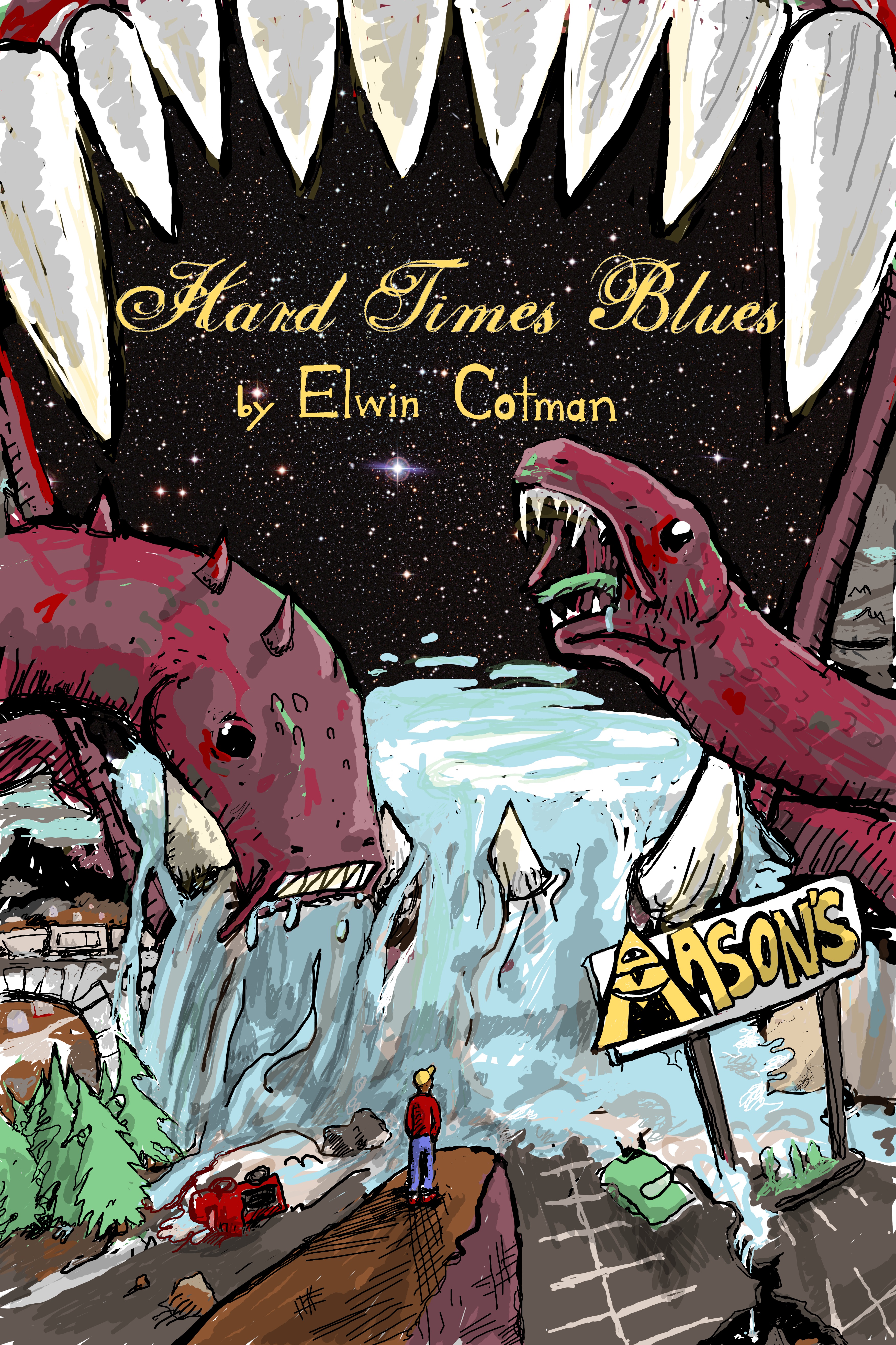
Elwin read his previous collection, The Jack Daniels Sessions to our writers group. His new book – Hard Times – is out and his book launch is at Pegasus bookstore in Berkeley later this week. Elwin has a uniques way of writing, but his voice when reading is amazing. Well worth an evening.

Me3

Back to Reality

1To the bearer of the sandbag: slide back two steps for every one you gain, because the levee does not give ground easily.

2Leper steps, needles pricking his calves and thighs.

3His life measured in steps of ten, one after the other, then again.

4Behind the rifle aimed at his cheek: a hairy face plastered with three stripes of black hair and his

5Eyes like the heads of rusted nails, lips drawn back from broken teeth.

6The deputy kept as close to him as a brother, his curses swallowed by the storm.

7Or maybe he had lost his voice and moved his mouth in hateful habit.

finalcoverhardtimesblues1           

The above excerpt is from “The Revelation of John,” a story in my new collection Hard Times Blues. It deals with the Flood of ’27, when terrible storms devastated the Mississippi delta. Blacks along the Mississippi lost their crops, their livelihoods. They also lost their freedom: black men, like my protagonist, were forced to work the levee in a vain attempt to stop its breaking. Equally as terrifying was the aftermath, when the Army Corps of Engineers abused the blacks who survived. It is a tragic event in US history, and most people I’ve met have never heard of it.

But it is a part of our history. And my genre of choice—fantasy—is the perfect way to explore it.

I write fantasy because it is fun. The inclusion of dragons and elves automatically makes a story more engaging for me. However, my subject matter is often not fun. Even in entertainment, the tragedy of the black experience is inescapable. Nor should it be escaped. It should be dealt with head on so that the world does not forget. The events of Hurricane Katrina becomes especially egregious when people know the same thing happened almost 100 years ago. Past and present are one.

As a kid, I spent my days and nights in Prydain, Narnia, Redwall Abbey, and Krynn. I always felt left out because there were hardly any black characters in these stories. It was when I read Toni Morrison’s Beloved that I saw how fantasy could tell my American story. Here was a horror story, with all the dread and uncertainty that makes good horror. The horror itself stemmed from slavery. The ghost of the dead daughter served to make the story more realistic; a key to learning the degradation of black people.

In my work, I explore historical injustice, police brutality, gentrification. They stem from of a desire to bring these issues to light, but also because they reflect my experience. My world is a multicultural one, and my writing is my truth . . . filtered through dragons and zombies. I once asked Charles de Lint, who some consider the father of urban fantasy, if he ever ran into resistance from publishers for writing black and indigenous characters. His reply was that any publisher who had those reservations wasn’t worth his time.

De Lint is a wonderful fantasist, with stories of fairies and bards that would enchant you. More important, his work is compassionate, addressing the lives of the indigenous, the homeless, the survivors. His writing brings you back to reality.

That’s what fantasy does for me: it brings light to the real world. It also offers the perfect platform for tales of heroism. The Afro-American experience holds numerous stories of rebellion against overwhelming odds. Thanks to fantasy, I have the language to honor this history and heroism.

 ———————————————————————————————————————————————

Elwin  Michael Cotman is a writer of urban and folkloric fantasy. He blogs at www.lookmanoagent.blogspot.com. Hard Times Blues can be ordered on Amazon,com here.

Gotta Love Terry Brooks

Just two weeks ago, I whined in Elves, Dwarves and Political Activists about being embarrassed that I write about elves, that people won’t take me seriously when I say I want to influence the values of the next generation, something I wrote about when I first started along this path back in 2011.

It’s nice to know that I am not alone in having to justify why I love to write about elves and dwarves. Terry Brooks, one of the greatest epic fantasy authors, has been facing these questions for over 30 years. You would think, given that he is a bestselling author, that people would cut him some slack.

 terry-brooks-150x150

But Mr. Brooks is the ideal person to deal with this, because he is…well he is…simply a mensch as I mentioned only a few months ago.

Grab yourself a cup of joe and sit back. Here in 15 minutes, he provides his answer, with a smile, a joke, and the confidence of one who is a master of his craft. Best of all, he does it with such humility and modesty.

 Gotta love Terry Brooks!

Enjoy the Solstice, everyone. From tomorrow we can now greet each other with Winter is Coming!

—————————————————————————————————–

Alon Shalev writes social justice-themed novels and YA epic fantasy. He swears there is a connection. His latest books include: Unwanted Heroes and the 2013 Eric Hoffer Book Award for YA – At The Walls Of Galbrieth. Alon tweets at @alonshalevsf and @elfwriter.   For more about the author, check out his website.

Elves, Dwarves and Political Activists

“You can’t be serious!” she exclaimed, wrinkling her nose as though I had just made a pass at her, or uttered a politically incorrect sentiment. “You write about elves and dwarves running from one end of the world to another killing each other and making long speeches? I thought you were a serious writer.”

In honesty, she had not seen me for a few years, and even then, knew me in the context of my more political work environment. To her credit, she recovered and apologized, and I was able to refrain from pouring my drink into her lap. It was, after all, a good scotch.

images-2

Friend or not, intentional or not, it still hurt. I thought I had past this stage, smoothly presenting myself as ‘an author who writes in two genres’. I have practiced my opening line and it is now delivered with confidence.

I am involved in social justice causes. Even in my short eight years living in the US, I have built a fair resume of involvement. I have taken students almost every year to New Orleans, not only to help rebuild a community, physically and emotionally, but to bear witness so that the millennials will not make the mistakes we have. I have been involved in various campaigns here and abroad.  I know my local food bank well. Hey, you never had a black President before I came to the US! 

But yes, I love to lose myself in Middle Earth, Alaegasia, Westeros and, dare I add it to the list: Odessiya. It’s a nice break from the intensive campus environment to deal with stubborn dwarves and idealistic elves. While closeted in an urban concrete jungle, it is relaxing to ride a horse through ancient forests, over great ice plains, and to quaff an ale or puff a pipe (without the health risks) with good friends, all from a computer screen or ebook reader.

Fantasy1

 The San Francisco Bay Area is intensely populated by variety of the human species often identified by salt-and-pepper haired, wrinkled, colorful attire, and provocative bumper stickers. These aging ideologues have rich resumes of demonstrating against wars, civil rights. Watergate, and more recently, more wars, gay rights, and gun control.

While there are many who have fallen by the wayside, succumbing to burnout, those who have maintained their energy to keep demonstrating and fighting for what is right, all seem to have a secret place they go to recharge, relax, and to return energized to make the world a better place to live in. It might be literature, meditation, family, friends, food, nature … it doesn’t matter. As a friend once said: Fixing the world is a marathon, not a sprint.

hobbits in pub

Yeah, I write about elves and dwarves doing brave acts and striving for justice and honor. Sure I write about battles and loves, about friendships and magic, about the power of nature and good fighting evil.

It energizes me, often provides clarity and vision. And if I do occasionally wonder what Seanchai or Shayth might do about gun control or why some people are denied the rights and opportunities their neighbors have, well that’s because fantasy is not quite as far-fetched and detached from reality as my shocked friend might think.

God created the world in six day and on the seventh s/he rested…and may well have deservedly read Lord of the Rings.

 images-3

Here’s to whatever it takes for each of us to continue the journey we’ve chosen!

—————————————————————————————————–

Alon Shalev writes social justice-themed novels and YA epic fantasy. He swears there is a connection. His latest books include: Unwanted Heroes and the 2013 Eric Hoffer Book Award for YA – At The Walls Of Galbrieth. Alon tweets at @alonshalevsf and @elfwriter.   For more about the author, check out his website.