The Gods of Fantasy

Pass a summer evening in a quaint English pub, mid 20th century, perhaps in the old town of Oxford. Caress a pint and listening to a few graying professors discuss semantics, philosophy, and the ancient languages long forgotten outside the sheltered walls of academia. What else can one possibly ask for? 

imgres-1Imagine these tweed-clad, pipe-smoking academics, hatching more than another challenging semester to try the greatest minds of this fair isle. Each is a king in the making or, more accurately, a kingmaker. For they direct more than the destiny of kings and noble houses. They raise kingdoms and conquer lands. They build great dynasties, bring whole species back from the mists of extinction, and set those of noble birth and principle to stand against evil.

Sip your beer, mull over the words, much of which you might not understand. Dwarves, elves, of course: but hobbits? Marsh-wiggles? Listen as the professors strategize great battles, masterfully marshalling unicorns, dragons, giants, minotaurs and proud ents. 

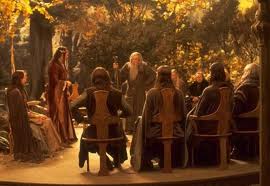
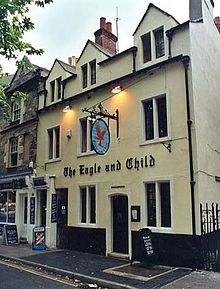
You slowly realize that you sit among the Gods, the creators of Middle Earth and Narnia, who hold court on Tuesdays at midday in a local public house. Perhaps it is The Eagle and Child, or The Lamb and Flag across the street. They read each other’s work and offer critique as writer’s groups have for centuries and continue to do so today.
220px-Birdandbaby 

I may never have understood much or been accepted into such an elite. They would have torn my work to shreds on grounds of philological shallowness (I had it checked – it’s not contagious), criticized me for imprudently suggesting that a 100,000 word novel can serve as more than merely an introduction.

They would have demanded richer world-building – take twenty pages to describe a forest, I dare you – unyielding heroes, and infallible plots. They would have challenged the age-old legends dressed up in fictional costumes, and raised an eyebrow at some of the language or innuendos.

Most likely, I would never have dared reveal my stories to the old professors of Oxford, to the most famous writing group in history. I would never have been more than a fly on the wall at a meeting of The Inklings, but would have returned week after week to sit at the feet of the Gods and hear their banter.

For here the Gods gave birth to great worlds and left them as a legacy to us and to our children, long after they departed this world. Every Wednesday night, I sit around a table in a coffee shop in Berkeley, sharing work with other aspiring authors and wonder: do the Gods look down upon us from Writers Heaven?

 lewis-and-tolkien1

Do they tut and shake their heads at our adverb addiction, our unwillingness to kill our darlings? Or do they even now move pieces around the literary chessboard? Protect the king! Advance the knights! Who, I wonder, are the pawns?

As we write a new book, a new chapter, do we not imagine the Gods walk among us?  Do they peer over our shoulders at our swanky writing machines, judging every word we write, every world we build? 

The Gods once sat in an old English pub. Now they stand behind us in coffee shops and at kitchen tables, urging us on, watching us walk the path they forged, taking on the quest they started.

For the Gods still walk among us and inside of us. The stories have been told but must be told again in different ways to a different generation. We sign these books in our own names, but humbly acknowledge those who molded us in their image as storytellers.

And now they are the flies on the wall and we who pound the keyboards. Take a moment, draw another pint, and raise your glass:

To the Gods of Fantasy!

—————————————————————————————————–

Alon Shalev writes social justice-themed novels and YA epic fantasy. He swears there is a connection. His latest books include: Unwanted Heroes and the 2013 Eric Hoffer Book Award for YA – At The Walls Of Galbrieth. Alon tweets at @alonshalevsf and @elfwriter.   For more about the author, check out his website.
 

Finding Mythical Places Everywhere

A while ago, I wrote a post about meeting elves in coffee shops. The point was that…well you can read the point for yourself, but there is more along these lines.

I grew up in England with real castles, stately homes, wattle and daub cottages, and signs of a more ancient, Pagan culture everywhere. I was not writing fantasy back then but imagine I would find a lot of inspiration there. Two weeks sitting in a castle in Wales writing – is that a business expense?

Meditation

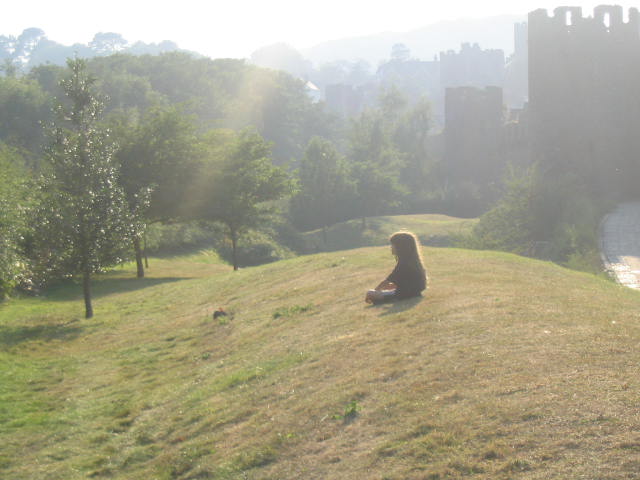
My eldest at Conway Castle, Wales, several years ago. He sat there for hours, transfixed in a world of his own.

But we actually don’t have to travel too far. I attended a conference in the heart of Washington ‘DC Chinatown. I stepped outside the meeting room on the 7th floor  for some fresh air and stared at this:

Ruins by Hillel SIC

Today, I was at the Ferry Building in San Francisco and noticed Old Glory flying at half-mast in respect of the victims of the Boston Marathon attack. The sky was a rich blue and the flag and tower looked glorious. I could imagine Seanchai and friends arriving on a boat (do you pay the toll riding over the Bay Bridge on horseback? Do three horses and riders make a posse or qualify for the casual car pool?).

Interestingly, I crossed the Embarcadero between the Ferry Building and Bay Bridge and saw a restaurant with gargoyles and (what looked to me) a sign that could have been written in Medieval lettering. It could have been a tavern or pub for thirsty travelers before they put five Peet’s Coffee and nine Starbucks in the mile-square Financial District.

My point is that writing fantasy is as much a state of mind. When I am actually writing a story (as opposed to editing or marketing), which is about 4-5 months of the year, I notice these things as though they are only around for this time of the year.

Tunnel

Picnic at our local park. Younger son discovered this tunnel. We sat in here and discussed how to use it in the book I was writing at the time.

It is why I see elves in coffee shops and get invited underground by hospitable dwarves. It enriches the already beautiful vistas, forests and rivers of Northern California where I explore. It is what makes my kids and I respond when we see a beautiful natural scene by exclaiming: Alagaesia! (You can blame Christopher Paolini for this. I hope he’s touched).

It is why Terry Brooks claims that ‘Sometimes The Magic Works.

Have a mystical weekend.

—————————————————————————————————–

Alon Shalev writes social justice-themed novels and YA epic fantasy. He swears there is a connection. His latest books include: Unwanted Heroes and At The Walls Of Galbrieth. Alon tweets at @alonshalevsf and @elfwriter.  

Everyone Wants To Be An Elf

How many times have you uploaded an article or song on the Internet and then got lost surfing through hundreds of comments underneath? Whether discussing politics, sports, or comparing the lead singers of Nightwish, it gets ugly very quickly. If you need to stock your insult arsenal, You Tube comments is the place to go – but a shot of JW or an anger management course might be more effective, long term…just saying, calm down.

Earlier this week, I played a Gothic music play list (that I can’t find now) while I wrote a new chapter for Book 4 of the Wycaan Master series. I made the mistake of perusing the comments and they were eye opening.

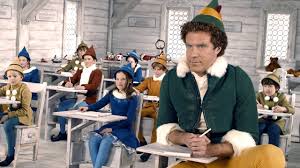
Tens of people (and I did not check all 2,000+ comments) wrote why they would love to be an elf. Just for the record, I believe people were imagining Legalos and not Will Ferrell or any of his fine companions.

 imagesimages

But there they were: some frivolous, but many, well, I believe laced with a genuine desire. They seemed to resonate with something deep inside, something lost.

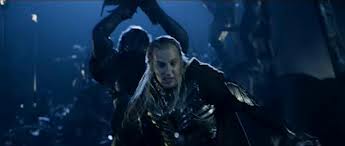
Some spoke of the physical attributes – tall and thin, healthy (have you ever seen an elf sneeze? – they even die beautifully – yes I’m talking about you, Haldir, at Helm’s Deep, I’m sure you remember), long living, nimble, coordinated… 

images-1

Others mentioned emotional attributes – decisive, confident, calm, intelligent, loyal mates (I plan to research this – I did a quick search for the Rivendale Daily Enquirer but they only distribute in the Western Isles).

And there was also an interesting assortment of comments such as: they could trust their leaders; they were in touch with nature… 

When I began writing the Wycaan Master series, it was clear to my sons and me that we didn’t want to make the elves (most of our protagonists) perfect. They get angry, make wrong decisions, feel abashed at that first kiss, and seem more…well human (ouch!).

In fact, one of the comments that surfaced as I read At The Walls Of Galbrieth to my writer’s group wass that I failed to distinguish them as elves. I struggled to do this without stepping into the familiar stereotypes. As I write Book 4, things have become somewhat darker, with the protagonists facing greater personal challenges. I continue to find it difficult to strike a cord between making my elves special without them losing their genuine, vulnerable side.

Finally, as I write this, I am listening to The Hobbit soundtrack. There is a long thread of comments, disagreements, and debate. But this is the comment that caught my eye:

RobbieBjork17 wrote: “Holy Crap that was one_ of the most educated conversations I’ve ever read on youtube…. shoulda known it was going to be Tolkien Fans ;).”

It made me absurdly proud to feel a part of the Epic Fantasy nation.

images-2

——————————————————————————————————

Alon Shalev is the author of At The Walls of Galbrieth, Wycaan Master Book 1 and The First Decree, both released by Tourmaline Books. Shalev is also the author of three social justice-themed novels including Unwanted Heroes. He swears there is a connection. More on Alon Shalev at http://www.alonshalev.com and on Twitter (@elfwriter).

Quite A Week

It has been quite a week for me. First, thank you to everyone who left such beautiful reviews both on amazon.com and across the pond at amazon.co.uk. In fact, both At The Walls Of Galbrieth and The First Decree are doing well there. I’m not sure what happened, but I received over 300 hits on Wednesday in an hour in the early California light. So whoever sparked it – I thank you too. 

I finished my own edit of Ashbar, Wycaan Master Book. 3, and sent it under the scalpel of the Master Surgeon (or Mistress Editor to be more accurate), Monica Buntin. While I wait, it is an opportunity to get back to writing Book 4. I wrote over 40,000 words during the Xmas break and I can’t wait to hit that keyboard – so much easier than a treadmill. I also left a few characters hanging and I need to apologize to them and let them move on.

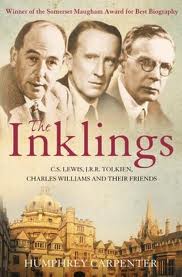
I discovered, and I realize that 90% of those who read this blog are about to roll their eyes, that J R.R. Tolkien and C.S. Lewis were part of a writers critic group at Oxford. It blew my mind and I scuttled off to find a copy of The Inklings by Humphrey Carpenter, who also wrote a great biography of the Professor. More on this when I actually finish his book.

imgres

Finally, The Hobbit came out on DVD and BluRay. In case you have never heard of this movie, Yahoo Movies offered us two delightful caveats.  I particularly loved their chart to differentiate between the races, but their behind-the-scenes video was cool as well.

_ylt=AsAy3VcY8kcvndsOg1BnmyK4AOB_;_ylu=X3oDMTFpOGpyZm1sBG1pdANCbG9nIFBvc3QgQm9keQRwb3MDMgRzZWMDTWVkaWFCbG9nQm9keUFzc2VtYmx5;_ylg=X3oDMTMyZnNiMWtvBGludGwDdXMEbGFuZwNlbi11cwRwc3RhaWQDZmMyZjgyNWQtMmUwNy0zN2NjLTk2OWEtM2IzNTEyMWQ1MzdhBHBzdGNhdANibG9nc3xt

I couldn’t see how to download it, so please accept The Song Of The Misty Mountain in its place.

——————————————————————————————————

Alon Shalev is the author of At The Walls of Galbrieth, Wycaan Master Book 1 and The First Decree, both released by Tourmaline Books. Shalev is also the author of three social justice-themed novels including Unwanted Heroes. He swears there is a connection. More on Alon Shalev at http://www.alonshalev.com and on Twitter (@elfwriter).


Why Epic Fantasy Can Be So Profound

The Lord of the Rings is a story (or several stories) about elves and dwarves and dragons and quests. And yet, professors sit in their Ivy League towers and dig deep into the story, seeking meaning, analyzing plot and characters, symbolism and analogy.

Grown men and women who read the books 20 or 30 years ago, continue to debate the values and meaning, while counting down the days from one epic movie to another. We reverently pass on the books, DVD’s and walk our children to the movies – a sacred rite of passage.

Here is a documentary that not only analyzes these aspects through a variety of knowledgable men and women with delightful accents, but also the symbiotic relationship between Tolkien with C.S. Lewis. Both men’s motivations and writing, for example, were shaped through their experiences in World War 1. They went on to create two of the greatest epic fantasy series ever. It is thirty minutes that are well worth the time.

lewis-and-tolkien1

So please, grab yourself a mug of ale, light up the Longbottom leaf, and enjoy a revealing explanation of a unique man who blazed a path for so many who came after him.

As one who owes him so much, I am truly humbled.

One last point: if you have the energy,  browse through the comments under the You Tube video. It is amazing how many people had such difficulty reading the LOTR and yet still have a deep appreciation for the work.

——————————————————————————————————

Alon Shalev is the author of the 2013 Eric Hoffer YA Book Award winner, At The Walls of Galbrieth, and five other Wycaan Master books all released by Tourmaline Books. The link above takes you to the Kindle versions. For all other eReaders, please click here.

More at http://www.alonshalev.com and on Twitter (@elfwriter).

What If Humans Were Real?

What if elves were real? There are those in the south of England who believe that elves exist. I heard this when researching for A Gardener’s Tale.  When a twitter friend shared with me that he had heard of this in the north of England, it made me wonder…

Delyphin rubbed the points of his ears as he waited for Harwin who was always late. He checked his watch. They would have to walk fast to reach the bookstore before the famous author began his reading. 

“Sorry, I’m late,” Harwin said as he jogged up.

They set off, hands in pockets. There was no point in chastising Harwin – it simply didn’t help.

“I‘m looking forward to this,” Harwin said. “I loved ‘Lady of the Earings’. The way that professor describes these mythical humans, I really begin to feel they exist.” 

I nodded, too winded to comment. The professor was a strange chap, lecturing at an elite university on ancient elven languages. They say he even invented an entire human language – as if all humans would speak the same language. Still he was a master of the epic fantasy genre.

We enter the bookstore, which is full and grab the last two seats.

Harwin leans in. “I hear he is planning on sending the humans on a new quest, that their world is threatened by some strange energy – ‘oyl’ – that is expensive, polluting and they go to war over it because there isn’t much.”

“That’s a bit of a stretch,” I say. “His humans are too smart to do that. Besides, they have the sun, the wind, and the waves of the ocean just like us. Why would they use this oyl?”

Harwin smiled. “You look rather irate. You might start believing in these humans too.”

“Don’t be daft, Harwin. That’s the beauty of epic fantasy. You get so into the story that you begin to believe the characters might actually be real. Next thing, you’ll be swearing you saw someone with round ears.”

We both laugh. That would be a sight.  The room hushes. The professor is about to speak. He opens his new book…and the world of the humans becomes real as he reads…

I can almost see their round ears and their oyl.

——————————————————————————————————

Alon Shalev is the author of At The Walls of Galbrieth, Book 1 of The Wyccan Master series, which reached the Quarter Finals of the Amazon Breakthrough Novel Award 2012, released by Tourmaline Books. The First Decree, the sequel is due out in early 2013. Shalev is also the author of three social justice-themed novels: Unwanted Heroes, The Accidental Activist and A Gardener’s Tale. More on Alon Shalev at http://www.alonshalev.com and on Twitter (@elfwriter).

10 Takeaways From George RR Martin

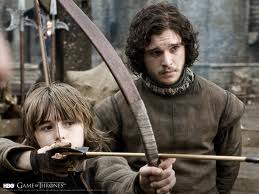
Isabel Berwick had lunch with Game of Thrones author, George RR Martin, and wrote this great article for the Financial Times. This post is not meant to replace it, but here are a few takeaways that stood out to me, for those of us who love and write epic fantasy. Please do read her article. It is very interesting, but be warned – it will make you hungry!

George RR Martin

1) During their lunch,  George RR Martin sees a map in Ms. Berwick’s “giant slab of breaded chicken.” He points to different parts and explains: “There are various little inlets where cities could be.”

I have seen elves in coffee shops and magical tunnels in my local park. These magical worlds are not hidden from us, they are right in front of our eyes.

2) Having famous fans of your works helps. Apparently, Facebook founder Mark Zuckerberg held a Game of Thrones-themed barbecue which made the news.

3) Martin didn’t have much as a child as his family struggled to keep financially afloat, but the seeds were sown – he was “the kid with his nose in a book.” Stephen King speaks of the need to be constantly reading – in your genre and outside.

 4) There are explicit sexual scenes in Game of Thrones (though I don’t remember much from the book apart from one scene – I have only read the first so far). This caught my attention because I use sex in my social-justice themed novels. Both A Gardener’s Tale and The Accidental Activist has vivid sex scenes. I believe these can reveal so much about a character, but I suspect HBO saw the fact that people like sex on their screens was reason enough.

5) It is okay to fail with a few books. Martin expected his breakthrough would come with his fourth book, Armageddon Rag, about a rock band. He concedes that: “it was the worst-selling of all my novels and essentially destroyed my career as a novelist at the time.” The most important lesson from this is DON’T GIVE UP!

6). When asked about his world-building, Martin, despite his success, is quick to give credit to J.R.R. Tolkien: “There were thousands of years of fantasy before Tolkien but the way it is shaped as a modern commercial publishing genre and the fantasy books that have been written in the past half century have all been influenced by Tolkien. So it still sort of defines the playing field.”

Martin has shown us that Tolkien’s legacy continues. People want to immerse into a rich world and are ready to read deep and vivid descriptions. 

7) Leave your own mark. Martin feels that his strong women, just as politically contriving and sexually adept, send a strong message that the female character needs to be as strong and vivid as the males.

I also think the way he perceives a hero is unique. John Smith and Tyrion Lannister are as close as I got to a hero (Edard Stark cuts a more typical Man For All Seasons-type hero). But they are clearly flawed and tainted enough to only just stand out from the rest. I admire this aspect of Martin – I am not aware who else succeeds in doing this.

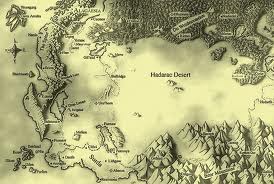
8) Martin believes that maps are very important. I have talked about them in this blog before, but he confirms the necessity. It was important enough, he notes, to be at the beginning of each HBO episode. 

 9) The reader is willing to cope with many characters. This means the writer needs to stay extremely organized. Martin has over 1,000 characters in his series and his plots are both complex and spread over years. 

There are many ways to keep track of plots and characters. I think methodology is a very individual choice and will touch on this in a later blog. What is certain is that the passionate reader will remember what happened several years ago and not forgive you the error.

10) Martin, the successful author is traveling around the world.  I am sure it is very interesting and gratifying, but you can tell a writer when he says: “These trips are fun but they do interfere with my writing.”

Write. Write. Write. This is a busy period for me at the work which puts the food on the table. Anticipating this, I am mainly editing and blogging. The next book will wait for a quieter part of the year. But man, am I cranky!  

Finally, I just loved this quote. It requires no comment.

“When I am writing best, I really am lost in my world. I lose track of the outside world. I have a difficult time balancing between my real world and the artificial world. When the writing is going really well, whole days and weeks go by and I suddenly realise I have all these unpaid bills and, my God, I haven’t unpacked, and the suitcase has been sitting there for three weeks.” 

If you’ve been there you know it. If you haven’t, I hope you soon discover it. Terry Brooks says that this is when the magic happens. Here’s to those magical moments: and many more books from the world of Westoros.

——————————————————————————————————

Alon Shalev is the author of The Accidental Activist and A Gardener’s Tale. He has written three epic fantasy novels and the first reached the Quarter Finals of the Amazon Breakthrough Novel Award as of March 2012. More on Alon Shalev at http://www.alon-shalev.com and on Twitter (@elfwriter).

Where Do People Like Us Hang Out?

“Go forth and find your target audience,” I was told and I posted a questionnaire that many of you were kind enough to answer (if you haven’t, it is not too late, and I do promise to share my findings).

“Keep defining and refining it,” my mentor continued and so I have a question for you.

Where do you hang out? Where do you meet others such as you and me; those who believe in elves, dwarves, noble quests, and dragons? And please don’t tell me: Alagaësia, Middle Earth or Shannara – I’ve been there and I never saw you!

When you don’t have your nose in an exciting book, where do you meet fellow fantasy readers? Do you frequent conferences? Do you read magazines (on-line or tree form)? Are you on a social networking fantasy site, a discussion group, or a fantasy book club?

Please leave your tracks in the comments below. It will help me find companions for my journey and help others find company too.

I appreciate your help. Oh, and next time you pop into Alagaësia, Middle Earth or Shannara, would it hurt to say hi?

Finally something totally unconnected to this blog: This past week Muslims were insulted, Christians died from the violence, and Jews were blamed. We are all victims when we set ourselves apart. Sometimes it just feels easier to lose yourself in the world of elves, dwarves and dragons.

May we all learn to celebrate our differences together and share the space. There is enough room for us all. Safe travels wherever your road takes you.

——————————————————————————————————

Alon Shalev is the author of The Accidental Activist and A Gardener’s Tale. He has written three epic fantasy novels and the first reached the Quarter Finals of the Amazon Breakthrough Novel Award as of March 2012. More on Alon Shalev at http://www.alonshalev.com/and on Twitter (@elfwriter).

Genre Conventions .v. Originality

“But this is how it’s done in epic fantasy,” I whine to my writer’s group. “It’s part of the convention.”

We are a bonded group, anxious to support each other and so I receive sympathetic smiles and diplomatic silence. The silence screams in my ears. I know they are right. If I have to fall back on a sentence like that, I am in trouble. Or am I?

How important is originality?

Utter originality is, of course, out of the question.” – Ezra Pound

Originality is nothing but judicious imitation.” – Voltaire

I feel better already.

It is better to fail in originality than to succeed in imitation.” – Herman Melville.

Ouch!

Elves are tall, thin, have pointed ears, and excellent hearing. They look good in green, and shoot bow and arrows with exceptional accuracy.  Dwarves are short, rotund, live underground, mine and play around with axes. This is so because J.R.R. Tolkien put the epic in epic fantasy with his Middle Earth series’. Are the rest of us thus condemned to be mere recyclers of his work? Maybe. But I am not convinced how this is different from any other genre: romance has the same images and general plot arc. So does suspense and horror. And don’t get me started on dystopian thrillers.

So why do we so enthusiastically embrace conventions in a genre? It might be because some themes are simply timeless. I’m thinking Beowulf (maybe written in the eighth century) and The Odyssey (sixteen centuries before that!). Tolkien would concede that he was not the first, but when something works, you build your own version of it, and sometimes your version is good enough to capture the imagination of a very loyal readership. But it is not just enjoyment. It is pure escapism to a world we can get excited about, to values we can admire or fear (or both). It is also something familiar, something soothing. 

And yet when we embark on a new epic fantasy series, or try the work of a new author, we are seeking both something familiar and something original. What makes each author since Tolkien distinct is some aspect of his / her work. The relationship between Eragon and Saphira (his dragon), made Christopher Paolini’s Inheritance series special. I have just started reading The Weight of Blood by David Dalglish (check out his cool book covers by Peter Ortiz) which is about two brothers (okay) who are not just orcs (hmmm), but half-orcs (ahhh). I was caught on page one. Dalglish has written a variance on the convention. So did R.A. Salvatore when he introduced Drizzt – a dark elf whose race were the opposite from the stereotypical elves. Five novels on, I am still intrigued. Daniel Arenson came up with his own original approach to dragons in the Song of Dragons series. 

Before I end, let me say how much I admire those who come up with something original – Hunger Games, Harry Potter, Percy Jackson – they capture us all and we devour their new approaches. But those who seek to ride their coattails are not so successful and I think this is very telling.

It says that while the fantasy readership will embrace a clever, well-written, new concept, that very concept might not establish itself beyond one brilliant author. Epic fantasy, however, with its elves, dragons and swords, continues to stand the test of time. This is not because our readership is lazy. Instead they demand depth – world building, characters, and a plot that offers a twist on a well-tested theme. They continue to surprise us with the familiar.

It’s a great genre to be a part of.

 Good Writing,

Alon 

—————————————————————————————————

Alon Shalev is the author of The Accidental Activist and A Gardener’s Tale. He has written three epic fantasy novels and the first reached the Quarter Finals of the Amazon Breakthrough Novel Award as of March 2012. More on Alon Shalev at http://www.alonshalev.com/and on Twitter (@elfwriter).