When Authors Reach For Immortality

Recently, I listened to an interview with the famous Israeli author, Amos Oz, a literary icon I grew up admiring. Now, well into his 70’s, he is as vibrant and inspirational as ever. There was something he said in the interview that resonated with me. He claimed to have made up a number of words that he used throughout his books. He was stoked one day when, while in conversation with a cab driver who did not recognize his passenger, the man used one of Amos Oz’s words. Oz suggested that his modest contribution to the Israeli language was his own brush with immortality.

imgres

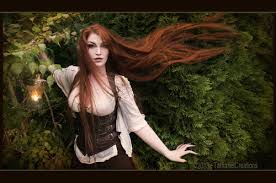
If this is so, I am quite proud of my own. When reading the manuscript of my first YA epic fantasy novel, At The Walls of Galbrieth, which won the 2013 Eric Hoffer Book Award for YA, to the Berkeley Writer’s Group, the female members of the group took exception to the term she-elf to delineate my female elves from males.

And so, after much discussion and debate, she-elves asserted themselves as elfes, and even saw the former term as an insult throughout the Wycaan Master series. Fast forward three years, and a newer member of the group while presenting his YA epic fantasy novel, used the same word, believing it part of the genre. I was, and remain, chuffed every time he uses the word.
images-6A friend from your writer’s group, is certainly a far cry from a random taxi driver (though no Israeli cabbie is ever random – you have to take a cab in Israel to appreciate them) of course. But I am hardly comparable to Amos Oz, an author widely expected to win the Nobel Prize for Literature.

And so I offer elfe to the epic fantasy world, along with calhei (elf children) and ahdahr (elf father). Last week, I mentioned that, while I have sent the manuscript of Book 4 to the editor, I am struggling with a title. The protagonist is a female, so I guess at least I have one word worked out!

—————————————————————————————————

Alon Shalev is the author of the 2013 Eric Hoffer YA Book Award winner, At The Walls of GalbriethThe First Decree, and Ashbar – Wycaan Master Book 3 – all released by Tourmaline Books. Shalev is also the author of three social justice-themed novels including Unwanted Heroes. He swears there is a connection. More at http://www.alonshalev.com and on Twitter (@elfwriter). Hang out with Alon on Google+
Big Characters Without Big Boobs

Last week I asked in my blog post, 10 Questions For J.R.R Tolkien, what questions people would like to ask the Professor if they had the opportunity. The answers were great, but one stood out for me.

A person with the twitter username @oneyearnovel (happy to enter your name and website) wrote: “I would ask if he ever considered a woman character who was not beautiful?”

 images-1

This got me wondering. When I began looking around for a book cover artist and shared my concept of Mhari, an elfe (the politically correct term for a female elf) and Seanchai’s teacher, I was offered sketches of buxom women with cleavage-revealing armor, muscled (bare) legs etc. You get the picture. I talk about this in an earlier post – Big Boobs and Book Covers. While these images might have sold more copies of At The Walls Of Galbrieth, the pensive, wise face that adorns the cover truly represents the wise, yet world-weary mentor for my protagonist, Seanchai.

Wycaan Master 1 Just Front Cover

I don’t in truth know if @oneyearnovel is correct that Tolkien’s females in his books are all beautiful, or if this is Peter Jackson pandering to what he believes his Hollywood audience wants. I have not read Lord of the Rings in years and can’t even recall a female in the Hobbit.

Tolkien students: please enlighten us on this in the comments.

imgres

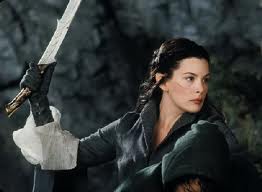
There are three main female characters who each leave an indelible mark on the first four books of the Wycaan Master series. Sellia is dark, exotic and beautiful, but she is also an excellent warrior and probably fits the stereotype. While I never talk about her breasts, hips etc. (this is YA), she intimidates the younger male elves and has them stuttering. She makes a game of eliciting a blush from Rhoddan or Seanchai.

Ilana is tough, an ideologue, constantly seeking a peaceful solution and offering Seanchai her unwavering support. As a romance blossoms she is viewed for her beauty, but it is seen through the eyes of one who is falling in love with her. Don’t we doting men all think our wives/partners are the most beautiful women in the world? Of course mine really is!

But Ilana is possibly the most popular character among readers, certainly female readers. It is not anything physical about her that binds the reader to her, but her deep principles, cutting sense of humor, and well just about everything else concerning her.

Maugwen is a human, short and pudgy. She is a weak character at first and I never meant to give her a long run. But she grows, matures and becomes a wise friend and strong individual. Readers have told me that she intrigues them and, just between us, she intrigues me.

We don’t make all our male characters handsome and ripped, so why our females? I think @oneyearnovel has a great point. Society expects us to bind ourselves to a pretty woman, and in truth, this goes for good or bad characters, but fiction has a responsibility to not only change with the times, but to be present at the tipping edge of that change.

It is very popular to write a coming-of-age novel. Perhaps it is time for our genre to come of age.

imgres-2

——————————————————————————————————

Alon Shalev is the author of the 2013 Eric Hoffer YA Book Award winner, At The Walls of GalbriethThe First Decree, and Ashbar – Wycaan Master Book 3 – all released by Tourmaline Books. Shalev is also the author of three social justice-themed novels including Unwanted Heroes. He swears there is a connection. More at http://www.alonshalev.com and on Twitter (@elfwriter).

I Didn’t Mean To Kill Her

I swear I didn’t. She is beautiful, funny and has a wicked repartee. My protagonist might be a bit wooden, excusable given all the tragic events he has gone through and the overall mission he is on. He is moody, serious, but very good at killing the bad people. While he has great depth, she lightens him up.

And I’m going to miss the sex. She is as creative in this realm as she is with her comments.

It was an accident. Really.

images-4 

An assassin came to kill the prince. The protagonist chased him all over the castle battlements. They both had bows and shot at each other from some really cool angles, or while jumping or falling. I had a great time and if there are any video game designers out there, it will make a great video game addition to the movie (oh, and if there are any producers out there…).

So the good guy and the baddie are running and jumping, and I’m having a ball as my fingers speed around the keyboard. Suddenly they find themselves face-to-face with the prince and my aforementioned heroine. 

Now all this had been planned, in as much as I thought of the chase while at the gym in the morning. What came next surprised even me.

images-2

Hero does a neat role and kills assassin, who gets off a shot at the prince. Sexy woman dives on the prince and takes the arrow herself.

Ooops!

I am staring at the screen. My reflexes press save and I curse that holy ethic that pompous authors such as myself are wont to say over a Merlot in a party (it would be legit to imagine mine accompanied by an English accent, acquired at birth, cultivated for maximum pretentiousness: “Oh yes, I let the story guide me.

Kind of like my protagonist and the prince, I am now staring at her prone, slight body, red hair splayed around her, and blood ominously seeping from her chest.

It was time to pick up my youngest from school. As we walked home, he asked if I was okay. “I have a problem,” I said and described the above scenario.

“Of course you can change it,” my 10-year-old says. “It’s your story,” and he spent the whole walk home offering various scenarios from his vivid imagination.

Sometimes it takes a child to add proportion. My fantasy woman will live… for now at least. I’m old enough to know I am not master of my own destiny, but I’ll be buggered if I cannot be master of my own muse.

images-5

So tonight I will make the necessary changes. And if the critic cops point fingers at me, I’ll just hold up my hands: “But… I didn’t mean to kill her.” 

——————————————————————————————————

Alon Shalev is the author of the 2013 Eric Hoffer YA Book Award winner, At The Walls of Galbrieth, Wycaan Master Book 1 and The First Decree, both released by Tourmaline Books. Ashbar – Book 3 – is due for release in October 2013. Shalev is also the author of three social justice-themed novels including Unwanted Heroes. He swears there is a connection. More at http://www.alonshalev.com and on Twitter (@elfwriter).

Where is the Moral Line in YA Fiction?

Since I wrote Wycaan Master with my (then) 11-year-old son, I assumed that our story fitted the Young Adult genre. It is a coming-of-age novel, so I never gave it much thought. There is no clear sex or profanity, though race is a big issue in the first book.

Since I have become absorbed in the fantasy genre, I have begun to wonder where the line is drawn. As I continue to write the second and third books in the series, intimacy has developed between characters, sometimes direct and at other times implied. There has been plenty of violence and references to overindulgence in alcohol. Colleagues at my writers group have questioned whether I should be including these themes.

As I began to research this, I found a number of excellent sources regarding YA fiction in general. Heather Dunlevy-Scheerer has written an interesting article about the historical development of YA literature.

She lays out several characteristics that she took from someone called Niday (I couldn’t find a clear reference).

(1) a teenage (or young adult) protagonist

(2) first-person perspective

(3) adult characters in the background

(4) a limited number of characters

(5) a compressed time span and familiar setting

(6) current slang

(7) detailed descriptions of appearance and dress

(8) positive resolution

(9) few, if any, subplots

(10) an approximate length of 125 to 250 pages.

From a brief skimming of the Internet, it seems that the common thread in YA fiction is an adolescent, rather than an adult or child, protagonist. However, the subject matter and story lines of leading YA literature are relevant to the challenges of youth, and more edgier novels include themes such as identity, sexuality, science fiction, depression, suicide, drug abuse, alcohol abuse, money issues, race, familial struggles, and bullying.

April Dawn Wells suggests seventeen common traits of young adult novels. These include: “friendship, getting into trouble, interest in the opposite sex, money, divorce, single parents, remarriage, problems with parents, grandparents, younger siblings, concern over grades/school, popularity, puberty, race, death, neighborhood, and job/working.

There are a number of YA novels currently in print that are on the edgier sides, dealing with peer pressure, drugs, gangs, crime, violence, sexuality, incest, oral sex, and female/male rape.

The obvious criticism of these novels is that they encourage destructive or immoral behavior or at least bring them into the adolescent’s mind at too early an age. Countering this is the fact that teens will be better equipped to deal with real-life difficult situations and social issues because they have role models in the protagonists they have followed.

Where is the line drawn in amount and nature of such issues between appropriateness and inappropriateness in young-adult fiction? How can we keep literature as a relevant medium when the exposure of TV, computer games and Internet is almost not monitored and easily accessible? None of these mediums, in my opinion, can offer the depth of thought and emotion that a good book provides.

Now more than ever, YA literature needs to stay relevant. Maybe the adults (including parents of teens like myself) have to accept that we might be more uncomfortable with this than our children.

——————————————————————————————————

Alon Shalev is the author of The Accidental Activist and A Gardener’s Tale. He has written two fantasy novels and the first reached the Quarter Finals of  the Amazon Breakthrough Novel Award as of March 2012. More on Alon Shalev at http://www.alonshalev.com/and on Twitter (@elfwriter).