Stand Up Fantasy Readers

I came out of the literature closet when I made the decision to find a way to have my Wycaan Master series published. My ego prevented me from using a pseudonym and I knew it was time to let the world know.

At first I kind of tagged a mumbled line into my elevator pitch: I write social justice-themed novels and also dabble in some fantasmmmm (imagine a hand rising in front of my mouth).

images-5

I was mortified when my boss’s wife turned to me one day and said her husband had told her I’m really into epic fantasy. I focused all my superhero strength on the ground opening up and swallowing me. Thankfully such talents are woefully non-existent because boss’s wife revealed with pride how she totally loves the genre and began reeling off her favorite authors and series. Then boss’s super-cool wife promptly sat on the stairs with my then 12-year-old son and talked for a half hour of their shared genre. He was beaming when I asked him how their conversation went.

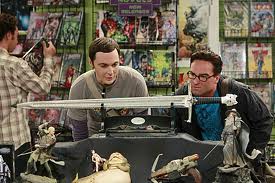
I discovered that, as I assumed more confidence in sharing that I write in two genres, people began to share their love for epic fantasy. I found that there were plenty of fantasy nerds (Big Bang Theory, anyone?) but there are also many very cool people.
images-6

As I begin to frequent the forums, I discover people who are deep-thinkers, who follow and critically analyze plots, world building, and character development. In fact, having participated in a fair share of workshops, read how-to writing books, and listened to countless authors, I have found these threads to be as profound and educational as any.

Fantasy readers are connoisseurs in the true sense of the word – a person who is especially competent to pass critical judgments in an art, particularly one of the fine arts, or in matters of taste (dictionary.com).

Last week I quoted from a comment on a long You Tube thread (I was listening to the Hobbit soundtrack) full of comments, disagreements, and debate. The author is RobbieBjork17: “Holy Crap that was one_ of the most educated conversations I’ve ever read on youtube…. shoulda known it was going to be Tolkien Fans ;).”

He (or she) knew something I didn’t. But then what can you expect from a genre led by two British Oxford professors!

Now I wear my genre on the side of my car and when I pick up commuters every morning at the casual car pool and they ask me about the car magnet, I reply: “I am an author. I write in two genres: social justice themed novels and YA epic fantasy.”

Image Car Magnet

And I say the last part without mumbling.

—————————————————————————————————–

Alon Shalev writes social justice-themed novels and YA epic fantasy. He swears there is a connection. His latest books include: Unwanted Heroes and At The Walls Of Galbrieth. Alon tweets at @alonshalevsf and @elfwriter.  

Book Review – Mrythdom: Game of Time – Jasper T. Scott

All The Right Ingredients

There are certain elements that ensure a smooth and entertaining read in the fantasy genre: innovative characters, a plot that moves along, plenty of twists and turns. Jasper Scott manages it all in effortless fashion in Mrythdom: Game of Time.

imgres

I have started a number of fantasy books recently and not been able to finish them. Scott’s characters stayed with me between readings – wondering how they were doing. His world-building is excellent. I didn’t think I would stay with a book that fuses SF and F, but Scott skillfully made it work.

His Meria society offers sexual tension that was enjoyable and tasteful. I had spent the best part of the 1st half wondering whether this might be another series to share with my teen son. The erotic tension was just right for it to be edgy without precluding a YA audience.

imgres-2Scott has set this up as a series. I look forward to the sequel and how Aurelius is going to succeed – if he is going to, that is. Either way, I’m enjoying traveling on the journey with him.

——————————————————————————————————

Alon Shalev is the author of At The Walls of Galbrieth, Wycaan Master Book 1 and The First Decree, both released by Tourmaline Books. Shalev is also the author of three social justice-themed novels including Unwanted Heroes. He is convinced there is a connection. More on Alon Shalev at http://www.alonshalev.com and on Twitter (@elfwriter).

I Need A Hero: Can You Kill Too Many Good Guys?

I’m reading (or rather listening to) a best-selling fantasy series. Each book is thick and extensive. The world-building is impressive, the multiple plots intertwine seamlessly, and the characters are deep and plentiful. 

imgresThis series has made my oft-challenging commute almost enjoyable and several times I have sat in the car outside my house waiting for a chapter to end. I dream about these characters and imagine myself alongside them.

 I am about two-thirds through the third book and happy to know that there are at least two more waiting in the wings. If I intersperse each book with something different, I can easily keep my commute comfortable until well into the summer.

But, and here is the reason I have not revealed the author or series, twice this week, as I was merrily driving home from work, a number of the good guys were put to the sword (or otherwise dispatched). Now, this is not the first time that our well-respected author has killed off heroes/heroines. He does it with drama, dignity and a huge amount of skill. He has left me in tears or sitting stunned at my driving wheel (hopefully while stationary) on a number of occasions.

But suddenly, I feel adrift. Each time one of my heroes dies, another emerges to take his (or her) place. These characters are usually in the background and, figuratively speaking, step up to the plate. And once more, our intrepid commuter is as happy as those drivers who gloat as they pass all the stationary cars while in the carpool lane.

imgres-4One of the fascinating aspects of this author’s craft is that most of his characters are not totally good or totally bad. It is challenging but possible to remain interested, even invested in some of the more fiendish without rooting for them. And there are plenty of characters with the potential to be heroes who fail or turn to the dark side (not a hint to the series).

But, suddenly, I am bereft of a hero: one who is fueled by noble principles, by a cause, and who is…well, heroic.

I find myself questioning my considerable investment in the series, the immense time I am spending on it, and even walk to my car with a certain level of tension and resignation. I am no longer sure with whom to stand when I dream and fantasize about the outcome. 

imgres-3

And so I must pose the question: Can you kill too many of the good guys and still engage all your audience? What say you, sir/milady?

—————————————————————————————————–

Alon Shalev writes social justice-themed novels and YA epic fantasy. He swears there is a connection. His latest books include: Unwanted Heroes and At The Walls Of Galbrieth. Alon tweets at @alonshalevsf and @elfwriter.  

.

Words of Truth – Terry Goodkind

“I like to deliver my philosophy at sword-point.” Terry Goodkind.

I was first introduced to Terry Goodkind, courtesy of Legend of the Seeker – his first two books serialized for TV. A handsome everyday hero, beautiful and oft-evil women, a quest, a sword, magic … need I say more?

imgresFor some inexplicable reason, despite solid ratings, the series lasted only two series. If you feel so moved by the injustice, you can join the Save The Seeker movement and show that there is a following for a third season.

I am in the middle of the second book and incredibly impressed with Terry Goodkind. He provides all the ingredients one would expect from a master of epic fantasy. In particular, his world building is so effortless and clear.

One warning: the books are far more gritty than the TV series. I’m not sure I would want my 14-year-old to read them, but having said that, some of the scenes that I am thinking of, are amazingly written. While I loved Legend of the Seeker, it is in no way a replacement for the books. I do wonder, however, having watched Game of Thrones, whether these gritty scenes could appear in a third series and whether this might propel Seeker to the same ratings as Game of Thrones.

imgres-1I confess to being a fan of authors and so went looking for some interviews with Terry Goodkind. The third and fourth interviews provide a great insight to a very unique man. This is a very cool interview.

But it is the first two interviews that really excited me. Last week I made a suggestion that epic fantasy can be a vehicle for imparting social values. In his ‘Confessor’ interviews, Goodkind articulates a similar perspective – and like his books, he is quite inspirational.

Make yourself a cup of coffee, put your feet up, and have a great weekend.

Elfwriter.

‘Confessor’ interviews:

Words of Truth:

——————————————————————————————————

Alon Shalev is the author oAt The Walls of Galbrieth, Book 1 of The Wyccan Master series, which reached the Quarter Finals of the Amazon Breakthrough Novel Award 2012, released by Tourmaline Books. The First Decree, the sequel is due out in early 2013. Shalev is also the author of three social justice-themed novels: Unwanted HeroesThe Accidental Activist and A Gardener’s Tale. More on Alon Shalev at http://www.alonshalev.com and on Twitter (@elfwriter).

Size – Does It Matter?

So shoot me for false advertising, but I have a dilemma. I shared with you last week in A Tribute to Editors that I have received my manuscript to At The Walls Of Galbrieth back from my editor with lots of cuts and corrections. As I worked my way through, accepting 90% of the changes suggested, I realized that my word count was dropping drastically.

I am about 80% through the novel, which began at 96,000 words and is now down to about 85,000.

Epic fantasy novels are thick tombs, offering the promise to get lost in a mythical world for a month or so. It is not a novel that you can finish in a weekend (unless your weekend is very empty and you are a fast reader).

Even Young Adult books make good doorstops. The Christopher Paolinis’ of this world have proved that teenagers will stick with a long story if it is compelling enough.

So my first question is: Is there a minimum length? When I was shopping the Wycaan Master series, there were publishers who stipulated a word range, often 100,00+. It might be that they expected their editors to attack it with a scalpel, much as my editor did.

My second question regards world building, something we have touched on before at elfwriter. A lot of the scenery description has been edited out. The editor, like many in the writing world, believes that you shouldn’t reveal everything: about a person, room, scenery etc., but allow the reader to create their own image.

Certainly, anyone who has read a book after watching the movie  (or the other way around) can appreciate this.

Tolkien, the master, spent pages describing the forests and the trees. Many of us loved this while others skipped these long descriptions. I wonder whether a young, undiscovered Tolkien would (and please pardon the expression) suffer the long red, sharpie lines through these sections of his work (or the Track Changes equivalent – but that’s not how I think of the old professor).

There is a middle ground. My editor has challenged me to integrate the descriptions within an action scene or as a pivot for a character’s self-reflection. This is a great point and I plan to experiment with this in the future. Do you know of any writers who do a good job of integrating description into the flow of the plot or character development, without it feeling like a ‘description-dump’?

So two questions here: Does size matter? How much description is allowed?

As always, I appreciate your feedback and guidance.

——————————————————————————————————

Alon Shalev is the author of The Accidental Activist and A Gardener’s Tale. He has written three epic fantasy novels and the first, which reached the Quarter Finals of the Amazon Breakthrough Novel Award 2012, is due out in January 2013 by Tourmaline Press. More on Alon Shalev at http://www.alonshalev.com and on Twitter (@elfwriter).

Genre Conventions .v. Originality

“But this is how it’s done in epic fantasy,” I whine to my writer’s group. “It’s part of the convention.”

We are a bonded group, anxious to support each other and so I receive sympathetic smiles and diplomatic silence. The silence screams in my ears. I know they are right. If I have to fall back on a sentence like that, I am in trouble. Or am I?

How important is originality?

Utter originality is, of course, out of the question.” – Ezra Pound

Originality is nothing but judicious imitation.” – Voltaire

I feel better already.

It is better to fail in originality than to succeed in imitation.” – Herman Melville.

Ouch!

Elves are tall, thin, have pointed ears, and excellent hearing. They look good in green, and shoot bow and arrows with exceptional accuracy.  Dwarves are short, rotund, live underground, mine and play around with axes. This is so because J.R.R. Tolkien put the epic in epic fantasy with his Middle Earth series’. Are the rest of us thus condemned to be mere recyclers of his work? Maybe. But I am not convinced how this is different from any other genre: romance has the same images and general plot arc. So does suspense and horror. And don’t get me started on dystopian thrillers.

So why do we so enthusiastically embrace conventions in a genre? It might be because some themes are simply timeless. I’m thinking Beowulf (maybe written in the eighth century) and The Odyssey (sixteen centuries before that!). Tolkien would concede that he was not the first, but when something works, you build your own version of it, and sometimes your version is good enough to capture the imagination of a very loyal readership. But it is not just enjoyment. It is pure escapism to a world we can get excited about, to values we can admire or fear (or both). It is also something familiar, something soothing. 

And yet when we embark on a new epic fantasy series, or try the work of a new author, we are seeking both something familiar and something original. What makes each author since Tolkien distinct is some aspect of his / her work. The relationship between Eragon and Saphira (his dragon), made Christopher Paolini’s Inheritance series special. I have just started reading The Weight of Blood by David Dalglish (check out his cool book covers by Peter Ortiz) which is about two brothers (okay) who are not just orcs (hmmm), but half-orcs (ahhh). I was caught on page one. Dalglish has written a variance on the convention. So did R.A. Salvatore when he introduced Drizzt – a dark elf whose race were the opposite from the stereotypical elves. Five novels on, I am still intrigued. Daniel Arenson came up with his own original approach to dragons in the Song of Dragons series. 

Before I end, let me say how much I admire those who come up with something original – Hunger Games, Harry Potter, Percy Jackson – they capture us all and we devour their new approaches. But those who seek to ride their coattails are not so successful and I think this is very telling.

It says that while the fantasy readership will embrace a clever, well-written, new concept, that very concept might not establish itself beyond one brilliant author. Epic fantasy, however, with its elves, dragons and swords, continues to stand the test of time. This is not because our readership is lazy. Instead they demand depth – world building, characters, and a plot that offers a twist on a well-tested theme. They continue to surprise us with the familiar.

It’s a great genre to be a part of.

 Good Writing,

Alon 

—————————————————————————————————

Alon Shalev is the author of The Accidental Activist and A Gardener’s Tale. He has written three epic fantasy novels and the first reached the Quarter Finals of the Amazon Breakthrough Novel Award as of March 2012. More on Alon Shalev at http://www.alonshalev.com/and on Twitter (@elfwriter).

I’ve Never Been In A Dwarf’s Cavern

I must confess: I’ve written almost 300,000 words of epic fantasy (three books) and never seen a dwarf’s cavern, an elf’s tree city, or a troll’s rock cairn. Now this might lose me credibility with readers, but after being complimented for my world-building by an editor at an established publishing house, I was asked from where I derive my inspiration for world-building from a fellow writer who is struggling with this important aspect.

My non-fantasy novels, The Accidental Activist and A Gardener’s Tale, were both situated in my native England, and my upcoming novel, Unwanted Heroes, is based here in San Francisco. I’m not sure if I chose these surroundings as much as absorbed what is around me into my stories. It is, I guess, what allows me to see elves in coffee shops.

I think the process is the same for me when I build my fantasy worlds. I am blessed to live surrounded by the natural beauty of California and its surrounding states, it is important to not only admire the majesty of the area but see it through the eyes of your protagonists. Three examples come to mind.

I have shared how my journey into the world of fantasy was prompted by my eldest son (then 11-years-old) complaining that I shouldn’t be writing while on vacation. I challenged him to write something with me and make it a family activity (the desperate games we play…) and there under the watchful eyes of the redwoods, we began our journey. 

It was easy to see our young heroes seeing these noble trees and the vines that hang in the forest where we were camping. They were ambushed as they passed a rock enclave, almost hidden by moss, that was a five minute bike ride from our tents.

On Monday, I will travel to an annual professional conference in St. Louis, where we have met for the past two years as well. To give us a break from the intensity of the conference, the organizers arranged a trip to a children’s museum. The incredibly creative designers had thought to fill their vast basement with caves and caverns.

While my colleagues snuck off to a nearby bar, I walked through these caverns imagining what it was like to live as a dwarf underground. I’m not sure what my biggest mistake was: missing out on a social mixer or admitting to my colleagues why I had declined their offer.

Finally, this year we traveled to Crater Lake in Oregon. Jutting out from the deep blue waters is an island called Magicians Island.  The audiovisual told us that the name came because it reminded the explorer of a wizard’s hat. I sat on the ridge overlooking the island, saw the steep grey rocks, the windswept trees, and the ospreys flying overhead.

Book 4 has a base from which to begin…

——————————————————————————————————

Alon Shalev is the author of The Accidental Activist and A Gardener’s Tale. He has written three epic fantasy novels and the first reached the Quarter Finals of the Amazon Breakthrough Novel Award as of March 2012. More on Alon Shalev at http://www.alon-shalev.com/ and on Twitter (@elfwriter).

The Art of World-Building

When the hobbit walked through Mirkwood, we all walked with him. We knew exactly how the trees looked, how the wind moved their branches, what the ground felt like as one fur-soled foot pressed down. We could smell the rotting leaves and…We were there as the master welcomed us into Middle Earth, his world. We were his honored guests and when we returned to this world, we felt a sense of loss.

No one, in my humble and uneducated opinion, has ever created a world in the rich way of J.R.R. Tolkien, and perhaps no one ever will. There are some among our younger readers who skip or skim the long descriptions. Do I need to know what every tree in the forest looks like?

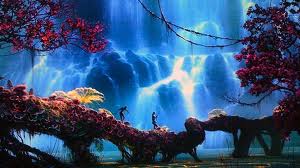
And yet these same young people marveled over the world of Pandora from James Cameron’s Avatar. I am closing in on finishing the third of the Wycaan Master novels and will then begin another edit of the first book before passing it on to more professional hands.

One of the aspects that I want to focus on is how well have I described the land in which the story transpires. There is a lot of traveling and many different climates and natural wonders, as well as villages and cities, which are described. When I wrote the first book, it was in close collaboration with my then 11-year-old son. I was very conscious of maintaining a fast pace. The second and third books were more my own work, with my son reading and giving me feedback. I believe these two novels involved considerably more world-building.

Why do we need to show such detail in epic fantasy? It seems obvious for the Sci-fi writers to put so much emphasis on creating worlds and I understand why those who write in modern earth need not focus so much because we can see the world we live in. 

Do you enjoy the detail of a new world or are you content to receive hints and imagine it for yourself? How important is world-building to you becoming a loyal reader of a fantasy series? Finally, if you write fantasy yourself, do you have any best practices or tips? Do share in the comments below.

Appreciate your feedback. Have a great weekend and a happy 4th.

Alon 

——————————————————————————————————

Alon Shalev is the author of The Accidental Activist and A Gardener’s Tale. He has written two fantasy novels and the first reached the Quarter Finals of  the Amazon Breakthrough Novel Award as of March 2012. More on Alon Shalev at http://www.alonshalev.com/and on Twitter (@elfwriter).