The Magic Is Everywhere – repost

Over the three days of November 17 -19, Amazon.com have decided to promote the 2013 Winner of the Eric Hoffer Award for YA – At The Walls Of Galbrieth. The novel will be offered FREE in ebook form.

This is a wonderful opportunity for me as an author and I request that you download the book and invites your friends to do the same. Feel free to gift it on (Thanksgiving and Hanukkah, anyone?).

To celebrate this and also the milestone of 100 blog posts on elfwriter.com, I wish to offer 10 of my favorite posts over the next three days. I hope you enjoy and, please, take a moment to download for FREE At The Walls Of Galbrieth and spread the word.

Thank you,

Alon

 =======================================

Last weekend, our family headed for the marina, a grassy area on the west point of Berkeley that looks over the San Francisco Bay Area. We have been there many times to fly kites, play soccer, run and bike. 

This time, armed with a blanket and picnic, we were planning on some serious reading. Older son had a book assigned from school, a historical fictional account of many good people dying from a plague back in the 1700’s: perfect depressing material for the summer vacation. Not surprisingly, he hadn’t embraced the intrusion with the enthusiasm he showed for Christopher Paolini’s Eragon or J. K. Rowlings’ Harry Potter.

It was surprisingly windy and we made for some bushes and trees that would deny us the view, but offer shelter. We spread the blanket and I fell into my stadium chair and flicked on my Kindle.

While I waited for it to fire up, I glanced to my left. Between the bushes and the trees was a tunnel, with brush growing up and over so that you could barely see the sky. It was dark inside with the promise of sunlight on the other side. My youngest son, I realized, was staring at it as well. He turned to me.

“What do you think is through there?” he asked, eyes wide open.

“I don’t know,” I replied, the right level of gravity in my voice. “Think you should check it out?”

He nodded, rose and moved into the tunnel. He never came out…

Okay, that is not exactly true. But he stayed in the tunnel and explored beyond. Sometimes he sat and read his book, and other times played, creating his own world. Finally, he called for me to join him.

“The tunnel is safe,” he declared, “but there are dragons on the other side. Be careful.”

I knew that on the other side was a view of the Golden Gate Bridge, Alcatraz, San Francisco, and the bay with many sailboats. But as his tiny hand took mine and guided me out the other side, all I saw were the dragons.

Others might have seen a red kite with a long tail, to its left was a blue-green one tearing through the sky in acrobatic maneuvers, but we saw two dragons eying each other. My son announced with authority that they were deciding whether to fight or be friends. Remembering my politically correct role as father, I said I hoped they would be friends. 

But as I watched them and glanced back at the tunnel, it was my imagination that soared. Perhaps a new book is fermenting, or only a scene in the next Wycaan Master. Maybe it will surface next year or in a decade, but it is stored away.

And this moment of magic only happened because I was ready to embrace it, albeit with a little help from a nine-year-old with a rich imagination. But then I have seen elves in coffee shops.  

=========================================

Alon Shalev is the author of the 2013 Eric Hoffer YA Book Award winner, At The Walls of Galbrieth, offered by Amazon.com  for FREE on November 17-19. The sequel, The First Decree, and Ashbar – Wycaan Master Book 3 are all released by Tourmaline Books. More at http://www.alon-shalev.com and on Twitter (@elfwriter). 

When Is An Elf Not An Elf?

Over the three days of November 17 -19, Amazon.com have decided to promote the 2013 Winner of the Eric Hoffer Book Award for YA – At The Walls Of Galbrieth. The novel will be offered FREE in ebook form.

This is a wonderful opportunity for me and I request that, to support my sales rank and me, you download the book and invites your friends to do the same. Feel free to gift it on (Thanksgiving and Hanukkah, anyone?).

To celebrate this and also the milestone of 100 blog posts on elfwriter.com, I wish to offer 10 of my favorite posts over the next three days. I hope you enjoy and, please, take a moment to download for FREE At The Walls Of Galbrieth and spread the word.

Thank you,

Alon

 =======================================

WHEN IS AN ELF NOT AN ELF?

Yes, my novel is compelling, special, well-written etc. just like the 499 other epic fantasy manuscripts sitting in the slush piles of every publishing house that offers YA epic fantasy.

I am working with an agent who is asking the challenging and insightful questions that will help my manuscript stand out from the rest. It is tough and I am feeling very possessive. Last week I shared his prompting to seek a Higher Concept.

One of the aspects that he wants me to consider is changing my elves, who make up many of the main characters and cultural references. He suggests that I consider changing the elves for a new, mythical race that will set me apart from the rest.

Let me state from the outset that I have no doubt this man knows far more than I about the publishing world, has considerable experience and understands the current state of the publishing world.

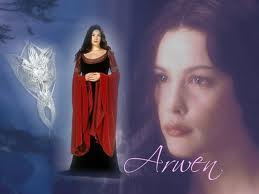
But my elves? Our elves? Those of us who grew up on Tolkien, Paolini, Brooks and others, have standards, images, friends. Legolas and Anwen, Arya and Blodgarm, and many others have created a rich and familiar texture. We welcome them surfacing as we settle into a thick novel. We embrace them because there are common threads that pass between authors. We call it a culture, those who don’t read fantasy roll their eyes.

                               Noble Haldir – we owe him for Helm’s Deep, no?

Terry Brooks’ children know that he is not all there, he tells us as much when he opens his book Sometimes the Magic Works: Lessons from a Writing Life. More on this book in a later blog.

But Brooks in not dissimilar to the rest of us, just considerably more talented! We pass through a gate in our imagination and reacquaint in a world that exists in a shared consciousness.

Here the elves are tall, thin, light-footed and beautiful. They are fast and posses stealth and discipline. They are in touch with the energy of the earth, the forest, the animal kingdom. They excel in archery, crafts and healing. Perhaps they are aloof, elitist, and closed to the other races, but this comes from their ancient and rich heritage. We know and love them.

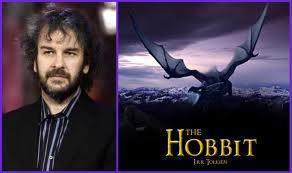
We rejoiced to learn that Peter Jackson is bringing Legalos into a prominent role in The Hobbit. Well, a few raised eyebrows, since Legalos was not even referred to by name in The Hobbit when he appeared flanking his father, the King of Mirkwood.

We accept, even with a bit of jealousy that he can fight at Helms Deep for five days, or run non stop for three and still not need to brush his immaculate hair. Nor do we care that his quiver seems to replenish itself, an occupational hazard of any archer who fights battles every other day.

We don’t mind because elves epitomize something that we identify with. We all want to be beautiful, brilliant, in excellent physical condition and, of course, environmentalists. When R.A. Salvatore created Drizzt Do’Urden and the dark elves of Menzoberranzan, a giant underground drow city-state he broke new ground.

Many of us were repelled and had it not been created in the hands of a master of fantasy, we would have rebelled. It was daring, it worked and by Book Three, we were rewarded with the typical elf one finds above ground.

It is tough to turn away from the basic tenets of epic fantasy: the teacher and student, the quest, the fight against a powerful evil, dwarves, elves, dragons, a rich natural world. There is something that has entered our collective consciousness and taken root.

It is why we read and reread the masters…and it is why we will return to read those who take over the role of entertaining us in a way that only epic fantasy does.

 =========================================

Alon Shalev is the author of the 2013 Eric Hoffer YA Book Award winner, At The Walls of Galbrieth, offered by Amazon.com  for FREE on November 17-19. The sequel, The First Decree, and Ashbar – Wycaan Master Book 3 are all released by Tourmaline Books. More at http://www.alonshalev.com and on Twitter (@elfwriter). Hang out with Alon on Google+
Why Do Adults Gravitate To Young Adult Fiction?

I believe that more adults are reading the epic fantasy Wycaan Master series than young adults. I know there is a fair proportion of teenagers and even pre-teens reading, but judging by the emails, blog comments, and twitter responses, it is predominately adults. This is all despite the books being written for and with my children, which I describe here. It begs the question why are adults drawn to Young Adult (YA) books?

imgresI found this article by Kelly Johnson. In her post, she debunks the following statements (her words):

1. Our culture encourages an unnatural and prolonged adolescence 

2. YA books are escapist since you don’t have to look beneath the surface of them. They are easier to grasp.

3. Adults read YA because they aren’t able to read past a middle school or high school level because adults are getting dumber and dumber.

4. YA books are about hopefulness. Their problems aren’t really problems and they can be fixed. Also there’s always a happy ending, so it’s satisfying and fulfilling to adults. The characters are likable. 

5. Fill in the blank with your own justification here. Some examples may include: YA is all about first experiences; YA is nostalgia for adults; YA is cheaper than adult books and therefore more appealing to the wallet; and so forth.”

images

I enjoyed Ms. Johnson’s fiery responses to these statements, but I felt let down when she finished with: “The only justification for why adults read YA books is this: they choose to. That’s it. That’s their reason. Adults read YA books because they as adults choose to do so.

I am disappointed. None of these reasons explain why an adult, working, raising a family, involved in a community, volunteering, following a sports team etc. would be so moved to take a few precious hours each day to sit and read, and then often reach out and engage with the author, fellow readers, come back to buy more books, and enter deep discussions online and at the pub.

Fiction is all about the plot, the characters, and the environment. It is true for John Grisham and Stephen King, and it is true for Terry Brooks, Christopher Paolini, and R.A. Salvatore.

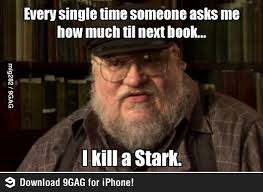
When I read a John Grisham book, I am transported to Mississippi, to another time, and when I close the book at the end of a chapter, I worry about his characters and their choices. It is no different to George R.R. Martin who may kill off a few popular characters in the next chapter if he had a bad day.

images-1

The issue, I think, is how we perceive YA. A young adult book means there is no sex, less violence and no profanity. There are certain boundaries not crossed if we want our youth to read them. But that is all it is. There is nothing here to prevent an adult from enjoying the book, unless you assume we are all sex-starved, violent, expletive-charged individuals, which would be sad, especially if this is how Hollywood and the mass media perceive us.

I am taking a few months break from the fourth Wycaan Master book to write an adult fantasy book.

I have not felt a need to raise the richness of language.

I have not made the characters deeper and more compelling.

I have not sought a more complex plot.

I have not deepened or diluted my world-building.

There are, to be honest, issues dealt with here that may be too dark to share with youth. I share a lot with my teen son, but would hesitate to share certain passages here. Characters deal with fears and obstacles that most of us who have children might not want them to read. There is sex and more graphic violence than in the Wycaan Master series, but that might yet get dialed down.

So what does make adults gravitate to YA novels? The problem is not with the answer. The question is simply wrong.

People read a story because it has a good plot, characters that the reader can bond with, a world that stimulates the imagination. This is the same for adults as it is for YA. YA is written within certain criteria in order to make them a safe space of teens. It certainly does not mean dumbing down or becoming predictable.

The discerning reader will be drawn to a book in their chosen genre simply because it is good: plot, characters, environment and strong writing.

A good novel is a good novel is a good novel…

So this seems like a good time to thank all of you who bought Ashbar – Wycaan Master Book 3 and any of my other novels. I read every blog comment, every tweet, every priceless review on Amazon.

Thank you. Thank you. Thank you. Have a great week.

elfwriter

——————————————————————————————————

Alon Shalev is the author of the 2013 Eric Hoffer YA Book Award winner, At The Walls of GalbriethThe First Decree, and Ashbar – Wycaan Master Book 3 – all released by Tourmaline Books. Shalev is also the author of three social justice-themed novels including Unwanted Heroes. He swears there is a connection. More at http://www.alonshalev.com and on Twitter (@elfwriter). Hang out with Alon on Google+ here.

Big Characters Without Big Boobs

Last week I asked in my blog post, 10 Questions For J.R.R Tolkien, what questions people would like to ask the Professor if they had the opportunity. The answers were great, but one stood out for me.

A person with the twitter username @oneyearnovel (happy to enter your name and website) wrote: “I would ask if he ever considered a woman character who was not beautiful?”

 images-1

This got me wondering. When I began looking around for a book cover artist and shared my concept of Mhari, an elfe (the politically correct term for a female elf) and Seanchai’s teacher, I was offered sketches of buxom women with cleavage-revealing armor, muscled (bare) legs etc. You get the picture. I talk about this in an earlier post – Big Boobs and Book Covers. While these images might have sold more copies of At The Walls Of Galbrieth, the pensive, wise face that adorns the cover truly represents the wise, yet world-weary mentor for my protagonist, Seanchai.

Wycaan Master 1 Just Front Cover

I don’t in truth know if @oneyearnovel is correct that Tolkien’s females in his books are all beautiful, or if this is Peter Jackson pandering to what he believes his Hollywood audience wants. I have not read Lord of the Rings in years and can’t even recall a female in the Hobbit.

Tolkien students: please enlighten us on this in the comments.

imgres

There are three main female characters who each leave an indelible mark on the first four books of the Wycaan Master series. Sellia is dark, exotic and beautiful, but she is also an excellent warrior and probably fits the stereotype. While I never talk about her breasts, hips etc. (this is YA), she intimidates the younger male elves and has them stuttering. She makes a game of eliciting a blush from Rhoddan or Seanchai.

Ilana is tough, an ideologue, constantly seeking a peaceful solution and offering Seanchai her unwavering support. As a romance blossoms she is viewed for her beauty, but it is seen through the eyes of one who is falling in love with her. Don’t we doting men all think our wives/partners are the most beautiful women in the world? Of course mine really is!

But Ilana is possibly the most popular character among readers, certainly female readers. It is not anything physical about her that binds the reader to her, but her deep principles, cutting sense of humor, and well just about everything else concerning her.

Maugwen is a human, short and pudgy. She is a weak character at first and I never meant to give her a long run. But she grows, matures and becomes a wise friend and strong individual. Readers have told me that she intrigues them and, just between us, she intrigues me.

We don’t make all our male characters handsome and ripped, so why our females? I think @oneyearnovel has a great point. Society expects us to bind ourselves to a pretty woman, and in truth, this goes for good or bad characters, but fiction has a responsibility to not only change with the times, but to be present at the tipping edge of that change.

It is very popular to write a coming-of-age novel. Perhaps it is time for our genre to come of age.

imgres-2

——————————————————————————————————

Alon Shalev is the author of the 2013 Eric Hoffer YA Book Award winner, At The Walls of GalbriethThe First Decree, and Ashbar – Wycaan Master Book 3 – all released by Tourmaline Books. Shalev is also the author of three social justice-themed novels including Unwanted Heroes. He swears there is a connection. More at http://www.alonshalev.com and on Twitter (@elfwriter).

A Prime Read!

“Hey Dad. Do we have Amazon Prime?”

“Sure son,” I reply.

“Great. We can get your ebooks for free .” He pauses for a few moments, perhaps pondering his own statement. “Err Dad. Do many people have Amazon Prime?”

“I believe it’s growing in popularity,” I say, invoking my fatherly privilege to all knowledge.

Actually, Morningstar analyst R.J. Hottovy published a report in March 2013 that claimed Amazon Prime membership had more than 10 million at the time of writing. Shame I didn’t have the use of Google during our discussion.

“So for all our hard work, and the fact that At The Walls Of Galbrieth won a fancy award, anyone can now get it for free? That sucks.”

“It’s like a library,” I say, not sure whether I want to convince him or myself. “People can now borrow the ebook and it will help fantasy readers to learn about my writing and the Wycaan Master series.”

“But they get it for free?” He has a certain skeptical frown that develops during adolescence, when teenagers begin to discover their fathers are generally making up fatherhood as we go.

“They do,” I gulp a glass of water. “But this is good for my market penetration.”

Big mistake. Remember: talking to teenager.

“Look son. You know how you are always complaining that you don’t have money to buy books?”

“You mean video games and a Harley, right?”

“Well think how many teenagers won’t have to deal with that problem now. They can borrow my book for a month on Amazon.”

“It’s still free, right?” Major teenage frown now.

“If you have Amazon Prime,” I add.

“Where did you get this idea?”

“From a marketing  book that focused on Amazon.”

“How much did you pay for this smart book, Dad?”

“I didn’t,” I reply. “I borrowed it for free from Amazon Prime.”

 imgres-1

It has taken me a while to understand the concept of Amazon’s Lending Library, but the idea that I can get my book out there quickly is very tempting. If you are an Amazon Prime member, you can indeed now borrow the ebook.

While there is no necessity, if you do so, please leave a review and help me convince my son and his father.

At The Walls Of Galbrieth will be in Amazon’s KDP program until the end of 2013. Enjoy, catch up. Book 3 should be out any day soon.

UPDATE: Ashbar – Wycaan Master Book 3 was released today in paperback. Here is the link. The ebook should be available next week.

Ashbar front cover

——————————————————————————————————

Alon Shalev is the author of the 2013 Eric Hoffer YA Book Award winner, At The Walls of Galbrieth, Wycaan Master Book 1 and the sequel The First Decree, both released by Tourmaline Books. Ashbar – Book 3 is the third in the series, released in October 2013. Shalev is also the author of three social justice-themed novels including Unwanted Heroes. He swears there is a connection. More at http://www.alonshalev.com and on Twitter (@elfwriter).
Interview With An Elf

This post has been sponsored by Tourmaline Books:  Award-winning epic fantasy ebook, At The Walls Of Galbrieth @ $0.99  only until Sunday – http://wp.me/p1Xaeb-fS  – It Was 99 Cents!

Wycaan Master 1 Just Front Cover

INTERVIEW WITH AN ELF

Interviewer: I would like to introduce Chamerak, an elf who appears in At The Walls Of Galbrieth, the first Wycaan Master novel by Alon Shalev.  Welcome, sir, and thank you for agreeing to the interview.

Chamerak: My pleasure. It is an honor to represent my people to receptive humans,

Interviewer: Receptive? Can you explain?

Chamerak: Once, long before you and I were born, a council that had representation from all the four races ruled the land of Odessiya. Eventually, humans broke from this coalition when they were discovered to have large colonies of slaves mining rich lands beyond our boundaries.

Most of those who were slaves then were dwarves, and the dwarves here insisted they stop. Slavery was not tolerated in Odessiya. There were the rich and the poor, to be sure, but every individual, regardless of race, had inherent rights.

Interviewer: What happened?

Chamerak: As well as large colonies of slaves, these humans had built huge armies too. There was a series of battles, culminating in one great battle. That was our most tragic moment.

The elven leaders had tried to broker between the humans and dwarves, though we were clearly on the side of the latter. Still, we had helped to find a diplomatic solution as we had for centuries since the great council had begun.

We spread our leaders too thinly and when the battles joined, our people were massacred. The humans won a decisive battle, the powers of the Emperor and his cronies were revealed. The dwarves, what were left of them, disappeared deep underground, and my people became a slave nation.

Interviewer: Literally slaves?

Chamerak: Yes. Those in the cities lived under total servitude. Others found refuge living in remoter villages, where they paid for their restricted freedom with crushing taxes that prevented them ever moving above the strain of poverty. Humans often came to have sport ­­– there were those who collected our pointed ears as trophies – or take if they wanted food or worse.

Interviewer: And all humans were like this?

Chamerak: Generally, yes. After a few generations, it became normal for them. They knew little else and were indoctrinated from birth to look down on us as an inferior race. But there were a few who were not like that.

In At The Walls Of Galbrieth, you will meet Uncle. He led a band of elves into the great forests, to live as freeborn and help other elves escape. Not long after I joined his band, we captured some humans. They did not fight us, but neither did they cower. We took them prisoners and a strange dynamic happened.

As we interrogated them, they began to ask us questions. At first, we thought it was a ruse to discover our secrets: where we hid, who our leadership was, and things like this. But they were different and we made a discovery that filled us with hope. Uncle, in his wisdom, was the first to realize this. I must admit: I wanted to execute them on the spot for just having round ears. I was young then and my life had been hard, though no different from those around me,

00013

Interviewer: What did this Uncle discover?

Chamerak: That not all humans were bad. That in the same way they had stereotyped us as stupid, inferior, lazy, unhygienic, etc., we too had stereotyped them as one type of human: violent, power-hungry, racist, you know.

Interviewer: What happened next?

Chamerak: Uncle invited them to join us. We kept them in a separate camp for a long time. But eventually, as trust grew between us, we became one band. Word spread of our mixed group and others sought us out. Other groups formed, including some who were committed to teaching rather than fighting.

Gradually, the old stories were told and there was an awakening of an older conscious. It is, I believe, what brought the Wycaans back into our histories, and what facilitated the coming of the Wycaan Master.

Interviewer: I have heard a lot of rumors about him. What can you tell me about­–

Chamerak: These are early days and it is better not to reveal too much. Wycaans are not just elves, but can be from any race. They can be male or female. You have made assumptions.

Interviewer: My apologies.

Chamerak: Assumptions are dangerous thoughts. They are what brought us to the racist society we live in. But there is hope.

Interviewer: How?

Chamerak: As long as the stories are being told, the narrative is being formed. It will be challenged and evolve and, hopefully, change for the better. It is the power of the books.

Interviewer: Rather fantastical, no?

Chamerak: Epically so.

images

——————————————————————————————————

Alon Shalev is the author of the 2013 Eric Hoffer YA Book Award winner, At The Walls of Galbrieth, Wycaan Master Book 1 and The First Decree, both released by Tourmaline Books. Ashbar – Book 3 – is due for release in October 2013. Shalev is also the author of three social justice-themed novels including Unwanted Heroes. He swears there is a connection. More at http://www.alonshalev.com and on Twitter (@elfwriter).
Another Author Writes For His Sons

Just a short post that reflects a frantic week. I often surf YouTube for author interviews when making dinner or cleaning the kitchen. Often they are enlightening about an author’s writing craft or their personal connection to their work. Sometimes I uncover a gem.

This is a great clip of Neil Gaiman (you need about 20 minutes – so don’t do this at work. People might hear you laugh out loud and worry!). You have to admire him for his charisma, speaking skills, sense of humor, and well, for me that he write a story for his children.

Rock on Neil Gaiman.

I shared a great talk by Terry Brooks on this blog and also Terry Goodkind.

—————————————————————————————————–

Alon Shalev writes social justice-themed novels and YA epic fantasy. He swears there is a connection. His latest books include: Unwanted Heroes and the 2013 Eric Hoffer Book Award for YA – At The Walls Of Galbrieth. Alon tweets at @alonshalevsf and @elfwriter. For more about the author, check out his website.

That Magical Time of Year – Better Than ‘Real’ Fantasy

Once a year, my family goes away camping in the mountains of Northern California or Oregon. All day we fish, hike, swim, explore and then after dinner sit around the campfire or snuggle up in my tent. This is the fourth year that I then open up a folder and read to my boys the completed first draft of the next book in the Wycaan Master series.

My boys listen, interrupt with question, comments and sometimes criticism. The latter is becoming increasingly sophisticated as they not only spot spelling or grammar errors, but when a character goes out of voice, or the plot is inconsistent.

During the day, while out on another activity, one of them might turn around and offer an idea or feedback. My youngest (10 years old) may well tell me what he guesses might happen next. I have told him that he is not allowed to share anything in an unpublished novel with his friends – many of whom are reading the series. He is to arch an eyebrow (Spock would be proud – if he ever felt emotions) and say Maybe. When he offers his predictions, I turn to him and smile, as evilly as I can muster: Maybe.

imgres

It elevates an already wonderful family vacation into the realms of magical and I feel truly blessed that we are building these communal memories together and hope they will stay with us as my boys grow up and walk their own paths.

Together with this is the excitement building for the book launch of Ashbar – Wycaan Master Book 3. Pages have been added at alonshalev.com and here on the elfwriter blog.

It is turning into an amazing year with The First Decree and Ashbar being published, and, of course winning the 2013 Eric Hoffer Book Award for YA. I am truly gratified that along the way I am making many new friends through twitter and the blog, and even some face-to-face networking (yes – it really happens!).

In this brave new publishing world, an author can only succeed with ‘a little help from his friends’ something Joe Cocker was preaching long before any of us knew that a chat room was a place you could hang out in pajamas or that we would love a tablet that is too large to swallow.

imgres-2

I appreciate all the retweets, the recommendations and the reviews. My mentor is telling me that I am not accruing enough reviews. Please, if you have read either At The Walls Of Galbrieth or The First Decree, take a few minutes to leave a review. If you are in a Google+ group, a Goodreads group, or on a thread of epic fantasy book aficionados, please make a recommendation to begin the series. I am following a thread on Amazon called Life after Game of Thrones and checking out the authors they suggest.

I really believe that, even in the rich online world, word-of-mouth remains the most effective marketing tool. On Thursday, a friend enthused about this new author he has discovered. I came home, checked him out, and his first book is on my wish list.

To those of you who already advocate for my novels and my path as an author – thank you. My relationship with my boys and the support you give me are what makes my epic fantasy truly magical.

—————————————————————————————————–

Alon Shalev writes social justice-themed novels and YA epic fantasy. He swears there is a connection. His latest books include: Unwanted Heroes and the 2013 Eric Hoffer Book Award for YA – At The Walls Of Galbrieth. Alon tweets at @alonshalevsf and @elfwriter. For more about the author, check out his website.

YA Epic Fantasy Readers and The Ebook Revolution

Last week’s post, Sex and Swords, generated a lot of great comments and a sound discussion. In the post, I wondered whether the author I was comparing myself to was selling more books than me because his audience are adults. Given that both of us sell more ebooks than tree books, am I likely to sell less books because young adults do not have the access to ebook readers that adults enjoy? Wait a moment  I need to tell my sons to get off screens and go play…

I wrote a post on another blog a couple of years ago and have taken material from there for this. There are a number of authors who have become bestsellers riding the ebook revolution. Amanda HockingJ.A. Konrath, and my own marketing guru, John Locke. But none of these fine people write for young adults (10-18 year old) – my primary market for the Wycaan Master series.

teenelectronic_396Laura Hazard Owen recently wrote: “The children’s and young adult e-book market faces special challenges not shared by the adult market, new research shows. And teens are slow to adopt ebooks, in part because they do not see ebooks as a social technology and they think there are too many restrictions on sharing digital titles.”

She reached her conclusion based on two online surveys commissioned by PubTrack Consumer towards the end of last year who surveyed 1,000 teenagers and 1,000 parents of pre-teens. The details of the survey can be found here – Children’s Publishing Goes Digital.   There are some interesting theories and statistics here. Firstly, youngsters are extremely social and want to share their books with friends and e-book technology is perceived as too restrictive. This is changing now and Amazon has been quick to identify this need. I thought that perhaps the teens did not have access to comfortable ebook readers. The majority has cell phones, but I am not including this. 60% of those surveyed receive technology from their parents as the latter upgrade.

images-7Ms. Hazard Owen makes another excellent point It is not just young adults propelling YA books like the Hunger Games trilogy onto ebook bestseller lists:

– 30-44-year-olds constitute 28 % of YA print book sales and 32 % of YA ebook sales.

-18-29-year-olds buy the most YA books, purchasing 31% of YA print sales and 35% of YA ebook sales.

Making a decision to invest in the YA fantasy ebook market doesn’t look as attractive as genres aimed at adults, but this is going to change as more young people receive the necessary devices. Also, the realization that the YA market goes not from 12-18, but 12-44 year olds make for a more encouraging prospect.

images-1A final interesting point is that this age group is more likely to buy a book because of a recommendation on a social network. Perhaps this prompted Amazon to make the investment to purchase Goodreads.

Now, please excuse me, this 49-year-old is going to read The Hunger Games, recommended to me by my 14-year-old son.

—————————————————————————————————–

Alon Shalev writes social justice-themed novels and YA epic fantasy. He swears there is a connection. His latest books include: Unwanted Heroes and the 2013 Eric Hoffer Book Award for YA – At The Walls Of Galbrieth. Alon tweets at @alonshalevsf and @elfwriterFor more about the author, check out his website.


Sex or Swords?

I recently finished reading an epic fantasy novel by an author who is perhaps a year ahead of me. He is a couple of novels deeper into his series and seems to have a similar, but not bigger, social platform. 

But his books are selling impressively and I enjoyed reading his work, but there was nothing in the quality of the plot, writing, etc. that suggested why he is outselling me.

There are a lot of things in common between our novels. They are both character driven and, though there is a clear plot arc, you really stay engaged because you are rooting for the characters. There is plenty of action and moral dilemmas. If and when I write a review, and I definitely will because this is so important to the author (hinting here!), I realize that it would be similar to many of the reviews I have received for At The Walls Of Galbrieth and The First Decree.

imgres 

But there are two fundamental differences, perhaps three.

1) His novels are meant only for adults.

2) There is a fair amount of sex.

There is also considerable swearing, but I don’t think someone buys a book because of the swearing. It might deter a few people, but not act as motivator.

These differences lead me to wonder about whether young adults are reading ebooks – which remains the most popular with all struggling authors – and I will examine this next week.

But for now, I want to focus on sex. Let me be honest. I’m very fond of sex and I enjoy reading and writing about it. In my non-fantasy novels, there are probably two graphic sex scenes in each. I believe that the way my characters deal with sex, before, during and after, reveals far more than any long description can ever hope to achieve.

All three books ­– A Gardener’s Tale, The Accidental Activist, and Unwanted Heroes – have garnered criticism from a few reviewers who were upset or disturbed by what they read, but there are many others who mention it positively. There was nothing 50 Shades, or anything violent or forced in these scenes and, in truth, I remain proud of them, even when I know my mother and mother-in-law have read them!

A Gardener's Tale  - new cover

However, what is the place of sex in epic fantasy? The book in question has two sex scenes and neither are particularly graphic or explicit. Throughout the novel there are sexual references but little more than men’s comments or a woman’s thoughts. Both scenes were written well and felt part of the story. Both added to the richness of the characters.

 I have wondered about Game of Thrones, in particular because my 14-year-old is interested in reading and watching the series. I have no doubt that George R.R. Martin wrote what he understood to be sexual mores of that period and I agree that it probably happened as he described, but the sex was clearly not a turn on for me (neither was it for most of Martin’s characters come to think of it).

Much of the sex were men exploiting their power over women and a few scenes are of women who manipulate men to get something they want through sexual favors or binding the men’s lusts to them. All good stuff, perhaps, but not something I want to share with my teenage son.

imgres-6

I want him to know about sex as something romantic, a bonding act between two people who love each other. I want him to know that anything that is not two consenting adults pleasuring themselves and each other, is deviant. It might not necessarily be wrong, but that is for him to decide according to his values.

In the Wycaan Master series, I touch on many values and morals. I challenge the young adults who read my books to make choices about race, violence, friendships, loyalty, and enjoy it when I hear my son or his friends comment that they are proud/disappointed/upset/ happy about the actions of a character. I like that they feel guilty, understanding and maybe partly rooting for the bad guys. Nothing is ever black or white.

images-1

But what about sex? There are certain hints in my novels that some things are going on, but it is easily missed if a young adult is not thinking about such topics. To write about sex, even in a tasteful youth-orientated way, would strip my novels of being YA (young adult). I would lose the initial motivation of writing to influence a new generation. 

Is it possible to write in sexual scenes in a YA novel? Most parents do not vet a book, trusting that if it has received recognition as YA then it will not include certain things such as swearing, graphic violence, or sex.

I do not want to step away from the target audience that so intrigues me and I am not sure I am ready to abandon them. However, I am frustrated that there are strict boundaries, frustrated that I could convey so much to my target audience through my young characters having or thinking of sexual encounters. I could convey healthy values associated with sex, values that I want to share with my own sons.

So my question is: Can sex be handled within a YA context? Your thoughts?

—————————————————————————————————–

Alon Shalev writes social justice-themed novels and YA epic fantasy. He swears there is a connection. His latest books include: Unwanted Heroes and the 2013 Eric Hoffer Book Award for YA – At The Walls Of Galbrieth. Alon tweets at @alonshalevsf and @elfwriter.   For more about the author, check out his website.