Judging A Book By Its Cover

The last few weeks have been spent communicating with a very talented book cover designer, William J. Kenney, who has designed the book cover for At The Walls Of Galbrieth. I am quite amazed how someone who has never met me or understands how my brain works (disclaimer: not that knowing me will guarantee that either), can interpret my jumbled explanations into a cover, far better than anything I could imagine.

I might be bias here, but I think epic fantasy book covers (and also sci-fi) must answer to higher standards. My social justice-themed novel, The Accidental Activist, is based on a photograph that I took in San Francisco’s financial district. The cover artist did an amazing job, but it is still based upon something real.

Claudia McKinney, the artist who designed Amanda Hockings’ book covers, designed the cover to A Gardener’s Tale. The different concept from the first edition is amazing and, I believe, a big help in raising my sales levels. My publisher told her that he wanted to stress the strong Pagan theme and earth spirituality running through, she came up with a number of excellent options.

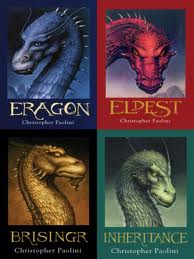
Designing book covers for a series is an additional challenge and, given that there are three, maybe four books in the Wycaan Master series, I now feel I have clear picture of how I imagine William will develop each cover. What I find interesting is that it doesn’t always have to be intricate. Christopher Paolini’s covers are not detailed, but still instantly recognizable. As each new cover was announced, my sons and I shared a collective gasp of anticipation.

 The question I want to pose here is what constitutes a good epic fantasy cover? There are some covers that I just sit and gaze in wonder, often several times when I pick up the book to commence reading. So, please also share your favorite fantasy book covers. Let’s make a Top Ten: over to you… 

Next week – the official unveiling of the book cover: At The Walls of Galbrieth – Wycaan Master Book 1.

——————————————————————————————————

Alon Shalev is the author of The Accidental Activist and A Gardener’s Tale. He has written three epic fantasy novels and the first, which reached the Quarter Finals of the Amazon Breakthrough Novel Award 2012, is due out in January 2013 by Tourmaline Press. More on Alon Shalev at http://www.alonshalev.com and on Twitter (@elfwriter).

Size – Does It Matter?

So shoot me for false advertising, but I have a dilemma. I shared with you last week in A Tribute to Editors that I have received my manuscript to At The Walls Of Galbrieth back from my editor with lots of cuts and corrections. As I worked my way through, accepting 90% of the changes suggested, I realized that my word count was dropping drastically.

I am about 80% through the novel, which began at 96,000 words and is now down to about 85,000.

Epic fantasy novels are thick tombs, offering the promise to get lost in a mythical world for a month or so. It is not a novel that you can finish in a weekend (unless your weekend is very empty and you are a fast reader).

Even Young Adult books make good doorstops. The Christopher Paolinis’ of this world have proved that teenagers will stick with a long story if it is compelling enough.

So my first question is: Is there a minimum length? When I was shopping the Wycaan Master series, there were publishers who stipulated a word range, often 100,00+. It might be that they expected their editors to attack it with a scalpel, much as my editor did.

My second question regards world building, something we have touched on before at elfwriter. A lot of the scenery description has been edited out. The editor, like many in the writing world, believes that you shouldn’t reveal everything: about a person, room, scenery etc., but allow the reader to create their own image.

Certainly, anyone who has read a book after watching the movie  (or the other way around) can appreciate this.

Tolkien, the master, spent pages describing the forests and the trees. Many of us loved this while others skipped these long descriptions. I wonder whether a young, undiscovered Tolkien would (and please pardon the expression) suffer the long red, sharpie lines through these sections of his work (or the Track Changes equivalent – but that’s not how I think of the old professor).

There is a middle ground. My editor has challenged me to integrate the descriptions within an action scene or as a pivot for a character’s self-reflection. This is a great point and I plan to experiment with this in the future. Do you know of any writers who do a good job of integrating description into the flow of the plot or character development, without it feeling like a ‘description-dump’?

So two questions here: Does size matter? How much description is allowed?

As always, I appreciate your feedback and guidance.

——————————————————————————————————

Alon Shalev is the author of The Accidental Activist and A Gardener’s Tale. He has written three epic fantasy novels and the first, which reached the Quarter Finals of the Amazon Breakthrough Novel Award 2012, is due out in January 2013 by Tourmaline Press. More on Alon Shalev at http://www.alonshalev.com and on Twitter (@elfwriter).

A Tribute To Editors

No blog post this weekend. 

Yesterday, I received the manuscript to At The Walls of Galbrieth back from my editor. Like many authors, I thought I had sent her a pretty clean story. I had gone over it several times myself, had it scrutinized by the venerable Berkeley Writers Group, and put it through the laundry with softener (I think you get my point).

At first, I was a bit dismayed to see all those little boxes in ‘Track Changes’ fighting each other for space along the right-hand side of my page. But after following and accepting her changes for the first three chapters, I am in awe of what an impact the eye of an independent professional can have, how much s/he can discern, how a few changes can add such clarity.

My last novel, The Accidental Activist, is a social justice-themed novel that fictionalized the McDonalds libel trial in England in the 1990’s. To show how thwarted and depressed my protagonist felt, I had used an English soccer game of my favorite team, Arsenal, as an analogy. My editor had written to me and, while expressing that she did not follow soccer, had researched a bit and thought that I could use an actual game from 2004. She had been right. The game was perfect.

With Tourmaline Press working hard with a gifted cover artist in St. Louis, an ISBN number (or three) assigned to the book, everything is taking shape.

On Friday, I wrote the dedication at the front of the book with tears in my eyes. But that is a story for another time.

This update is just to let you know why there is no blog post this weekend. Here let me click the button…. Okay – posted!

Happy Columbus / Indigenous Peoples Day,

Elfwriter

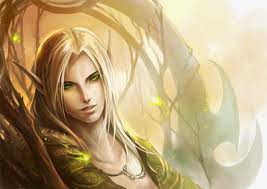
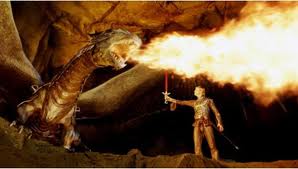
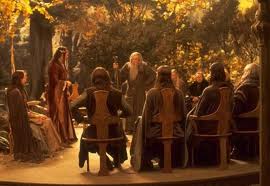
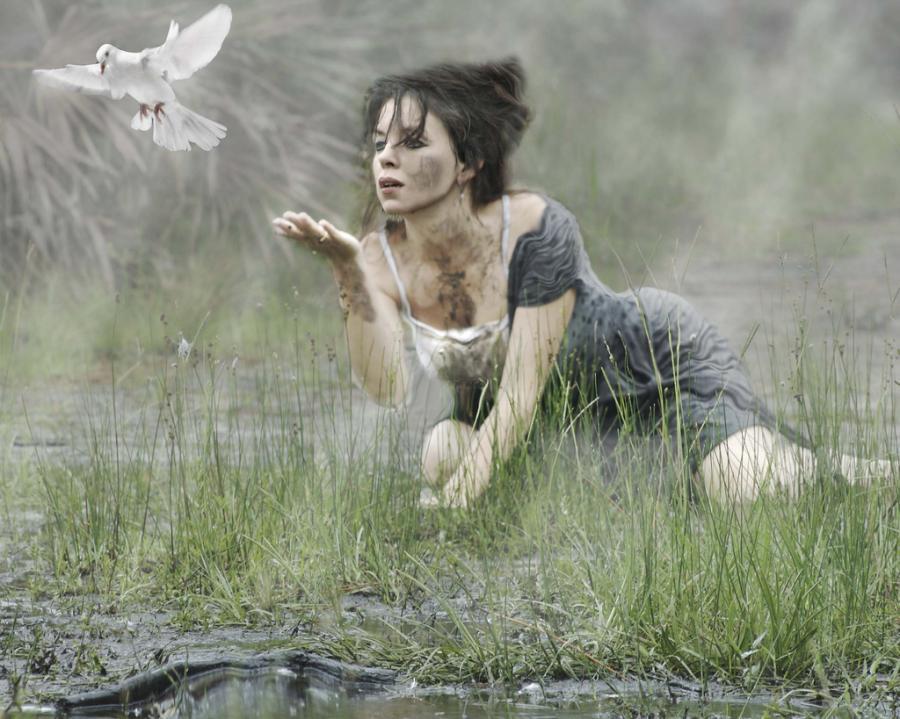
p.s. – didn’t think pictures of editors would be too exciting – and this is a genre with such great images. So here are some of my favorites.

——————————————————————————————————

Alon Shalev is the author of The Accidental Activist and A Gardener’s Tale. He has written three epic fantasy novels and the first, which reached the Quarter Finals of the Amazon Breakthrough Novel Award 2012, is due out in January 2013 by Tourmaline Press. More on Alon Shalev at http://www.alonshalev.com and on Twitter (@elfwriter).

What Would Tolkien Say?

I wasn’t that surprised when I heard originally that The Hobbit would be expanded into more than one movie. Harry Potter 7 and Breaking Dawn have set the precedence. But I was stunned (pleasantly, I must admit) that somehow the thin, children’s book is going to take as much time as Lord of the Rings, volumes of which are well-known for many attributes, not least that of a competent doorstop.

Still, I thought, in Peter Jackson I trust. LOTR is an amazing movie trilogy, so why not have the hobbit and dwarves trudge through countless woods and mountain ranges. Offer a few character insights, and smoke a few more pipes around the fire. Works for me and I doubt a particular Oxford linguistics professor would have minded.

But, now I hear that Peter Jackson has actually invented some new characters and I must admit to feeling somewhat perturbed. Is J.R.R. Tolkien sitting in his celestial study puffing his pipe furiously? 

It had occurred to me that we are a bit short on the females in this book, less noticeable for a book, but an issue for the screen. This has obviously occurred to Mr. Jackson as well, as he introduces Tauriel, an elven warrior, who according to the info released is head of the elven guard. Lost star Evangeline Lilly plays this fearsome (and no doubt sexy warrior) and she is quoted as saying:

“She is a warrior. She’s actually the head of the Elven guard. She’s the big shot in the army. So she knows how to wield any weapon, but the primary weapons that she uses are a bow and arrow and two daggers. And she’s lethal and deadly.”

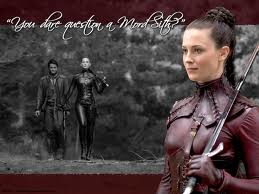
While I am the last to complain about introducing any elf, I feel uneasy. And it has nothing to do with her resembling a Mord Sith. I’m feeling rather traumatized, having (after watching Legend of the Seeker on TV) just listened to Wizard’s First Rule – Terry Goodkind – on audio alone in my car, which fleshes out (excuse the extremely accurate pun), the Mord Sith techniques. Let’s just say that if any woman in red leather comes within 50 feet, I’m running.

But the question is not what this humble elfwriter thinks, but what Tolkien would say. I have a number of books on the master, but never met him. However, I can’t help feeling he would not be amused. 

I can’t imagine someone taking my books and inserting new characters. It seems to be one step too far. What do you think? How loyal should Peter Jackson stay to the original work?

When does The Hobbit become The Hollybit?

——————————————————————————————————

Alon Shalev is the author of The Accidental Activist and A Gardener’s Tale. He has written three epic fantasy novels and the first reached the Quarter Finals of the Amazon Breakthrough Novel Award as of March 2012. More on Alon Shalev at http://www.alonshalev.com and on Twitter (@elfwriter).

10 Takeaways From George RR Martin

Isabel Berwick had lunch with Game of Thrones author, George RR Martin, and wrote this great article for the Financial Times. This post is not meant to replace it, but here are a few takeaways that stood out to me, for those of us who love and write epic fantasy. Please do read her article. It is very interesting, but be warned – it will make you hungry!
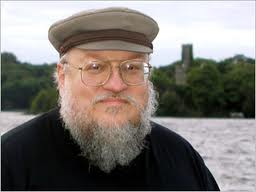
George RR Martin

1) During their lunch,  George RR Martin sees a map in Ms. Berwick’s “giant slab of breaded chicken.” He points to different parts and explains: “There are various little inlets where cities could be.”

I have seen elves in coffee shops and magical tunnels in my local park. These magical worlds are not hidden from us, they are right in front of our eyes.

2) Having famous fans of your works helps. Apparently, Facebook founder Mark Zuckerberg held a Game of Thrones-themed barbecue which made the news.

3) Martin didn’t have much as a child as his family struggled to keep financially afloat, but the seeds were sown – he was “the kid with his nose in a book.” Stephen King speaks of the need to be constantly reading – in your genre and outside.

 4) There are explicit sexual scenes in Game of Thrones (though I don’t remember much from the book apart from one scene – I have only read the first so far). This caught my attention because I use sex in my social-justice themed novels. Both A Gardener’s Tale and The Accidental Activist has vivid sex scenes. I believe these can reveal so much about a character, but I suspect HBO saw the fact that people like sex on their screens was reason enough.

5) It is okay to fail with a few books. Martin expected his breakthrough would come with his fourth book, Armageddon Rag, about a rock band. He concedes that: “it was the worst-selling of all my novels and essentially destroyed my career as a novelist at the time.” The most important lesson from this is DON’T GIVE UP!

6). When asked about his world-building, Martin, despite his success, is quick to give credit to J.R.R. Tolkien: “There were thousands of years of fantasy before Tolkien but the way it is shaped as a modern commercial publishing genre and the fantasy books that have been written in the past half century have all been influenced by Tolkien. So it still sort of defines the playing field.”

Martin has shown us that Tolkien’s legacy continues. People want to immerse into a rich world and are ready to read deep and vivid descriptions. 

7) Leave your own mark. Martin feels that his strong women, just as politically contriving and sexually adept, send a strong message that the female character needs to be as strong and vivid as the males.

I also think the way he perceives a hero is unique. John Smith and Tyrion Lannister are as close as I got to a hero (Edard Stark cuts a more typical Man For All Seasons-type hero). But they are clearly flawed and tainted enough to only just stand out from the rest. I admire this aspect of Martin – I am not aware who else succeeds in doing this.

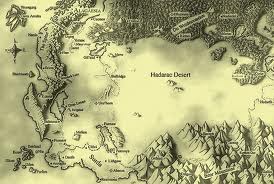
8) Martin believes that maps are very important. I have talked about them in this blog before, but he confirms the necessity. It was important enough, he notes, to be at the beginning of each HBO episode. 
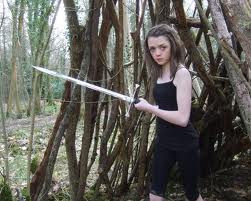
 9) The reader is willing to cope with many characters. This means the writer needs to stay extremely organized. Martin has over 1,000 characters in his series and his plots are both complex and spread over years. 

There are many ways to keep track of plots and characters. I think methodology is a very individual choice and will touch on this in a later blog. What is certain is that the passionate reader will remember what happened several years ago and not forgive you the error.

10) Martin, the successful author is traveling around the world.  I am sure it is very interesting and gratifying, but you can tell a writer when he says: “These trips are fun but they do interfere with my writing.”

Write. Write. Write. This is a busy period for me at the work which puts the food on the table. Anticipating this, I am mainly editing and blogging. The next book will wait for a quieter part of the year. But man, am I cranky!  

Finally, I just loved this quote. It requires no comment.

“When I am writing best, I really am lost in my world. I lose track of the outside world. I have a difficult time balancing between my real world and the artificial world. When the writing is going really well, whole days and weeks go by and I suddenly realise I have all these unpaid bills and, my God, I haven’t unpacked, and the suitcase has been sitting there for three weeks.” 

If you’ve been there you know it. If you haven’t, I hope you soon discover it. Terry Brooks says that this is when the magic happens. Here’s to those magical moments: and many more books from the world of Westoros.
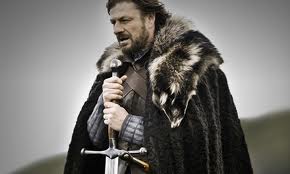
——————————————————————————————————

Alon Shalev is the author of The Accidental Activist and A Gardener’s Tale. He has written three epic fantasy novels and the first reached the Quarter Finals of the Amazon Breakthrough Novel Award as of March 2012. More on Alon Shalev at http://www.alon-shalev.com and on Twitter (@elfwriter).

Where Do People Like Us Hang Out?

“Go forth and find your target audience,” I was told and I posted a questionnaire that many of you were kind enough to answer (if you haven’t, it is not too late, and I do promise to share my findings).

“Keep defining and refining it,” my mentor continued and so I have a question for you.

Where do you hang out? Where do you meet others such as you and me; those who believe in elves, dwarves, noble quests, and dragons? And please don’t tell me: Alagaësia, Middle Earth or Shannara – I’ve been there and I never saw you!

When you don’t have your nose in an exciting book, where do you meet fellow fantasy readers? Do you frequent conferences? Do you read magazines (on-line or tree form)? Are you on a social networking fantasy site, a discussion group, or a fantasy book club?

Please leave your tracks in the comments below. It will help me find companions for my journey and help others find company too.

I appreciate your help. Oh, and next time you pop into Alagaësia, Middle Earth or Shannara, would it hurt to say hi?

Finally something totally unconnected to this blog: This past week Muslims were insulted, Christians died from the violence, and Jews were blamed. We are all victims when we set ourselves apart. Sometimes it just feels easier to lose yourself in the world of elves, dwarves and dragons.

May we all learn to celebrate our differences together and share the space. There is enough room for us all. Safe travels wherever your road takes you.

——————————————————————————————————

Alon Shalev is the author of The Accidental Activist and A Gardener’s Tale. He has written three epic fantasy novels and the first reached the Quarter Finals of the Amazon Breakthrough Novel Award as of March 2012. More on Alon Shalev at http://www.alonshalev.com/and on Twitter (@elfwriter).

Genre Conventions .v. Originality

“But this is how it’s done in epic fantasy,” I whine to my writer’s group. “It’s part of the convention.”

We are a bonded group, anxious to support each other and so I receive sympathetic smiles and diplomatic silence. The silence screams in my ears. I know they are right. If I have to fall back on a sentence like that, I am in trouble. Or am I?

How important is originality?

Utter originality is, of course, out of the question.” – Ezra Pound

Originality is nothing but judicious imitation.” – Voltaire

I feel better already.

It is better to fail in originality than to succeed in imitation.” – Herman Melville.

Ouch!

Elves are tall, thin, have pointed ears, and excellent hearing. They look good in green, and shoot bow and arrows with exceptional accuracy.  Dwarves are short, rotund, live underground, mine and play around with axes. This is so because J.R.R. Tolkien put the epic in epic fantasy with his Middle Earth series’. Are the rest of us thus condemned to be mere recyclers of his work? Maybe. But I am not convinced how this is different from any other genre: romance has the same images and general plot arc. So does suspense and horror. And don’t get me started on dystopian thrillers.

So why do we so enthusiastically embrace conventions in a genre? It might be because some themes are simply timeless. I’m thinking Beowulf (maybe written in the eighth century) and The Odyssey (sixteen centuries before that!). Tolkien would concede that he was not the first, but when something works, you build your own version of it, and sometimes your version is good enough to capture the imagination of a very loyal readership. But it is not just enjoyment. It is pure escapism to a world we can get excited about, to values we can admire or fear (or both). It is also something familiar, something soothing. 

And yet when we embark on a new epic fantasy series, or try the work of a new author, we are seeking both something familiar and something original. What makes each author since Tolkien distinct is some aspect of his / her work. The relationship between Eragon and Saphira (his dragon), made Christopher Paolini’s Inheritance series special. I have just started reading The Weight of Blood by David Dalglish (check out his cool book covers by Peter Ortiz) which is about two brothers (okay) who are not just orcs (hmmm), but half-orcs (ahhh). I was caught on page one. Dalglish has written a variance on the convention. So did R.A. Salvatore when he introduced Drizzt – a dark elf whose race were the opposite from the stereotypical elves. Five novels on, I am still intrigued. Daniel Arenson came up with his own original approach to dragons in the Song of Dragons series. 

Before I end, let me say how much I admire those who come up with something original – Hunger Games, Harry Potter, Percy Jackson – they capture us all and we devour their new approaches. But those who seek to ride their coattails are not so successful and I think this is very telling.

It says that while the fantasy readership will embrace a clever, well-written, new concept, that very concept might not establish itself beyond one brilliant author. Epic fantasy, however, with its elves, dragons and swords, continues to stand the test of time. This is not because our readership is lazy. Instead they demand depth – world building, characters, and a plot that offers a twist on a well-tested theme. They continue to surprise us with the familiar.

It’s a great genre to be a part of.

 Good Writing,

Alon 

—————————————————————————————————

Alon Shalev is the author of The Accidental Activist and A Gardener’s Tale. He has written three epic fantasy novels and the first reached the Quarter Finals of the Amazon Breakthrough Novel Award as of March 2012. More on Alon Shalev at http://www.alonshalev.com/and on Twitter (@elfwriter).

What’s With The Pipe?

When you write epic fantasy, you have the privilege sit before a blank page (well screen nowadays). You make up all the rules. If you want these creatures to have different colored skin, pointed ears, horns, or magic, go for it. If you want to have unicorns, dragons, or any creature you make up, it is your right.

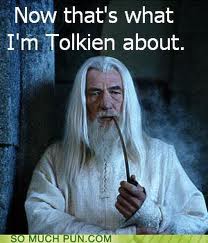
So what’s with the pipe? I know, Tolkien smoked, but he strode around Oxford in tweed, talking languages no one else remembers. In fact, there are a lot of characteristics about the master that we can adopt.

I think the secret lies with those who puff. I used to smoke a pipe for several years, seeing it as a compromise, a halfway house between smoking cigarettes and not. I loved my pipe. I craved the taste, loved the touch of the warm bowl, and enjoyed packing the pipe correctly, even cleaning it. All day, I looked forward to that time when I could put my feet up and puff the worries of the world away. 

I succeeded in giving up cigarettes for the pipe, but giving up the pipe proved tougher than I could imagine. This is not an article about smoking cessation, but even eight years later, if someone passed by me with his briar, or even is sitting a hundred feet away (given the correct wind), I will smell it, yearn for it, crave it for the rest of the day …  maybe for the rest of my life.

Perhaps this is why we continue to give our characters an opportunity that we are denying ourselves. Are we being foolish? Indulgent? 

I recently read a scene to my writer’s group in which, shortly after a bloody fight, the characters (those who survived) sat down and puffed their pipes. A colleague questioned me having my characters smoking in a YA novel. 

Fair point, I thought, until I realized that she had not objected to me exposing my tender, young readers to battle, killing, blood and gore.

I guess that one man’s poison is…well poison is poison. I shall have to sit and think about this. Now where’s my pi–.

Why do you think pipe smoking is a mainstay in fantasy novels?

Good reading.

——————————————————————————————————

Alon Shalev is the author of The Accidental Activist and A Gardener’s Tale. He has written three epic fantasy novels and the first reached the Quarter Finals of the Amazon Breakthrough Novel Award as of March 2012. More on Alon Shalev at http://www.alonshalev.com/and on Twitter (@elfwriter).

The Magic Is Everywhere

Last weekend, our family headed for the marina, a grassy area on the west point of Berkeley that looks over the San Francisco Bay Area. We have been there many times to fly kites, play soccer, run and bike. 

This time, armed with a blanket and picnic, we were planning on some serious reading. Older son had a book assigned from school, a historical fictional account of many good people dying from a plague back in the 1700’s: perfect depressing material for the summer vacation. Not surprisingly, he hadn’t embraced the intrusion with the enthusiasm he showed for Christopher Paolini’s Eragon or J. K. Rowlings’ Harry Potter. 

It was surprisingly windy and we made for some bushes and trees that would deny us the view, but offer shelter. We spread the blanket and I fell into my stadium chair and flicked on my Kindle.

While I waited for it to fire up, I glanced to my left. Between the bushes and the trees was a tunnel, with brush growing up and over so that you could barely see the sky. It was dark inside with the promise of sunlight on the other side. My youngest son, I realized, was staring at it as well. He turned to me.

“What do you think is through there?” he asked, eyes wide open.

“I don’t know,” I replied, the right level of gravity in my voice. “Think you should check it out?”

He nodded, rose and moved into the tunnel. He never came out…

Okay, that is not exactly true. But he stayed in the tunnel and explored beyond. Sometimes he sat and read his book, and other times played, creating his own world. Finally, he called for me to join him.

“The tunnel is safe,” he declared, “but there are dragons on the other side. Be careful.”

I knew that on the other side was a view of the Golden Gate Bridge, Alcatraz, San Francisco, and the bay with many sailboats. But as his tiny hand took mine and guided me out the other side, all I saw were the dragons.

Others might have seen a red kite with a long tail, to its left was a blue-green one tearing through the sky in acrobatic maneuvers, but we saw two dragons eying each other. My son announced with authority that they were deciding whether to fight or be friends. Remembering my politically correct role as father, I said I hoped they would be friends. 

But as I watched them and glanced back at the tunnel, it was my imagination that soared. Perhaps a new book is fermenting, or only a scene in the next Wycaan Master. Maybe it will surface next year or in a decade, but it is stored away.

And this moment of magic only happened because I was ready to embrace it, albeit with a little help from a nine-year-old with a rich imagination. But then I have seen elves in coffee shops.

——————————————————————————————————

Alon Shalev is the author of The Accidental Activist and A Gardener’s Tale. He has written three epic fantasy novels and the first reached the Quarter Finals of the Amazon Breakthrough Novel Award as of March 2012. More on Alon Shalev at http://www.alon-shalev.com and on Twitter (@elfwriter).

It’s In The Journey

“The problem with your genre,” the man declared with a smirk, “is that the reader always know what’s going to happen in the end. That’s why I never read fantasy.”

I could have asked him how he knew this since he admitted to not reading the genre. I might have questioned whether romance (the most popular fiction genre) or cookbooks (most popular non fiction) are any different. Those recipes never work for me!

Instead, I asked him what it was about epic fantasy that made it popular assuming he was right about the predictable endings. To his credit, he thought a while before answering. “It’s in the journey,” he replied.

I’ve been thinking about this. During my summer vacation, we camped by a river. The locals told me that there were no fish inhabiting it and it was only good for swimming in.

We went down to the river and my sons had a great time with their river rats (inflated tubes) negotiating small rapids.

I got out my fly rod, walked a bit upstream and stood in the middle of the water casting. The river was beautiful and clear, the rocks underneath and protruding were smooth and colorful. Majestic redwoods surrounded us and a noble mountain peak loomed above me. Wisps of fog hugged the tops of the trees and later in the day came almost to the edge of the water.

The author, deftly not catching fish!

I imagined where a wild trout (huge one of course) would hover and allow its prey to float right to it (a feeding pool, I think the experts call it). I cast my fly and watched it float in a wide arc. Being of only limited skill it took me a while to cast to the right distance, but I was very satisfied when I could consistently float my fly into the (imaginary) feeding pool.

A couple walked past arm-in-arm and the man felt compelled to tell me that there were no fish in the river. I nodded and told him I knew. He shrugged, but his partner got it, I think.

“Enjoy yourself,” she said.

I did enjoy myself that afternoon. I enjoyed setting up my fly rod and casting it out. I enjoyed the river, the trees, the mountain, the fog. I felt myself sighing as I released the tension of my real world and let it float away with the river.

Hemingway fly-fished. Tolkien smoked a pipe (I couldn’t find evidence that he fished but he wrote poems about it – see below). I strive to walk in the shadow of Tolkien rather than Hemmingway, but the pipe has long been relinquished. Still I remember the pleasure I got in packing and lighting the pipe, even cleaning it. I still yearn for the smell of the Borkum Riff tobacco all these years later. I miss it more than the smoking for sure. I recall the anticipation of waiting all day for that special time after dinner when I could sit outside my little house and puff away the worries of the day.

Gimli lights up after a hard day of killing.

At the end of one of my fantasy novels is a twist I am very proud of. Those who have read it all tell me that they gasped at that moment. In my writer’s group, while still only on page six of that novel, one of the women guessed the twist.

I never responded, never told her she was right. I want her to enjoy the journey.

Happy fishing everyone, however you cast your rod. I’ll leave you in the hands of the Master:

Fish Riddle

Alive without breath;
as cold as death;
never thirsting, ever drinking;
clad in mail, never clinking.
Drowns on dry land,
thinks an island
is a mountain;
thinks a fountain
is a puff of air.

So sleek, so fair!
What a joy to meet!

We only wish
to catch a fish,

 So juicy-sweet!

                                                      From Lord of the Rings By J.R.R. Tolkien

——————————————————————————————————

Alon Shalev is the author of The Accidental Activist and A Gardener’s Tale. He has written three epic fantasy novels and the first reached the Quarter Finals of the Amazon Breakthrough Novel Award as of March 2012. More on Alon Shalev at http://www.alonshalev.com/ and on Twitter (@elfwriter).