When Is An Elf Not An Elf?

Over the three days of November 17 -19, Amazon.com have decided to promote the 2013 Winner of the Eric Hoffer Book Award for YA – At The Walls Of Galbrieth. The novel will be offered FREE in ebook form.

This is a wonderful opportunity for me and I request that, to support my sales rank and me, you download the book and invites your friends to do the same. Feel free to gift it on (Thanksgiving and Hanukkah, anyone?).

To celebrate this and also the milestone of 100 blog posts on elfwriter.com, I wish to offer 10 of my favorite posts over the next three days. I hope you enjoy and, please, take a moment to download for FREE At The Walls Of Galbrieth and spread the word.

Thank you,

Alon

 =======================================

WHEN IS AN ELF NOT AN ELF?

Yes, my novel is compelling, special, well-written etc. just like the 499 other epic fantasy manuscripts sitting in the slush piles of every publishing house that offers YA epic fantasy.

I am working with an agent who is asking the challenging and insightful questions that will help my manuscript stand out from the rest. It is tough and I am feeling very possessive. Last week I shared his prompting to seek a Higher Concept.

One of the aspects that he wants me to consider is changing my elves, who make up many of the main characters and cultural references. He suggests that I consider changing the elves for a new, mythical race that will set me apart from the rest.

Let me state from the outset that I have no doubt this man knows far more than I about the publishing world, has considerable experience and understands the current state of the publishing world.

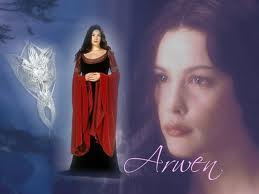
But my elves? Our elves? Those of us who grew up on Tolkien, Paolini, Brooks and others, have standards, images, friends. Legolas and Anwen, Arya and Blodgarm, and many others have created a rich and familiar texture. We welcome them surfacing as we settle into a thick novel. We embrace them because there are common threads that pass between authors. We call it a culture, those who don’t read fantasy roll their eyes.

                               Noble Haldir – we owe him for Helm’s Deep, no?

Terry Brooks’ children know that he is not all there, he tells us as much when he opens his book Sometimes the Magic Works: Lessons from a Writing Life. More on this book in a later blog.

But Brooks in not dissimilar to the rest of us, just considerably more talented! We pass through a gate in our imagination and reacquaint in a world that exists in a shared consciousness.

Here the elves are tall, thin, light-footed and beautiful. They are fast and posses stealth and discipline. They are in touch with the energy of the earth, the forest, the animal kingdom. They excel in archery, crafts and healing. Perhaps they are aloof, elitist, and closed to the other races, but this comes from their ancient and rich heritage. We know and love them.

We rejoiced to learn that Peter Jackson is bringing Legalos into a prominent role in The Hobbit. Well, a few raised eyebrows, since Legalos was not even referred to by name in The Hobbit when he appeared flanking his father, the King of Mirkwood.
We accept, even with a bit of jealousy that he can fight at Helms Deep for five days, or run non stop for three and still not need to brush his immaculate hair. Nor do we care that his quiver seems to replenish itself, an occupational hazard of any archer who fights battles every other day.

We don’t mind because elves epitomize something that we identify with. We all want to be beautiful, brilliant, in excellent physical condition and, of course, environmentalists. When R.A. Salvatore created Drizzt Do’Urden and the dark elves of Menzoberranzan, a giant underground drow city-state he broke new ground.

Many of us were repelled and had it not been created in the hands of a master of fantasy, we would have rebelled. It was daring, it worked and by Book Three, we were rewarded with the typical elf one finds above ground.

It is tough to turn away from the basic tenets of epic fantasy: the teacher and student, the quest, the fight against a powerful evil, dwarves, elves, dragons, a rich natural world. There is something that has entered our collective consciousness and taken root.

It is why we read and reread the masters…and it is why we will return to read those who take over the role of entertaining us in a way that only epic fantasy does.

 =========================================

Alon Shalev is the author of the 2013 Eric Hoffer YA Book Award winner, At The Walls of Galbrieth, offered by Amazon.com  for FREE on November 17-19. The sequel, The First Decree, and Ashbar – Wycaan Master Book 3 are all released by Tourmaline Books. More at http://www.alonshalev.com and on Twitter (@elfwriter). Hang out with Alon on Google+

Why Do Adults Gravitate To Young Adult Fiction?

I believe that more adults are reading the epic fantasy Wycaan Master series than young adults. I know there is a fair proportion of teenagers and even pre-teens reading, but judging by the emails, blog comments, and twitter responses, it is predominately adults. This is all despite the books being written for and with my children, which I describe here. It begs the question why are adults drawn to Young Adult (YA) books?

imgresI found this article by Kelly Johnson. In her post, she debunks the following statements (her words):

1. Our culture encourages an unnatural and prolonged adolescence 

2. YA books are escapist since you don’t have to look beneath the surface of them. They are easier to grasp.

3. Adults read YA because they aren’t able to read past a middle school or high school level because adults are getting dumber and dumber.

4. YA books are about hopefulness. Their problems aren’t really problems and they can be fixed. Also there’s always a happy ending, so it’s satisfying and fulfilling to adults. The characters are likable. 

5. Fill in the blank with your own justification here. Some examples may include: YA is all about first experiences; YA is nostalgia for adults; YA is cheaper than adult books and therefore more appealing to the wallet; and so forth.”

images

I enjoyed Ms. Johnson’s fiery responses to these statements, but I felt let down when she finished with: “The only justification for why adults read YA books is this: they choose to. That’s it. That’s their reason. Adults read YA books because they as adults choose to do so.

I am disappointed. None of these reasons explain why an adult, working, raising a family, involved in a community, volunteering, following a sports team etc. would be so moved to take a few precious hours each day to sit and read, and then often reach out and engage with the author, fellow readers, come back to buy more books, and enter deep discussions online and at the pub.

Fiction is all about the plot, the characters, and the environment. It is true for John Grisham and Stephen King, and it is true for Terry Brooks, Christopher Paolini, and R.A. Salvatore.

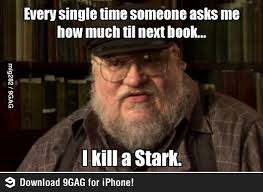
When I read a John Grisham book, I am transported to Mississippi, to another time, and when I close the book at the end of a chapter, I worry about his characters and their choices. It is no different to George R.R. Martin who may kill off a few popular characters in the next chapter if he had a bad day.

images-1

The issue, I think, is how we perceive YA. A young adult book means there is no sex, less violence and no profanity. There are certain boundaries not crossed if we want our youth to read them. But that is all it is. There is nothing here to prevent an adult from enjoying the book, unless you assume we are all sex-starved, violent, expletive-charged individuals, which would be sad, especially if this is how Hollywood and the mass media perceive us.

I am taking a few months break from the fourth Wycaan Master book to write an adult fantasy book.

I have not felt a need to raise the richness of language.

I have not made the characters deeper and more compelling.

I have not sought a more complex plot.

I have not deepened or diluted my world-building.

There are, to be honest, issues dealt with here that may be too dark to share with youth. I share a lot with my teen son, but would hesitate to share certain passages here. Characters deal with fears and obstacles that most of us who have children might not want them to read. There is sex and more graphic violence than in the Wycaan Master series, but that might yet get dialed down.

So what does make adults gravitate to YA novels? The problem is not with the answer. The question is simply wrong.

People read a story because it has a good plot, characters that the reader can bond with, a world that stimulates the imagination. This is the same for adults as it is for YA. YA is written within certain criteria in order to make them a safe space of teens. It certainly does not mean dumbing down or becoming predictable.

The discerning reader will be drawn to a book in their chosen genre simply because it is good: plot, characters, environment and strong writing.

A good novel is a good novel is a good novel…

So this seems like a good time to thank all of you who bought Ashbar – Wycaan Master Book 3 and any of my other novels. I read every blog comment, every tweet, every priceless review on Amazon.

Thank you. Thank you. Thank you. Have a great week.

elfwriter

——————————————————————————————————

Alon Shalev is the author of the 2013 Eric Hoffer YA Book Award winner, At The Walls of GalbriethThe First Decree, and Ashbar – Wycaan Master Book 3 – all released by Tourmaline Books. Shalev is also the author of three social justice-themed novels including Unwanted Heroes. He swears there is a connection. More at http://www.alonshalev.com and on Twitter (@elfwriter). Hang out with Alon on Google+ here.
Big Characters Without Big Boobs

Last week I asked in my blog post, 10 Questions For J.R.R Tolkien, what questions people would like to ask the Professor if they had the opportunity. The answers were great, but one stood out for me.

A person with the twitter username @oneyearnovel (happy to enter your name and website) wrote: “I would ask if he ever considered a woman character who was not beautiful?”

 images-1

This got me wondering. When I began looking around for a book cover artist and shared my concept of Mhari, an elfe (the politically correct term for a female elf) and Seanchai’s teacher, I was offered sketches of buxom women with cleavage-revealing armor, muscled (bare) legs etc. You get the picture. I talk about this in an earlier post – Big Boobs and Book Covers. While these images might have sold more copies of At The Walls Of Galbrieth, the pensive, wise face that adorns the cover truly represents the wise, yet world-weary mentor for my protagonist, Seanchai.

Wycaan Master 1 Just Front Cover

I don’t in truth know if @oneyearnovel is correct that Tolkien’s females in his books are all beautiful, or if this is Peter Jackson pandering to what he believes his Hollywood audience wants. I have not read Lord of the Rings in years and can’t even recall a female in the Hobbit.

Tolkien students: please enlighten us on this in the comments.

imgres

There are three main female characters who each leave an indelible mark on the first four books of the Wycaan Master series. Sellia is dark, exotic and beautiful, but she is also an excellent warrior and probably fits the stereotype. While I never talk about her breasts, hips etc. (this is YA), she intimidates the younger male elves and has them stuttering. She makes a game of eliciting a blush from Rhoddan or Seanchai.

Ilana is tough, an ideologue, constantly seeking a peaceful solution and offering Seanchai her unwavering support. As a romance blossoms she is viewed for her beauty, but it is seen through the eyes of one who is falling in love with her. Don’t we doting men all think our wives/partners are the most beautiful women in the world? Of course mine really is!

But Ilana is possibly the most popular character among readers, certainly female readers. It is not anything physical about her that binds the reader to her, but her deep principles, cutting sense of humor, and well just about everything else concerning her.

Maugwen is a human, short and pudgy. She is a weak character at first and I never meant to give her a long run. But she grows, matures and becomes a wise friend and strong individual. Readers have told me that she intrigues them and, just between us, she intrigues me.

We don’t make all our male characters handsome and ripped, so why our females? I think @oneyearnovel has a great point. Society expects us to bind ourselves to a pretty woman, and in truth, this goes for good or bad characters, but fiction has a responsibility to not only change with the times, but to be present at the tipping edge of that change.

It is very popular to write a coming-of-age novel. Perhaps it is time for our genre to come of age.

imgres-2

——————————————————————————————————

Alon Shalev is the author of the 2013 Eric Hoffer YA Book Award winner, At The Walls of GalbriethThe First Decree, and Ashbar – Wycaan Master Book 3 – all released by Tourmaline Books. Shalev is also the author of three social justice-themed novels including Unwanted Heroes. He swears there is a connection. More at http://www.alonshalev.com and on Twitter (@elfwriter).

Epic Fantasy, Epic Tattoos

I take my tattoos pretty seriously and see them as a rite-of-passage. I have three, each celebrating a landmark event. I got the first when Ms. Elfwriter and I got married and the other two when my sons were each born. I often joke that the reason there will not be a third child is that I can’t afford the tattoo. I actually did plan another tattoo to celebrate the Wycaan Master series, but I haven’t done it yet.

I have often wondered about incorporating my love for body art into my books. I have this association, when it comes to fantasy, of tattoos and the bad guys. If they are essentially used to signify evil, I take issue.

eragon_film_eragon_rescues_arya

Having just discovered the Iron Druid series, I have found at least one author who has delved more than a cursory skin deep level (couldn’t resist).

Hearne’s protagonist is a Druid who draws power from the earth … through his tattoo. Hearne describes the tattoo beautifully as it moves from the soles of his feet to cover all the energy points on his body. In Book 1, we even learn something of the significance and the process. Note to Mr. Hearne – we, the readers, would love to learn more of this.

imgres-1

Credit to another writer – Paul Goat Allen – who wrote a blog post that asked what is your favorite literature image that you can imagine making into a tattoo.

But, as an author of Young Adult fantasy, is it okay to romanticize or elevate the art of tattoos? Certain religions forbid it – I will not be allowed to be buried in a Jewish cemetery since I have defiled my body, which was created in G-d’s image.

Putting aside any desire for my ashes to be thrown from the Golden Gate Bridge (there is probably a law against that as well – but hey, I’ve already apparently pissed off YAWEH) – there are many parents who, I am sure, do not want their children getting a tattoo on the whim of a fictional character.

My own sons, justifiably proud that I bear a tattoo of each of them, have already told me of the various images they plan to emblaze on their bodies. I promised that when they are 18, if they still want them, I will take them to get their first tattoos (to add proportion, I have also promised to buy their first round when they turn 21 – good parenting, I am told, is all about consistency). I do, however, also point out the painful process, which helps to somewhat quell their impatience.

imgres-2

And yet tattoos do have a rich, spiritual past. If fantasy authors are trying to illustrate such a fantastical bygone age, why should we shirk from a bit of body art? I am trying to imagine a conversation with a concerned parent.

“Look, Mr. Shalev, I really appreciate that you have written several books that my son is enjoying more than endless video games, but really! He now wants a tattoo. Do you have to keep harping on about it? It is so crude.”

“Crude?”

“Yes. All those needles and blood.”

“Have you told your son about this process?”

“Goddess no. He would have nightmares, poor little tyke.”

“Has he told you about the fighting in my books, slaying good and bad guys with swords and bows?”

“Oh yes. He wants to take up archery, the sweetie. At least it will get him out of the house, I say.”

“Great. By the way: what’s his favorite video game?”

“Grand Theft Auto. He just loves his little cars.”

“Do you have a problem with that?”

“Of course not. Burt Reynolds starred in the movie you know. Anyway, it’s only a game.”

True, I think. Only a game. This is literature!

And to end with a question in the vein of Paul Goat Allen’s post: What fantasy image, character, or phrase, could you imagine having tattooed onto your body? Answers in the comments, please.

Thank you! Have a great week.

——————————————————————————————————

Alon Shalev is the author of the 2013 Eric Hoffer YA Book Award winner, At The Walls of Galbrieth, Wycaan Master Book 1 and The First Decree, both released by Tourmaline Books. Ashbar – Book 3 – is due for release in October 2013. Shalev is also the author of three social justice-themed novels including Unwanted Heroes. He swears there is a connection. More at http://www.alonshalev.com and on Twitter (@elfwriter).

YA Epic Fantasy Readers and The Ebook Revolution

Last week’s post, Sex and Swords, generated a lot of great comments and a sound discussion. In the post, I wondered whether the author I was comparing myself to was selling more books than me because his audience are adults. Given that both of us sell more ebooks than tree books, am I likely to sell less books because young adults do not have the access to ebook readers that adults enjoy? Wait a moment  I need to tell my sons to get off screens and go play…

I wrote a post on another blog a couple of years ago and have taken material from there for this. There are a number of authors who have become bestsellers riding the ebook revolution. Amanda HockingJ.A. Konrath, and my own marketing guru, John Locke. But none of these fine people write for young adults (10-18 year old) – my primary market for the Wycaan Master series.

teenelectronic_396Laura Hazard Owen recently wrote: “The children’s and young adult e-book market faces special challenges not shared by the adult market, new research shows. And teens are slow to adopt ebooks, in part because they do not see ebooks as a social technology and they think there are too many restrictions on sharing digital titles.”

She reached her conclusion based on two online surveys commissioned by PubTrack Consumer towards the end of last year who surveyed 1,000 teenagers and 1,000 parents of pre-teens. The details of the survey can be found here – Children’s Publishing Goes Digital.   There are some interesting theories and statistics here. Firstly, youngsters are extremely social and want to share their books with friends and e-book technology is perceived as too restrictive. This is changing now and Amazon has been quick to identify this need. I thought that perhaps the teens did not have access to comfortable ebook readers. The majority has cell phones, but I am not including this. 60% of those surveyed receive technology from their parents as the latter upgrade.

images-7Ms. Hazard Owen makes another excellent point It is not just young adults propelling YA books like the Hunger Games trilogy onto ebook bestseller lists:

– 30-44-year-olds constitute 28 % of YA print book sales and 32 % of YA ebook sales.

-18-29-year-olds buy the most YA books, purchasing 31% of YA print sales and 35% of YA ebook sales.

Making a decision to invest in the YA fantasy ebook market doesn’t look as attractive as genres aimed at adults, but this is going to change as more young people receive the necessary devices. Also, the realization that the YA market goes not from 12-18, but 12-44 year olds make for a more encouraging prospect.

images-1A final interesting point is that this age group is more likely to buy a book because of a recommendation on a social network. Perhaps this prompted Amazon to make the investment to purchase Goodreads.

Now, please excuse me, this 49-year-old is going to read The Hunger Games, recommended to me by my 14-year-old son.

—————————————————————————————————–

Alon Shalev writes social justice-themed novels and YA epic fantasy. He swears there is a connection. His latest books include: Unwanted Heroes and the 2013 Eric Hoffer Book Award for YA – At The Walls Of Galbrieth. Alon tweets at @alonshalevsf and @elfwriterFor more about the author, check out his website.


Sex or Swords?

I recently finished reading an epic fantasy novel by an author who is perhaps a year ahead of me. He is a couple of novels deeper into his series and seems to have a similar, but not bigger, social platform. 

But his books are selling impressively and I enjoyed reading his work, but there was nothing in the quality of the plot, writing, etc. that suggested why he is outselling me.

There are a lot of things in common between our novels. They are both character driven and, though there is a clear plot arc, you really stay engaged because you are rooting for the characters. There is plenty of action and moral dilemmas. If and when I write a review, and I definitely will because this is so important to the author (hinting here!), I realize that it would be similar to many of the reviews I have received for At The Walls Of Galbrieth and The First Decree.

imgres 

But there are two fundamental differences, perhaps three.

1) His novels are meant only for adults.

2) There is a fair amount of sex.

There is also considerable swearing, but I don’t think someone buys a book because of the swearing. It might deter a few people, but not act as motivator.

These differences lead me to wonder about whether young adults are reading ebooks – which remains the most popular with all struggling authors – and I will examine this next week.

But for now, I want to focus on sex. Let me be honest. I’m very fond of sex and I enjoy reading and writing about it. In my non-fantasy novels, there are probably two graphic sex scenes in each. I believe that the way my characters deal with sex, before, during and after, reveals far more than any long description can ever hope to achieve.

All three books ­– A Gardener’s Tale, The Accidental Activist, and Unwanted Heroes – have garnered criticism from a few reviewers who were upset or disturbed by what they read, but there are many others who mention it positively. There was nothing 50 Shades, or anything violent or forced in these scenes and, in truth, I remain proud of them, even when I know my mother and mother-in-law have read them!

A Gardener's Tale  - new cover

However, what is the place of sex in epic fantasy? The book in question has two sex scenes and neither are particularly graphic or explicit. Throughout the novel there are sexual references but little more than men’s comments or a woman’s thoughts. Both scenes were written well and felt part of the story. Both added to the richness of the characters.

 I have wondered about Game of Thrones, in particular because my 14-year-old is interested in reading and watching the series. I have no doubt that George R.R. Martin wrote what he understood to be sexual mores of that period and I agree that it probably happened as he described, but the sex was clearly not a turn on for me (neither was it for most of Martin’s characters come to think of it).

Much of the sex were men exploiting their power over women and a few scenes are of women who manipulate men to get something they want through sexual favors or binding the men’s lusts to them. All good stuff, perhaps, but not something I want to share with my teenage son.

imgres-6

I want him to know about sex as something romantic, a bonding act between two people who love each other. I want him to know that anything that is not two consenting adults pleasuring themselves and each other, is deviant. It might not necessarily be wrong, but that is for him to decide according to his values.

In the Wycaan Master series, I touch on many values and morals. I challenge the young adults who read my books to make choices about race, violence, friendships, loyalty, and enjoy it when I hear my son or his friends comment that they are proud/disappointed/upset/ happy about the actions of a character. I like that they feel guilty, understanding and maybe partly rooting for the bad guys. Nothing is ever black or white.

images-1

But what about sex? There are certain hints in my novels that some things are going on, but it is easily missed if a young adult is not thinking about such topics. To write about sex, even in a tasteful youth-orientated way, would strip my novels of being YA (young adult). I would lose the initial motivation of writing to influence a new generation. 

Is it possible to write in sexual scenes in a YA novel? Most parents do not vet a book, trusting that if it has received recognition as YA then it will not include certain things such as swearing, graphic violence, or sex.

I do not want to step away from the target audience that so intrigues me and I am not sure I am ready to abandon them. However, I am frustrated that there are strict boundaries, frustrated that I could convey so much to my target audience through my young characters having or thinking of sexual encounters. I could convey healthy values associated with sex, values that I want to share with my own sons.

So my question is: Can sex be handled within a YA context? Your thoughts?

—————————————————————————————————–

Alon Shalev writes social justice-themed novels and YA epic fantasy. He swears there is a connection. His latest books include: Unwanted Heroes and the 2013 Eric Hoffer Book Award for YA – At The Walls Of Galbrieth. Alon tweets at @alonshalevsf and @elfwriter.   For more about the author, check out his website.


The Gods of Fantasy

Pass a summer evening in a quaint English pub, mid 20th century, perhaps in the old town of Oxford. Caress a pint and listening to a few graying professors discuss semantics, philosophy, and the ancient languages long forgotten outside the sheltered walls of academia. What else can one possibly ask for? 

imgres-1Imagine these tweed-clad, pipe-smoking academics, hatching more than another challenging semester to try the greatest minds of this fair isle. Each is a king in the making or, more accurately, a kingmaker. For they direct more than the destiny of kings and noble houses. They raise kingdoms and conquer lands. They build great dynasties, bring whole species back from the mists of extinction, and set those of noble birth and principle to stand against evil.

Sip your beer, mull over the words, much of which you might not understand. Dwarves, elves, of course: but hobbits? Marsh-wiggles? Listen as the professors strategize great battles, masterfully marshalling unicorns, dragons, giants, minotaurs and proud ents. 

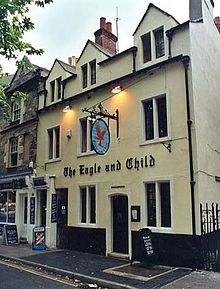
You slowly realize that you sit among the Gods, the creators of Middle Earth and Narnia, who hold court on Tuesdays at midday in a local public house. Perhaps it is The Eagle and Child, or The Lamb and Flag across the street. They read each other’s work and offer critique as writer’s groups have for centuries and continue to do so today.

220px-Birdandbaby 

I may never have understood much or been accepted into such an elite. They would have torn my work to shreds on grounds of philological shallowness (I had it checked – it’s not contagious), criticized me for imprudently suggesting that a 100,000 word novel can serve as more than merely an introduction.

They would have demanded richer world-building – take twenty pages to describe a forest, I dare you – unyielding heroes, and infallible plots. They would have challenged the age-old legends dressed up in fictional costumes, and raised an eyebrow at some of the language or innuendos.

Most likely, I would never have dared reveal my stories to the old professors of Oxford, to the most famous writing group in history. I would never have been more than a fly on the wall at a meeting of The Inklings, but would have returned week after week to sit at the feet of the Gods and hear their banter.

For here the Gods gave birth to great worlds and left them as a legacy to us and to our children, long after they departed this world. Every Wednesday night, I sit around a table in a coffee shop in Berkeley, sharing work with other aspiring authors and wonder: do the Gods look down upon us from Writers Heaven?

 lewis-and-tolkien1

Do they tut and shake their heads at our adverb addiction, our unwillingness to kill our darlings? Or do they even now move pieces around the literary chessboard? Protect the king! Advance the knights! Who, I wonder, are the pawns?

As we write a new book, a new chapter, do we not imagine the Gods walk among us?  Do they peer over our shoulders at our swanky writing machines, judging every word we write, every world we build? 

The Gods once sat in an old English pub. Now they stand behind us in coffee shops and at kitchen tables, urging us on, watching us walk the path they forged, taking on the quest they started.

For the Gods still walk among us and inside of us. The stories have been told but must be told again in different ways to a different generation. We sign these books in our own names, but humbly acknowledge those who molded us in their image as storytellers.

And now they are the flies on the wall and we who pound the keyboards. Take a moment, draw another pint, and raise your glass:

To the Gods of Fantasy!

—————————————————————————————————–

Alon Shalev writes social justice-themed novels and YA epic fantasy. He swears there is a connection. His latest books include: Unwanted Heroes and the 2013 Eric Hoffer Book Award for YA – At The Walls Of Galbrieth. Alon tweets at @alonshalevsf and @elfwriter.   For more about the author, check out his website.


Stand Up Fantasy Readers

I came out of the literature closet when I made the decision to find a way to have my Wycaan Master series published. My ego prevented me from using a pseudonym and I knew it was time to let the world know.

At first I kind of tagged a mumbled line into my elevator pitch: I write social justice-themed novels and also dabble in some fantasmmmm (imagine a hand rising in front of my mouth).

images-5

I was mortified when my boss’s wife turned to me one day and said her husband had told her I’m really into epic fantasy. I focused all my superhero strength on the ground opening up and swallowing me. Thankfully such talents are woefully non-existent because boss’s wife revealed with pride how she totally loves the genre and began reeling off her favorite authors and series. Then boss’s super-cool wife promptly sat on the stairs with my then 12-year-old son and talked for a half hour of their shared genre. He was beaming when I asked him how their conversation went.

I discovered that, as I assumed more confidence in sharing that I write in two genres, people began to share their love for epic fantasy. I found that there were plenty of fantasy nerds (Big Bang Theory, anyone?) but there are also many very cool people.

images-6

As I begin to frequent the forums, I discover people who are deep-thinkers, who follow and critically analyze plots, world building, and character development. In fact, having participated in a fair share of workshops, read how-to writing books, and listened to countless authors, I have found these threads to be as profound and educational as any.

Fantasy readers are connoisseurs in the true sense of the word – a person who is especially competent to pass critical judgments in an art, particularly one of the fine arts, or in matters of taste (dictionary.com).

Last week I quoted from a comment on a long You Tube thread (I was listening to the Hobbit soundtrack) full of comments, disagreements, and debate. The author is RobbieBjork17: “Holy Crap that was one_ of the most educated conversations I’ve ever read on youtube…. shoulda known it was going to be Tolkien Fans ;).”

He (or she) knew something I didn’t. But then what can you expect from a genre led by two British Oxford professors!

Now I wear my genre on the side of my car and when I pick up commuters every morning at the casual car pool and they ask me about the car magnet, I reply: “I am an author. I write in two genres: social justice themed novels and YA epic fantasy.”

Image Car Magnet

And I say the last part without mumbling.

—————————————————————————————————–

Alon Shalev writes social justice-themed novels and YA epic fantasy. He swears there is a connection. His latest books include: Unwanted Heroes and At The Walls Of Galbrieth. Alon tweets at @alonshalevsf and @elfwriter.  

Everyone Wants To Be An Elf

How many times have you uploaded an article or song on the Internet and then got lost surfing through hundreds of comments underneath? Whether discussing politics, sports, or comparing the lead singers of Nightwish, it gets ugly very quickly. If you need to stock your insult arsenal, You Tube comments is the place to go – but a shot of JW or an anger management course might be more effective, long term…just saying, calm down.

Earlier this week, I played a Gothic music play list (that I can’t find now) while I wrote a new chapter for Book 4 of the Wycaan Master series. I made the mistake of perusing the comments and they were eye opening.

Tens of people (and I did not check all 2,000+ comments) wrote why they would love to be an elf. Just for the record, I believe people were imagining Legalos and not Will Ferrell or any of his fine companions.

 imagesimages

But there they were: some frivolous, but many, well, I believe laced with a genuine desire. They seemed to resonate with something deep inside, something lost.

Some spoke of the physical attributes – tall and thin, healthy (have you ever seen an elf sneeze? – they even die beautifully – yes I’m talking about you, Haldir, at Helm’s Deep, I’m sure you remember), long living, nimble, coordinated… 

images-1

Others mentioned emotional attributes – decisive, confident, calm, intelligent, loyal mates (I plan to research this – I did a quick search for the Rivendale Daily Enquirer but they only distribute in the Western Isles).

And there was also an interesting assortment of comments such as: they could trust their leaders; they were in touch with nature… 

When I began writing the Wycaan Master series, it was clear to my sons and me that we didn’t want to make the elves (most of our protagonists) perfect. They get angry, make wrong decisions, feel abashed at that first kiss, and seem more…well human (ouch!).

In fact, one of the comments that surfaced as I read At The Walls Of Galbrieth to my writer’s group wass that I failed to distinguish them as elves. I struggled to do this without stepping into the familiar stereotypes. As I write Book 4, things have become somewhat darker, with the protagonists facing greater personal challenges. I continue to find it difficult to strike a cord between making my elves special without them losing their genuine, vulnerable side.

Finally, as I write this, I am listening to The Hobbit soundtrack. There is a long thread of comments, disagreements, and debate. But this is the comment that caught my eye:

RobbieBjork17 wrote: “Holy Crap that was one_ of the most educated conversations I’ve ever read on youtube…. shoulda known it was going to be Tolkien Fans ;).”

It made me absurdly proud to feel a part of the Epic Fantasy nation.

images-2

——————————————————————————————————

Alon Shalev is the author of At The Walls of Galbrieth, Wycaan Master Book 1 and The First Decree, both released by Tourmaline Books. Shalev is also the author of three social justice-themed novels including Unwanted Heroes. He swears there is a connection. More on Alon Shalev at http://www.alonshalev.com and on Twitter (@elfwriter).

Writing An Epic Fantasy Series Is Not Easy

I dropped in on an interview by Franny (not sure if this is her real name) who runs the Mind Reader blog. I have visited a few times – she writes great book reviews. Franny interviewed Meredith Bond, author of Magic In The Storm, (full interview here) and opened with the following question:

“Why is almost every book published now part of a series? Have you noticed this? I don’t think I’ve seen one single stand-alone title (aside from anthologies) in over a year! Is this a good thing? Isn’t it good enough to find books by an author you like without the books having to be tied together in some way?”

Ms. Bond’s answer is thoughtful and worth reading, but she does claim, frivolously I hope, that we authors are “lazy bums.” I took exception to this. Writing a series of books in one world with many recurring characters demands that we show this world in different forms throughout the series. In fact, I draw my own world-building inspiration from nature and I hope I will never stop seeing new lands and areas of natural beauty. When we see a beautiful vista, it is a family joke to say in a breath-taking voice: Alagaesia, a tribute to the beautiful world that Christopher Paolini built.

imgresSimilarly, my characters do not stand still. They grow, and as they age, experience conflict and love from a different perspective, as do we all in the ‘real world’. Terry Brooks is a master of this with his Shannara series.

I would venture to suggest that the onus is even greater with recurring characters because we need to show significant depth in their development. Perhaps it is easier to create a new warrior, hero, heroine, villain etc., in each book, because you can keep them relatively shallow.

Next month, The First Decree, my second Wycaan Master novel, will be released by Tourmaline Books. Since the Xmas holiday break, I have been writing Book 4 (Book 3 is written but not edited) and am about 30,000 words in. My characters are older, wiser, have more to lose, and a greater sense of responsibility.

They are growing up and each developing into the unique, ever-changing individual that they are. I care about them too much. I would never let them languish and become stagnant. What kind of a father would I be (I am, however, in no rush for my real kids to grow up!)?

There are obvious and legitimate reasons to write a series. Every author wants to build a readership and why not create an ongoing relationship between readers and the characters they are rooting for?

Tery Goodkind wrote 12 books in the Sword of Truth series.

Tery Goodkind wrote 12 books in the Sword of Truth series.

I don’t mean to begin a feud with Ms. Bond because of one phrase in an otherwise excellent interview, but it struck a chord. I recently told a friend that I have written a book a year for the last seven years (I am published in two genres), and she responded by saying that it must be easy for me.

It is not. I work very hard at my craft, spend considerable time building the world of Odessiya, and worry about my characters and their destiny. I cry when a main character dies (I can even cry several times as I reread, and reread, and reread) and feel equally exhilarated when they succeed.

The story flows out of me but I put considerable time and effort into it. I wake up early and go to bed late, squeezing in a full-time job and hopefully trying to be an active parent and sharing husband.

When I finish writing a first draft I am exhausted mentally. But I’ll keep coming back for more, just as a marathon runner pushes themselves beyond their limit during a race, but knows s/he will be back running soon.

There is an incredible high when the words flow, exhilaration as a plot unfolds, and pure joy when someone says: “Hey. You’re an author, right? I read your books.

I wouldn’t have it any other way.

The First Decree-hi resolution

—————————————————————————————————–

Alon Shalev writes social justice-themed novels and YA epic fantasy. He swears there is a connection. His latest books include: Unwanted Heroes and At The Walls Of Galbrieth. Alon tweets at @alonshalevsf and @elfwriter.