It’s In The Journey

“The problem with your genre,” the man declared with a smirk, “is that the reader always know what’s going to happen in the end. That’s why I never read fantasy.”

I could have asked him how he knew this since he admitted to not reading the genre. I might have questioned whether romance (the most popular fiction genre) or cookbooks (most popular non fiction) are any different. Those recipes never work for me!

Instead, I asked him what it was about epic fantasy that made it popular assuming he was right about the predictable endings. To his credit, he thought a while before answering. “It’s in the journey,” he replied.

I’ve been thinking about this. During my summer vacation, we camped by a river. The locals told me that there were no fish inhabiting it and it was only good for swimming in.

We went down to the river and my sons had a great time with their river rats (inflated tubes) negotiating small rapids.

I got out my fly rod, walked a bit upstream and stood in the middle of the water casting. The river was beautiful and clear, the rocks underneath and protruding were smooth and colorful. Majestic redwoods surrounded us and a noble mountain peak loomed above me. Wisps of fog hugged the tops of the trees and later in the day came almost to the edge of the water.

The author, deftly not catching fish!

I imagined where a wild trout (huge one of course) would hover and allow its prey to float right to it (a feeding pool, I think the experts call it). I cast my fly and watched it float in a wide arc. Being of only limited skill it took me a while to cast to the right distance, but I was very satisfied when I could consistently float my fly into the (imaginary) feeding pool.

A couple walked past arm-in-arm and the man felt compelled to tell me that there were no fish in the river. I nodded and told him I knew. He shrugged, but his partner got it, I think.

“Enjoy yourself,” she said.

I did enjoy myself that afternoon. I enjoyed setting up my fly rod and casting it out. I enjoyed the river, the trees, the mountain, the fog. I felt myself sighing as I released the tension of my real world and let it float away with the river.

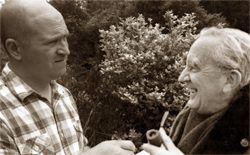
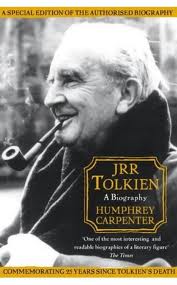
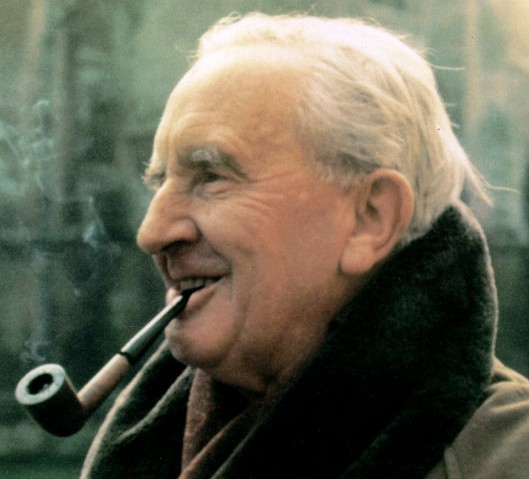
Hemingway fly-fished. Tolkien smoked a pipe (I couldn’t find evidence that he fished but he wrote poems about it – see below). I strive to walk in the shadow of Tolkien rather than Hemmingway, but the pipe has long been relinquished. Still I remember the pleasure I got in packing and lighting the pipe, even cleaning it. I still yearn for the smell of the Borkum Riff tobacco all these years later. I miss it more than the smoking for sure. I recall the anticipation of waiting all day for that special time after dinner when I could sit outside my little house and puff away the worries of the day.

Gimli lights up after a hard day of killing.

At the end of one of my fantasy novels is a twist I am very proud of. Those who have read it all tell me that they gasped at that moment. In my writer’s group, while still only on page six of that novel, one of the women guessed the twist.

I never responded, never told her she was right. I want her to enjoy the journey.

Happy fishing everyone, however you cast your rod. I’ll leave you in the hands of the Master:

Fish Riddle

Alive without breath;
as cold as death;
never thirsting, ever drinking;
clad in mail, never clinking.
Drowns on dry land,
thinks an island
is a mountain;
thinks a fountain
is a puff of air.

So sleek, so fair!
What a joy to meet!

We only wish
to catch a fish,

 So juicy-sweet!

                                                      From Lord of the Rings By J.R.R. Tolkien

——————————————————————————————————

Alon Shalev is the author of The Accidental Activist and A Gardener’s Tale. He has written three epic fantasy novels and the first reached the Quarter Finals of the Amazon Breakthrough Novel Award as of March 2012. More on Alon Shalev at http://www.alonshalev.com/ and on Twitter (@elfwriter).

I’ve Never Been In A Dwarf’s Cavern

I must confess: I’ve written almost 300,000 words of epic fantasy (three books) and never seen a dwarf’s cavern, an elf’s tree city, or a troll’s rock cairn. Now this might lose me credibility with readers, but after being complimented for my world-building by an editor at an established publishing house, I was asked from where I derive my inspiration for world-building from a fellow writer who is struggling with this important aspect.

My non-fantasy novels, The Accidental Activist and A Gardener’s Tale, were both situated in my native England, and my upcoming novel, Unwanted Heroes, is based here in San Francisco. I’m not sure if I chose these surroundings as much as absorbed what is around me into my stories. It is, I guess, what allows me to see elves in coffee shops.

I think the process is the same for me when I build my fantasy worlds. I am blessed to live surrounded by the natural beauty of California and its surrounding states, it is important to not only admire the majesty of the area but see it through the eyes of your protagonists. Three examples come to mind.

I have shared how my journey into the world of fantasy was prompted by my eldest son (then 11-years-old) complaining that I shouldn’t be writing while on vacation. I challenged him to write something with me and make it a family activity (the desperate games we play…) and there under the watchful eyes of the redwoods, we began our journey. 

It was easy to see our young heroes seeing these noble trees and the vines that hang in the forest where we were camping. They were ambushed as they passed a rock enclave, almost hidden by moss, that was a five minute bike ride from our tents.

On Monday, I will travel to an annual professional conference in St. Louis, where we have met for the past two years as well. To give us a break from the intensity of the conference, the organizers arranged a trip to a children’s museum. The incredibly creative designers had thought to fill their vast basement with caves and caverns.

While my colleagues snuck off to a nearby bar, I walked through these caverns imagining what it was like to live as a dwarf underground. I’m not sure what my biggest mistake was: missing out on a social mixer or admitting to my colleagues why I had declined their offer.

Finally, this year we traveled to Crater Lake in Oregon. Jutting out from the deep blue waters is an island called Magicians Island.  The audiovisual told us that the name came because it reminded the explorer of a wizard’s hat. I sat on the ridge overlooking the island, saw the steep grey rocks, the windswept trees, and the ospreys flying overhead.

Book 4 has a base from which to begin…

——————————————————————————————————

Alon Shalev is the author of The Accidental Activist and A Gardener’s Tale. He has written three epic fantasy novels and the first reached the Quarter Finals of the Amazon Breakthrough Novel Award as of March 2012. More on Alon Shalev at http://www.alon-shalev.com/ and on Twitter (@elfwriter).

The Master Tolkien Left Crumbs For The Hungry

The skeptics (those forced to study his work) and the jealous (those of us who figuratively sit at his feet bashing out epic fantasy novels on our laptops) dismiss J.R.R. Tolkien as a once-in-a-lifetime genius. We couldn’t emulate him even if we wanted to (though of course we do want to). We comfort ourselves that in today’s world of instant gratification, you cannot spend several pages describing a forest, however old and steeped in magic it may be.

I have read a number of books about the master and even began a fictionalized account of his life. I have on my iPod a course from the iTunes University – The Tolkien Professor by Corey Olsen, a professor himself from Washington College.

I want to share a few tips that Tolkien had for writers. This is taken from a post by Roger Colby, an author and English teacher. Mr. Colby never met Tolkien, though thanks to photoshop, he looks like he might have! Judging by his research, he deserved to!

Roger Colby ‘meets’ J.R.R. Tolkien

Mr. Colby spent a month carefully dissecting The Letters of J.R.R. Tolkien, edited by Humphrey Carpenter, and underlined every instance where the master of Middle Earth wrote about his process. The quotes are attributed. Any comments belong to Mr. Colby, though I strongly recommend reading the entire article.

1.  Vanity Is Useless

Tolkien writes in a letter to Sir Stanley Unwin on 31 July 1947:

“…I certainly hope to leave behind me the whole thing [LOTR] revised and in final form, for the world to throw into the waste-paper basket.  All books come there in the end, in this world, anyway” (121).

2.  Keep a Stiff Upper Lip

In another letter to Sir Stanley Unwin dated July 21, 1946, Tolkien lists a mound of personal struggles he was facing: being ill, being overworked and missing his son Christopher who was away in the Royal Navy. He put many of his struggles aside, though, and went to writing.

He had to balance his day job with his desire to write epic stories set in Middle Earth. He found time. He made time. It took him 7 years to write The Hobbit. (117). The thing that he writes about most in this period is his struggle to get the work finished on his novels and to balance teaching and his many duties at Oxford College. Apparently he found a way.

3.  Listen to Critics

Tolkien writes to his editor about the comments C.S. Lewis made about The Lord of the Rings: “When he would say, ‘You can do better than that. Better, Tolkien, please!’ I would try. I’d sit down and write the section over and over.

That happened with the scene I think is the best in the book, the confrontation between Gandalf and his rival wizard, Saruman, in the ravaged city of Isengard.”

He writes that he “cut out some passages of light-hearted hobbit conversation which he [Lewis] found tiresome, thinking that if he did most other readers (if any) would feel the same…to tell the truth he never really like hobbits very much, least of all Merry and Pippin. But a great number of readers do, and would like more than they have got” (376).

4.  Let Your Interests Drive Your Writing

Tolkien wrote: “I began the construction of languages in early boyhood: I am primarily a scientific philologist. My interests were, and remain, largely scientific. But I was also interested in traditional tales (especially those concerning dragons); and writing (not reading) verse and metrical devices. These things began to flow together when I was an undergraduate to the despair of my tutors and near-wrecking of my career” (345).

5.  Poetry As A Road to Prose

When Tolkien couldn’t express his thoughts in prose he “wrote much of it in verse.”

He writes “The first version of the song of Strider concerning Luthien,… originally appeared in the Leeds University magazine, but the whole tale, as sketched by Aragorn, was written in a poem of great length” (346).

6.  Happy Accidents

Tolkien writes: “The Hobbit saw the light and made my connection with A. & U. by an accident.” Further: “From The Hobbit are also derived the matter of the Dwarves, Durin their prime ancestor, and Moria; and Elrond.

Mr. Colby: “Sometimes accidents happen, and sometimes those accidents will lead a writer to a publisher or create an entire novel.  Tolkien created entire worlds and then used what he knew of myth and legend to tell iconic, archetypal stories based in those magical places.

Even though he planned everything out meticulously, he still had happy accidents occur that he kept in the final manuscript because they just worked. Sometimes accidents can be blessings.”

7.  Dreams Give Us Inspiration

Tolkien writes:  “In sleep I had the dreadful dream of the ineluctable Wave, either coming out of the quiet sea, or coming in towering over the green inlands.  It still occurs occasionally, though now exorcised by writing about it.

It always ends by surrender, and I awake gasping out of the deep water. I used to draw it or write bad poems about it. When C.S. Lewis and I tossed up, and he was to write on space-travel and I on time-travel, I began an abortive book of time-travel of which the end was to be the presence of my hero in the drowning of Atlantis” (347).

8.  Real People Make Great Characters

Tolkien: “There was a curious local character, an old man who used to go about sweeping gossip and weather-wisdom and such like.

To amuse my boys I named him Gaffer Gamgee, and the name became part of family lore to fix on old chaps of the kind. At that time I was beginning on The Hobbit. The choice of Gamgee was primarily directed by alliteration; but I did not invent it. It was caught out of childhood memory, as a comic word or name. It was in fact the name when I was small (in Birmingham) for ‘cotton-wool’”(348).

9.  You May Be the Next Best Selling Author

Tolkien relates the following story: “I lived for a while in a rather decayed road (aptly called Duchess) in Edgbaston, B’ham; it ran into a more decayed road called Beaufort. I mention this only because in Beaufort road was a house, occupied in its palmier days, by Mr. Shorthouse, a manufacturer of acids, of (I believe) Quaker connections.

He, a mere amateur (like myself) with no status in the literary world, suddenly produced a long book, which was queer, exciting, and debatable – or seemed so then, few now find it possible to read. It slowly took on, and eventually became a best-seller, and the subject of public discussion from the Prime Minister downwards. This was John Inglesant. Mr. Shorthouse became very queer, and very UnBrummagem not to say UnEnglish. He seemed to fancy himself as a reincarnation of some renaissance Italian, and dressed the part” (348).

10.  Books You Write May Seem Trite

Tolkien writes: “I now find The Lord of the Rings ‘good in parts”(349).

Mr, Colby: “This is to say that upon reading his books years after writing them his writing experience informs him that he is a much better writer than when he published The Hobbit.”

Tribute: Given that I have relied heavily upon the research of Mr. Colby, I would like to promote his own novel as appreciation. The Transgression Box- Roger Colby.
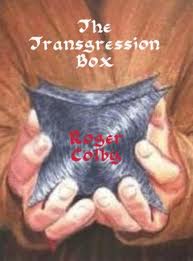
Dornin is known as the village liar…but he will also be their unwitting savior. It all begins when Dornin finds a mysterious object in the forest – a perfect cube of a box – and brings it back to his village. Unsure of its purpose, he hands over the object to the village elders – but during the night he spots a strange fog emanating from the House of Elders, and in the morning, over half of the people of the village have fallen into an unnatural and unending sleep.

Dornin decides he must set off on a quest to destroy the “Transgression Box” in order to save his people. Along the way he will encounter many strange and dangerous places, as he desperately tries to destroy that which must be destroyed for him. The Transgression Box is an allegorical science fiction tale of faith, trust and hope.

——————————————————————————————————

Alon Shalev is the author of The Accidental Activist and A Gardener’s Tale. He has written three epic fantasy novels and the first reached the Quarter Finals of the Amazon Breakthrough Novel Award as of March 2012. More on Alon Shalev at  http://www.alonshalev.com and on Twitter (@elfwriter).

The Art of World-Building

When the hobbit walked through Mirkwood, we all walked with him. We knew exactly how the trees looked, how the wind moved their branches, what the ground felt like as one fur-soled foot pressed down. We could smell the rotting leaves and…We were there as the master welcomed us into Middle Earth, his world. We were his honored guests and when we returned to this world, we felt a sense of loss.

No one, in my humble and uneducated opinion, has ever created a world in the rich way of J.R.R. Tolkien, and perhaps no one ever will. There are some among our younger readers who skip or skim the long descriptions. Do I need to know what every tree in the forest looks like?

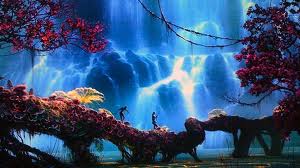
And yet these same young people marveled over the world of Pandora from James Cameron’s Avatar. I am closing in on finishing the third of the Wycaan Master novels and will then begin another edit of the first book before passing it on to more professional hands.

One of the aspects that I want to focus on is how well have I described the land in which the story transpires. There is a lot of traveling and many different climates and natural wonders, as well as villages and cities, which are described. When I wrote the first book, it was in close collaboration with my then 11-year-old son. I was very conscious of maintaining a fast pace. The second and third books were more my own work, with my son reading and giving me feedback. I believe these two novels involved considerably more world-building.

Why do we need to show such detail in epic fantasy? It seems obvious for the Sci-fi writers to put so much emphasis on creating worlds and I understand why those who write in modern earth need not focus so much because we can see the world we live in. 

Do you enjoy the detail of a new world or are you content to receive hints and imagine it for yourself? How important is world-building to you becoming a loyal reader of a fantasy series? Finally, if you write fantasy yourself, do you have any best practices or tips? Do share in the comments below.

Appreciate your feedback. Have a great weekend and a happy 4th.

Alon 

——————————————————————————————————

Alon Shalev is the author of The Accidental Activist and A Gardener’s Tale. He has written two fantasy novels and the first reached the Quarter Finals of  the Amazon Breakthrough Novel Award as of March 2012. More on Alon Shalev at http://www.alonshalev.com/and on Twitter (@elfwriter).

Who is Reading Epic Fantasy?

I’m reading a series of books about marketing my novels. They each prioritize a central marketing principle: Know Your Target Audience.

I realize, being relatively new to the epic fantasy scene that I don’t know who these people are. I have never frequented conventions or even chat groups online. When I go to social occasions, I often ask people what are you reading right now, because sports and politics can only go so far – and real men don’t discuss work or family (as a new immigrant to the US that’s what I was told).

But when I ask the question, people rarely say epic fantasy. During the days of Harry Potter, the Inheritance series, and now The Hunger Games, a man could come out of the library closet because his children were reading them and he was showing himself to be an in-touch father.

So here is my request. If you read epic fantasy, please answer as many of the following questions as you have patience for.

1. How old are you?

2. Are you male or female?

3. Where do you live?

4. Did you finish High School / Bachelors Degree / Masters Degree?

5. What is your profession?

6. Are you active on Facebook, Twitter, Google+, read and comment on blogs?

7. What do you look for in an epic fantasy book?

8. Do you read books on an eReader or as a hardcover/paperback? (if both, please assign a ratio).

9. How many books do you read a month?

10. Who is your favorite epic fantasy author? Why?

One last favor if I may. Please pass this on to friends and family who you think might read epic fantasy and ask them to mention your name as referral. I would like to offer the first 20 people who refer 3 responders to the survey an eBook of either:

The Accidental Activist  or

A Gardener’s Tale

Thank you for your help. I will publish the results if I can get 50 responses.

——————————————————————————————————

Alon Shalev is the author of The Accidental Activist and A Gardener’s Tale. He has written two fantasy novels and the first reached the Quarter Finals of  the Amazon Breakthrough Novel Award as of March 2012. More on Alon Shalev at http://www.alonshalev.com/and on Twitter (@elfwriter).

At The Next Dwarf Mine Turn Left.

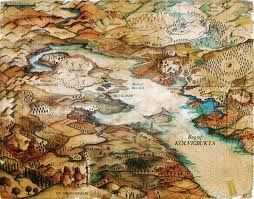
I came across this great article by Roberta Osborn called How to Create A Map For Your Novel. It is very cool and I strongly recommend to those of you who are fantasy or sci-fi writers and may be considering drawing a map, that you follow the link.

Two other articles that I found are from Fantasy Faction and a low-tech video.

When writing Wycaan Master, I never thought to draw a map. Only when I began to write a sequel and realized that I had to keep my characters following a certain geographical framework did I consider making one.

Given that I have no artistic talent, and that my son who helped me write and edit, better understands which end of a pencil is which, I charged him with the task. Being of prime pre-teen material, he refused. In the ensuing negotiation, we agreed to tackle it together.

We went through the manuscript and highlighted every change in direction, every named mountain range and forest. He then took a piece of paper and began to draw. We were soon off the page and took another piece of paper and, utilizing cutting-edge technology, taped the two pages together. They soon blossomed into several pages at unruly angles one to the other, with absolutely no way the map could be folded.

it was clearly destined to be crumpled, torn, and otherwise abused. Today, it sits somewhere in our humble abode under a pile of mutually discarded papers that are not yet quite trash-worthy. It is a tragic tale.

As I look through the articles above, I am struck with a series of questions for those who read epic fantasy. Remember, that I am new, if enthusiastic, to the genre. If you have the energy please answer any or all of the following questions.

1) Do you look at a map at the beginning of a fantasy novel? If so, how much do you study it?

2) Do you refer back to the map as you read the book?

3) Is there any room in epic fantasy for a GPS?

Answers to the first two questions will be greatly appreciated.

Have a great weekend,

Alon

——————————————————————————————————

Alon Shalev is the author of The Accidental Activist and A Gardener’s Tale. He has written two fantasy novels and the first has reached the Quarter Finals of  the Amazon Breakthrough Novel Award as of March 2012. More on Alon Shalev at http://www.alonshalev.com/and on Twitter (@elfwriter).
Top Current Epic Fantasy Novels

Amazon.com sent me list of their best-selling titles (see below). I thought we could springboard on it and see who is reading what. Are you reading any of these novels? What is the best epic fantasy novel that you have read in the last few months?

I am particularly interested in Terry Goodkind. I enjoyed watching Legend of the Seeker on TV, but never got into the Sword of Truth – his first novel. Have you been reading his books? Let me know.

Have a great weekend,

Alon

——————————————————————————————————

Alon Shalev is the author of The Accidental Activist and A Gardener’s Tale. He has written two fantasy novels and the first has been entered into the Amazon Breakthrough Novel Award in January 2012. More on Alon Shalev at http://www.alonshalev.com/and on Twitter (@elfwriter).

Alon


A Discovery of Witches: A Novel (All Souls Trilogy) A Discovery of Witches: A Novel (All Souls Trilogy)
by Deborah Harkness
The Wise Man's Fear: The Kingkiller Chronicle: Day Two (Kingkiller Chronicles) The Wise Man’s Fear: The Kingkiller Chronicle: Day Two (Kingkiller Chronicles)
by Patrick Rothfuss
A Game of Thrones: The Graphic Novel: Volume One A Game of Thrones: The Graphic Novel: Volume One
by Daniel Abraham, George R.R. Martin
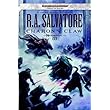
Charon's Claw: Neverwinter Saga, Book III Charon’s Claw: Neverwinter Saga, Book III
by R.A. Salvatore
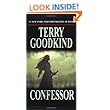
Confessor (Sword of Truth) Confessor (Sword of Truth)
by Terry Goodkind
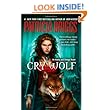
Cry Wolf (Alpha and Omega, Book 1) Cry Wolf (Alpha and Omega, Book 1)
by Patricia Briggs
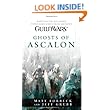
Guild Wars : Ghosts of Ascalon Guild Wars : Ghosts of Ascalonby Matt Forbeck
The Wheel of Time, Boxed Set II, Books 4-6: The Shadow Rising, The Fires of Heaven, Lord of Chaos The Wheel of Time, Boxed Set II, Books 4-6: The Shadow Rising, The Fires of Heaven, Lord of Chaos
by Robert Jordan

Young Adults and the E-book Revolution

I have entered my Young Adult epic fantasy novel into the Amazon Breakthrough Novel Award. My plan is if I do fall at some point to send submissions to about 20 agents and try to publish in the conventional way.

If this does not succeed, I assumed that I would then join the e-book revolution and hope to create enough splash to be picked up in the footsteps of Amanda Hocking and J.A. Konrath. I have read closely John Locke’s successful business model and would love to try it.

But today something hit me. Do young adults (10-18 year old) – my primary market for my epic fantasy series – read their books on e-Readers?

recently wrote: “The children’s and young adult e-book market faces special challenges not shared by the adult market, new research shows. And teens are slow to adopt e-books, in part because they do not see e-books as a social technology and they think there are too many restrictions on sharing digital titles.”

She reached her conclusion based on two online surveys commissioned by  PubTrack Consumer towards the end of last year who surveyed 1,000 teenagers and 1,000 parents of pre-teens. The details of the survey can be found here –  “Children’s Publishing Goes Digital.”

There are some interesting theories and statistics here. Firstly, youngsters are extremely social and want to share their books with friends and e-book technology is perceived as too restrictive. I thought that perhaps the teens did not have access to comfortable e-book readers. The majority has cell phones, but I am not including this. 60% of those surveyed receive technology from their parents as the latter upgrade.

makes another excellent point It is not just young adults propelling YA books like the Hunger Games trilogy onto e-book bestseller lists:

– 30-44-year-olds constitute 28 % of YA print book sales and 32 % of YA e-book sales. -18-29-year-olds buy the most YA books, purchasing 31% of YA print sales and 35% of YA e-book sales.

Making a decision to invest in the YA fantasy e-book market doesn’t look as attractive as for genres aimed at adults, but this is going to change as more young people receive the necessary devices. Also, the realization that the YA market goes not from 12-18, but 12-44 year olds make for a more encouraging prospect.

A final interesting point is that this age group is more likely to buy a book because of a recommendation on a social network.

Now, please excuse me, this 47-year-old is going to read The Hunger Games, recommended to me by my 13-year-old son.

——————————————————————————————————

Alon Shalev is the author of The Accidental Activist and A Gardener’s Tale. He has written two fantasy novels and the first will enter the Amazon Breakthrough Novel Award in January 2012. More on Alon Shalev at http://www.alonshalev.com/and on Twitter (@elfwriter).
What is The Future of Epic Fantasy?

I have mentioned in past posts that I am seeking to differentiate my novel from other epic fantasy series. I am being continually told by those insiders that every descent agent and publisher has five hundred manuscripts on their groaning desks about swords and quests and good .v. evil. Apparently these agents groan whenever an elf is mentioned (especially if s/he is tall, thin, loves nature etc.).

At the Berkeley Writers critique group, visitors often ask: what differentiates this from Lord of the Rings?

All this begs the question: what is the future of epic fantasy?

Is it okay to accept that there are certain conventions that are timeless? Are dwarfs small and stout, brave and ready for a rumble? Is it okay that they are miners and love to live underground?

Gimli - plenty of blades, no razor

Here are 10 basic ingredients that need to be questioned:

1) There is the good guy (or gal) and the bad one. The goods is the underdog, the bad is all-powerful, though hopefully will fall in the end.

2) Magic – the hero/heroine has something special about them that gives them a chance to win.

3) There is a teacher who mentors the hero/heroine.

4) The dwarfs are stereotypical – see above.

5) The elves are tall, beautiful, healers, wicked with the bow and arrows and…

6) Romance

7) Everything takes place in New Zealand-type environment.

8) There is a lot of walking about.

9) Swords, bows and arrows, lots of insignificant people dying.

10) Long novels, preferably in series form, with huge potential for movies.

Journeys that never end...

I have mentioned the high-concept challenge in earlier posts. The idea is to have something that is unique, that separates your fantasy novel from the rest. Enter Harry Potter and Hunger Games. 

And yet, we come back for more. A new novel from Terry Brooks or R.A Salvatore has us salivating. Christopher Paolini’s final book of the Inheritance series was eagerly awaited, and we all know when we are going to see the Hobbit movie even if we haven’t booked our summer vacations or filed our taxes.

When I mentioned the higher concept to a woman who has been reading my manuscript, she baulked. As long as there is a strong plot, a few twists, memorable characters, and a high level of writing, she said, a novel will always stand out from the rest.

The question is: Are the essential epic fantasy novel ingredients timeless? When Tolkien first created Middle Earth, did he set in motion a genre that will endure into the 21st Century?

The Master

——————————————————————————————————

Alon Shalev is the author of The Accidental Activist and A Gardener’s Tale. He has written two fantasy novels and the first has been entered into the Amazon Breakthrough Novel Award in January 2012. More on Alon Shalev at http://www.alonshalev.com/and on Twitter (@elfwriter).

Awkward Sex Change

Last week I shared feedback I had received to add stronger female characters in my YA novels to distinguish them from traditional epic fantasy. I have to admit to feeling motivated to do this just from a desire to contribute to breaking from the sexist images that I feel pervade in millennial culture (another topic in itself).

Heeding this advice, I have begun to convert a powerful and wise (male) teacher into a female. It has been an interesting and revealing process.  At first, it seems just a matter of changing he to she, him to her, and man to woman.

But as I make the conversion there seem to be a number of questions arising and a sharp look at his/her behavior. Firstly, I realized that the teacher does almost all the cooking. When it was a guy I never noticed: now I do and feel a need for her to teach our hero some cookery lessons.

There are other scenes that need to modified. Imagining the shock when my young teenage son reads that they cast off their clothes and jump into the lake, one would assume naked, made sense when it was two guys, but now an elderly  woman and teenage boy… hmmm.

The fighting aspect doesn’t faze me. I am happy that she is a fearsome warrior and that she teaches to try and solve conflicts in a peaceful way first. Ironically, as the reluctant teacher spends more time with the protagonist, he becomes more paternal to the young elf.  While I enjoyed this when the teacher was a man, as a woman it seems almost…stereotypical.

Changing the gender of a character, I discovered, is far more intricate than just converting he to she. But in doing so, I feel I am strengthening my novel and the epic fantasy genre. More importantly, I hope that I am making a statement that will resonate with my two sons and their friends.

——————————————————————————————————

Alon Shalev is the author of The Accidental Activist and A Gardener’s Tale. He has written two fantasy novels and the first will enter the Amazon Breakthrough Novel Award in January 2012. More on Alon Shalev at http://www.alonshalev.com/and on Twitter (@elfwriter).