Why Do Adults Gravitate To Young Adult Fiction?

I believe that more adults are reading the epic fantasy Wycaan Master series than young adults. I know there is a fair proportion of teenagers and even pre-teens reading, but judging by the emails, blog comments, and twitter responses, it is predominately adults. This is all despite the books being written for and with my children, which I describe here. It begs the question why are adults drawn to Young Adult (YA) books?

imgresI found this article by Kelly Johnson. In her post, she debunks the following statements (her words):

1. Our culture encourages an unnatural and prolonged adolescence 

2. YA books are escapist since you don’t have to look beneath the surface of them. They are easier to grasp.

3. Adults read YA because they aren’t able to read past a middle school or high school level because adults are getting dumber and dumber.

4. YA books are about hopefulness. Their problems aren’t really problems and they can be fixed. Also there’s always a happy ending, so it’s satisfying and fulfilling to adults. The characters are likable. 

5. Fill in the blank with your own justification here. Some examples may include: YA is all about first experiences; YA is nostalgia for adults; YA is cheaper than adult books and therefore more appealing to the wallet; and so forth.”
images

I enjoyed Ms. Johnson’s fiery responses to these statements, but I felt let down when she finished with: “The only justification for why adults read YA books is this: they choose to. That’s it. That’s their reason. Adults read YA books because they as adults choose to do so.

I am disappointed. None of these reasons explain why an adult, working, raising a family, involved in a community, volunteering, following a sports team etc. would be so moved to take a few precious hours each day to sit and read, and then often reach out and engage with the author, fellow readers, come back to buy more books, and enter deep discussions online and at the pub.

Fiction is all about the plot, the characters, and the environment. It is true for John Grisham and Stephen King, and it is true for Terry Brooks, Christopher Paolini, and R.A. Salvatore.

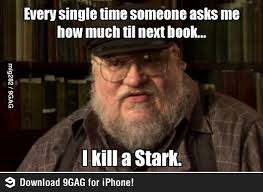
When I read a John Grisham book, I am transported to Mississippi, to another time, and when I close the book at the end of a chapter, I worry about his characters and their choices. It is no different to George R.R. Martin who may kill off a few popular characters in the next chapter if he had a bad day.
images-1

The issue, I think, is how we perceive YA. A young adult book means there is no sex, less violence and no profanity. There are certain boundaries not crossed if we want our youth to read them. But that is all it is. There is nothing here to prevent an adult from enjoying the book, unless you assume we are all sex-starved, violent, expletive-charged individuals, which would be sad, especially if this is how Hollywood and the mass media perceive us.

I am taking a few months break from the fourth Wycaan Master book to write an adult fantasy book.

I have not felt a need to raise the richness of language.

I have not made the characters deeper and more compelling.

I have not sought a more complex plot.

I have not deepened or diluted my world-building.

There are, to be honest, issues dealt with here that may be too dark to share with youth. I share a lot with my teen son, but would hesitate to share certain passages here. Characters deal with fears and obstacles that most of us who have children might not want them to read. There is sex and more graphic violence than in the Wycaan Master series, but that might yet get dialed down.

So what does make adults gravitate to YA novels? The problem is not with the answer. The question is simply wrong.

People read a story because it has a good plot, characters that the reader can bond with, a world that stimulates the imagination. This is the same for adults as it is for YA. YA is written within certain criteria in order to make them a safe space of teens. It certainly does not mean dumbing down or becoming predictable.

The discerning reader will be drawn to a book in their chosen genre simply because it is good: plot, characters, environment and strong writing.

A good novel is a good novel is a good novel…

So this seems like a good time to thank all of you who bought Ashbar – Wycaan Master Book 3 and any of my other novels. I read every blog comment, every tweet, every priceless review on Amazon.

Thank you. Thank you. Thank you. Have a great week.

elfwriter

——————————————————————————————————

Alon Shalev is the author of the 2013 Eric Hoffer YA Book Award winner, At The Walls of GalbriethThe First Decree, and Ashbar – Wycaan Master Book 3 – all released by Tourmaline Books. Shalev is also the author of three social justice-themed novels including Unwanted Heroes. He swears there is a connection. More at http://www.alonshalev.com and on Twitter (@elfwriter). Hang out with Alon on Google+ here.

Sex or Swords?

I recently finished reading an epic fantasy novel by an author who is perhaps a year ahead of me. He is a couple of novels deeper into his series and seems to have a similar, but not bigger, social platform. 

But his books are selling impressively and I enjoyed reading his work, but there was nothing in the quality of the plot, writing, etc. that suggested why he is outselling me.

There are a lot of things in common between our novels. They are both character driven and, though there is a clear plot arc, you really stay engaged because you are rooting for the characters. There is plenty of action and moral dilemmas. If and when I write a review, and I definitely will because this is so important to the author (hinting here!), I realize that it would be similar to many of the reviews I have received for At The Walls Of Galbrieth and The First Decree.

imgres 

But there are two fundamental differences, perhaps three.

1) His novels are meant only for adults.

2) There is a fair amount of sex.

There is also considerable swearing, but I don’t think someone buys a book because of the swearing. It might deter a few people, but not act as motivator.

These differences lead me to wonder about whether young adults are reading ebooks – which remains the most popular with all struggling authors – and I will examine this next week.

But for now, I want to focus on sex. Let me be honest. I’m very fond of sex and I enjoy reading and writing about it. In my non-fantasy novels, there are probably two graphic sex scenes in each. I believe that the way my characters deal with sex, before, during and after, reveals far more than any long description can ever hope to achieve.

All three books ­– A Gardener’s Tale, The Accidental Activist, and Unwanted Heroes – have garnered criticism from a few reviewers who were upset or disturbed by what they read, but there are many others who mention it positively. There was nothing 50 Shades, or anything violent or forced in these scenes and, in truth, I remain proud of them, even when I know my mother and mother-in-law have read them!

A Gardener's Tale  - new cover

However, what is the place of sex in epic fantasy? The book in question has two sex scenes and neither are particularly graphic or explicit. Throughout the novel there are sexual references but little more than men’s comments or a woman’s thoughts. Both scenes were written well and felt part of the story. Both added to the richness of the characters.

 I have wondered about Game of Thrones, in particular because my 14-year-old is interested in reading and watching the series. I have no doubt that George R.R. Martin wrote what he understood to be sexual mores of that period and I agree that it probably happened as he described, but the sex was clearly not a turn on for me (neither was it for most of Martin’s characters come to think of it).

Much of the sex were men exploiting their power over women and a few scenes are of women who manipulate men to get something they want through sexual favors or binding the men’s lusts to them. All good stuff, perhaps, but not something I want to share with my teenage son.

imgres-6

I want him to know about sex as something romantic, a bonding act between two people who love each other. I want him to know that anything that is not two consenting adults pleasuring themselves and each other, is deviant. It might not necessarily be wrong, but that is for him to decide according to his values.

In the Wycaan Master series, I touch on many values and morals. I challenge the young adults who read my books to make choices about race, violence, friendships, loyalty, and enjoy it when I hear my son or his friends comment that they are proud/disappointed/upset/ happy about the actions of a character. I like that they feel guilty, understanding and maybe partly rooting for the bad guys. Nothing is ever black or white.

images-1

But what about sex? There are certain hints in my novels that some things are going on, but it is easily missed if a young adult is not thinking about such topics. To write about sex, even in a tasteful youth-orientated way, would strip my novels of being YA (young adult). I would lose the initial motivation of writing to influence a new generation. 

Is it possible to write in sexual scenes in a YA novel? Most parents do not vet a book, trusting that if it has received recognition as YA then it will not include certain things such as swearing, graphic violence, or sex.

I do not want to step away from the target audience that so intrigues me and I am not sure I am ready to abandon them. However, I am frustrated that there are strict boundaries, frustrated that I could convey so much to my target audience through my young characters having or thinking of sexual encounters. I could convey healthy values associated with sex, values that I want to share with my own sons.

So my question is: Can sex be handled within a YA context? Your thoughts?

—————————————————————————————————–

Alon Shalev writes social justice-themed novels and YA epic fantasy. He swears there is a connection. His latest books include: Unwanted Heroes and the 2013 Eric Hoffer Book Award for YA – At The Walls Of Galbrieth. Alon tweets at @alonshalevsf and @elfwriter.   For more about the author, check out his website.


Everyone Wants To Be An Elf

How many times have you uploaded an article or song on the Internet and then got lost surfing through hundreds of comments underneath? Whether discussing politics, sports, or comparing the lead singers of Nightwish, it gets ugly very quickly. If you need to stock your insult arsenal, You Tube comments is the place to go – but a shot of JW or an anger management course might be more effective, long term…just saying, calm down.

Earlier this week, I played a Gothic music play list (that I can’t find now) while I wrote a new chapter for Book 4 of the Wycaan Master series. I made the mistake of perusing the comments and they were eye opening.

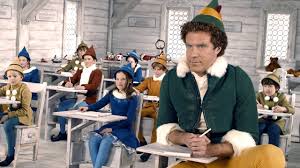
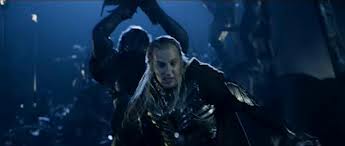
Tens of people (and I did not check all 2,000+ comments) wrote why they would love to be an elf. Just for the record, I believe people were imagining Legalos and not Will Ferrell or any of his fine companions.

 imagesimages

But there they were: some frivolous, but many, well, I believe laced with a genuine desire. They seemed to resonate with something deep inside, something lost.

Some spoke of the physical attributes – tall and thin, healthy (have you ever seen an elf sneeze? – they even die beautifully – yes I’m talking about you, Haldir, at Helm’s Deep, I’m sure you remember), long living, nimble, coordinated… 

images-1

Others mentioned emotional attributes – decisive, confident, calm, intelligent, loyal mates (I plan to research this – I did a quick search for the Rivendale Daily Enquirer but they only distribute in the Western Isles).

And there was also an interesting assortment of comments such as: they could trust their leaders; they were in touch with nature… 

When I began writing the Wycaan Master series, it was clear to my sons and me that we didn’t want to make the elves (most of our protagonists) perfect. They get angry, make wrong decisions, feel abashed at that first kiss, and seem more…well human (ouch!).

In fact, one of the comments that surfaced as I read At The Walls Of Galbrieth to my writer’s group wass that I failed to distinguish them as elves. I struggled to do this without stepping into the familiar stereotypes. As I write Book 4, things have become somewhat darker, with the protagonists facing greater personal challenges. I continue to find it difficult to strike a cord between making my elves special without them losing their genuine, vulnerable side.

Finally, as I write this, I am listening to The Hobbit soundtrack. There is a long thread of comments, disagreements, and debate. But this is the comment that caught my eye:

RobbieBjork17 wrote: “Holy Crap that was one_ of the most educated conversations I’ve ever read on youtube…. shoulda known it was going to be Tolkien Fans ;).”

It made me absurdly proud to feel a part of the Epic Fantasy nation.

images-2

——————————————————————————————————

Alon Shalev is the author of At The Walls of Galbrieth, Wycaan Master Book 1 and The First Decree, both released by Tourmaline Books. Shalev is also the author of three social justice-themed novels including Unwanted Heroes. He swears there is a connection. More on Alon Shalev at http://www.alonshalev.com and on Twitter (@elfwriter).

Quite A Week

It has been quite a week for me. First, thank you to everyone who left such beautiful reviews both on amazon.com and across the pond at amazon.co.uk. In fact, both At The Walls Of Galbrieth and The First Decree are doing well there. I’m not sure what happened, but I received over 300 hits on Wednesday in an hour in the early California light. So whoever sparked it – I thank you too. 

I finished my own edit of Ashbar, Wycaan Master Book. 3, and sent it under the scalpel of the Master Surgeon (or Mistress Editor to be more accurate), Monica Buntin. While I wait, it is an opportunity to get back to writing Book 4. I wrote over 40,000 words during the Xmas break and I can’t wait to hit that keyboard – so much easier than a treadmill. I also left a few characters hanging and I need to apologize to them and let them move on.

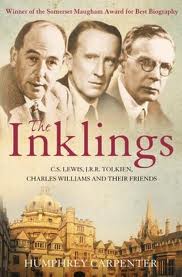
I discovered, and I realize that 90% of those who read this blog are about to roll their eyes, that J R.R. Tolkien and C.S. Lewis were part of a writers critic group at Oxford. It blew my mind and I scuttled off to find a copy of The Inklings by Humphrey Carpenter, who also wrote a great biography of the Professor. More on this when I actually finish his book.

imgres

Finally, The Hobbit came out on DVD and BluRay. In case you have never heard of this movie, Yahoo Movies offered us two delightful caveats.  I particularly loved their chart to differentiate between the races, but their behind-the-scenes video was cool as well.

_ylt=AsAy3VcY8kcvndsOg1BnmyK4AOB_;_ylu=X3oDMTFpOGpyZm1sBG1pdANCbG9nIFBvc3QgQm9keQRwb3MDMgRzZWMDTWVkaWFCbG9nQm9keUFzc2VtYmx5;_ylg=X3oDMTMyZnNiMWtvBGludGwDdXMEbGFuZwNlbi11cwRwc3RhaWQDZmMyZjgyNWQtMmUwNy0zN2NjLTk2OWEtM2IzNTEyMWQ1MzdhBHBzdGNhdANibG9nc3xt

I couldn’t see how to download it, so please accept The Song Of The Misty Mountain in its place.

——————————————————————————————————

Alon Shalev is the author of At The Walls of Galbrieth, Wycaan Master Book 1 and The First Decree, both released by Tourmaline Books. Shalev is also the author of three social justice-themed novels including Unwanted Heroes. He swears there is a connection. More on Alon Shalev at http://www.alonshalev.com and on Twitter (@elfwriter).


Why Epic Fantasy Can Be So Profound

The Lord of the Rings is a story (or several stories) about elves and dwarves and dragons and quests. And yet, professors sit in their Ivy League towers and dig deep into the story, seeking meaning, analyzing plot and characters, symbolism and analogy.

Grown men and women who read the books 20 or 30 years ago, continue to debate the values and meaning, while counting down the days from one epic movie to another. We reverently pass on the books, DVD’s and walk our children to the movies – a sacred rite of passage.

Here is a documentary that not only analyzes these aspects through a variety of knowledgable men and women with delightful accents, but also the symbiotic relationship between Tolkien with C.S. Lewis. Both men’s motivations and writing, for example, were shaped through their experiences in World War 1. They went on to create two of the greatest epic fantasy series ever. It is thirty minutes that are well worth the time.

lewis-and-tolkien1

So please, grab yourself a mug of ale, light up the Longbottom leaf, and enjoy a revealing explanation of a unique man who blazed a path for so many who came after him.

As one who owes him so much, I am truly humbled.

One last point: if you have the energy,  browse through the comments under the You Tube video. It is amazing how many people had such difficulty reading the LOTR and yet still have a deep appreciation for the work.

——————————————————————————————————

Alon Shalev is the author of the 2013 Eric Hoffer YA Book Award winner, At The Walls of Galbrieth, and five other Wycaan Master books all released by Tourmaline Books. The link above takes you to the Kindle versions. For all other eReaders, please click here.

More at http://www.alonshalev.com and on Twitter (@elfwriter).

Book Review – Mrythdom: Game of Time – Jasper T. Scott

All The Right Ingredients

There are certain elements that ensure a smooth and entertaining read in the fantasy genre: innovative characters, a plot that moves along, plenty of twists and turns. Jasper Scott manages it all in effortless fashion in Mrythdom: Game of Time.

imgres

I have started a number of fantasy books recently and not been able to finish them. Scott’s characters stayed with me between readings – wondering how they were doing. His world-building is excellent. I didn’t think I would stay with a book that fuses SF and F, but Scott skillfully made it work.

His Meria society offers sexual tension that was enjoyable and tasteful. I had spent the best part of the 1st half wondering whether this might be another series to share with my teen son. The erotic tension was just right for it to be edgy without precluding a YA audience.

imgres-2Scott has set this up as a series. I look forward to the sequel and how Aurelius is going to succeed – if he is going to, that is. Either way, I’m enjoying traveling on the journey with him.

——————————————————————————————————

Alon Shalev is the author of At The Walls of Galbrieth, Wycaan Master Book 1 and The First Decree, both released by Tourmaline Books. Shalev is also the author of three social justice-themed novels including Unwanted Heroes. He is convinced there is a connection. More on Alon Shalev at http://www.alonshalev.com and on Twitter (@elfwriter).

Genre Conventions .v. Originality

“But this is how it’s done in epic fantasy,” I whine to my writer’s group. “It’s part of the convention.”

We are a bonded group, anxious to support each other and so I receive sympathetic smiles and diplomatic silence. The silence screams in my ears. I know they are right. If I have to fall back on a sentence like that, I am in trouble. Or am I?

How important is originality?

Utter originality is, of course, out of the question.” – Ezra Pound

Originality is nothing but judicious imitation.” – Voltaire

I feel better already.

It is better to fail in originality than to succeed in imitation.” – Herman Melville.

Ouch!

Elves are tall, thin, have pointed ears, and excellent hearing. They look good in green, and shoot bow and arrows with exceptional accuracy.  Dwarves are short, rotund, live underground, mine and play around with axes. This is so because J.R.R. Tolkien put the epic in epic fantasy with his Middle Earth series’. Are the rest of us thus condemned to be mere recyclers of his work? Maybe. But I am not convinced how this is different from any other genre: romance has the same images and general plot arc. So does suspense and horror. And don’t get me started on dystopian thrillers.

So why do we so enthusiastically embrace conventions in a genre? It might be because some themes are simply timeless. I’m thinking Beowulf (maybe written in the eighth century) and The Odyssey (sixteen centuries before that!). Tolkien would concede that he was not the first, but when something works, you build your own version of it, and sometimes your version is good enough to capture the imagination of a very loyal readership. But it is not just enjoyment. It is pure escapism to a world we can get excited about, to values we can admire or fear (or both). It is also something familiar, something soothing. 

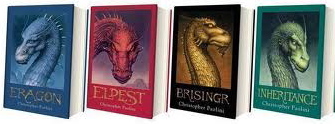
And yet when we embark on a new epic fantasy series, or try the work of a new author, we are seeking both something familiar and something original. What makes each author since Tolkien distinct is some aspect of his / her work. The relationship between Eragon and Saphira (his dragon), made Christopher Paolini’s Inheritance series special. I have just started reading The Weight of Blood by David Dalglish (check out his cool book covers by Peter Ortiz) which is about two brothers (okay) who are not just orcs (hmmm), but half-orcs (ahhh). I was caught on page one. Dalglish has written a variance on the convention. So did R.A. Salvatore when he introduced Drizzt – a dark elf whose race were the opposite from the stereotypical elves. Five novels on, I am still intrigued. Daniel Arenson came up with his own original approach to dragons in the Song of Dragons series. 

Before I end, let me say how much I admire those who come up with something original – Hunger Games, Harry Potter, Percy Jackson – they capture us all and we devour their new approaches. But those who seek to ride their coattails are not so successful and I think this is very telling.

It says that while the fantasy readership will embrace a clever, well-written, new concept, that very concept might not establish itself beyond one brilliant author. Epic fantasy, however, with its elves, dragons and swords, continues to stand the test of time. This is not because our readership is lazy. Instead they demand depth – world building, characters, and a plot that offers a twist on a well-tested theme. They continue to surprise us with the familiar.

It’s a great genre to be a part of.

 Good Writing,

Alon 

—————————————————————————————————

Alon Shalev is the author of The Accidental Activist and A Gardener’s Tale. He has written three epic fantasy novels and the first reached the Quarter Finals of the Amazon Breakthrough Novel Award as of March 2012. More on Alon Shalev at http://www.alonshalev.com/and on Twitter (@elfwriter).

Oops! Just Killed A Friend

Wow! Killing a friend ain’t easy. You think you’re ready for it. You have planned the dramatic demise, executed to perfection, but when it gets right down to it, it is soooo hard.

And when they are lying there dead, with an arrow though their heart, or an axe wound in their head, you think you can just walk away. But what do you still have to do?

Press the Save button.

Haldir – too noble for our times.

Do you get the irony? Your friend lies dead on the page, their blood still wet, and you are totally responsible for it. Sure you didn’t wield the axe, or aim the bow, but you created this person, this character, this hero.

He trusted you, allowed you to move him from one part of the kingdom to the other. He has seen you put him in a tight jam and always something happens to get him out of it in the nick of time. He never complained.

Except this time he is dead. You killed him and now he glares at you from the computer screen.

Save

Brom – never got over the loss of his dragon.

And you walk around in a daze. What made you do it? Why? For the glory? So that the reader would say: “Wow I never thought he would dare…” And you know you will have to face your writers group next week with this and get flayed. They loyally listened to your manuscript week after week, growing to love your characters, buying into your plot, and now you do this to them!

Save

He hasn’t gone you know, not really. A knock on the door, a guy at the gym with the same tattoo, a person who bumps shoulders on the busy train platform. Your eyes meet fleetingly and you look away, guilty, ashamed. How could you have done that?

You killed a good friend, one who let you create them. And now you are going to expect the other characters in the story to trust you? Beware my friend. You never can be sure just how the next chapter will end.

Save

I simply could never accept this. Destroyed my childhood innocence and I’m in my 40’s!

Good Writing,

——————————————————————————————————

Alon Shalev is the author of The Accidental Activist and A Gardener’s Tale. He has written two fantasy novels and the first reached the Quarter Finals of  the Amazon Breakthrough Novel Award as of March 2012. More on Alon Shalev at http://www.alonshalev.com/and on Twitter (@elfwriter).

Writing A Fantasy Series Pt. 1

Christopher Paolini, the young author of the Inheritance Series (Eragon), was featured in The Writer. I was excited as the title was ‘Writing A Hit Series’, and Paolini has created a magnificent world in the 3,000 or so pages of his four novels.

I was disappointed with the interview. The reporter assumed that most of us didn’t know who Paolini is and what he has written. The story focused on a lot of the well-recorded autobiography (that I am sure most of us love) and the decision of the Paolini family to self-publish Eragon and travel around the country selling copies face-to-face.

But there were precious few tidbits regarding writing a series. Paolini structures his stories before he writes them. Fair enough. There are no surprises, we are told, except I wish to point out that Book Three became two books (how do you misplan an additional 700+ pages? – not that I am complaining, Mr. Paolini – you can write several more and I will faithfully buy and read them together with my sons).

My son holding his autographed copy at the midnight release... a priceless moment!

Paolini also stresses the need for a map. He warns that if there is a small mistake in detail between Book One and Four, true fans will notice.

As I continue to put Book Three of the Wycaan Master onto (virtual) parchment, (just passed the 25,000 word mark), I am continually realizing how much I must refer back to keep consistent, whether in language, appearance, or plot.

I love the spontaneity of allowing the plot to unfold. It works for me and it is part of the magic of writing. But I totally understand the value of a structured plan as Paolini suggests.

I keep three lists going: characters, chapter contents, and odds-and-ends. I do not provide much in terms of character appearance and history. I regret this now, as I need to sift through over 200,000 words. Chapter contents are kept brief – 1-2 sentences, but serves to help me refer back relatively quickly. Odd-and-ends is, well, a lot of unresolved issues, detail needed, clan structure and more.

A Great Place to Write Fantasy.

I have no doubt that there is so much more to remember and involved when writing a series. I think when I begin another, I might take more careful notes and listen more to authors like Paolini, Salvatore, and Brooks.

But I also think it is worth it. The depth and richness of a series is an incredible honor to write. More on that aspect next week.

Until then, good writing.

——————————————————————————————————

Alon Shalev is the author of The Accidental Activist and A Gardener’s Tale. He has written two fantasy novels and the first has reached the Quarter Finals of  the Amazon Breakthrough Novel Award as of March 2012. More on Alon Shalev at http://www.alonshalev.com/and on Twitter (@elfwriter).


Ever Been To The World I Invented?

How do you explain to someone how to write about a place that you made up? Or a race that has never existed? How to describe the unexplored or give directions to a destination that you have never been to?

Fantasy (and sci-fi) writers are in a unique position in the writing world. A friend of mine is writing a historical novel from the Vietnam War. It is from a time and place that she never experienced. Yet, thorough diligent research and patient interviews, she has built an authentic account of the jungles, the battles, and the actions of soldiers.

But I have to confess, and let’s just keep this between you and me; I have never met an elf, never yielded high magic or walked and breathed underwater (I tried the latter – it didn’t work). In Wycaan Master, one of my elves performed a particular feat. He will do it several times throughout the three novels and his teacher explains the rudiments to him. Nonetheless one of my dear friends from my writer’s group (not a fantasy writer) proclaimed: “elves can’t do that.” 

Our group boasts a number of very smart people, all of whom I am sure, thought what one asked. “Oh really? How many elves do you know?”

We laughed and decided that these were my elves and I could do what I want with them. It was amusing and yet, who sets the rules?

The obvious answer is that the market does, and the market is the reader. Buy a fantasy writer a couple of beers and s/he will admit that we all live in the shadow of the greats, with Tolkien being the greatest of them all.

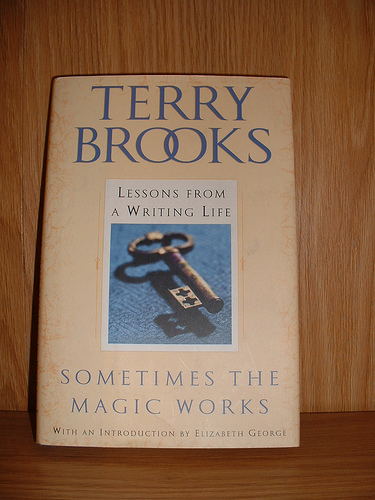
In the pantheon upon which the great Ring Writer sits, are others held in great esteem. I am devouring Terry Brooks‘ Shannara series, and so I came across a book he wrote to explain his craft.

 The book is called: Sometimes The Magic Works – Lessons From A Writing Life. Brooks deals with such issues common to all who write fiction such as plot, characters, hook, dialogue etc., but he also spends time on more specialized aspects such as world creating, or even how it is different perhaps to hold the threads of a plot through a number of books or corresponding paths in a single book.

I read through Sometimes The Magic Works – Lessons From A Writing Life once, enjoying his autobiographical content as much as his craft teaching. I am going away soon for a week and plan to take the book and reread.

 I have two questions:

 1) What makes writing fantasy different from other genres in terms of craft and technique?

2) Are there other good books on writing that are specific to the fantasy genre?

Drop me a note on the blog or tweet any suggestions. I appreciate your help.

Good Writing and Reading,

Alon

——————————————————————————————————

Alon Shalev is the author of The Accidental Activist and A Gardener’s Tale. He has written two fantasy novels and the first has reached the Quarter Finals of  the Amazon Breakthrough Novel Award as of March 2012. More on Alon Shalev at http://www.alonshalev.com/and on Twitter (@elfwriter).