Quite A Week

It has been quite a week for me. First, thank you to everyone who left such beautiful reviews both on amazon.com and across the pond at amazon.co.uk. In fact, both At The Walls Of Galbrieth and The First Decree are doing well there. I’m not sure what happened, but I received over 300 hits on Wednesday in an hour in the early California light. So whoever sparked it – I thank you too. 

I finished my own edit of Ashbar, Wycaan Master Book. 3, and sent it under the scalpel of the Master Surgeon (or Mistress Editor to be more accurate), Monica Buntin. While I wait, it is an opportunity to get back to writing Book 4. I wrote over 40,000 words during the Xmas break and I can’t wait to hit that keyboard – so much easier than a treadmill. I also left a few characters hanging and I need to apologize to them and let them move on.

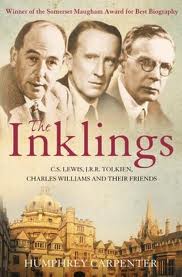
I discovered, and I realize that 90% of those who read this blog are about to roll their eyes, that J R.R. Tolkien and C.S. Lewis were part of a writers critic group at Oxford. It blew my mind and I scuttled off to find a copy of The Inklings by Humphrey Carpenter, who also wrote a great biography of the Professor. More on this when I actually finish his book.

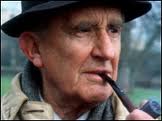
imgres

Finally, The Hobbit came out on DVD and BluRay. In case you have never heard of this movie, Yahoo Movies offered us two delightful caveats.  I particularly loved their chart to differentiate between the races, but their behind-the-scenes video was cool as well.

_ylt=AsAy3VcY8kcvndsOg1BnmyK4AOB_;_ylu=X3oDMTFpOGpyZm1sBG1pdANCbG9nIFBvc3QgQm9keQRwb3MDMgRzZWMDTWVkaWFCbG9nQm9keUFzc2VtYmx5;_ylg=X3oDMTMyZnNiMWtvBGludGwDdXMEbGFuZwNlbi11cwRwc3RhaWQDZmMyZjgyNWQtMmUwNy0zN2NjLTk2OWEtM2IzNTEyMWQ1MzdhBHBzdGNhdANibG9nc3xt

I couldn’t see how to download it, so please accept The Song Of The Misty Mountain in its place.

——————————————————————————————————

Alon Shalev is the author of At The Walls of Galbrieth, Wycaan Master Book 1 and The First Decree, both released by Tourmaline Books. Shalev is also the author of three social justice-themed novels including Unwanted Heroes. He swears there is a connection. More on Alon Shalev at http://www.alonshalev.com and on Twitter (@elfwriter).


Why Epic Fantasy Can Be So Profound

The Lord of the Rings is a story (or several stories) about elves and dwarves and dragons and quests. And yet, professors sit in their Ivy League towers and dig deep into the story, seeking meaning, analyzing plot and characters, symbolism and analogy.

Grown men and women who read the books 20 or 30 years ago, continue to debate the values and meaning, while counting down the days from one epic movie to another. We reverently pass on the books, DVD’s and walk our children to the movies – a sacred rite of passage.

Here is a documentary that not only analyzes these aspects through a variety of knowledgable men and women with delightful accents, but also the symbiotic relationship between Tolkien with C.S. Lewis. Both men’s motivations and writing, for example, were shaped through their experiences in World War 1. They went on to create two of the greatest epic fantasy series ever. It is thirty minutes that are well worth the time.

lewis-and-tolkien1

So please, grab yourself a mug of ale, light up the Longbottom leaf, and enjoy a revealing explanation of a unique man who blazed a path for so many who came after him.

As one who owes him so much, I am truly humbled.

One last point: if you have the energy,  browse through the comments under the You Tube video. It is amazing how many people had such difficulty reading the LOTR and yet still have a deep appreciation for the work.

——————————————————————————————————

Alon Shalev is the author of the 2013 Eric Hoffer YA Book Award winner, At The Walls of Galbrieth, and five other Wycaan Master books all released by Tourmaline Books. The link above takes you to the Kindle versions. For all other eReaders, please click here.

More at http://www.alonshalev.com and on Twitter (@elfwriter).

How’s The Weather In Middle Earth?

I’ve never been a big weather fan but Tamati Coffey receives my Weather Forecaster of the Week. I think you’ll understand why.

Mr. Coffey – I believe Professor Tolkien would be proud.

Hope you all have a great weekend and the weather holds out for you. If it’s raining or snowing where you live, I suggest you replay the above forecast!

——————————————————————————————————

Alon Shalev is the author of At The Walls of Galbrieth, Book 1 of The Wyccan Master series, which reached the Quarter Finals of the Amazon Breakthrough Novel Award 2012, released by Tourmaline Books. The First Decree, the sequel is due out in early 2013. Shalev is also the author of three social justice-themed novels: Unwanted Heroes, The Accidental Activist and A Gardener’s Tale. More on Alon Shalev at http://www.alonshalev.com and on Twitter (@elfwriter).

What If Humans Were Real?

What if elves were real? There are those in the south of England who believe that elves exist. I heard this when researching for A Gardener’s Tale.  When a twitter friend shared with me that he had heard of this in the north of England, it made me wonder…

Delyphin rubbed the points of his ears as he waited for Harwin who was always late. He checked his watch. They would have to walk fast to reach the bookstore before the famous author began his reading. 

“Sorry, I’m late,” Harwin said as he jogged up.

They set off, hands in pockets. There was no point in chastising Harwin – it simply didn’t help.

“I‘m looking forward to this,” Harwin said. “I loved ‘Lady of the Earings’. The way that professor describes these mythical humans, I really begin to feel they exist.” 

I nodded, too winded to comment. The professor was a strange chap, lecturing at an elite university on ancient elven languages. They say he even invented an entire human language – as if all humans would speak the same language. Still he was a master of the epic fantasy genre.

We enter the bookstore, which is full and grab the last two seats.

Harwin leans in. “I hear he is planning on sending the humans on a new quest, that their world is threatened by some strange energy – ‘oyl’ – that is expensive, polluting and they go to war over it because there isn’t much.”

“That’s a bit of a stretch,” I say. “His humans are too smart to do that. Besides, they have the sun, the wind, and the waves of the ocean just like us. Why would they use this oyl?”

Harwin smiled. “You look rather irate. You might start believing in these humans too.”

“Don’t be daft, Harwin. That’s the beauty of epic fantasy. You get so into the story that you begin to believe the characters might actually be real. Next thing, you’ll be swearing you saw someone with round ears.”

We both laugh. That would be a sight.  The room hushes. The professor is about to speak. He opens his new book…and the world of the humans becomes real as he reads…

I can almost see their round ears and their oyl.

——————————————————————————————————

Alon Shalev is the author of At The Walls of Galbrieth, Book 1 of The Wyccan Master series, which reached the Quarter Finals of the Amazon Breakthrough Novel Award 2012, released by Tourmaline Books. The First Decree, the sequel is due out in early 2013. Shalev is also the author of three social justice-themed novels: Unwanted Heroes, The Accidental Activist and A Gardener’s Tale. More on Alon Shalev at http://www.alonshalev.com and on Twitter (@elfwriter).

Tolkien, Ever The Historian – Happy Thanksgiving

Just a fun note and an opportunity to wish everyone a Happy Thanksgiving. I so appreciate you all taking the time to read my blog posts and offer your feedback and comments.

We epic fantasy aficionados are more than just fans. We are our own little family. Thank you for being a part of mine.

Happy Thanksgiving, 

Alon the Elfwriter

——————————————————————————————————

Alon Shalev is the author of At The Walls of Galbrieth, Book 1 of The Wyccan Master series, which reached the Quarter Finals of the Amazon Breakthrough Novel Award 2012, released by Tourmaline Books. The First Decree, the sequel is due out in early 2013. Shalev is also the author of three social justice-themed novels: Unwanted Heroes, The Accidental Activist and A Gardener’s Tale. More on Alon Shalev at http://www.alonshalev.com and on Twitter (@elfwriter).

A Poem In Elvish – J.R.R. Tolkien

This is a rare gem. That an author could possibly make up an entire language is mind-blowing. Yet we often forget that beyond the dragons, swords, and quests, J.R.R. Tolkien created an entire language. As a professor of philology (ancient languages) at Oxford University, Tolkien was already immersed in the mechanics of how a language is put together. 

But the professor took it to another level when he actually made up a language. With the hype beginning to build for The Hobbit movie, this poem surfaced read by the master himself.

Enjoy!

My own elvish is somewhat rusty, so here is a translation of Namarie (Farewell) courtesy of Josh Jones, who goes into greater detail about the when and where.  

Ah! like gold fall the leaves in the wind, long years
numberless as the wings of trees! The long years
have passed like swift draughts of the sweet mead
in lofty halls beyond the West, beneath the blue
vaults of Varda wherein the stars tremble in the
song of her voice, holy and queenly.

Who now shall refill the cup for me?

For now the Kindler, Varda, the Queen of Stars,
from Mount Everwhite has uplifted her hands like
clouds, and all paths are drowned deep in shadow;
and out of a grey country darkness lies on the
foaming waves between us, and mist covers the
jewels of Calacirya for ever. Now lost, lost for
those from the East is Valimar!

Farewell! Maybe thou shalt find Valimar. Maybe
even thou shalt find it. Farewell!

And, in case you haven’t got enough, here is Tolkien again, reciting the Song of Durin (in English). 

Have a great weekend,

Elfwriter

——————————————————————————————————

Alon Shalev is the author of The Accidental Activist and A Gardener’s Tale. He has written three epic fantasy novels and the first, which reached the Quarter Finals of the Amazon Breakthrough Novel Award 2012, is due out in January 2013 by Tourmaline Press. More on Alon Shalev at http://www.alonshalev.com and on Twitter (@elfwriter).

Size – Does It Matter?

So shoot me for false advertising, but I have a dilemma. I shared with you last week in A Tribute to Editors that I have received my manuscript to At The Walls Of Galbrieth back from my editor with lots of cuts and corrections. As I worked my way through, accepting 90% of the changes suggested, I realized that my word count was dropping drastically.

I am about 80% through the novel, which began at 96,000 words and is now down to about 85,000.

Epic fantasy novels are thick tombs, offering the promise to get lost in a mythical world for a month or so. It is not a novel that you can finish in a weekend (unless your weekend is very empty and you are a fast reader).

Even Young Adult books make good doorstops. The Christopher Paolinis’ of this world have proved that teenagers will stick with a long story if it is compelling enough.

So my first question is: Is there a minimum length? When I was shopping the Wycaan Master series, there were publishers who stipulated a word range, often 100,00+. It might be that they expected their editors to attack it with a scalpel, much as my editor did.

My second question regards world building, something we have touched on before at elfwriter. A lot of the scenery description has been edited out. The editor, like many in the writing world, believes that you shouldn’t reveal everything: about a person, room, scenery etc., but allow the reader to create their own image.

Certainly, anyone who has read a book after watching the movie  (or the other way around) can appreciate this.

Tolkien, the master, spent pages describing the forests and the trees. Many of us loved this while others skipped these long descriptions. I wonder whether a young, undiscovered Tolkien would (and please pardon the expression) suffer the long red, sharpie lines through these sections of his work (or the Track Changes equivalent – but that’s not how I think of the old professor).

There is a middle ground. My editor has challenged me to integrate the descriptions within an action scene or as a pivot for a character’s self-reflection. This is a great point and I plan to experiment with this in the future. Do you know of any writers who do a good job of integrating description into the flow of the plot or character development, without it feeling like a ‘description-dump’?

So two questions here: Does size matter? How much description is allowed?

As always, I appreciate your feedback and guidance.

——————————————————————————————————

Alon Shalev is the author of The Accidental Activist and A Gardener’s Tale. He has written three epic fantasy novels and the first, which reached the Quarter Finals of the Amazon Breakthrough Novel Award 2012, is due out in January 2013 by Tourmaline Press. More on Alon Shalev at http://www.alonshalev.com and on Twitter (@elfwriter).

What Would Tolkien Say?

I wasn’t that surprised when I heard originally that The Hobbit would be expanded into more than one movie. Harry Potter 7 and Breaking Dawn have set the precedence. But I was stunned (pleasantly, I must admit) that somehow the thin, children’s book is going to take as much time as Lord of the Rings, volumes of which are well-known for many attributes, not least that of a competent doorstop.

Still, I thought, in Peter Jackson I trust. LOTR is an amazing movie trilogy, so why not have the hobbit and dwarves trudge through countless woods and mountain ranges. Offer a few character insights, and smoke a few more pipes around the fire. Works for me and I doubt a particular Oxford linguistics professor would have minded.

But, now I hear that Peter Jackson has actually invented some new characters and I must admit to feeling somewhat perturbed. Is J.R.R. Tolkien sitting in his celestial study puffing his pipe furiously? 

It had occurred to me that we are a bit short on the females in this book, less noticeable for a book, but an issue for the screen. This has obviously occurred to Mr. Jackson as well, as he introduces Tauriel, an elven warrior, who according to the info released is head of the elven guard. Lost star Evangeline Lilly plays this fearsome (and no doubt sexy warrior) and she is quoted as saying:

“She is a warrior. She’s actually the head of the Elven guard. She’s the big shot in the army. So she knows how to wield any weapon, but the primary weapons that she uses are a bow and arrow and two daggers. And she’s lethal and deadly.”

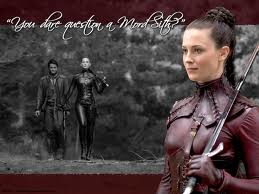
While I am the last to complain about introducing any elf, I feel uneasy. And it has nothing to do with her resembling a Mord Sith. I’m feeling rather traumatized, having (after watching Legend of the Seeker on TV) just listened to Wizard’s First Rule – Terry Goodkind – on audio alone in my car, which fleshes out (excuse the extremely accurate pun), the Mord Sith techniques. Let’s just say that if any woman in red leather comes within 50 feet, I’m running.

But the question is not what this humble elfwriter thinks, but what Tolkien would say. I have a number of books on the master, but never met him. However, I can’t help feeling he would not be amused. 

I can’t imagine someone taking my books and inserting new characters. It seems to be one step too far. What do you think? How loyal should Peter Jackson stay to the original work?

When does The Hobbit become The Hollybit?

——————————————————————————————————

Alon Shalev is the author of The Accidental Activist and A Gardener’s Tale. He has written three epic fantasy novels and the first reached the Quarter Finals of the Amazon Breakthrough Novel Award as of March 2012. More on Alon Shalev at http://www.alonshalev.com and on Twitter (@elfwriter).

10 Takeaways From George RR Martin

Isabel Berwick had lunch with Game of Thrones author, George RR Martin, and wrote this great article for the Financial Times. This post is not meant to replace it, but here are a few takeaways that stood out to me, for those of us who love and write epic fantasy. Please do read her article. It is very interesting, but be warned – it will make you hungry!
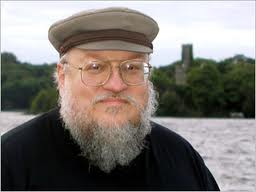
George RR Martin

1) During their lunch,  George RR Martin sees a map in Ms. Berwick’s “giant slab of breaded chicken.” He points to different parts and explains: “There are various little inlets where cities could be.”

I have seen elves in coffee shops and magical tunnels in my local park. These magical worlds are not hidden from us, they are right in front of our eyes.

2) Having famous fans of your works helps. Apparently, Facebook founder Mark Zuckerberg held a Game of Thrones-themed barbecue which made the news.

3) Martin didn’t have much as a child as his family struggled to keep financially afloat, but the seeds were sown – he was “the kid with his nose in a book.” Stephen King speaks of the need to be constantly reading – in your genre and outside.

 4) There are explicit sexual scenes in Game of Thrones (though I don’t remember much from the book apart from one scene – I have only read the first so far). This caught my attention because I use sex in my social-justice themed novels. Both A Gardener’s Tale and The Accidental Activist has vivid sex scenes. I believe these can reveal so much about a character, but I suspect HBO saw the fact that people like sex on their screens was reason enough.

5) It is okay to fail with a few books. Martin expected his breakthrough would come with his fourth book, Armageddon Rag, about a rock band. He concedes that: “it was the worst-selling of all my novels and essentially destroyed my career as a novelist at the time.” The most important lesson from this is DON’T GIVE UP!

6). When asked about his world-building, Martin, despite his success, is quick to give credit to J.R.R. Tolkien: “There were thousands of years of fantasy before Tolkien but the way it is shaped as a modern commercial publishing genre and the fantasy books that have been written in the past half century have all been influenced by Tolkien. So it still sort of defines the playing field.”

Martin has shown us that Tolkien’s legacy continues. People want to immerse into a rich world and are ready to read deep and vivid descriptions. 

7) Leave your own mark. Martin feels that his strong women, just as politically contriving and sexually adept, send a strong message that the female character needs to be as strong and vivid as the males.

I also think the way he perceives a hero is unique. John Smith and Tyrion Lannister are as close as I got to a hero (Edard Stark cuts a more typical Man For All Seasons-type hero). But they are clearly flawed and tainted enough to only just stand out from the rest. I admire this aspect of Martin – I am not aware who else succeeds in doing this.

8) Martin believes that maps are very important. I have talked about them in this blog before, but he confirms the necessity. It was important enough, he notes, to be at the beginning of each HBO episode. 
 9) The reader is willing to cope with many characters. This means the writer needs to stay extremely organized. Martin has over 1,000 characters in his series and his plots are both complex and spread over years. 

There are many ways to keep track of plots and characters. I think methodology is a very individual choice and will touch on this in a later blog. What is certain is that the passionate reader will remember what happened several years ago and not forgive you the error.

10) Martin, the successful author is traveling around the world.  I am sure it is very interesting and gratifying, but you can tell a writer when he says: “These trips are fun but they do interfere with my writing.”

Write. Write. Write. This is a busy period for me at the work which puts the food on the table. Anticipating this, I am mainly editing and blogging. The next book will wait for a quieter part of the year. But man, am I cranky!  

Finally, I just loved this quote. It requires no comment.

“When I am writing best, I really am lost in my world. I lose track of the outside world. I have a difficult time balancing between my real world and the artificial world. When the writing is going really well, whole days and weeks go by and I suddenly realise I have all these unpaid bills and, my God, I haven’t unpacked, and the suitcase has been sitting there for three weeks.” 

If you’ve been there you know it. If you haven’t, I hope you soon discover it. Terry Brooks says that this is when the magic happens. Here’s to those magical moments: and many more books from the world of Westoros.
——————————————————————————————————

Alon Shalev is the author of The Accidental Activist and A Gardener’s Tale. He has written three epic fantasy novels and the first reached the Quarter Finals of the Amazon Breakthrough Novel Award as of March 2012. More on Alon Shalev at http://www.alon-shalev.com and on Twitter (@elfwriter).
Genre Conventions .v. Originality

“But this is how it’s done in epic fantasy,” I whine to my writer’s group. “It’s part of the convention.”

We are a bonded group, anxious to support each other and so I receive sympathetic smiles and diplomatic silence. The silence screams in my ears. I know they are right. If I have to fall back on a sentence like that, I am in trouble. Or am I?

How important is originality?

Utter originality is, of course, out of the question.” – Ezra Pound

Originality is nothing but judicious imitation.” – Voltaire

I feel better already.

It is better to fail in originality than to succeed in imitation.” – Herman Melville.

Ouch!

Elves are tall, thin, have pointed ears, and excellent hearing. They look good in green, and shoot bow and arrows with exceptional accuracy.  Dwarves are short, rotund, live underground, mine and play around with axes. This is so because J.R.R. Tolkien put the epic in epic fantasy with his Middle Earth series’. Are the rest of us thus condemned to be mere recyclers of his work? Maybe. But I am not convinced how this is different from any other genre: romance has the same images and general plot arc. So does suspense and horror. And don’t get me started on dystopian thrillers.

So why do we so enthusiastically embrace conventions in a genre? It might be because some themes are simply timeless. I’m thinking Beowulf (maybe written in the eighth century) and The Odyssey (sixteen centuries before that!). Tolkien would concede that he was not the first, but when something works, you build your own version of it, and sometimes your version is good enough to capture the imagination of a very loyal readership. But it is not just enjoyment. It is pure escapism to a world we can get excited about, to values we can admire or fear (or both). It is also something familiar, something soothing. 

And yet when we embark on a new epic fantasy series, or try the work of a new author, we are seeking both something familiar and something original. What makes each author since Tolkien distinct is some aspect of his / her work. The relationship between Eragon and Saphira (his dragon), made Christopher Paolini’s Inheritance series special. I have just started reading The Weight of Blood by David Dalglish (check out his cool book covers by Peter Ortiz) which is about two brothers (okay) who are not just orcs (hmmm), but half-orcs (ahhh). I was caught on page one. Dalglish has written a variance on the convention. So did R.A. Salvatore when he introduced Drizzt – a dark elf whose race were the opposite from the stereotypical elves. Five novels on, I am still intrigued. Daniel Arenson came up with his own original approach to dragons in the Song of Dragons series. 

Before I end, let me say how much I admire those who come up with something original – Hunger Games, Harry Potter, Percy Jackson – they capture us all and we devour their new approaches. But those who seek to ride their coattails are not so successful and I think this is very telling.

It says that while the fantasy readership will embrace a clever, well-written, new concept, that very concept might not establish itself beyond one brilliant author. Epic fantasy, however, with its elves, dragons and swords, continues to stand the test of time. This is not because our readership is lazy. Instead they demand depth – world building, characters, and a plot that offers a twist on a well-tested theme. They continue to surprise us with the familiar.

It’s a great genre to be a part of.

 Good Writing,

Alon 

—————————————————————————————————

Alon Shalev is the author of The Accidental Activist and A Gardener’s Tale. He has written three epic fantasy novels and the first reached the Quarter Finals of the Amazon Breakthrough Novel Award as of March 2012. More on Alon Shalev at http://www.alonshalev.com/and on Twitter (@elfwriter).