Stand Up Fantasy Readers

I came out of the literature closet when I made the decision to find a way to have my Wycaan Master series published. My ego prevented me from using a pseudonym and I knew it was time to let the world know.

At first I kind of tagged a mumbled line into my elevator pitch: I write social justice-themed novels and also dabble in some fantasmmmm (imagine a hand rising in front of my mouth).

images-5

I was mortified when my boss’s wife turned to me one day and said her husband had told her I’m really into epic fantasy. I focused all my superhero strength on the ground opening up and swallowing me. Thankfully such talents are woefully non-existent because boss’s wife revealed with pride how she totally loves the genre and began reeling off her favorite authors and series. Then boss’s super-cool wife promptly sat on the stairs with my then 12-year-old son and talked for a half hour of their shared genre. He was beaming when I asked him how their conversation went.

I discovered that, as I assumed more confidence in sharing that I write in two genres, people began to share their love for epic fantasy. I found that there were plenty of fantasy nerds (Big Bang Theory, anyone?) but there are also many very cool people.
images-6

As I begin to frequent the forums, I discover people who are deep-thinkers, who follow and critically analyze plots, world building, and character development. In fact, having participated in a fair share of workshops, read how-to writing books, and listened to countless authors, I have found these threads to be as profound and educational as any.

Fantasy readers are connoisseurs in the true sense of the word – a person who is especially competent to pass critical judgments in an art, particularly one of the fine arts, or in matters of taste (dictionary.com).

Last week I quoted from a comment on a long You Tube thread (I was listening to the Hobbit soundtrack) full of comments, disagreements, and debate. The author is RobbieBjork17: “Holy Crap that was one_ of the most educated conversations I’ve ever read on youtube…. shoulda known it was going to be Tolkien Fans ;).”

He (or she) knew something I didn’t. But then what can you expect from a genre led by two British Oxford professors!

Now I wear my genre on the side of my car and when I pick up commuters every morning at the casual car pool and they ask me about the car magnet, I reply: “I am an author. I write in two genres: social justice themed novels and YA epic fantasy.”

Image Car Magnet

And I say the last part without mumbling.

—————————————————————————————————–

Alon Shalev writes social justice-themed novels and YA epic fantasy. He swears there is a connection. His latest books include: Unwanted Heroes and At The Walls Of Galbrieth. Alon tweets at @alonshalevsf and @elfwriter.  
Writing An Epic Fantasy Series Is Not Easy

I dropped in on an interview by Franny (not sure if this is her real name) who runs the Mind Reader blog. I have visited a few times – she writes great book reviews. Franny interviewed Meredith Bond, author of Magic In The Storm, (full interview here) and opened with the following question:

“Why is almost every book published now part of a series? Have you noticed this? I don’t think I’ve seen one single stand-alone title (aside from anthologies) in over a year! Is this a good thing? Isn’t it good enough to find books by an author you like without the books having to be tied together in some way?”

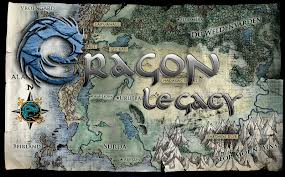
Ms. Bond’s answer is thoughtful and worth reading, but she does claim, frivolously I hope, that we authors are “lazy bums.” I took exception to this. Writing a series of books in one world with many recurring characters demands that we show this world in different forms throughout the series. In fact, I draw my own world-building inspiration from nature and I hope I will never stop seeing new lands and areas of natural beauty. When we see a beautiful vista, it is a family joke to say in a breath-taking voice: Alagaesia, a tribute to the beautiful world that Christopher Paolini built.

imgresSimilarly, my characters do not stand still. They grow, and as they age, experience conflict and love from a different perspective, as do we all in the ‘real world’. Terry Brooks is a master of this with his Shannara series.

I would venture to suggest that the onus is even greater with recurring characters because we need to show significant depth in their development. Perhaps it is easier to create a new warrior, hero, heroine, villain etc., in each book, because you can keep them relatively shallow.

Next month, The First Decree, my second Wycaan Master novel, will be released by Tourmaline Books. Since the Xmas holiday break, I have been writing Book 4 (Book 3 is written but not edited) and am about 30,000 words in. My characters are older, wiser, have more to lose, and a greater sense of responsibility.

They are growing up and each developing into the unique, ever-changing individual that they are. I care about them too much. I would never let them languish and become stagnant. What kind of a father would I be (I am, however, in no rush for my real kids to grow up!)?

There are obvious and legitimate reasons to write a series. Every author wants to build a readership and why not create an ongoing relationship between readers and the characters they are rooting for?

Tery Goodkind wrote 12 books in the Sword of Truth series.

Tery Goodkind wrote 12 books in the Sword of Truth series.

I don’t mean to begin a feud with Ms. Bond because of one phrase in an otherwise excellent interview, but it struck a chord. I recently told a friend that I have written a book a year for the last seven years (I am published in two genres), and she responded by saying that it must be easy for me.

It is not. I work very hard at my craft, spend considerable time building the world of Odessiya, and worry about my characters and their destiny. I cry when a main character dies (I can even cry several times as I reread, and reread, and reread) and feel equally exhilarated when they succeed.

The story flows out of me but I put considerable time and effort into it. I wake up early and go to bed late, squeezing in a full-time job and hopefully trying to be an active parent and sharing husband.

When I finish writing a first draft I am exhausted mentally. But I’ll keep coming back for more, just as a marathon runner pushes themselves beyond their limit during a race, but knows s/he will be back running soon.

There is an incredible high when the words flow, exhilaration as a plot unfolds, and pure joy when someone says: “Hey. You’re an author, right? I read your books.

I wouldn’t have it any other way.

The First Decree-hi resolution

—————————————————————————————————–

Alon Shalev writes social justice-themed novels and YA epic fantasy. He swears there is a connection. His latest books include: Unwanted Heroes and At The Walls Of Galbrieth. Alon tweets at @alonshalevsf and @elfwriter.
An Unexpected Journey

This weekend, J.R.R. Tolkien’s The Hobbit – An Unexpected Journey comes out. If you are reading this blog, you have probably been counting down along with the Mayans. I haven’t seen the movie yet, so there are no spoilers, but I am incredibly excited. I can’t wait to see it and have no doubt that I will love it, buy the DVD, change my computer’s wall paper and take my kids to eat breakfast at Denny’s…again!

imgres-2But there is something else that has me so stoked for this movie stands on the threshold of something historic: it is the induction of the next generation of epic fantasy readers. Just as Lord of the Rings ignited my generation’s interest, and Christopher Paolini’s Eragon sentenced my own children to a lifetime of reading and vivid imagination, The Hobbit will take a new, unsuspecting generation on an unexpected journey.

My own journey has been somewhat unexpected. Having written a series of well-received social justice-themed novels, I have been introduced to people who are passionate to see and work for a better world. I treasure the opportunities to meet readers at book signings and author meet ups.

DSCN1387As we approached the launch of At The Walls Of Galbrieth, I sought to define my target audience and had a big surprise. To begin with, there were the 100+ who filled out my survey ­– thank you all – and I began to discover a group of passionate and richly imaginative readership.

But here is what excites me. I am meeting a large number of students and teenagers who are die-hard readers of epic fantasy. They eloquently share their love for the creation of a new world, their desire to see everyday folk transform into heroes, and to believe in universal principles such as freedom, good over evil, and the value of friendship.

My social justice-themed novels all contain a common thread: an everyday person goes through a transformational experience which empowers them to pursue justice. Swap the multinational corporation for an evil Emperor, replace the use of social protest with a special bow and arrow, and we have similar themes.

My point is that epic fantasy creeps up on you. This weekend many ingenuous children, teenagers, and parents, are going to see a hyped-up movie and experience a transformation. They may not start yielding a sword and slaying dragons, but they just might embark on an unexpected journey of reading and enter into a world that drives our imagination and defines our social values…

All because in the words of a great wizard: “Hobbits really are amazing creatures.”

——————————————————————————————————

Alon Shalev is the author of At The Walls of Galbrieth, Book 1 of The Wyccan Master series, which reached the Quarter Finals of the Amazon Breakthrough Novel Award 2012, released by Tourmaline Books. The First Decree, the sequel is due out in early 2013. Shalev is also the author of three social justice-themed novels: Unwanted Heroes, The Accidental Activist and A Gardener’s Tale. More on Alon Shalev at http://www.alonshalev.com and on Twitter (@elfwriter).

Request For Reviewers

With At The Walls Of Galbrieth published, the next important step is to garner reviews.

I would like to find 10 followers of this blog and send them a kindle ebook in return for a commitment from the reader to post a review on the book’s amazon.com page. I understand that, from an ethical perspective you can write at the end of the review – copy provided by author for review – or words to that effect.

If you are willing to do this, please send me an email to anelfwriter at gmail dot com.

Wycaan Master 1 Just Front Cover

Also, if you know of any good forums or book clubs that do epic fantasy reviews, please let me know in the comments. I appreciate your support and all who follow the elfwriter blog.

Alon – elfwriter

——————————————————————————————————

Alon Shalev is the author of At The Walls of Galbrieth, Book 1 of The Wyccan Master series, which reached the Quarter Finals of the Amazon Breakthrough Novel Award 2012, released by Tourmaline Books. The First Decree, the sequel is due out in early 2013. Shalev is also the author of three social justice-themed novels: Unwanted Heroes, The Accidental Activist and A Gardener’s Tale. More on Alon Shalev at http://www.alonshalev.com and on Twitter (@elfwriter).

At The Walls Of Galbrieth – Launched!

A couple of weeks ago, I posted that the imminent release of At The Walls Of Galbrieth was like seeing your child leave home. Well this weekend,  Book 1 of the Wycaan Master series, was busy packing its bags, saying goodbye to its friends, and reminiscing about how its laundry always got done and there was food in the pantry.

Okay, I’m stretching this, but like a parent who constantly peers into their child’s now empty room, I am peeking at Amazon.com, staring in disbelief that my book is finally out there in the big wide world.

But it is there and on Tuesday, the family (the real one) sat around the dinner table and ceremoniously opened the brown cardboard package and held the first paperback copy. My oldest, who deserves a lot of credit for initiating this project, sat and read and reread the dedication to him and scanned the rest of the book. It was rather challenging to get him to relinquish the book so that the rest of us could look.

Just like the child leaving home, it is the end of one stage of life and the beginning of the next. A few days earlier, I received the manuscript for the second book, The First Decree, from my talented editor, Monica Buntin. The next day, I saw the first sketching of that book’s cover by artist, William Kenney. In the past two months, I completed my first serious edit of the third book and I am itching to sink my teeth (or fingers) into writing the fourth. 

This is how it all began – deep in a redwood forest.

I’m glad my wife and I decided on only two children because there are still a lot of books to write and nurture to launch day!

Have a great weekend. If you buy the book, please let me know what you thought. I can’t wait to hear.

Alon Shalev – elfwriter

——————————————————————————————————

Alon Shalev is the author of At The Walls of Galbrieth, Book 1 of The Wyccan Master series, which reached the Quarter Finals of the Amazon Breakthrough Novel Award 2012, released by Tourmaline Books. The First Decree, the sequel is due out in early 2013. Shalev is also the author of three social justice-themed novels: Unwanted Heroes, The Accidental Activist and A Gardener’s Tale. More on Alon Shalev at http://www.alonshalev.com and on Twitter (@elfwriter).


A Poem In Elvish – J.R.R. Tolkien

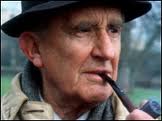
This is a rare gem. That an author could possibly make up an entire language is mind-blowing. Yet we often forget that beyond the dragons, swords, and quests, J.R.R. Tolkien created an entire language. As a professor of philology (ancient languages) at Oxford University, Tolkien was already immersed in the mechanics of how a language is put together. 

But the professor took it to another level when he actually made up a language. With the hype beginning to build for The Hobbit movie, this poem surfaced read by the master himself.

Enjoy!

My own elvish is somewhat rusty, so here is a translation of Namarie (Farewell) courtesy of Josh Jones, who goes into greater detail about the when and where.  

Ah! like gold fall the leaves in the wind, long years
numberless as the wings of trees! The long years
have passed like swift draughts of the sweet mead
in lofty halls beyond the West, beneath the blue
vaults of Varda wherein the stars tremble in the
song of her voice, holy and queenly.

Who now shall refill the cup for me?

For now the Kindler, Varda, the Queen of Stars,
from Mount Everwhite has uplifted her hands like
clouds, and all paths are drowned deep in shadow;
and out of a grey country darkness lies on the
foaming waves between us, and mist covers the
jewels of Calacirya for ever. Now lost, lost for
those from the East is Valimar!

Farewell! Maybe thou shalt find Valimar. Maybe
even thou shalt find it. Farewell!

And, in case you haven’t got enough, here is Tolkien again, reciting the Song of Durin (in English). 

Have a great weekend,

Elfwriter

——————————————————————————————————

Alon Shalev is the author of The Accidental Activist and A Gardener’s Tale. He has written three epic fantasy novels and the first, which reached the Quarter Finals of the Amazon Breakthrough Novel Award 2012, is due out in January 2013 by Tourmaline Press. More on Alon Shalev at http://www.alonshalev.com and on Twitter (@elfwriter).

Turn Write At The Next Junction

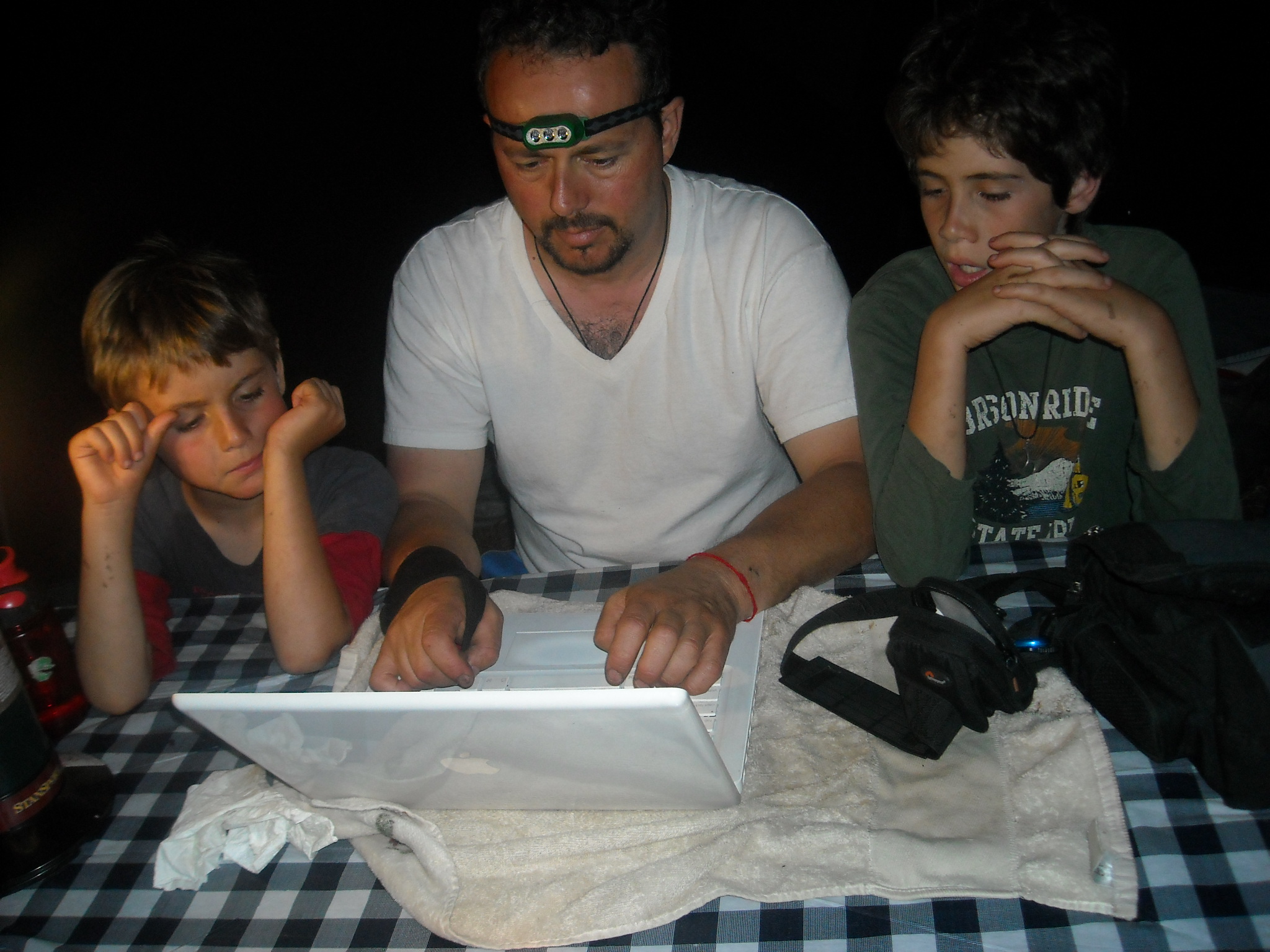
Family vacations are always special for my little clan. Once a year, we pack up our considerable collection of camping gear and head to the mountains, lakes and redwoods. Without Internet and electricity, we have no choice but to hike, fish, and enjoy beautiful Northern California and Oregon, and each other. This year there were two highlights. We all followed my eldest’s passion for archery and it has hopefully become a family hobby.

Two years ago. I wrote the first Wycaan Master book together with my eldest son. I have blogged about this previously. Last year, I wrote the second book before we went away and each night, we sat around the campfire or snuggled in my tent as I read to them a few chapters at a time.

This year, we followed suit, reading the third book of the series. Everyday I waited with anticipation to read and treasured their responses. As the books have become more intricate, my youngest (now 9 years old) sometimes had a hard time following and peppered me with questions, often later that night when he was supposed to sleep, or the next day in the middle of another activity.

Now I know that family are not supposed to be considered as impartial critics. In truth, they had a lot of constructive criticism and suggestions, most of which I adopted. But I cannot imagine enjoying the level of engagement that they experienced and expressed from anyone else.

Back in the Bay Area and it is time to make major decisions. There is time as I outsource the books for some professional editing, but I am considering alternative options to publish the series.

A fascinating conversation with a representative at a publishing house with a long history of epic fantasy titles has left me wondering how long to walk the traditional path. She told me that they spent considerable time discussing the option of signing me even though they had previously made a business decision to stop publishing in this genre. It just doesn’t make business sense in the current economic climate, she told me. It has nothing to do with the quality of your work.

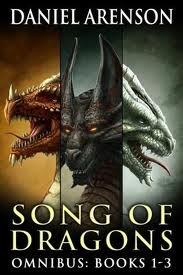
I feel a degree of frustration as I have been watching other fantasy authors and their respectable and consistent ranking on Amazon.com. Daniel Arenson, who is the author of the Requiem series and others, announced the following at the end of June:

“100,000 books sold. Bloody hell. You bought 100,000 of these silly books about dragons, swords, and spells. You’re nuts. But THANK YOU, readers. It’s been a crazy ride.”

I have no doubt that Mr. Arenson worked extremely hard to get to this significant landmark. He wrote great books and went out and did it by himself.

I congratulate him…and wonder.


——————————————————————————————————

Alon Shalev is the author of The Accidental Activist and A Gardener’s Tale. He has written three epic fantasy novels and the first reached the Quarter Finals of  the Amazon Breakthrough Novel Award as of March 2012. More on Alon Shalev at http://www.alonshalev.com/ and on Twitter (@elfwriter).


The Art of World-Building

When the hobbit walked through Mirkwood, we all walked with him. We knew exactly how the trees looked, how the wind moved their branches, what the ground felt like as one fur-soled foot pressed down. We could smell the rotting leaves and…We were there as the master welcomed us into Middle Earth, his world. We were his honored guests and when we returned to this world, we felt a sense of loss.

No one, in my humble and uneducated opinion, has ever created a world in the rich way of J.R.R. Tolkien, and perhaps no one ever will. There are some among our younger readers who skip or skim the long descriptions. Do I need to know what every tree in the forest looks like?

And yet these same young people marveled over the world of Pandora from James Cameron’s Avatar. I am closing in on finishing the third of the Wycaan Master novels and will then begin another edit of the first book before passing it on to more professional hands.

One of the aspects that I want to focus on is how well have I described the land in which the story transpires. There is a lot of traveling and many different climates and natural wonders, as well as villages and cities, which are described. When I wrote the first book, it was in close collaboration with my then 11-year-old son. I was very conscious of maintaining a fast pace. The second and third books were more my own work, with my son reading and giving me feedback. I believe these two novels involved considerably more world-building.

Why do we need to show such detail in epic fantasy? It seems obvious for the Sci-fi writers to put so much emphasis on creating worlds and I understand why those who write in modern earth need not focus so much because we can see the world we live in. 

Do you enjoy the detail of a new world or are you content to receive hints and imagine it for yourself? How important is world-building to you becoming a loyal reader of a fantasy series? Finally, if you write fantasy yourself, do you have any best practices or tips? Do share in the comments below.

Appreciate your feedback. Have a great weekend and a happy 4th.

Alon 

——————————————————————————————————

Alon Shalev is the author of The Accidental Activist and A Gardener’s Tale. He has written two fantasy novels and the first reached the Quarter Finals of  the Amazon Breakthrough Novel Award as of March 2012. More on Alon Shalev at http://www.alonshalev.com/and on Twitter (@elfwriter).

Oops! Just Killed A Friend

Wow! Killing a friend ain’t easy. You think you’re ready for it. You have planned the dramatic demise, executed to perfection, but when it gets right down to it, it is soooo hard.

And when they are lying there dead, with an arrow though their heart, or an axe wound in their head, you think you can just walk away. But what do you still have to do?

Press the Save button.

Haldir – too noble for our times.

Do you get the irony? Your friend lies dead on the page, their blood still wet, and you are totally responsible for it. Sure you didn’t wield the axe, or aim the bow, but you created this person, this character, this hero.

He trusted you, allowed you to move him from one part of the kingdom to the other. He has seen you put him in a tight jam and always something happens to get him out of it in the nick of time. He never complained.

Except this time he is dead. You killed him and now he glares at you from the computer screen.

Save

Brom – never got over the loss of his dragon.

And you walk around in a daze. What made you do it? Why? For the glory? So that the reader would say: “Wow I never thought he would dare…” And you know you will have to face your writers group next week with this and get flayed. They loyally listened to your manuscript week after week, growing to love your characters, buying into your plot, and now you do this to them!

Save

He hasn’t gone you know, not really. A knock on the door, a guy at the gym with the same tattoo, a person who bumps shoulders on the busy train platform. Your eyes meet fleetingly and you look away, guilty, ashamed. How could you have done that?

You killed a good friend, one who let you create them. And now you are going to expect the other characters in the story to trust you? Beware my friend. You never can be sure just how the next chapter will end.

Save

I simply could never accept this. Destroyed my childhood innocence and I’m in my 40’s!

Good Writing,

——————————————————————————————————

Alon Shalev is the author of The Accidental Activist and A Gardener’s Tale. He has written two fantasy novels and the first reached the Quarter Finals of  the Amazon Breakthrough Novel Award as of March 2012. More on Alon Shalev at http://www.alonshalev.com/and on Twitter (@elfwriter).

Where is the Moral Line in YA Fiction?

Since I wrote Wycaan Master with my (then) 11-year-old son, I assumed that our story fitted the Young Adult genre. It is a coming-of-age novel, so I never gave it much thought. There is no clear sex or profanity, though race is a big issue in the first book.

Since I have become absorbed in the fantasy genre, I have begun to wonder where the line is drawn. As I continue to write the second and third books in the series, intimacy has developed between characters, sometimes direct and at other times implied. There has been plenty of violence and references to overindulgence in alcohol. Colleagues at my writers group have questioned whether I should be including these themes.

As I began to research this, I found a number of excellent sources regarding YA fiction in general. Heather Dunlevy-Scheerer has written an interesting article about the historical development of YA literature.

She lays out several characteristics that she took from someone called Niday (I couldn’t find a clear reference).

(1) a teenage (or young adult) protagonist

(2) first-person perspective

(3) adult characters in the background

(4) a limited number of characters

(5) a compressed time span and familiar setting

(6) current slang

(7) detailed descriptions of appearance and dress

(8) positive resolution

(9) few, if any, subplots

(10) an approximate length of 125 to 250 pages.

From a brief skimming of the Internet, it seems that the common thread in YA fiction is an adolescent, rather than an adult or child, protagonist. However, the subject matter and story lines of leading YA literature are relevant to the challenges of youth, and more edgier novels include themes such as identity, sexuality, science fiction, depression, suicide, drug abuse, alcohol abuse, money issues, race, familial struggles, and bullying.

April Dawn Wells suggests seventeen common traits of young adult novels. These include: “friendship, getting into trouble, interest in the opposite sex, money, divorce, single parents, remarriage, problems with parents, grandparents, younger siblings, concern over grades/school, popularity, puberty, race, death, neighborhood, and job/working.

There are a number of YA novels currently in print that are on the edgier sides, dealing with peer pressure, drugs, gangs, crime, violence, sexuality, incest, oral sex, and female/male rape.

The obvious criticism of these novels is that they encourage destructive or immoral behavior or at least bring them into the adolescent’s mind at too early an age. Countering this is the fact that teens will be better equipped to deal with real-life difficult situations and social issues because they have role models in the protagonists they have followed.

Where is the line drawn in amount and nature of such issues between appropriateness and inappropriateness in young-adult fiction? How can we keep literature as a relevant medium when the exposure of TV, computer games and Internet is almost not monitored and easily accessible? None of these mediums, in my opinion, can offer the depth of thought and emotion that a good book provides.

Now more than ever, YA literature needs to stay relevant. Maybe the adults (including parents of teens like myself) have to accept that we might be more uncomfortable with this than our children.

——————————————————————————————————

Alon Shalev is the author of The Accidental Activist and A Gardener’s Tale. He has written two fantasy novels and the first reached the Quarter Finals of  the Amazon Breakthrough Novel Award as of March 2012. More on Alon Shalev at http://www.alonshalev.com/and on Twitter (@elfwriter).