Book Review – Mrythdom: Game of Time – Jasper T. Scott

All The Right Ingredients

There are certain elements that ensure a smooth and entertaining read in the fantasy genre: innovative characters, a plot that moves along, plenty of twists and turns. Jasper Scott manages it all in effortless fashion in Mrythdom: Game of Time.

imgres

I have started a number of fantasy books recently and not been able to finish them. Scott’s characters stayed with me between readings – wondering how they were doing. His world-building is excellent. I didn’t think I would stay with a book that fuses SF and F, but Scott skillfully made it work.

His Meria society offers sexual tension that was enjoyable and tasteful. I had spent the best part of the 1st half wondering whether this might be another series to share with my teen son. The erotic tension was just right for it to be edgy without precluding a YA audience.

imgres-2Scott has set this up as a series. I look forward to the sequel and how Aurelius is going to succeed – if he is going to, that is. Either way, I’m enjoying traveling on the journey with him.

——————————————————————————————————

Alon Shalev is the author of At The Walls of Galbrieth, Wycaan Master Book 1 and The First Decree, both released by Tourmaline Books. Shalev is also the author of three social justice-themed novels including Unwanted Heroes. He is convinced there is a connection. More on Alon Shalev at http://www.alonshalev.com and on Twitter (@elfwriter).

I Need A Hero: Can You Kill Too Many Good Guys?

I’m reading (or rather listening to) a best-selling fantasy series. Each book is thick and extensive. The world-building is impressive, the multiple plots intertwine seamlessly, and the characters are deep and plentiful. 

imgresThis series has made my oft-challenging commute almost enjoyable and several times I have sat in the car outside my house waiting for a chapter to end. I dream about these characters and imagine myself alongside them.

 I am about two-thirds through the third book and happy to know that there are at least two more waiting in the wings. If I intersperse each book with something different, I can easily keep my commute comfortable until well into the summer.

But, and here is the reason I have not revealed the author or series, twice this week, as I was merrily driving home from work, a number of the good guys were put to the sword (or otherwise dispatched). Now, this is not the first time that our well-respected author has killed off heroes/heroines. He does it with drama, dignity and a huge amount of skill. He has left me in tears or sitting stunned at my driving wheel (hopefully while stationary) on a number of occasions.

But suddenly, I feel adrift. Each time one of my heroes dies, another emerges to take his (or her) place. These characters are usually in the background and, figuratively speaking, step up to the plate. And once more, our intrepid commuter is as happy as those drivers who gloat as they pass all the stationary cars while in the carpool lane.

imgres-4One of the fascinating aspects of this author’s craft is that most of his characters are not totally good or totally bad. It is challenging but possible to remain interested, even invested in some of the more fiendish without rooting for them. And there are plenty of characters with the potential to be heroes who fail or turn to the dark side (not a hint to the series).

But, suddenly, I am bereft of a hero: one who is fueled by noble principles, by a cause, and who is…well, heroic.

I find myself questioning my considerable investment in the series, the immense time I am spending on it, and even walk to my car with a certain level of tension and resignation. I am no longer sure with whom to stand when I dream and fantasize about the outcome. 

imgres-3

And so I must pose the question: Can you kill too many of the good guys and still engage all your audience? What say you, sir/milady?

—————————————————————————————————–

Alon Shalev writes social justice-themed novels and YA epic fantasy. He swears there is a connection. His latest books include: Unwanted Heroes and At The Walls Of Galbrieth. Alon tweets at @alonshalevsf and @elfwriter.  

.

Sword and Gun Control

Epic Fantasy, among many genres, has the ability to whisk us away from reality and send us into a world of noble quests, ancient swords, and magnificent mythical animals. It also has the ability to offer wisdom for the world we live in and I have written about this before.

Airship10But sometimes it is really hard to let go and enter this world – or to return to the one we live in. I needed to write a post for this blog a day or so after the Sandy Hook Elementary School tragedy in Newtown, Connecticut, and I couldn’t. What can one possibly write on a blog like this? 

I searched the Internet, found something amusing and pre posted it. It was a cop-out; admittedly perhaps some much-needed comic relief. But I’ve been thinking about this ever since. If epic fantasy is anything more than escapism, then we should have something to say? 

When National Rifle Association VP, Wayne LaPierre, blames violent video games, perhaps to deflect the debate on gun control, we need to ask ourselves whether we as fantasy authors and readers are also glorifying violence. 

The fact we use bows and arrows, axes and swords instead of semi-automatic machine guns doesn’t make it cleaner. I admire (begrudgingly as it is sometimes hard to read) the gruesomeness of George R. R. Martin’s A Game of Thrones series. What he describes in his battle scenes are probably the closest we come to the reality of battle. 

imgres-8But I am stuck with the feeling that if we do not write about the darker side, how can we reach for the lighter? For a rainbow to appear, there needs to be a storm. We do have a responsibility not to glorify or keep the violence clean. I am not sure that I achieve this in At The Walls Of Galbrieth and especially not in the huge battles that take place in The First Decree. I am not sure how to even achieve this without excluding the young adults for whom I primarily write. I do not believe my 14-year-old son and his friends, who devour my books, should read A Game of Thrones because of the violence (and also the way he portrays sex).

How can we keep on moving forward after a tragedy? Does it not maybe become even more important not to give up? I’ll leave the last words to a couple of good friends.

FRODO: “What are we holding onto Sam?”

SAM: “That there’s some good in this world Mr. Frodo, and it’s worth fighting for.”

Frodo and Sam

——————————————————————————————————

Alon Shalev is the author of At The Walls of Galbrieth, Book 1 of The Wyccan Master series, which reached the Quarter Finals of the Amazon Breakthrough Novel Award 2012, released by Tourmaline Books. The First Decree, the sequel is due out in early 2013. Shalev is also the author of three social justice-themed novels: Unwanted Heroes, The Accidental Activist and A Gardener’s Tale. More on Alon Shalev at http://www.alonshalev.com and on Twitter (@elfwriter).

An Unexpected Journey

This weekend, J.R.R. Tolkien’s The Hobbit – An Unexpected Journey comes out. If you are reading this blog, you have probably been counting down along with the Mayans. I haven’t seen the movie yet, so there are no spoilers, but I am incredibly excited. I can’t wait to see it and have no doubt that I will love it, buy the DVD, change my computer’s wall paper and take my kids to eat breakfast at Denny’s…again!

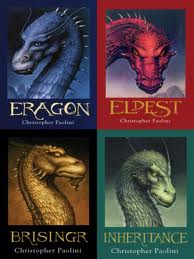
imgres-2But there is something else that has me so stoked for this movie stands on the threshold of something historic: it is the induction of the next generation of epic fantasy readers. Just as Lord of the Rings ignited my generation’s interest, and Christopher Paolini’s Eragon sentenced my own children to a lifetime of reading and vivid imagination, The Hobbit will take a new, unsuspecting generation on an unexpected journey.

My own journey has been somewhat unexpected. Having written a series of well-received social justice-themed novels, I have been introduced to people who are passionate to see and work for a better world. I treasure the opportunities to meet readers at book signings and author meet ups.

DSCN1387As we approached the launch of At The Walls Of Galbrieth, I sought to define my target audience and had a big surprise. To begin with, there were the 100+ who filled out my survey ­– thank you all – and I began to discover a group of passionate and richly imaginative readership.

But here is what excites me. I am meeting a large number of students and teenagers who are die-hard readers of epic fantasy. They eloquently share their love for the creation of a new world, their desire to see everyday folk transform into heroes, and to believe in universal principles such as freedom, good over evil, and the value of friendship.

My social justice-themed novels all contain a common thread: an everyday person goes through a transformational experience which empowers them to pursue justice. Swap the multinational corporation for an evil Emperor, replace the use of social protest with a special bow and arrow, and we have similar themes.

My point is that epic fantasy creeps up on you. This weekend many ingenuous children, teenagers, and parents, are going to see a hyped-up movie and experience a transformation. They may not start yielding a sword and slaying dragons, but they just might embark on an unexpected journey of reading and enter into a world that drives our imagination and defines our social values…

All because in the words of a great wizard: “Hobbits really are amazing creatures.”

——————————————————————————————————

Alon Shalev is the author of At The Walls of Galbrieth, Book 1 of The Wyccan Master series, which reached the Quarter Finals of the Amazon Breakthrough Novel Award 2012, released by Tourmaline Books. The First Decree, the sequel is due out in early 2013. Shalev is also the author of three social justice-themed novels: Unwanted Heroes, The Accidental Activist and A Gardener’s Tale. More on Alon Shalev at http://www.alonshalev.com and on Twitter (@elfwriter).

What If Humans Were Real?

What if elves were real? There are those in the south of England who believe that elves exist. I heard this when researching for A Gardener’s Tale.  When a twitter friend shared with me that he had heard of this in the north of England, it made me wonder…

Delyphin rubbed the points of his ears as he waited for Harwin who was always late. He checked his watch. They would have to walk fast to reach the bookstore before the famous author began his reading. 

“Sorry, I’m late,” Harwin said as he jogged up.

They set off, hands in pockets. There was no point in chastising Harwin – it simply didn’t help.

“I‘m looking forward to this,” Harwin said. “I loved ‘Lady of the Earings’. The way that professor describes these mythical humans, I really begin to feel they exist.” 

I nodded, too winded to comment. The professor was a strange chap, lecturing at an elite university on ancient elven languages. They say he even invented an entire human language – as if all humans would speak the same language. Still he was a master of the epic fantasy genre.

We enter the bookstore, which is full and grab the last two seats.

Harwin leans in. “I hear he is planning on sending the humans on a new quest, that their world is threatened by some strange energy – ‘oyl’ – that is expensive, polluting and they go to war over it because there isn’t much.”

“That’s a bit of a stretch,” I say. “His humans are too smart to do that. Besides, they have the sun, the wind, and the waves of the ocean just like us. Why would they use this oyl?”

Harwin smiled. “You look rather irate. You might start believing in these humans too.”

“Don’t be daft, Harwin. That’s the beauty of epic fantasy. You get so into the story that you begin to believe the characters might actually be real. Next thing, you’ll be swearing you saw someone with round ears.”

We both laugh. That would be a sight.  The room hushes. The professor is about to speak. He opens his new book…and the world of the humans becomes real as he reads…

I can almost see their round ears and their oyl.

——————————————————————————————————

Alon Shalev is the author of At The Walls of Galbrieth, Book 1 of The Wyccan Master series, which reached the Quarter Finals of the Amazon Breakthrough Novel Award 2012, released by Tourmaline Books. The First Decree, the sequel is due out in early 2013. Shalev is also the author of three social justice-themed novels: Unwanted Heroes, The Accidental Activist and A Gardener’s Tale. More on Alon Shalev at http://www.alonshalev.com and on Twitter (@elfwriter).

Tolkien, Ever The Historian – Happy Thanksgiving

Just a fun note and an opportunity to wish everyone a Happy Thanksgiving. I so appreciate you all taking the time to read my blog posts and offer your feedback and comments.

We epic fantasy aficionados are more than just fans. We are our own little family. Thank you for being a part of mine.

Happy Thanksgiving, 

Alon the Elfwriter

——————————————————————————————————

Alon Shalev is the author of At The Walls of Galbrieth, Book 1 of The Wyccan Master series, which reached the Quarter Finals of the Amazon Breakthrough Novel Award 2012, released by Tourmaline Books. The First Decree, the sequel is due out in early 2013. Shalev is also the author of three social justice-themed novels: Unwanted Heroes, The Accidental Activist and A Gardener’s Tale. More on Alon Shalev at http://www.alonshalev.com and on Twitter (@elfwriter).

Judging A Book By Its Cover

The last few weeks have been spent communicating with a very talented book cover designer, William J. Kenney, who has designed the book cover for At The Walls Of Galbrieth. I am quite amazed how someone who has never met me or understands how my brain works (disclaimer: not that knowing me will guarantee that either), can interpret my jumbled explanations into a cover, far better than anything I could imagine.

I might be bias here, but I think epic fantasy book covers (and also sci-fi) must answer to higher standards. My social justice-themed novel, The Accidental Activist, is based on a photograph that I took in San Francisco’s financial district. The cover artist did an amazing job, but it is still based upon something real.

Claudia McKinney, the artist who designed Amanda Hockings’ book covers, designed the cover to A Gardener’s Tale. The different concept from the first edition is amazing and, I believe, a big help in raising my sales levels. My publisher told her that he wanted to stress the strong Pagan theme and earth spirituality running through, she came up with a number of excellent options.

Designing book covers for a series is an additional challenge and, given that there are three, maybe four books in the Wycaan Master series, I now feel I have clear picture of how I imagine William will develop each cover. What I find interesting is that it doesn’t always have to be intricate. Christopher Paolini’s covers are not detailed, but still instantly recognizable. As each new cover was announced, my sons and I shared a collective gasp of anticipation.

 The question I want to pose here is what constitutes a good epic fantasy cover? There are some covers that I just sit and gaze in wonder, often several times when I pick up the book to commence reading. So, please also share your favorite fantasy book covers. Let’s make a Top Ten: over to you… 

Next week – the official unveiling of the book cover: At The Walls of Galbrieth – Wycaan Master Book 1.

——————————————————————————————————

Alon Shalev is the author of The Accidental Activist and A Gardener’s Tale. He has written three epic fantasy novels and the first, which reached the Quarter Finals of the Amazon Breakthrough Novel Award 2012, is due out in January 2013 by Tourmaline Press. More on Alon Shalev at http://www.alonshalev.com and on Twitter (@elfwriter).

Size – Does It Matter?

So shoot me for false advertising, but I have a dilemma. I shared with you last week in A Tribute to Editors that I have received my manuscript to At The Walls Of Galbrieth back from my editor with lots of cuts and corrections. As I worked my way through, accepting 90% of the changes suggested, I realized that my word count was dropping drastically.

I am about 80% through the novel, which began at 96,000 words and is now down to about 85,000.

Epic fantasy novels are thick tombs, offering the promise to get lost in a mythical world for a month or so. It is not a novel that you can finish in a weekend (unless your weekend is very empty and you are a fast reader).

Even Young Adult books make good doorstops. The Christopher Paolinis’ of this world have proved that teenagers will stick with a long story if it is compelling enough.

So my first question is: Is there a minimum length? When I was shopping the Wycaan Master series, there were publishers who stipulated a word range, often 100,00+. It might be that they expected their editors to attack it with a scalpel, much as my editor did.

My second question regards world building, something we have touched on before at elfwriter. A lot of the scenery description has been edited out. The editor, like many in the writing world, believes that you shouldn’t reveal everything: about a person, room, scenery etc., but allow the reader to create their own image.

Certainly, anyone who has read a book after watching the movie  (or the other way around) can appreciate this.

Tolkien, the master, spent pages describing the forests and the trees. Many of us loved this while others skipped these long descriptions. I wonder whether a young, undiscovered Tolkien would (and please pardon the expression) suffer the long red, sharpie lines through these sections of his work (or the Track Changes equivalent – but that’s not how I think of the old professor).

There is a middle ground. My editor has challenged me to integrate the descriptions within an action scene or as a pivot for a character’s self-reflection. This is a great point and I plan to experiment with this in the future. Do you know of any writers who do a good job of integrating description into the flow of the plot or character development, without it feeling like a ‘description-dump’?

So two questions here: Does size matter? How much description is allowed?

As always, I appreciate your feedback and guidance.

——————————————————————————————————

Alon Shalev is the author of The Accidental Activist and A Gardener’s Tale. He has written three epic fantasy novels and the first, which reached the Quarter Finals of the Amazon Breakthrough Novel Award 2012, is due out in January 2013 by Tourmaline Press. More on Alon Shalev at http://www.alonshalev.com and on Twitter (@elfwriter).

Genre Conventions .v. Originality

“But this is how it’s done in epic fantasy,” I whine to my writer’s group. “It’s part of the convention.”

We are a bonded group, anxious to support each other and so I receive sympathetic smiles and diplomatic silence. The silence screams in my ears. I know they are right. If I have to fall back on a sentence like that, I am in trouble. Or am I?

How important is originality?
Utter originality is, of course, out of the question.” – Ezra Pound

Originality is nothing but judicious imitation.” – Voltaire

I feel better already.

It is better to fail in originality than to succeed in imitation.” – Herman Melville.

Ouch!

Elves are tall, thin, have pointed ears, and excellent hearing. They look good in green, and shoot bow and arrows with exceptional accuracy.  Dwarves are short, rotund, live underground, mine and play around with axes. This is so because J.R.R. Tolkien put the epic in epic fantasy with his Middle Earth series’. Are the rest of us thus condemned to be mere recyclers of his work? Maybe. But I am not convinced how this is different from any other genre: romance has the same images and general plot arc. So does suspense and horror. And don’t get me started on dystopian thrillers.

So why do we so enthusiastically embrace conventions in a genre? It might be because some themes are simply timeless. I’m thinking Beowulf (maybe written in the eighth century) and The Odyssey (sixteen centuries before that!). Tolkien would concede that he was not the first, but when something works, you build your own version of it, and sometimes your version is good enough to capture the imagination of a very loyal readership. But it is not just enjoyment. It is pure escapism to a world we can get excited about, to values we can admire or fear (or both). It is also something familiar, something soothing. 

And yet when we embark on a new epic fantasy series, or try the work of a new author, we are seeking both something familiar and something original. What makes each author since Tolkien distinct is some aspect of his / her work. The relationship between Eragon and Saphira (his dragon), made Christopher Paolini’s Inheritance series special. I have just started reading The Weight of Blood by David Dalglish (check out his cool book covers by Peter Ortiz) which is about two brothers (okay) who are not just orcs (hmmm), but half-orcs (ahhh). I was caught on page one. Dalglish has written a variance on the convention. So did R.A. Salvatore when he introduced Drizzt – a dark elf whose race were the opposite from the stereotypical elves. Five novels on, I am still intrigued. Daniel Arenson came up with his own original approach to dragons in the Song of Dragons series. 

Before I end, let me say how much I admire those who come up with something original – Hunger Games, Harry Potter, Percy Jackson – they capture us all and we devour their new approaches. But those who seek to ride their coattails are not so successful and I think this is very telling.

It says that while the fantasy readership will embrace a clever, well-written, new concept, that very concept might not establish itself beyond one brilliant author. Epic fantasy, however, with its elves, dragons and swords, continues to stand the test of time. This is not because our readership is lazy. Instead they demand depth – world building, characters, and a plot that offers a twist on a well-tested theme. They continue to surprise us with the familiar.

It’s a great genre to be a part of.

 Good Writing,

Alon 

—————————————————————————————————

Alon Shalev is the author of The Accidental Activist and A Gardener’s Tale. He has written three epic fantasy novels and the first reached the Quarter Finals of the Amazon Breakthrough Novel Award as of March 2012. More on Alon Shalev at http://www.alonshalev.com/and on Twitter (@elfwriter).

What’s With The Pipe?

When you write epic fantasy, you have the privilege sit before a blank page (well screen nowadays). You make up all the rules. If you want these creatures to have different colored skin, pointed ears, horns, or magic, go for it. If you want to have unicorns, dragons, or any creature you make up, it is your right.

So what’s with the pipe? I know, Tolkien smoked, but he strode around Oxford in tweed, talking languages no one else remembers. In fact, there are a lot of characteristics about the master that we can adopt.

I think the secret lies with those who puff. I used to smoke a pipe for several years, seeing it as a compromise, a halfway house between smoking cigarettes and not. I loved my pipe. I craved the taste, loved the touch of the warm bowl, and enjoyed packing the pipe correctly, even cleaning it. All day, I looked forward to that time when I could put my feet up and puff the worries of the world away. 

I succeeded in giving up cigarettes for the pipe, but giving up the pipe proved tougher than I could imagine. This is not an article about smoking cessation, but even eight years later, if someone passed by me with his briar, or even is sitting a hundred feet away (given the correct wind), I will smell it, yearn for it, crave it for the rest of the day …  maybe for the rest of my life.

Perhaps this is why we continue to give our characters an opportunity that we are denying ourselves. Are we being foolish? Indulgent? 

I recently read a scene to my writer’s group in which, shortly after a bloody fight, the characters (those who survived) sat down and puffed their pipes. A colleague questioned me having my characters smoking in a YA novel. 

Fair point, I thought, until I realized that she had not objected to me exposing my tender, young readers to battle, killing, blood and gore.

I guess that one man’s poison is…well poison is poison. I shall have to sit and think about this. Now where’s my pi–.

Why do you think pipe smoking is a mainstay in fantasy novels?

Good reading.

——————————————————————————————————

Alon Shalev is the author of The Accidental Activist and A Gardener’s Tale. He has written three epic fantasy novels and the first reached the Quarter Finals of the Amazon Breakthrough Novel Award as of March 2012. More on Alon Shalev at http://www.alonshalev.com/and on Twitter (@elfwriter).