How Fantastical is Fantasy?

I mentioned previously that I am reading Sometimes The Magic Works by Terry Brooks. On Page 27 of this little book of great lessons, he writes how, as he struggled with his writing, he began to realize that he could not write the book in this world. “Everything I wrote had to remind readers of what they already knew, yet makes them take a second look at whether or not what they believed was really true.

 terry-brooks-150x150

I’ve been thinking about this sentence a lot. The difference between epic fantasy and magical realism (think Game of Thrones – George R.R. Martin) is that the former transpires in a totally different world, whereas magical realism takes place in this world, but has elements of the unexplained – magic.

While the Wycaan Master series takes place in Odessiya, a mythical world, I kept it relatively easy to imagine, because I do not want the reader to struggle with my world building. Rather, I want them to focus on the characters and the plot, while still portraying a beautiful world.

Christopher Paolini does a wonderful job describing his land of Alagaesia, in stunning detail. He suggests his success in doing this is based on his love for the wild as he grew up in Montana. But again, his world is very easy to believe. When my family is on a road trip and are confronted by a beautiful vista, we point and declare: Alagaesia!

images 

I hope I have succeeded in portraying Odessiya as a beautiful land: full of great mountain ranges, deserts, forests, lakes and coast. I thoroughly enjoyed describing the ice worlds in the north and the forest of the Shanrea, but I never strayed from environments you can associate with on trips or the National Geographic channel.

When I sent Seanchai to the Elves of the West, I wanted to describe a rich world of mighty trees. Living in Northern California, I am in constant awe of the redwoods. My fictional bloodwoods are a tribute to these majestic giants and the name is meant to offer just enough to fill the reader with the images of redwoods. I wanted to offer an exotic setting with a connection to something known to the reader with just enough to be different.

 images-1

The age of a dozen pages of descriptions that J.R.R. Tolkien got away with no longer survives the red pen of the 21st Century editor. The publishers, facing rising costs of resources are loath to publish thick tomes, and the millennial reader does not have the patience to read several pages describing a small forest. My eldest son admitted to skipping descriptions after he had a clear picture in his mind and I am not completely unsure that I didn’t do this when I read Lord of the Rings back in the previous century.

That being said, the fantasy writer is challenged to offer opportunities for the reader to suspend belief as Brooks suggests. In his own prequels to the Shannara series, he sends us through post-apocalyptic California with humans and mutations. But the mutants are a result of the catastrophe that has all but destroyed the world. It is, tragically, not hard to take that leap of imagination, which again happens when he skillfully weaves in his elves.

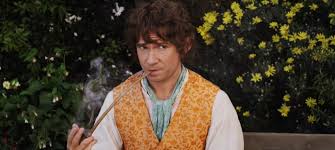
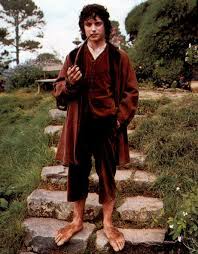
Perhaps no one deserves more praise that he who blazed the trail and created a hobbit. There had never been a hobbit before Tolkien and yet it seems so familiar. Even ‘second breakfast’ and the family relations that Bilbo et al gets so worked up about, makes sense.
 images-2

The skill of the fantasy author is to create a world that the reader does not have to work hard to imagine and then to create something imaginative that allows us, because we have built trust between writer and reader, to suspend rational belief and embrace.

It is a subtle yet powerful tool that offers a rich layer to the world of epic fantasy. It is why readers flock to Terry Brooks, R.A. Salvatore and Christopher Paolini, and why those of us who walk in their shadows continue to cultivate our craft and build words, races and situations that are believably unbelievable.

Have a great week, everyone.

Elfwriter

——————————————————————————————————

Alon Shalev is the author of the 2013 Eric Hoffer YA Book Award winner, At The Walls of GalbriethThe First Decree, and Ashbar – Wycaan Master Book 3 – all released by Tourmaline Books. Shalev is also the author of three social justice-themed novels including Unwanted Heroes. He swears there is a connection. More at http://www.alonshalev.com and on Twitter (@elfwriter). Hang out with Alon on Google+
The Pressure To Produce – An Author’s Perspective

Rarely does a week without me being asked when the fourth Wycaan Master book is coming out. Let me be very clear: I am absolutely chuffed (ecstatic in my new country’s vernacular) that people ask and truly humbled that readers care enough to ask and want the next installment.

 Games of Berkeley Question from Asif

Most of these questions come from young people, the generation of instant gratification. You click and you get it. It is hard to explain that it takes 5-6 months to write, a further 2-3 to edit, and another couple to publish. I have set a goal of a book a year, and I don’t believe I can produce more. Those who crank them out (or have others write for them) are, I suspect, doing themselves a disfavor, even if they sell well.

I can’t help thinking that unless you blindly follow a strict formula, there needs to be some creative downtime and an opportunity to mull over what has happened and where the series might be going. I’m trying to work a good wine or whisky analogy, but failing dismally. Everything needs to ferment and you need to burst into the next book, not start still breathless from the last climatic battle.

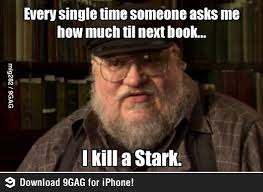
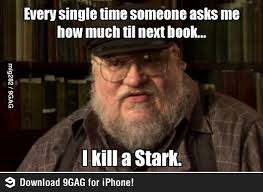
I am, however, waiting on two ‘next installments.’ The third Magicians book by Lev Grossman is due out in the fall and then there is that author I dare not mention who takes a couple of years to write each tome.

images-1George Martin to kill Tyrion

In total hypocritical mode, I have to say I am impatiently waiting for these books. It is really a compliment that readers bond with the characters and want to see how they develop.

But it is also pressure. The need to maintain a creative energy is perhaps akin to working out and keeping your body at a weight or suppleness that age and gravity take issue with. We know that our bodies react better when we work out regularly, and sometimes I think that it is the same with writing.

If I was to give one piece of advise to a beginning writer, it would be to cultivate a daily practice, whether writing a chapter of your novel or blogging, but not your shopping list. I only write a first draft of a novel in half a year, the other half as explained above is for editing, production and promotion.

While I embark on a novel with a lot of excitement there is also apprehension as I begin to work those creativity muscles and feel the soreness and fatigue. This feeling disappears as I settle into a rhythm and the plot reveals itself to me.

images-2

And if I have doubts, or feel lethargic, I always have those readers who earnestly ask: “When’s the next book coming out?”

——————————————————————————————————

Alon Shalev is the author of the 2013 Eric Hoffer YA Book Award winner, At The Walls of Galbrieth, The First Decree, and Ashbar – Wycaan Master Book 3 – all released by Tourmaline Books. Shalev is also the author of three social justice-themed novels including Unwanted Heroes. He swears there is a connection. More at http://www.alonshalev.com and on Twitter (@elfwriter). Hang out with Alon on Google+
Cinderella The Savage and Saruman The Sweet

A common question that I field at readings is how/why I chose the name of a particular character? I find it surprising because I would never have thought to ask such a question of my favorite authors. Either I considered their names a perfect fit  (and so never thought about it), or the author probably didn’t remain my favorite for long.

But it is a good question. A name, particularly for a protagonist or main character, is a significant part of the experience. If it appears ten times on every page and gets stuck in your throat, it is either a big problem or you need some lozenges on hand.  And if we are talking about a series, then that character is going to be around for some time. 

images-2

R.A.Salvatore, one of my role models and favorite authors, challenges us with his drows.

With the fourth Wycaan Master novel safely ensconced in the hands of my editor, I did what every author without a life or with a compulsive disorder does and began Book 5. My dear friends, Seanchai, Rhoddan and Sellia, have appeared in every book, so we are closing in on a half million words by the time I finish this one. I am trying to restrain myself from discovering how many times each name has appeared.

Having attended a number of events with people who have actually read my novels (they exist!), I discovered that everyone pronounces Seanchai differently. I am particularly proud of his name and love being asked why I chose it. In Celtic culture, a Seanchai was a traditional storyteller and, in my books, the Wycaan magic that our protagonist learns is based upon words and stories.

While providing what I hope is a cool answer, I see in their expressions how it is difficult that people struggle to say or hear. I am, of course, the worst offender. My non-existent Celtic notwithstanding, I have spend a good part of my life in the Middle East, where we sound like we are clearing our throats every time we put a ch together. It can be unsettling at first, because you flinch thinking the person is about to spit on you. but a serious ch is essential to the language and I worked very hard to master it.

More locally, I discovered people use che as in the name of the Cuban revolutionary. At a recent event, two friends decided to help me with a more interactive reading, each taking different parts, and each inevitably pronouncing Seanchai differently. We had a blast, but I wonder how those in the audience who had not read any of the series coped.

Games of Berkeley Question from Asif

I guess it doesn’t really matter until the movie comes out right? And by that time, pronouncing his name will be the last thing on this elated author’s mind. Slightly more realistically, I would love to produce an audio book since I derive such pleasure from them on my long, daily commute. 

Ironically, I have no idea where the name Rhoddan came from, I really don’t. I was looking for something that suggested stability and loyalty – go figure – but I feel the name fits perfectly. Certainly, the upside is that everyone agrees on how to pronounce his name, so hey, he can stay alive…for now!

The Greeks deserve credit for conveying much about their characters through names. Zeus is truly a name fit for a god and the king of the gods at that. And how would you react if your daughter told you that she was dating a dude named Hades or Loki? Lock her in her room, I’m sure. Thor sounds like a badass, and Aphrodite – well, best I leave that to your own imagination.

Moving to our own gods, and I think the old professor did a pretty good job all round, particularly with his hobbits. Bilbo Baggins is already lovable and you have only seen his business card. Friendly, courteous, and clearly one who drinks tea, eats Second Breakfast, and has a clean handkerchief in his pocketsss along with, of course, a ring of apocalyptic power. Who doesn’t these days?

 images-1

Tolkien did so well naming his hobbits – see this awesome list – and he nailed it with Gollum. If a name conveys considerable information, we understand that this is one twisted fella, with a name that just sticks in your throat.

Ilana, since you ask, comes from the Hebrew for tree. I chose this quite deliberately as I was looking for something stable, beautiful, and important to the existence of the characters around her. Alon means oak in Hebrew, so you see I have an affinity with trees, and At The Walls Of Galbrieth was conceived in a beautiful ancient redwood forest.

The names of minor characters is also important as an author spends more limited time extrapolating their characteristics. Since they appear and disappear so often, you want these names to be remembered and to also convey something about the characters. Certainly, when you have over a thousand characters stretching over several hefty tomes, yes I’m talking about you, Mr Martin, this becomes especially challenging.

 imgres-1

There is an advantage when reading ebooks, that you can search back to find references to a character, but this is impossible in an audiobook, and while a glossary of characters is helpful to flick through in most circumstances, it is not recommended while driving and listening to the audio book. App anyone?

What is your favorite name for an epic fantasy character? Which author shines at their selection? And which character does not fit the image you imagined from the name?

——————————————————————————————————

Alon Shalev is the author of the 2013 Eric Hoffer YA Book Award winner, At The Walls of Galbrieth, The First Decree, and Ashbar – Wycaan Master Book 3 – all released by Tourmaline Books. Shalev is also the author of three social justice-themed novels including Unwanted Heroes. He swears there is a connection. More at http://www.alonshalev.com and on Twitter (@elfwriter). Hang out with Alon on Google+

That Magical Time Of Year – repost

Over the three days of November 17 -19, Amazon.com have decided to promote the 2013 Winner of the Eric Hoffer Book Award for YA – At The Walls Of Galbrieth. The novel will be offered FREE in ebook form.

This is a wonderful opportunity for me and I request that, to support my sales rank and me, you download the book and invites your friends to do the same. Feel free to gift it on (Thanksgiving and Hanukkah, anyone?).

To celebrate this and also the milestone of 100 blog posts on elfwriter.com, I wish to offer 10 of my favorite posts over the next three days. I hope you enjoy and, please, take a moment to download for FREE At The Walls Of Galbrieth and spread the word.

Thank you,

Alon

 =======================================

Once a year, my family goes away camping in the mountains of Northern California or Oregon. All day we fish, hike, swim, explore and then after dinner sit around the campfire or snuggle up in my tent. This is the fourth year that I then open up a folder and read to my boys the completed first draft of the next book in the Wycaan Master series.

My boys listen, interrupt with question, comments and sometimes criticism. The latter is becoming increasingly sophisticated as they not only spot spelling or grammar errors, but when a character goes out of voice, or the plot is inconsistent.

During the day, while out on another activity, one of them might turn around and offer an idea or feedback. My youngest (10 years old) may well tell me what he guesses might happen next. I have told him that he is not allowed to share anything in an unpublished novel with his friends – many of whom are reading the series. He is to arch an eyebrow (Spock would be proud – if he ever felt emotions) and say Maybe. When he offers his predictions, I turn to him and smile, as evilly as I can muster: Maybe.

imgres

It elevates an already wonderful family vacation into the realms of magical and I feel truly blessed that we are building these communal memories together and hope they will stay with us as my boys grow up and walk their own paths.

Together with this is the excitement building for the book launch of Ashbar – Wycaan Master Book 3. Pages have been added at alonshalev.com and here on the elfwriter blog.

It is turning into an amazing year with The First Decree and Ashbar being published, and, of course winning the 2013 Eric Hoffer Book Award for YA. I am truly gratified that along the way I am making many new friends through twitter and the blog, and even some face-to-face networking (yes – it really happens!).

In this brave new publishing world, an author can only succeed with ‘a little help from his friends’ something Joe Cocker was preaching long before any of us knew that a chat room was a place you could hang out in pajamas or that we would love a tablet that is too large to swallow.

imgres-2

I appreciate all the retweets, the recommendations and the reviews. My mentor is telling me that I am not accruing enough reviews. Please, if you have read either At The Walls Of Galbrieth or The First Decree, take a few minutes to leave a review. If you are in a Google+ group, a Goodreads group, or on a thread of epic fantasy book aficionados, please make a recommendation to begin the series. I am following a thread on Amazon called Life after Game of Thrones and checking out the authors they suggest.

I really believe that, even in the rich online world, word-of-mouth remains the most effective marketing tool. On Thursday, a friend enthused about this new author he has discovered. I came home, checked him out, and his first book is on my wish list.

To those of you who already advocate for my novels and my path as an author – thank you. My relationship with my boys and the support you give me are what makes my epic fantasy truly magical.

 =======================================

Alon Shalev is the author of the 2013 Eric Hoffer YA Book Award winner, At The Walls of Galbrieth, offered by Amazon.com  for FREE on November 17-19. The sequel, The First Decree, and Ashbar – Wycaan Master Book 3 are all released by Tourmaline Books. More at http://www.alonshalev.com and on Twitter (@elfwriter). Hang out with Alon on Google+
The Fellowship Of The Book – repost

Over the three days of November 17 -19, Amazon.com have decided to promote the 2013 Winner of the Eric Hoffer Book Award for YA – At The Walls Of Galbrieth. The novel will be offered FREE in ebook form.

This is a wonderful opportunity for me and I request that, to support my sales rank and me, you download the book and invites your friends to do the same. Feel free to gift it on (Thanksgiving and Hanukkah, anyone?).

To celebrate this and also the milestone of 100 blog posts on elfwriter.com, I wish to offer 10 of my favorite posts over the next three days. I hope you enjoy and, please, take a moment to download for FREE At The Walls Of Galbrieth and spread the word.

Thank you,

Alon

 =======================================

All our protagonists had them – a fellowship of loyal followers and friends, ready to put their lives on the line, to draw their swords in defense of the hero/ine, and to go off on dangerous missions or to pass on an important message.

hobbits in pub

What would we do without them? How would our characters cope bereft of true companionship? I have mentioned in the past the lure of universal values to the conventions of epic fantasy. We long to lose ourselves in some far off land, discover mythical creatures, embark on a noble quest.

Granted, but we also seek values that are part of our everyday aspirations: justice, truth, love, riches … and friendship.

Why am I writing about this? Last week, I somewhat frivolously criticized George R.R. Martin, author of the Game of Thrones series. I learned two things from the experience:

1) Mess with a great epic fantasy author if you want to boost the hits to your blog.

2) Mess with the followers of a great epic fantasy author at your peril.

images-1

My humble offering garnered 4-5 times the amount of hits of an average blog post (not that any of my posts are average, of course) and I received far more comments, many of which were retweeted and favored on twitter, some, I admit, by myself.

To those who accused me, a humble fantasy author, of being insanely jealous: I accept the charge.

To those who say people who criticize Martin’s long tomes suffer a short attention span, I say – next point.

And so it went on. To be fair, there were many who agreed with my pointed digs, and in the name of credibility, still faithfully open the next book in the series. I myself, despite honorable intentions to take a break having just concluded Book 4, read Sacre Bleu, the latest by one of my favorite authors, Christopher Moore, and having finished it, promptly started Book 5 – A Dance of Dragons.

imgres-2

What is clear is that, in the same way that we want to align ourselves to great fictional characters, we subconsciously swear fealty to their creators: the authors. I encountered fans of Mr. Martin, as loyal as Frodo’s gardener (well maybe not quite). They were ready to defend him to the hilt – even if they privately knew I was right. It is something very special about the people attracted to the genre.

The skeptical among them would probably accuse me again of jealousy: that I crave one day to have Wycaan Master followers as loyal as them. To my accusers I proudly say: Yeah. Darn right!

Have a great weekend,

Elfwriter

 =======================================

Alon Shalev is the author of the 2013 Eric Hoffer YA Book Award winner, At The Walls of Galbrieth, offered by Amazon.com  for FREE on November 17-19. The sequel, The First Decree, and Ashbar – Wycaan Master Book 3 are all released by Tourmaline Books. More at http://www.alonshalev.com and on Twitter (@elfwriter). Hang out with Alon on Google+
World-Building: How Much Detail?

I’ve noticed a number of adult reviewers of my Wycaan Master series have been critical of my world-building, suggesting that I do not go deep enough or that the books are too fast-paced and that more description of scenery and environment would help to pace the book.

There seems a definite age issue here. I asked a number of my sons’ friends (ages 10-16) who have read the book and they did not agree. In fact, the younger readers were happy to describe to me the fortress of Galbrieth from Book 1, and mighty Hothengold, the dwarf capital, which is situated in a huge cavern. Admittedly, each child described it differently, but I am not sure that matters.

Girl Browsing Books at the Library

It seems there is a certain richness in each (young) reader’s imagination forming their own world, but why do adult readers not want to exercise their minds in such a way? Why does the generation of instant gratification seem willing to work their imagination muscles, while those who always had to work hard to discover anything, do not? In an earlier blog post – The Art of World Building – which I wrote at the beginning of my epic fantasy writing journey – I assumed that it would be exactly the opposite.

I suspect age is not always a factor. The adult who is often challenged to find reading time, wants to push the plot along, something my books are complimented for, and not spend a chapter describing every tree in Mirkwood. Ironically, when the same readers lost themselves in Tolkien’s Middle Earth decades ago, they had more free time to meander with the master.

Over the summer, I have indulged myself in writing an adult fantasy novel, a Game of Thrones wannabe, and I will soon shelve it to focus on editing Book 4 and writing Book 5 – the cycle never ends. But I realize I have been no more generous with my world building than for the Wycaan Master series.

Airship10

So my question to you, dear readers: How much detail of the environment is needed for a YA in comparison to an adult fantasy novel? Is there enough world-building in the Wycaan Master series? Please feel free to leave your feedback in the comments section below. I really appreciate every comment.

Talking of feedback: I have been reading a number of books about Amazon.com and how to improve your ranking and exposure. I really need reviews on both At The Walls Of Galbrieth and The First Decree, on both the US and UK sites. Apparently less than 3% of readers leave reviews and I admit, until I began writing, I was one of the 97%. But now from the other side of the fence, I would really appreciate that if you have read either book, please take five minutes and leave a review.

It will be a huge help to a struggling author and if ever we meet in Odessiya, the next round of ale will be on me!

hobbits in pub

——————————————————————————————————

Alon Shalev is the author of the 2013 Eric Hoffer YA Book Award winner, At The Walls of Galbrieth, Wycaan Master Book 1 and The First Decree, both released by Tourmaline Books. Ashbar – Book 3 – is due for release in October 2013. Shalev is also the author of three social justice-themed novels including Unwanted Heroes. He swears there is a connection. More at http://www.alonshalev.com and on Twitter (@elfwriter).

That Magical Time of Year – Better Than ‘Real’ Fantasy

Once a year, my family goes away camping in the mountains of Northern California or Oregon. All day we fish, hike, swim, explore and then after dinner sit around the campfire or snuggle up in my tent. This is the fourth year that I then open up a folder and read to my boys the completed first draft of the next book in the Wycaan Master series.

My boys listen, interrupt with question, comments and sometimes criticism. The latter is becoming increasingly sophisticated as they not only spot spelling or grammar errors, but when a character goes out of voice, or the plot is inconsistent.

During the day, while out on another activity, one of them might turn around and offer an idea or feedback. My youngest (10 years old) may well tell me what he guesses might happen next. I have told him that he is not allowed to share anything in an unpublished novel with his friends – many of whom are reading the series. He is to arch an eyebrow (Spock would be proud – if he ever felt emotions) and say Maybe. When he offers his predictions, I turn to him and smile, as evilly as I can muster: Maybe.

imgres

It elevates an already wonderful family vacation into the realms of magical and I feel truly blessed that we are building these communal memories together and hope they will stay with us as my boys grow up and walk their own paths.

Together with this is the excitement building for the book launch of Ashbar – Wycaan Master Book 3. Pages have been added at alonshalev.com and here on the elfwriter blog.

It is turning into an amazing year with The First Decree and Ashbar being published, and, of course winning the 2013 Eric Hoffer Book Award for YA. I am truly gratified that along the way I am making many new friends through twitter and the blog, and even some face-to-face networking (yes – it really happens!).

In this brave new publishing world, an author can only succeed with ‘a little help from his friends’ something Joe Cocker was preaching long before any of us knew that a chat room was a place you could hang out in pajamas or that we would love a tablet that is too large to swallow.

imgres-2

I appreciate all the retweets, the recommendations and the reviews. My mentor is telling me that I am not accruing enough reviews. Please, if you have read either At The Walls Of Galbrieth or The First Decree, take a few minutes to leave a review. If you are in a Google+ group, a Goodreads group, or on a thread of epic fantasy book aficionados, please make a recommendation to begin the series. I am following a thread on Amazon called Life after Game of Thrones and checking out the authors they suggest.

I really believe that, even in the rich online world, word-of-mouth remains the most effective marketing tool. On Thursday, a friend enthused about this new author he has discovered. I came home, checked him out, and his first book is on my wish list.

To those of you who already advocate for my novels and my path as an author – thank you. My relationship with my boys and the support you give me are what makes my epic fantasy truly magical.

—————————————————————————————————–

Alon Shalev writes social justice-themed novels and YA epic fantasy. He swears there is a connection. His latest books include: Unwanted Heroes and the 2013 Eric Hoffer Book Award for YA – At The Walls Of Galbrieth. Alon tweets at @alonshalevsf and @elfwriter. For more about the author, check out his website.

Sex or Swords?

I recently finished reading an epic fantasy novel by an author who is perhaps a year ahead of me. He is a couple of novels deeper into his series and seems to have a similar, but not bigger, social platform. 

But his books are selling impressively and I enjoyed reading his work, but there was nothing in the quality of the plot, writing, etc. that suggested why he is outselling me.

There are a lot of things in common between our novels. They are both character driven and, though there is a clear plot arc, you really stay engaged because you are rooting for the characters. There is plenty of action and moral dilemmas. If and when I write a review, and I definitely will because this is so important to the author (hinting here!), I realize that it would be similar to many of the reviews I have received for At The Walls Of Galbrieth and The First Decree.

imgres 

But there are two fundamental differences, perhaps three.

1) His novels are meant only for adults.

2) There is a fair amount of sex.

There is also considerable swearing, but I don’t think someone buys a book because of the swearing. It might deter a few people, but not act as motivator.

These differences lead me to wonder about whether young adults are reading ebooks – which remains the most popular with all struggling authors – and I will examine this next week.

But for now, I want to focus on sex. Let me be honest. I’m very fond of sex and I enjoy reading and writing about it. In my non-fantasy novels, there are probably two graphic sex scenes in each. I believe that the way my characters deal with sex, before, during and after, reveals far more than any long description can ever hope to achieve.

All three books ­– A Gardener’s Tale, The Accidental Activist, and Unwanted Heroes – have garnered criticism from a few reviewers who were upset or disturbed by what they read, but there are many others who mention it positively. There was nothing 50 Shades, or anything violent or forced in these scenes and, in truth, I remain proud of them, even when I know my mother and mother-in-law have read them!

A Gardener's Tale  - new cover

However, what is the place of sex in epic fantasy? The book in question has two sex scenes and neither are particularly graphic or explicit. Throughout the novel there are sexual references but little more than men’s comments or a woman’s thoughts. Both scenes were written well and felt part of the story. Both added to the richness of the characters.

 I have wondered about Game of Thrones, in particular because my 14-year-old is interested in reading and watching the series. I have no doubt that George R.R. Martin wrote what he understood to be sexual mores of that period and I agree that it probably happened as he described, but the sex was clearly not a turn on for me (neither was it for most of Martin’s characters come to think of it).

Much of the sex were men exploiting their power over women and a few scenes are of women who manipulate men to get something they want through sexual favors or binding the men’s lusts to them. All good stuff, perhaps, but not something I want to share with my teenage son.

imgres-6

I want him to know about sex as something romantic, a bonding act between two people who love each other. I want him to know that anything that is not two consenting adults pleasuring themselves and each other, is deviant. It might not necessarily be wrong, but that is for him to decide according to his values.

In the Wycaan Master series, I touch on many values and morals. I challenge the young adults who read my books to make choices about race, violence, friendships, loyalty, and enjoy it when I hear my son or his friends comment that they are proud/disappointed/upset/ happy about the actions of a character. I like that they feel guilty, understanding and maybe partly rooting for the bad guys. Nothing is ever black or white.

images-1

But what about sex? There are certain hints in my novels that some things are going on, but it is easily missed if a young adult is not thinking about such topics. To write about sex, even in a tasteful youth-orientated way, would strip my novels of being YA (young adult). I would lose the initial motivation of writing to influence a new generation. 

Is it possible to write in sexual scenes in a YA novel? Most parents do not vet a book, trusting that if it has received recognition as YA then it will not include certain things such as swearing, graphic violence, or sex.

I do not want to step away from the target audience that so intrigues me and I am not sure I am ready to abandon them. However, I am frustrated that there are strict boundaries, frustrated that I could convey so much to my target audience through my young characters having or thinking of sexual encounters. I could convey healthy values associated with sex, values that I want to share with my own sons.

So my question is: Can sex be handled within a YA context? Your thoughts?

—————————————————————————————————–

Alon Shalev writes social justice-themed novels and YA epic fantasy. He swears there is a connection. His latest books include: Unwanted Heroes and the 2013 Eric Hoffer Book Award for YA – At The Walls Of Galbrieth. Alon tweets at @alonshalevsf and @elfwriter.   For more about the author, check out his website.


The Fatherly Figure in Fantasy

As a warm up for reading this blog, please  say the following five times as quickly as possible: The Fatherly Figure in Fantasy.

I shared some thoughts on Left Coast Voices regarding Father’s Day this Sunday. But it occurred to me that the father figures in epic fantasy gets a tough time. Here is a brief overview of a few of our beloved characters and their fathers (I acknowledge that I am encompassing a wide definition of the genre for this post. Purists – please excuse me this once).

WARNING: There might be spoilers here, so I am giving the name of the character first and won’t be offended if you skip that part.

1. Luke Skywalker:

I know this is sci-fi and not fantasy, but we have all hung there with Luke as his father, who had just chopped off his arm, now looms over him with a lightsaber. What a time to discover your father! As if it is not enough that your uncle and aunt who brought you up were murdered, now you discover your father is a metallic mass-murderer.

Suggestion: Do not buy Dad a lightsaber. It is the first step to the Dark Side and he already has plenty of power tools he never uses.

 images

2. Tyrion Lannister:

So your father abused you and openly hated and insulted you. As if you don’t have enough to contend with two older, beautiful siblings, who are bonking, or the fact that you were born stunted and are accused of killing your mother as she gave birth to you. Not hard to understand why A Lannister Always Pays His Debts!

Suggestion: Don’t give your father a ‘quarrel’ even if he deserves it.

 images-2

 3. Eragon:

Also grew up never knowing his true father and then, like Luke Skywalker, finds his uncle, who was like a father to him, is murdered in his stead. Of course, no sooner does he discover who his father really is, than he has to bury him, and take considerable blame for brave father’s death.

Suggestion: Giving your old man your dragon/porche just before he dies is classy, but do check your insurance policy first.

images-1

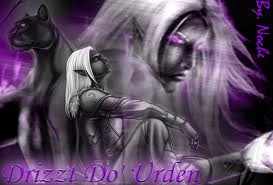
4. Drizzt Do’Urden:

Gotta give the dark elf considerable credit. He grew up in the Drow city of Menzoberranzan. where all males were merely fighters and concubines. Of course his mother and sisters abused him and tried to kill him, and by the time he discovered who his father really was, well…I don’t think he even got to bury him.

Suggestion: a bit stumped here. When your father gave you a genetic sense of justice, enough to turn you against your mother and sisters, what can you really reciprocate with? 

images-2

Artist – Noche

5. Frodo Baggins:

I admit, I had to look this up and cannot guarantee my sources. Frodo’s father was Drogo and we don’t know much about him other than he went and drowned in a boating accident. Hobbits should know not to participate in such dangerous and adventurous pastimes as boating. At least, Frodo had a nice secure upbringing with his first cousin once removed (and not his uncle as even dear Bilbo often referred to himself). It was not as though Bilbo passed on any artifact that was incredibly dangerous and held the fate of the entire Middle Earth!

Suggestion: Stay away from the jewelry!!!

images-3


In epic fantasy we gravitate to protagonists who are the underdogs, who overcome adversary, and make great personal sacrifice. But we also seem to be sending out a message to our young readers that the absent/weak/villain father is the norm.

It must not be so. Every young man deserves a father who is a role model, imperfect and flawed as we may be, but a father who will teach him to fish, nock an arrow, believe in a just society, and to be a good human being…or elf…dwarf etc.

I’m sure if we were to meet Luke, Eragon, Tyrion, Drizzt or Frodo in a pub, they would all agree that they wished they had fathers they could truly appreciate and learn from.

Perhaps being the best father you can is the greatest quest any of us can embark on. It may not save Middle Earth or Menzoberranzan, but it will make our world a better place to live in.

Happy Father’s Day.

—————————————————————————————————–

Alon Shalev writes social justice-themed novels and YA epic fantasy. He swears there is a connection. His latest books include: Unwanted Heroes and the 2013 Eric Hoffer Book Award for YA – At The Walls Of Galbrieth. Alon tweets at @elfwriter. For more about the author, check out his website.

The Fellowship of the Book

All our protagonists had them – a fellowship of loyal followers and friends, ready to put their lives on the line, to draw their swords in defense of the hero/ine, and to go off on dangerous missions or to pass on an important message.

hobbits in pub

What would we do without them? How would our characters cope bereft of true companionship? I have mentioned in the past the lure of universal values to the conventions of epic fantasy. We long to lose ourselves in some far off land, discover mythical creatures, embark on a noble quest.

Granted, but we also seek values that are part of our everyday aspirations: justice, truth, love, riches … and friendship.

Why am I writing about this? Last week, I somewhat frivolously criticized George R.R. Martin, author of the Game of Thrones series. I learned two things from the experience:

1) Mess with a great epic fantasy author if you want to boost the hits to your blog.

2) Mess with the followers of a great epic fantasy author at your peril.

images-1

My humble offering garnered 4-5 times the amount of hits of an average blog post (not that any of my posts are average, of course) and I received far more comments, many of which were retweeted and favored on twitter, some, I admit, by myself.

To those who accused me, a humble fantasy author, of being insanely jealous: I accept the charge.

To those who say people who criticize Martin’s long tomes suffer a short attention span, I say – next point.

And so it went on. To be fair, there were many who agreed with my pointed digs, and in the name of credibility, still faithfully open the next book in the series. I myself, despite honorable intentions to take a break having just concluded Book 4, read Sacre Bleu, the latest by one of my favorite authors, Christopher Moore, and having finished it, promptly started Book 5 – A Dance of Dragons.

imgres-2

What is clear is that, in the same way that we want to align ourselves to great fictional characters, we subconsciously swear fealty to their creators: the authors. I encountered fans of Mr. Martin, as loyal as Frodo’s gardener (well maybe not quite). They were ready to defend him to the hilt – even if they privately knew I was right. It is something very special about the people attracted to the genre.

The skeptical among them would probably accuse me again of jealousy: that I crave one day to have Wycaan Master followers as loyal as them. To my accusers I proudly say: Yeah. Darn right!

Have a great weekend,

Elfwriter

—————————————————————————————————–

Alon Shalev writes social justice-themed novels and YA epic fantasy. He swears there is a connection. His latest books include: Unwanted Heroes and At The Walls Of Galbrieth. Alon tweets at @alonshalevsf and @elfwriter.