A Damning Tribute to George R.R. Martin

This tribute is a rewrite of a previous post written in honor of the launch tonight of HBO’s fifth series.

Dear Mr. Martin,

Let me begin by saying I’m a big fan. I’ve read all five books and, if that isn’t proof enough, I can’t wait for Book 6 (hint, hint). I have sung your praises on my humble elfwriter blog and keep your photo under my pillow (I don’t – but I want to make sure I still have your attention).

It’s like this, sir. One day when I grow up (I’m only 50-teen) I want to be a bestselling epic fantasy author like you. My fifth book comes out in the fall and I have sold more books as you’ve killed noble characters (I think!).

I spend a lot of time hanging out with other writers: online and (I know this is rare) actually in person. Everyone tells me to “observe the rules,” “don’t break the conventions,” and, my favorite, “Tolkien was one-of-a-kind. You wouldn’t get away with that.”

But you, sir, break all the rules, tippexed (anyone?) over the conventions. One friend suggested you only get away with it because you’re already famous, have a huge following, and probably don’t care anymore what anyone outside of the Seven Kingdoms thinks.
images-1

So here is my list of 10 things you have done wrong:

1. Your books are too long. I keep getting told that 90K is way beyond the commitment that most readers are willing to invest today. But then why do I enjoy your tomes (and Christopher Paolini, and J.K Rowlings, and some unknown ancient language, Oxford professor) and feel a sense of loss when they are finished?

2. Your books are too slow. People want action, action, action. Instant gratification …debate in 140 characters or less. Have a car chase or blow up a bridge – well, you get my point.

3. Your books are too detailed. You mean I need to think? Concentrate? Invest? I hear you keep flow charts in your office – can we peek? How about a deal with Cliff Notes or an app that you can enter a character, your book and page number and get an update. Dude – I totally expect a commission on the app idea.

4. Your characters are too flawed (especially the good ones). If I’m not seeing Ryan Gosling or Kristen Stewart then it simply won’t do. If I want real people, I would put my book down and hit the pub.

images-2

5. Your characters are too dead. I actually wrote a blog post about this (I Need A Hero), keeping the book and you anonymous so as not to spoil it. Guess what? Everyone knew who I was talking about.

6. You drop some characters for hundreds of pages – are you tempting me to skip pages, sir? Just so as not to spoil this for any readers on Books 1-4, you know what I mean when I connect this to Book 4//5.

7. You miss out key scenes – battles in particular – and subtly let us know they have happened. I know it is incredibly difficult to write battles and only the best can pull it off, but well sir, you are one of the best.

8. You have too many minor characters. I hope you are keeping track of them because, to be honest, I am developing a habit of scratching my head whenever someone resurfaces 1-2,000 pages later.

9. You care more for the old gods and the new than the critics.

10. Your books are too addictive. I can’t stop…

You broke all the rules, sir. Congratulations! I can’t wait for the first episode of Book Five tonight … not to mention Book 6 …Oops! Are there any Starks left?

images-9

————————————————————————————-

Alon Shalev is the author of the 2013 Eric Hoffer YA Book Award winner, At The Walls of GalbriethThe First Decree, and Ashbar – Wycaan Master Book 3 – all released by Tourmaline Books. His latest novel is Sacrificial Flame, the fourth in the series.

Shalev is also the author of three social justice-themed novels including Unwanted Heroes.He swears there is a connection. More at http://www.alonshalev.com and on Twitter (@elfwriter). Hang out with Alon on Google+

Walking Away From A Fantasy Series

I have heard others talk about the difficulty of finishing writing a series, of tying up loose ends, of sad partings and death, glorious battles and victories. However clear your plot line is, it is difficult to turn your back on characters who have walked with you on the paths of fiction for five or ten years.

When I finished the first draft of Book Five during the summer, the plan had been to edit and rewrite and then send out to my editor by the end of October. What actually happened was that I plunged straight into Book 6 and now, three months later, I am writing the final third of the book: the climax and end of the series. My publisher knows that a February launch date is mere fantasy (excuse the pun), but given that they are more used to authors who get writers block and stop writing, my uncontrollable urge to write is hardly seen as much of a disaster.

Leonid_Pasternak_001

However, I am finding the final third of Book 6 so difficult to write and it is a strange feeling. There are many storylines to tie up and it occurs to me that perhaps it is better to write the sixth book before locking down the fifth.

The conclusion of a series is a huge responsibility and radically different from finishing one novel. There are many reasons why a series is easier than individual standalone stories and many reasons why it is harder.

But beyond anything, and first and foremost is the multiple strands of plot, is the commitment between author and character, and this truly weighs me down. I have written before about killing off characters but even dead they remain part of the story.

I hope to finish the first draft of Book 6 by the end of the year. Thirty thousand words in forty-five days with Thanksgiving and the Christmas holiday season included is not daunting in terms of output. But this time it feels different and a steeper mountain to climb.

I am wondering if other authors feel the same way? The Professor went on after Lord of the Rings to write two more tomes, though George R.R. Martin seems relieved to soon finish. How do you feel, a reader or writer of series’, when you approach the end of an era?

images-1

Enough pontificating. another 30,000 words to write!

———————————————————————————————

Alon Shalev is the author of the 2013 Eric Hoffer YA Book Award winner, At The Walls of GalbriethThe First Decree, and Ashbar – Wycaan Master Book 3 – all released by Tourmaline Books. His latest novel is Sacrificial Flame, the fourth in the series.

Shalev is also the author of three social justice-themed novels including Unwanted Heroes. He swears there is a connection. More at http://www.alonshalev.com and on Twitter (@elfwriter). Hang out with Alon on Google+

Exclusive Interview With An Elven Protagonist

The Odessiyan Times recently caught up with Seanchai, Wycaan Master, shortly after the battle of Cliftean Pass, and he graciously agreed to the following interview, to be published shortly before the release of Sacrificial Flame – Wycaan Master Book 4.

 193htrjzik8kajpg

Reporter: There are some who say that only a few short years ago, you were a lost child running from your village. Now you’ve brought down the army that tried to conscript you. Is that how it feels?

Seanchai: I was never a lost child, but a scared calhei who had fled his parent’s village in search of an uncle he had never met.

Reporter: When did you first understand that you might be special, more than just the average elf?

Seanchai: When strangers seemed to believe in me to the point that they were willing to sacrifice their lives for me.

Reporter: That must have made you feel important.

Seanchai: No! It made me furious and guilty. No one should give their life like that. There are hundreds, maybe thousands, of widows and orphans, because their parents chose to believe in me.

 Wycaan Master 1 Just Front Cover

Reporter: But at least they are free. Mhari was your first teacher. Was she the greatest influence on your early life?

Seanchai: No, though she was and remains very important to me. But the greatest influence was Ilana and Rhoddan. They saw my potential but were never blinded by it. Perhaps because they saw my glaring faults as well. But they loved me, each in their own way, and I could never have done what I did without them.

Reporter: Some say your loyalty to your friends was your biggest weakness.

Seanchai: Your friends are never your weakness and neither is your family. I regret no time that I risked my life for one of them and they risked their lives for me. Their support is what makes it all so real. It gives you the determination to carry on.

Reporter: It was your friends who motivated you to take action?

Seanchai: No. It was destiny: Seeing the racism and injustice. No one, man, elf, dwarf, pictorian – no one should be a slave or denied the right to live free of fear or shame.  

Reporter: Was it easy to become a Wycaan?

Seanchai: No. It is a lot of internal practice and discipline. It is allowing yourself to connect with powers purer and stronger than you. But perhaps it is easier to become a Wycaan than to stay one?

Reporter: What do you mean?

Seanchai: Once you are a Wycaan, everyone follows your orders even if you don’t know what you are doing, even though it might go wrong and sentence thousands to an early grave. You are sought to bless babies, cure the sick, and make judicial decisions. The worse part is that they never blame you when you fail.

Reporter: How did it feel to know that your story won a national book award?

Seanchai: I do not put as much emphasis on ego, such as shall we say, authors. But I guess if he hadn’t have written the story, I wouldn’t exist.

Reporter: You don’t like your author?

Seanchai: He killed off many of the people closest to me. Who does he think he is – George R.R. Martin? How could he? I mean: look what he did in Book 4.

images-1

Reporter: What did he do?

Seanchai: Oh, I can’t tell you. The book, Sacrificial Flame, is not out yet.

Reporter: Still if you told me, I could leak it and we would make the front pages.

Seanchai: You would truly make a terrible Wycaan. But you only need to wait for two more weeks or so. And if you want to find out more about the new release, click here LINK, even though we don’t have computers in the land of Odessiya.

Sacrificial Flame Cover Hi Res

Reporter: Well that’s all we have time for, unless you wanna turn into a bear for the camera…Hey! I thought Wycaans don’t get angry. Help!!!

——————————————————————————————————

Alon Shalev is the author of the 2013 Eric Hoffer YA Book Award winner, At The Walls of Galbrieth, The First Decree, and Ashbar – Wycaan Master Book 3 – all released by Tourmaline Books. Shalev is also the author of three social justice-themed novels including Unwanted Heroes. He swears there is a connection. More at http://www.alonshalev.com and on Twitter (@elfwriter). Hang out with Alon on Google+

How Fantastical is Fantasy?

I mentioned previously that I am reading Sometimes The Magic Works by Terry Brooks. On Page 27 of this little book of great lessons, he writes how, as he struggled with his writing, he began to realize that he could not write the book in this world. “Everything I wrote had to remind readers of what they already knew, yet makes them take a second look at whether or not what they believed was really true.

 terry-brooks-150x150

I’ve been thinking about this sentence a lot. The difference between epic fantasy and magical realism (think Game of Thrones – George R.R. Martin) is that the former transpires in a totally different world, whereas magical realism takes place in this world, but has elements of the unexplained – magic.

While the Wycaan Master series takes place in Odessiya, a mythical world, I kept it relatively easy to imagine, because I do not want the reader to struggle with my world building. Rather, I want them to focus on the characters and the plot, while still portraying a beautiful world.

Christopher Paolini does a wonderful job describing his land of Alagaesia, in stunning detail. He suggests his success in doing this is based on his love for the wild as he grew up in Montana. But again, his world is very easy to believe. When my family is on a road trip and are confronted by a beautiful vista, we point and declare: Alagaesia!

images 

I hope I have succeeded in portraying Odessiya as a beautiful land: full of great mountain ranges, deserts, forests, lakes and coast. I thoroughly enjoyed describing the ice worlds in the north and the forest of the Shanrea, but I never strayed from environments you can associate with on trips or the National Geographic channel.

When I sent Seanchai to the Elves of the West, I wanted to describe a rich world of mighty trees. Living in Northern California, I am in constant awe of the redwoods. My fictional bloodwoods are a tribute to these majestic giants and the name is meant to offer just enough to fill the reader with the images of redwoods. I wanted to offer an exotic setting with a connection to something known to the reader with just enough to be different.

 images-1

The age of a dozen pages of descriptions that J.R.R. Tolkien got away with no longer survives the red pen of the 21st Century editor. The publishers, facing rising costs of resources are loath to publish thick tomes, and the millennial reader does not have the patience to read several pages describing a small forest. My eldest son admitted to skipping descriptions after he had a clear picture in his mind and I am not completely unsure that I didn’t do this when I read Lord of the Rings back in the previous century.

That being said, the fantasy writer is challenged to offer opportunities for the reader to suspend belief as Brooks suggests. In his own prequels to the Shannara series, he sends us through post-apocalyptic California with humans and mutations. But the mutants are a result of the catastrophe that has all but destroyed the world. It is, tragically, not hard to take that leap of imagination, which again happens when he skillfully weaves in his elves.

Perhaps no one deserves more praise that he who blazed the trail and created a hobbit. There had never been a hobbit before Tolkien and yet it seems so familiar. Even ‘second breakfast’ and the family relations that Bilbo et al gets so worked up about, makes sense.

 images-2

The skill of the fantasy author is to create a world that the reader does not have to work hard to imagine and then to create something imaginative that allows us, because we have built trust between writer and reader, to suspend rational belief and embrace.

It is a subtle yet powerful tool that offers a rich layer to the world of epic fantasy. It is why readers flock to Terry Brooks, R.A. Salvatore and Christopher Paolini, and why those of us who walk in their shadows continue to cultivate our craft and build words, races and situations that are believably unbelievable.

Have a great week, everyone.

Elfwriter

——————————————————————————————————

Alon Shalev is the author of the 2013 Eric Hoffer YA Book Award winner, At The Walls of GalbriethThe First Decree, and Ashbar – Wycaan Master Book 3 – all released by Tourmaline Books. Shalev is also the author of three social justice-themed novels including Unwanted Heroes. He swears there is a connection. More at http://www.alonshalev.com and on Twitter (@elfwriter). Hang out with Alon on Google+

Best Advice Ever – If You Can Quit…

There is a legendary quote that is circulating the twitterverse and bloggersphere from epic fantasy giant, R. A. Salvatore. When asked to offer one piece of advice to aspiring writers, he said:

If you can quit, you should do so. If you can’t quit, you are a writer.”

I accidentally came across the interview with the quote. The interview is by Brian Stern (thank you, sir) and the first 20 minutes in particular are, in my humble opinion, amazing. Here are the first 12 minutes. Hey, it’s Sunday! Take a break, make yourself a coffee, pour a glass of wine (or both, no one is watching) and give yourself at least 12 minutes for the first third.

Okay, I couldn’t resist. Here is the second 12 minutes.

It is amazing how Bob (may I call you Bob? I feel we’re pretty close after these interviews and having read about eight of your books) just becomes more enthusiastic with his characters as the series progresses. It feels like he truly pours all of himself into each book. What he wrote about his brother is simply stunning.

Something that I find fascinating is how he is challenged to find time to read and make his way through a series. He speaks about how authors influence each other and I think there is something very important here. I do feel that Salvatore, Terry Brooks, and more recently George R.R. Martin have had an influence on me. But I am not sure this is a bad thing.

Why not learn from the masters? Even if you are already a member of the elite fantasy A-list like Salvatore, are we not all trying to constantly improve?

Finally, here is the third and final part of the interview. There is a great part about the author’s interactions with his readers, something I discussed last week.

I know I only asked you for 12 minutes and gave you 36 minutes. I would apologize, but I don’t think actually feel sorry for doing this. Yeah, it’s 36 minutes you will never get back, but just maybe it will help and inspire you. Perhaps you just couldn’t quit!

But then if you cannot quit…read his books. Next time you go into a bookstore (yeah, they still exist), check out his amazing book covers. They are quite simply works of art. Amazing.

——————————————————————————————————

Alon Shalev is the author of the 2013 Eric Hoffer YA Book Award winner, At The Walls of Galbrieth, The First Decree, and Ashbar – Wycaan Master Book 3 – all released by Tourmaline Books. Shalev is also the author of three social justice-themed novels including Unwanted Heroes. He swears there is a connection. More at http://www.alonshalev.com and on Twitter (@elfwriter). Hang out with Alon on Google+


Cinderella The Savage and Saruman The Sweet

A common question that I field at readings is how/why I chose the name of a particular character? I find it surprising because I would never have thought to ask such a question of my favorite authors. Either I considered their names a perfect fit  (and so never thought about it), or the author probably didn’t remain my favorite for long.

But it is a good question. A name, particularly for a protagonist or main character, is a significant part of the experience. If it appears ten times on every page and gets stuck in your throat, it is either a big problem or you need some lozenges on hand.  And if we are talking about a series, then that character is going to be around for some time. 

images-2

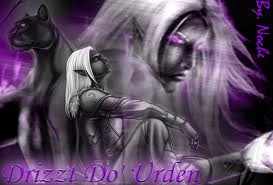
R.A.Salvatore, one of my role models and favorite authors, challenges us with his drows.

With the fourth Wycaan Master novel safely ensconced in the hands of my editor, I did what every author without a life or with a compulsive disorder does and began Book 5. My dear friends, Seanchai, Rhoddan and Sellia, have appeared in every book, so we are closing in on a half million words by the time I finish this one. I am trying to restrain myself from discovering how many times each name has appeared.

Having attended a number of events with people who have actually read my novels (they exist!), I discovered that everyone pronounces Seanchai differently. I am particularly proud of his name and love being asked why I chose it. In Celtic culture, a Seanchai was a traditional storyteller and, in my books, the Wycaan magic that our protagonist learns is based upon words and stories.

While providing what I hope is a cool answer, I see in their expressions how it is difficult that people struggle to say or hear. I am, of course, the worst offender. My non-existent Celtic notwithstanding, I have spend a good part of my life in the Middle East, where we sound like we are clearing our throats every time we put a ch together. It can be unsettling at first, because you flinch thinking the person is about to spit on you. but a serious ch is essential to the language and I worked very hard to master it.

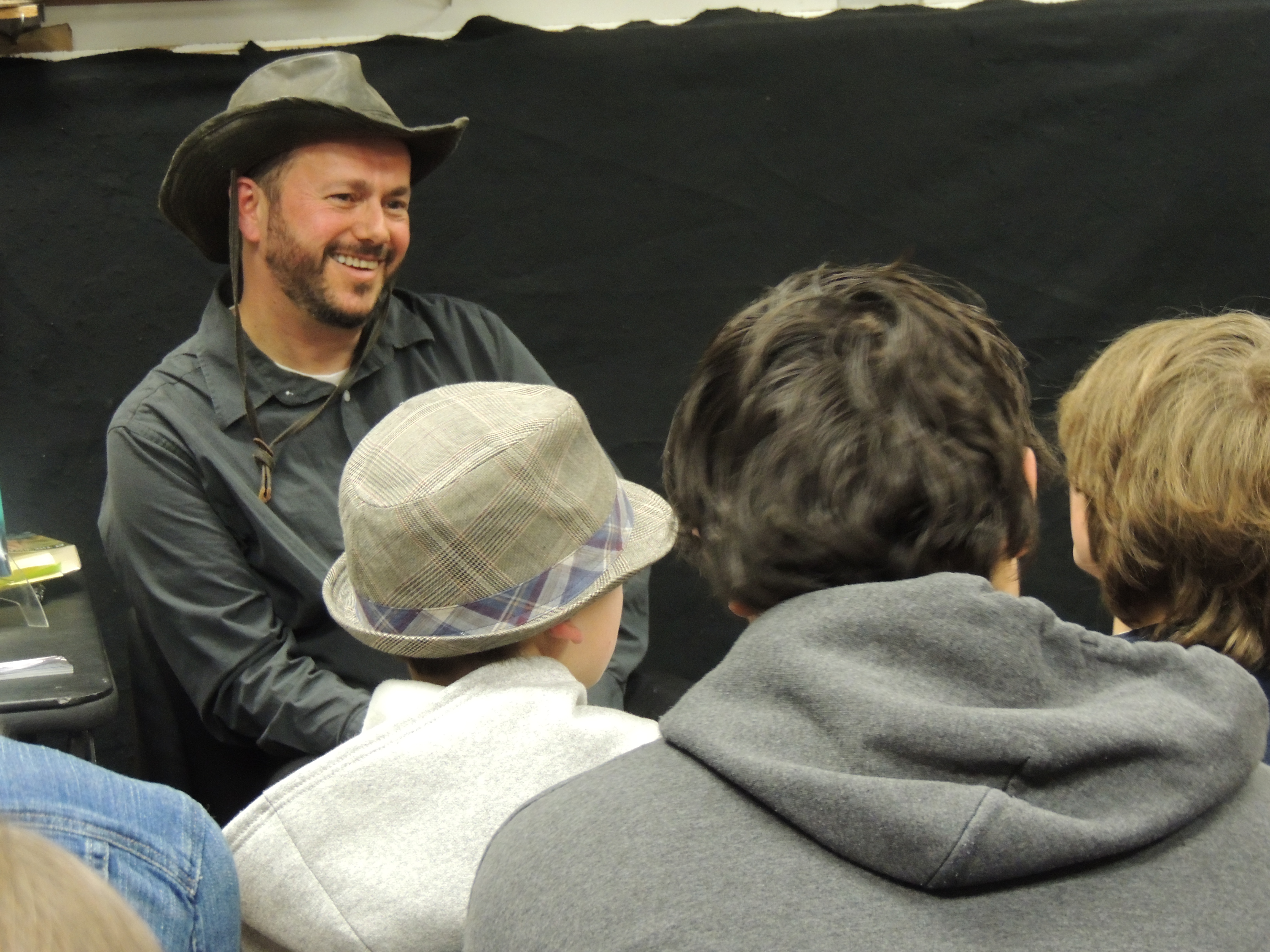
More locally, I discovered people use che as in the name of the Cuban revolutionary. At a recent event, two friends decided to help me with a more interactive reading, each taking different parts, and each inevitably pronouncing Seanchai differently. We had a blast, but I wonder how those in the audience who had not read any of the series coped.

Games of Berkeley Question from Asif

I guess it doesn’t really matter until the movie comes out right? And by that time, pronouncing his name will be the last thing on this elated author’s mind. Slightly more realistically, I would love to produce an audio book since I derive such pleasure from them on my long, daily commute. 

Ironically, I have no idea where the name Rhoddan came from, I really don’t. I was looking for something that suggested stability and loyalty – go figure – but I feel the name fits perfectly. Certainly, the upside is that everyone agrees on how to pronounce his name, so hey, he can stay alive…for now!

The Greeks deserve credit for conveying much about their characters through names. Zeus is truly a name fit for a god and the king of the gods at that. And how would you react if your daughter told you that she was dating a dude named Hades or Loki? Lock her in her room, I’m sure. Thor sounds like a badass, and Aphrodite – well, best I leave that to your own imagination.

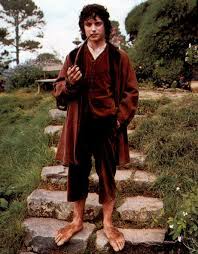
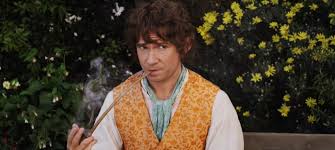
Moving to our own gods, and I think the old professor did a pretty good job all round, particularly with his hobbits. Bilbo Baggins is already lovable and you have only seen his business card. Friendly, courteous, and clearly one who drinks tea, eats Second Breakfast, and has a clean handkerchief in his pocketsss along with, of course, a ring of apocalyptic power. Who doesn’t these days?

 images-1

Tolkien did so well naming his hobbits – see this awesome list – and he nailed it with Gollum. If a name conveys considerable information, we understand that this is one twisted fella, with a name that just sticks in your throat.

Ilana, since you ask, comes from the Hebrew for tree. I chose this quite deliberately as I was looking for something stable, beautiful, and important to the existence of the characters around her. Alon means oak in Hebrew, so you see I have an affinity with trees, and At The Walls Of Galbrieth was conceived in a beautiful ancient redwood forest.

The names of minor characters is also important as an author spends more limited time extrapolating their characteristics. Since they appear and disappear so often, you want these names to be remembered and to also convey something about the characters. Certainly, when you have over a thousand characters stretching over several hefty tomes, yes I’m talking about you, Mr Martin, this becomes especially challenging.

 imgres-1

There is an advantage when reading ebooks, that you can search back to find references to a character, but this is impossible in an audiobook, and while a glossary of characters is helpful to flick through in most circumstances, it is not recommended while driving and listening to the audio book. App anyone?

What is your favorite name for an epic fantasy character? Which author shines at their selection? And which character does not fit the image you imagined from the name?

——————————————————————————————————

Alon Shalev is the author of the 2013 Eric Hoffer YA Book Award winner, At The Walls of Galbrieth, The First Decree, and Ashbar – Wycaan Master Book 3 – all released by Tourmaline Books. Shalev is also the author of three social justice-themed novels including Unwanted Heroes. He swears there is a connection. More at http://www.alonshalev.com and on Twitter (@elfwriter). Hang out with Alon on Google+

Guest Post – Author Lisa Fender

My guest today is author Lisa Fender. She has co-written the fantasy novel, Fable – Book 1 of The Lorn Prophecy with her sister which is, in itself an amazing story. Author, J.E Rogers described Fable “as a wonderful book that combines, fantasy, with young adult romance. Lisa Fender, and Toni Burns, have deftly created a new world, another dimension. This well written fantasy will take its readers on an exhilarating ride to this other dimension. It is another world that young people will easily identify with, and enjoy.”

Lisa exudes a love for everything epic fantasy, so I was not surprised when she chose to write about why she finds it so enthralling.

Lisa and Toni: sisters in creative collusion

Lisa: I have been a fantasy freak for as long as I can remember. Ah, to be taken away to another world where dragons roam and Dryads peek at you from behind (or within) the trees. And, when I am immersed in a fantasy world and I read the last book in the trilogy, quadrilogy, or even twelve-part series, and the story(ies) end…argh! Agony!

I live and breathe fantasy fiction and when I decided it was time for me to write the story dancing around in my head, it had to be in the genre of…epic fantasy, of course! But, the question was: How to make mine different? To achieve this, I looked to my personal passions.

My inherent love for our planet and wildlife, and concern over how our species seems bent on destroying both, gave me my inspiration. This in turn, gave rise to the idea of the Djen.

Djen are my take-off of the Genie. Don’t think of a genie in a bottle, or “I Dream of Jeannie”.  Instead my Djen are a race of beings in a parallel dimension. They have but one purpose: watch over the planet and keep nature in balance. Of course, perfection cannot come without conflict, in the form of a faction who creates turmoil for the Djen and the series’ main character, Stevie Barrett.

Fable Book Cover

I started putting pen to paper back in 2009. After a couple of years—not simply writing, but additionally educating myself in the craft—I asked my sister, Toni, to with help me with revisions. At the time I had hired a writing coach and we discovered that my sister’s experience with journalistic and business-style writing was not the same as creative writing. The two of us began to learn the craft together. 

After a short while, Toni started to offer suggestions and became my sounding board to bounce off ideas. This led to our coming up with scenarios and directions for the book and characters that neither one of us had considered. Together we made the story more intriguing and exciting. She too, fell in love with the characters and the Djen world. I finally decided to ask her to be my co-writer and I haven’t looked back. We are ecstatic about publishing our first book in the series, Fable, and look forward to continuing our partnership.

Writing the series together has truly brought us closer. Sure we fight once in a while, all sisters do, but not about the stories or the way we write together. We have a system and even though some have said to me that I’m giving away my power, I disagree. I love writing together.

Most of the basic story is written by me, and then the two of us go over each line and clean it up. We discuss ideas together and decide which way we want the story to go. We complement each other’s writing strengths and skills. It works well.

Fable, Book 1 of the Lorn Prophecy has been in print since spring of this year, and we have completed a side book/compendium novel: Fated, Book 1 of the Djenrye Chronicles. We are now working on the second book in the Lorn Prophecy series: Lore. In essence, I have gone from being immersed in the fantasy worlds of other writers to creating one of my own!

What books and worlds do you like get lost in?

imgres

I have the complete joy of living in Golden, Colorado with my husband, Rick, and our yellow lab mix, Branch. I love hiking, camping and enjoying the mountains and wildlife which provides so much of my inspiration. I don’t have some fabulous degree or a plethora of literary courses behind me, I am literally the waitress that wanted to write a book.

images-1

Thank you, Alon, for having me as a guest on your blog! It is truly an honor.  I do so share your love for the classic fantasy fictions—J.R.R. Tolkien, George R. R. Martin—as well as J. K. Rowling’s Harry Potter – and your finding your inspiration in the world around you.

Want to know more about Lisa and her work? Here are her social media links:

Fable – Book 1 of The Lorn Prophecy 

Fated – Book 1 of The Djenrye Chronicles 

Lisa’s Blog

Fanpage

Twitter

——————————————————————————————————

Alon Shalev is the author of the 2013 Eric Hoffer YA Book Award winner, At The Walls of Galbrieth, The First Decree, and Ashbar – Wycaan Master Book 3 – all released by Tourmaline Books. Shalev is also the author of three social justice-themed novels including Unwanted Heroes. He swears there is a connection. More at http://www.alonshalev.com, on Twitter (@elfwriter) and on Google+.

The Fellowship Of The Book – repost

Over the three days of November 17 -19, Amazon.com have decided to promote the 2013 Winner of the Eric Hoffer Book Award for YA – At The Walls Of Galbrieth. The novel will be offered FREE in ebook form.

This is a wonderful opportunity for me and I request that, to support my sales rank and me, you download the book and invites your friends to do the same. Feel free to gift it on (Thanksgiving and Hanukkah, anyone?).

To celebrate this and also the milestone of 100 blog posts on elfwriter.com, I wish to offer 10 of my favorite posts over the next three days. I hope you enjoy and, please, take a moment to download for FREE At The Walls Of Galbrieth and spread the word.

Thank you,

Alon

 =======================================

All our protagonists had them – a fellowship of loyal followers and friends, ready to put their lives on the line, to draw their swords in defense of the hero/ine, and to go off on dangerous missions or to pass on an important message.

hobbits in pub

What would we do without them? How would our characters cope bereft of true companionship? I have mentioned in the past the lure of universal values to the conventions of epic fantasy. We long to lose ourselves in some far off land, discover mythical creatures, embark on a noble quest.

Granted, but we also seek values that are part of our everyday aspirations: justice, truth, love, riches … and friendship.

Why am I writing about this? Last week, I somewhat frivolously criticized George R.R. Martin, author of the Game of Thrones series. I learned two things from the experience:

1) Mess with a great epic fantasy author if you want to boost the hits to your blog.

2) Mess with the followers of a great epic fantasy author at your peril.

images-1

My humble offering garnered 4-5 times the amount of hits of an average blog post (not that any of my posts are average, of course) and I received far more comments, many of which were retweeted and favored on twitter, some, I admit, by myself.

To those who accused me, a humble fantasy author, of being insanely jealous: I accept the charge.

To those who say people who criticize Martin’s long tomes suffer a short attention span, I say – next point.

And so it went on. To be fair, there were many who agreed with my pointed digs, and in the name of credibility, still faithfully open the next book in the series. I myself, despite honorable intentions to take a break having just concluded Book 4, read Sacre Bleu, the latest by one of my favorite authors, Christopher Moore, and having finished it, promptly started Book 5 – A Dance of Dragons.

imgres-2

What is clear is that, in the same way that we want to align ourselves to great fictional characters, we subconsciously swear fealty to their creators: the authors. I encountered fans of Mr. Martin, as loyal as Frodo’s gardener (well maybe not quite). They were ready to defend him to the hilt – even if they privately knew I was right. It is something very special about the people attracted to the genre.

The skeptical among them would probably accuse me again of jealousy: that I crave one day to have Wycaan Master followers as loyal as them. To my accusers I proudly say: Yeah. Darn right!

Have a great weekend,

Elfwriter

 =======================================

Alon Shalev is the author of the 2013 Eric Hoffer YA Book Award winner, At The Walls of Galbrieth, offered by Amazon.com  for FREE on November 17-19. The sequel, The First Decree, and Ashbar – Wycaan Master Book 3 are all released by Tourmaline Books. More at http://www.alonshalev.com and on Twitter (@elfwriter). Hang out with Alon on Google+

Why Do Adults Gravitate To Young Adult Fiction?

I believe that more adults are reading the epic fantasy Wycaan Master series than young adults. I know there is a fair proportion of teenagers and even pre-teens reading, but judging by the emails, blog comments, and twitter responses, it is predominately adults. This is all despite the books being written for and with my children, which I describe here. It begs the question why are adults drawn to Young Adult (YA) books?

imgresI found this article by Kelly Johnson. In her post, she debunks the following statements (her words):

1. Our culture encourages an unnatural and prolonged adolescence 

2. YA books are escapist since you don’t have to look beneath the surface of them. They are easier to grasp.

3. Adults read YA because they aren’t able to read past a middle school or high school level because adults are getting dumber and dumber.

4. YA books are about hopefulness. Their problems aren’t really problems and they can be fixed. Also there’s always a happy ending, so it’s satisfying and fulfilling to adults. The characters are likable. 

5. Fill in the blank with your own justification here. Some examples may include: YA is all about first experiences; YA is nostalgia for adults; YA is cheaper than adult books and therefore more appealing to the wallet; and so forth.”

images

I enjoyed Ms. Johnson’s fiery responses to these statements, but I felt let down when she finished with: “The only justification for why adults read YA books is this: they choose to. That’s it. That’s their reason. Adults read YA books because they as adults choose to do so.

I am disappointed. None of these reasons explain why an adult, working, raising a family, involved in a community, volunteering, following a sports team etc. would be so moved to take a few precious hours each day to sit and read, and then often reach out and engage with the author, fellow readers, come back to buy more books, and enter deep discussions online and at the pub.

Fiction is all about the plot, the characters, and the environment. It is true for John Grisham and Stephen King, and it is true for Terry Brooks, Christopher Paolini, and R.A. Salvatore.

When I read a John Grisham book, I am transported to Mississippi, to another time, and when I close the book at the end of a chapter, I worry about his characters and their choices. It is no different to George R.R. Martin who may kill off a few popular characters in the next chapter if he had a bad day.

images-1

The issue, I think, is how we perceive YA. A young adult book means there is no sex, less violence and no profanity. There are certain boundaries not crossed if we want our youth to read them. But that is all it is. There is nothing here to prevent an adult from enjoying the book, unless you assume we are all sex-starved, violent, expletive-charged individuals, which would be sad, especially if this is how Hollywood and the mass media perceive us.

I am taking a few months break from the fourth Wycaan Master book to write an adult fantasy book.

I have not felt a need to raise the richness of language.

I have not made the characters deeper and more compelling.

I have not sought a more complex plot.

I have not deepened or diluted my world-building.

There are, to be honest, issues dealt with here that may be too dark to share with youth. I share a lot with my teen son, but would hesitate to share certain passages here. Characters deal with fears and obstacles that most of us who have children might not want them to read. There is sex and more graphic violence than in the Wycaan Master series, but that might yet get dialed down.

So what does make adults gravitate to YA novels? The problem is not with the answer. The question is simply wrong.

People read a story because it has a good plot, characters that the reader can bond with, a world that stimulates the imagination. This is the same for adults as it is for YA. YA is written within certain criteria in order to make them a safe space of teens. It certainly does not mean dumbing down or becoming predictable.

The discerning reader will be drawn to a book in their chosen genre simply because it is good: plot, characters, environment and strong writing.

A good novel is a good novel is a good novel…

So this seems like a good time to thank all of you who bought Ashbar – Wycaan Master Book 3 and any of my other novels. I read every blog comment, every tweet, every priceless review on Amazon.

Thank you. Thank you. Thank you. Have a great week.

elfwriter

——————————————————————————————————

Alon Shalev is the author of the 2013 Eric Hoffer YA Book Award winner, At The Walls of GalbriethThe First Decree, and Ashbar – Wycaan Master Book 3 – all released by Tourmaline Books. Shalev is also the author of three social justice-themed novels including Unwanted Heroes. He swears there is a connection. More at http://www.alonshalev.com and on Twitter (@elfwriter). Hang out with Alon on Google+ here.

Sex or Swords?

I recently finished reading an epic fantasy novel by an author who is perhaps a year ahead of me. He is a couple of novels deeper into his series and seems to have a similar, but not bigger, social platform. 

But his books are selling impressively and I enjoyed reading his work, but there was nothing in the quality of the plot, writing, etc. that suggested why he is outselling me.

There are a lot of things in common between our novels. They are both character driven and, though there is a clear plot arc, you really stay engaged because you are rooting for the characters. There is plenty of action and moral dilemmas. If and when I write a review, and I definitely will because this is so important to the author (hinting here!), I realize that it would be similar to many of the reviews I have received for At The Walls Of Galbrieth and The First Decree.

imgres 

But there are two fundamental differences, perhaps three.

1) His novels are meant only for adults.

2) There is a fair amount of sex.

There is also considerable swearing, but I don’t think someone buys a book because of the swearing. It might deter a few people, but not act as motivator.

These differences lead me to wonder about whether young adults are reading ebooks – which remains the most popular with all struggling authors – and I will examine this next week.

But for now, I want to focus on sex. Let me be honest. I’m very fond of sex and I enjoy reading and writing about it. In my non-fantasy novels, there are probably two graphic sex scenes in each. I believe that the way my characters deal with sex, before, during and after, reveals far more than any long description can ever hope to achieve.

All three books ­– A Gardener’s Tale, The Accidental Activist, and Unwanted Heroes – have garnered criticism from a few reviewers who were upset or disturbed by what they read, but there are many others who mention it positively. There was nothing 50 Shades, or anything violent or forced in these scenes and, in truth, I remain proud of them, even when I know my mother and mother-in-law have read them!

A Gardener's Tale  - new cover

However, what is the place of sex in epic fantasy? The book in question has two sex scenes and neither are particularly graphic or explicit. Throughout the novel there are sexual references but little more than men’s comments or a woman’s thoughts. Both scenes were written well and felt part of the story. Both added to the richness of the characters.

 I have wondered about Game of Thrones, in particular because my 14-year-old is interested in reading and watching the series. I have no doubt that George R.R. Martin wrote what he understood to be sexual mores of that period and I agree that it probably happened as he described, but the sex was clearly not a turn on for me (neither was it for most of Martin’s characters come to think of it).

Much of the sex were men exploiting their power over women and a few scenes are of women who manipulate men to get something they want through sexual favors or binding the men’s lusts to them. All good stuff, perhaps, but not something I want to share with my teenage son.

imgres-6

I want him to know about sex as something romantic, a bonding act between two people who love each other. I want him to know that anything that is not two consenting adults pleasuring themselves and each other, is deviant. It might not necessarily be wrong, but that is for him to decide according to his values.

In the Wycaan Master series, I touch on many values and morals. I challenge the young adults who read my books to make choices about race, violence, friendships, loyalty, and enjoy it when I hear my son or his friends comment that they are proud/disappointed/upset/ happy about the actions of a character. I like that they feel guilty, understanding and maybe partly rooting for the bad guys. Nothing is ever black or white.

images-1

But what about sex? There are certain hints in my novels that some things are going on, but it is easily missed if a young adult is not thinking about such topics. To write about sex, even in a tasteful youth-orientated way, would strip my novels of being YA (young adult). I would lose the initial motivation of writing to influence a new generation. 

Is it possible to write in sexual scenes in a YA novel? Most parents do not vet a book, trusting that if it has received recognition as YA then it will not include certain things such as swearing, graphic violence, or sex.

I do not want to step away from the target audience that so intrigues me and I am not sure I am ready to abandon them. However, I am frustrated that there are strict boundaries, frustrated that I could convey so much to my target audience through my young characters having or thinking of sexual encounters. I could convey healthy values associated with sex, values that I want to share with my own sons.

So my question is: Can sex be handled within a YA context? Your thoughts?

—————————————————————————————————–

Alon Shalev writes social justice-themed novels and YA epic fantasy. He swears there is a connection. His latest books include: Unwanted Heroes and the 2013 Eric Hoffer Book Award for YA – At The Walls Of Galbrieth. Alon tweets at @alonshalevsf and @elfwriter.   For more about the author, check out his website.