Is The Grass Always Greener?

Between you and me, I’ve always been jealous and somewhat in awe of a dear friend who has a book contract with a major publisher and is a terrific writer. I never resented her achievements because I knew she worked hard to achieve her success, garnering attention through winning writing contests, traveling far and wide to speaker engagements, and generally being the lovely collaborative person that any publisher or agent would love to work with.
Games of Berkeley Question from Asif

So I was a bit shocked when I met up with her for coffee the other day and she told me how frustrated she was with the route she had taken. I have heard many doom-and-gloom writers who are disdainful of the conventional publishing route, but to be honest, I always thought they were bitter because their books hadn’t sold as much as they had dreamed, or they were frustrated at having their considerable talents spurned by agents or publishers.

Hearing about her feeling of inertia and entrapment (my words, not hers) made me appreciate the support and belief that my small-press publishers, (Three Clover Press for the Social Justice novels, and Tourmaline Books for the epic fantasy) despite their limited resources.

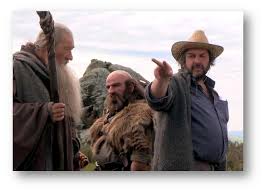
But I would be lying if, when I see the beautiful hardcover books of Terry Brooks or R.A Salvatore adorning the shelves of a bookstore, I do not dream of seeing my novels displayed next to theirs, or wonder which actor Peter Jackson will cast to play Seanchai or Ilana.
imgres-1

 I am currently editing a magical realism manuscript with my writers’ group and have been wondering whether to try and find an agent or offer it to one of the small-presses that already support me. Every time I watch an episode of Game of Thrones or Legend of the Seeker, I decide that I will go that route.

But yesterday’s conversation had me reevaluating. I am not entirely free to initiate a particular marketing strategy and should check in with my publishers. But I always receive their blessings and usually some wise words that help me improve my idea. Most importantly perhaps, when I call, someone answers the phone. They know who I am and personally care about my writing career, not just their bottom line.

imgres.

How have you chosen such paths in your writing or career decisions? Would love to hear.

And yes, even though I have been saying for the past month and a half that it is only two weeks until the release of Sacrificial Flame, Wycaan Master Book 4…I wish to leave you with the breaking news… Only two wee– Okay. I have no idea, but I’m holding out for July. When it happens, I will let you (and the whole world) know! Promise!


Sacrificial Flame Cover Hi Res

Good Writing.

—————————————————————————————————

Alon Shalev is the author of the 2013 Eric Hoffer YA Book Award winner, At The Walls of Galbrieth, The First Decree, and Ashbar – Wycaan Master Book 3 – all released by Tourmaline Books. Shalev is also the author of three social justice-themed novels including Unwanted Heroes. He swears there is a connection. More at http://www.alonshalev.com and on Twitter (@elfwriter). Hang out with Alon on Google+

Exclusive Interview With An Elven Protagonist

The Odessiyan Times recently caught up with Seanchai, Wycaan Master, shortly after the battle of Cliftean Pass, and he graciously agreed to the following interview, to be published shortly before the release of Sacrificial Flame – Wycaan Master Book 4.

 193htrjzik8kajpg

Reporter: There are some who say that only a few short years ago, you were a lost child running from your village. Now you’ve brought down the army that tried to conscript you. Is that how it feels?

Seanchai: I was never a lost child, but a scared calhei who had fled his parent’s village in search of an uncle he had never met.

Reporter: When did you first understand that you might be special, more than just the average elf?

Seanchai: When strangers seemed to believe in me to the point that they were willing to sacrifice their lives for me.

Reporter: That must have made you feel important.

Seanchai: No! It made me furious and guilty. No one should give their life like that. There are hundreds, maybe thousands, of widows and orphans, because their parents chose to believe in me.

 Wycaan Master 1 Just Front Cover

Reporter: But at least they are free. Mhari was your first teacher. Was she the greatest influence on your early life?

Seanchai: No, though she was and remains very important to me. But the greatest influence was Ilana and Rhoddan. They saw my potential but were never blinded by it. Perhaps because they saw my glaring faults as well. But they loved me, each in their own way, and I could never have done what I did without them.

Reporter: Some say your loyalty to your friends was your biggest weakness.

Seanchai: Your friends are never your weakness and neither is your family. I regret no time that I risked my life for one of them and they risked their lives for me. Their support is what makes it all so real. It gives you the determination to carry on.

Reporter: It was your friends who motivated you to take action?

Seanchai: No. It was destiny: Seeing the racism and injustice. No one, man, elf, dwarf, pictorian – no one should be a slave or denied the right to live free of fear or shame.  

Reporter: Was it easy to become a Wycaan?

Seanchai: No. It is a lot of internal practice and discipline. It is allowing yourself to connect with powers purer and stronger than you. But perhaps it is easier to become a Wycaan than to stay one?

Reporter: What do you mean?

Seanchai: Once you are a Wycaan, everyone follows your orders even if you don’t know what you are doing, even though it might go wrong and sentence thousands to an early grave. You are sought to bless babies, cure the sick, and make judicial decisions. The worse part is that they never blame you when you fail.

Reporter: How did it feel to know that your story won a national book award?

Seanchai: I do not put as much emphasis on ego, such as shall we say, authors. But I guess if he hadn’t have written the story, I wouldn’t exist.

Reporter: You don’t like your author?

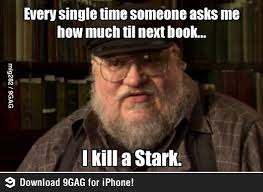
Seanchai: He killed off many of the people closest to me. Who does he think he is – George R.R. Martin? How could he? I mean: look what he did in Book 4.

images-1

Reporter: What did he do?

Seanchai: Oh, I can’t tell you. The book, Sacrificial Flame, is not out yet.

Reporter: Still if you told me, I could leak it and we would make the front pages.

Seanchai: You would truly make a terrible Wycaan. But you only need to wait for two more weeks or so. And if you want to find out more about the new release, click here LINK, even though we don’t have computers in the land of Odessiya.

Sacrificial Flame Cover Hi Res

Reporter: Well that’s all we have time for, unless you wanna turn into a bear for the camera…Hey! I thought Wycaans don’t get angry. Help!!!

——————————————————————————————————

Alon Shalev is the author of the 2013 Eric Hoffer YA Book Award winner, At The Walls of Galbrieth, The First Decree, and Ashbar – Wycaan Master Book 3 – all released by Tourmaline Books. Shalev is also the author of three social justice-themed novels including Unwanted Heroes. He swears there is a connection. More at http://www.alonshalev.com and on Twitter (@elfwriter). Hang out with Alon on Google+
No Blog Post, But An Announcement!

No blog post this week as I have been busy incorporating the (many) suggestions of my fearless (or fearsome) editor. It never ceases to amaze me how perceptive a good editor is, how they can stay focused through 100,000 words, and be able to not only correct grammar or spelling, but follow plot arcs, different character developments, and so much more.

 images 

Here are two great errors that I really should be too embarrassed to share, but hey, we’re all friends here, right? 

1. One of my characters was very sad and wiped the tears from her ears!

2. Seanchai (my protagonist) left his bow and quiver at the summit of a mountain, snowboarded down to join the battle, and when he entered the fray shot several of the enemy with his bow! Clever guy!

 images-1

I wrote a while ago a blog post – A Tribute To Editors ­– and I remain just as in awe today.

Along with the edited manuscript I have received a first sketch of the book cover and an ISBN number. June 12 is my fiftieth birthday – I’m negotiating the launch date for this time, but it might be too close.

It’s beginning to get real and I am so excited. As I blogged a while ago: It Never Gets Old.

Finally…(drumroll)…the title of Book 4 is official:

 Sacrificial Flame – Wycaan Master Book 4

Can’t wait to share it with you. Two months to go!

—————————————————————————————————

Alon Shalev is the author of the 2013 Eric Hoffer YA Book Award winner, At The Walls of GalbriethThe First Decree, and Ashbar – Wycaan Master Book 3 – all released by Tourmaline Books. Shalev is also the author of three social justice-themed novels including Unwanted Heroes. He swears there is a connection. More at http://www.alonshalev.com and on Twitter (@elfwriter). Hang out with Alon on Google+


How Fantastical is Fantasy?

I mentioned previously that I am reading Sometimes The Magic Works by Terry Brooks. On Page 27 of this little book of great lessons, he writes how, as he struggled with his writing, he began to realize that he could not write the book in this world. “Everything I wrote had to remind readers of what they already knew, yet makes them take a second look at whether or not what they believed was really true.

 terry-brooks-150x150

I’ve been thinking about this sentence a lot. The difference between epic fantasy and magical realism (think Game of Thrones – George R.R. Martin) is that the former transpires in a totally different world, whereas magical realism takes place in this world, but has elements of the unexplained – magic.

While the Wycaan Master series takes place in Odessiya, a mythical world, I kept it relatively easy to imagine, because I do not want the reader to struggle with my world building. Rather, I want them to focus on the characters and the plot, while still portraying a beautiful world.

Christopher Paolini does a wonderful job describing his land of Alagaesia, in stunning detail. He suggests his success in doing this is based on his love for the wild as he grew up in Montana. But again, his world is very easy to believe. When my family is on a road trip and are confronted by a beautiful vista, we point and declare: Alagaesia!

images 

I hope I have succeeded in portraying Odessiya as a beautiful land: full of great mountain ranges, deserts, forests, lakes and coast. I thoroughly enjoyed describing the ice worlds in the north and the forest of the Shanrea, but I never strayed from environments you can associate with on trips or the National Geographic channel.

When I sent Seanchai to the Elves of the West, I wanted to describe a rich world of mighty trees. Living in Northern California, I am in constant awe of the redwoods. My fictional bloodwoods are a tribute to these majestic giants and the name is meant to offer just enough to fill the reader with the images of redwoods. I wanted to offer an exotic setting with a connection to something known to the reader with just enough to be different.

 images-1

The age of a dozen pages of descriptions that J.R.R. Tolkien got away with no longer survives the red pen of the 21st Century editor. The publishers, facing rising costs of resources are loath to publish thick tomes, and the millennial reader does not have the patience to read several pages describing a small forest. My eldest son admitted to skipping descriptions after he had a clear picture in his mind and I am not completely unsure that I didn’t do this when I read Lord of the Rings back in the previous century.

That being said, the fantasy writer is challenged to offer opportunities for the reader to suspend belief as Brooks suggests. In his own prequels to the Shannara series, he sends us through post-apocalyptic California with humans and mutations. But the mutants are a result of the catastrophe that has all but destroyed the world. It is, tragically, not hard to take that leap of imagination, which again happens when he skillfully weaves in his elves.

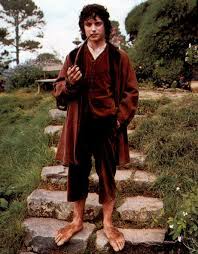
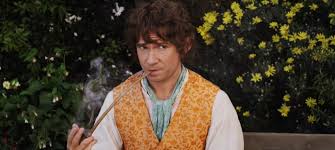
Perhaps no one deserves more praise that he who blazed the trail and created a hobbit. There had never been a hobbit before Tolkien and yet it seems so familiar. Even ‘second breakfast’ and the family relations that Bilbo et al gets so worked up about, makes sense.

 images-2

The skill of the fantasy author is to create a world that the reader does not have to work hard to imagine and then to create something imaginative that allows us, because we have built trust between writer and reader, to suspend rational belief and embrace.

It is a subtle yet powerful tool that offers a rich layer to the world of epic fantasy. It is why readers flock to Terry Brooks, R.A. Salvatore and Christopher Paolini, and why those of us who walk in their shadows continue to cultivate our craft and build words, races and situations that are believably unbelievable.

Have a great week, everyone.

Elfwriter

——————————————————————————————————

Alon Shalev is the author of the 2013 Eric Hoffer YA Book Award winner, At The Walls of GalbriethThe First Decree, and Ashbar – Wycaan Master Book 3 – all released by Tourmaline Books. Shalev is also the author of three social justice-themed novels including Unwanted Heroes. He swears there is a connection. More at http://www.alonshalev.com and on Twitter (@elfwriter). Hang out with Alon on Google+

Cinderella The Savage and Saruman The Sweet

A common question that I field at readings is how/why I chose the name of a particular character? I find it surprising because I would never have thought to ask such a question of my favorite authors. Either I considered their names a perfect fit  (and so never thought about it), or the author probably didn’t remain my favorite for long.

But it is a good question. A name, particularly for a protagonist or main character, is a significant part of the experience. If it appears ten times on every page and gets stuck in your throat, it is either a big problem or you need some lozenges on hand.  And if we are talking about a series, then that character is going to be around for some time. 

images-2

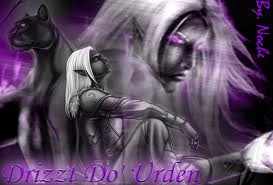
R.A.Salvatore, one of my role models and favorite authors, challenges us with his drows.

With the fourth Wycaan Master novel safely ensconced in the hands of my editor, I did what every author without a life or with a compulsive disorder does and began Book 5. My dear friends, Seanchai, Rhoddan and Sellia, have appeared in every book, so we are closing in on a half million words by the time I finish this one. I am trying to restrain myself from discovering how many times each name has appeared.

Having attended a number of events with people who have actually read my novels (they exist!), I discovered that everyone pronounces Seanchai differently. I am particularly proud of his name and love being asked why I chose it. In Celtic culture, a Seanchai was a traditional storyteller and, in my books, the Wycaan magic that our protagonist learns is based upon words and stories.

While providing what I hope is a cool answer, I see in their expressions how it is difficult that people struggle to say or hear. I am, of course, the worst offender. My non-existent Celtic notwithstanding, I have spend a good part of my life in the Middle East, where we sound like we are clearing our throats every time we put a ch together. It can be unsettling at first, because you flinch thinking the person is about to spit on you. but a serious ch is essential to the language and I worked very hard to master it.

More locally, I discovered people use che as in the name of the Cuban revolutionary. At a recent event, two friends decided to help me with a more interactive reading, each taking different parts, and each inevitably pronouncing Seanchai differently. We had a blast, but I wonder how those in the audience who had not read any of the series coped.

Games of Berkeley Question from Asif

I guess it doesn’t really matter until the movie comes out right? And by that time, pronouncing his name will be the last thing on this elated author’s mind. Slightly more realistically, I would love to produce an audio book since I derive such pleasure from them on my long, daily commute. 

Ironically, I have no idea where the name Rhoddan came from, I really don’t. I was looking for something that suggested stability and loyalty – go figure – but I feel the name fits perfectly. Certainly, the upside is that everyone agrees on how to pronounce his name, so hey, he can stay alive…for now!

The Greeks deserve credit for conveying much about their characters through names. Zeus is truly a name fit for a god and the king of the gods at that. And how would you react if your daughter told you that she was dating a dude named Hades or Loki? Lock her in her room, I’m sure. Thor sounds like a badass, and Aphrodite – well, best I leave that to your own imagination.

Moving to our own gods, and I think the old professor did a pretty good job all round, particularly with his hobbits. Bilbo Baggins is already lovable and you have only seen his business card. Friendly, courteous, and clearly one who drinks tea, eats Second Breakfast, and has a clean handkerchief in his pocketsss along with, of course, a ring of apocalyptic power. Who doesn’t these days?

 images-1

Tolkien did so well naming his hobbits – see this awesome list – and he nailed it with Gollum. If a name conveys considerable information, we understand that this is one twisted fella, with a name that just sticks in your throat.

Ilana, since you ask, comes from the Hebrew for tree. I chose this quite deliberately as I was looking for something stable, beautiful, and important to the existence of the characters around her. Alon means oak in Hebrew, so you see I have an affinity with trees, and At The Walls Of Galbrieth was conceived in a beautiful ancient redwood forest.

The names of minor characters is also important as an author spends more limited time extrapolating their characteristics. Since they appear and disappear so often, you want these names to be remembered and to also convey something about the characters. Certainly, when you have over a thousand characters stretching over several hefty tomes, yes I’m talking about you, Mr Martin, this becomes especially challenging.

 imgres-1

There is an advantage when reading ebooks, that you can search back to find references to a character, but this is impossible in an audiobook, and while a glossary of characters is helpful to flick through in most circumstances, it is not recommended while driving and listening to the audio book. App anyone?

What is your favorite name for an epic fantasy character? Which author shines at their selection? And which character does not fit the image you imagined from the name?

——————————————————————————————————

Alon Shalev is the author of the 2013 Eric Hoffer YA Book Award winner, At The Walls of Galbrieth, The First Decree, and Ashbar – Wycaan Master Book 3 – all released by Tourmaline Books. Shalev is also the author of three social justice-themed novels including Unwanted Heroes. He swears there is a connection. More at http://www.alonshalev.com and on Twitter (@elfwriter). Hang out with Alon on Google+

Big Characters Without Big Boobs

Last week I asked in my blog post, 10 Questions For J.R.R Tolkien, what questions people would like to ask the Professor if they had the opportunity. The answers were great, but one stood out for me.

A person with the twitter username @oneyearnovel (happy to enter your name and website) wrote: “I would ask if he ever considered a woman character who was not beautiful?”

 images-1

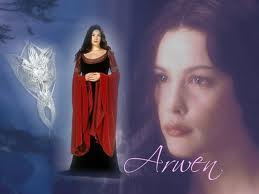
This got me wondering. When I began looking around for a book cover artist and shared my concept of Mhari, an elfe (the politically correct term for a female elf) and Seanchai’s teacher, I was offered sketches of buxom women with cleavage-revealing armor, muscled (bare) legs etc. You get the picture. I talk about this in an earlier post – Big Boobs and Book Covers. While these images might have sold more copies of At The Walls Of Galbrieth, the pensive, wise face that adorns the cover truly represents the wise, yet world-weary mentor for my protagonist, Seanchai.

Wycaan Master 1 Just Front Cover

I don’t in truth know if @oneyearnovel is correct that Tolkien’s females in his books are all beautiful, or if this is Peter Jackson pandering to what he believes his Hollywood audience wants. I have not read Lord of the Rings in years and can’t even recall a female in the Hobbit.

Tolkien students: please enlighten us on this in the comments.

imgres

There are three main female characters who each leave an indelible mark on the first four books of the Wycaan Master series. Sellia is dark, exotic and beautiful, but she is also an excellent warrior and probably fits the stereotype. While I never talk about her breasts, hips etc. (this is YA), she intimidates the younger male elves and has them stuttering. She makes a game of eliciting a blush from Rhoddan or Seanchai.

Ilana is tough, an ideologue, constantly seeking a peaceful solution and offering Seanchai her unwavering support. As a romance blossoms she is viewed for her beauty, but it is seen through the eyes of one who is falling in love with her. Don’t we doting men all think our wives/partners are the most beautiful women in the world? Of course mine really is!

But Ilana is possibly the most popular character among readers, certainly female readers. It is not anything physical about her that binds the reader to her, but her deep principles, cutting sense of humor, and well just about everything else concerning her.

Maugwen is a human, short and pudgy. She is a weak character at first and I never meant to give her a long run. But she grows, matures and becomes a wise friend and strong individual. Readers have told me that she intrigues them and, just between us, she intrigues me.

We don’t make all our male characters handsome and ripped, so why our females? I think @oneyearnovel has a great point. Society expects us to bind ourselves to a pretty woman, and in truth, this goes for good or bad characters, but fiction has a responsibility to not only change with the times, but to be present at the tipping edge of that change.

It is very popular to write a coming-of-age novel. Perhaps it is time for our genre to come of age.

imgres-2

——————————————————————————————————

Alon Shalev is the author of the 2013 Eric Hoffer YA Book Award winner, At The Walls of GalbriethThe First Decree, and Ashbar – Wycaan Master Book 3 – all released by Tourmaline Books. Shalev is also the author of three social justice-themed novels including Unwanted Heroes. He swears there is a connection. More at http://www.alonshalev.com and on Twitter (@elfwriter).

Elves, Dwarves and Political Activists

“You can’t be serious!” she exclaimed, wrinkling her nose as though I had just made a pass at her, or uttered a politically incorrect sentiment. “You write about elves and dwarves running from one end of the world to another killing each other and making long speeches? I thought you were a serious writer.”

In honesty, she had not seen me for a few years, and even then, knew me in the context of my more political work environment. To her credit, she recovered and apologized, and I was able to refrain from pouring my drink into her lap. It was, after all, a good scotch.

images-2

Friend or not, intentional or not, it still hurt. I thought I had past this stage, smoothly presenting myself as ‘an author who writes in two genres’. I have practiced my opening line and it is now delivered with confidence.

I am involved in social justice causes. Even in my short eight years living in the US, I have built a fair resume of involvement. I have taken students almost every year to New Orleans, not only to help rebuild a community, physically and emotionally, but to bear witness so that the millennials will not make the mistakes we have. I have been involved in various campaigns here and abroad.  I know my local food bank well. Hey, you never had a black President before I came to the US! 

But yes, I love to lose myself in Middle Earth, Alaegasia, Westeros and, dare I add it to the list: Odessiya. It’s a nice break from the intensive campus environment to deal with stubborn dwarves and idealistic elves. While closeted in an urban concrete jungle, it is relaxing to ride a horse through ancient forests, over great ice plains, and to quaff an ale or puff a pipe (without the health risks) with good friends, all from a computer screen or ebook reader.

Fantasy1

 The San Francisco Bay Area is intensely populated by variety of the human species often identified by salt-and-pepper haired, wrinkled, colorful attire, and provocative bumper stickers. These aging ideologues have rich resumes of demonstrating against wars, civil rights. Watergate, and more recently, more wars, gay rights, and gun control.

While there are many who have fallen by the wayside, succumbing to burnout, those who have maintained their energy to keep demonstrating and fighting for what is right, all seem to have a secret place they go to recharge, relax, and to return energized to make the world a better place to live in. It might be literature, meditation, family, friends, food, nature … it doesn’t matter. As a friend once said: Fixing the world is a marathon, not a sprint.

hobbits in pub

Yeah, I write about elves and dwarves doing brave acts and striving for justice and honor. Sure I write about battles and loves, about friendships and magic, about the power of nature and good fighting evil.

It energizes me, often provides clarity and vision. And if I do occasionally wonder what Seanchai or Shayth might do about gun control or why some people are denied the rights and opportunities their neighbors have, well that’s because fantasy is not quite as far-fetched and detached from reality as my shocked friend might think.

God created the world in six day and on the seventh s/he rested…and may well have deservedly read Lord of the Rings.

 images-3

Here’s to whatever it takes for each of us to continue the journey we’ve chosen!

—————————————————————————————————–

Alon Shalev writes social justice-themed novels and YA epic fantasy. He swears there is a connection. His latest books include: Unwanted Heroes and the 2013 Eric Hoffer Book Award for YA – At The Walls Of Galbrieth. Alon tweets at @alonshalevsf and @elfwriter.   For more about the author, check out his website.


Finding Mythical Places Everywhere

A while ago, I wrote a post about meeting elves in coffee shops. The point was that…well you can read the point for yourself, but there is more along these lines.

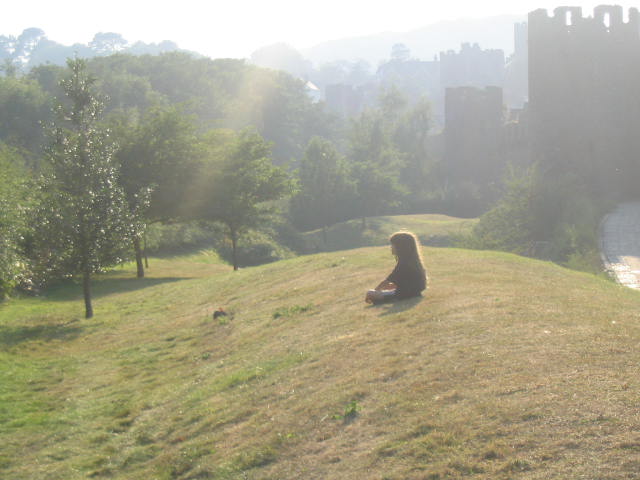
I grew up in England with real castles, stately homes, wattle and daub cottages, and signs of a more ancient, Pagan culture everywhere. I was not writing fantasy back then but imagine I would find a lot of inspiration there. Two weeks sitting in a castle in Wales writing – is that a business expense?

Meditation

My eldest at Conway Castle, Wales, several years ago. He sat there for hours, transfixed in a world of his own.

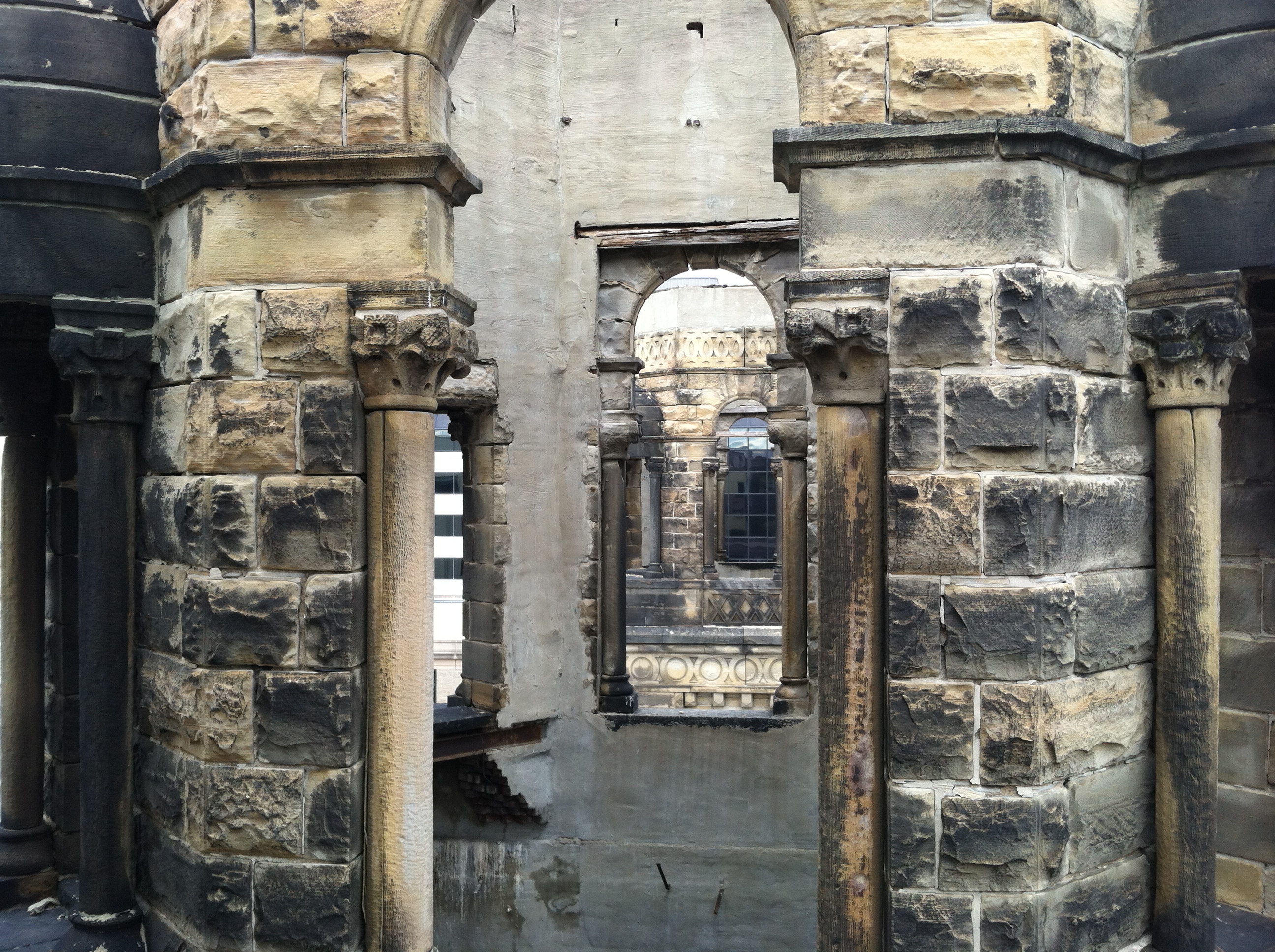
But we actually don’t have to travel too far. I attended a conference in the heart of Washington ‘DC Chinatown. I stepped outside the meeting room on the 7th floor  for some fresh air and stared at this:

Ruins by Hillel SIC

Today, I was at the Ferry Building in San Francisco and noticed Old Glory flying at half-mast in respect of the victims of the Boston Marathon attack. The sky was a rich blue and the flag and tower looked glorious. I could imagine Seanchai and friends arriving on a boat (do you pay the toll riding over the Bay Bridge on horseback? Do three horses and riders make a posse or qualify for the casual car pool?).

Interestingly, I crossed the Embarcadero between the Ferry Building and Bay Bridge and saw a restaurant with gargoyles and (what looked to me) a sign that could have been written in Medieval lettering. It could have been a tavern or pub for thirsty travelers before they put five Peet’s Coffee and nine Starbucks in the mile-square Financial District.

My point is that writing fantasy is as much a state of mind. When I am actually writing a story (as opposed to editing or marketing), which is about 4-5 months of the year, I notice these things as though they are only around for this time of the year.

Tunnel

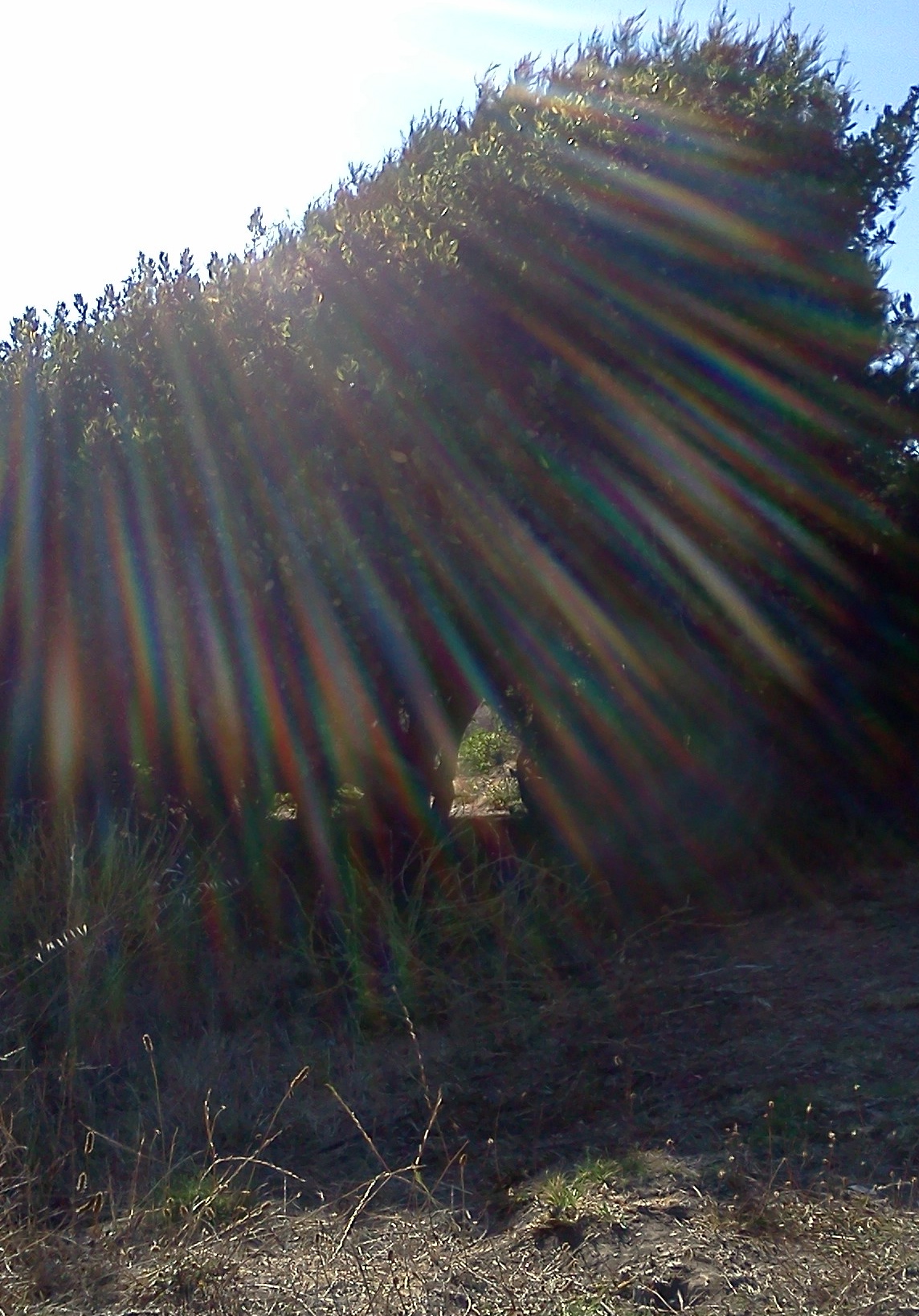
Picnic at our local park. Younger son discovered this tunnel. We sat in here and discussed how to use it in the book I was writing at the time.

It is why I see elves in coffee shops and get invited underground by hospitable dwarves. It enriches the already beautiful vistas, forests and rivers of Northern California where I explore. It is what makes my kids and I respond when we see a beautiful natural scene by exclaiming: Alagaesia! (You can blame Christopher Paolini for this. I hope he’s touched).

It is why Terry Brooks claims that ‘Sometimes The Magic Works.

Have a mystical weekend.

—————————————————————————————————–

Alon Shalev writes social justice-themed novels and YA epic fantasy. He swears there is a connection. His latest books include: Unwanted Heroes and At The Walls Of Galbrieth. Alon tweets at @alonshalevsf and @elfwriter.  

Big Boobs and Book Covers: A Critique of Fantasy Art

When I began soliciting artists interesting in creating the covers for At The Walls Of Galbrieth and The First Decree, I asked the artists for a rendering of Mhari, an elfe (politically correct term for female elf in Odessiya) who would become the first teacher of my protagonist, Seanchai.

I explained that she was old but vibrant, tough but wise, and I waited for the examples. Every one of the four artists produced sexy, buxom female warriors. I realize that sex sells ­– I considered moving to T-Mobile because of the woman in the advert not her motorbike, helicopter or the beautiful color purple (okay I am partial to motorbikes and purple, but lets stay on topic…) ­­– but these are YA books.

Wycaan Master 1 Just Front Cover

Apparently, the use of beautiful women on covers of YA Fantasy and Sci Fi are nothing new. This article follows the noble battle by author, Jim Hines.

Hines produced a series of great photos in which he poses in similar positions to scantily-clad women on book covers. Mr. Hines wasn’t against showing some skin himself.

_65356744_scifi“The way women are portrayed is just so ridiculous, so often, you just stop seeing it,” Hines says. “I think posing has made people see it again – you see how ridiculous it is when a 38-year-old fantasy writer is doing it.”

Hines began posting his poses at the beginning of 2012 and they quickly became the most visited. This gave him the idea to create a series to raise money for research to help fight Aicardi Syndrome, a genetic disorder, and he has raised over $15,000 to date.

_65373741_fear_comp

The issue of depicting women in fantasy art in a sexual way is nothing new and, in fact, quite rampant in role playing games like D&D. Tracey Hurley, co-founder of Prismatic Art Collection, has commented: “Women are so often portrayed assuming that a stereotypical hetero male is going to be the person looking at the cover, … Male characters [are] powerful and strong, and women’s sexuality will be emphasised. And why is that a problem? It’s constraining for both men and women.”

I find this really depressing. I guess I expected something different from a genre free of stereotypical constraints because it creates its own reality. This is all the more disappointing when dealing with Young Adult literature because of the target audience. I wonder whether a scantily-dressed, thin, and cleavage-heavy woman might also be a turn-off for young women, conscious of their own body-type. Add to this that most of the women portrayed are white and I am left wondering if this explains why less teenage women read fantasy. I also think it explains the success of The Hunger Games, though the promo photos for the movie also follow the concept.

imgresIt is not enough to just thrust a sword in her hand or dress her in a chain mail bikini to project strong images of women, nor is the cover of the book enough to reinforce strong, positive female values.

While my protagonist is a male, I made sure to add strong female characters, who are indispensable to his quest. I believe I showed them as more than equal warriors, each with her own special character. I needed prodding with this, I admit, and even changed Seanchai’s teacher from a man to a woman. Interestingly, it opened up a number of exciting avenues.

Authors are powerful influencers in the community, and even more so when writing for a Young Adult market. But power comes with responsibility and we have a role to play in shaping the next generation of thinkers, leaders, and innovators.

Even though many of us write about different worlds and kingdoms, let’s help make this world a better place.

—————————————————————————————————–

Alon Shalev writes social justice-themed novels and YA epic fantasy. He swears there is a connection. His latest books include: Unwanted Heroes and At The Walls Of GalbriethThe First Decree is due out in March 2013.

I Didn’t Make The Cut

I’m bummed. This week 50 writers saw their manuscripts advance to the Semi-Final stage of the Amazon Breakthrough Novel Award – YA category. My humble offering – Wycaan Master – was not one of them. It reached the Quarter-Final, ahead of a few thousand others, but…

In an odd sense of timing, I will finish reading the 95,000 word epic fantasy story to my writer’s group. They stuck with me over the past 18 months though none (until the last couple of months) read or are interested in fantasy. Thank you – Berkeley Writers Group.

Either you think epic fantasy is alive and thriving (Tolkien, Terry Brooks, R.A. Salvatore etc.,) or you think the only fantasy that sells is high concept – Harry Potter, The Hunger Games…

It is hard writing in two genres – social justice-themed novels reflect my lifestyle and values. Young-adult fantasy was inspired by a writing project with my preteen son and has been a lot of fun. But they serve two separate target audiences and I maintain a separate blog and twitter account.

I have to admit, I’ve arrived at a junction. I have not only sweated over a first YA fantasy manuscript, but completed a second, and am 30,000 words into a third. It is  a series and I must admit: I’m kind of hooked on it.

I want to see how my young heroes (and villains – who I am also quite attached to) grow. Will the races of Odessiya unite? What is the Emperor’s secret power that enables him to keep winning? Will shy Seanchai and his guide, Ilana, ever hook up?

As a reader becomes hooked on a series and feels compelled to read through to the end, I have discovered that so can an author become ensnared. It might well be an issue of not writing an outline and having faith in the story evolving, but I need to discover what happens in the world I’ve created.

Even if I didn’t make the cut.

——————————————————————————————————

Alon Shalev is the author of The Accidental Activist and A Gardener’s Tale. He has written two fantasy novels and the first reached the Quarter Finals of  the Amazon Breakthrough Novel Award as of March 2012. More on Alon Shalev at http://www.alonshalev.com/and on Twitter (@elfwriter).