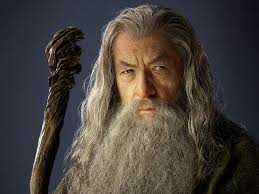
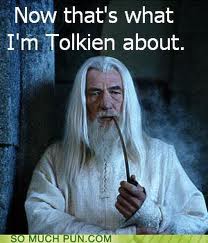
Happy Hobbit Day!

To celebrate Hobbit Day tomorrow (the birthdays of both Bilbo and Frodo), I would like to share a post I wrote two years ago after the first Hobbit movie came out. There is so much depth in the Hobbits’ simple characters, especially in relation to the others around them – wizards, kings, princes, elf lords etc., that it is an amazing tribute to Tolkien how he weaved these unassuming and lovable creatures into our psyches. This was my tribute to the old professor after the movie. 

Happy Hobbit Day!

THERE ARE NO SPOILERS ABOUT THE MOVIE IN THIS POST.

Last week I blogged about my expectation that a new generation were about to embark on an unexpected journey into the world of epic fantasy as they sat and watched the first Hobbit movie.

I mentioned with pride how my teenage son, moving into social independence, chose to see the movie with me rather than his friends. My first fantasy novel (and the three others to a lesser extent), At The Walls Of Galbrieth, was a joint project, and I identify our mutual love for the genre as one more log to grab as he flows down the river of manhood.
DSCN0193

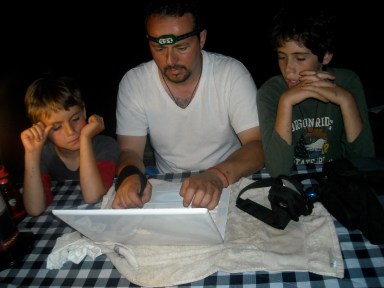
We sat next to each other and whispered and compared experiences. It was everything a father could hope for.

But it was with my youngest son (10 years old) with whom I had an unexpected experience. I wish to thank the movie theatre for failing to fix the armrest between us (why does this never happen on a date?). We were able to push it up and out of the way and for three hours, we cuddled together as we watched the movie.

While my older son leaned over and whispered whenever he wanted to, I could actually feel my youngest son’s reaction by his body language. I was intrigued. I felt when he tensed, when he was amazed, when he was sad, and when he laughed.

Other people - didn't think my fellow movie-goers would appreciate the flash!

Other people – I didn’t think my fellow movie-goers would appreciate the camera flash in the middle of the movie!

As we made our way home after the movie, my youngest enthusiastically told me about how we should incorporate this or that into the fourth Wycaan Master novel. I think the Tolkien Estate might sue if we did what he was suggesting, but for the moment, I just basked in his enthusiasm.

Another epic fantasy lover. I’m not the greatest father, I know. But this evening I felt I had done my job.

Finally a shout out to Stephen Colbert. Depending on your politics, you may or may not enjoy his nightly show. But he is undoubtedly impressive with his ability to be satirical and hold his own with very high-level guests.

But he outdid himself with a week of tribute to The Hobbit. Turns out, Mr. Colbert is a major Tolkien fan. His elfish sounds polished, and his knowledge of The Professor’s work is awesome.

Colbert and Sir Ian McKellen (Gandalf)

Colbert and Sir Ian McKellen (Gandalf)

Check him out on You Tube – he has a different cast member as guest each night.

——————————————————————————————————

Alon Shalev is the author of At The Walls of Galbrieth, Book 1 of The Wyccan Master series, which reached the Quarter Finals of the Amazon Breakthrough Novel Award 2012, released by Tourmaline Books. The First Decree, the sequel is due out in early 2013. Shalev is also the author of three social justice-themed novels: Unwanted Heroes, The Accidental Activist and A Gardener’s Tale. More on Alon Shalev at http://www.alonshalev.com and on Twitter (@elfwriter).

How Fantastical is Fantasy?

I mentioned previously that I am reading Sometimes The Magic Works by Terry Brooks. On Page 27 of this little book of great lessons, he writes how, as he struggled with his writing, he began to realize that he could not write the book in this world. “Everything I wrote had to remind readers of what they already knew, yet makes them take a second look at whether or not what they believed was really true.

 terry-brooks-150x150

I’ve been thinking about this sentence a lot. The difference between epic fantasy and magical realism (think Game of Thrones – George R.R. Martin) is that the former transpires in a totally different world, whereas magical realism takes place in this world, but has elements of the unexplained – magic.

While the Wycaan Master series takes place in Odessiya, a mythical world, I kept it relatively easy to imagine, because I do not want the reader to struggle with my world building. Rather, I want them to focus on the characters and the plot, while still portraying a beautiful world.

Christopher Paolini does a wonderful job describing his land of Alagaesia, in stunning detail. He suggests his success in doing this is based on his love for the wild as he grew up in Montana. But again, his world is very easy to believe. When my family is on a road trip and are confronted by a beautiful vista, we point and declare: Alagaesia!

images 

I hope I have succeeded in portraying Odessiya as a beautiful land: full of great mountain ranges, deserts, forests, lakes and coast. I thoroughly enjoyed describing the ice worlds in the north and the forest of the Shanrea, but I never strayed from environments you can associate with on trips or the National Geographic channel.

When I sent Seanchai to the Elves of the West, I wanted to describe a rich world of mighty trees. Living in Northern California, I am in constant awe of the redwoods. My fictional bloodwoods are a tribute to these majestic giants and the name is meant to offer just enough to fill the reader with the images of redwoods. I wanted to offer an exotic setting with a connection to something known to the reader with just enough to be different.

 images-1

The age of a dozen pages of descriptions that J.R.R. Tolkien got away with no longer survives the red pen of the 21st Century editor. The publishers, facing rising costs of resources are loath to publish thick tomes, and the millennial reader does not have the patience to read several pages describing a small forest. My eldest son admitted to skipping descriptions after he had a clear picture in his mind and I am not completely unsure that I didn’t do this when I read Lord of the Rings back in the previous century.

That being said, the fantasy writer is challenged to offer opportunities for the reader to suspend belief as Brooks suggests. In his own prequels to the Shannara series, he sends us through post-apocalyptic California with humans and mutations. But the mutants are a result of the catastrophe that has all but destroyed the world. It is, tragically, not hard to take that leap of imagination, which again happens when he skillfully weaves in his elves.

Perhaps no one deserves more praise that he who blazed the trail and created a hobbit. There had never been a hobbit before Tolkien and yet it seems so familiar. Even ‘second breakfast’ and the family relations that Bilbo et al gets so worked up about, makes sense.

 images-2

The skill of the fantasy author is to create a world that the reader does not have to work hard to imagine and then to create something imaginative that allows us, because we have built trust between writer and reader, to suspend rational belief and embrace.

It is a subtle yet powerful tool that offers a rich layer to the world of epic fantasy. It is why readers flock to Terry Brooks, R.A. Salvatore and Christopher Paolini, and why those of us who walk in their shadows continue to cultivate our craft and build words, races and situations that are believably unbelievable.

Have a great week, everyone.

Elfwriter

——————————————————————————————————

Alon Shalev is the author of the 2013 Eric Hoffer YA Book Award winner, At The Walls of GalbriethThe First Decree, and Ashbar – Wycaan Master Book 3 – all released by Tourmaline Books. Shalev is also the author of three social justice-themed novels including Unwanted Heroes. He swears there is a connection. More at http://www.alonshalev.com and on Twitter (@elfwriter). Hang out with Alon on Google+

Cinderella The Savage and Saruman The Sweet

A common question that I field at readings is how/why I chose the name of a particular character? I find it surprising because I would never have thought to ask such a question of my favorite authors. Either I considered their names a perfect fit  (and so never thought about it), or the author probably didn’t remain my favorite for long.

But it is a good question. A name, particularly for a protagonist or main character, is a significant part of the experience. If it appears ten times on every page and gets stuck in your throat, it is either a big problem or you need some lozenges on hand.  And if we are talking about a series, then that character is going to be around for some time. 

images-2

R.A.Salvatore, one of my role models and favorite authors, challenges us with his drows.

With the fourth Wycaan Master novel safely ensconced in the hands of my editor, I did what every author without a life or with a compulsive disorder does and began Book 5. My dear friends, Seanchai, Rhoddan and Sellia, have appeared in every book, so we are closing in on a half million words by the time I finish this one. I am trying to restrain myself from discovering how many times each name has appeared.

Having attended a number of events with people who have actually read my novels (they exist!), I discovered that everyone pronounces Seanchai differently. I am particularly proud of his name and love being asked why I chose it. In Celtic culture, a Seanchai was a traditional storyteller and, in my books, the Wycaan magic that our protagonist learns is based upon words and stories.

While providing what I hope is a cool answer, I see in their expressions how it is difficult that people struggle to say or hear. I am, of course, the worst offender. My non-existent Celtic notwithstanding, I have spend a good part of my life in the Middle East, where we sound like we are clearing our throats every time we put a ch together. It can be unsettling at first, because you flinch thinking the person is about to spit on you. but a serious ch is essential to the language and I worked very hard to master it.

More locally, I discovered people use che as in the name of the Cuban revolutionary. At a recent event, two friends decided to help me with a more interactive reading, each taking different parts, and each inevitably pronouncing Seanchai differently. We had a blast, but I wonder how those in the audience who had not read any of the series coped.

Games of Berkeley Question from Asif

I guess it doesn’t really matter until the movie comes out right? And by that time, pronouncing his name will be the last thing on this elated author’s mind. Slightly more realistically, I would love to produce an audio book since I derive such pleasure from them on my long, daily commute. 

Ironically, I have no idea where the name Rhoddan came from, I really don’t. I was looking for something that suggested stability and loyalty – go figure – but I feel the name fits perfectly. Certainly, the upside is that everyone agrees on how to pronounce his name, so hey, he can stay alive…for now!

The Greeks deserve credit for conveying much about their characters through names. Zeus is truly a name fit for a god and the king of the gods at that. And how would you react if your daughter told you that she was dating a dude named Hades or Loki? Lock her in her room, I’m sure. Thor sounds like a badass, and Aphrodite – well, best I leave that to your own imagination.

Moving to our own gods, and I think the old professor did a pretty good job all round, particularly with his hobbits. Bilbo Baggins is already lovable and you have only seen his business card. Friendly, courteous, and clearly one who drinks tea, eats Second Breakfast, and has a clean handkerchief in his pocketsss along with, of course, a ring of apocalyptic power. Who doesn’t these days?

 images-1

Tolkien did so well naming his hobbits – see this awesome list – and he nailed it with Gollum. If a name conveys considerable information, we understand that this is one twisted fella, with a name that just sticks in your throat.

Ilana, since you ask, comes from the Hebrew for tree. I chose this quite deliberately as I was looking for something stable, beautiful, and important to the existence of the characters around her. Alon means oak in Hebrew, so you see I have an affinity with trees, and At The Walls Of Galbrieth was conceived in a beautiful ancient redwood forest.

The names of minor characters is also important as an author spends more limited time extrapolating their characteristics. Since they appear and disappear so often, you want these names to be remembered and to also convey something about the characters. Certainly, when you have over a thousand characters stretching over several hefty tomes, yes I’m talking about you, Mr Martin, this becomes especially challenging.

 imgres-1

There is an advantage when reading ebooks, that you can search back to find references to a character, but this is impossible in an audiobook, and while a glossary of characters is helpful to flick through in most circumstances, it is not recommended while driving and listening to the audio book. App anyone?

What is your favorite name for an epic fantasy character? Which author shines at their selection? And which character does not fit the image you imagined from the name?

——————————————————————————————————

Alon Shalev is the author of the 2013 Eric Hoffer YA Book Award winner, At The Walls of Galbrieth, The First Decree, and Ashbar – Wycaan Master Book 3 – all released by Tourmaline Books. Shalev is also the author of three social justice-themed novels including Unwanted Heroes. He swears there is a connection. More at http://www.alonshalev.com and on Twitter (@elfwriter). Hang out with Alon on Google+
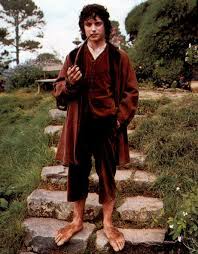
Happy Birthday, Professor Tolkien

Everyone should have a mentor, a leader they look up to, someone who, when they are faced with a dilemma consider: What would XXX do? That person might be a religious leader, a youth leader, a teacher … or a professor.

A month ago, on another blog, I spoke of the loss I feel for Nelson Mandela and describe his influence at various times of my life. But I have another hero, not one who would, I am sure, compare himself to Madiba, but a man I think about all the time when writing. If I am faced with an issue in one of my books, I pause and try and imagine what a certain old Oxford professor would advise me to do.

lewis-and-tolkien1 

The old professor is, of course, J.R.R. Tolkien, author of The Hobbit, Lord of the Rings, and others. His books are legendary, his world-building stunning, and his ability to create languages simply mind-boggling.

But often what people forget is that Tolkien seemed, on the outside at least, to be anything but a fantasy writer. He was an academic, a somewhat stiff Englishman, a traditionalist, a Christian, and a war veteran. One fine summer day, he was rather bored marking term end papers when someone had inadvertently inserted a blank page.

Tolkien, without much thought, scribbled on the white paper the famous words: In a hole in the ground there lives a hobbit…

images-4

And he went on to change the world of epic fantasy forever. He should have realized what he was doing, for as he warned dear Frodo: “It’s a dangerous business, Frodo, going out your door. You step onto the road, and if you don’t keep your feet, there’s no knowing where you might be swept off to.

Today, J.R.R. Tolkien is, I believe, in a pub up there in heaven, celebrating with his illustrious friends from The Inklings  and raising a glass to celebrate his 122nd birthday.

In the Lord of the Rings, Bilbo celebrates his eleventy-first birthday, so it is only fitting to wish Tolkien a very happy twelvety-first birthday and to sing him Happy Birthday in elvish, the language he created, one word at a time. Thank you to Petri Tikka for this rendition!

So please, wherever you are, take a moment, pour yourself a glass of whatever does it for you and raise it to the following song:

Happy Birthday Professor – Oronnad meren allen! 

——————————————————————————————————

Alon Shalev is the author of the 2013 Eric Hoffer YA Book Award winner, At The Walls of Galbrieth, The First Decree, and Ashbar – Wycaan Master Book 3 – all released by Tourmaline Books. Shalev is also the author of three social justice-themed novels including Unwanted Heroes. He swears there is a connection. More at http://www.alonshalev.com and on Twitter (@elfwriter). Hang out with Alon on Google+
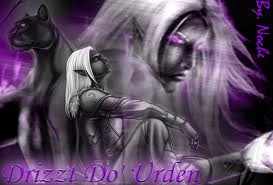
Everyone Wants To Be An Elf – repost

Over the three days of November 17 -19, Amazon.com have decided to promote the 2013 Winner of the Eric Hoffer Book Award for YA – At The Walls Of Galbrieth. The novel will be offered FREE in ebook form.

This is a wonderful opportunity for me and I request that, to support my sales rank and me, you download the book and invites your friends to do the same. Feel free to gift it on (Thanksgiving and Hanukkah, anyone?).

To celebrate this and also the milestone of 100 blog posts on elfwriter.com, I wish to offer 10 of my favorite posts over the next three days. I hope you enjoy and, please, take a moment to download for FREE At The Walls Of Galbrieth and spread the word.

Thank you,

Alon

 =======================================

How many times have you uploaded an article or song on the Internet and then got lost surfing through hundreds of comments underneath? Whether discussing politics, sports, or comparing the lead singers of Nightwish, it gets ugly very quickly. If you need to stock your insult arsenal, You Tube comments is the place to go – but a shot of JW or an anger management course might be more effective, long term…just saying, calm down.

Earlier this week, I played a Gothic music play list (that I can’t find now) while I wrote a new chapter for Book 4 of the Wycaan Master series. I made the mistake of perusing the comments and they were eye opening.

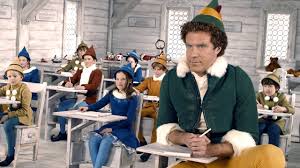
Tens of people (and I did not check all 2,000+ comments) wrote why they would love to be an elf. Just for the record, I believe people were imagining Legalos and not Will Ferrell or any of his fine companions.

imagesimages

But there they were: some frivolous, but many, well, I believe laced with a genuine desire. They seemed to resonate with something deep inside, something lost.

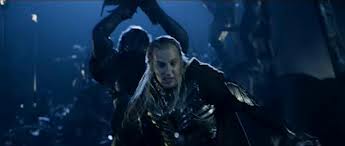
Some spoke of the physical attributes – tall and thin, healthy (have you ever seen an elf sneeze? – they even die beautifully – yes I’m talking about you, Haldir, at Helm’s Deep, I’m sure you remember), long living, nimble, coordinated… 

images-1

Others mentioned emotional attributes – decisive, confident, calm, intelligent, loyal mates (I plan to research this – I did a quick search for the Rivendale Daily Enquirer but they only distribute in the Western Isles).

And there was also an interesting assortment of comments such as: they could trust their leaders; they were in touch with nature… 

When I began writing the Wycaan Master series, it was clear to my sons and me that we didn’t want to make the elves (most of our protagonists) perfect. They get angry, make wrong decisions, feel abashed at that first kiss, and seem more…well human (ouch!).

In fact, one of the comments that surfaced as I read At The Walls Of Galbrieth to my writer’s group was that I failed to distinguish them as elves. I struggled to do this without stepping into the familiar stereotypes. As I write Book 4, things have become somewhat darker, with the protagonists facing greater personal challenges. I continue to find it difficult to strike a cord between making my elves special without them losing their genuine, vulnerable side.

Finally, as I write this, I am listening to The Hobbit soundtrack. There is a long thread of comments, disagreements, and debate. But this is the comment that caught my eye:

RobbieBjork17 wrote: “Holy Crap that was one_ of the most educated conversations I’ve ever read on youtube…. shoulda known it was going to be Tolkien Fans ;).”

It made me absurdly proud to feel a part of the Epic Fantasy nation.

images-2

 =======================================

Alon Shalev is the author of the 2013 Eric Hoffer YA Book Award winner, At The Walls of Galbrieth, offered by Amazon.com  for FREE on November 17-19. The sequel, The First Decree, and Ashbar – Wycaan Master Book 3 are all released by Tourmaline Books. More at http://www.alonshalev.com and on Twitter (@elfwriter). Hang out with Alon on Google+
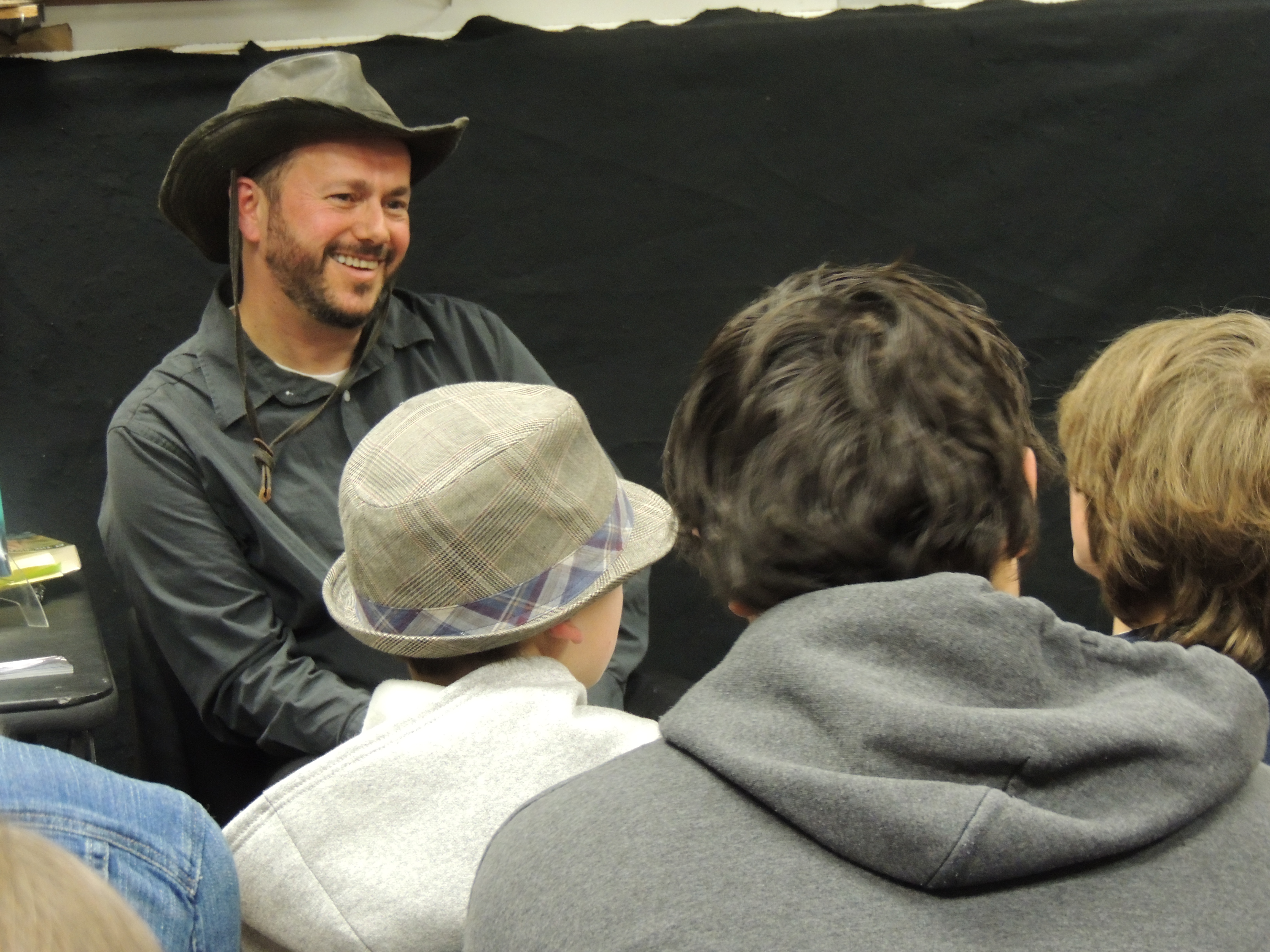
Possessed Writers – repost

Over the three days of November 17 -19, Amazon.com have decided to promote the 2013 Winner of the Eric Hoffer Award for YA – At The Walls Of Galbrieth. The novel will be offered FREE in ebook form.

This is a wonderful opportunity for me as an author and I request that  you download the book and invites your friends to do the same. Feel free to gift it on (Thanksgiving and Hanukkah, anyone?).

To celebrate this and also the milestone of 100 blog posts on elfwriter.com, I wish to offer 10 of my favorite posts over the next three days. I hope you enjoy and, please, take a moment to download for FREE At The Walls Of Galbrieth and spread the word.

Thank you,

Alon

 =======================================

The scene might be the same in any house mid-week, early evening.

Your partner is rushing to make dinner, still in his/her office clothes. Ten- year-old son is irritable, primarily because he preferred to play wall ball than eat his lunch at um … lunch break. He has even pointed out that the First Lady wants him to exercise more (you just lost my vote in 2020 Ms. Obama! Tell him to eat that sandwich we made him). Older son is drowning in homework and needs help. Unfortunately it is not math where he ends up explaining it to a perplexed calculator-wielding father – it is English and father is the fastest typist in the house.

images

From within this maelstrom, hassled wife turns around from steaming cooking pots and sees an unset, messy dinner table, a swivel chair, and a writer’s desk. The writer, sitting in said chair, is distinctly facing the wrong direction, pounding his keyboard with a vengeance.

Suddenly, she can’t help herself. Forgetting the wooden spoon in her hand (writers notice these details especially when the spoon is being flailed in said writer’s direction), she towers over the writer, hands on hips:

“You’re writing? Now? Man, you are just possessed!”

When my extremely patient and understanding wife says something like this, it does makes you wonder. The problem is that after a stressful few months, I had a week off over the Christmas break, and kind angels put our family up in beautiful, snowbound Tahoe, 10,000 feet high in the Sierra Nevada mountain range.

Already on crutches from a knee operation, I was never going to cut the crisp, fresh snow on virgin slopes (I don’t ski even when not on crutches – at best I tumble down a 100 feet nursery slope, make sure there are photos, and then slink off for laced hot chocolate).

images-1

But here, if only for a few days, I couldn’t help myself. The laptop comes on and a few snow-bound scenes of a new book somehow appear.

Possessed? Moi? Five months and 103,000 words later, despite an intense period at work and many other obligations, I type the final period, click the save command, and stare at the epilogue. Rough first draft of Wycaan Master Book 4 is completed.

This latest book was written mainly between 7.30-8.30 am and after the boys go to bed on weekdays, and a couple of hours on the weekend, or random pieces written during odd times. Or while waiting at the dentist, on the mass-transit BART commuting home, in San Francisco, Washington DC, Ventura, St. Louis, San Diego, and at too many airports.

images-3

Possessed? Nah. Possessed would be finishing Book 4 and starting to write scenes of Book 5. Possessed. Out-of-control. Crazy.

I just wrote a few pages, honestly, mainly plot threads that I want to develop, characters that need to grow and confront their pasts. There is a bit of world-building with oceans and…

Starting Book 5 might just be considered grounds for divorce, need to involve Family and Children Services, or a good psychologist (preferably one who is as much a fan of Tolkien as of Freud). 

Starting Book 5? “Now? Man, you are just possessed!”

Fair point.

 =========================================

Alon Shalev is the author of the 2013 Eric Hoffer YA Book Award winner, At The Walls of Galbrieth, offered by Amazon.com  for FREE on November 17-19. The sequel, The First Decree, and Ashbar – Wycaan Master Book 3 are all released by Tourmaline Books. More at http://www.alonshalev.com and on Twitter (@elfwriter). Hang out with Alon on Google+
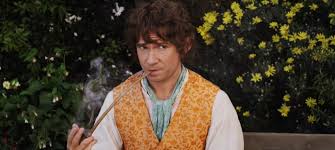
When Is An Elf Not An Elf?

Over the three days of November 17 -19, Amazon.com have decided to promote the 2013 Winner of the Eric Hoffer Book Award for YA – At The Walls Of Galbrieth. The novel will be offered FREE in ebook form.

This is a wonderful opportunity for me and I request that, to support my sales rank and me, you download the book and invites your friends to do the same. Feel free to gift it on (Thanksgiving and Hanukkah, anyone?).

To celebrate this and also the milestone of 100 blog posts on elfwriter.com, I wish to offer 10 of my favorite posts over the next three days. I hope you enjoy and, please, take a moment to download for FREE At The Walls Of Galbrieth and spread the word.

Thank you,

Alon

 =======================================

WHEN IS AN ELF NOT AN ELF?

Yes, my novel is compelling, special, well-written etc. just like the 499 other epic fantasy manuscripts sitting in the slush piles of every publishing house that offers YA epic fantasy.

I am working with an agent who is asking the challenging and insightful questions that will help my manuscript stand out from the rest. It is tough and I am feeling very possessive. Last week I shared his prompting to seek a Higher Concept.

One of the aspects that he wants me to consider is changing my elves, who make up many of the main characters and cultural references. He suggests that I consider changing the elves for a new, mythical race that will set me apart from the rest.

Let me state from the outset that I have no doubt this man knows far more than I about the publishing world, has considerable experience and understands the current state of the publishing world.

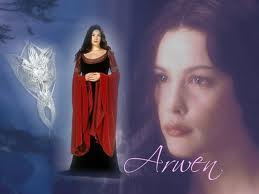
But my elves? Our elves? Those of us who grew up on Tolkien, Paolini, Brooks and others, have standards, images, friends. Legolas and Anwen, Arya and Blodgarm, and many others have created a rich and familiar texture. We welcome them surfacing as we settle into a thick novel. We embrace them because there are common threads that pass between authors. We call it a culture, those who don’t read fantasy roll their eyes.

                               Noble Haldir – we owe him for Helm’s Deep, no?

Terry Brooks’ children know that he is not all there, he tells us as much when he opens his book Sometimes the Magic Works: Lessons from a Writing Life. More on this book in a later blog.

But Brooks in not dissimilar to the rest of us, just considerably more talented! We pass through a gate in our imagination and reacquaint in a world that exists in a shared consciousness.

Here the elves are tall, thin, light-footed and beautiful. They are fast and posses stealth and discipline. They are in touch with the energy of the earth, the forest, the animal kingdom. They excel in archery, crafts and healing. Perhaps they are aloof, elitist, and closed to the other races, but this comes from their ancient and rich heritage. We know and love them.

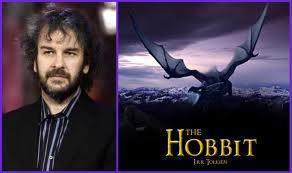
We rejoiced to learn that Peter Jackson is bringing Legalos into a prominent role in The Hobbit. Well, a few raised eyebrows, since Legalos was not even referred to by name in The Hobbit when he appeared flanking his father, the King of Mirkwood.

We accept, even with a bit of jealousy that he can fight at Helms Deep for five days, or run non stop for three and still not need to brush his immaculate hair. Nor do we care that his quiver seems to replenish itself, an occupational hazard of any archer who fights battles every other day.

We don’t mind because elves epitomize something that we identify with. We all want to be beautiful, brilliant, in excellent physical condition and, of course, environmentalists. When R.A. Salvatore created Drizzt Do’Urden and the dark elves of Menzoberranzan, a giant underground drow city-state he broke new ground.

Many of us were repelled and had it not been created in the hands of a master of fantasy, we would have rebelled. It was daring, it worked and by Book Three, we were rewarded with the typical elf one finds above ground.

It is tough to turn away from the basic tenets of epic fantasy: the teacher and student, the quest, the fight against a powerful evil, dwarves, elves, dragons, a rich natural world. There is something that has entered our collective consciousness and taken root.

It is why we read and reread the masters…and it is why we will return to read those who take over the role of entertaining us in a way that only epic fantasy does.

 =========================================

Alon Shalev is the author of the 2013 Eric Hoffer YA Book Award winner, At The Walls of Galbrieth, offered by Amazon.com  for FREE on November 17-19. The sequel, The First Decree, and Ashbar – Wycaan Master Book 3 are all released by Tourmaline Books. More at http://www.alonshalev.com and on Twitter (@elfwriter). Hang out with Alon on Google+

Big Characters Without Big Boobs

Last week I asked in my blog post, 10 Questions For J.R.R Tolkien, what questions people would like to ask the Professor if they had the opportunity. The answers were great, but one stood out for me.

A person with the twitter username @oneyearnovel (happy to enter your name and website) wrote: “I would ask if he ever considered a woman character who was not beautiful?”

 images-1

This got me wondering. When I began looking around for a book cover artist and shared my concept of Mhari, an elfe (the politically correct term for a female elf) and Seanchai’s teacher, I was offered sketches of buxom women with cleavage-revealing armor, muscled (bare) legs etc. You get the picture. I talk about this in an earlier post – Big Boobs and Book Covers. While these images might have sold more copies of At The Walls Of Galbrieth, the pensive, wise face that adorns the cover truly represents the wise, yet world-weary mentor for my protagonist, Seanchai.

Wycaan Master 1 Just Front Cover

I don’t in truth know if @oneyearnovel is correct that Tolkien’s females in his books are all beautiful, or if this is Peter Jackson pandering to what he believes his Hollywood audience wants. I have not read Lord of the Rings in years and can’t even recall a female in the Hobbit.

Tolkien students: please enlighten us on this in the comments.

imgres

There are three main female characters who each leave an indelible mark on the first four books of the Wycaan Master series. Sellia is dark, exotic and beautiful, but she is also an excellent warrior and probably fits the stereotype. While I never talk about her breasts, hips etc. (this is YA), she intimidates the younger male elves and has them stuttering. She makes a game of eliciting a blush from Rhoddan or Seanchai.

Ilana is tough, an ideologue, constantly seeking a peaceful solution and offering Seanchai her unwavering support. As a romance blossoms she is viewed for her beauty, but it is seen through the eyes of one who is falling in love with her. Don’t we doting men all think our wives/partners are the most beautiful women in the world? Of course mine really is!

But Ilana is possibly the most popular character among readers, certainly female readers. It is not anything physical about her that binds the reader to her, but her deep principles, cutting sense of humor, and well just about everything else concerning her.

Maugwen is a human, short and pudgy. She is a weak character at first and I never meant to give her a long run. But she grows, matures and becomes a wise friend and strong individual. Readers have told me that she intrigues them and, just between us, she intrigues me.

We don’t make all our male characters handsome and ripped, so why our females? I think @oneyearnovel has a great point. Society expects us to bind ourselves to a pretty woman, and in truth, this goes for good or bad characters, but fiction has a responsibility to not only change with the times, but to be present at the tipping edge of that change.

It is very popular to write a coming-of-age novel. Perhaps it is time for our genre to come of age.

imgres-2

——————————————————————————————————

Alon Shalev is the author of the 2013 Eric Hoffer YA Book Award winner, At The Walls of GalbriethThe First Decree, and Ashbar – Wycaan Master Book 3 – all released by Tourmaline Books. Shalev is also the author of three social justice-themed novels including Unwanted Heroes. He swears there is a connection. More at http://www.alonshalev.com and on Twitter (@elfwriter).

10 Questions For J.R.R. Tolkien

This blog post was inspired by a Time interview with Sir Ian McKellen, who plays Gandalf, the wizard who… if you are following this blog, you already know. It is a fascinating interview given that  J.R.R Tolkien was Catholic and McKellen is gay.

imgresThe interview is:

Timely: the difference between the making of The Hobbit and Lord of the Rings is that Peter Jackson now wears shoes.

Funny:  “No one ever ablutes in Middle Earth.” and…

Poignant: When he visits a public school in England

One of the questions asked of McKellen is what would he ask Tolkien if he could meet him. This got me thinking: I have already shared that I think a lot of Tolkien and Oxford, and The Inklings Club.

So, if you are up there in Writer’s Heaven, quaffing on an ale or puffing your pipe, there is a student down on earth trying to emulate your literary work with a few questions.

1. Did you ever get embarrassed or try to hide your fantasy writing from your academic peers?

2. Did World War 1 provide you with the imaginary and emotional background for Lord of the Rings?

3. Why Hobbits? Who is your favorite character in either The Hobbit or Lord of the Rings?

4. If you were writing either LOTR or The Hobbit today, would you change anything? Different ending?

5. What do you think of the movies?

6. Is Peter Jackson out-of-line to make such radical changes to The Hobbit as including a character who is not from the book?

7. Who is your favorite fantasy author?

8. I know the story of how the first line of The Hobbit came to you (the blank academic paper you were grading), but how did you really come to write a fantasy series?

9. Mac or PC?

10. My critique group has room for one more. Would you consider…

imgres-7The reality is that if I ever found myself in front of the Professor, I would probably stammer and blush, and make a complete fool of myself. So help me out, just in case one day…

What questions would you ask the greatest epic fantasy writer of all time?

——————————————————————————————————

Alon Shalev is the author of the 2013 Eric Hoffer YA Book Award winner, At The Walls of Galbrieth,  the sequel The First Decree, and Ashbar – Wycaan Master Book 3, all released by Tourmaline Books. Shalev is also the author of three social justice-themed novels including Unwanted Heroes. He swears there is a connection. More at http://www.alonshalev.com and on Twitter (@elfwriter).

Cute Tolkien Story

I am indebted for the story in this post to the author, Peter Smalley so I want to first give him a shout-out. “Peter A. Smalley was not so much born as he was the object of a suitably ominous origin story.” If you want to know more, click on the link above or check out his latest book – Emerald City Blues

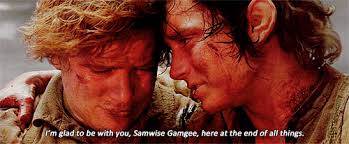
Remember This Guy?

“I’m glad to be with you, Samwise Gamgee, here at the end of all things.” This is friendship!

 So here is the (true) story.

In March 1956, J.R.R. Tolkien was surprised to receive a letter from a man named Sam Gamgee from Tooting, London. Mr. Gamgee, who had not read Lord of the Rings, was surprised to hear that his name had been used in the story. The Professor responded in a letter of his own.

“Dear Mr. Gamgee,

It was very kind of you to write. You can imagine my astonishment when I saw your signature! I can only say, for your comfort, I hope, that the ‘Sam Gamgee’ of my story is a most heroic character, now widely beloved by many readers, even though his origins are rustic. So that perhaps you will not be displeased at the coincidence of the name of this imaginary character of supposedly many centuries ago being the same as yours.”

– The Letters of J.R.R. Tolkien: Letter 184

dsc04663-e1378821253884
Being the gentleman he was, Tolkien also sent him a signed copy of all three volumes of the book. This incident did, however, worry the professor who wrote in his journal:

“For some time I lived in fear of receiving a letter signed ‘S. Gollum’. That would have been more difficult to deal with.”

– J.R.R. Tolkien: A Biography

Oh well, need to fill the void for the next 1,464 hours (at the time of writing) until the second Hobbit movie!

imgres 

Finally, thank you to everyone who bought Ashbar – Wycaan Master Bk. 3, which celebrates its 10th day in publication!

 ——————————————————————————————————

Alon Shalev is the author of the 2013 Eric Hoffer YA Book Award winner, At The Walls of Galbrieth, Wycaan Master Book 1 and the sequel The First Decree, both released by Tourmaline Books. Ashbar – Book 3 is the third in the series, released in October 2013. Shalev is also the author of three social justice-themed novels including Unwanted Heroes. He swears there is a connection. More at http://www.alonshalev.com and on Twitter (@elfwriter).