A Private Letter to George R.R. Martin

Dear Mr. Martin,

Let me begin by saying that I am a big fan. I have just finished Book 4 and, if that isn’t proof enough, I am preparing to read Book 5. I have sung your praises on my humble elfwriter blog and keep your photo under my pillow (I don’t – but I wanted to make sure I still had your attention).

It’s like this, sir. One day I want to be a bestselling epic fantasy author like you. My third book comes out in the fall and I have probably sold as many books as you’ve killed noble characters (actually I might be being a bit optimistic there).
images-3

I spend a lot of time hanging out with other writers: online and (I know this is rare) actually in person. Everyone tells me to “observe the rules,” “don’t break the conventions,” and, my favorite, “Tolkien was one-of-a-kind. You wouldn’t get away with that.”

But you, sir, have broken the rules. You have tippexed (anyone?) over the conventions. One friend suggested that you only get away with it because you are already famous, already have a huge following, and probably don’t care anymore what anyone outside of the Seven Kingdoms thinks.
images-1

So here is my list of 10 things you have done wrong:

1. Your books are too long. I keep getting told that 90K is way beyond the commitment that most readers are willing to invest today. But then why do I enjoy them (and Christopher Paolini, and J.K Rowling, and some unknown ancient language, Oxford professor) and feel a sense of loss when they are finished? 

2. Your books are too slow. People want action, action, action. Instant gratification …debate in 140 characters or less. Have a car chase or blow up a bridge – well, you get my point.

3. Your books are too detailed. You mean I need to think? Concentrate? Invest? I hear you keep flow charts in your office – can we peek? How about a deal with Cliff Notes or an app that you can enter a character, your book and page number and get an update. Dude – I totally expect a commission on the app idea.

4. Your characters are too flawed (especially the good ones). If I’m not seeing Ryan Gosling or Kristen Stewart then it simply won’t do. If I want real people, I would put my book down and hit the pub.

images-2

5. Your characters are too dead. I actually wrote a blog post about this (I Need A Hero), keeping the book and you anonymous so as not to spoil it. Guess what? Everyone knew who I was talking about.

6. You drop some characters for hundreds of pages – are you tempting me to skip pages, sir? Just so as not to spoil this for any readers on Books 1-4, you know what I mean when I connect this to Book 4//5.

7. You miss out key scenes – battles in particular – and subtly let us know they have happened. I know it is incredibly difficult to write battles and only the best can pull it off, but well sir, you are one of the best.

8. You have too many minor characters. I hope you are keeping track of them because, to be honest, I am developing a habit of scratching my head whenever someone resurfaces 1-2,000 pages later.

9. You care more for the old gods and the new than the critics.

10. Your books are too addictive. I can’t stop…

You broke all the rules, sir. Congratulations! Now where is my copy of Book Five?

images

—————————————————————————————————–

Alon Shalev writes social justice-themed novels and YA epic fantasy. He swears there is a connection. His latest books include: Unwanted Heroes and At The Walls Of Galbrieth. Alon tweets at @alonshalevsf and @elfwriter.  

.
 

Finding Mythical Places Everywhere

A while ago, I wrote a post about meeting elves in coffee shops. The point was that…well you can read the point for yourself, but there is more along these lines.

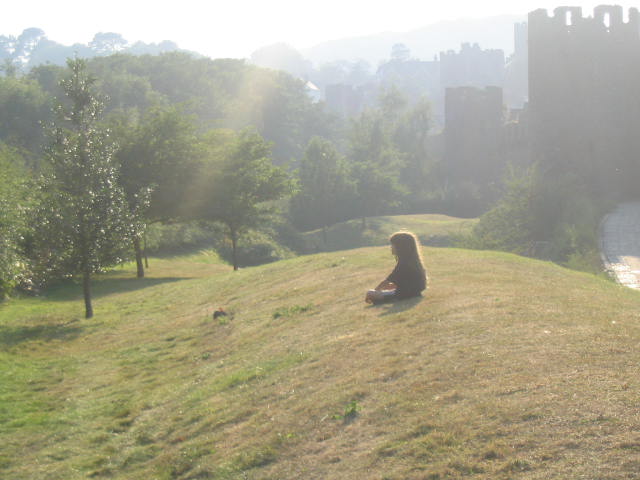
I grew up in England with real castles, stately homes, wattle and daub cottages, and signs of a more ancient, Pagan culture everywhere. I was not writing fantasy back then but imagine I would find a lot of inspiration there. Two weeks sitting in a castle in Wales writing – is that a business expense?

Meditation

My eldest at Conway Castle, Wales, several years ago. He sat there for hours, transfixed in a world of his own.

But we actually don’t have to travel too far. I attended a conference in the heart of Washington ‘DC Chinatown. I stepped outside the meeting room on the 7th floor  for some fresh air and stared at this:

Ruins by Hillel SIC

Today, I was at the Ferry Building in San Francisco and noticed Old Glory flying at half-mast in respect of the victims of the Boston Marathon attack. The sky was a rich blue and the flag and tower looked glorious. I could imagine Seanchai and friends arriving on a boat (do you pay the toll riding over the Bay Bridge on horseback? Do three horses and riders make a posse or qualify for the casual car pool?).

Interestingly, I crossed the Embarcadero between the Ferry Building and Bay Bridge and saw a restaurant with gargoyles and (what looked to me) a sign that could have been written in Medieval lettering. It could have been a tavern or pub for thirsty travelers before they put five Peet’s Coffee and nine Starbucks in the mile-square Financial District.

My point is that writing fantasy is as much a state of mind. When I am actually writing a story (as opposed to editing or marketing), which is about 4-5 months of the year, I notice these things as though they are only around for this time of the year.

Tunnel

Picnic at our local park. Younger son discovered this tunnel. We sat in here and discussed how to use it in the book I was writing at the time.

It is why I see elves in coffee shops and get invited underground by hospitable dwarves. It enriches the already beautiful vistas, forests and rivers of Northern California where I explore. It is what makes my kids and I respond when we see a beautiful natural scene by exclaiming: Alagaesia! (You can blame Christopher Paolini for this. I hope he’s touched).

It is why Terry Brooks claims that ‘Sometimes The Magic Works.

Have a mystical weekend.

—————————————————————————————————–

Alon Shalev writes social justice-themed novels and YA epic fantasy. He swears there is a connection. His latest books include: Unwanted Heroes and At The Walls Of Galbrieth. Alon tweets at @alonshalevsf and @elfwriter.  

Writing An Epic Fantasy Series Is Not Easy

I dropped in on an interview by Franny (not sure if this is her real name) who runs the Mind Reader blog. I have visited a few times – she writes great book reviews. Franny interviewed Meredith Bond, author of Magic In The Storm, (full interview here) and opened with the following question:

“Why is almost every book published now part of a series? Have you noticed this? I don’t think I’ve seen one single stand-alone title (aside from anthologies) in over a year! Is this a good thing? Isn’t it good enough to find books by an author you like without the books having to be tied together in some way?”

Ms. Bond’s answer is thoughtful and worth reading, but she does claim, frivolously I hope, that we authors are “lazy bums.” I took exception to this. Writing a series of books in one world with many recurring characters demands that we show this world in different forms throughout the series. In fact, I draw my own world-building inspiration from nature and I hope I will never stop seeing new lands and areas of natural beauty. When we see a beautiful vista, it is a family joke to say in a breath-taking voice: Alagaesia, a tribute to the beautiful world that Christopher Paolini built.

imgresSimilarly, my characters do not stand still. They grow, and as they age, experience conflict and love from a different perspective, as do we all in the ‘real world’. Terry Brooks is a master of this with his Shannara series.

I would venture to suggest that the onus is even greater with recurring characters because we need to show significant depth in their development. Perhaps it is easier to create a new warrior, hero, heroine, villain etc., in each book, because you can keep them relatively shallow.

Next month, The First Decree, my second Wycaan Master novel, will be released by Tourmaline Books. Since the Xmas holiday break, I have been writing Book 4 (Book 3 is written but not edited) and am about 30,000 words in. My characters are older, wiser, have more to lose, and a greater sense of responsibility.

They are growing up and each developing into the unique, ever-changing individual that they are. I care about them too much. I would never let them languish and become stagnant. What kind of a father would I be (I am, however, in no rush for my real kids to grow up!)?

There are obvious and legitimate reasons to write a series. Every author wants to build a readership and why not create an ongoing relationship between readers and the characters they are rooting for?

Tery Goodkind wrote 12 books in the Sword of Truth series.

Tery Goodkind wrote 12 books in the Sword of Truth series.

I don’t mean to begin a feud with Ms. Bond because of one phrase in an otherwise excellent interview, but it struck a chord. I recently told a friend that I have written a book a year for the last seven years (I am published in two genres), and she responded by saying that it must be easy for me.

It is not. I work very hard at my craft, spend considerable time building the world of Odessiya, and worry about my characters and their destiny. I cry when a main character dies (I can even cry several times as I reread, and reread, and reread) and feel equally exhilarated when they succeed.

The story flows out of me but I put considerable time and effort into it. I wake up early and go to bed late, squeezing in a full-time job and hopefully trying to be an active parent and sharing husband.

When I finish writing a first draft I am exhausted mentally. But I’ll keep coming back for more, just as a marathon runner pushes themselves beyond their limit during a race, but knows s/he will be back running soon.

There is an incredible high when the words flow, exhilaration as a plot unfolds, and pure joy when someone says: “Hey. You’re an author, right? I read your books.

I wouldn’t have it any other way.

The First Decree-hi resolution

—————————————————————————————————–

Alon Shalev writes social justice-themed novels and YA epic fantasy. He swears there is a connection. His latest books include: Unwanted Heroes and At The Walls Of Galbrieth. Alon tweets at @alonshalevsf and @elfwriter.

An Unexpected Journey

This weekend, J.R.R. Tolkien’s The Hobbit – An Unexpected Journey comes out. If you are reading this blog, you have probably been counting down along with the Mayans. I haven’t seen the movie yet, so there are no spoilers, but I am incredibly excited. I can’t wait to see it and have no doubt that I will love it, buy the DVD, change my computer’s wall paper and take my kids to eat breakfast at Denny’s…again!

imgres-2But there is something else that has me so stoked for this movie stands on the threshold of something historic: it is the induction of the next generation of epic fantasy readers. Just as Lord of the Rings ignited my generation’s interest, and Christopher Paolini’s Eragon sentenced my own children to a lifetime of reading and vivid imagination, The Hobbit will take a new, unsuspecting generation on an unexpected journey.

My own journey has been somewhat unexpected. Having written a series of well-received social justice-themed novels, I have been introduced to people who are passionate to see and work for a better world. I treasure the opportunities to meet readers at book signings and author meet ups.

DSCN1387As we approached the launch of At The Walls Of Galbrieth, I sought to define my target audience and had a big surprise. To begin with, there were the 100+ who filled out my survey ­– thank you all – and I began to discover a group of passionate and richly imaginative readership.

But here is what excites me. I am meeting a large number of students and teenagers who are die-hard readers of epic fantasy. They eloquently share their love for the creation of a new world, their desire to see everyday folk transform into heroes, and to believe in universal principles such as freedom, good over evil, and the value of friendship.

My social justice-themed novels all contain a common thread: an everyday person goes through a transformational experience which empowers them to pursue justice. Swap the multinational corporation for an evil Emperor, replace the use of social protest with a special bow and arrow, and we have similar themes.

My point is that epic fantasy creeps up on you. This weekend many ingenuous children, teenagers, and parents, are going to see a hyped-up movie and experience a transformation. They may not start yielding a sword and slaying dragons, but they just might embark on an unexpected journey of reading and enter into a world that drives our imagination and defines our social values…

All because in the words of a great wizard: “Hobbits really are amazing creatures.”

——————————————————————————————————

Alon Shalev is the author of At The Walls of Galbrieth, Book 1 of The Wyccan Master series, which reached the Quarter Finals of the Amazon Breakthrough Novel Award 2012, released by Tourmaline Books. The First Decree, the sequel is due out in early 2013. Shalev is also the author of three social justice-themed novels: Unwanted Heroes, The Accidental Activist and A Gardener’s Tale. More on Alon Shalev at http://www.alonshalev.com and on Twitter (@elfwriter).

Judging A Book By Its Cover

The last few weeks have been spent communicating with a very talented book cover designer, William J. Kenney, who has designed the book cover for At The Walls Of Galbrieth. I am quite amazed how someone who has never met me or understands how my brain works (disclaimer: not that knowing me will guarantee that either), can interpret my jumbled explanations into a cover, far better than anything I could imagine.

I might be bias here, but I think epic fantasy book covers (and also sci-fi) must answer to higher standards. My social justice-themed novel, The Accidental Activist, is based on a photograph that I took in San Francisco’s financial district. The cover artist did an amazing job, but it is still based upon something real.

Claudia McKinney, the artist who designed Amanda Hockings’ book covers, designed the cover to A Gardener’s Tale. The different concept from the first edition is amazing and, I believe, a big help in raising my sales levels. My publisher told her that he wanted to stress the strong Pagan theme and earth spirituality running through, she came up with a number of excellent options.

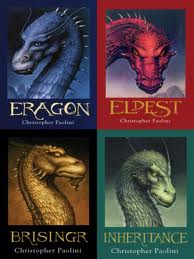
Designing book covers for a series is an additional challenge and, given that there are three, maybe four books in the Wycaan Master series, I now feel I have clear picture of how I imagine William will develop each cover. What I find interesting is that it doesn’t always have to be intricate. Christopher Paolini’s covers are not detailed, but still instantly recognizable. As each new cover was announced, my sons and I shared a collective gasp of anticipation.

 The question I want to pose here is what constitutes a good epic fantasy cover? There are some covers that I just sit and gaze in wonder, often several times when I pick up the book to commence reading. So, please also share your favorite fantasy book covers. Let’s make a Top Ten: over to you… 

Next week – the official unveiling of the book cover: At The Walls of Galbrieth – Wycaan Master Book 1.

——————————————————————————————————

Alon Shalev is the author of The Accidental Activist and A Gardener’s Tale. He has written three epic fantasy novels and the first, which reached the Quarter Finals of the Amazon Breakthrough Novel Award 2012, is due out in January 2013 by Tourmaline Press. More on Alon Shalev at http://www.alonshalev.com and on Twitter (@elfwriter).

Size – Does It Matter?

So shoot me for false advertising, but I have a dilemma. I shared with you last week in A Tribute to Editors that I have received my manuscript to At The Walls Of Galbrieth back from my editor with lots of cuts and corrections. As I worked my way through, accepting 90% of the changes suggested, I realized that my word count was dropping drastically.

I am about 80% through the novel, which began at 96,000 words and is now down to about 85,000.

Epic fantasy novels are thick tombs, offering the promise to get lost in a mythical world for a month or so. It is not a novel that you can finish in a weekend (unless your weekend is very empty and you are a fast reader).

Even Young Adult books make good doorstops. The Christopher Paolinis’ of this world have proved that teenagers will stick with a long story if it is compelling enough.

So my first question is: Is there a minimum length? When I was shopping the Wycaan Master series, there were publishers who stipulated a word range, often 100,00+. It might be that they expected their editors to attack it with a scalpel, much as my editor did.

My second question regards world building, something we have touched on before at elfwriter. A lot of the scenery description has been edited out. The editor, like many in the writing world, believes that you shouldn’t reveal everything: about a person, room, scenery etc., but allow the reader to create their own image.

Certainly, anyone who has read a book after watching the movie  (or the other way around) can appreciate this.

Tolkien, the master, spent pages describing the forests and the trees. Many of us loved this while others skipped these long descriptions. I wonder whether a young, undiscovered Tolkien would (and please pardon the expression) suffer the long red, sharpie lines through these sections of his work (or the Track Changes equivalent – but that’s not how I think of the old professor).

There is a middle ground. My editor has challenged me to integrate the descriptions within an action scene or as a pivot for a character’s self-reflection. This is a great point and I plan to experiment with this in the future. Do you know of any writers who do a good job of integrating description into the flow of the plot or character development, without it feeling like a ‘description-dump’?

So two questions here: Does size matter? How much description is allowed?

As always, I appreciate your feedback and guidance.

——————————————————————————————————

Alon Shalev is the author of The Accidental Activist and A Gardener’s Tale. He has written three epic fantasy novels and the first, which reached the Quarter Finals of the Amazon Breakthrough Novel Award 2012, is due out in January 2013 by Tourmaline Press. More on Alon Shalev at http://www.alonshalev.com and on Twitter (@elfwriter).

Where Do People Like Us Hang Out?

“Go forth and find your target audience,” I was told and I posted a questionnaire that many of you were kind enough to answer (if you haven’t, it is not too late, and I do promise to share my findings).

“Keep defining and refining it,” my mentor continued and so I have a question for you.

Where do you hang out? Where do you meet others such as you and me; those who believe in elves, dwarves, noble quests, and dragons? And please don’t tell me: Alagaësia, Middle Earth or Shannara – I’ve been there and I never saw you!

When you don’t have your nose in an exciting book, where do you meet fellow fantasy readers? Do you frequent conferences? Do you read magazines (on-line or tree form)? Are you on a social networking fantasy site, a discussion group, or a fantasy book club?

Please leave your tracks in the comments below. It will help me find companions for my journey and help others find company too.

I appreciate your help. Oh, and next time you pop into Alagaësia, Middle Earth or Shannara, would it hurt to say hi?

Finally something totally unconnected to this blog: This past week Muslims were insulted, Christians died from the violence, and Jews were blamed. We are all victims when we set ourselves apart. Sometimes it just feels easier to lose yourself in the world of elves, dwarves and dragons.

May we all learn to celebrate our differences together and share the space. There is enough room for us all. Safe travels wherever your road takes you.

——————————————————————————————————

Alon Shalev is the author of The Accidental Activist and A Gardener’s Tale. He has written three epic fantasy novels and the first reached the Quarter Finals of the Amazon Breakthrough Novel Award as of March 2012. More on Alon Shalev at http://www.alonshalev.com/and on Twitter (@elfwriter).

Genre Conventions .v. Originality

“But this is how it’s done in epic fantasy,” I whine to my writer’s group. “It’s part of the convention.”

We are a bonded group, anxious to support each other and so I receive sympathetic smiles and diplomatic silence. The silence screams in my ears. I know they are right. If I have to fall back on a sentence like that, I am in trouble. Or am I?

How important is originality?

Utter originality is, of course, out of the question.” – Ezra Pound

Originality is nothing but judicious imitation.” – Voltaire

I feel better already.

It is better to fail in originality than to succeed in imitation.” – Herman Melville.

Ouch!

Elves are tall, thin, have pointed ears, and excellent hearing. They look good in green, and shoot bow and arrows with exceptional accuracy.  Dwarves are short, rotund, live underground, mine and play around with axes. This is so because J.R.R. Tolkien put the epic in epic fantasy with his Middle Earth series’. Are the rest of us thus condemned to be mere recyclers of his work? Maybe. But I am not convinced how this is different from any other genre: romance has the same images and general plot arc. So does suspense and horror. And don’t get me started on dystopian thrillers.

So why do we so enthusiastically embrace conventions in a genre? It might be because some themes are simply timeless. I’m thinking Beowulf (maybe written in the eighth century) and The Odyssey (sixteen centuries before that!). Tolkien would concede that he was not the first, but when something works, you build your own version of it, and sometimes your version is good enough to capture the imagination of a very loyal readership. But it is not just enjoyment. It is pure escapism to a world we can get excited about, to values we can admire or fear (or both). It is also something familiar, something soothing. 

And yet when we embark on a new epic fantasy series, or try the work of a new author, we are seeking both something familiar and something original. What makes each author since Tolkien distinct is some aspect of his / her work. The relationship between Eragon and Saphira (his dragon), made Christopher Paolini’s Inheritance series special. I have just started reading The Weight of Blood by David Dalglish (check out his cool book covers by Peter Ortiz) which is about two brothers (okay) who are not just orcs (hmmm), but half-orcs (ahhh). I was caught on page one. Dalglish has written a variance on the convention. So did R.A. Salvatore when he introduced Drizzt – a dark elf whose race were the opposite from the stereotypical elves. Five novels on, I am still intrigued. Daniel Arenson came up with his own original approach to dragons in the Song of Dragons series. 

Before I end, let me say how much I admire those who come up with something original – Hunger Games, Harry Potter, Percy Jackson – they capture us all and we devour their new approaches. But those who seek to ride their coattails are not so successful and I think this is very telling.

It says that while the fantasy readership will embrace a clever, well-written, new concept, that very concept might not establish itself beyond one brilliant author. Epic fantasy, however, with its elves, dragons and swords, continues to stand the test of time. This is not because our readership is lazy. Instead they demand depth – world building, characters, and a plot that offers a twist on a well-tested theme. They continue to surprise us with the familiar.

It’s a great genre to be a part of.

 Good Writing,

Alon 

—————————————————————————————————

Alon Shalev is the author of The Accidental Activist and A Gardener’s Tale. He has written three epic fantasy novels and the first reached the Quarter Finals of the Amazon Breakthrough Novel Award as of March 2012. More on Alon Shalev at http://www.alonshalev.com/and on Twitter (@elfwriter).

The Magic Is Everywhere

Last weekend, our family headed for the marina, a grassy area on the west point of Berkeley that looks over the San Francisco Bay Area. We have been there many times to fly kites, play soccer, run and bike. 

This time, armed with a blanket and picnic, we were planning on some serious reading. Older son had a book assigned from school, a historical fictional account of many good people dying from a plague back in the 1700’s: perfect depressing material for the summer vacation. Not surprisingly, he hadn’t embraced the intrusion with the enthusiasm he showed for Christopher Paolini’s Eragon or J. K. Rowlings’ Harry Potter. 

It was surprisingly windy and we made for some bushes and trees that would deny us the view, but offer shelter. We spread the blanket and I fell into my stadium chair and flicked on my Kindle.

While I waited for it to fire up, I glanced to my left. Between the bushes and the trees was a tunnel, with brush growing up and over so that you could barely see the sky. It was dark inside with the promise of sunlight on the other side. My youngest son, I realized, was staring at it as well. He turned to me.

“What do you think is through there?” he asked, eyes wide open.

“I don’t know,” I replied, the right level of gravity in my voice. “Think you should check it out?”

He nodded, rose and moved into the tunnel. He never came out…

Okay, that is not exactly true. But he stayed in the tunnel and explored beyond. Sometimes he sat and read his book, and other times played, creating his own world. Finally, he called for me to join him.

“The tunnel is safe,” he declared, “but there are dragons on the other side. Be careful.”

I knew that on the other side was a view of the Golden Gate Bridge, Alcatraz, San Francisco, and the bay with many sailboats. But as his tiny hand took mine and guided me out the other side, all I saw were the dragons.

Others might have seen a red kite with a long tail, to its left was a blue-green one tearing through the sky in acrobatic maneuvers, but we saw two dragons eying each other. My son announced with authority that they were deciding whether to fight or be friends. Remembering my politically correct role as father, I said I hoped they would be friends. 

But as I watched them and glanced back at the tunnel, it was my imagination that soared. Perhaps a new book is fermenting, or only a scene in the next Wycaan Master. Maybe it will surface next year or in a decade, but it is stored away.

And this moment of magic only happened because I was ready to embrace it, albeit with a little help from a nine-year-old with a rich imagination. But then I have seen elves in coffee shops.

——————————————————————————————————

Alon Shalev is the author of The Accidental Activist and A Gardener’s Tale. He has written three epic fantasy novels and the first reached the Quarter Finals of the Amazon Breakthrough Novel Award as of March 2012. More on Alon Shalev at http://www.alon-shalev.com and on Twitter (@elfwriter).