The Gods Of Fantasy – repost

Over the three days of November 17 -19, Amazon.com have decided to promote the 2013 Winner of the Eric Hoffer Book Award for YA – At The Walls Of Galbrieth. The novel will be offered FREE in ebook form.

This is a wonderful opportunity for me and I request that, to support my sales rank and me, you download the book and invites your friends to do the same. Feel free to gift it on (Thanksgiving and Hanukkah, anyone?).

To celebrate this and also the milestone of 100 blog posts on elfwriter.com, I wish to offer 10 of my favorite posts over the next three days. I hope you enjoy and, please, take a moment to download for FREE At The Walls Of Galbrieth and spread the word.

Thank you,

Alon

 =======================================

Pass a summer evening in a quaint English pub, mid 20th century, perhaps in the old town of Oxford. Caress a pint and listening to a few graying professors discuss semantics, philosophy, and the ancient languages long forgotten outside the sheltered walls of academia. What else can one possibly ask for? 

imgres-1

Imagine these tweed-clad, pipe-smoking academics, hatching more than another challenging semester to try the greatest minds of this fair isle. Each is a king in the making or, more accurately, a kingmaker. For they direct more than the destiny of kings and noble houses. They raise kingdoms and conquer lands. They build great dynasties, bring whole species back from the mists of extinction, and set those of noble birth and principle to stand against evil.

Sip your beer, mull over the words, much of which you might not understand. Dwarves, elves, of course: but hobbits? Marsh-wiggles? Listen as the professors strategize great battles, masterfully marshalling unicorns, dragons, giants, minotaurs and proud ents.

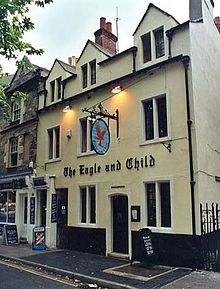
You slowly realize that you sit among the Gods, the creators of Middle Earth and Narnia, who hold court on Tuesdays at midday in a local public house. Perhaps it is The Eagle and Child, or The Lamb and Flag across the street. They read each other’s work and offer critique as writer’s groups have for centuries and continue to do so today.

220px-Birdandbaby

I may never have understood much or been accepted into such an elite. They would have torn my work to shreds on grounds of philological shallowness (I had it checked – it’s not contagious), criticized me for imprudently suggesting that a 100,000 word novel can serve as more than merely an introduction.

They would have demanded richer world-building – take twenty pages to describe a forest, I dare you – unyielding heroes, and infallible plots. They would have challenged the age-old legends dressed up in fictional costumes, and raised an eyebrow at some of the language or innuendos.

Most likely, I would never have dared reveal my stories to the old professors of Oxford, to the most famous writing group in history. I would never have been more than a fly on the wall at a meeting of The Inklings, but would have returned week after week to sit at the feet of the Gods and hear their banter.

For here the Gods gave birth to great worlds and left them as a legacy to us and to our children, long after they departed this world. Every Wednesday night, I sit around a table in a coffee shop in Berkeley, sharing work with other aspiring authors and wonder: do the Gods look down upon us from Writers Heaven?

lewis-and-tolkien1

Do they tut and shake their heads at our adverb addiction, our unwillingness to kill our darlings? Or do they even now move pieces around the literary chessboard. Protect the king! Advance the knights! Who, I wonder, are the pawns?

As we write a new book, a new chapter, do we not imagine the Gods walk among us?  Do they peer over our shoulders at our swanky writing machines, judging every word we write, every world we build? 

The Gods once sat in an old English pub. Now they stand behind us in coffee shops and at kitchen tables, urging us on, watching us walk the path they forged, taking on the quest they started.

For the Gods still walk among us and inside of us. The stories have been told but must be told again in different ways to a different generation. We sign these books in our own names, but humbly acknowledge those who molded us in their image as storytellers.

And now they are the flies on the wall and we who pound the keyboards. Take a moment, draw another pint, and raise your glass:

To the Gods of Fantasy!

 =========================================

Alon Shalev is the author of the 2013 Eric Hoffer YA Book Award winner, At The Walls of Galbrieth, offered by Amazon.com  for FREE on November 17-19. The sequel, The First Decree, and Ashbar – Wycaan Master Book 3 are all released by Tourmaline Books. More at http://www.alon-shalev.com and on  Twitter (@elfwriter). 

When Is An Elf Not An Elf?

Over the three days of November 17 -19, Amazon.com have decided to promote the 2013 Winner of the Eric Hoffer Book Award for YA – At The Walls Of Galbrieth. The novel will be offered FREE in ebook form.

This is a wonderful opportunity for me and I request that, to support my sales rank and me, you download the book and invites your friends to do the same. Feel free to gift it on (Thanksgiving and Hanukkah, anyone?).

To celebrate this and also the milestone of 100 blog posts on elfwriter.com, I wish to offer 10 of my favorite posts over the next three days. I hope you enjoy and, please, take a moment to download for FREE At The Walls Of Galbrieth and spread the word.

Thank you,

Alon

 =======================================

WHEN IS AN ELF NOT AN ELF?

Yes, my novel is compelling, special, well-written etc. just like the 499 other epic fantasy manuscripts sitting in the slush piles of every publishing house that offers YA epic fantasy.

I am working with an agent who is asking the challenging and insightful questions that will help my manuscript stand out from the rest. It is tough and I am feeling very possessive. Last week I shared his prompting to seek a Higher Concept.

One of the aspects that he wants me to consider is changing my elves, who make up many of the main characters and cultural references. He suggests that I consider changing the elves for a new, mythical race that will set me apart from the rest.

Let me state from the outset that I have no doubt this man knows far more than I about the publishing world, has considerable experience and understands the current state of the publishing world.

But my elves? Our elves? Those of us who grew up on Tolkien, Paolini, Brooks and others, have standards, images, friends. Legolas and Anwen, Arya and Blodgarm, and many others have created a rich and familiar texture. We welcome them surfacing as we settle into a thick novel. We embrace them because there are common threads that pass between authors. We call it a culture, those who don’t read fantasy roll their eyes.

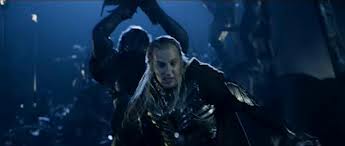
                               Noble Haldir – we owe him for Helm’s Deep, no?

Terry Brooks’ children know that he is not all there, he tells us as much when he opens his book Sometimes the Magic Works: Lessons from a Writing Life. More on this book in a later blog.

But Brooks in not dissimilar to the rest of us, just considerably more talented! We pass through a gate in our imagination and reacquaint in a world that exists in a shared consciousness.

Here the elves are tall, thin, light-footed and beautiful. They are fast and posses stealth and discipline. They are in touch with the energy of the earth, the forest, the animal kingdom. They excel in archery, crafts and healing. Perhaps they are aloof, elitist, and closed to the other races, but this comes from their ancient and rich heritage. We know and love them.

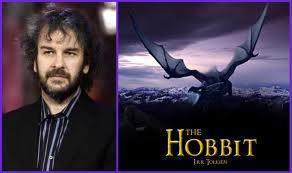
We rejoiced to learn that Peter Jackson is bringing Legalos into a prominent role in The Hobbit. Well, a few raised eyebrows, since Legalos was not even referred to by name in The Hobbit when he appeared flanking his father, the King of Mirkwood.

We accept, even with a bit of jealousy that he can fight at Helms Deep for five days, or run non stop for three and still not need to brush his immaculate hair. Nor do we care that his quiver seems to replenish itself, an occupational hazard of any archer who fights battles every other day.

We don’t mind because elves epitomize something that we identify with. We all want to be beautiful, brilliant, in excellent physical condition and, of course, environmentalists. When R.A. Salvatore created Drizzt Do’Urden and the dark elves of Menzoberranzan, a giant underground drow city-state he broke new ground.

Many of us were repelled and had it not been created in the hands of a master of fantasy, we would have rebelled. It was daring, it worked and by Book Three, we were rewarded with the typical elf one finds above ground.

It is tough to turn away from the basic tenets of epic fantasy: the teacher and student, the quest, the fight against a powerful evil, dwarves, elves, dragons, a rich natural world. There is something that has entered our collective consciousness and taken root.

It is why we read and reread the masters…and it is why we will return to read those who take over the role of entertaining us in a way that only epic fantasy does.

 =========================================

Alon Shalev is the author of the 2013 Eric Hoffer YA Book Award winner, At The Walls of Galbrieth, offered by Amazon.com  for FREE on November 17-19. The sequel, The First Decree, and Ashbar – Wycaan Master Book 3 are all released by Tourmaline Books. More at http://www.alonshalev.com and on Twitter (@elfwriter). Hang out with Alon on Google+
Interview With An Elf

This post has been sponsored by Tourmaline Books:  Award-winning epic fantasy ebook, At The Walls Of Galbrieth @ $0.99  only until Sunday – http://wp.me/p1Xaeb-fS  – It Was 99 Cents!

Wycaan Master 1 Just Front Cover

INTERVIEW WITH AN ELF

Interviewer: I would like to introduce Chamerak, an elf who appears in At The Walls Of Galbrieth, the first Wycaan Master novel by Alon Shalev.  Welcome, sir, and thank you for agreeing to the interview.

Chamerak: My pleasure. It is an honor to represent my people to receptive humans,

Interviewer: Receptive? Can you explain?

Chamerak: Once, long before you and I were born, a council that had representation from all the four races ruled the land of Odessiya. Eventually, humans broke from this coalition when they were discovered to have large colonies of slaves mining rich lands beyond our boundaries.

Most of those who were slaves then were dwarves, and the dwarves here insisted they stop. Slavery was not tolerated in Odessiya. There were the rich and the poor, to be sure, but every individual, regardless of race, had inherent rights.

Interviewer: What happened?

Chamerak: As well as large colonies of slaves, these humans had built huge armies too. There was a series of battles, culminating in one great battle. That was our most tragic moment.

The elven leaders had tried to broker between the humans and dwarves, though we were clearly on the side of the latter. Still, we had helped to find a diplomatic solution as we had for centuries since the great council had begun.

We spread our leaders too thinly and when the battles joined, our people were massacred. The humans won a decisive battle, the powers of the Emperor and his cronies were revealed. The dwarves, what were left of them, disappeared deep underground, and my people became a slave nation.

Interviewer: Literally slaves?

Chamerak: Yes. Those in the cities lived under total servitude. Others found refuge living in remoter villages, where they paid for their restricted freedom with crushing taxes that prevented them ever moving above the strain of poverty. Humans often came to have sport ­­– there were those who collected our pointed ears as trophies – or take if they wanted food or worse.

Interviewer: And all humans were like this?

Chamerak: Generally, yes. After a few generations, it became normal for them. They knew little else and were indoctrinated from birth to look down on us as an inferior race. But there were a few who were not like that.

In At The Walls Of Galbrieth, you will meet Uncle. He led a band of elves into the great forests, to live as freeborn and help other elves escape. Not long after I joined his band, we captured some humans. They did not fight us, but neither did they cower. We took them prisoners and a strange dynamic happened.

As we interrogated them, they began to ask us questions. At first, we thought it was a ruse to discover our secrets: where we hid, who our leadership was, and things like this. But they were different and we made a discovery that filled us with hope. Uncle, in his wisdom, was the first to realize this. I must admit: I wanted to execute them on the spot for just having round ears. I was young then and my life had been hard, though no different from those around me,

00013

Interviewer: What did this Uncle discover?

Chamerak: That not all humans were bad. That in the same way they had stereotyped us as stupid, inferior, lazy, unhygienic, etc., we too had stereotyped them as one type of human: violent, power-hungry, racist, you know.

Interviewer: What happened next?

Chamerak: Uncle invited them to join us. We kept them in a separate camp for a long time. But eventually, as trust grew between us, we became one band. Word spread of our mixed group and others sought us out. Other groups formed, including some who were committed to teaching rather than fighting.

Gradually, the old stories were told and there was an awakening of an older conscious. It is, I believe, what brought the Wycaans back into our histories, and what facilitated the coming of the Wycaan Master.

Interviewer: I have heard a lot of rumors about him. What can you tell me about­–

Chamerak: These are early days and it is better not to reveal too much. Wycaans are not just elves, but can be from any race. They can be male or female. You have made assumptions.

Interviewer: My apologies.

Chamerak: Assumptions are dangerous thoughts. They are what brought us to the racist society we live in. But there is hope.

Interviewer: How?

Chamerak: As long as the stories are being told, the narrative is being formed. It will be challenged and evolve and, hopefully, change for the better. It is the power of the books.

Interviewer: Rather fantastical, no?

Chamerak: Epically so.

images

——————————————————————————————————

Alon Shalev is the author of the 2013 Eric Hoffer YA Book Award winner, At The Walls of Galbrieth, Wycaan Master Book 1 and The First Decree, both released by Tourmaline Books. Ashbar – Book 3 – is due for release in October 2013. Shalev is also the author of three social justice-themed novels including Unwanted Heroes. He swears there is a connection. More at http://www.alonshalev.com and on Twitter (@elfwriter).

Gotta Love Terry Brooks

Just two weeks ago, I whined in Elves, Dwarves and Political Activists about being embarrassed that I write about elves, that people won’t take me seriously when I say I want to influence the values of the next generation, something I wrote about when I first started along this path back in 2011.

It’s nice to know that I am not alone in having to justify why I love to write about elves and dwarves. Terry Brooks, one of the greatest epic fantasy authors, has been facing these questions for over 30 years. You would think, given that he is a bestselling author, that people would cut him some slack.

 terry-brooks-150x150

But Mr. Brooks is the ideal person to deal with this, because he is…well he is…simply a mensch as I mentioned only a few months ago.

Grab yourself a cup of joe and sit back. Here in 15 minutes, he provides his answer, with a smile, a joke, and the confidence of one who is a master of his craft. Best of all, he does it with such humility and modesty.

 Gotta love Terry Brooks!

Enjoy the Solstice, everyone. From tomorrow we can now greet each other with Winter is Coming!

—————————————————————————————————–

Alon Shalev writes social justice-themed novels and YA epic fantasy. He swears there is a connection. His latest books include: Unwanted Heroes and the 2013 Eric Hoffer Book Award for YA – At The Walls Of Galbrieth. Alon tweets at @alonshalevsf and @elfwriter.   For more about the author, check out his website.

The Fatherly Figure in Fantasy

As a warm up for reading this blog, please  say the following five times as quickly as possible: The Fatherly Figure in Fantasy.

I shared some thoughts on Left Coast Voices regarding Father’s Day this Sunday. But it occurred to me that the father figures in epic fantasy gets a tough time. Here is a brief overview of a few of our beloved characters and their fathers (I acknowledge that I am encompassing a wide definition of the genre for this post. Purists – please excuse me this once).

WARNING: There might be spoilers here, so I am giving the name of the character first and won’t be offended if you skip that part.

1. Luke Skywalker:

I know this is sci-fi and not fantasy, but we have all hung there with Luke as his father, who had just chopped off his arm, now looms over him with a lightsaber. What a time to discover your father! As if it is not enough that your uncle and aunt who brought you up were murdered, now you discover your father is a metallic mass-murderer.

Suggestion: Do not buy Dad a lightsaber. It is the first step to the Dark Side and he already has plenty of power tools he never uses.

 images

2. Tyrion Lannister:

So your father abused you and openly hated and insulted you. As if you don’t have enough to contend with two older, beautiful siblings, who are bonking, or the fact that you were born stunted and are accused of killing your mother as she gave birth to you. Not hard to understand why A Lannister Always Pays His Debts!

Suggestion: Don’t give your father a ‘quarrel’ even if he deserves it.

 images-2

 3. Eragon:

Also grew up never knowing his true father and then, like Luke Skywalker, finds his uncle, who was like a father to him, is murdered in his stead. Of course, no sooner does he discover who his father really is, than he has to bury him, and take considerable blame for brave father’s death.

Suggestion: Giving your old man your dragon/porche just before he dies is classy, but do check your insurance policy first.

images-1

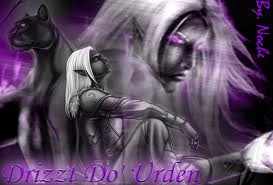
4. Drizzt Do’Urden:

Gotta give the dark elf considerable credit. He grew up in the Drow city of Menzoberranzan. where all males were merely fighters and concubines. Of course his mother and sisters abused him and tried to kill him, and by the time he discovered who his father really was, well…I don’t think he even got to bury him.

Suggestion: a bit stumped here. When your father gave you a genetic sense of justice, enough to turn you against your mother and sisters, what can you really reciprocate with? 

images-2

Artist – Noche

5. Frodo Baggins:

I admit, I had to look this up and cannot guarantee my sources. Frodo’s father was Drogo and we don’t know much about him other than he went and drowned in a boating accident. Hobbits should know not to participate in such dangerous and adventurous pastimes as boating. At least, Frodo had a nice secure upbringing with his first cousin once removed (and not his uncle as even dear Bilbo often referred to himself). It was not as though Bilbo passed on any artifact that was incredibly dangerous and held the fate of the entire Middle Earth!

Suggestion: Stay away from the jewelry!!!

images-3


In epic fantasy we gravitate to protagonists who are the underdogs, who overcome adversary, and make great personal sacrifice. But we also seem to be sending out a message to our young readers that the absent/weak/villain father is the norm.

It must not be so. Every young man deserves a father who is a role model, imperfect and flawed as we may be, but a father who will teach him to fish, nock an arrow, believe in a just society, and to be a good human being…or elf…dwarf etc.

I’m sure if we were to meet Luke, Eragon, Tyrion, Drizzt or Frodo in a pub, they would all agree that they wished they had fathers they could truly appreciate and learn from.

Perhaps being the best father you can is the greatest quest any of us can embark on. It may not save Middle Earth or Menzoberranzan, but it will make our world a better place to live in.

Happy Father’s Day.

—————————————————————————————————–

Alon Shalev writes social justice-themed novels and YA epic fantasy. He swears there is a connection. His latest books include: Unwanted Heroes and the 2013 Eric Hoffer Book Award for YA – At The Walls Of Galbrieth. Alon tweets at @elfwriter. For more about the author, check out his website.

Elves, Dwarves and Political Activists

“You can’t be serious!” she exclaimed, wrinkling her nose as though I had just made a pass at her, or uttered a politically incorrect sentiment. “You write about elves and dwarves running from one end of the world to another killing each other and making long speeches? I thought you were a serious writer.”

In honesty, she had not seen me for a few years, and even then, knew me in the context of my more political work environment. To her credit, she recovered and apologized, and I was able to refrain from pouring my drink into her lap. It was, after all, a good scotch.

images-2

Friend or not, intentional or not, it still hurt. I thought I had past this stage, smoothly presenting myself as ‘an author who writes in two genres’. I have practiced my opening line and it is now delivered with confidence.

I am involved in social justice causes. Even in my short eight years living in the US, I have built a fair resume of involvement. I have taken students almost every year to New Orleans, not only to help rebuild a community, physically and emotionally, but to bear witness so that the millennials will not make the mistakes we have. I have been involved in various campaigns here and abroad.  I know my local food bank well. Hey, you never had a black President before I came to the US! 

But yes, I love to lose myself in Middle Earth, Alaegasia, Westeros and, dare I add it to the list: Odessiya. It’s a nice break from the intensive campus environment to deal with stubborn dwarves and idealistic elves. While closeted in an urban concrete jungle, it is relaxing to ride a horse through ancient forests, over great ice plains, and to quaff an ale or puff a pipe (without the health risks) with good friends, all from a computer screen or ebook reader.

Fantasy1

 The San Francisco Bay Area is intensely populated by variety of the human species often identified by salt-and-pepper haired, wrinkled, colorful attire, and provocative bumper stickers. These aging ideologues have rich resumes of demonstrating against wars, civil rights. Watergate, and more recently, more wars, gay rights, and gun control.

While there are many who have fallen by the wayside, succumbing to burnout, those who have maintained their energy to keep demonstrating and fighting for what is right, all seem to have a secret place they go to recharge, relax, and to return energized to make the world a better place to live in. It might be literature, meditation, family, friends, food, nature … it doesn’t matter. As a friend once said: Fixing the world is a marathon, not a sprint.

hobbits in pub

Yeah, I write about elves and dwarves doing brave acts and striving for justice and honor. Sure I write about battles and loves, about friendships and magic, about the power of nature and good fighting evil.

It energizes me, often provides clarity and vision. And if I do occasionally wonder what Seanchai or Shayth might do about gun control or why some people are denied the rights and opportunities their neighbors have, well that’s because fantasy is not quite as far-fetched and detached from reality as my shocked friend might think.

God created the world in six day and on the seventh s/he rested…and may well have deservedly read Lord of the Rings.

 images-3

Here’s to whatever it takes for each of us to continue the journey we’ve chosen!

—————————————————————————————————–

Alon Shalev writes social justice-themed novels and YA epic fantasy. He swears there is a connection. His latest books include: Unwanted Heroes and the 2013 Eric Hoffer Book Award for YA – At The Walls Of Galbrieth. Alon tweets at @alonshalevsf and @elfwriter.   For more about the author, check out his website.


The Gods of Fantasy

Pass a summer evening in a quaint English pub, mid 20th century, perhaps in the old town of Oxford. Caress a pint and listening to a few graying professors discuss semantics, philosophy, and the ancient languages long forgotten outside the sheltered walls of academia. What else can one possibly ask for? 

imgres-1Imagine these tweed-clad, pipe-smoking academics, hatching more than another challenging semester to try the greatest minds of this fair isle. Each is a king in the making or, more accurately, a kingmaker. For they direct more than the destiny of kings and noble houses. They raise kingdoms and conquer lands. They build great dynasties, bring whole species back from the mists of extinction, and set those of noble birth and principle to stand against evil.

Sip your beer, mull over the words, much of which you might not understand. Dwarves, elves, of course: but hobbits? Marsh-wiggles? Listen as the professors strategize great battles, masterfully marshalling unicorns, dragons, giants, minotaurs and proud ents. 

You slowly realize that you sit among the Gods, the creators of Middle Earth and Narnia, who hold court on Tuesdays at midday in a local public house. Perhaps it is The Eagle and Child, or The Lamb and Flag across the street. They read each other’s work and offer critique as writer’s groups have for centuries and continue to do so today.

220px-Birdandbaby 

I may never have understood much or been accepted into such an elite. They would have torn my work to shreds on grounds of philological shallowness (I had it checked – it’s not contagious), criticized me for imprudently suggesting that a 100,000 word novel can serve as more than merely an introduction.

They would have demanded richer world-building – take twenty pages to describe a forest, I dare you – unyielding heroes, and infallible plots. They would have challenged the age-old legends dressed up in fictional costumes, and raised an eyebrow at some of the language or innuendos.

Most likely, I would never have dared reveal my stories to the old professors of Oxford, to the most famous writing group in history. I would never have been more than a fly on the wall at a meeting of The Inklings, but would have returned week after week to sit at the feet of the Gods and hear their banter.

For here the Gods gave birth to great worlds and left them as a legacy to us and to our children, long after they departed this world. Every Wednesday night, I sit around a table in a coffee shop in Berkeley, sharing work with other aspiring authors and wonder: do the Gods look down upon us from Writers Heaven?

 lewis-and-tolkien1

Do they tut and shake their heads at our adverb addiction, our unwillingness to kill our darlings? Or do they even now move pieces around the literary chessboard? Protect the king! Advance the knights! Who, I wonder, are the pawns?

As we write a new book, a new chapter, do we not imagine the Gods walk among us?  Do they peer over our shoulders at our swanky writing machines, judging every word we write, every world we build? 

The Gods once sat in an old English pub. Now they stand behind us in coffee shops and at kitchen tables, urging us on, watching us walk the path they forged, taking on the quest they started.

For the Gods still walk among us and inside of us. The stories have been told but must be told again in different ways to a different generation. We sign these books in our own names, but humbly acknowledge those who molded us in their image as storytellers.

And now they are the flies on the wall and we who pound the keyboards. Take a moment, draw another pint, and raise your glass:

To the Gods of Fantasy!

—————————————————————————————————–

Alon Shalev writes social justice-themed novels and YA epic fantasy. He swears there is a connection. His latest books include: Unwanted Heroes and the 2013 Eric Hoffer Book Award for YA – At The Walls Of Galbrieth. Alon tweets at @alonshalevsf and @elfwriter.   For more about the author, check out his website.


Finding Mythical Places Everywhere

A while ago, I wrote a post about meeting elves in coffee shops. The point was that…well you can read the point for yourself, but there is more along these lines.

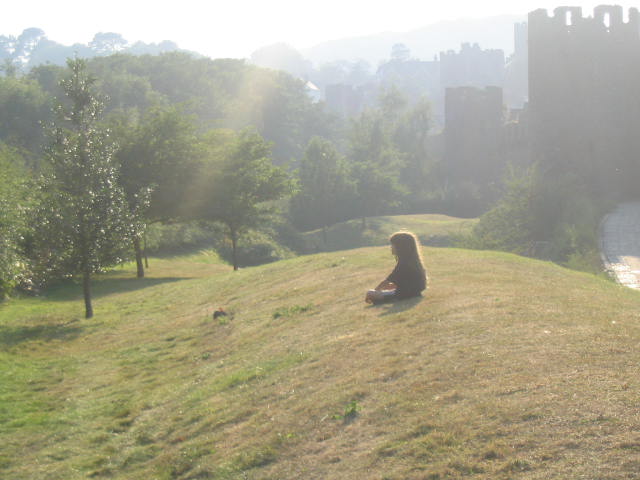
I grew up in England with real castles, stately homes, wattle and daub cottages, and signs of a more ancient, Pagan culture everywhere. I was not writing fantasy back then but imagine I would find a lot of inspiration there. Two weeks sitting in a castle in Wales writing – is that a business expense?

Meditation

My eldest at Conway Castle, Wales, several years ago. He sat there for hours, transfixed in a world of his own.

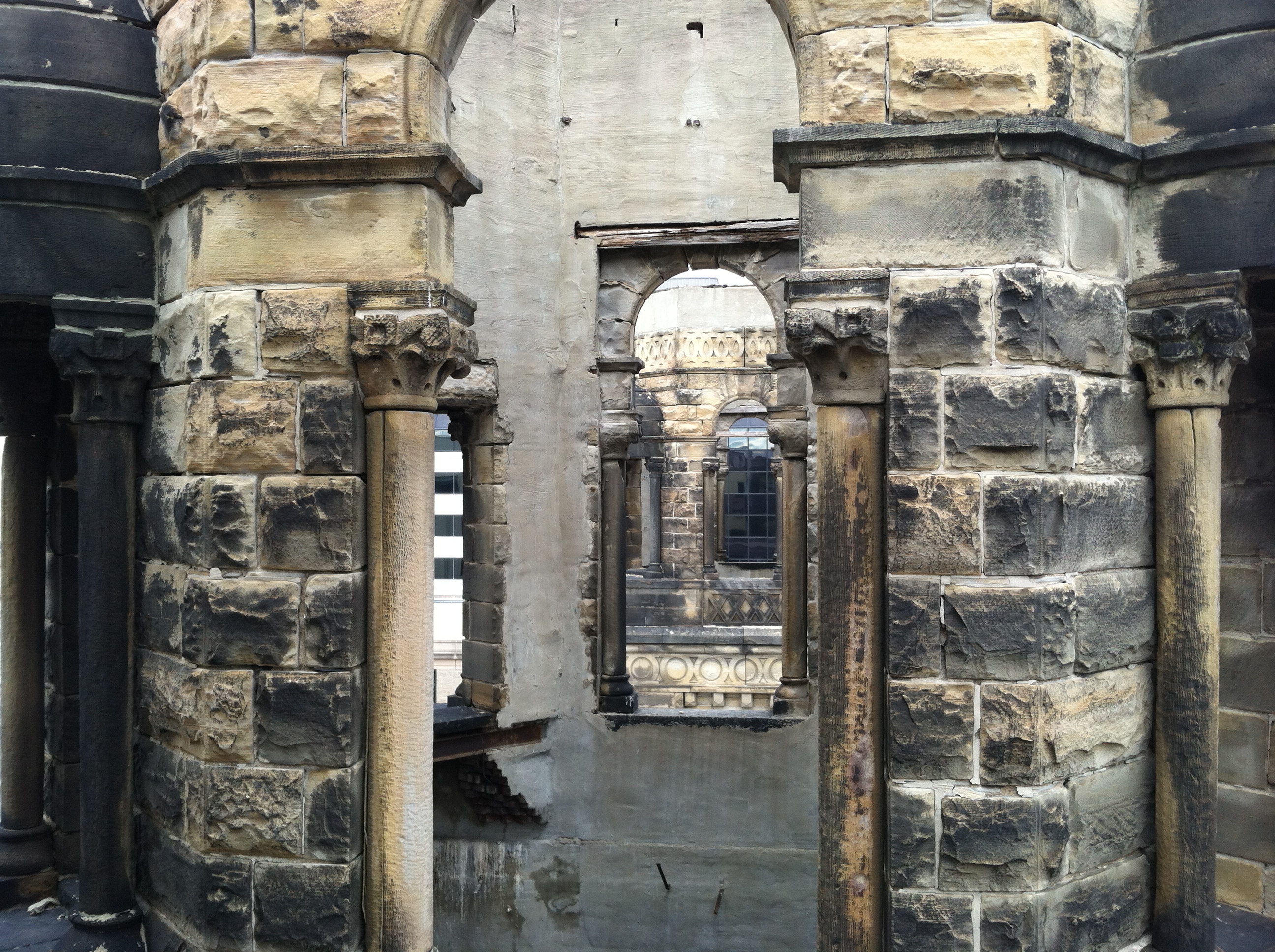
But we actually don’t have to travel too far. I attended a conference in the heart of Washington ‘DC Chinatown. I stepped outside the meeting room on the 7th floor  for some fresh air and stared at this:

Ruins by Hillel SIC

Today, I was at the Ferry Building in San Francisco and noticed Old Glory flying at half-mast in respect of the victims of the Boston Marathon attack. The sky was a rich blue and the flag and tower looked glorious. I could imagine Seanchai and friends arriving on a boat (do you pay the toll riding over the Bay Bridge on horseback? Do three horses and riders make a posse or qualify for the casual car pool?).

Interestingly, I crossed the Embarcadero between the Ferry Building and Bay Bridge and saw a restaurant with gargoyles and (what looked to me) a sign that could have been written in Medieval lettering. It could have been a tavern or pub for thirsty travelers before they put five Peet’s Coffee and nine Starbucks in the mile-square Financial District.

My point is that writing fantasy is as much a state of mind. When I am actually writing a story (as opposed to editing or marketing), which is about 4-5 months of the year, I notice these things as though they are only around for this time of the year.

Tunnel

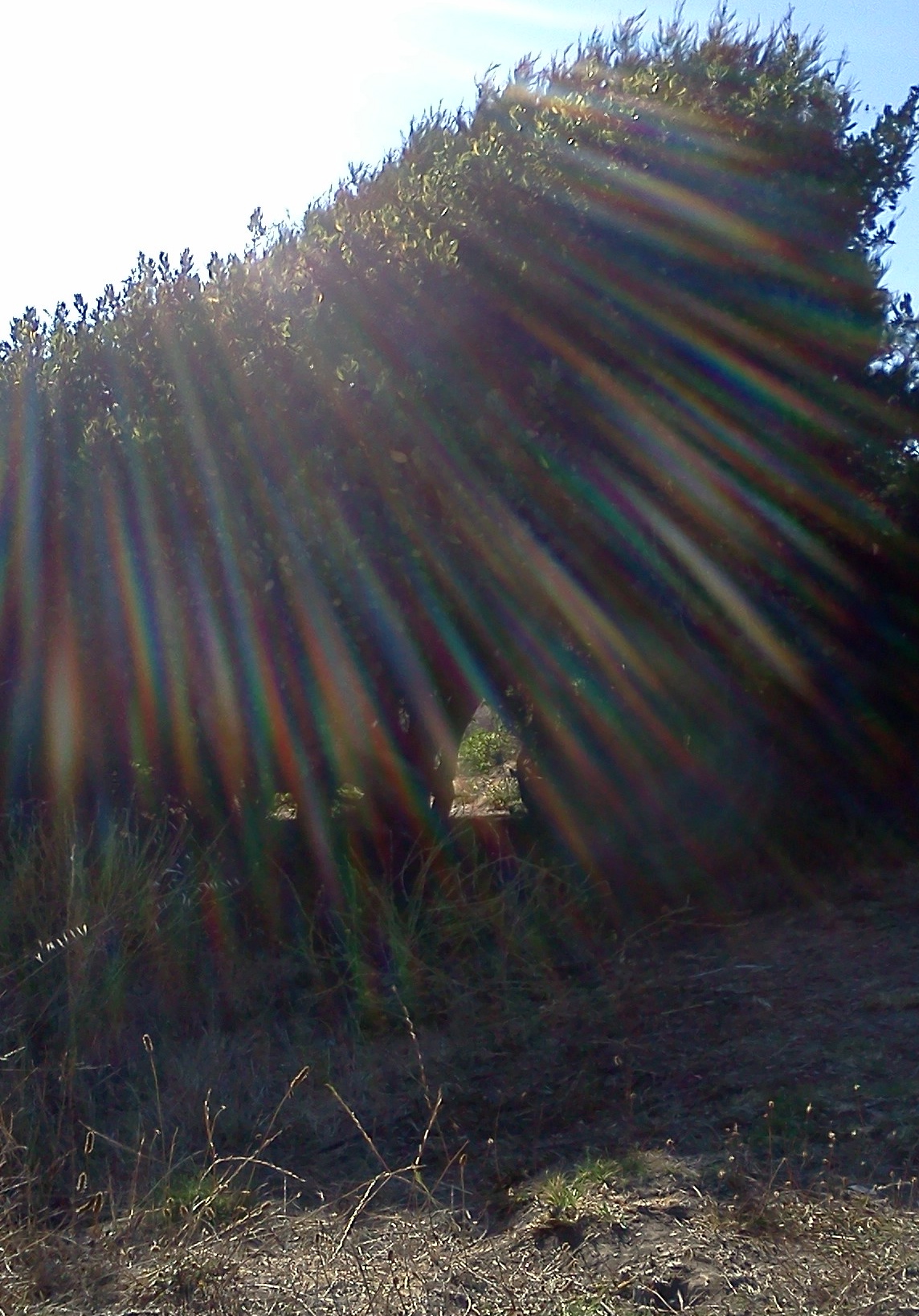
Picnic at our local park. Younger son discovered this tunnel. We sat in here and discussed how to use it in the book I was writing at the time.

It is why I see elves in coffee shops and get invited underground by hospitable dwarves. It enriches the already beautiful vistas, forests and rivers of Northern California where I explore. It is what makes my kids and I respond when we see a beautiful natural scene by exclaiming: Alagaesia! (You can blame Christopher Paolini for this. I hope he’s touched).

It is why Terry Brooks claims that ‘Sometimes The Magic Works.

Have a mystical weekend.

—————————————————————————————————–

Alon Shalev writes social justice-themed novels and YA epic fantasy. He swears there is a connection. His latest books include: Unwanted Heroes and At The Walls Of Galbrieth. Alon tweets at @alonshalevsf and @elfwriter.  

Everyone Wants To Be An Elf

How many times have you uploaded an article or song on the Internet and then got lost surfing through hundreds of comments underneath? Whether discussing politics, sports, or comparing the lead singers of Nightwish, it gets ugly very quickly. If you need to stock your insult arsenal, You Tube comments is the place to go – but a shot of JW or an anger management course might be more effective, long term…just saying, calm down.

Earlier this week, I played a Gothic music play list (that I can’t find now) while I wrote a new chapter for Book 4 of the Wycaan Master series. I made the mistake of perusing the comments and they were eye opening.

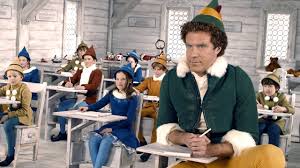
Tens of people (and I did not check all 2,000+ comments) wrote why they would love to be an elf. Just for the record, I believe people were imagining Legalos and not Will Ferrell or any of his fine companions.

 imagesimages

But there they were: some frivolous, but many, well, I believe laced with a genuine desire. They seemed to resonate with something deep inside, something lost.

Some spoke of the physical attributes – tall and thin, healthy (have you ever seen an elf sneeze? – they even die beautifully – yes I’m talking about you, Haldir, at Helm’s Deep, I’m sure you remember), long living, nimble, coordinated… 

images-1

Others mentioned emotional attributes – decisive, confident, calm, intelligent, loyal mates (I plan to research this – I did a quick search for the Rivendale Daily Enquirer but they only distribute in the Western Isles).

And there was also an interesting assortment of comments such as: they could trust their leaders; they were in touch with nature… 

When I began writing the Wycaan Master series, it was clear to my sons and me that we didn’t want to make the elves (most of our protagonists) perfect. They get angry, make wrong decisions, feel abashed at that first kiss, and seem more…well human (ouch!).

In fact, one of the comments that surfaced as I read At The Walls Of Galbrieth to my writer’s group wass that I failed to distinguish them as elves. I struggled to do this without stepping into the familiar stereotypes. As I write Book 4, things have become somewhat darker, with the protagonists facing greater personal challenges. I continue to find it difficult to strike a cord between making my elves special without them losing their genuine, vulnerable side.

Finally, as I write this, I am listening to The Hobbit soundtrack. There is a long thread of comments, disagreements, and debate. But this is the comment that caught my eye:

RobbieBjork17 wrote: “Holy Crap that was one_ of the most educated conversations I’ve ever read on youtube…. shoulda known it was going to be Tolkien Fans ;).”

It made me absurdly proud to feel a part of the Epic Fantasy nation.

images-2

——————————————————————————————————

Alon Shalev is the author of At The Walls of Galbrieth, Wycaan Master Book 1 and The First Decree, both released by Tourmaline Books. Shalev is also the author of three social justice-themed novels including Unwanted Heroes. He swears there is a connection. More on Alon Shalev at http://www.alonshalev.com and on Twitter (@elfwriter).