10 Questions For J.R.R. Tolkien

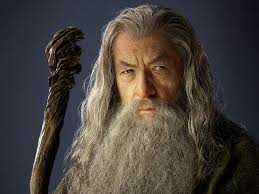
This blog post was inspired by a Time interview with Sir Ian McKellen, who plays Gandalf, the wizard who… if you are following this blog, you already know. It is a fascinating interview given that  J.R.R Tolkien was Catholic and McKellen is gay.

imgresThe interview is:

Timely: the difference between the making of The Hobbit and Lord of the Rings is that Peter Jackson now wears shoes.

Funny:  “No one ever ablutes in Middle Earth.” and…

Poignant: When he visits a public school in England

One of the questions asked of McKellen is what would he ask Tolkien if he could meet him. This got me thinking: I have already shared that I think a lot of Tolkien and Oxford, and The Inklings Club.

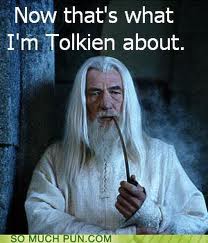
So, if you are up there in Writer’s Heaven, quaffing on an ale or puffing your pipe, there is a student down on earth trying to emulate your literary work with a few questions.

1. Did you ever get embarrassed or try to hide your fantasy writing from your academic peers?

2. Did World War 1 provide you with the imaginary and emotional background for Lord of the Rings?

3. Why Hobbits? Who is your favorite character in either The Hobbit or Lord of the Rings?

4. If you were writing either LOTR or The Hobbit today, would you change anything? Different ending?

5. What do you think of the movies?

6. Is Peter Jackson out-of-line to make such radical changes to The Hobbit as including a character who is not from the book?

7. Who is your favorite fantasy author?

8. I know the story of how the first line of The Hobbit came to you (the blank academic paper you were grading), but how did you really come to write a fantasy series?

9. Mac or PC?

10. My critique group has room for one more. Would you consider…

imgres-7The reality is that if I ever found myself in front of the Professor, I would probably stammer and blush, and make a complete fool of myself. So help me out, just in case one day…

What questions would you ask the greatest epic fantasy writer of all time?

——————————————————————————————————

Alon Shalev is the author of the 2013 Eric Hoffer YA Book Award winner, At The Walls of Galbrieth,  the sequel The First Decree, and Ashbar – Wycaan Master Book 3, all released by Tourmaline Books. Shalev is also the author of three social justice-themed novels including Unwanted Heroes. He swears there is a connection. More at http://www.alonshalev.com and on Twitter (@elfwriter).

Cute Tolkien Story

I am indebted for the story in this post to the author, Peter Smalley so I want to first give him a shout-out. “Peter A. Smalley was not so much born as he was the object of a suitably ominous origin story.” If you want to know more, click on the link above or check out his latest book – Emerald City Blues

Remember This Guy?

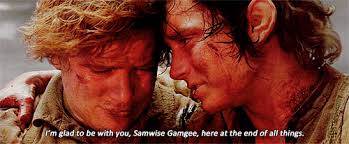
“I’m glad to be with you, Samwise Gamgee, here at the end of all things.” This is friendship!

 So here is the (true) story.

In March 1956, J.R.R. Tolkien was surprised to receive a letter from a man named Sam Gamgee from Tooting, London. Mr. Gamgee, who had not read Lord of the Rings, was surprised to hear that his name had been used in the story. The Professor responded in a letter of his own.

“Dear Mr. Gamgee,

It was very kind of you to write. You can imagine my astonishment when I saw your signature! I can only say, for your comfort, I hope, that the ‘Sam Gamgee’ of my story is a most heroic character, now widely beloved by many readers, even though his origins are rustic. So that perhaps you will not be displeased at the coincidence of the name of this imaginary character of supposedly many centuries ago being the same as yours.”

– The Letters of J.R.R. Tolkien: Letter 184

dsc04663-e1378821253884
Being the gentleman he was, Tolkien also sent him a signed copy of all three volumes of the book. This incident did, however, worry the professor who wrote in his journal:

“For some time I lived in fear of receiving a letter signed ‘S. Gollum’. That would have been more difficult to deal with.”

– J.R.R. Tolkien: A Biography

Oh well, need to fill the void for the next 1,464 hours (at the time of writing) until the second Hobbit movie!

imgres 

Finally, thank you to everyone who bought Ashbar – Wycaan Master Bk. 3, which celebrates its 10th day in publication!

 ——————————————————————————————————

Alon Shalev is the author of the 2013 Eric Hoffer YA Book Award winner, At The Walls of Galbrieth, Wycaan Master Book 1 and the sequel The First Decree, both released by Tourmaline Books. Ashbar – Book 3 is the third in the series, released in October 2013. Shalev is also the author of three social justice-themed novels including Unwanted Heroes. He swears there is a connection. More at http://www.alonshalev.com and on Twitter (@elfwriter).

The Journey Just Gets Better

It has been quite a week with the release of Ashbar – Wycaan Master Book 3. I am feeling slightly stunned by the closure of the first trilogy. Like At The Walls Of Galbrieth and The First Decree, Ashbar is a self contained story as well as the third in a series.

Ashbar front cover

There is a lot of closure, though not enough to stop the next trilogy from beginning, and I feel a certain sense of forlorn, perhaps as a parent feels when their children leave the nest.  I know the remedy to this – plunge into writing the next book. As the wise saying goes: “One trilogy closes, another opens.

Thank you to everyone who bought Ashbar over the weekend and enabled it to pick up a credible ranking. Please let me know what you thought of it, once read, and leave a review on Amazon. I am surprised at how important these reviews are in terms of trackable purchasing actions and sales ranks. If you have not yet bought it, please invest the $2.99 this week, to help move it to a higher ranking.

I just want to take a moment and thank the incredible support team behind me.

Monica Buntin is my editor. I send her a jumble of about 100,000 words and she makes sense of them. I once had the audacity to tell her that I was sending a pretty clean manuscript. She had the good manners not to respond to that comment, but that didn’t deter her from cutting about 10% of the book and offering (correct) critique on every page.

Oh well. I learned my lesson. Editors are an eclectic breed and I have written about them before. They need authors or they will have nothing to edit and yet have to, I am sure, tolerate an awful lot of ego. When an author finds a good editor and one who clicks with them, they have a rare asset and would do well to keep them.

William J. Kenny, a fantasy author in his own right, designed the covers for all three of the Wycaan Master books. One day, I would like him to reveal the creative process in depth. For now, I am content to consider it magical. I send him a couple of paragraphs with my ideas and he sends me a crude image. He takes my response and produces such a complete picture. I am really in awe of him. If I could draw anything better than deformed stick people, I would love to give the process a go.

Then there is Jeny Reulo from FastFingers Book Formatting Services,  who designs and formats the interior of the books. Her willingness to make changes and attention to detail is amazing. The interior design of a book, if done well, does not garner any attention, but it is a crucial element in the reader’s experience. The interior designers are often the unsung heroes of the expedition into producing a book.

Finally, a big appreciation for my wife Ariela. I am sure she releases a big sigh of relief on the day that I finish writing a manuscript and probably an even bigger sigh of exasperation when, the following week, I begin writing the next book! My absences, both physical and mental, create a void she needs to fill, and she does it with grace and understanding.

This series began as a fun, family project, deep in a redwood forest. My sons were a part of this strange journey, from the prologue in Chapter 1 of At The Walls Of Galbrieth, to the final climax in Ashbar. Earlier this summer I read them a rough first draft of Book 4, and, four years on, it remains an integral part of what I hope and believe is a powerful journey we will share in our memories forever.

This is how it all began - deep in a redwood forest.

Where it all began – deep in a redwood forest.

It really doesn’t get any better than that. Once again, thank you to all who buy, read and review the Wycaan Master series. Your time is precious, the options of good books to read vast, and I am honored that you choose to open and read my books.

Thank you for sharing in the journey of the Wycaan Masters.

——————————————————————————————————

Alon Shalev is the author of the 2013 Eric Hoffer YA Book Award winner, At The Walls of Galbrieth, Wycaan Master Book 1 and the sequel The First Decree, both released by Tourmaline Books. Ashbar – Book 3 is the third in the series, released in October 2013. Shalev is also the author of three social justice-themed novels including Unwanted Heroes. He swears there is a connection. More at http://www.alonshalev.com and on Twitter (@elfwriter).

World-Building: How Much Detail?

I’ve noticed a number of adult reviewers of my Wycaan Master series have been critical of my world-building, suggesting that I do not go deep enough or that the books are too fast-paced and that more description of scenery and environment would help to pace the book.

There seems a definite age issue here. I asked a number of my sons’ friends (ages 10-16) who have read the book and they did not agree. In fact, the younger readers were happy to describe to me the fortress of Galbrieth from Book 1, and mighty Hothengold, the dwarf capital, which is situated in a huge cavern. Admittedly, each child described it differently, but I am not sure that matters.

Girl Browsing Books at the Library

It seems there is a certain richness in each (young) reader’s imagination forming their own world, but why do adult readers not want to exercise their minds in such a way? Why does the generation of instant gratification seem willing to work their imagination muscles, while those who always had to work hard to discover anything, do not? In an earlier blog post – The Art of World Building – which I wrote at the beginning of my epic fantasy writing journey – I assumed that it would be exactly the opposite.

I suspect age is not always a factor. The adult who is often challenged to find reading time, wants to push the plot along, something my books are complimented for, and not spend a chapter describing every tree in Mirkwood. Ironically, when the same readers lost themselves in Tolkien’s Middle Earth decades ago, they had more free time to meander with the master.

Over the summer, I have indulged myself in writing an adult fantasy novel, a Game of Thrones wannabe, and I will soon shelve it to focus on editing Book 4 and writing Book 5 – the cycle never ends. But I realize I have been no more generous with my world building than for the Wycaan Master series.

Airship10

So my question to you, dear readers: How much detail of the environment is needed for a YA in comparison to an adult fantasy novel? Is there enough world-building in the Wycaan Master series? Please feel free to leave your feedback in the comments section below. I really appreciate every comment.

Talking of feedback: I have been reading a number of books about Amazon.com and how to improve your ranking and exposure. I really need reviews on both At The Walls Of Galbrieth and The First Decree, on both the US and UK sites. Apparently less than 3% of readers leave reviews and I admit, until I began writing, I was one of the 97%. But now from the other side of the fence, I would really appreciate that if you have read either book, please take five minutes and leave a review.

It will be a huge help to a struggling author and if ever we meet in Odessiya, the next round of ale will be on me!

hobbits in pub

——————————————————————————————————

Alon Shalev is the author of the 2013 Eric Hoffer YA Book Award winner, At The Walls of Galbrieth, Wycaan Master Book 1 and The First Decree, both released by Tourmaline Books. Ashbar – Book 3 – is due for release in October 2013. Shalev is also the author of three social justice-themed novels including Unwanted Heroes. He swears there is a connection. More at http://www.alonshalev.com and on Twitter (@elfwriter).

Epic Fantasy, Epic Tattoos

I take my tattoos pretty seriously and see them as a rite-of-passage. I have three, each celebrating a landmark event. I got the first when Ms. Elfwriter and I got married and the other two when my sons were each born. I often joke that the reason there will not be a third child is that I can’t afford the tattoo. I actually did plan another tattoo to celebrate the Wycaan Master series, but I haven’t done it yet.

I have often wondered about incorporating my love for body art into my books. I have this association, when it comes to fantasy, of tattoos and the bad guys. If they are essentially used to signify evil, I take issue.

eragon_film_eragon_rescues_arya

Having just discovered the Iron Druid series, I have found at least one author who has delved more than a cursory skin deep level (couldn’t resist).

Hearne’s protagonist is a Druid who draws power from the earth … through his tattoo. Hearne describes the tattoo beautifully as it moves from the soles of his feet to cover all the energy points on his body. In Book 1, we even learn something of the significance and the process. Note to Mr. Hearne – we, the readers, would love to learn more of this.

imgres-1

Credit to another writer – Paul Goat Allen – who wrote a blog post that asked what is your favorite literature image that you can imagine making into a tattoo.

But, as an author of Young Adult fantasy, is it okay to romanticize or elevate the art of tattoos? Certain religions forbid it – I will not be allowed to be buried in a Jewish cemetery since I have defiled my body, which was created in G-d’s image.

Putting aside any desire for my ashes to be thrown from the Golden Gate Bridge (there is probably a law against that as well – but hey, I’ve already apparently pissed off YAWEH) – there are many parents who, I am sure, do not want their children getting a tattoo on the whim of a fictional character.

My own sons, justifiably proud that I bear a tattoo of each of them, have already told me of the various images they plan to emblaze on their bodies. I promised that when they are 18, if they still want them, I will take them to get their first tattoos (to add proportion, I have also promised to buy their first round when they turn 21 – good parenting, I am told, is all about consistency). I do, however, also point out the painful process, which helps to somewhat quell their impatience.

imgres-2

And yet tattoos do have a rich, spiritual past. If fantasy authors are trying to illustrate such a fantastical bygone age, why should we shirk from a bit of body art? I am trying to imagine a conversation with a concerned parent.

“Look, Mr. Shalev, I really appreciate that you have written several books that my son is enjoying more than endless video games, but really! He now wants a tattoo. Do you have to keep harping on about it? It is so crude.”

“Crude?”

“Yes. All those needles and blood.”

“Have you told your son about this process?”

“Goddess no. He would have nightmares, poor little tyke.”

“Has he told you about the fighting in my books, slaying good and bad guys with swords and bows?”

“Oh yes. He wants to take up archery, the sweetie. At least it will get him out of the house, I say.”

“Great. By the way: what’s his favorite video game?”

“Grand Theft Auto. He just loves his little cars.”

“Do you have a problem with that?”

“Of course not. Burt Reynolds starred in the movie you know. Anyway, it’s only a game.”

True, I think. Only a game. This is literature!

And to end with a question in the vein of Paul Goat Allen’s post: What fantasy image, character, or phrase, could you imagine having tattooed onto your body? Answers in the comments, please.

Thank you! Have a great week.

——————————————————————————————————

Alon Shalev is the author of the 2013 Eric Hoffer YA Book Award winner, At The Walls of Galbrieth, Wycaan Master Book 1 and The First Decree, both released by Tourmaline Books. Ashbar – Book 3 – is due for release in October 2013. Shalev is also the author of three social justice-themed novels including Unwanted Heroes. He swears there is a connection. More at http://www.alonshalev.com and on Twitter (@elfwriter).

That Magical Time of Year – Better Than ‘Real’ Fantasy

Once a year, my family goes away camping in the mountains of Northern California or Oregon. All day we fish, hike, swim, explore and then after dinner sit around the campfire or snuggle up in my tent. This is the fourth year that I then open up a folder and read to my boys the completed first draft of the next book in the Wycaan Master series.

My boys listen, interrupt with question, comments and sometimes criticism. The latter is becoming increasingly sophisticated as they not only spot spelling or grammar errors, but when a character goes out of voice, or the plot is inconsistent.

During the day, while out on another activity, one of them might turn around and offer an idea or feedback. My youngest (10 years old) may well tell me what he guesses might happen next. I have told him that he is not allowed to share anything in an unpublished novel with his friends – many of whom are reading the series. He is to arch an eyebrow (Spock would be proud – if he ever felt emotions) and say Maybe. When he offers his predictions, I turn to him and smile, as evilly as I can muster: Maybe.

imgres

It elevates an already wonderful family vacation into the realms of magical and I feel truly blessed that we are building these communal memories together and hope they will stay with us as my boys grow up and walk their own paths.

Together with this is the excitement building for the book launch of Ashbar – Wycaan Master Book 3. Pages have been added at alonshalev.com and here on the elfwriter blog.

It is turning into an amazing year with The First Decree and Ashbar being published, and, of course winning the 2013 Eric Hoffer Book Award for YA. I am truly gratified that along the way I am making many new friends through twitter and the blog, and even some face-to-face networking (yes – it really happens!).

In this brave new publishing world, an author can only succeed with ‘a little help from his friends’ something Joe Cocker was preaching long before any of us knew that a chat room was a place you could hang out in pajamas or that we would love a tablet that is too large to swallow.

imgres-2

I appreciate all the retweets, the recommendations and the reviews. My mentor is telling me that I am not accruing enough reviews. Please, if you have read either At The Walls Of Galbrieth or The First Decree, take a few minutes to leave a review. If you are in a Google+ group, a Goodreads group, or on a thread of epic fantasy book aficionados, please make a recommendation to begin the series. I am following a thread on Amazon called Life after Game of Thrones and checking out the authors they suggest.

I really believe that, even in the rich online world, word-of-mouth remains the most effective marketing tool. On Thursday, a friend enthused about this new author he has discovered. I came home, checked him out, and his first book is on my wish list.

To those of you who already advocate for my novels and my path as an author – thank you. My relationship with my boys and the support you give me are what makes my epic fantasy truly magical.

—————————————————————————————————–

Alon Shalev writes social justice-themed novels and YA epic fantasy. He swears there is a connection. His latest books include: Unwanted Heroes and the 2013 Eric Hoffer Book Award for YA – At The Walls Of Galbrieth. Alon tweets at @alonshalevsf and @elfwriter. For more about the author, check out his website.

YA Epic Fantasy Readers and The Ebook Revolution

Last week’s post, Sex and Swords, generated a lot of great comments and a sound discussion. In the post, I wondered whether the author I was comparing myself to was selling more books than me because his audience are adults. Given that both of us sell more ebooks than tree books, am I likely to sell less books because young adults do not have the access to ebook readers that adults enjoy? Wait a moment  I need to tell my sons to get off screens and go play…

I wrote a post on another blog a couple of years ago and have taken material from there for this. There are a number of authors who have become bestsellers riding the ebook revolution. Amanda HockingJ.A. Konrath, and my own marketing guru, John Locke. But none of these fine people write for young adults (10-18 year old) – my primary market for the Wycaan Master series.

teenelectronic_396Laura Hazard Owen recently wrote: “The children’s and young adult e-book market faces special challenges not shared by the adult market, new research shows. And teens are slow to adopt ebooks, in part because they do not see ebooks as a social technology and they think there are too many restrictions on sharing digital titles.”

She reached her conclusion based on two online surveys commissioned by PubTrack Consumer towards the end of last year who surveyed 1,000 teenagers and 1,000 parents of pre-teens. The details of the survey can be found here – Children’s Publishing Goes Digital.   There are some interesting theories and statistics here. Firstly, youngsters are extremely social and want to share their books with friends and e-book technology is perceived as too restrictive. This is changing now and Amazon has been quick to identify this need. I thought that perhaps the teens did not have access to comfortable ebook readers. The majority has cell phones, but I am not including this. 60% of those surveyed receive technology from their parents as the latter upgrade.

images-7Ms. Hazard Owen makes another excellent point It is not just young adults propelling YA books like the Hunger Games trilogy onto ebook bestseller lists:

– 30-44-year-olds constitute 28 % of YA print book sales and 32 % of YA ebook sales.

-18-29-year-olds buy the most YA books, purchasing 31% of YA print sales and 35% of YA ebook sales.

Making a decision to invest in the YA fantasy ebook market doesn’t look as attractive as genres aimed at adults, but this is going to change as more young people receive the necessary devices. Also, the realization that the YA market goes not from 12-18, but 12-44 year olds make for a more encouraging prospect.

images-1A final interesting point is that this age group is more likely to buy a book because of a recommendation on a social network. Perhaps this prompted Amazon to make the investment to purchase Goodreads.

Now, please excuse me, this 49-year-old is going to read The Hunger Games, recommended to me by my 14-year-old son.

—————————————————————————————————–

Alon Shalev writes social justice-themed novels and YA epic fantasy. He swears there is a connection. His latest books include: Unwanted Heroes and the 2013 Eric Hoffer Book Award for YA – At The Walls Of Galbrieth. Alon tweets at @alonshalevsf and @elfwriterFor more about the author, check out his website.


Sex or Swords?

I recently finished reading an epic fantasy novel by an author who is perhaps a year ahead of me. He is a couple of novels deeper into his series and seems to have a similar, but not bigger, social platform. 

But his books are selling impressively and I enjoyed reading his work, but there was nothing in the quality of the plot, writing, etc. that suggested why he is outselling me.

There are a lot of things in common between our novels. They are both character driven and, though there is a clear plot arc, you really stay engaged because you are rooting for the characters. There is plenty of action and moral dilemmas. If and when I write a review, and I definitely will because this is so important to the author (hinting here!), I realize that it would be similar to many of the reviews I have received for At The Walls Of Galbrieth and The First Decree.

imgres 

But there are two fundamental differences, perhaps three.

1) His novels are meant only for adults.

2) There is a fair amount of sex.

There is also considerable swearing, but I don’t think someone buys a book because of the swearing. It might deter a few people, but not act as motivator.

These differences lead me to wonder about whether young adults are reading ebooks – which remains the most popular with all struggling authors – and I will examine this next week.

But for now, I want to focus on sex. Let me be honest. I’m very fond of sex and I enjoy reading and writing about it. In my non-fantasy novels, there are probably two graphic sex scenes in each. I believe that the way my characters deal with sex, before, during and after, reveals far more than any long description can ever hope to achieve.

All three books ­– A Gardener’s Tale, The Accidental Activist, and Unwanted Heroes – have garnered criticism from a few reviewers who were upset or disturbed by what they read, but there are many others who mention it positively. There was nothing 50 Shades, or anything violent or forced in these scenes and, in truth, I remain proud of them, even when I know my mother and mother-in-law have read them!

A Gardener's Tale  - new cover

However, what is the place of sex in epic fantasy? The book in question has two sex scenes and neither are particularly graphic or explicit. Throughout the novel there are sexual references but little more than men’s comments or a woman’s thoughts. Both scenes were written well and felt part of the story. Both added to the richness of the characters.

 I have wondered about Game of Thrones, in particular because my 14-year-old is interested in reading and watching the series. I have no doubt that George R.R. Martin wrote what he understood to be sexual mores of that period and I agree that it probably happened as he described, but the sex was clearly not a turn on for me (neither was it for most of Martin’s characters come to think of it).

Much of the sex were men exploiting their power over women and a few scenes are of women who manipulate men to get something they want through sexual favors or binding the men’s lusts to them. All good stuff, perhaps, but not something I want to share with my teenage son.

imgres-6

I want him to know about sex as something romantic, a bonding act between two people who love each other. I want him to know that anything that is not two consenting adults pleasuring themselves and each other, is deviant. It might not necessarily be wrong, but that is for him to decide according to his values.

In the Wycaan Master series, I touch on many values and morals. I challenge the young adults who read my books to make choices about race, violence, friendships, loyalty, and enjoy it when I hear my son or his friends comment that they are proud/disappointed/upset/ happy about the actions of a character. I like that they feel guilty, understanding and maybe partly rooting for the bad guys. Nothing is ever black or white.

images-1

But what about sex? There are certain hints in my novels that some things are going on, but it is easily missed if a young adult is not thinking about such topics. To write about sex, even in a tasteful youth-orientated way, would strip my novels of being YA (young adult). I would lose the initial motivation of writing to influence a new generation. 

Is it possible to write in sexual scenes in a YA novel? Most parents do not vet a book, trusting that if it has received recognition as YA then it will not include certain things such as swearing, graphic violence, or sex.

I do not want to step away from the target audience that so intrigues me and I am not sure I am ready to abandon them. However, I am frustrated that there are strict boundaries, frustrated that I could convey so much to my target audience through my young characters having or thinking of sexual encounters. I could convey healthy values associated with sex, values that I want to share with my own sons.

So my question is: Can sex be handled within a YA context? Your thoughts?

—————————————————————————————————–

Alon Shalev writes social justice-themed novels and YA epic fantasy. He swears there is a connection. His latest books include: Unwanted Heroes and the 2013 Eric Hoffer Book Award for YA – At The Walls Of Galbrieth. Alon tweets at @alonshalevsf and @elfwriter.   For more about the author, check out his website.
 

Judging A Book By Its Cover

The last few weeks have been spent communicating with a very talented book cover designer, William J. Kenney, who has designed the book cover for At The Walls Of Galbrieth. I am quite amazed how someone who has never met me or understands how my brain works (disclaimer: not that knowing me will guarantee that either), can interpret my jumbled explanations into a cover, far better than anything I could imagine.

I might be bias here, but I think epic fantasy book covers (and also sci-fi) must answer to higher standards. My social justice-themed novel, The Accidental Activist, is based on a photograph that I took in San Francisco’s financial district. The cover artist did an amazing job, but it is still based upon something real.

Claudia McKinney, the artist who designed Amanda Hockings’ book covers, designed the cover to A Gardener’s Tale. The different concept from the first edition is amazing and, I believe, a big help in raising my sales levels. My publisher told her that he wanted to stress the strong Pagan theme and earth spirituality running through, she came up with a number of excellent options.

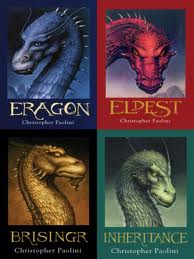
Designing book covers for a series is an additional challenge and, given that there are three, maybe four books in the Wycaan Master series, I now feel I have clear picture of how I imagine William will develop each cover. What I find interesting is that it doesn’t always have to be intricate. Christopher Paolini’s covers are not detailed, but still instantly recognizable. As each new cover was announced, my sons and I shared a collective gasp of anticipation.

 The question I want to pose here is what constitutes a good epic fantasy cover? There are some covers that I just sit and gaze in wonder, often several times when I pick up the book to commence reading. So, please also share your favorite fantasy book covers. Let’s make a Top Ten: over to you… 

Next week – the official unveiling of the book cover: At The Walls of Galbrieth – Wycaan Master Book 1.

——————————————————————————————————

Alon Shalev is the author of The Accidental Activist and A Gardener’s Tale. He has written three epic fantasy novels and the first, which reached the Quarter Finals of the Amazon Breakthrough Novel Award 2012, is due out in January 2013 by Tourmaline Press. More on Alon Shalev at http://www.alonshalev.com and on Twitter (@elfwriter).

Size – Does It Matter?

So shoot me for false advertising, but I have a dilemma. I shared with you last week in A Tribute to Editors that I have received my manuscript to At The Walls Of Galbrieth back from my editor with lots of cuts and corrections. As I worked my way through, accepting 90% of the changes suggested, I realized that my word count was dropping drastically.

I am about 80% through the novel, which began at 96,000 words and is now down to about 85,000.

Epic fantasy novels are thick tombs, offering the promise to get lost in a mythical world for a month or so. It is not a novel that you can finish in a weekend (unless your weekend is very empty and you are a fast reader).

Even Young Adult books make good doorstops. The Christopher Paolinis’ of this world have proved that teenagers will stick with a long story if it is compelling enough.

So my first question is: Is there a minimum length? When I was shopping the Wycaan Master series, there were publishers who stipulated a word range, often 100,00+. It might be that they expected their editors to attack it with a scalpel, much as my editor did.

My second question regards world building, something we have touched on before at elfwriter. A lot of the scenery description has been edited out. The editor, like many in the writing world, believes that you shouldn’t reveal everything: about a person, room, scenery etc., but allow the reader to create their own image.

Certainly, anyone who has read a book after watching the movie  (or the other way around) can appreciate this.

Tolkien, the master, spent pages describing the forests and the trees. Many of us loved this while others skipped these long descriptions. I wonder whether a young, undiscovered Tolkien would (and please pardon the expression) suffer the long red, sharpie lines through these sections of his work (or the Track Changes equivalent – but that’s not how I think of the old professor).

There is a middle ground. My editor has challenged me to integrate the descriptions within an action scene or as a pivot for a character’s self-reflection. This is a great point and I plan to experiment with this in the future. Do you know of any writers who do a good job of integrating description into the flow of the plot or character development, without it feeling like a ‘description-dump’?

So two questions here: Does size matter? How much description is allowed?

As always, I appreciate your feedback and guidance.

——————————————————————————————————

Alon Shalev is the author of The Accidental Activist and A Gardener’s Tale. He has written three epic fantasy novels and the first, which reached the Quarter Finals of the Amazon Breakthrough Novel Award 2012, is due out in January 2013 by Tourmaline Press. More on Alon Shalev at http://www.alonshalev.com and on Twitter (@elfwriter).