Best Advice Ever – If You Can Quit…

There is a legendary quote that is circulating the twitterverse and bloggersphere from epic fantasy giant, R. A. Salvatore. When asked to offer one piece of advice to aspiring writers, he said:

If you can quit, you should do so. If you can’t quit, you are a writer.”

I accidentally came across the interview with the quote. The interview is by Brian Stern (thank you, sir) and the first 20 minutes in particular are, in my humble opinion, amazing. Here are the first 12 minutes. Hey, it’s Sunday! Take a break, make yourself a coffee, pour a glass of wine (or both, no one is watching) and give yourself at least 12 minutes for the first third.

Okay, I couldn’t resist. Here is the second 12 minutes.

It is amazing how Bob (may I call you Bob? I feel we’re pretty close after these interviews and having read about eight of your books) just becomes more enthusiastic with his characters as the series progresses. It feels like he truly pours all of himself into each book. What he wrote about his brother is simply stunning.

Something that I find fascinating is how he is challenged to find time to read and make his way through a series. He speaks about how authors influence each other and I think there is something very important here. I do feel that Salvatore, Terry Brooks, and more recently George R.R. Martin have had an influence on me. But I am not sure this is a bad thing.

Why not learn from the masters? Even if you are already a member of the elite fantasy A-list like Salvatore, are we not all trying to constantly improve?

Finally, here is the third and final part of the interview. There is a great part about the author’s interactions with his readers, something I discussed last week.

I know I only asked you for 12 minutes and gave you 36 minutes. I would apologize, but I don’t think actually feel sorry for doing this. Yeah, it’s 36 minutes you will never get back, but just maybe it will help and inspire you. Perhaps you just couldn’t quit!

But then if you cannot quit…read his books. Next time you go into a bookstore (yeah, they still exist), check out his amazing book covers. They are quite simply works of art. Amazing.

——————————————————————————————————

Alon Shalev is the author of the 2013 Eric Hoffer YA Book Award winner, At The Walls of Galbrieth, The First Decree, and Ashbar – Wycaan Master Book 3 – all released by Tourmaline Books. Shalev is also the author of three social justice-themed novels including Unwanted Heroes. He swears there is a connection. More at http://www.alonshalev.com and on Twitter (@elfwriter). Hang out with Alon on Google+


All He Had To Say Was Thank You

There is an urban author’s myth of a now famous author in her undiscovered days – was it Janet Evanovich? – who spoke at a bookstore in a mall with pouring rain outside. She knew the audience would be sparse as the mall was empty, and to cheer herself up, she bought a box of chocolates from the store next door. 

Only four people turned up and she made them sit in a circle and gave them each a chocolate. They were silent as she spoke and read, and asked no questions. At the end three got up and left. The fourth thanked her and the author asked, rather desperately, if she wanted to buy a book. The woman laughed and said that all four were homeless, and just thirsted for a little culture so the bookstore allowed them to attend. The author felt compelled to give her a copy of her book and the rest of the chocolates.

images

I recently went to a book reading of an author who is struggling to break through, like me. We had met a few times and I have offered advice at various stages. I dutifully spread the word of his book launch to my social and e-circles, attended the reading, and bought a book.

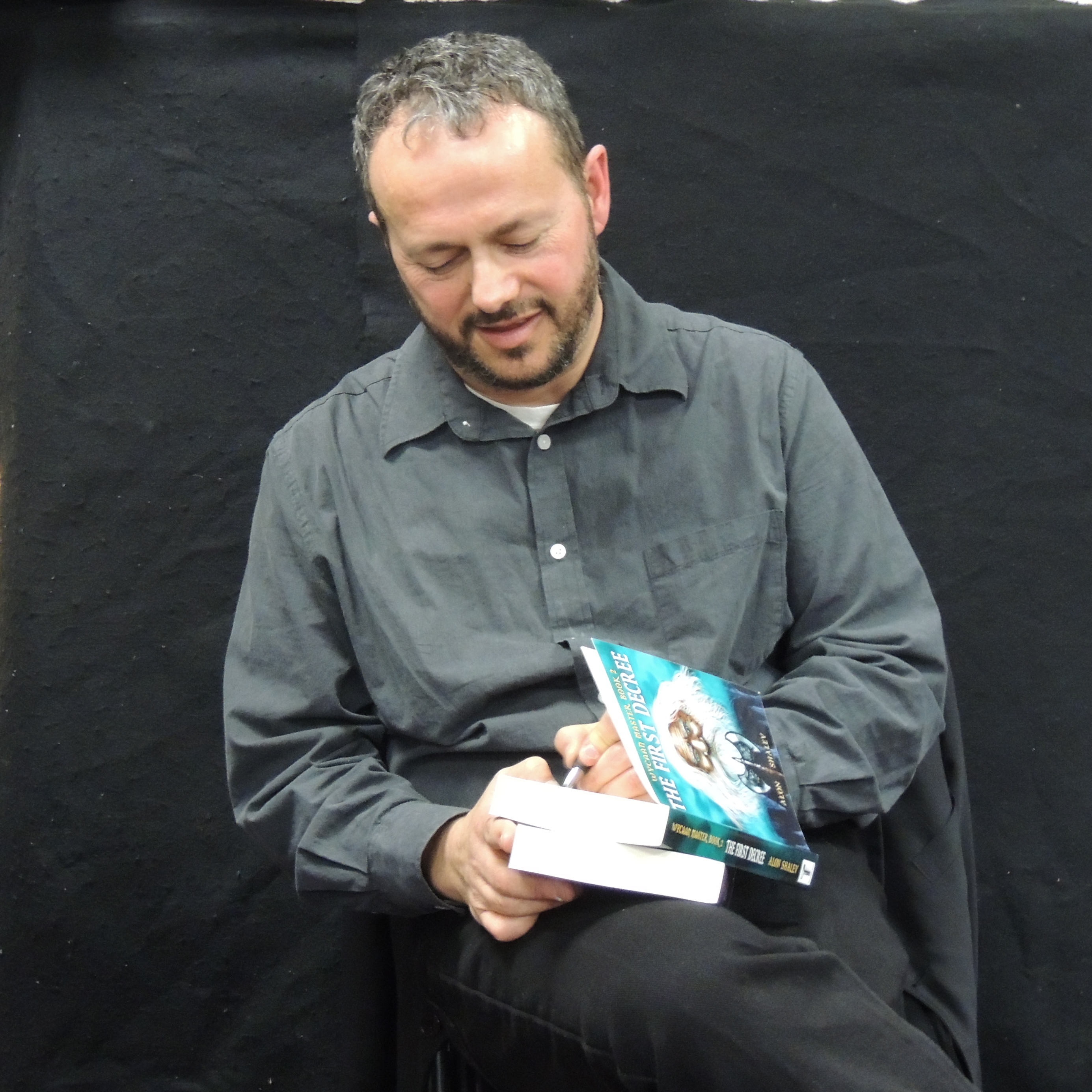
Not many people turned up and even less felt inclined to buy the book. He was disappointed and the bookstore staff was not too excited either. When I asked him to sign my book, he mumbled a weak thank you and scribbled. I don’t think he ever made eye contact with me, and I felt a profound sense of resentment.

This is reality for all but the 200 or so A-listers. The rest of us may have 50 people in attendance or 5. It is hit-or-miss and this is probably a significant reason why adopting an online marketing strategy makes sense.

To celebrate the first Wycaan Master trilogy and the Eric Hoffer Book Award, I held a celebration in my hometown at the iconic Games of Berkeley at the end of last year. There was a strong attendance, but I put a lot of time into advertising and most of those attending had already bought the books. It was not a good return on investment if I look at it through economic eyes alone.

 Games of Berkeley Question from Asif

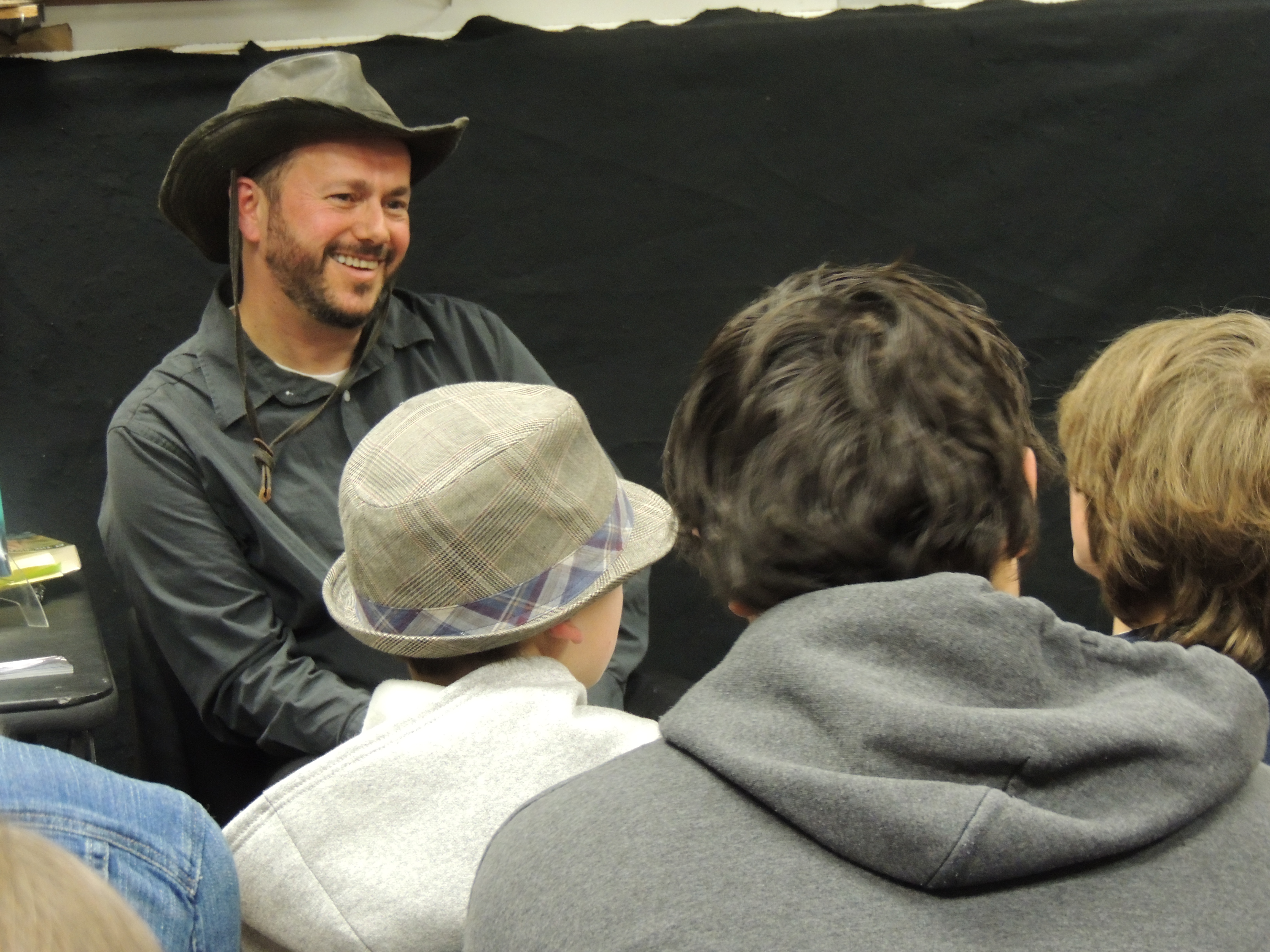
But I loved doing it. I loved my friends who came and read parts, I loved the Q&A, especially the questions from the younger members of the audience, and most of all, I loved the conversations and the excitement of my readers – yes, for one afternoon they were all mine!

I sincerely hope that those who attended left happy and committed to my series and me. I especially hope that the young people were inspired to continue reading and, who knows, maybe put millennial quill to parchment. 

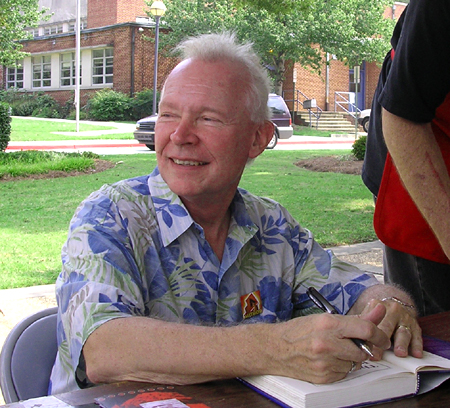
I have heard many times that my author-hero, Terry Brooks, is an inspiring author to meet. I hear he shares a conversation with everyone bearing books, and that he is a delight to be with. I can believe that after reading this passage in his book, Sometimes The Magic Works. He says that book signings are not about selling books or advancing your career. He say…oh why not just let him say it:

Terry Brooks

Terry Brooks

“It is not in fact about you at all.

Rather, it is about making a connection between readers and books. It is about making readers feel so enthusiastic about books that they cannot wait to come back and buy more – not just copies of your books, but of other authors’ books, as well. It is about generating a feeling of goodwill toward the bookstore and the staff. Mostly, it is about reassuring everyone that they did not waste their time on you. 

How do you accomplish this? …

…Speak to everyone. Make them aware of the fact that you are grateful to be there, anxious to chat, and ready to answer questions if they have any. Never sign a book without looking at and speaking directly to the reader, and then thank them for choosing to take a chance on you.”

I think I have always thanked those who buy my books. To this day, when a stranger tweets me that they just bought one, I feel genuinely touched and honored that they spent their hard-earned money on my books.

Book Signing Games of Berkeley

And I thank them.

Maybe one day, someone will develop an app wherein I can put my hand through the screen and shake theirs as I thank them. Perhaps the 2.0 version will allow us to reach through and hug someone.

 girl-hugging-words1

The world would become a better place, for authors, readers and all humankind!

Have a great week,

Elfwriter

——————————————————————————————————

Alon Shalev is the author of the 2013 Eric Hoffer YA Book Award winner, At The Walls of Galbrieth, and five other Wycaan Master books all released by Tourmaline Books. The link above takes you to the Kindle versions. For all other eReaders, please click here.

More at http://www.alonshalev.com and on Twitter (@elfwriter).


The Pressure To Produce – An Author’s Perspective

Rarely does a week without me being asked when the fourth Wycaan Master book is coming out. Let me be very clear: I am absolutely chuffed (ecstatic in my new country’s vernacular) that people ask and truly humbled that readers care enough to ask and want the next installment.

 Games of Berkeley Question from Asif

Most of these questions come from young people, the generation of instant gratification. You click and you get it. It is hard to explain that it takes 5-6 months to write, a further 2-3 to edit, and another couple to publish. I have set a goal of a book a year, and I don’t believe I can produce more. Those who crank them out (or have others write for them) are, I suspect, doing themselves a disfavor, even if they sell well.

I can’t help thinking that unless you blindly follow a strict formula, there needs to be some creative downtime and an opportunity to mull over what has happened and where the series might be going. I’m trying to work a good wine or whisky analogy, but failing dismally. Everything needs to ferment and you need to burst into the next book, not start still breathless from the last climatic battle.

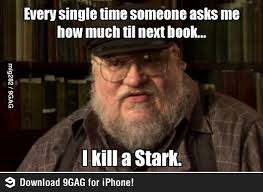
I am, however, waiting on two ‘next installments.’ The third Magicians book by Lev Grossman is due out in the fall and then there is that author I dare not mention who takes a couple of years to write each tome.

images-1George Martin to kill Tyrion

In total hypocritical mode, I have to say I am impatiently waiting for these books. It is really a compliment that readers bond with the characters and want to see how they develop.

But it is also pressure. The need to maintain a creative energy is perhaps akin to working out and keeping your body at a weight or suppleness that age and gravity take issue with. We know that our bodies react better when we work out regularly, and sometimes I think that it is the same with writing.

If I was to give one piece of advise to a beginning writer, it would be to cultivate a daily practice, whether writing a chapter of your novel or blogging, but not your shopping list. I only write a first draft of a novel in half a year, the other half as explained above is for editing, production and promotion.

While I embark on a novel with a lot of excitement there is also apprehension as I begin to work those creativity muscles and feel the soreness and fatigue. This feeling disappears as I settle into a rhythm and the plot reveals itself to me.

images-2

And if I have doubts, or feel lethargic, I always have those readers who earnestly ask: “When’s the next book coming out?”

——————————————————————————————————

Alon Shalev is the author of the 2013 Eric Hoffer YA Book Award winner, At The Walls of Galbrieth, The First Decree, and Ashbar – Wycaan Master Book 3 – all released by Tourmaline Books. Shalev is also the author of three social justice-themed novels including Unwanted Heroes. He swears there is a connection. More at http://www.alonshalev.com and on Twitter (@elfwriter). Hang out with Alon on Google+

Cinderella The Savage and Saruman The Sweet

A common question that I field at readings is how/why I chose the name of a particular character? I find it surprising because I would never have thought to ask such a question of my favorite authors. Either I considered their names a perfect fit  (and so never thought about it), or the author probably didn’t remain my favorite for long.

But it is a good question. A name, particularly for a protagonist or main character, is a significant part of the experience. If it appears ten times on every page and gets stuck in your throat, it is either a big problem or you need some lozenges on hand.  And if we are talking about a series, then that character is going to be around for some time. 

images-2

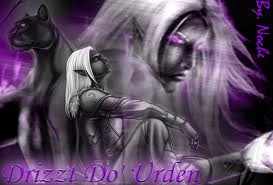
R.A.Salvatore, one of my role models and favorite authors, challenges us with his drows.

With the fourth Wycaan Master novel safely ensconced in the hands of my editor, I did what every author without a life or with a compulsive disorder does and began Book 5. My dear friends, Seanchai, Rhoddan and Sellia, have appeared in every book, so we are closing in on a half million words by the time I finish this one. I am trying to restrain myself from discovering how many times each name has appeared.

Having attended a number of events with people who have actually read my novels (they exist!), I discovered that everyone pronounces Seanchai differently. I am particularly proud of his name and love being asked why I chose it. In Celtic culture, a Seanchai was a traditional storyteller and, in my books, the Wycaan magic that our protagonist learns is based upon words and stories.

While providing what I hope is a cool answer, I see in their expressions how it is difficult that people struggle to say or hear. I am, of course, the worst offender. My non-existent Celtic notwithstanding, I have spend a good part of my life in the Middle East, where we sound like we are clearing our throats every time we put a ch together. It can be unsettling at first, because you flinch thinking the person is about to spit on you. but a serious ch is essential to the language and I worked very hard to master it.

More locally, I discovered people use che as in the name of the Cuban revolutionary. At a recent event, two friends decided to help me with a more interactive reading, each taking different parts, and each inevitably pronouncing Seanchai differently. We had a blast, but I wonder how those in the audience who had not read any of the series coped.

Games of Berkeley Question from Asif

I guess it doesn’t really matter until the movie comes out right? And by that time, pronouncing his name will be the last thing on this elated author’s mind. Slightly more realistically, I would love to produce an audio book since I derive such pleasure from them on my long, daily commute. 

Ironically, I have no idea where the name Rhoddan came from, I really don’t. I was looking for something that suggested stability and loyalty – go figure – but I feel the name fits perfectly. Certainly, the upside is that everyone agrees on how to pronounce his name, so hey, he can stay alive…for now!

The Greeks deserve credit for conveying much about their characters through names. Zeus is truly a name fit for a god and the king of the gods at that. And how would you react if your daughter told you that she was dating a dude named Hades or Loki? Lock her in her room, I’m sure. Thor sounds like a badass, and Aphrodite – well, best I leave that to your own imagination.

Moving to our own gods, and I think the old professor did a pretty good job all round, particularly with his hobbits. Bilbo Baggins is already lovable and you have only seen his business card. Friendly, courteous, and clearly one who drinks tea, eats Second Breakfast, and has a clean handkerchief in his pocketsss along with, of course, a ring of apocalyptic power. Who doesn’t these days?

 images-1

Tolkien did so well naming his hobbits – see this awesome list – and he nailed it with Gollum. If a name conveys considerable information, we understand that this is one twisted fella, with a name that just sticks in your throat.

Ilana, since you ask, comes from the Hebrew for tree. I chose this quite deliberately as I was looking for something stable, beautiful, and important to the existence of the characters around her. Alon means oak in Hebrew, so you see I have an affinity with trees, and At The Walls Of Galbrieth was conceived in a beautiful ancient redwood forest.

The names of minor characters is also important as an author spends more limited time extrapolating their characteristics. Since they appear and disappear so often, you want these names to be remembered and to also convey something about the characters. Certainly, when you have over a thousand characters stretching over several hefty tomes, yes I’m talking about you, Mr Martin, this becomes especially challenging.

 imgres-1

There is an advantage when reading ebooks, that you can search back to find references to a character, but this is impossible in an audiobook, and while a glossary of characters is helpful to flick through in most circumstances, it is not recommended while driving and listening to the audio book. App anyone?

What is your favorite name for an epic fantasy character? Which author shines at their selection? And which character does not fit the image you imagined from the name?

——————————————————————————————————

Alon Shalev is the author of the 2013 Eric Hoffer YA Book Award winner, At The Walls of Galbrieth, The First Decree, and Ashbar – Wycaan Master Book 3 – all released by Tourmaline Books. Shalev is also the author of three social justice-themed novels including Unwanted Heroes. He swears there is a connection. More at http://www.alonshalev.com and on Twitter (@elfwriter). Hang out with Alon on Google+

Valentine’s Day – Epic Fantasy Style

What made the great world-builders of our time overlook such a special occasion? Was Valentine’s Day not celebrated in Middle Earth? Shanara? Odessiya?  Where does Terry Brooks,  R. A. Salvatore, Christopher Paolini, Robert Jordan and others stand on this?

Perhaps it is not a question of the author’s epic battles for love. Sometimes you have to look to the characters to take a bit of responsibility. How would they have gone about it?

Elves: the sophisticated romantics. On the special day, elves would often take their beloved on a romantic walk, deep into the ancient forests. Alone, they would visit a favorite pool, fed by a steady waterfall, with a noble white heron keeping watch from a rock nearby. Butterflies would hover over the water.

Each elf would produce a small flute and serenade each other. Then one would draw his (or her) intricately carved bow and shoot into a nearby tree. A shower of fragrant petals would fall around them, settling in their perfectly coiffured hair. The other would produce a carefully wrapped, gluten-free, artisan pizza, magically still warm and with crispy crusts.  They would recite poetry to each other, eat, and then bathe in the pool, coincidently illuminated by a full moon on a cloudless night.

Oh, to be an elf!

 images-4

Dwarves: The romantic dwarf is meticulous in her (or his) preparation for Valentine’s Day. The previous day is spent washing, conditioning, and combing their beards. Oh, those curly locks challenge even the most finely made comb.

A dwarven Valentine’s Day is all about the rocks. A conscientious romantic will travel deep into the mines to find the perfect gem and then forge a unique ring and necklace set, never seen before … since last Valentine’s Day.

The morning of Valentine’s Day, one often awakes to see their axe newly sharpened and oiled, the hilt freshly bound with clean leather or copper wire, the shaft gleaming. That night around a roaring fire, with an ox dripping grease into the flames, the dwarves consume tankards of ale and sing deep into the night. The songs, however, are not of mighty battles and bountiful treasures as they are every other night, sung as one mighty chorus. This night the dwarves sing only to their beloved, and the songs are of mighty battles, bountiful treasures, and furtive kisses for the hero (or heroine). The next morning, all you remember through the hangover is hazy and askew. But you still have the ring and necklace, and oh your axe is gleaming and so sharp!

 images-6

Humans: As Valentine’s Day approaches, the scribes of the mighty House of Hallmark are almost out of scrolls, quills, and ink, their arms limp from Carpel Tunnel Syndrome. They don’t complain, few have health coverage, but they have made their money. They bless the Great Goddess of Consumerism, though they will never quite appreciate the theology until the revelation of the Coming of the Internet. For now, electricity seems fantastical and visions of deluded priests, court jesters, and entrepreneurs.

The gardeners have been preparing all year. Every self-respecting knight requires a bouquet of at least 10 long-stemmed reds to fit over the tip of their lance, which they will offer to a sweet virgin in the admiring crowd. If she accepts the roses, then she replaces them with her silk ’kerchief, piercing it gently over the young knight’s lance tip. Many a young man has, at this point, fallen from his horse in anticipation. And the definition of virgin, it should be noted, is pretty relaxed in the world of fantasy.

After the obligatory jousting and archery competitions, the virgins retire to their rooms and surreptitiously peer over their balconies. After slaying dragons and defeating barbarian hordes on the battlefield, the young knights return, and once bathed, shaved and smelling of Old Spice, serenade the young virgins. They toss a twisted vine with grappling hook up to her balcony (many a venture capitalist squire made his fortune investing in the grappling hook industry). The virgin slides down, having practiced for hours how to keep her flowing dress from either ripping, getting dirty, or ending up awkwardly around her head. She lands sidesaddle on the knight’s noble steed. 

The rest of the evening: a dinner, movie, and long walk along the moonlit battlefield, gazing together upon the vultures and ravens picking the entrails of the vanquished, have passed from tradition into our everyday rituals.

 images-7

Pictorians: The pictorians (read Wycaan Master series for background, but not while on Valentine’s Day date) are very secretive about their romantic rituals. Court anthropologists believe the couple sneak off after the pictorye are asleep, both with gleaming weapons. Working in perfect synchronicity and without need for verbal communication, they bring down a wild buffalo bull, ripping its flesh with their bare hands and teeth, while feeding each other in a raw, bloody passion. The horns of the bull are carved out and used to toast the night with a dark beer imported from the mythical land of the Four-leafed Clover. 

The female pictorian then beats her mate unconscious with the two bull horns, drags him back to their ice homes, and has her way with him, which often includes skinning the buffalo and cleaning out the hearth, done but once a year by such mighty warriors. They are also expected to provide her with breakfast in bed, the Venti Mocha still steaming.

If you are still reading this post, you probably have a pretty good idea why our literary greats chose not to dwell on such rituals as Valentine’s Day. I would elucidate further, but my mate awaits with expectations high, and I have her axe to sharpen, parchment to gather, and, where did I put that vine…

images-5 

Happy Valentine’s Day to all.

——————————————————————————————————

Alon Shalev is the author of the 2013 Eric Hoffer YA Book Award winner, At The Walls of GalbriethThe First Decree, and Ashbar – Wycaan Master Book 3 – all released by Tourmaline Books. Shalev is also the author of three social justice-themed novels including Unwanted Heroes. He swears there is a connection. More at http://www.alonshalev.com and on Twitter (@elfwriter). Hang out with Alon on Google+

When Authors Reach For Immortality

Recently, I listened to an interview with the famous Israeli author, Amos Oz, a literary icon I grew up admiring. Now, well into his 70’s, he is as vibrant and inspirational as ever. There was something he said in the interview that resonated with me. He claimed to have made up a number of words that he used throughout his books. He was stoked one day when, while in conversation with a cab driver who did not recognize his passenger, the man used one of Amos Oz’s words. Oz suggested that his modest contribution to the Israeli language was his own brush with immortality.

imgres

If this is so, I am quite proud of my own. When reading the manuscript of my first YA epic fantasy novel, At The Walls of Galbrieth, which won the 2013 Eric Hoffer Book Award for YA, to the Berkeley Writer’s Group, the female members of the group took exception to the term she-elf to delineate my female elves from males.

And so, after much discussion and debate, she-elves asserted themselves as elfes, and even saw the former term as an insult throughout the Wycaan Master series. Fast forward three years, and a newer member of the group while presenting his YA epic fantasy novel, used the same word, believing it part of the genre. I was, and remain, chuffed every time he uses the word.

images-6A friend from your writer’s group, is certainly a far cry from a random taxi driver (though no Israeli cabbie is ever random – you have to take a cab in Israel to appreciate them) of course. But I am hardly comparable to Amos Oz, an author widely expected to win the Nobel Prize for Literature.

And so I offer elfe to the epic fantasy world, along with calhei (elf children) and ahdahr (elf father). Last week, I mentioned that, while I have sent the manuscript of Book 4 to the editor, I am struggling with a title. The protagonist is a female, so I guess at least I have one word worked out!

—————————————————————————————————

Alon Shalev is the author of the 2013 Eric Hoffer YA Book Award winner, At The Walls of GalbriethThe First Decree, and Ashbar – Wycaan Master Book 3 – all released by Tourmaline Books. Shalev is also the author of three social justice-themed novels including Unwanted Heroes. He swears there is a connection. More at http://www.alonshalev.com and on Twitter (@elfwriter). Hang out with Alon on Google+
They Grow Up So Fast

One day they are suckling at the nipple of your opening chapters and then, before you know it, your little manuscript is all grown up and running out the door, into the critical embrace of the editor. 

It was the same for your eldest, Book 1, and also for Book 2 and Book 3, but you are never as prepared for this moment as you think. You smile to yourself through welling tears, remembering its first word: Prologue.

You relish the memory, but must return to the present. What do you say, what wisdom can you impart as they turn to face you one more time? Look upon it well. It will never return the same. The time you never think will happen is upon you.

images-3“Go,” you say, your voice cracking. “Be careful. Stay true to your plot, to the storyline I passed on to you. Look after your characters for they are your family now. Oh, and always track changes. And don’t forget to save every few minutes. Always back up at the end of the day and floss before you go to sleep.”

For a fleeting moment the young manuscript stares up at you, revealing its understanding of the gravity of this sacred moment. Wordlessly, it asks if this is the right time.

You stroke its spine, muss its pages and sigh. “She’s a good editor. She cares about you and she will make you a better manuscript. You will feel lighter, tighter, and ready to face the readers who will pore over your every word.”

girl-hugging-words1

And the manuscript gulps and nods, not because it believes you, but because it trusts you. You brought it into the world, typed its first words, worried over its development and story arc. When it was sick or faltered, you were beside it, cutting and pasting, making the necessary changes so that it could one day fulfill its destiny.

And then it turns to go, now only an attachment. You type in the editor’s email address and click the button you always dreaded: Send.

Now you sit and stare at the blank screen, swallow hard and wonder what to do with your time. You have no choice. Be strong. This is a circle of life thing. Your fingers hover over the keyboard. The computer holds its breath. And then you type:

Book Five: Prologue

images

Dedicated to my editor, Monica Buntin, and all who are brave enough to edit author’s books and lives!

—————————————————————————————————

Alon Shalev is the author of the 2013 Eric Hoffer YA Book Award winner, At The Walls of Galbrieth, The First Decree, and Ashbar – Wycaan Master Book 3 – all released by Tourmaline Books. Shalev is also the author of three social justice-themed novels including Unwanted Heroes. He swears there is a connection. More at http://www.alonshalev.com and on Twitter (@elfwriter). Hang out with Alon on Google+
The Great Author Gold Rush

Last week, Amazon announced the dates for the Amazon Breakthrough Novel Awards 2014 (ABNA). This was the signal, across the country, that sent thousands of writers, novelists, and dreamers, scurrying into our offices, corners, coffee shops, and wherever else people of our ilk perch to write their novels.

images-2 

Ten thousand will be allowed to enter a novel, an excerpt and a pitch, click on submit, and then lean back to spend three months dreaming of future fame and glory. It is the writer’s lottery ticket and the adrenaline is flowing.

Part of the magic around this competition is that it is the ultimate democratizing of publishing. All who enter receive equal access to the judges, the fans, and the agents who hover on the periphery. No more ambushing agents in expensive Writer Conference bathrooms (yes it happens), no more trips to the post office with unsolicited manuscripts, no more trying to convince a friend who knows someone who knows…

Click on the button and let cyber-nature take its course. If your manuscript is intriguing, your pitch compelling, and your craft sound, you stand as good a chance as the other 9,999 entries. Personally, I prepared my acceptance speech, good for ABNA, Nobel, the Oscars or Oprah!

imagesAnd then there is ABNA Anonymous (not its real name – see Createspace website), a glorious plethora of online forums wherein the hopeful gather to ask questions, hypothesize, vent frustrations, and enjoy a communal glass of wine without needing to drive home.

I have entered two novels that both reached the Quarter Finals, the last 250 contestants.  Whilst the semi finals proved elusive, Unwanted Heroes was picked up by Three Clover Press, and At The Walls Of Galbrieth went on to win the 2013 Eric Hoffer Book Award for YA.

 photo (17)

A good friend, Francine Howard, also reached the Quarter Finals with Pages of a Tennessee Journal and went on to become an Amazon Encore author, signed up by Amazon’s own publishing house. The link also has a lovely interview with Francine further down the page.

So here’s to another successful year for the Amazon Breakthrough Novel Award and all those who bravely enter. Reaching the final destination would be nice, but the journey is a great ride. Enjoy it!

Now, if you will excuse me, I have a pitch to polish!

——————————————————————————————————

Alon Shalev is the author of the 2013 Eric Hoffer YA Book Award winner, At The Walls of Galbrieth, The First Decree, and Ashbar – Wycaan Master Book 3 – all released by Tourmaline Books. Shalev is also the author of three social justice-themed novels including Unwanted Heroes. He swears there is a connection. More at http://www.alonshalev.com and on Twitter (@elfwriter). Hang out with Alon on Google+
Happy Birthday, Professor Tolkien

Everyone should have a mentor, a leader they look up to, someone who, when they are faced with a dilemma consider: What would XXX do? That person might be a religious leader, a youth leader, a teacher … or a professor.

A month ago, on another blog, I spoke of the loss I feel for Nelson Mandela and describe his influence at various times of my life. But I have another hero, not one who would, I am sure, compare himself to Madiba, but a man I think about all the time when writing. If I am faced with an issue in one of my books, I pause and try and imagine what a certain old Oxford professor would advise me to do.

lewis-and-tolkien1 

The old professor is, of course, J.R.R. Tolkien, author of The Hobbit, Lord of the Rings, and others. His books are legendary, his world-building stunning, and his ability to create languages simply mind-boggling.

But often what people forget is that Tolkien seemed, on the outside at least, to be anything but a fantasy writer. He was an academic, a somewhat stiff Englishman, a traditionalist, a Christian, and a war veteran. One fine summer day, he was rather bored marking term end papers when someone had inadvertently inserted a blank page.

Tolkien, without much thought, scribbled on the white paper the famous words: In a hole in the ground there lives a hobbit…

images-4

And he went on to change the world of epic fantasy forever. He should have realized what he was doing, for as he warned dear Frodo: “It’s a dangerous business, Frodo, going out your door. You step onto the road, and if you don’t keep your feet, there’s no knowing where you might be swept off to.

Today, J.R.R. Tolkien is, I believe, in a pub up there in heaven, celebrating with his illustrious friends from The Inklings  and raising a glass to celebrate his 122nd birthday.

In the Lord of the Rings, Bilbo celebrates his eleventy-first birthday, so it is only fitting to wish Tolkien a very happy twelvety-first birthday and to sing him Happy Birthday in elvish, the language he created, one word at a time. Thank you to Petri Tikka for this rendition!

So please, wherever you are, take a moment, pour yourself a glass of whatever does it for you and raise it to the following song:

Happy Birthday Professor – Oronnad meren allen! 

——————————————————————————————————

Alon Shalev is the author of the 2013 Eric Hoffer YA Book Award winner, At The Walls of Galbrieth, The First Decree, and Ashbar – Wycaan Master Book 3 – all released by Tourmaline Books. Shalev is also the author of three social justice-themed novels including Unwanted Heroes. He swears there is a connection. More at http://www.alonshalev.com and on Twitter (@elfwriter). Hang out with Alon on Google+

Dragged Into The 21st Century

Did you wake up this morning the proud/confused/intimidated owner of something small, electrical, and vaguely rectangular? Did you smile meekly last night while your loved ones looked on with bated breath as you apprehensively ripped open the packaging and did they cheer and clap their hands welcoming you into the technological age?

 images-3

And did they notice when you reached for that glass of single malt and took a gulp instead of a sip? Thousands of years in the future, archeologists will discover that man had a propensity to collect random items and leave them in their boxes. Often, they will propose theories to skeptical crowds, these gifts ran off of some obtuse energy source which was, no doubt very rare, since these gadgets seem to be hardly used.

Furthermore, they will note, primitive humans had a propensity to acquire the same gadget with slightly better features despite barely understanding the gadget’s predecessor.

images-2

Have another sip of scotch. Oh, I forgot it is the morning after. Well you can always lace your cereal if you do it discreetly.

We are all entering the technological age, whether through brave adventurism, or without choice. You might as well take a deep breath and plunge in. Who knows, you might actually enjoy it.

Such things as cell phones and iPods seem to be accepted by all but a brazen few, even if the desire for the latest phone has nothing to do with actually making a call. The battle, for now, is over the tablet. The world (at least those of us who don’t need to worry about the little things like a roof over our heads, food at our next meal, or what’s in the water supply) is divided into three groups.

1. Embracing the technology. These people don’t just read on their iPad, Kindle or Nook, they embrace it, often with an annoying missionary zest. They don’t take it out of their bag at the coffee shop or on the bus, they brandish it, like a mighty sword from days long past.

They are liable to chastise you, often in a smug, sympathetic way, as you balance your hardcover on your lap. “Oh,” they whine in true Bob Dylan style, “How many trees does a Luddite reader fell…” When dealing with these people, it can be advantageous to note that the hefty hardcover has a distinct advantage over the light, sleek screen – it is far more effective when you take a swing at aforementioned pretentious individual.

2. Luddite Conviction. No way! We are already spending too much time on screens. A book is more than just words on paper. You can smell it, feel the page crackle as you move through the novel, feel the weight of the author’s perseverance as you hold his/her masterpiece in your hand… And then the classic, yet oft-doomed line: It will never catch on.

3. Dithering in the Middle. There is some middle ground. I have to admit that I love my Kindle. It is light, convenient, and I get a kick about the environmental aspects. However, I do also miss the feel and smell of the book. I love the art of a well thought out book cover, and I also love reading while soaking in a hot bath. My bookshelves are an important part of my identity in our house and I hope sets a certain tone with my family.

So, some Advice for The Morning After:

Firstly: Don’t Panic! Take a deep breath, slowly unwrap the gadget and take it out of its box.

 images-11

Then: Go on your computer and find either the website for the company or go to You Tube. There are some really good, simple, step-by-step videos for people like us. I know, half of my readers are men and we read instruction manuals like we ask people for directions (btw – you might have a GPS navigator on your tablet).

Finally: Have another whisky. It is the holiday season after all. And take note: if you are reading this blog, then you have already embraced the blogosphere: the cutting edge of the Internet. You are already firmly in the 21st century, dude. YOU CAN DO THIS!

Oh, and if you did receive a Kindle, iPad, or whatever, this might be a good first book to read on your gadget (couldn’t resist!). In fact, how else can you stack up with an award-winning epic fantasy trilogy for just $9….Just saying!

Happy Hols’

——————————————————————————————————

0
0
1
122
700
5
1
821
14.0

Normal
0

false
false
false

EN-US
JA
X-NONE

/* Style Definitions */
table.MsoNormalTable
{mso-style-name:”Table Normal”;
mso-tstyle-rowband-size:0;
mso-tstyle-colband-size:0;
mso-style-noshow:yes;
mso-style-priority:99;
mso-style-parent:””;
mso-padding-alt:0in 5.4pt 0in 5.4pt;
mso-para-margin:0in;
mso-para-margin-bottom:.0001pt;
mso-pagination:widow-orphan;
font-size:10.0pt;
font-family:”Times New Roman”;}

Alon Shalev is the author of the 2013 Eric Hoffer YA Book Award winner, At The Walls of Galbrieth, The First Decree, and Ashbar – Wycaan Master Book 3 – all released by Tourmaline Books. Shalev is also the author of three social justice-themed novels including Unwanted Heroes. He swears there is a connection. More at http://www.alonshalev.com and on Twitter (@elfwriter). Hang out with Alon on Google+